
Articles | Volume 8, issue 1
https://doi.org/10.5194/soil-8-253-2022
© Author(s) 2022. This work is distributed under
the Creative Commons Attribution 4.0 License.
the Creative Commons Attribution 4.0 License.
https://doi.org/10.5194/soil-8-253-2022
© Author(s) 2022. This work is distributed under
the Creative Commons Attribution 4.0 License.
the Creative Commons Attribution 4.0 License.
Original research article
| 
01 Apr 2022
Original research article |
| 01 Apr 2022
| 01 Apr 2022
Land use impact on carbon mineralization in well aerated soils is mainly explained by variations of particulate organic matter rather than of soil structure
Steffen Schlüter
CORRESPONDING AUTHOR
Department of Soil System Sciences, Helmholtz Centre for Environmental
Research – UFZ, Theodor-Lieser-Str. 4, 06120 Halle (Saale), Germany
Tim Roussety
Department of Soil System Sciences, Helmholtz Centre for Environmental
Research – UFZ, Theodor-Lieser-Str. 4, 06120 Halle (Saale), Germany
Lena Rohe
Department of Soil System Sciences, Helmholtz Centre for Environmental
Research – UFZ, Theodor-Lieser-Str. 4, 06120 Halle (Saale), Germany
Vusal Guliyev
Department of Soil Ecology, Helmholtz Centre for Environmental Research
– UFZ, Theodor-Lieser-Str. 4, 06120 Halle (Saale), Germany
Evgenia Blagodatskaya
Department of Soil Ecology, Helmholtz Centre for Environmental Research
– UFZ, Theodor-Lieser-Str. 4, 06120 Halle (Saale), Germany
Thomas Reitz
Department of Soil System Sciences, Helmholtz Centre for Environmental
Research – UFZ, Theodor-Lieser-Str. 4, 06120 Halle (Saale), Germany
Department of Soil Ecology, Helmholtz Centre for Environmental Research
– UFZ, Theodor-Lieser-Str. 4, 06120 Halle (Saale), Germany
Related authors
Jan Nitzbon, Damir Gadylyaev, Steffen Schlüter, John Maximilian Köhne, Guido Grosse, and Julia Boike
The Cryosphere, 16, 3507–3515, https://doi.org/10.5194/tc-16-3507-2022, https://doi.org/10.5194/tc-16-3507-2022, 2022
Short summary
Short summary
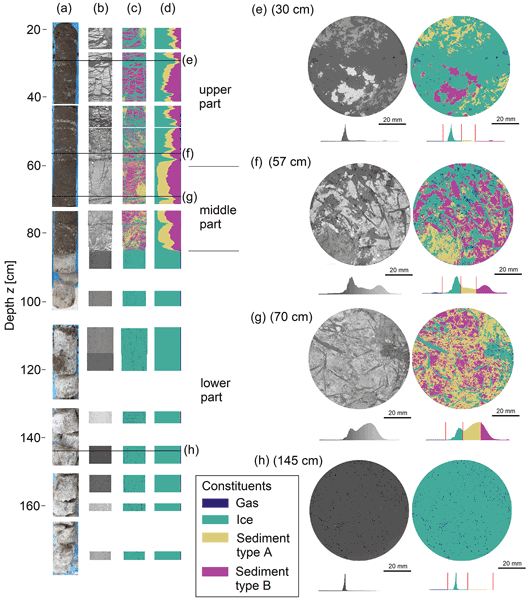
The microstructure of permafrost soils contains clues to its formation and its preconditioning to future change. We used X-ray computed tomography (CT) to measure the composition of a permafrost drill core from Siberia. By combining CT with laboratory measurements, we determined the the proportions of pore ice, excess ice, minerals, organic matter, and gas contained in the core at an unprecedented resolution. Our work demonstrates the potential of CT to study permafrost properties and processes.
Ulrich Weller, Lukas Albrecht, Steffen Schlüter, and Hans-Jörg Vogel
SOIL, 8, 507–515, https://doi.org/10.5194/soil-8-507-2022, https://doi.org/10.5194/soil-8-507-2022, 2022
Short summary
Short summary
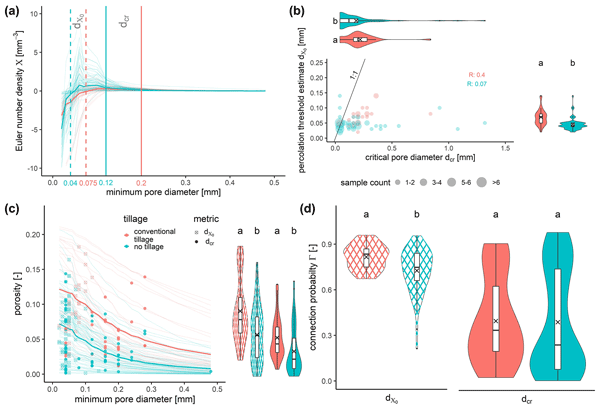
Soil structure is of central importance for soil functions. It is, however, ill defined. With the increasing availability of X-ray CT scanners, more and more soils are scanned and an undisturbed image of the soil's structure is produced. Often, a qualitative description is all that is derived from these images. We provide now a web-based Soil Structure Library where these images can be evaluated in a standardized quantitative way and can be compared to a world-wide data set.
Matthes Kantzenbach, Sara König, Thomas Reitz, Martin Schädler, and Franziska Taubert
EGUsphere, https://doi.org/10.5194/egusphere-2026-1713, https://doi.org/10.5194/egusphere-2026-1713, 2026
Short summary
Short summary
To address uncertainties in grassland modeling due to simplified soil processes, we couple the grassland model GRASSMIND with the soil model BODIUM and evaluate the coupled system using multi-year field data. The results show a more reliable representation of plant–soil interactions and reveal new opportunities to improve model processes. This demonstrates that linking specialized models can strengthen model development and improve their usefulness for studying environmental systems.
Jan Nitzbon, Damir Gadylyaev, Steffen Schlüter, John Maximilian Köhne, Guido Grosse, and Julia Boike
The Cryosphere, 16, 3507–3515, https://doi.org/10.5194/tc-16-3507-2022, https://doi.org/10.5194/tc-16-3507-2022, 2022
Short summary
Short summary
The microstructure of permafrost soils contains clues to its formation and its preconditioning to future change. We used X-ray computed tomography (CT) to measure the composition of a permafrost drill core from Siberia. By combining CT with laboratory measurements, we determined the the proportions of pore ice, excess ice, minerals, organic matter, and gas contained in the core at an unprecedented resolution. Our work demonstrates the potential of CT to study permafrost properties and processes.
Ulrich Weller, Lukas Albrecht, Steffen Schlüter, and Hans-Jörg Vogel
SOIL, 8, 507–515, https://doi.org/10.5194/soil-8-507-2022, https://doi.org/10.5194/soil-8-507-2022, 2022
Short summary
Short summary
Soil structure is of central importance for soil functions. It is, however, ill defined. With the increasing availability of X-ray CT scanners, more and more soils are scanned and an undisturbed image of the soil's structure is produced. Often, a qualitative description is all that is derived from these images. We provide now a web-based Soil Structure Library where these images can be evaluated in a standardized quantitative way and can be compared to a world-wide data set.
Cited articles
Akimenko, V. K., Trutko, S. M., Medentsev, A. G., and Korobov, V. P.:
Distribution of cyanide-resistant respiration among yeasts and bacteria and
its relation to oversynthesis of metabolites, Arch. Microbiol., 136,
234–241, https://doi.org/10.1007/BF00409851, 1983.
Altermann, M., Rinklebe, J., Merbach, I., Körschens, M., Langer, U., and
Hofmann, B.: Chernozem – Soil of the Year 2005, J. Plant Nutr.
Soil Sc., 168, 725–740, 2005.
Anderson, J. P. E. and Domsch, K. H.: A physiological method for the
quantitative measurement of microbial biomass in soils, Soil Biol.
Biochem., 10, 215–221,
https://doi.org/10.1016/0038-0717(78)90099-8, 1978.
Auffret, M. D., Karhu, K., Khachane, A., Dungait, J. A. J., Fraser, F.,
Hopkins, D. W., Wookey, P. A., Singh, B. K., Freitag, T. E., Hartley, I. P.,
and Prosser, J. I.: The Role of Microbial Community Composition in
Controlling Soil Respiration Responses to Temperature, PLOS ONE, 11,
e0165448, https://doi.org/10.1371/journal.pone.0165448, 2016.
Berg, S., Kutra, D., Kroeger, T., Straehle, C. N., Kausler, B. X., Haubold,
C., Schiegg, M., Ales, J., Beier, T., Rudy, M., Eren, K., Cervantes, J. I.,
Xu, B., Beuttenmueller, F., Wolny, A., Zhang, C., Koethe, U., Hamprecht, F.
A., and Kreshuk, A.: ilastik: interactive machine learning for (bio)image
analysis, Nat. Method., 16, 1226–1232, https://doi.org/10.1038/s41592-019-0582-9, 2019.
Blagodatskaya, E. and Kuzyakov, Y.: Active microorganisms in soil: Critical
review of estimation criteria and approaches, Soil Biol. Biochem.,
67, 192–211, https://doi.org/10.1016/j.soilbio.2013.08.024,
2013.
Bouckaert, L., Sleutel, S., Van Loo, D., Brabant, L., Cnudde, V., Van
Hoorebeke, L., and De Neve, S.: Carbon mineralisation and pore size classes
in undisturbed soil cores, Soil Res., 51, 14–22,
https://doi.org/10.1071/SR12116, 2013.
Buades, A., Coll, B., and Morel, J.-M.: A non-local algorithm for image
denoising, in: Computer Vision and Pattern Recognition, 2005, CVPR 2005,
IEEE Computer Society Conference on, San Diego, California, https://doi.org/10.1109/CVPR.2005.38, 2005.
Canty, A. and Ripley, B.: boot: Bootstrap R (S-Plus) Functions, R
package version 1.3-24 [code], avaliable at: https://cran.r-project.org/web/packages/boot/, last access: 9 June 2019.
Davidson, E. A., Janssens, I. A., and Luo, Y.: On the variability of
respiration in terrestrial ecosystems: moving beyond Q10, Glob.
Biol., 12, 154–164, https://doi.org/10.1111/j.1365-2486.2005.01065.x, 2006.
Davison, A. C. and Hinkley, D. V.: Bootstrap methods and their application,
Cambridge Series in Statistical and Probabilistic Mathematics, Cambridge
University Press, Cambridge, ISBN 0521574714, 1997.
de Mendiburu, F.: Agricolae: statistical procedures for agricultural
research, in: R package version 1.3-5 [code], avaliable at: https://cran.r-project.org/web/packages/agricolae/, last access: 7 June 2021.
De Neve, S. and Hofman, G.: Influence of soil compaction on carbon and
nitrogen mineralization of soil organic matter and crop residues, Biol. Fert. Soils, 30, 544–549, https://doi.org/10.1007/s003740050034, 2000.
Domeignoz-Horta, L. A., Pold, G., Liu, X.-J. A., Frey, S. D., Melillo, J.
M., and DeAngelis, K. M.: Microbial diversity drives carbon use efficiency
in a model soil, Nat. Commun., 11, 3684,
https://doi.org/10.1038/s41467-020-17502-z, 2020.
Dungait, J. A. J., Hopkins, D. W., Gregory, A. S., and Whitmore, A. P.: Soil
organic matter turnover is governed by accessibility not recalcitrance,
Glob. Change Biol., 18, 1781–1796, https://doi.org/10.1111/j.1365-2486.2012.02665.x,
2012.
Ebrahimi, A. and Or, D.: On Upscaling of Soil Microbial Processes and
Biogeochemical Fluxes From Aggregates to Landscapes, J. Geophys.
Res.-Biogeo., 123, 1526–1547, https://doi.org/10.1029/2017JG004347, 2018.
Eden, M., Moldrup, P., Schjønning, P., Vogel, H.-J., Scow, K. M., and de
Jonge, L. W.: Linking Soil Physical Parameters Along a Density Gradient in a
Loess-Soil Long-Term Experiment, Soil Sci., 177, 1–11,
https://doi.org/10.1097/SS.0b013e31823745a9, 2012.
Efron, B.: Better bootstrap confidence intervals, J. Am.
Stat. Assoc., 82, 171–185, https://doi.org/10.2307/2289144, 1987.
Gaillard, V., Chenu, C., and Recous, S.: Carbon mineralisation in soil
adjacent to plant residues of contrasting biochemical quality, Soil Biol. Biochem., 35, 93–99, https://doi.org/10.1016/S0038-0717(02)00241-9, 2003.
Guo, X., Gao, Q., Yuan, M., Wang, G., Zhou, X., Feng, J., Shi, Z., Hale, L.,
Wu, L., Zhou, A., Tian, R., Liu, F., Wu, B., Chen, L., Jung, C. G., Niu, S.,
Li, D., Xu, X., Jiang, L., Escalas, A., Wu, L., He, Z., Van Nostrand, J. D.,
Ning, D., Liu, X., Yang, Y., Schuur, E. A. G., Konstantinidis, K. T., Cole,
J. R., Penton, C. R., Luo, Y., Tiedje, J. M., and Zhou, J.: Gene-informed
decomposition model predicts lower soil carbon loss due to persistent
microbial adaptation to warming, Nat. Commun., 11, 4897,
https://doi.org/10.1038/s41467-020-18706-z, 2020.
Herbst, M., Tappe, W., Kummer, S., and Vereecken, H.: The impact of sieving
on heterotrophic respiration response to water content in loamy and sandy
topsoils, Geoderma, 272, 73–82, https://doi.org/10.1016/j.geoderma.2016.03.002, 2016.
Hund, K. and Schenk, B.: The microbial respiration quotient as indicator
for bioremediation processes, Chemosphere, 28, 477–490, https://doi.org/10.1016/0045-6535(94)90292-5, 1994.
Juarez, S., Nunan, N., Duday, A.-C., Pouteau, V., and Chenu, C.: Soil carbon
mineralisation responses to alterations of microbial diversity and soil
structure, Biol. Fert. Soil., 49, 939–948,
https://doi.org/10.1007/s00374-013-0784-8, 2013.
Kemmitt, S. J., Lanyon, C. V., Waite, I. S., Wen, Q., Addiscott, T. M.,
Bird, N. R. A., O'Donnell, A. G., and Brookes, P. C.: Mineralization of
native soil organic matter is not regulated by the size, activity or
composition of the soil microbial biomass – a new perspective, Soil Biol. Biochem., 40, 61–73, https://doi.org/10.1016/j.soilbio.2007.06.021, 2008.
Koestel, J.: SoilJ: An ImageJ Plugin for the Semiautomatic Processing of
Three-Dimensional X-ray Images of Soils, Vadose Zone J., 17, 170062,
https://doi.org/10.2136/vzj2017.03.0062, 2018.
Kravchenko, A. N., Toosi, E. R., Guber, A. K., Ostrom, N. E., Yu, J., Azeem,
K., Rivers, M. L., and Robertson, G. P.: Hotspots of soil N2O emission
enhanced through water absorption by plant residue, Nat. Geosci., 10,
496, https://doi.org/10.1038/ngeo2963,
2017.
Kravchenko, A. N., Guber, A. K., Razavi, B. S., Koestel, J., Quigley, M. Y.,
Robertson, G. P., and Kuzyakov, Y.: Microbial spatial footprint as a driver
of soil carbon stabilization, Nat. Commun., 10, 3121,
https://doi.org/10.1038/s41467-019-11057-4, 2019.
Kuzyakov, Y., Blagodatskaya, E., and Blagodatsky, S.: Comments on the paper
by Kemmitt et al. (2008) “Mineralization of native soil organic matter is
not regulated by the size, activity or composition of the soil microbial
biomass – A new perspective” [Soil Biology & Biochemistry 40, 61–73]:
The biology of the Regulatory Gate, Soil Biol. Biochem.y, 41,
435–439, https://doi.org/10.1016/j.soilbio.2008.07.023, 2009.
Legland, D., Arganda-Carreras, I., and Andrey, P.: MorphoLibJ: integrated
library and plugins for mathematical morphology with ImageJ, Bioinformatics,
32, 3532–3534, 2016.
Lehmann, J., Hansel, C. M., Kaiser, C., Kleber, M., Maher, K., Manzoni, S.,
Nunan, N., Reichstein, M., Schimel, J. P., Torn, M. S., Wieder, W. R., and
Kögel-Knabner, I.: Persistence of soil organic carbon caused by
functional complexity, Nat. Geosci., 13, 529–534,
https://doi.org/10.1038/s41561-020-0612-3, 2020.
Liebig, M. A., Jones, A. J., Doran, J. W., and Mielke, L. N.: Potential Soil
Respiration and Relationship to Soil Properties in Ridge Tillage, Soil
Sci. Soc. Am. J., 59, 1430–1435, https://doi.org/10.2136/sssaj1995.03615995005900050032x, 1995.
Lipson, D. A., Monson, R. K., Schmidt, S. K., and Weintraub, M. N.: The
trade-off between growth rate and yield in microbial communities and the
consequences for under-snow soil respiration in a high elevation coniferous
forest, Biogeochemistry, 95, 23–35, https://doi.org/10.1007/s10533-008-9252-1, 2009.
Loeppmann, S., Semenov, M., Kuzyakov, Y., and Blagodatskaya, E.: Shift from
dormancy to microbial growth revealed by RNA:DNA ratio, Ecol.
Indic., 85, 603–612, https://doi.org/10.1016/j.ecolind.2017.11.020, 2018.
Loeppmann, S., Breidenbach, A., Spielvogel, S., Dippold, M. A., and
Blagodatskaya, E.: Organic Nutrients Induced Coupled C- and P-Cycling Enzyme
Activities During Microbial Growth in Forest Soils, Front. Forest.
Glob. Change, 3, 100, https://doi.org/10.3389/ffgc.2020.00100, 2020.
Meurer, K. H. E., Chenu, C., Coucheney, E., Herrmann, A. M., Keller, T.,
Kätterer, T., Nimblad Svensson, D., and Jarvis, N.: Modelling dynamic
interactions between soil structure and the storage and turnover of soil
organic matter, Biogeosciences, 17, 5025–5042, https://doi.org/10.5194/bg-17-5025-2020,
2020.
Nazaries, L., Tottey, W., Robinson, L., Khachane, A., Al-Soud, W. A.,
Sørensen, S., and Singh, B. K.: Shifts in the microbial community
structure explain the response of soil respiration to land-use change but
not to climate warming, Soil Biol. Biochem., 89, 123–134,
https://doi.org/10.1016/j.soilbio.2015.06.027, 2015.
Otsu, N.: A threshold selection method from gray-level histograms,
Automatica, 11, 23–27, 1975.
Palm, C., Blanco-Canqui, H., DeClerck, F., Gatere, L., and Grace, P.:
Conservation agriculture and ecosystem services: An overview, Agr.
Ecosyst. Environ., 187, 87–105, 2014.
Panikov, N.: Microbial Growth Kinetics, Chapman & Hall,
London-Glasgow-Weinheim, ISBN 0412566303, 1995.
Perkons, U., Kautz, T., Uteau, D., Peth, S., Geier, V., Thomas, K.,
Lütke Holz, K., Athmann, M., Pude, R., and Köpke, U.: Root-length
densities of various annual crops following crops with contrasting root
systems, Soil Till. Res., 137, 50–57, https://doi.org/10.1016/j.still.2013.11.005, 2014.
Poeplau, C. and Don, A.: Sensitivity of soil organic carbon stocks and
fractions to different land-use changes across Europe, Geoderma, 192,
189–201, https://doi.org/10.1016/j.geoderma.2012.08.003, 2013.
R Core Team: R: A language and environment for statistical computing version 4.0.2,
R Foundation for Statistical Computing, Vienna, Austria,
https://www.R-project.org/, last access: 30 June 2020.
Rawlins, B. G., Wragg, J., Reinhard, C., Atwood, R. C., Houston, A., Lark,
R. M., and Rudolph, S.: Three-dimensional soil organic matter distribution,
accessibility and microbial respiration in macroaggregates using osmium
staining and synchrotron X-ray computed tomography, SOIL, 2, 659–671,
https://doi.org/10.5194/soil-2-659-2016, 2016.
Roger-Estrade, J., Richard, G., Caneill, J., Boizard, H., Coquet, Y.,
Defossez, P., and Manichon, H.: Morphological characterisation of soil
structure in tilled fields: from a diagnosis method to the modelling of
structural changes over time, Soil Till. Res., 79, 33–49, 2004.
Salazar-Villegas, A., Blagodatskaya, E., and Dukes, J. S.: Changes in the
Size of the Active Microbial Pool Explain Short-Term Soil Respiratory
Responses to Temperature and Moisture, Front. Microbiol., 7, 524,
https://doi.org/10.3389/fmicb.2016.00524, 2016.
Schädler, M., Buscot, F., Klotz, S., Reitz, T., Durka, W., Bumberger,
J., Merbach, I., Michalski, S. G., Kirsch, K., Remmler, P., Schulz, E., and
Auge, H.: Investigating the consequences of climate change under different
land-use regimes: a novel experimental infrastructure, Ecosphere, 10,
e02635, https://doi.org/10.1002/ecs2.2635, 2019.
Schindelin, J., Arganda-Carreras, I., Frise, E., Kaynig, V., Longair, M.,
Pietzsch, T., Preibisch, S., Rueden, C., Saalfeld, S., and Schmid, B.: Fiji:
an open-source platform for biological-image analysis, Nat. Method., 9,
676–682, 2012.
Schlüter, S., Vogel, H.-J., Ippisch, O., and Vanderborght, J.: Combined
Impact of Soil Heterogeneity and Vegetation Type on the Annual Water Balance
at the Field Scale, Vadose Zone J., 12, 1–17, https://doi.org/10.2136/vzj2013.03.0053, 2013.
Schlüter, S., Sheppard, A., Brown, K., and Wildenschild, D.: Image
processing of multiphase images obtained via X-ray microtomography: A
review, Water Resour. Res., 50, 3615–3639, 2014.
Schlüter, S., Zawallich, J., Vogel, H.-J., and Dörsch, P.: Physical constraints for respiration in microbial hotspots in soil and their importance for denitrification, Biogeosciences, 16, 3665–3678, https://doi.org/10.5194/bg-16-3665-2019, 2019.
Schlüter, S., Albrecht, L., Schwärzel, K., and Kreiselmeier, J.:
Long-term effects of conventional tillage and no-tillage on saturated and
near-saturated hydraulic conductivity – Can their prediction be improved by
pore metrics obtained with X-ray CT?, Geoderma, 361, 114082, https://doi.org/10.1016/j.geoderma.2019.114082, 2020.
Schmidt, M. W. I., Torn, M. S., Abiven, S., Dittmar, T., Guggenberger, G.,
Janssens, I. A., Kleber, M., Kögel-Knabner, I., Lehmann, J., Manning, D.
A. C., Nannipieri, P., Rasse, D. P., Weiner, S., and Trumbore, S. E.:
Persistence of soil organic matter as an ecosystem property, Nature, 478,
49–56, 2011.
Stenström, J., Stenberg, B., and Johansson, M.: Kinetics of
Substrate-Induced Respiration (SIR), Theory, Ambio, 27, 35–39, 1998.
Strudley, M. W., Green, T. R., and Ascough, J. C.: Tillage effects on soil
hydraulic properties in space and time: State of the science, Soil
Till. Res., 99, 4–48, 2008.
Thorup-Kristensen, K., Salmerón Cortasa, M., and Loges, R.: Winter wheat
roots grow twice as deep as spring wheat roots, is this important for N
uptake and N leaching losses?, Plant Soil, 322, 101–114, 2009.
Védère, C., Vieublé Gonod, L., Pouteau, V., Girardin, C., and
Chenu, C.: Spatial and temporal evolution of detritusphere hotspots at
different soil moistures, Soil Biol. Biochem., 150, 107975,
https://doi.org/10.1016/j.soilbio.2020.107975, 2020.
Vogel, H.-J., Weller, U., and Schlüter, S.: Quantification of soil
structure based on Minkowski functions, Comput. Geosci., 36,
1236–1245, https://doi.org/10.1016/j.cageo.2010.03.007, 2010.
Wardle, D. A. and Ghani, A.: A critique of the microbial metabolic quotient
(qCO2) as a bioindicator of disturbance and ecosystem development, Soil
Biol. Biochem., 27, 1601–1610, https://doi.org/10.1016/0038-0717(95)00093-T, 1995.
Wickham, H.: ggplot2: Elegant Graphics for Data Analysis, Springer-Verlag
New York, Springer, 260 pp., ISBN 978-3-319-24275-0, 2016.
Wolodzko, T.: Kernelboot: Smoothed bootstrap and random generation from kernel densities version 0.1.7, https://cran.r-project.org/web/packages/kernelboot/, last access: 1 June 2020.
Wutzler, T., Blagodatsky, S. A., Blagodatskaya, E., and Kuzyakov, Y.: Soil
microbial biomass and its activity estimated by kinetic respiration analysis
– Statistical guidelines, Soil Biol. Biochem., 45, 102–112,
https://doi.org/10.1016/j.soilbio.2011.10.004, 2012.
Yan, Z., Bond-Lamberty, B., Todd-Brown, K. E., Bailey, V. L., Li, S., Liu,
C., and Liu, C.: A moisture function of soil heterotrophic respiration that
incorporates microscale processes, Nat. Commun., 9, 2562,
https://doi.org/10.1038/s41467-018-04971-6, 2018.
Short summary
We combined microstructure analysis via X-ray CT with carbon mineralization analysis via respirometry of intact soil cores from different land uses. We found that the amount of particulate organic matter (POM) exerted a dominant control on carbon mineralization in well-aerated topsoils, whereas soil moisture and macroporosity did not play role. This is because carbon mineralization mainly occurs in microbial hotspots around degrading POM, where it is decoupled from conditions of the bulk soil.
We combined microstructure analysis via X-ray CT with carbon mineralization analysis via...


