Articles | Volume 12, issue 2
https://doi.org/10.5194/soil-12-979-2026
© Author(s) 2026. This work is distributed under
the Creative Commons Attribution 4.0 License.
https://doi.org/10.5194/soil-12-979-2026
© Author(s) 2026. This work is distributed under
the Creative Commons Attribution 4.0 License.
Two decades of conservation agriculture enhances soil structure, carbon sequestration, and water retention in Mediterranean soils

Jennifer Alvarez-Sagrero
CORRESPONDING AUTHOR
Environmental Systems Graduate Group, University of California, Merced 5200 N Lake Rd, Merced, 95343 CA, USA
Asmeret Asefaw Berhe
Life and Environmental Science Department, University of California, Merced, 5200 N Lake Rd, Merced, 95343 CA, USA
Stephany S. Chacon
Life and Environmental Science Department, University of California, Merced, 5200 N Lake Rd, Merced, 95343 CA, USA
Jeffrey P. Mitchell
Department of Plant Sciences, University of California, Davis, 1 Shields Ave, Davis, 95616 CA, USA
Teamrat Afewerki Ghezzehei
CORRESPONDING AUTHOR
Life and Environmental Science Department, University of California, Merced, 5200 N Lake Rd, Merced, 95343 CA, USA
Related authors
No articles found.
Teneille Nel, Manisha Dolui, Abbygail R. McMurtry, Stephanie Chacon, Joseph A. Mason, Laura M. Phillips, Erika Marin-Spiotta, Marie-Anne de Graaff, Asmeret A. Berhe, and Teamrat A. Ghezzehei
SOIL, 12, 561–582, https://doi.org/10.5194/soil-12-561-2026, https://doi.org/10.5194/soil-12-561-2026, 2026
Short summary
Short summary
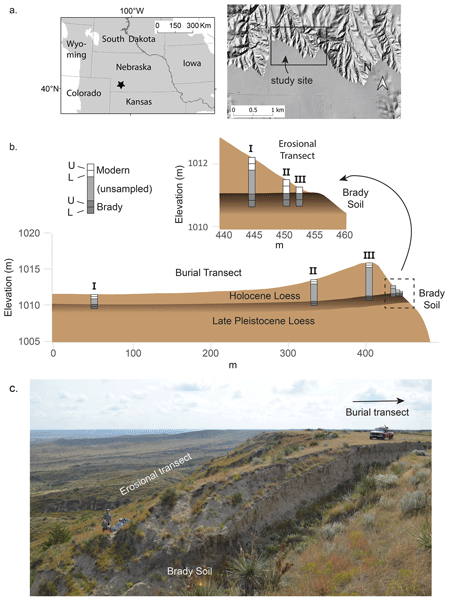
Buried ancient topsoils (Brady paleosol, Nebraska) sequester vast amounts of soil organic carbon (SOC). We found repeated drying/rewetting causes greater carbon (C) loss than continuous wetting, destabilizing the slow-cycling C pool, especially in shallower soils. Decomposition rates are higher in erosional settings. Burial depth and moisture regime are key to the long-term vulnerability of these ancient C stocks under climate change.
Leila Maria Wahab, Sora L. Kim, and Asmeret Asefaw Berhe
Biogeosciences, 22, 3915–3930, https://doi.org/10.5194/bg-22-3915-2025, https://doi.org/10.5194/bg-22-3915-2025, 2025
Short summary
Short summary
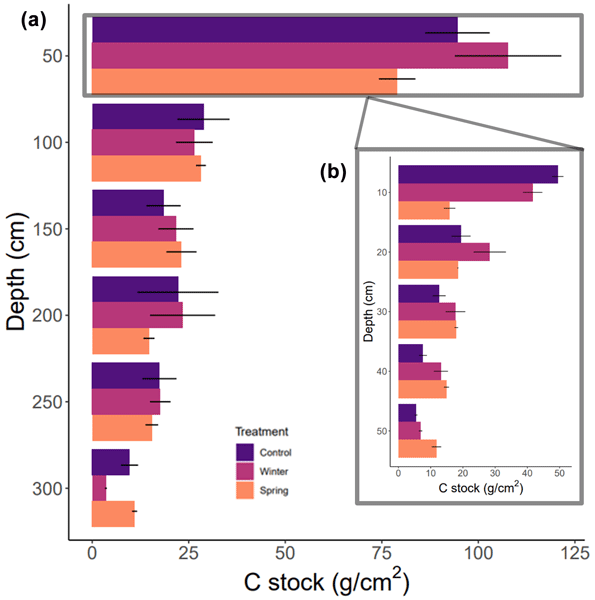
Soils are a large reservoir of carbon (C) on land, and there is uncertainty regarding how this reservoir will be affected by climate change. Currently, active research on (1) how changing precipitation patterns, a key aspect of climate change, will affect soil C and (2) how vulnerable subsoils are to climate change is still being undertaken. In this study, we examined subsoils after 20 years of experimentally manipulated precipitation shifts to see whether increasing precipitation would affect C amounts and chemistry.
Toshiyuki Bandai and Teamrat A. Ghezzehei
Hydrol. Earth Syst. Sci., 26, 4469–4495, https://doi.org/10.5194/hess-26-4469-2022, https://doi.org/10.5194/hess-26-4469-2022, 2022
Short summary
Short summary
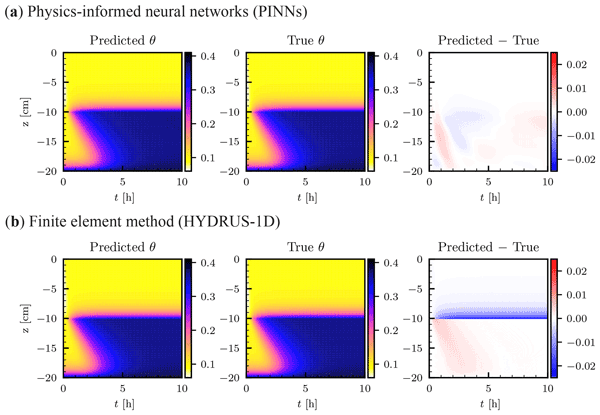
Scientists use a physics-based equation to simulate water dynamics that influence hydrological and ecological phenomena. We present hybrid physics-informed neural networks (PINNs) to leverage the growing availability of soil moisture data and advances in machine learning. We showed that PINNs perform comparably to traditional methods and enable the estimation of rainfall rates from soil moisture. However, PINNs are challenging to train and significantly slower than traditional methods.
Moritz Mainka, Laura Summerauer, Daniel Wasner, Gina Garland, Marco Griepentrog, Asmeret Asefaw Berhe, and Sebastian Doetterl
Biogeosciences, 19, 1675–1689, https://doi.org/10.5194/bg-19-1675-2022, https://doi.org/10.5194/bg-19-1675-2022, 2022
Short summary
Short summary
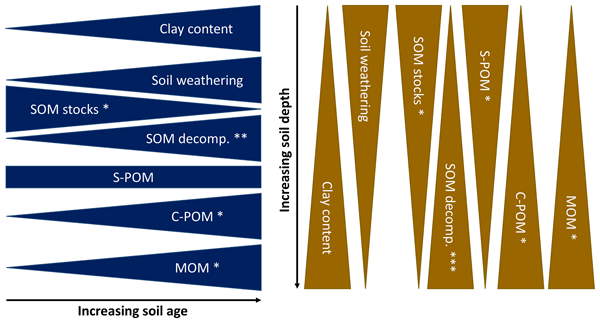
The largest share of terrestrial carbon is stored in soils, making them highly relevant as regards global change. Yet, the mechanisms governing soil carbon stabilization are not well understood. The present study contributes to a better understanding of these processes. We show that qualitative changes in soil organic matter (SOM) co-vary with alterations of the soil matrix following soil weathering. Hence, the type of SOM that is stabilized in soils might change as soils develop.
Samuel N. Araya, Jeffrey P. Mitchell, Jan W. Hopmans, and Teamrat A. Ghezzehei
SOIL, 8, 177–198, https://doi.org/10.5194/soil-8-177-2022, https://doi.org/10.5194/soil-8-177-2022, 2022
Short summary
Short summary
We studied the long-term effects of no-till (NT) and winter cover cropping (CC) practices on soil hydraulic properties. We measured soil water retention and conductivity and also conducted numerical simulations to compare soil water storage abilities under the different systems. Soils under NT and CC practices had improved soil structure. Conservation agriculture practices showed marginal improvement with respect to infiltration rates and water storage.
Jing Yan and Teamrat Ghezzehei
Biogeosciences Discuss., https://doi.org/10.5194/bg-2022-52, https://doi.org/10.5194/bg-2022-52, 2022
Publication in BG not foreseen
Short summary
Short summary
Although hydraulic redistribution (HR) is a well-documented phenomenon, whether it is a passive happy accident or actively controlled by roots is not well understood. Our modeling study suggests HR is long-range feedback between roots that inhabit heterogeneously resourced soil regions. When nutrients and organic matter are concentrated in shallow layers that experience frequent drying, root-exudation facilitated HR allows plants to mineralize and extract the otherwise inaccessible nutrients.
Daniel Rath, Nathaniel Bogie, Leonardo Deiss, Sanjai J. Parikh, Daoyuan Wang, Samantha Ying, Nicole Tautges, Asmeret Asefaw Berhe, Teamrat A. Ghezzehei, and Kate M. Scow
SOIL, 8, 59–83, https://doi.org/10.5194/soil-8-59-2022, https://doi.org/10.5194/soil-8-59-2022, 2022
Short summary
Short summary
Storing C in subsoils can help mitigate climate change, but this requires a better understanding of subsoil C dynamics. We investigated changes in subsoil C storage under a combination of compost, cover crops (WCC), and mineral fertilizer and found that systems with compost + WCC had ~19 Mg/ha more C after 25 years. This increase was attributed to increased transport of soluble C and nutrients via WCC root pores and demonstrates the potential for subsoil C storage in tilled agricultural systems.
Cited articles
Alvarez‐Sagrero, J., Chacon, S. S., Mitchell, J. P., and Ghezzehei, T. A.: Soil structure changes under reduced tillage and cover cropping enhance carbon mineralization in Mediterranean croplands, Vadose Zone J., 25, e70065, https://doi.org/10.1002/vzj2.70065, 2026a. a
Alvarez-Sagrero, J., Berhe, A. A., Chacon, S., Mitchell, J. P., and Ghezzehei, T.: Data and code from: Two decades of conservation agriculture enhances soil structure, carbon sequestration, and water retention in Mediterranean soils, Dryad [data set and code], https://doi.org/10.5061/dryad.pg4f4qs3c, 2026b. a
Baker, J. B., Southard, R. J., and Mitchell, J. P.: Agricultural Dust Production in Standard and Conservation Tillage Systems in the San Joaquin Valley, J. Environ. Qual., 34, 1260–1269, https://doi.org/10.2134/jeq2003.0348, 2005. a, b
Berhe, A. A., Harden, J. W., Torn, M. S., Kleber, M., Burton, S. D., and Harte, J.: Persistence of soil organic matter in eroding versus depositional landform positions, J. Geophys. Res.-Biogeo., 117, 2011JG001790, https://doi.org/10.1029/2011JG001790, 2012. a
Bienes, R., Marques, M. J., Sastre, B., García-Díaz, A., Esparza, I., Antón, O., Navarrete, L., Hernánz, J. L., Sánchez-Girón, V., Sánchez Del Arco, M. J., and Alarcón, R.: Tracking Changes on Soil Structure and Organic Carbon Sequestration after 30 Years of Different Tillage and Management Practices, Agronomy, 11, 291, https://doi.org/10.3390/agronomy11020291, 2021. a
Blanco-Canqui, H. and Ruis, S. J.: No-tillage and soil physical environment, Geoderma, 326, 164–200, https://doi.org/10.1016/j.geoderma.2018.03.011, 2018. a, b
Bronick, C. J. and Lal, R.: Soil structure and management: a review, Geoderma, 124, 3–22, https://doi.org/10.1016/j.geoderma.2004.03.005, 2005. a, b
Christensen, B. T.: Physical fractionation of soil and structural and functional complexity in organic matter turnover, Eur. J.f Soil Sci., 52, 345–353, https://doi.org/10.1046/j.1365-2389.2001.00417.x, 2001. a, b
Dupla, X., Lemaître, T., Grand, S., Gondret, K., Charles, R., Verrecchia, E., and Boivin, P.: On-Farm Relationships Between Agricultural Practices and Annual Changes in Organic Carbon Content at a Regional Scale, Front. Environ. Sci., 10, 834055, https://doi.org/10.3389/fenvs.2022.834055, 2022. a
Francaviglia, R., Almagro, M., and Vicente-Vicente, J. L.: Conservation Agriculture and Soil Organic Carbon: Principles, Processes, Practices and Policy Options, Soil Sys. 7, 17, https://doi.org/10.3390/soilsystems7010017, 2023. a
Friedlingstein, P., O'Sullivan, M., Jones, M. W., Andrew, R. M., Hauck, J., Landschützer, P., Le Quéré, C., Li, H., Luijkx, I. T., Olsen, A., Peters, G. P., Peters, W., Pongratz, J., Schwingshackl, C., Sitch, S., Canadell, J. G., Ciais, P., Jackson, R. B., Alin, S. R., Arneth, A., Arora, V., Bates, N. R., Becker, M., Bellouin, N., Berghoff, C. F., Bittig, H. C., Bopp, L., Cadule, P., Campbell, K., Chamberlain, M. A., Chandra, N., Chevallier, F., Chini, L. P., Colligan, T., Decayeux, J., Djeutchouang, L. M., Dou, X., Duran Rojas, C., Enyo, K., Evans, W., Fay, A. R., Feely, R. A., Ford, D. J., Foster, A., Gasser, T., Gehlen, M., Gkritzalis, T., Grassi, G., Gregor, L., Gruber, N., Gürses, Ö., Harris, I., Hefner, M., Heinke, J., Hurtt, G. C., Iida, Y., Ilyina, T., Jacobson, A. R., Jain, A. K., Jarníková, T., Jersild, A., Jiang, F., Jin, Z., Kato, E., Keeling, R. F., Klein Goldewijk, K., Knauer, J., Korsbakken, J. I., Lan, X., Lauvset, S. K., Lefèvre, N., Liu, Z., Liu, J., Ma, L., Maksyutov, S., Marland, G., Mayot, N., McGuire, P. C., Metzl, N., Monacci, N. M., Morgan, E. J., Nakaoka, S.-I., Neill, C., Niwa, Y., Nützel, T., Olivier, L., Ono, T., Palmer, P. I., Pierrot, D., Qin, Z., Resplandy, L., Roobaert, A., Rosan, T. M., Rödenbeck, C., Schwinger, J., Smallman, T. L., Smith, S. M., Sospedra-Alfonso, R., Steinhoff, T., Sun, Q., Sutton, A. J., Séférian, R., Takao, S., Tatebe, H., Tian, H., Tilbrook, B., Torres, O., Tourigny, E., Tsujino, H., Tubiello, F., van der Werf, G., Wanninkhof, R., Wang, X., Yang, D., Yang, X., Yu, Z., Yuan, W., Yue, X., Zaehle, S., Zeng, N., and Zeng, J.: Global Carbon Budget 2024, Earth Syst. Sci. Data, 17, 965–1039, https://doi.org/10.5194/essd-17-965-2025, 2025. a
Georgiou, K., Jackson, R. B., Vindušková, O., Abramoff, R. Z., Ahlström, A., Feng, W., Harden, J. W., Pellegrini, A. F. A., Polley, H. W., Soong, J. L., Riley, W. J., and Torn, M. S.: Global stocks and capacity of mineral-associated soil organic carbon, Nat. Commun., 13, 3797, https://doi.org/10.1038/s41467-022-31540-9, 2022. a, b, c, d, e, f, g, h
Golchin, A., Oades, J., Skjemstad, J., and Clarke, P.: Study of free and occluded particulate organic matter in soils by solid state 13C Cp/MAS NMR spectroscopy and scanning electron microscopy, Soil Res., 32, 285, https://doi.org/10.1071/SR9940285, 1994. a
Gomes, A., DeVincentis, A. J., Solis, S. S., Zaccaria, D., Munk, D., Bali, K., Shrestha, A., Gould, K., and Mitchell, J.: Long-term reduced tillage and winter cover crops can improve soil quality without depleting moisture, California Agriculture, 77, 4–14, https://doi.org/10.3733/ca.2023a0001, 2023. a, b
Jilling, A., Kane, D., Williams, A., Yannarell, A. C., Davis, A., Jordan, N. R., Koide, R. T., Mortensen, D. A., Smith, R. G., Snapp, S. S., Spokas, K. A., and Stuart Grandy, A.: Rapid and distinct responses of particulate and mineral-associated organic nitrogen to conservation tillage and cover crops, Geoderma, 359, 114001, https://doi.org/10.1016/j.geoderma.2019.114001, 2020. a
Kleber, M., Nico, P. S., Plante, A., Filley, T., Kramer, M., Swanston, C., and Sollins, P.: Old and stable soil organic matter is not necessarily chemically recalcitrant: implications for modeling concepts and temperature sensitivity, Glob. Change Biol., 17, 1097–1107, https://doi.org/10.1111/j.1365-2486.2010.02278.x, 2011. a
Lavallee, J. M., Soong, J. L., and Cotrufo, M. F.: Conceptualizing soil organic matter into particulate and mineral‐associated forms to address global change in the 21st century, Glob. Change Biol., 26, 261–273, https://doi.org/10.1111/gcb.14859, 2020. a, b, c
Lee, S., Chu, M. L., Guzman, J. A., and Botero-Acosta, A.: A comprehensive modeling framework to evaluate soil erosion by water and tillage, J. Environ. Manage., 279, 111631, https://doi.org/10.1016/j.jenvman.2020.111631, 2021. a
Lessmann, M., Ros, G. H., Young, M. D., and De Vries, W.: Global variation in soil carbon sequestration potential through improved cropland management, Glob. Change Biol., 28, 1162–1177, https://doi.org/10.1111/gcb.15954, 2022. a
Leuthold, S., Lavallee, J. M., Haddix, M. L., and Cotrufo, M. F.: Contrasting properties of soil organic matter fractions isolated by different physical separation methodologies, Geoderma, 445, 116870, https://doi.org/10.1016/j.geoderma.2024.116870, 2024. a
Liu, A., Ma, B. L., and Bomke, A. A.: Effects of Cover Crops on Soil Aggregate Stability, Total Organic Carbon, and Polysaccharides, Soil Sci. Soc. Am. J., 69, 2041–2048, https://doi.org/10.2136/sssaj2005.0032, 2005. a
Liu, X., Wu, X., Liang, G., Zheng, F., Zhang, M., and Li, S.: A global meta‐analysis of the impacts of no‐tillage on soil aggregation and aggregate‐associated organic carbon, Land Degrad. Dev., 32, 5292–5305, https://doi.org/10.1002/ldr.4109, 2021. a
Mainka, M., Summerauer, L., Wasner, D., Garland, G., Griepentrog, M., Berhe, A. A., and Doetterl, S.: Soil geochemistry as a driver of soil organic matter composition: insights from a soil chronosequence, Biogeosciences, 19, 1675–1689, https://doi.org/10.5194/bg-19-1675-2022, 2022. a
Margenot, A. J., Parikh, S. J., and Calderón, F. J.: Fourier‐transform infrared spectroscopy for soil organic matter analysis, Soil Sci. Soc. Am. J., 87, 1503–1528, https://doi.org/10.1002/saj2.20583, 2023. a, b, c, d
Mitchell, J. P., Shrestha, A., Mathesius, K., Scow, K. M., Southard, R. J., Haney, R. L., Schmidt, R., Munk, D. S., and Horwath, W. R.: Cover cropping and no-tillage improve soil health in an arid irrigated cropping system in California’s San Joaquin Valley, USA, Soil Till. Res., 165, 325–335, https://doi.org/10.1016/j.still.2016.09.001, 2017. a, b, c, d, e, f, g, h, i
Mitchell, J. P., Jackson, L. E., Reicosky, D. C., Kassam, A., Shrestha, A., Harben, R., Miyao, E. M., Scow, K. M., Sposito, G., Beck, D., Friedrich, T., Mitchell, A. S., Schmidt, R., Park, S., Park, B., Foster, P., Muller, P., Brait, A., Willey, T., Bottens, M., Crum, C., Giacomazzi, D., Barcellos, T., Crowell, M. V., Roy, R., Ferris, H., Chiartas, J. L., Brennan, E., Gaudin, A., Diener, J., Diener, J., Asgill, L., Kueneman, E. A., Fisher, J., Bartz, M., Peiretti, R. A., Derpsch, R., Landers, J., Aegerter, B. J., Leinfelder‐Miles, M., Light, S. E., McPhee, J., and Branco, R. B. F.: The key role of local and global farmer networks in the development of conservation agriculture in California, J. Environ. Qual., jeq2.70039, https://doi.org/10.1002/jeq2.70039, 2025. a
Nimmo, J. R. and Perkins, K. S.: 2.6 Aggregate Stability and Size Distribution, in: Methods of Soil Analysis, John Wiley & Sons, Ltd, 317–328, ISBN 978-0-89118-893-3, https://doi.org/10.2136/sssabookser5.4.c14, 2002. a
Paustian, K., Collier, S., Baldock, J., Burgess, R., Creque, J., DeLonge, M., Dungait, J., Ellert, B., Frank, S., Goddard, T., Govaerts, B., Grundy, M., Henning, M., Izaurralde, R. C., Madaras, M., McConkey, B., Porzig, E., Rice, C., Searle, R., Seavy, N., Skalsky, R., Mulhern, W., and Jahn, M.: Quantifying carbon for agricultural soil management: from the current status toward a global soil information system, Carbon Manage., 10, 567–587, https://doi.org/10.1080/17583004.2019.1633231, 2019. a
Peters, A., Hohenbrink, T. L., Iden, S. C., and Durner, W.: A Simple Model to Predict Hydraulic Conductivity in Medium to Dry Soil From the Water Retention Curve, Water Resour. Res., 57, e2020WR029211, https://doi.org/10.1029/2020WR029211, 2021. a
Poeplau, C., Don, A., Six, J., Kaiser, M., Benbi, D., Chenu, C., Cotrufo, M. F., Derrien, D., Gioacchini, P., Grand, S., Gregorich, E., Griepentrog, M., Gunina, A., Haddix, M., Kuzyakov, Y., Kühnel, A., Macdonald, L. M., Soong, J., Trigalet, S., Vermeire, M.-L., Rovira, P., van Wesemael, B., Wiesmeier, M., Yeasmin, S., Yevdokimov, I., and Nieder, R.: Isolating organic carbon fractions with varying turnover rates in temperate agricultural soils – A comprehensive method comparison, Soil Biol. Biochem., 125, 10–26, https://doi.org/10.1016/j.soilbio.2018.06.025, 2018. a, b, c, d
R Core Team: R: A Language and Environment for Statistical Computing, R Foundation for Statistical Computing, Vienna, Austria, https://www.R-project.org/ (last access: 26 September 2026), 2025. a
Sanderman, J., Hengl, T., and Fiske, G. J.: Soil carbon debt of 12,000 years of human land use, P. Natl. Acad. Sci. USA, 114, 9575–9580, https://doi.org/10.1073/pnas.1706103114, 2017. a, b
Schmidt, R., Mitchell, J., and Scow, K.: Cover cropping and no-till increase diversity and symbiotroph:saprotroph ratios of soil fungal communities, Soil Biol. Biochem., 129, 99–109, https://doi.org/10.1016/j.soilbio.2018.11.010, 2019. a
Six, J., Conant, R. T., Paul, E. A., and Paustian, K.: Stabilization mechanisms of soil organic matter: Implications for C-saturation of soils, Plant Soil, 241, 155–176, https://doi.org/10.1023/A:1016125726789, 2002. a
Six, J., Bossuyt, H., Degryze, S., and Denef, K.: A history of research on the link between (micro)aggregates, soil biota, and soil organic matter dynamics, Soil Till. Res., 79, 7–31, https://doi.org/10.1016/j.still.2004.03.008, 2004. a, b
Soil Survey Staff, Natural Resources Conservation Service, United States Department of Agriculture: Web Soil Survey, https://websoilsurvey.nrcs.usda.gov/app/, last access: 25 August 2023. a
Stewart, C. E., Paustian, K., Conant, R. T., Plante, A. F., and Six, J.: Soil carbon saturation: Implications for measurable carbon pool dynamics in long-term incubations, Soil Biol. Biochem., 41, 357–366, https://doi.org/10.1016/j.soilbio.2008.11.011, 2009. a
Swanston, C. W., Torn, M. S., Hanson, P. J., Southon, J. R., Garten, C. T., Hanlon, E. M., and Ganio, L.: Initial characterization of processes of soil carbon stabilization using forest stand-level radiocarbon enrichment, Geoderma, 128, 52–62, https://doi.org/10.1016/j.geoderma.2004.12.015, 2005. a
Tian, J., Dungait, J. A. J., Hou, R., Deng, Y., Hartley, I. P., Yang, Y., Kuzyakov, Y., Zhang, F., Cotrufo, M. F., and Zhou, J.: Microbially mediated mechanisms underlie soil carbon accrual by conservation agriculture under decade-long warming, Nat. Commun.s, 15, 377, https://doi.org/10.1038/s41467-023-44647-4, 2024. a, b, c, d
Tisdall, J. M. and Oades, J. M.: Organic matter and water‐stable aggregates in soils, J. Soil Sci., 33, 141–163, https://doi.org/10.1111/j.1365-2389.1982.tb01755.x, 1982. a, b
Van Genuchten, M. T.: A Closed-form Equation for Predicting the Hydraulic Conductivity of Unsaturated Soils 1, Soil Sci. Soc. Am. J., 44, 892–898, https://doi.org/10.2136/sssaj1980.03615995004400050002x, 1980. a
Veenstra, J. J., Horwath, W. R., and Mitchell, J. P.: Tillage and Cover Cropping Effects on Aggregate-Protected Carbon in Cotton and Tomato, Soil Sci. Soc. Am. J., 71, 362–371, https://doi.org/10.2136/sssaj2006.0229, 2007. a, b, c, d
Yang, J., Rahardja, S., and Fränti, P.: Outlier detection: how to threshold outlier scores?, in: Proceedings of the International Conference on Artificial Intelligence, Information Processing and Cloud Computing, ACM, Sanya China, 1–6, https://doi.org/10.1145/3371425.3371427, 2019. a
Short summary
We studied California farmland managed with conservation practices for 20 years to understand how reducing tillage and planting cover crops change soil. Conservation farming greatly improved soil structure, doubled carbon storage in surface soil, and increased its ability to hold water. We also found that much of the additional carbon became protected within soil structure, while the soil still had substantial capacity to store more carbon.
We studied California farmland managed with conservation practices for 20 years to understand...