
the Creative Commons Attribution 4.0 License.
the Creative Commons Attribution 4.0 License.
 | 03 Jul 2026
Non-inversion tillage benefits soil N retention during bare soil period coinciding with wet spell
Annelie Holzkämper
Ernst Spiess
Clay Humphrys
Karin Meier-Zimmermann
Olivier Heller
Thomas Keller
Volker Prasuhn
Recent meta-analyses suggest risks of increased nitrate (NO) leaching with the implementation of reduced tillage practices. This study aimed to quantify effects of a subsidized and commonly implemented form of non-inversion tillage in Switzerland (NIT, i.e. chisel ploughing) in comparison to conventional tillage (CT, i.e. mouldboard ploughing) on NO leaching and its driving processes (i.e. water fluxes, soil temperature, plant uptake). A lysimeter experiment was conducted at the lysimeter facility Reckenholz/Zurich in Switzerland, mimicking tillage differences. Results after three years of treatment implementation show that during the following three years, tillage treatment had a significant effect on NO leaching in one of three seepage periods for two of three soil types considered. NIT reduced NO leaching in the seepage period 2014/2015 by 42 % on a Cambisol from Reckenholz and 32 % on a Luvisol from Schafisheim, respectively. The observed effect was driven by differences in NO concentrations in seepage water rather than seepage water amounts. Differences in NO concentrations could be attributable to structural differences in the topsoil, leaving larger amounts of soil N exposed to matrix water flow in the disturbed topsoil under CT than in the largely undisturbed topsoil under NIT. Also, differences in crop residue amount between treatments could have contributed to NO concentration differences. The treatment impact on NO leaching was most pronounced during and shortly after a bare soil period following sugar beet cultivation, which coincided with above-average spring precipitation. Considering that winter and spring precipitation is expected to increase with progressing climate change in Switzerland, reduced soil management may hold potentials to mitigate NO leaching in the face of progressing climate change. However, more research is needed to prove the relevance of this mechanism and its sensitivity to soil, climate and management drivers.
- Article
(7678 KB) - Full-text XML
- BibTeX
- EndNote


Common soil management practices in arable farming are mouldboard ploughing, chisel ploughing, strip-till, ridge-till or no-till. These practices cover a spectrum of intensities of soil disturbance and soil inversion in association with the machinery used. Mouldboard ploughing inverts the topsoil, while breaking soil aggregates and continuous biopores. It is therefore also termed inversion tillage. Non-inversion tillage practices such as strip-tillage/zone-tillage or mulch-tillage create less soil disturbance than inversion-tillage practices as they operate on a shallower basis (i.e. mulch-tillage), are confined to parts of the soil surface (i.e. chisel ploughing) or both (i.e. strip-tillage). No-tillage avoids soil disturbances in general, and crops are sown or planted directly into the mulch-layer.
Reduced tillage practices are widely promoted as effective means to reduce soil erosion (Montgomery, 2007; Prasuhn, 2012; Seitz et al., 2018; Skaalsveen et al., 2019). Moreover, reduced tillage and no-till were also found to provide co-benefits for carbon sequestration (Follett, 2001; Colunga et al., 2025), soil biodiversity (Betancur-Corredor et al., 2022) and reduction of fine-particle air pollution (Behrer and Lobell, 2022).
Regarding tillage impacts on the leaching of NO below the root zone and subsequent groundwater contamination, the findings from existing studies are not conclusive. Evidence from experimental studies suggests that no-till or non-inversion tillage can lead to decreases in NO leaching (e.g. Koskiaho et al., 2002; Spiess et al., 2020; Norberg and Aronsson, 2025), no effect (e.g. Hooker et al., 2008; Pisani et al., 2017; Jabro et al., 2019) or increases (e.g. Huang et al., 2015; Bhattacharyya et al., 2022). Recent field data syntheses and meta-analyses by Daryanto et al. (2017), Li et al. (2023) and Huang et al. (2024) addressed the inconsistence in impacts of tillage on NO leaching documented in existing research studies. Based on their meta-analyses they conclude that overall, NO leaching tends to be higher under no-tillage than under conventional tillage, the difference attributable to altered water fluxes. Concluding from this, Huang et al. (2024) highlight precautions regarding the implementation of no-tillage or reduced tillage to promote sustainable agriculture under changing climatic conditions. These findings fundamentally question the recommendation of reduced tillage as a measure to reduce NO leaching as for example suggested by Kirchmann et al. (2002) or Frick et al. (2023).
Reduced tillage practices are widely adopted around the world (Porwollik et al., 2019). The highest levels of adoption are observed in South and North America, followed by Australia and New Zealand, Asia, Russia and Ukraine, Europe, and Africa (Kassam et al., 2019). In the European Union, reduced tillage is subsidized through the EU CAP “eco-schemes”, and the share of conservation tillage was 22 % in 2016 (Eurostat). According to the Swiss Federal Office for Agriculture (FOAG), the adoption rate is even higher in Switzerland with 32 % of all arable land was under conservation soil management in 2019.
Given the wide extent of reduced tillage adoption, inconsistencies in documented impacts on NO leaching and concerns about the effects of reduced tillage on nitrate leaching, this study aimed to quantify its impact on NO leaching as well as on the processes governing leaching dynamics, including water fluxes, soil temperature, and plant uptake. Soil water fluxes are a primary driver of nitrate transport to groundwater, and tillage practices can modify these fluxes by altering soil structure (Pires et al., 2017). Soil temperature influences carbon and nutrient cycling (Kan et al., 2022), and reduced tillage has been shown to lower soil temperature during the growing season while increasing soil thermal conductivity (Blanco-Canqui and Ruis, 2018). In addition, by influencing nitrogen and water availability to plants, tillage practices can affect plant growth (Pittelkow et al., 2015), which can have implications on nitrate leaching below the root zone.
In this study, we conducted a tillage experiment in a lysimeter facility equipped with high precision weighable monolithic lysimeters and soil moisture and temperature probes in different depths to shed light on the role of soil water dynamics, temperature and plant growth in driving treatment differences.
2.1 Lysimeter station
The experiment was conducted on 18 lysimeters of a facility at Agroscope in Zürich-Reckenholz (47°25′41′′ N, 8°31′05′′ E; 444 m a.s.l.; Prasuhn et al., 2009, Fig. A1). The lysimeter casings were of stainless steel, having a diameter of 1.13 m, a surface area of 1 m2 and a depth of 1.50 m. The top 1.35 m are soil monoliths while the lowest 0.15 m are composed of three layers of quartz sand and gravel that contain small quartz grains on the top (0.10 to 0.50 mm diameter) and the largest ones at the bottom (3.15 to 5.60 mm). The quartz sand layers are used to minimize the disruption of the water flux from the soil monolith to the exposure of atmospheric pressure at the bottom of the monolith (Abdou and Flury, 2004; Meissner et al., 2014).
At the bottom of the lysimeters, the volume of seepage water is measured with 100 mL tipping buckets, with the exact time of each tipping recorded by a data logger. With every second tipping, about 2–4 mL of water also flows into a sample bottle, which allows a flow-proportional collection of small samples.
Six of the lysimeters were weighable and instrumented with different types of probes. Frequency domain reflectometry sensors (FDR; ThetaProbe ML2x, Delta-T Devices, Burwell, UK), equilibrium tensiometers (EQ15, Ecomatic, Munich, Germany), pressure transducer tensiometers (Tensio 150, UGT, Müncheberg, Germany) and temperature sensors were installed in two replications at soil depths of 10, 30, 60 and 90 cm. The measurement accuracy of the weighing load cells (UGT WM 100, UGT, Müncheberg, Germany) is indicated to be 10 g (or 0.01 mm of water). The temporal resolution of all sensors has been set to 5 min. The recorded data on lysimeter weights was used to derive estimates of actual evapotranspiration on an hourly basis as describes in Eq. (1). Times series of ETa were filtered to remove outliers and noise.
where ET actual evapotranspiration at hour i, p= hourly precipitation [mm], s= hourly seepage water [mm], and w= lysimeter weight.
2.2 Soils
Soil monoliths were collected in 2008 from arable land at three Swiss lowland sites: six each from Grafenried (Cambisol; FAO classification), Reckenholz (Cambisol, stagnic) and Schafisheim (Luvisol above gravel). The three soil types represent typical agricultural soils as they occur along the Swiss Central Plateau. Soil profile characteristics are summarized in Table 1 below. In the following we refer to the Cambisol from Grafenried as soil G, the Stagnic Cambisol from Reckenholz is called soil R and Luvisol from Schafisheim is denoted as soil S.
Table 1Soil profile characteristics of the three soil types on which the experiment was conducted. Soil description (incl. horizon names) was done in the Swiss soil classification system (SSS, 2010); plant available water capacity is marked in bold; A: Organo-mineral topsoil, B: Mineral horizon, C: Parent material:, E: Eluvial horizon, I: Illuvial horizon, h: humus-rich, p: ploughed, cn: concretions, g: Fe oxidation, t: accumulation of clay minerals, brackets indicate weak expression of features.
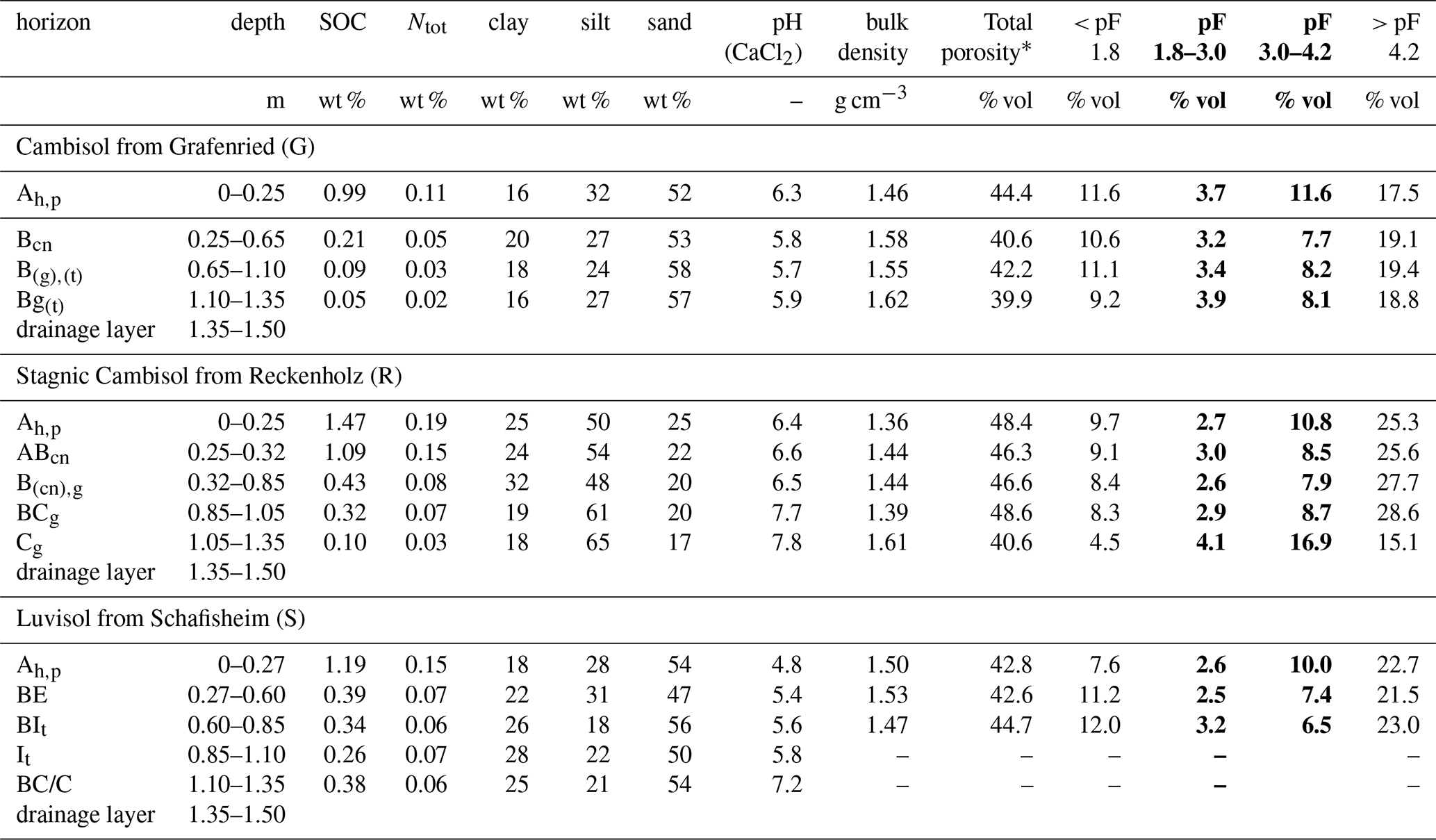
* Porosities were determined following the procedure described in Agroscope (2020a).
2.3 Experimental design
Treatments were chosen to represent conventional soil management with mouldboard plough (i.e. conventional tillage = CT) and a form of reduced tillage that is subsidized and widely implemented in Switzerland (i.e. “Mulchsaat”). The practice is equivalent to chisel ploughing; to align with the international literature, we term it NIT (= non-inversion tillage) in this publication. The two treatments were introduced in 2010, and they were implemented as follows. The conventional tillage treatment (CT) was simulated on the lysimeters by manually digging the soil to 20 cm depth using a spade. Thereby, the soil was subjected to complete inversion tillage, and all remaining crop residues were thoroughly incorporated into the topsoil. In secondary tillage before main and cover crops, harrowing was simulated using a hoe to 10 cm soil depth. In the non-inversion tillage (NIT) treatment, a chisel plough operation as mimicked by cutting/making 20 cm deep slots at 20 cm spacing with a spade. In this treatment, harvest residues partly remained on the soil surface, forming a mulch layer. Crop residues were chopped and retained in both treatments. During the experimental period investigated here, crop residues consisted of the total biomass of cover crops (i.e. phacelia), sugar beet tops and straw of maize and wheat. The two treatments, each with three replicates per soil type, were allocated to the lysimeters of the three soil types in a completely randomized design. Each treatment and soil was represented once within the subset of weighable and sensor-equipped lysimeters (Fig. A2).
While the treatment differences were introduced already in 2010, the analysis in this study focuses only on the treatment differences from 2013 to 2016 (data gaps prevented a robust analysis of the initial period). This implies that evaluated treatment differences relate to three-year established treatment effects (photos in Fig. B1 illustrate exemplary treatment difference on 21 May 2014).
2.4 Crop rotation and management
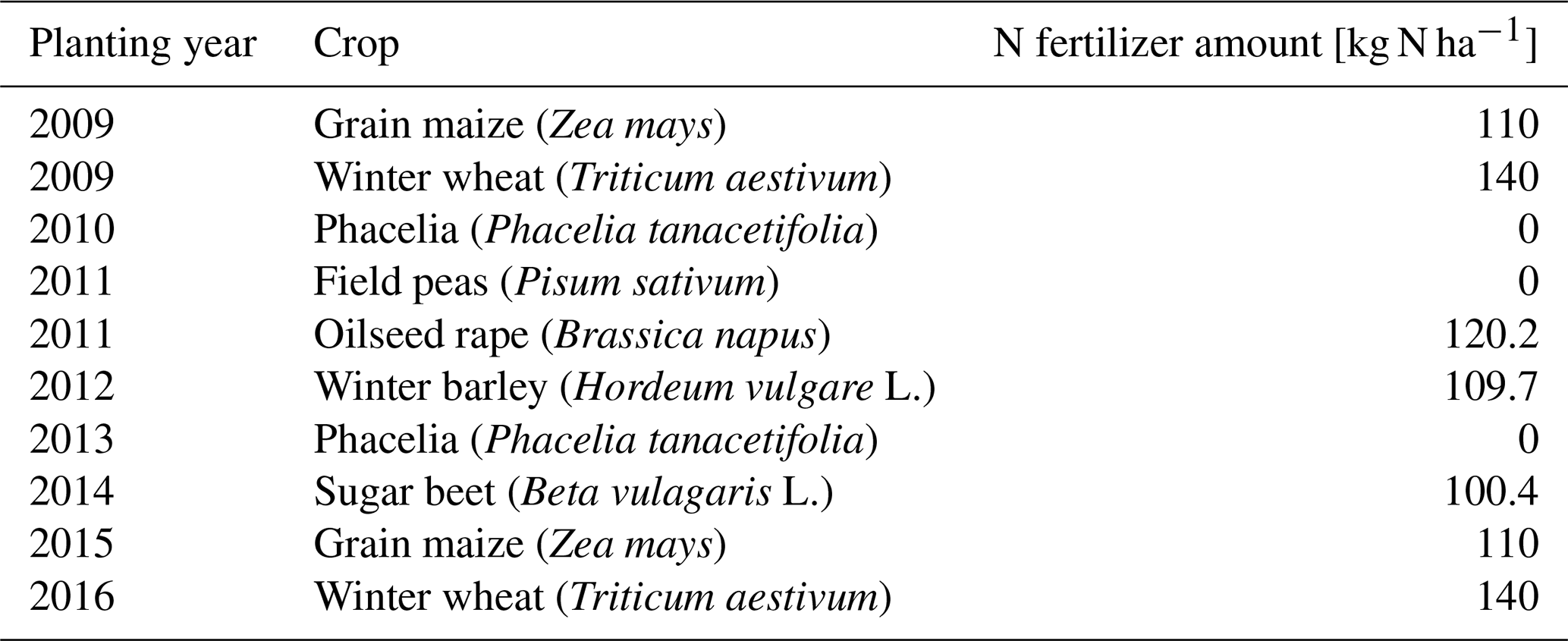
During the experimental period analysed here, the lysimeters were cropped with phacelia as a cover crop (2013), sugar beet (2014), grain maize (2015) and winter wheat (2016). The full rotation since the establishment of the experiment in 2009 is shown in Table 2. Mineral N fertilizer was applied according to the official fertilizer recommendations of the Swiss Federal Agricultural Research Stations in force at the start of the experiment (Flisch et al., 2009; see Table 2).
Table 2Crop rotation and mineral fertilizer amounts applied by crop in both treatments.
2.5 Lab analyses
Samples of seepage water were collected every two weeks from sample bottles attached to tipping buckets. The samples were analysed colorimetrically for nitrate (NO) using segmented flow injection analysis (s-FIA). NO concentrations of seepage water are reported as flow-weighted means.
For all harvested products removed from the lysimeters, dry matter (DM) yields and N removals by harvested products were determined. All plant samples were dried at 60 °C, ground and analysed for total N on a VarioMax CN elemental analyzer (Elementar, Langenselbold, Germany) following a dry combustion method based on the original method by (Dumas, 1831) (see also Bremner and Mulvaney, 1982).
Soil pH was measured in H2O suspension as described in Agroscope (2020b). Soil organic carbon (SOC) content was measured as described in Agroscope (2020c) and soil N content was quantified with an elementary analyser according to the method of Dumas.
2.6 Meteorological data
Interpretations of experimental results produced in the lysimeter station are supported by climatic data recorded at automated weather station Reckenholz operated by MeteoSwiss (Fig. 1). The weather station is located 20 m next to the lysimeter station and records daily temperature and precipitation in 2 m height above ground.
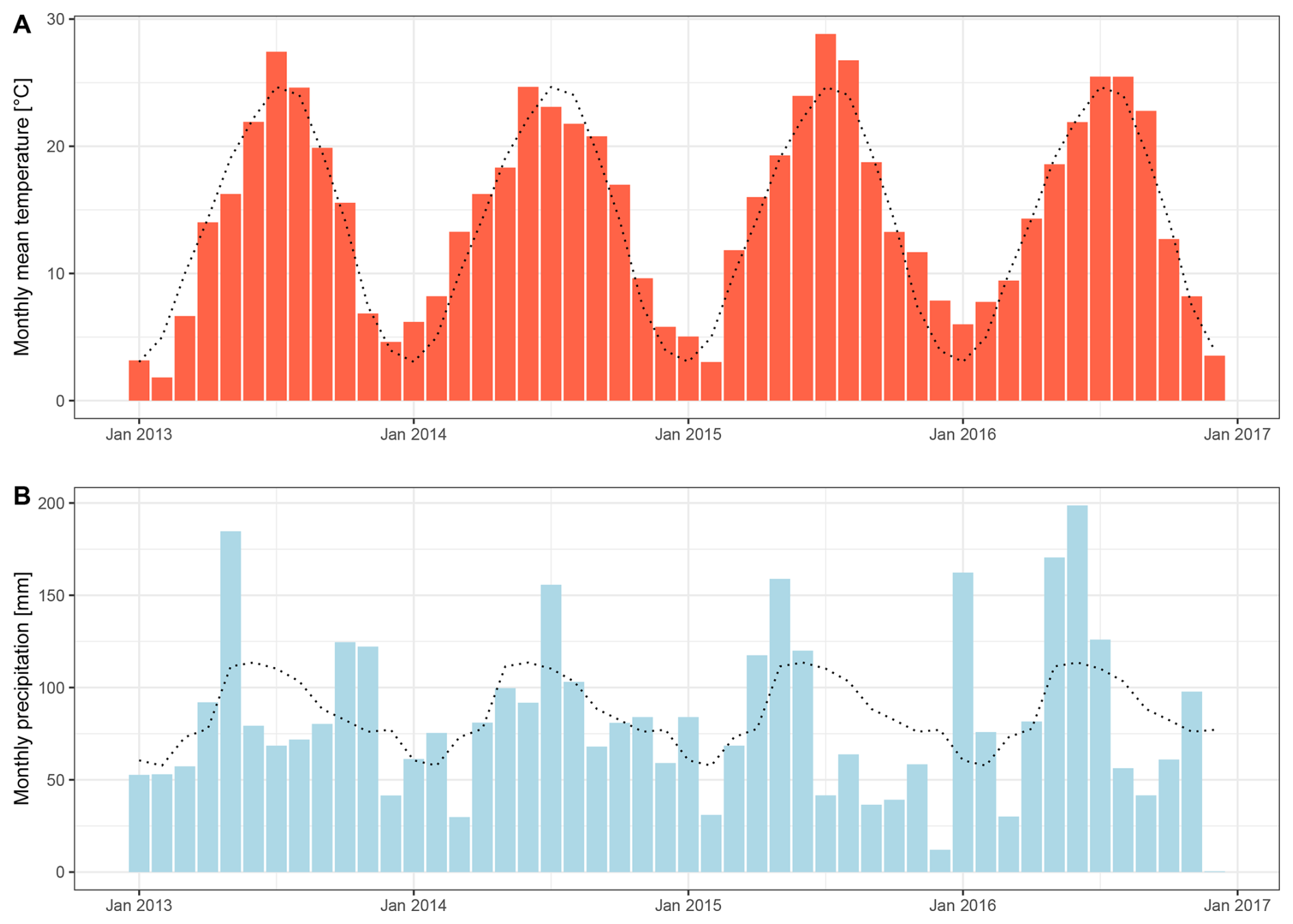
Figure 1Monthly mean temperatures recorded at MeteoSwiss station Zurich Reckenholz during the experimental period (red bars) in comparison to long-term averages of monthly mean temperatures between 1981 and 2010 (dotted line, A); Monthly precipitation sums recorded at MeteoSwiss station Zurich Reckenholz during the experimental period (blue bars) in comparison to long-term averages of monthly precipitation between 1981 and 2010 (dotted line, B).
2.7 Statistical analyses
We fitted a linear mixed-effects model to NO leaching observations using restricted maximum likelihood (REML) as implemented in the R packages lme4 (Bates et al., 2015). Fixed effects included treatment, precipitation during the seepage period, topsoil SOC, and the interactions between treatment and each continuous covariate. To improve numerical stability and facilitate interpretation, the response variable and all continuous explanatory variables were centred and scaled prior to analysis. Random intercepts were included for lysimeters nested within soil type and for seepage period (defined as 1 July to 30 June of the following year) to account for variation among lysimeters, soil types, and seepage periods. The estimated variance associated with lysimeter identity was negligible, resulting in a singular fit and indicating that most of the between-lysimeter variability was already captured by differences among soil types. Statistical significance of fixed effects was assessed using the rather conservative denominator degrees of freedom approximations of (Kenward and Roger, 1997) as implemented in the R package lmerTest (Kuznetsova et al., 2017).
Where treatment impacts on NO leaching, seepage water amount, bi-weekly NO concentrations, onsets of seepage water periods, yields, exported N, growing season ETa, soil moisture, soil water tension and soil temperature were explored, t-tests were applied to identify significances.
3.1 Treatment impacts on NO leaching
Significant treatment effects on NO leaching were observed only in the seepage period 2014–2015 with soils R and S (Fig. 2). Seepage period 2014–2015 was also the period during which NO leaching was generally the highest (around 40 kg N ha−1), while it was very low in the other two seepage periods investigated here. In 2013/2014 N leaching was mostly below 10 kg N ha−1 and in 2015/2016 it was mostly below 20 kg N ha−1. The treatment impact on NO leaching was most pronounced with soil R in 2014/2015. During seepage period 2024/2015, we observed 42 % lower N leaching with NIT than with CT (29.3 ± 2.52 kg ha−1 NO-N vs. 50.3 ± 6.81 kg ha−1 NO-N). With soil S, the mean NO load observed was 32 % lower with NIT than with CT (33.3 ± 2.52 kg ha−1 NO-N vs. 48.7 ± 5.86 kg ha−1 NO-N). However, no treatment difference was observed for soil G in the same period (NIT: 36.3 ± 4.04 kg ha−1 NO-N, CT: 40.3 ± 6.66 kg ha−1 NO-N).
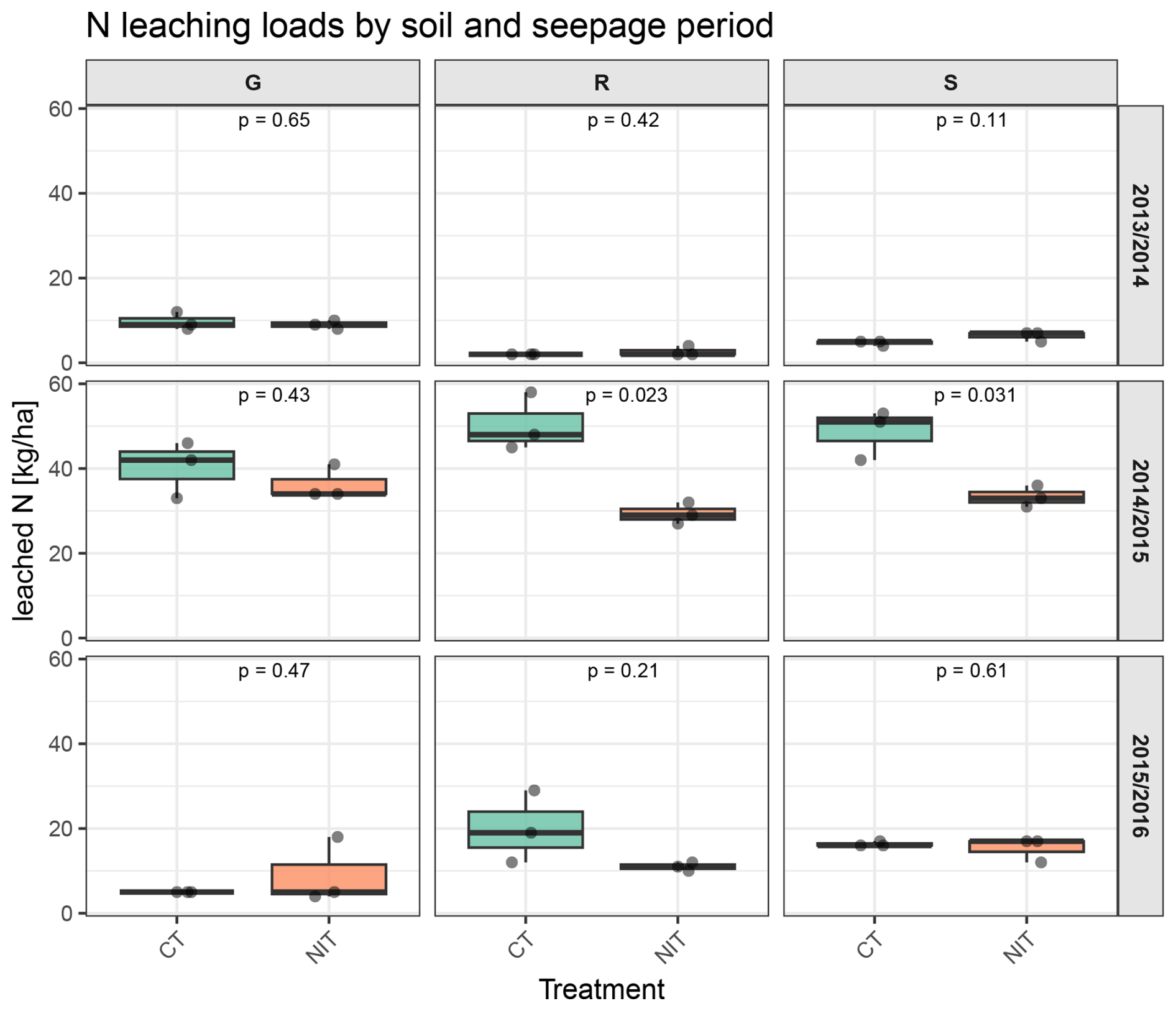
Figure 2Boxplots of cumulative NO-N loads leached from lysimeters by seepage period, soil (G = Cambisol from Grafenried, R = Stagnic Cambisol from Reckenholz, S = Luvisol from Schafisheim) and by treatment (NIT = non-inversion tillage with chisel plough, CT = conventional tillage with mouldboard plough); n = 18 (2 treatments × 3 soils × 3 replicates)).
3.2 Treatment impacts on seepage water
Observations of seepage water amounts show no statistically significant differences between treatments on soils G and R in any of the seepage water periods (Fig. 3). Only soil S exhibited significantly higher seepage water amounts with NIT compared to CT in seepage periods 2013/2014 and 2014/2015.
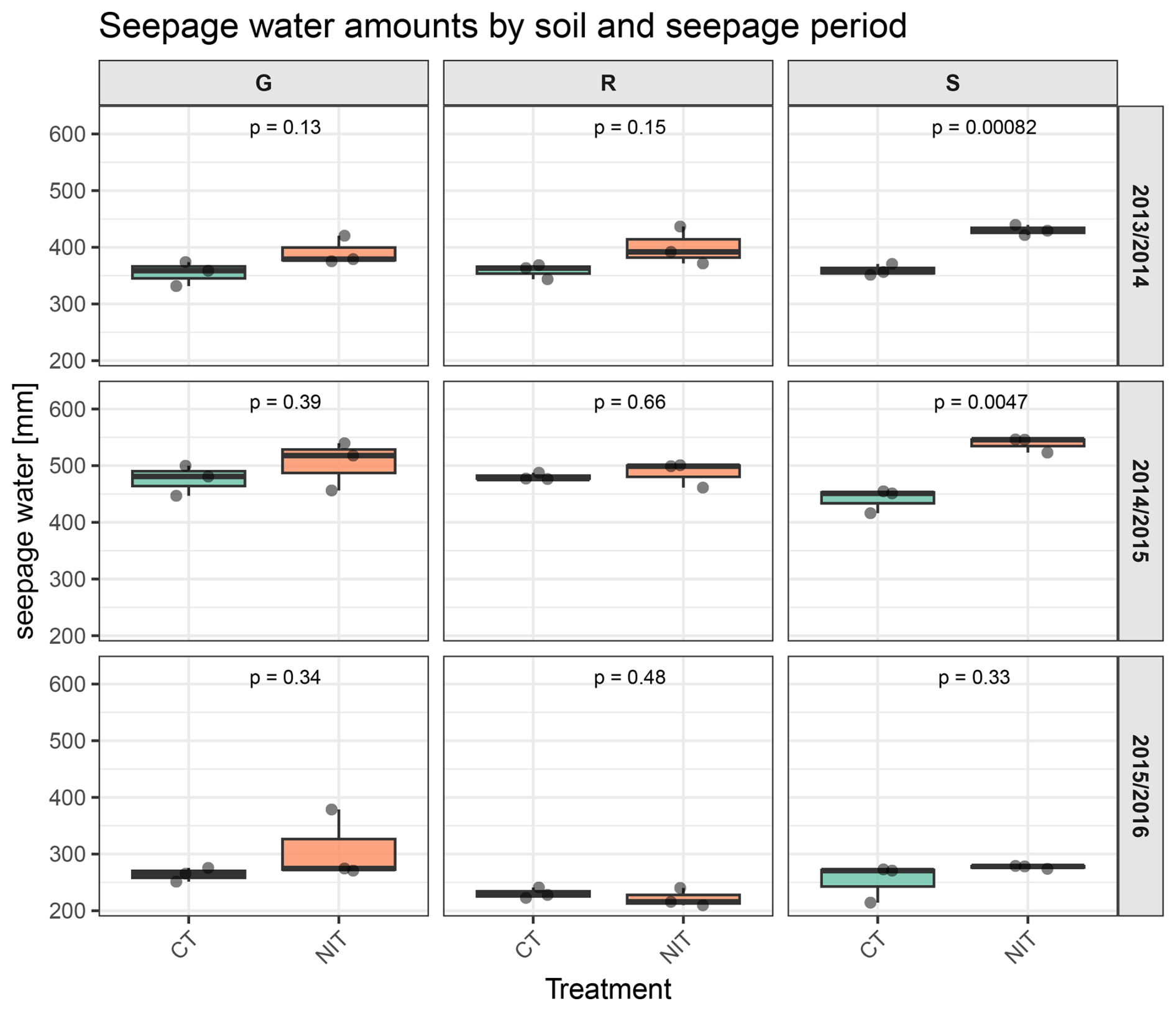
Figure 3Boxplots of cumulative seepage water from lysimeters by treatment (NIT = non-inversion tillage with chisel plough, CT = conventional tillage with mouldboard plough), seepage water period and soil type (G = Cambisol from Grafenried, R = Stagnic Cambisol from Reckenholz, S = Luvisol from Schafisheim; n = 18 (2 treatments × 3 soils × 3 replicates)).
3.3 Treatment impacts on bi-weekly NO concentrations
Figure 4 shows bi-weekly NO concentrations in seepage water by treatment and by soil type. With soil types R (Stagnic Cambisol) and S (Luvisol), NO concentrations in seepage water are significantly higher under CT than under NIT during and shortly after the bare soil period following sugar beet growth between winter 2014 and spring 2015. This shows that differences in concentrations drove observed differences in N leaching (Fig. 2), not differences in seepage water amounts.
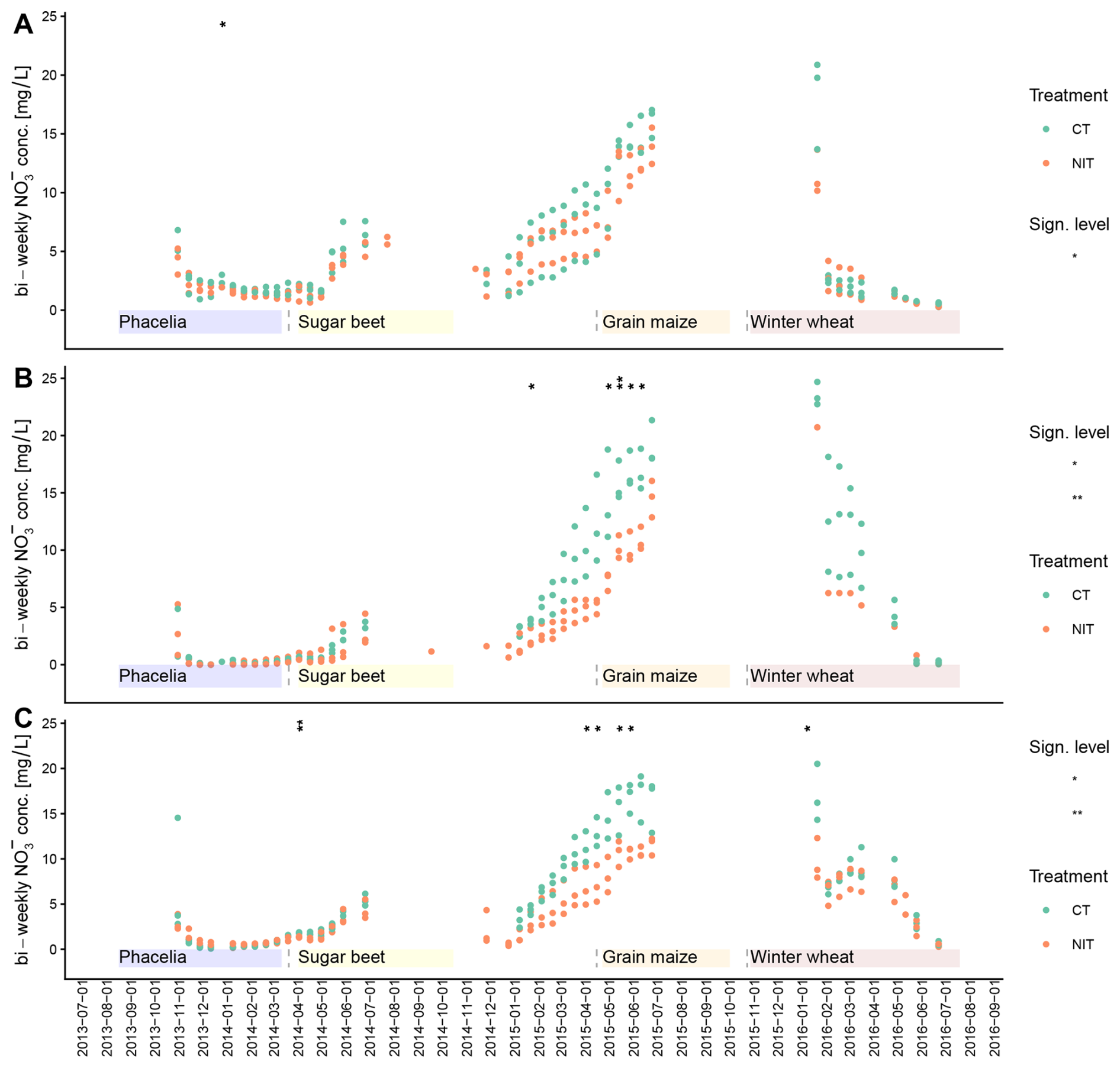
Figure 4Time series of bi-weekly NO concentrations in seepage water from lysimeters of both treatments (CT = conventional tillage, NIT = non-inversion tillage) by soil type (A = Cambisol from Grafenried, B = Stagnic Cambisol from Reckenholz, C = Luvisol from Schafisheim); coloured shading is in reference to cropping periods: purple (phacelia), yellow (sugar beet), orange (grain maize), red (winter wheat); grey dashed vertical lines denote ploughing times; stars indicate statistical significance of treatment differences (p-value < 0.01 “”; p-value < 0.05 “*”); n= 18.
It is striking that treatment differences predominantly occur under poor or no plant cover. The period with the highest NO concentrations in seepage water was also characterized by large amounts of precipitation (especially in spring 2015, see Fig. 1). During the cover cropping period with phacelia in autumn 2013 and the following sugar beet cultivation period in 2014, NO leaching was generally lowest.
3.4 Treatment impacts on onset of seepage water generation
In the seepage water periods 2013/2014 and 2014/2015, the timing of the first tipping (i.e. onset of seepage water generation) occurred significantly earlier under NIT than under CT under soils G and S (Fig. 5A, B). However, no treatment impact on the onset of seepage water generation was observed in the seepage water period 2015/2016 (Fig. 5C). And no significant treatment effects in onset of seepage water period were observed in any seepage period with soil type R, the Stagnic Cambisol.
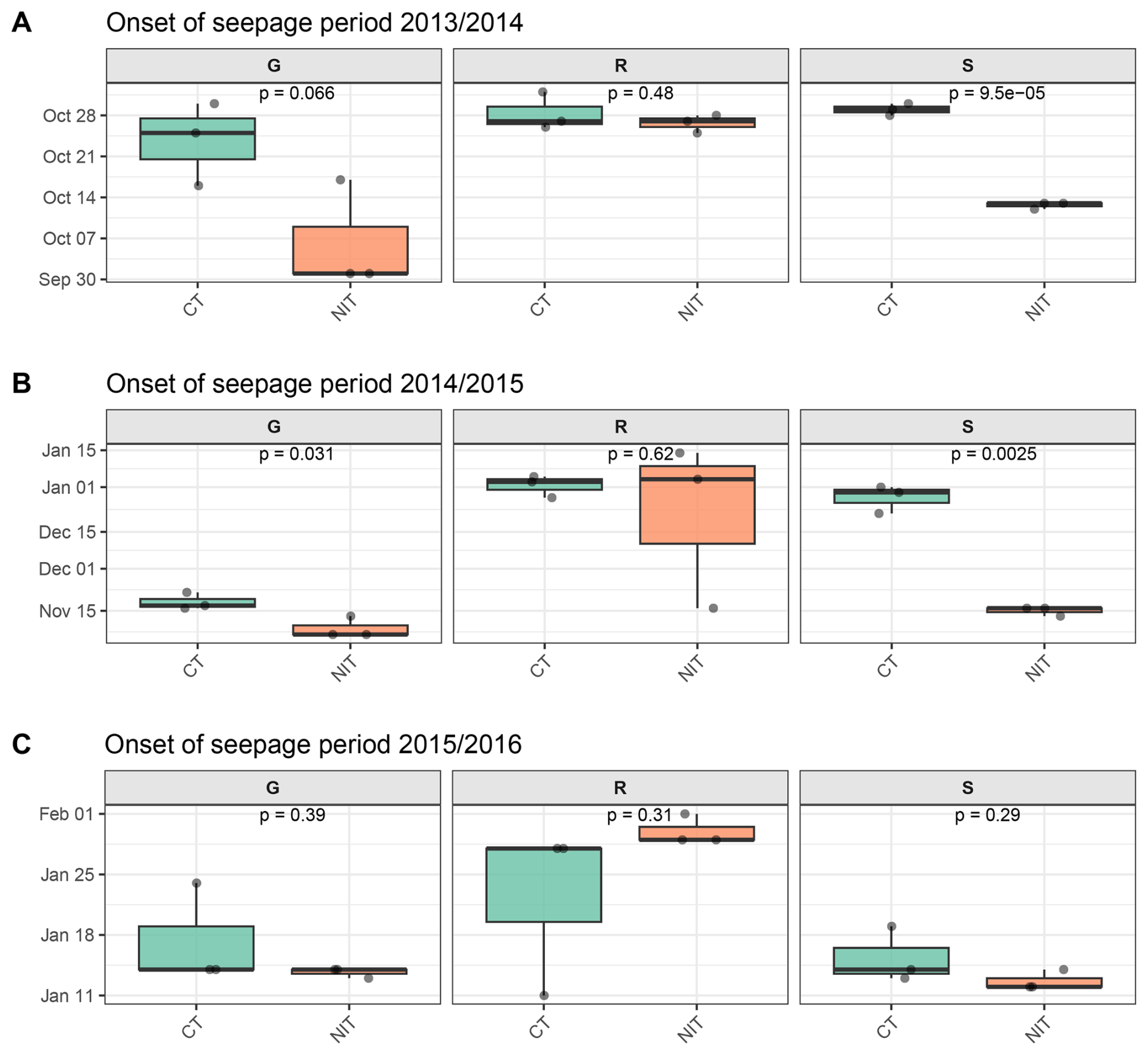
Figure 5Dates of first tipping in seepage periods 2013/2014 (A), 2014/2015 (B), and 2015/2016 (C) by soil type (G = Cambisol from Grafenried, R = Stagnic Cambisol from Reckenholz, S = Luvisol from Schafisheim) and by treatment (CT: conventional tillage, NIT: non-inversion tillage); n = 18 (2 treatments × 3 soils × 3 replicates).
3.5 Treatment impacts on yields
Significant differences in dry matter yields between treatments were observed in sugar beet in 2014 on soils R and S but not on soil G (Fig. 6). Tendencies towards higher grain maize yields under NIT are observed in 2015 on soils S and R. In general, crop yields tended to be higher on soils R and S than on soil type G.
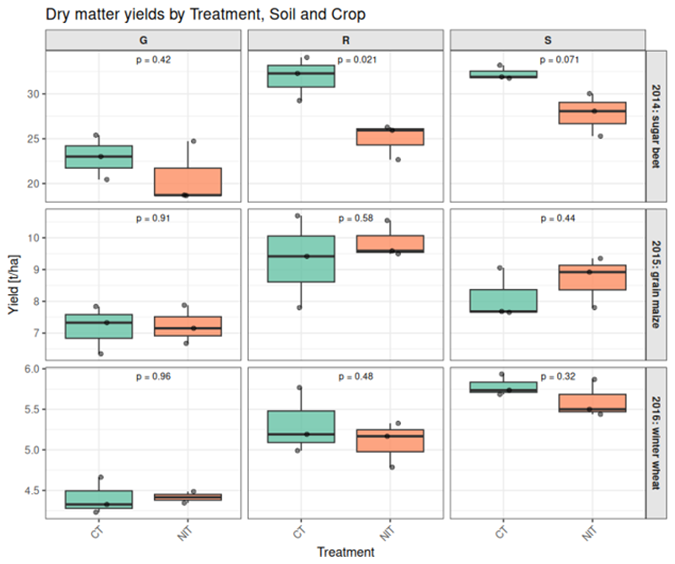
Figure 6Dry matter yields by treatment (CT: conventional tillage, NIT: non-inversion tillage), year and soil type (G = Grafenried soil, R = Reckenholz soil, S = Schafisheim soil) and crop; n = 18 (2 treatments × 3 soils × 3 replicates).
Despite differences in dry matter yield between treatments in 2014 with soil types R and S (Fig. 6), seasonal nitrogen export with harvest did not differ significantly between treatments in any year or with any soil type (Fig. 7).
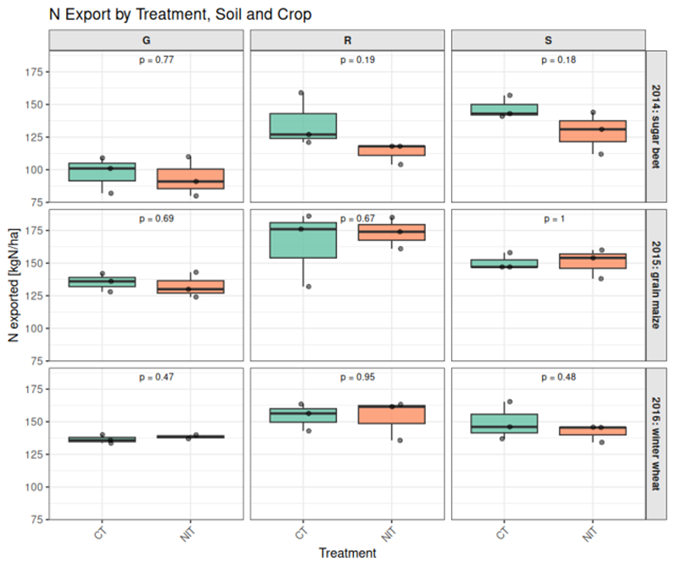
Figure 7Seasonal N export by treatment (CT: conventional tillage, NIT: non-inversion tillage) and soil (G = Grafenried soil, R = Reckenholz soil, S = Schafisheim soil) and crop; n = 18 (2 treatments × 3 soils × 3 replicates).
3.6 Treatment impacts on evapotranspiration, soil moisture and water retention
Actual evapotranspiration (ETa) was cumulated over the growing season (April–September) for each year and each weighable lysimeter. It has to be noted that each treatment was only represented once on a weighable lysimeter of each soil (Fig. 8A). Across soil types, ETa was significantly higher under CT than NIT during the growing period of sugar beet in 2014, but not in 2015 or 2016 (Fig. 8B). This observation is in line with the higher sugar beet yield observed in 2014 with CT, while grain maize yield in 2015 and winter wheat yields in 2016 did not differ significantly between treatments (Fig. 6).
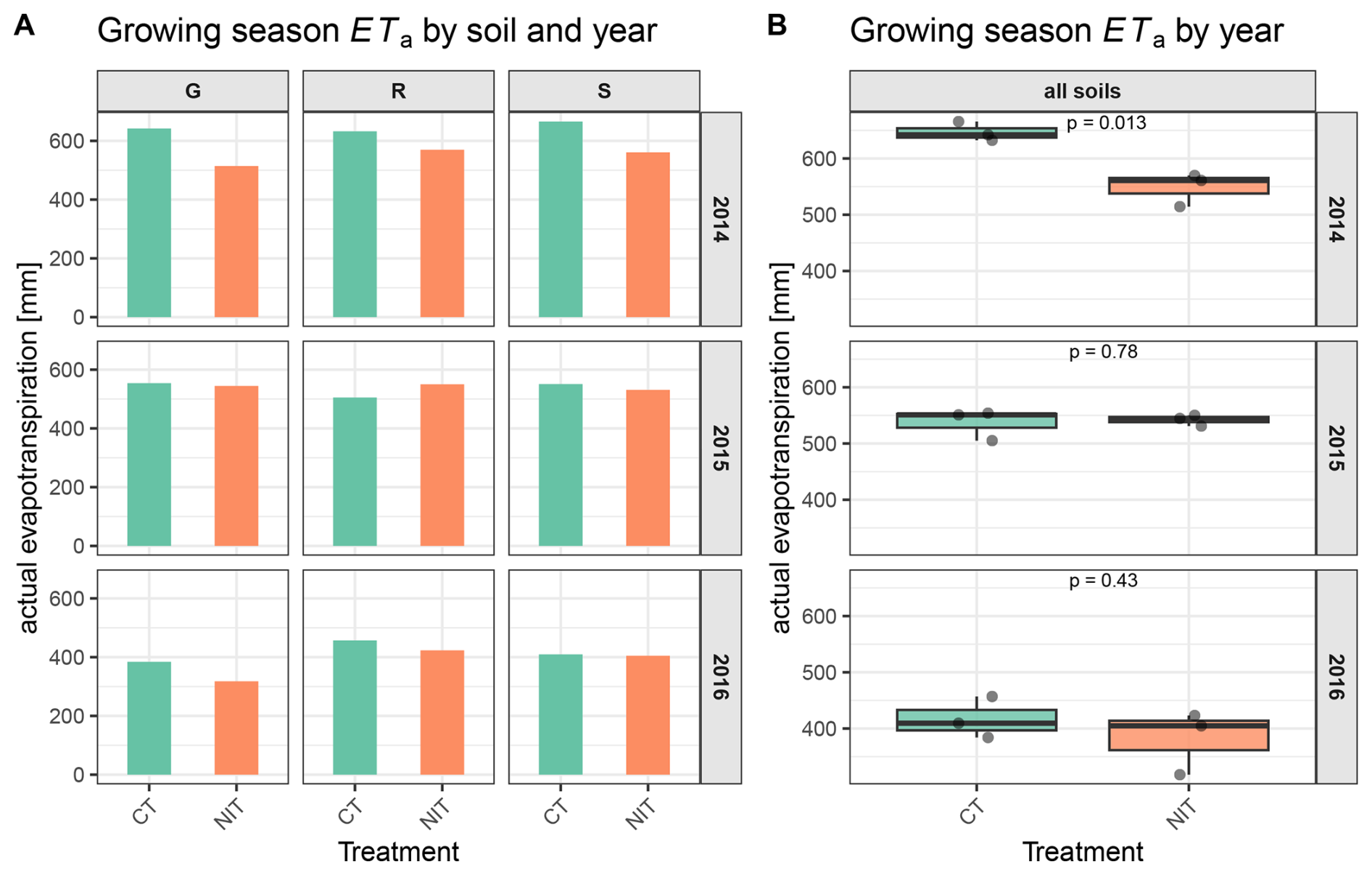
Figure 8Growing season evapotranspiration estimates derived from weighable lysimeters by treatment (CT: conventional tillage, NIT: non-inversion tillage), soil type and year (A) and by treatment and year across the three soil types (B); n = 6 (2 treatments × 3 soils).
Across soil types, recorded soil water contents by treatment show significantly higher water contents at 10 cm depth under NIT as compared to CT during several periods (Fig. 9A), while soil water tension shows statistically significant differences by treatment on few occasions only (Fig. 9B). The differences in soil water content show the greatest significances during the cropping periods of sugar beet and grain maize. At deeper depths soil moisture and water tension differences of low statistical significance are only observed on few occasions and do not occur systematically (30, 60, 90 cm; Appendix C1, C2).
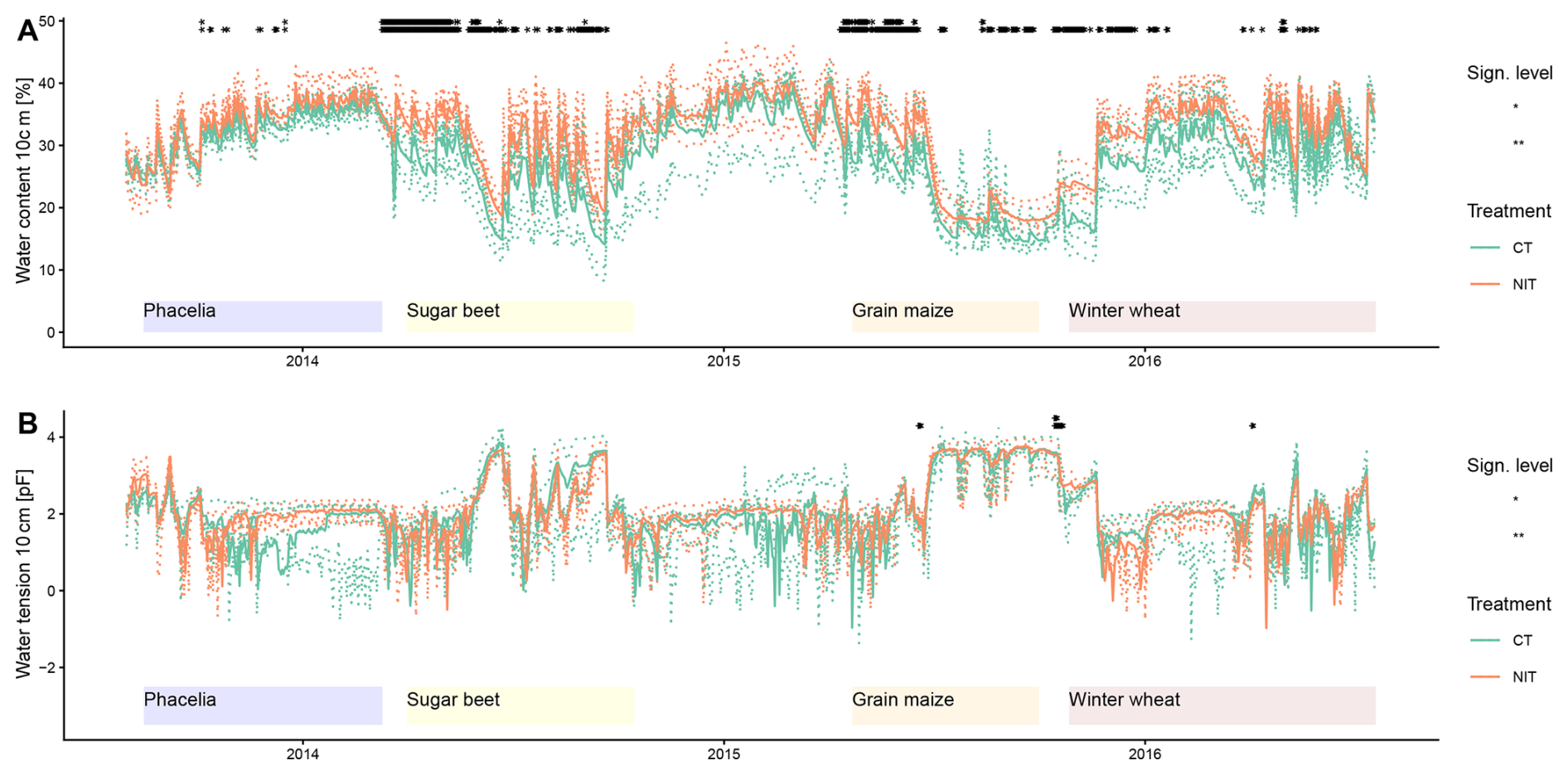
Figure 9Daily soil water content (A) and water tension (B) measured in 10 cm depth by treatment (CT: conventional tillage, NIT: non-inversion tillage; solid lines indicate treatment average, dashed lines indicate measured values by lysimeter; n = 12, 2 treatments × 3 soil types × 2 sensor replicates).
Temperature measurements could not generally confirm the hypothesis that soil temperature in spring and summer would be lower under the mulch layer in the NIT treatment than under CT (Fig. 10). Only on few occasions, significantly higher soil temperatures were measured under CT than NIT, mostly in summer 2013 at the beginning of the observation periods, when the lysimeters were cropped with the cover crop phacelia. On the contrary, during the winter 2015/2016, temperatures in 10 cm depth were significantly higher in NIT than in CT for extended periods with falling temperatures, suggesting that soil cooling was delayed under NIT. This could be explained by an insulating effect of grain maize mulch in NIT during this period (see Fig. B2).
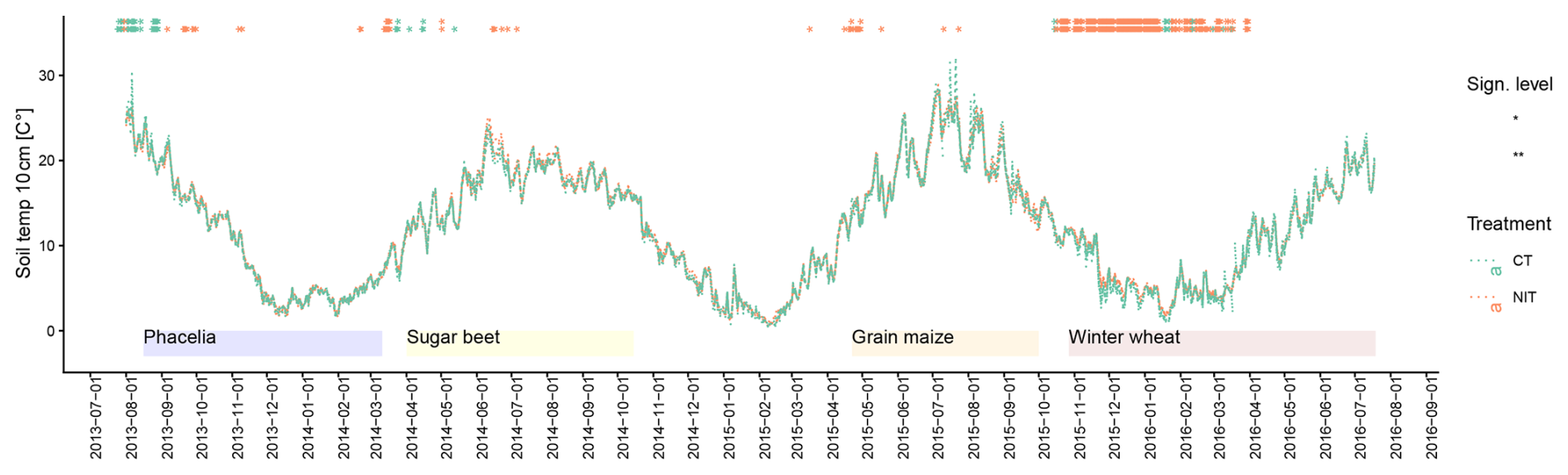
Figure 10Daily soil temperature in 10 cm depth (asterisks indicate significance of treatment difference: p-value < 0.05 “*”, p-value < 0.01 “”; colours of asterisks indicate direction of treatment difference: higher temperatures in NIT are indicated by red asterisks, higher temperatures in CT are indicated by green asterisks); results for all depths are shown in Fig. C3.
3.7 Statistical analysis
Results from the mixed linear model reveal that variance in seasonal NO leaching between 2013 and 2016 was best explained by the interactive effect between precipitation amount and treatment, the treatment effect, precipitation and the interaction between treatment and SOC (Table 3). Precipitation had a strong positive effect (estimate = 1.101 ± 0.087 SE, t = 12.61, p = 0.010), whereas SOC showed no significant main effect (p = 0.209).
Precipitation varied between seepage periods and was highest during seepage period 2014/2015 (1130.7 mm) and lowest during seepage period 2013/2014 (947.9 mm). Besides precipitation, also crops and bare-soil periods differ between seepage periods. While crops could not serve as a possible predictor variable, the length of bare soil periods by seepage period were considered in an alternative model, which was discarded here due to a poorer fit to the observed data. SOC varied between soil types, with soil R (Stagnic Cambiol from Reckenholz) showing the highest SOC content (1.47 %) and soil G (Cambisol from Grafenried) showing the lowest SOC content (0.99 %). The three soil types differ also with respect to many other variables (e.g. clay content, pH; see Table 1). However, we chose to include SOC in the statistical model here since it led to the best model fit. SOC had a significant influence in its interaction with the treatment effect (p-value = 0.015). The treatment × SOC interaction was negative and significant (estimate = −0.241 ± 0.086 SE, t= −2.81, p= 0.015), indicating that the influence of SOC differed between treatments and was reduced under NIT conditions (see Fig. 11B). This is in accordance with the observation that the treatment impact on NO leaching is largest on the carbon-rich soil R (Fig. 2). Likewise, the interaction between treatment and precipitation was strongly negative (estimate = −0.379 ± 0.086 SE, t= −4.41, p<0.001), suggesting that the positive relationship between precipitation and the response variable was weaker under the NIT treatment. Figure 11A illustrates this interactive term. The fixed effects revealed a significant negative effect of the NIT treatment (estimate = −0.307 ± 0.085 SE, t= −3.60, p = 0.003), indicating that the NIT treatment reduced the response variable relative to the reference condition. The model residuals shown in Fig. 11C appear randomly scattered around zero, suggesting no major violations of linearity and no strong evidence of heteroscedasticity.
Table 3Results of the linear mixed-effects model examining effects of treatment, precipitation, and SOC on scaled nitrate leaching. The model included random intercepts for soil type, period and lysimeter to accommodate the structure of the dataset (n=54).
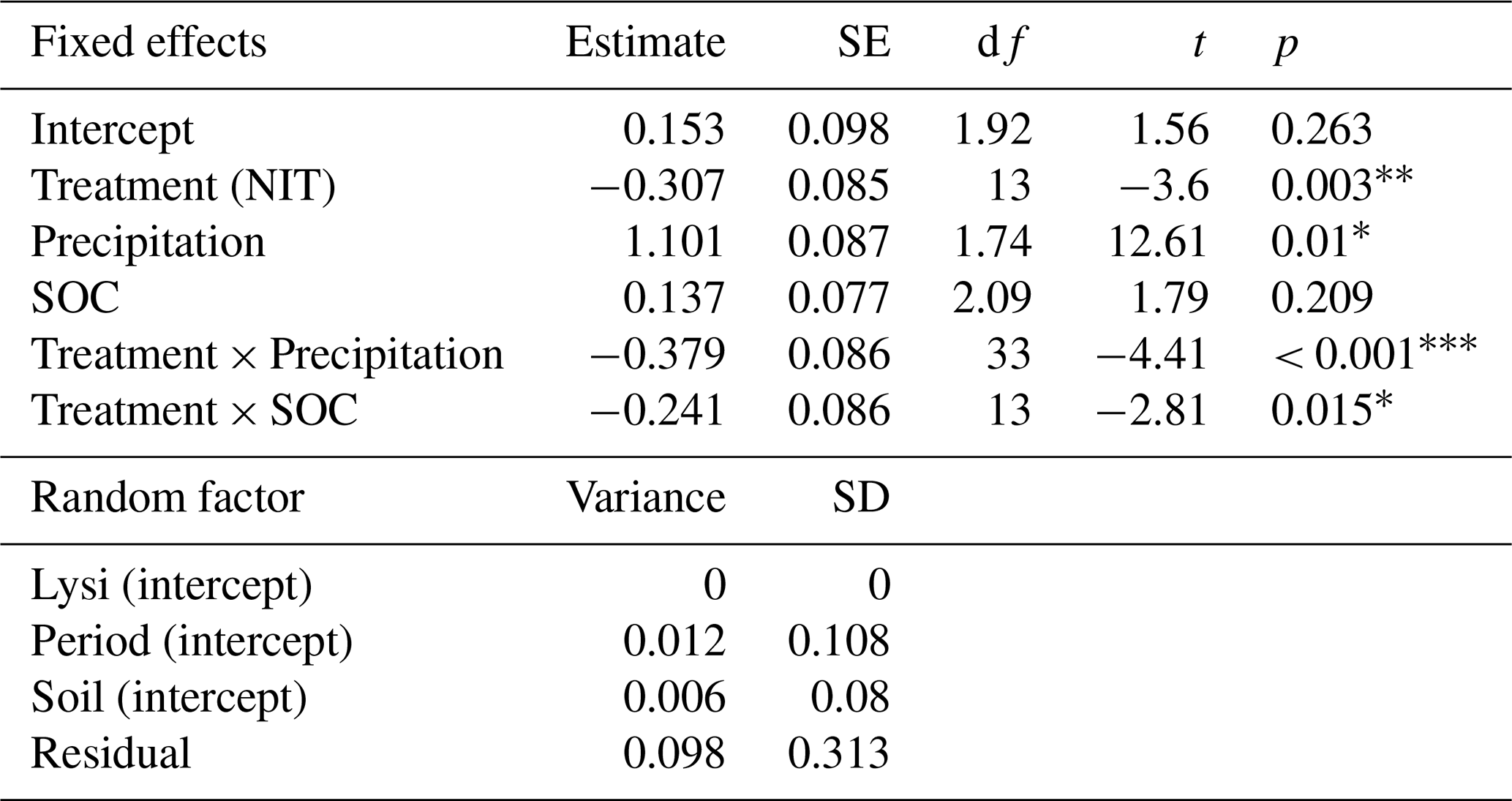
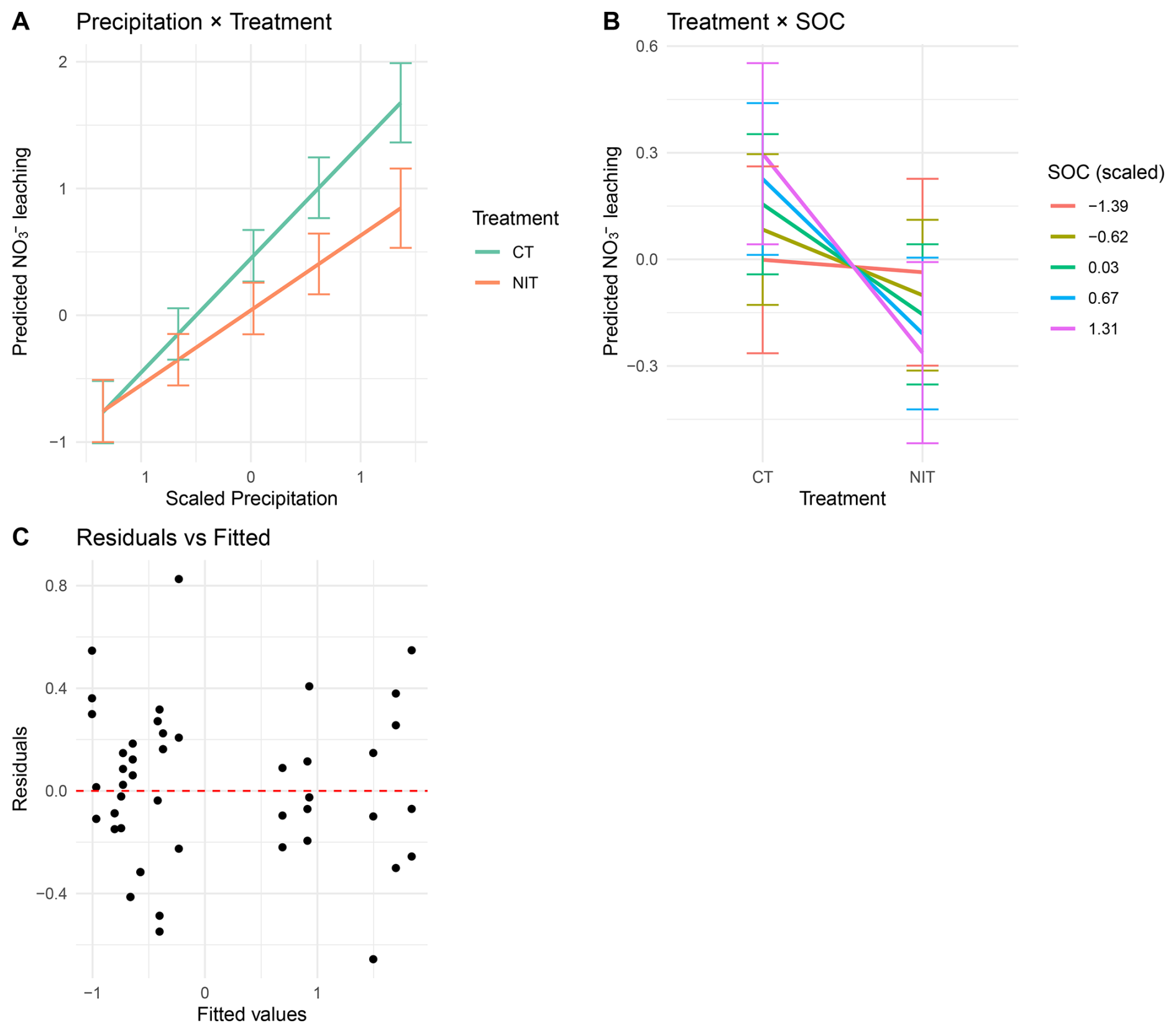
Figure 11Modelled interactive effects between precipitation and treatment (A), treatment and SOC (B) on NO leaching and residual plot of the fitted model (C).
4.1 Higher NO leaching under CT due to higher NO concentration in seepage water
Over the observation period between August 2013 and July 2016, cumulative NO leaching was significantly higher under CT than under NIT in two of the three soil types in the lysimeter experiment. The observed treatment difference was largest on the Stagnic Cambisol (soil R) with a topsoil SOC content of 1.45 %. The Luvisol with 1.16 % SOC (soil S) showed 32 % lower NO leaching in NIT compared to CT, but on the Cambisol (soil G), no treatment impact on NO leaching was observed. Both in the Luvisol (soil S) and the Stagnic Cambisol (soil R), treatment differences were attributable to differences in NO concentrations rather than seepage water amounts. This finding is in line with results from a previous lysimeter study in Switzerland by Spiess et al. (2020), where NO leaching was also slightly higher with CT than with no-till under a Luvisol soil with a SOC content of 1.2 %. Similar to Spiess et al. (2020), we also measured higher seepage water generation in NIT than CT under the Luvisol in our study (soil S). The two Cambisols in our study (soils G and R) did not show a significant difference in seepage water amounts and the Cambisol (soil G) also did not show a difference in NO leaching between treatments.
Results from the linear mixed model point at precipitation is a major driver of nitrate leaching. While this is plausible, it must be noted that only three periods with different amounts of precipitation were included in the analysis and the period with the largest amount of precipitation was also characterized by the longest bare-soil period with no or only limited nutrient-uptake through plants. The highly significant interaction between precipitation and treatment suggests that NIT holds a potential to reduce nitrate leaching during wet spells with poor plant cover. Results from the mixed model also showed that NO leaching was also strongly influenced by SOC in interaction with precipitation. The Stagnic Cambisol (soil R), which had the highest SOC, exhibited the greatest treatment difference (i.e. reduced NO leaching with NIT compared to CT) and this was most evident during the period with the largest amount of precipitation. These results support the statement of Li et al. (2023) who concluded from their global meta-analysis that the benefits of reduced tillage for NO leaching mitigation tend to be higher on soils with higher SOC contents.
4.2 Likely mechanisms underlying observed tillage impacts on NO concentrations
The observation that higher NO concentrations in seepage water drove the treatment effect on NO leaching in our experiment in two of the three soil types considered in this study prompts an examination of the mechanisms underlying the elevated NO concentrations under CT compared with NIT. In the following, we discuss plausible mechanisms that may have contributed to observed differences in NO concentrations.
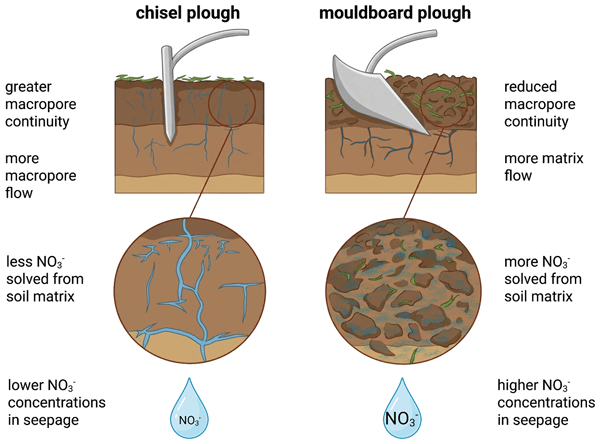
The delayed onsets of seepage in CT lysimeters under soils S and G suggest that water fluxes differed between treatments. The same observation was also made by Miranda-Vélez et al. (2022) and it can be explained as follows. In CT, ploughing and harrowing was simulated by inverting the soil with a spade followed by raking, while the soil structure remained largely undisturbed in NIT. The intense topsoil disturbance in CT is likely to have reduced macropore continuity and with that the share of macropore flow though the soil. This hypothesis is also supported by Roseberg and McCoy (1992), Buczko et al. (2003) and Chakraborty et al. (2022), who found that macropore continuity can be reduced through ploughing even if total porosity is increased through tillage. This can have implications on nitrate leaching as with a higher share of matrix water flow in the nutrient-rich topsoil under CT, more NO can be carried through the soil matrix. This is plausible as it is known that more homogenous flow through the soil matrix favours the transport of highly soluble substances such as NO (Radolinski et al., 2022). This mechanism termed “bypass effect” has been described by several previous studies (e.g. Bjorneberg et al., 1996; Shipitalo et al., 2000; Hess et al., 2020; Miranda-Vélez et al.m 2022). The lack of a delayed onset of seepage period under CT under soil R in our study could be explained by the fact that in this soil type macroporosity was very low in the deepest layer of the soil (Table 1). This could have diminished the effect on the timing of seepage water generation even if there was a treatment impact on flow pathways in the topsoil. The fact that no treatment impact on the onset of seepage water period 2015/2016 was observed might be explained by the extremely dry vegetation period 2015, where prolonged soil drying might have influenced porosity through the formation of shrinking cracks/fissures in both treatments (Fig. C1).
As previously highlighted by Li et al. (2023), the SOC content of soils seems to be an important determinant of tillage impacts on N leaching. Our results support this statement: the tillage treatment had the strongest impact on N leaching under the soil type with the largest SOC content (i.e. Stagnic Cambisol from Reckenholz). This could be explained by the fact that SOC contributes to structural coherence within soil aggregates, promoting more continuous and interconnected pore networks as for example found by Deurer et al. (2009) or by Liu et al. (2025) in Cambisol samples. This would imply that the “bypass effect” described above is amplified by SOC content, which is in line with our observation that no treatment impact on N leaching was observed with the Cambisol from Grafenried with SOC of 0.99 %, while the treatment impact was largest on the Cambisol from Reckenholz with SOC of 1.45 %.
Besides differences in soil water fluxes, also differences in crop residues from sugar beet in 2014 could have contributed to observed differences in NO concentrations. In 2014 higher sugar beet yields with CT on soil types R and S (Fig. 6), were likely associated with larger amounts of crop residues in this treatment. Sugar beet residues could have posed an easily degradable source of N (Thomsen and Christensen, 1996), thus contributing to higher NO concentrations in CT under these two soil types in the seepage period following sugar beet cultivation (i.e. 2014/2015, Fig. 4). Treatment impacts on crop growth could also have influenced the onset of seepage water periods. In lysimeters with more crop growth, soil water uptake was likely higher, leading to larger water depletion in CT lysimeters and this a delay in the onset of seepage periods. Observations of ETa (Fig. 8) and soil moisture (Fig. C1) suggest that this could have played a role at least in the seepage period 2024/2015. This would suggest that also crop growth processes played a strong role in governing tillage impacts on N leaching. Finally, the tillage difference could have led to higher denitrification in the NIT than in CT, as was observed as a result of increased water retention capacity for example by Senigagliesi and Ferrari (1993) and Mkhabela et al. (2008). Recorded soil moisture and water tension data support this assumption, as soil moisture in the topsoil was observed to be frequently higher under NIT than under CT (Fig. 9).
4.3 Possible mechanisms driving increased N leaching with tillage reduction
Given the concerns raised by Daryanto et al. (2017), Li et al. (2023) and Huang et al. (2024) that NO leaching could be higher under reduced tillage or no-till compared to conventional tillage, it is worth discussing under which conditions this might be the case even though findings from our study suggest the opposite effect. According to studies identifying higher NO leaching under reduced tillage or no-till compared to conventional tillage, changes in soil water fluxes play a key role in determining this effect. Daryanto et al. (2017), Li et al. (2023) and Huang et al. (2024) attributed the effect to the presence of biopores (earthworm burrows, old root channels) under long-term no-tillage management, which lead to more deep percolation in no-till than in conventionally ploughed fields. However, not all studies documenting an increase in deep percolation with reduced tillage also report increased leaching loads. For example, Randall and Iragavarapu (1995), Weed and Kanwar (1996) and Spiess et al. (2020) found that reduced tillage decreased N leaching slightly despite increasing deep percolation. Also in our study, we found lower N leaching on soil S despite a tendency towards higher seepage water generation under this soil type (Fig. 3). This indicates that deep percolation per se is unlikely to be the primary driver of the treatment differences. Li et al. (2023) identified SOC content as a strong explanatory variable driving the effect size of area-scaled NO leaching: In soils with low SOC content (< 1 %), no-till resulted in approximately 50 % greater area- and yield-scaled NO leaching than inversion tillage. This is consistent with our finding that SOC explained a significant amount of variance in NO leaching, in particular in interaction with the treatment effect (Table 3). The relevance of SOC may be explained by the fact that the possibilities to increase aggregate stability through reduced tillage or no till are limited in carbon-poorer soils. In a regional study on no-till impacts in the US Midwest, Blanco-Canqui et al. (2009) found that the SOC content was positively correlated with aggregate wettability and aggregate resistance to rain drops. Thus, with lower carbon content the effect of bypass flow on N retention as described in Sect. 4.2 is likely to become less relevant. This would explain higher leaching of NO under no-till in carbon-poor soils. In a semi-arid region of China with low SOC content Huang et al. (2015) found 44.6 % higher NO leaching under no-till than under conventional tillage. They attribute this to higher amount of deep percolation under no-till, but also higher NO concentrations in seepage water with no-till than with conventional tillage. It is notable that at their study site due to very dry winter conditions, the seasonality of seepage water generation differs substantially from conditions in temperate regions of Europe, where mostly no or opposing effects were observed (e.g. Norberg and Aronsson, 2025).
Besides climatic and soil structural drivers, other processes may add to higher NO leaching under NT. Hansen et al. (2010) for example, found some negative effects of reduced tillage intensity on NO leaching in Denmark (Flakkebjerg), which they attribute to poorer crop establishment with reduced tillage and thus reduced N plant uptake. This effect is expected to play a considerable role in general since it has often been reported that no-till can limit crop productivity due to higher surface compaction limiting root growth and slower soil warming under mulch layers (Pittelkow et al., 2015; Büchi et al., 2018) that slows plant development. Meisinger et al. (2015) see a likely reason for lower NO losses in mouldboard plough treatment in comparison to NT in the higher decomposition of the carbon rich wheat straw residues incorporated into the ploughed soil. The faster decomposition and accompanying immobilization of NO-N in CT is likely to have led to a smaller NO-N pool in the CT soil in their argumentation.
Differences in earthworm communities between the treatments as for example reported by Maurer-Troxler et al. (2005) and Jossi et al. (2011) could also have significant implications on soil nitrogen dynamics. Worm casts contain nitrogen in plant-available forms (Singh, 2018). Differences in earthworm abundances also have implications on soil microbial communities as reported by Ma et al. (2022). Both earthworm and microbial activities would lead to faster decomposition of organic material, potentially increasing the risk of NO leaching with no-till. N mineralization on the soil surface and in the topsoil could potentially be higher in NT/NIT than in CT if the mulch layer induces more favourable temperature and moisture conditions for soil microbial activity during dry periods.
4.4 Interpreting observed effects in the context of climate change
The fact that NO leaching is highest during and shortly after the bare soil period following sugar beet cultivation highlights that plant cover and the continuity of N uptake by plants are strong leverages to reduce NO leaching. On the contrary, large amounts of precipitation during periods of low or no plant cover as experienced between January and May 2015 impose large risks of NO leaching. As climate projections for Switzerland suggest increasing winter and spring precipitation (CH2025), such risks are expected to increase in the future (e.g. Klein et al., 2013, 2014; Zarrineh et al., 2020). Results from this study suggest that reduced soil tillage could hold the potential to reduce NO leaching in such situations as also found by Hess et al. (2020), who showed that under an experimental regime with more intense but less frequent rain events, NO leaching increased in tilled systems but did not in no-till systems. While this seems a promising prospect, it needs to be studied further to what extent the finding holds true on different soil types/soil depths and in connection with compounding climate extremes. The fact we could not observe differences in the onset of seepage water period 2015/2016 depending on treatment may suggest that prolonged droughts alleviate tillage influences on flow pathways to some extent.
4.5 Outlook
Our study provides evidence of lower NO concentrations and loads under NIT compared to CT mostly during a period of bare soil and heavy rainfall. While data from our study and literature support hypotheses that differences in flow pathways, SOC and crop residues have contributed to the observed differences in NO concentrations, we could not prove the relevance of driving mechanisms in our experiment. Considering that the relevance of this mechanism is likely to increase with progressing climate change, future experiments should be designed to provide this missing evidence. Ideally, this should be done in a complementary lysimeter and field experimental setting. While our study suggested that the treatment effect differs depending on precipitation conditions, it would be recommended to further improve the evidence base on the influences of climatic conditions and in particular precipitation regimes on changes of NO leaching under tillage reduction. Such effects were not addressed in depth in any of the meta-analyses on the subject so far. Interactive effects between precipitation/irrigation and no-till on NO leaching identified by Daryanto et al. (2017) and Li et al. (2023) are not conclusive. Daryanto et al. (2017) found that no-till increases NO leaching more in dry years than in wet years. Results from Li et al. (2023) suggest that both relatively low water inputs from precipitation and irrigation, but also relatively high water inputs were associated with greater NO leaching losses under no-till compared with inversion tillage. Further work is needed to investigate this linkage more in depth as the prospects of inducing increased NO leaching with no-till could shift with progressing climate change.
In this study we explored the impacts of non-inversion tillage (NIT) in comparison with conventional tillage (CT) on NO leaching after three years of treatment implementation in a lysimeter facility in Zurich, Switzerland. We found that N leaching was reduced through NIT in comparison to CT during one of three seepage periods explored and under two of three soil types considered. Specifically, we found that on a Cambisol with 1.47 % SOC and on a Luvisol with 1.19 % SOC, NIT reduced NO leaching in the seepage period 2014/2015 by 42 % and 32 %, respectively. The observed effect was driven by differences in NO concentrations in seepage water rather than seepage water amounts. We argue that the differences in NO concentrations in seepage could be attributable to the “bypass effect” where greater macropore continuity in NIT is likely to have led to a smaller share of matrix water flow, thus carrying less NO from the soil matrix in NIT. Differences in pre-crop residues and denitrification may also have contributed to the observed treatment effect on NO leaching. The beneficial effect of NIT is most prominent during a bare-soil period coinciding with a wet spell, which may suggest that NIT holds potential to buffer NO leaching risks during critical periods, which are expected to occur more frequently with climate change (i.e. with projected increases in winter and spring precipitation in combination with larger risks of crop failures).
We find that, up to now the influences of climate drivers (i.e. precipitation regimes, temperature variations) on tillage impacts on NO leaching are not well understood. Further work is needed to investigate the influence of climate drivers and compounding climate extremes on benefits and drawbacks of reduced soil management regarding NO leaching.
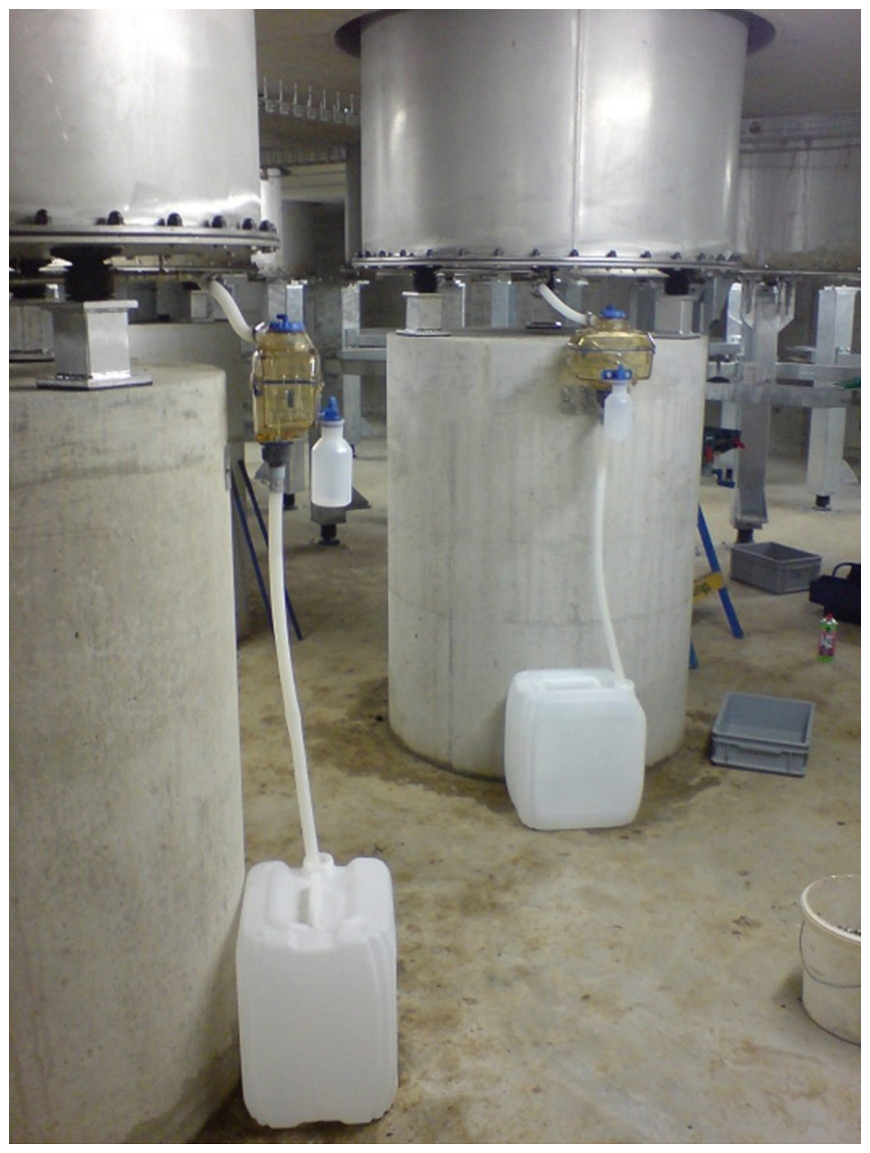
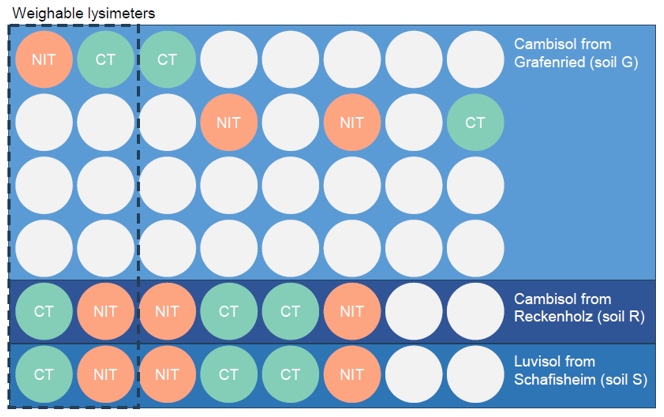
Figure A2Experimental plan showing locations of treatments (CT = conventional tillage; NIT = non-inversion tillage) on lysimeter facility with soil monoliths from three locations in Switzerland.
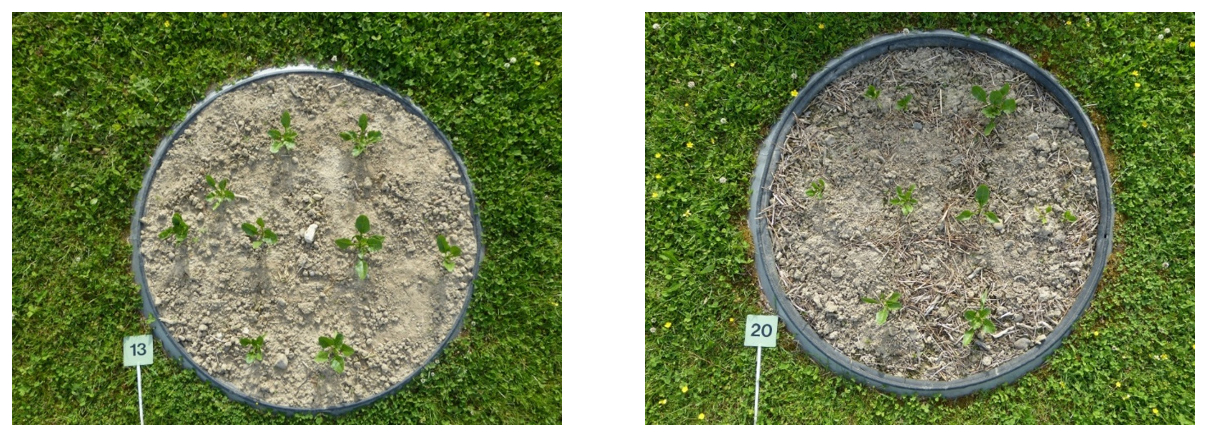
Figure B1Lysimeter with sugar beet under conventional tillage (CT, left) and under non-inversion tillage (NIT, right) treatment on 21 May 2014.
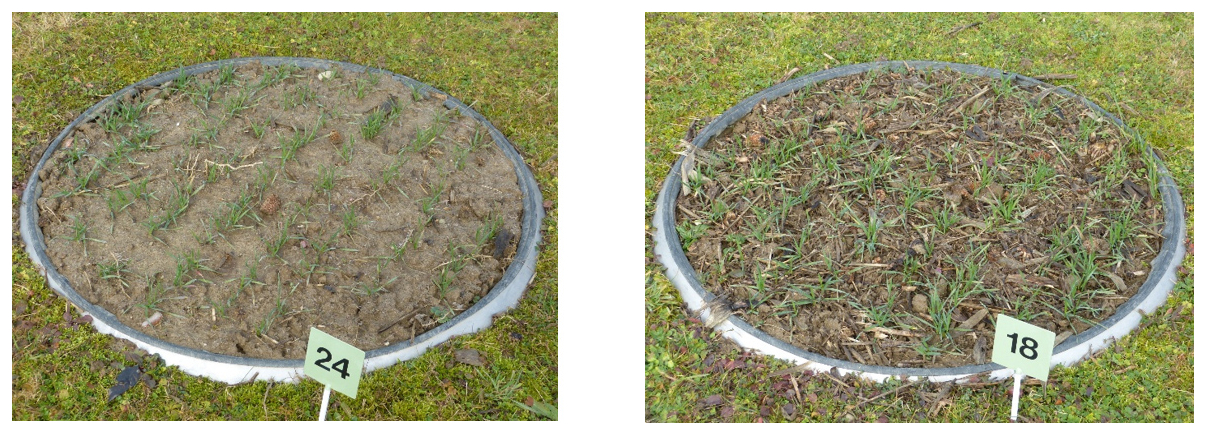
Figure B2Lysimeter with winter wheat under conventional tillage (CT, left) and under non-inversion tillage (NIT, right) treatment on 14 January 2016.
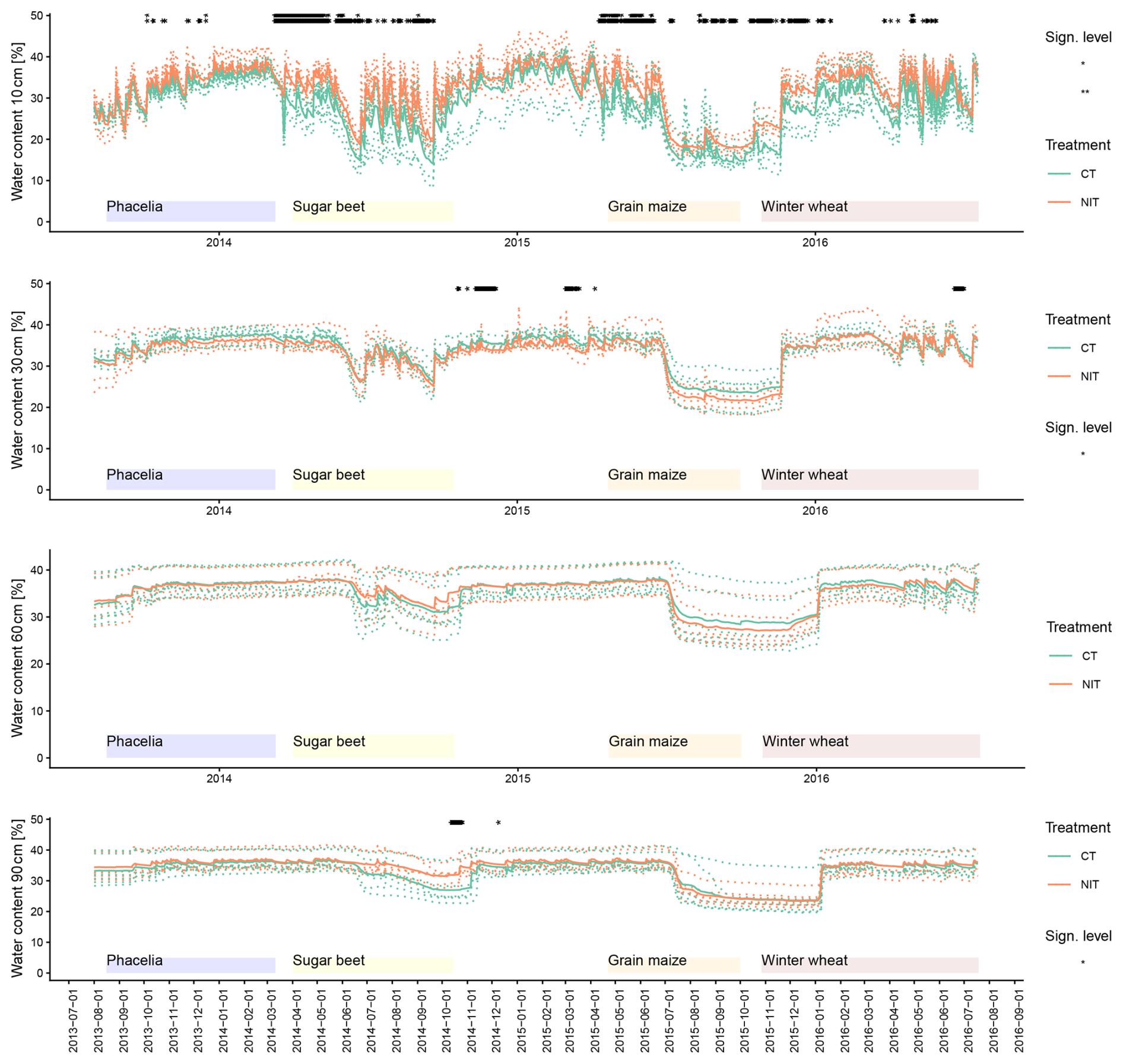
Figure C1Soil water contents recorded in four depths in three lysimeters by treatment (NIT = non-inversion tillage, i.e. chisel plough; CT = conventional tillage, i.e. mouldboard plough; solid lines indicate mean values by treatment, dashed lines indicate single sensor values); stars indicate statistical significance of treatment differences (p-value < 0.01 “”; p-value < 0.05 “*”); n = 12 (2 treatments × 3 soil types × 2 sensor replicates).
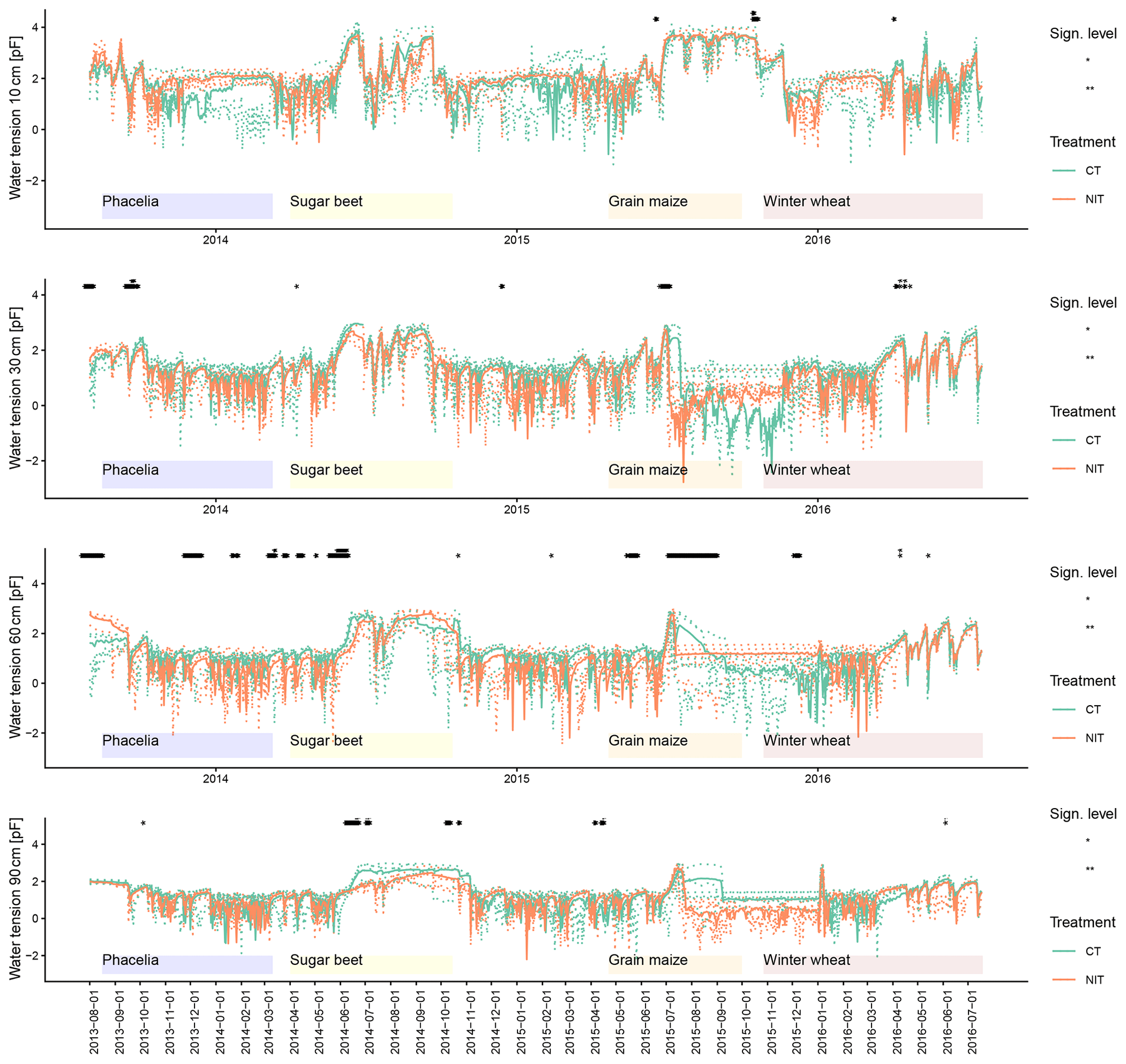
Figure C2Soil water tensions recorded in four depths in three lysimeters by treatment (NIT = non-inversion tillage, i.e. chisel plough; CT = conventional tillage, i.e. mouldboard plough; solid lines indicate mean values by treatment, dashed lines indicate single sensor values); stars indicate statistical significance of treatment differences (p-value < 0.01 “”; p-value < 0.05 “*”); n = 12 (2 treatments × 3 soil types × 2 sensor replicates).
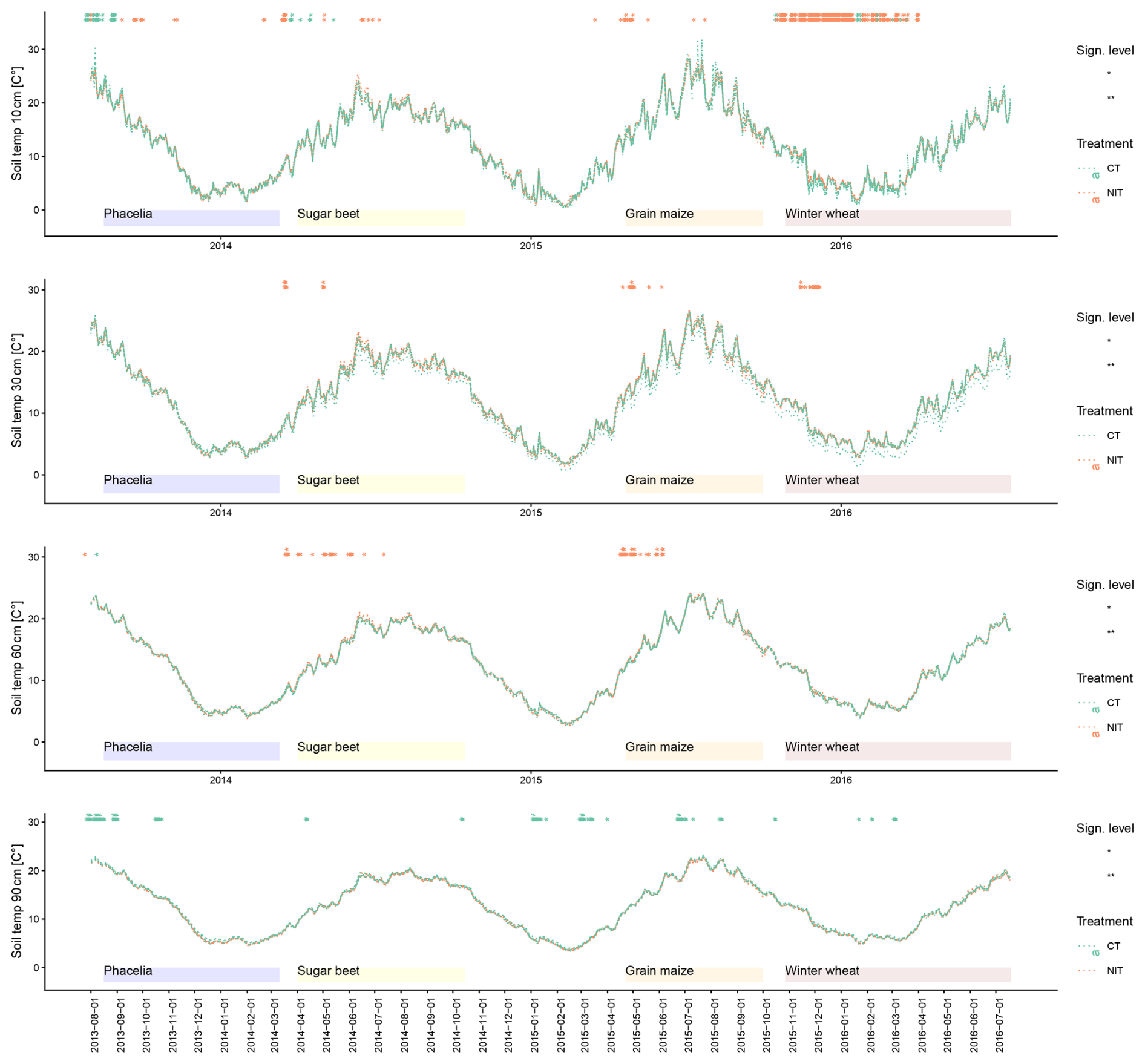
Figure C3Soil temperatures recorded in four depths in three lysimeters by treatment (NIT = non-inversion tillage, i.e. chisel plough; CT = conventional tillage, i.e. mouldboard plough); stars indicate statistical significance of treatment differences (p-value < 0.01 “”; p-value < 0.05 “*”), colours of asterisks indicate direction of treatment difference: higher temperatures in NIT are indicated by red asterisks, higher temperatures in CT are indicated by green asterisks).; n = 12 (2 treatments × 3 soil types × 2 sensor replicates).
Research data supporting this study are available from https://doi.org/10.5281/zenodo.20825203 (Holzkämper et al., 2026). R scripts used for data processing, analysis and visualization of research results can be made available by the corresponding author upon reasonable request.
AH: data curation; formal analysis; writing – original draft. ES: conceptualization; methodology; data curation; formal analysis; writing – review and editing. CH: investigation. KMZ: investigation. OH: statistical analysis; writing – review and editing; TK: writing – review and editing. VP: conceptualization; methodology; writing – review and editing.
The contact author has declared that none of the authors has any competing interests.
Publisher's note: Copernicus Publications remains neutral with regard to jurisdictional claims made in the text, published maps, institutional affiliations, or any other geographical representation in this paper. The authors bear the ultimate responsibility for providing appropriate place names. Views expressed in the text are those of the authors and do not necessarily reflect the views of the publisher.
Special thanks go to Abel Veloso and one anonymous referee whose critical comments and recommendations have helped a lot to improve the quality of this publication.
This paper was edited by Carolina Boix-Fayos and reviewed by Abel Veloso and one anonymous referee.
Abdou, H. M. and Flury, M.: Simulation of water flow and solute transport in free-drainage lysimeters and field soils with heterogeneous structures, Eur. J. Soil Sci., 55, 229–241, https://doi.org/10.1046/j.1365-2389.2004.00592.x, 2004.
Agroscope: Bestimmung des Porenvolumens von Bodenproben mit ungestörtem Gefüge mittels Luftdruckpyknometer, Schweizerische Referenzmethoden der Forschungsanstalten Agroscope, Version 1.1, https://link.ira.agroscope.ch/de-CH/publication/46215 (last access: 30 June 2026), 2020a.
Agroscope: pH: pH-Wert in Wassersuspension (1:2.5), in: Schweizerische Referenzmethoden der Forschungsanstalten Agroscope, Agroscope, Zurich, Switzerland, https://link.ira.agroscope.ch/de-CH/publication/45991 (last access: 30 June 2026), 2020b.
Agroscope: Bestimmung des organisch gebundenen Kohlenstoffs (Corg) – Version 1.2, in: Schweizerische Referenzmethoden der Forschungsanstalten Agroscope, Agroscope, Zurich, Switzerland, https://link.ira.agroscope.ch/de-CH/publication/46276 (last access: 30 June 2026), 2020c.
Bates, D., Mächler, M., Bolker, B., and Walker, S.: Fitting Linear Mixed-Effects Models Using lme4, J. Stat. Softw., 67, 1–48, https://doi.org/10.18637/jss.v067.i01, 2015.
Betancur-Corredor, B., Lang, B., and Russell, D. J.: Reducing tillage intensity benefits the soil micro-and mesofauna in a global meta-analysis, Eur. J. Soil Sci., 73, e13321, https://doi.org/10.1111/ejss.13321, 2022.
Behrer, A. P. and Lobell, D.: Higher levels of no-till agriculture associated with lower PM2.5 in the Corn Belt, Environ. Res. Lett., 17, https://doi.org/10.1088/1748-9326/ac816f, 2022.
Bhattacharyya, S. S., Leite, F. F. G. D., France, C. L., Adekoya, A. O., Ros, G. H., de Vries, W., Melchor-Martínez, E. M., Iqbal, H. M. N., and Parra-Saldívar, R.: Soil carbon sequestration, greenhouse gas emissions, and water pollution under different tillage practices, Sci. Total Environ., 826, 154161, https://doi.org/10.1016/j.scitotenv.2022.154161, 2022.
Bjorneberg, D. L., Kanwar, R. S., and Melvin, S. W.: Seasonal changes in flow and NO-N loss from subsurface drains, T. ASAE, 39, 961–967, 1996.
Blanco-Canqui, H. and Ruis, S. J.: No-tillage and soil physical environment, Geoderma, 326, 164–200, https://doi.org/10.1016/j.geoderma.2018.03.011, 2018.
Blanco-Canqui, H., Mikha, M. M., Benjamin, J. G., Stone, L. R., Schlegel, A. J., Lyon, D. J., Vigil, M. F., and Stahlman, P. W.: Regional Study of No-Till Impacts on Near-Surface Aggregate Properties that Influence Soil Erodibility, Soil Sci. Soc. Am. J., 73, 1361–1368, https://doi.org/10.2136/sssaj2008.0401, 2009.
Bremner, J. M. and Mulvaney, C. S.: Nitrogen-Total, in: Methods of soil analysis. Part 2. Chemical and microbiological properties, edited by: Page, A. L., Miller, R. H., and Keeney, D. R., American Society of Agronomy, Soil Science Society of America, Madison, Wisconsin, 595–624, ISBN 978-0-89118-072-2, 1982.
Büchi, L., Wendling, M., Amossé, C., Necpalova, M., and Charles, R.: Importance of cover crops in alleviating negative effects of reduced soil tillage and promoting soil fertility in a winter wheat cropping system, Agr. Ecosyst. Environ., 256, 92–104, https://doi.org/10.1016/j.agee.2018.01.005, 2018.
Buczko, U., Bens, O., Hangen, E., Brunotte, J., and Hüttl, R. F.: Infiltration and macroporosity of a silt moam soil under two contrasting tillage systems, Landbauforsch. Volk., 2/3, 181–190, 2003.
Chakraborty, P., Singh, N., Bansal, S., Sekaran, U., Sexton, P., Bly, A., Anderson, S. H., and Kumar, S.: Does the duration of no-till implementation influence depth distribution of soil organic carbon, hydro-physical properties, and computed tomography-derived macropore characteristics?, Soil Till. Res., 222, 105426, https://doi.org/10.1016/j.still.2022.105426, 2022.
Colunga, S. L., Wahab, L., Fierro Cabo, A., and Pereira, E.: Carbon sequestration through conservation tillage in sandy soils of arid and semi-arid climates: A meta-analysis, Soil Till. Res., 245, 106310, https://doi.org/10.1016/j.still.2024.106310, 2025.
Daryanto, S., Wang, L., and Jacinthe, P.-A.: Impacts of no-tillage management on nitrate loss from corn, soybean and wheat cultivation: A meta-analysis, Sci. Rep., 7, 12117, https://doi.org/10.1038/s41598-017-12383-7, 2017.
Deurer, M., Grinev, D., Young, I., Clothier, B. E., and Müller, K.: The impact of soil carbon management on soil macropore structure: a comparison of two apple orchard systems in New Zealand, Eur. J. Soil Sci., 60, 945–955, https://doi.org/10.1111/j.1365-2389.2009.01164.x, 2009.
Dumas, J. B. A.: Procedes de I'analyse organique, Ann. Chim. Phys., 247, 198–213, 1831.
Flisch, R., Sinaj, S., Charles, R., and Richner, W.: GRUDAF 2009. Principles for fertilisation in arable and fodder production, Agrarforschung, 16, 1–100, 2009.
Follett, R. F.: Soil management concepts and carbon sequestration in cropland soils, Soil Till. Res., 61, 77–92, https://doi.org/10.1016/S0167-1987(01)00180-5, 2001.
Frick, H., Bischoff, W.-A., and Liebisch, F.: Massnahmen zur Reduktion der Nitratauswaschung ins Grundwasser: Regionalisierter Massnahmenkatalog für das Nitratprojekt Niederbipp-Gäu-Olten (SO & BE), Agroscope Science, 147, https://doi.org/10.34776/as147g, 2023.
Hansen, E. M., Munkholm, L. J., Melander, B., and Olesen, J. E.: Can non-inversion tillage and straw retainment reduce N leaching in cereal-based crop rotations?, Soil Till. Res., 109, 1–8, https://doi.org/10.1016/j.still.2010.04.001, 2010.
Hess, L. J. T., Hinckley, E.-L. S., Robertson, G. P., and Matson, P. A.: Rainfall intensification increases nitrate leaching from tilled but not no-till cropping systems in the U.S. Midwest, Agr. Ecosyst. Environ., 290, 106747, https://doi.org/10.1016/j.agee.2019.106747, 2020.
Holzkämper, A., Spiess, E., and Prasuhn, V.: Lysimeter data from a tillage experiment at Zurich-Reckenholz, Zenodo [data set], https://doi.org/10.5281/zenodo.20825203, 2026.
Hooker, K. V., Coxon, C. E., Hackett, R., Kirwan, L. E., O'Keeffe, E., and Richards, K. G.: Evaluation of cover crop and reduced cultivation for reducing nitrate leaching in Ireland, J. Environ. Qual., 37, 138–145, https://doi.org/10.2134/jeq2006.0547, 2008.
Huang, M. X., Liang, T., Wang, L. Q., and Zhou, C. H.: No-tillage and fertilization management on crop yields and nitrate leaching in North China Plain, Ecol. Evol., 5, 1143–1155, https://doi.org/10.1002/ece3.1420, 2015.
Huang, Y. W., Ren, W., Lindsey, L. E., Wang, L. X., Hui, D. F., Tao, B., Jacinthe, P. A., and Tian, H. Q.: No-tillage farming enhances widespread nitrate leaching in the US Midwest, Environ. Res. Lett., 19, https://doi.org/10.1088/1748-9326/ad751d, 2024.
Jabro, J. D., Iversen, W. M., Stevens, W. B., Sainju, U. M., and Allen, B. L.: Tillage Effects on Drainage Fluxes and Nitrate Leaching through Unsaturated Zone under Irrigated Corn-Soybean Rotation, Appl. Eng. Agric., 35, 293–300, https://doi.org/10.13031/aea.13127, 2019.
Jossi, W., Zihlmann, U., Anken, T., Dorn, B., and Van der Heijden, M.: Reduzierte Bodenbearbeitung schont die Regenwürmer (Reduced soil management benefits earthworms), Agrarforsch. Schweiz, 2, 432–439, 2011.
Kan, Z., Liu, W., Liu, W., Lal, R., Dang, Y., Zhao, X., and Zhang, H.: Mechanisms of soil organic carbon stability and its response to no-till: A global synthesis and perspective, Glob. Change Biol., 28, 693–710, https://doi.org/10.1111/gcb.15968, 2022.
Kassam, A., Friedrich, T., and Derpsch, R.: Global spread of conservation agriculture, Int. J. Environ. Stud., 76, 29–51, https://doi.org/10.1080/00207233.2018.1494927, 2019.
Kenward, M. G. and Roger, J. H.: Small Sample Inference for Fixed Effects from Restricted Maximum Likelihood, Biometrics, 53, 983–997, 1997.
Kirchmann, H., Johnston, A. E. J., and Bergström, L. F.: Possibilities for Reducing Nitrate Leaching from Agricultural Land, AMBIO, 31, 404–408, https://doi.org/10.1579/0044-7447-31.5.404, 2002.
Klein, T., Holzkämper, A., Calanca, P., and Fuhrer, J.: Adaptation options under climate change for multifunctional agriculture: a simulation study for western Switzerland, Reg. Environ. Change, 14, 167–184, https://doi.org/10.1007/s10113-013-0470-2, 2014.
Klein, T., Holzkämper, A., Calanca, P., Seppelt, R., and Fuhrer, J.: Adapting agricultural land management to climate change: a regional multi-objective optimization approach, Landscape Ecol., 28, 2029–2047, https://doi.org/10.1007/s10980-013-9939-0, 2013.
Koskiaho, J., Kivisaari, S., and Vermeulen, S.: Reduced tillage: Influence on erosion and nutrient losses in a clayey field in southern, Agr. Food Sci., 11, 37–50, https://doi.org/10.23986/afsci.5711, 2002.
Kuznetsova, A., Brockhoff, P. B., and Christensen, R. H. B.: lmerTest Package: Tests in Linear Mixed Effects Models, J. Stat. Softw., 82, 1–26, https://doi.org/10.18637/jss.v082.i13, 2017.
Li, J., Hu, W., Chau, H. W., Beare, M., Cichota, R., Teixeira, E., Moore, T., Di, H., Cameron, K., Guo, J., and Xu, L.: Response of nitrate leaching to no-tillage is dependent on soil, climate, and management factors: A global meta-analysis, Glob. Change Biol., 29, 2172–2187, https://doi.org/10.1111/gcb.16618, 2023.
Liu, J., Tian, Y., Pasut, C., Farrell, M., and Lu, S.: Investigating the influence of soil organic carbon on pore structure within aggregates, Geoderma, 460, 117463, https://doi.org/10.1016/j.geoderma.2025.117463, 2025.
Ma, L., Song, D., Liu, M., Li, Y., and Li, Y.: Effects of earthworm activities on soil nutrients and microbial diversity under different tillage measures, Soil Till. Res., 222, 105441, https://doi.org/10.1016/j.still.2022.105441, 2022.
Maurer-Troxler, C., Chervet, A., Ramseier, L., and Sturny, W. G.: Bodenbiologie nach zehn Jahren Direktsaat und Pflug, Agrarforsch. Schweiz, 12, 460–465, 2005.
Meisinger, J. J., Palmer, R. E., and Timlin, D. J.: Effects of tillage practices on drainage and nitrate leaching from winter wheat in the Northern Atlantic Coastal-Plain USA, Soil Till. Res., 151, 18–27, https://doi.org/10.1016/j.still.2015.02.007, 2015.
Meissner, R., Rupp, H., and Seyfarth, M.: Advanced Technologies in Lysimetry, in: Novel Measurement and Assessment Tools for Monitoring and Management of Land and Water Resources in Agricultural Landscapes of Central Asia, edited by: Mueller, L., Saparov, A., and Lischeid, G., Springer International Publishing, Cham, 159–173, https://doi.org/10.1007/978-3-319-01017-5_8, 2014.
Miranda-Vélez, J. F., Diamantopoulos, E., and Vogeler, I.: Does macropore flow in no-till systems bypass mobile soil nitrogen after harvest?, Soil Till. Res., 221, 105408, https://doi.org/10.1016/j.still.2022.105408, 2022.
Mkhabela, M. S., Madani, A., Gordon, R., Burton, D., Cudmore, D., Elmi, A., and Hart, W.: Gaseous and leaching nitrogen losses from no-tillage and conventional tillage systems following surface application of cattle manure, Soil Till. Res., 98, 187–199, https://doi.org/10.1016/j.still.2007.12.005, 2008.
Montgomery, D. R.: Soil erosion and agricultural sustainability, P. Natl. Acad. Sci. USA, 104, 13268–13272, https://doi.org/10.1073/pnas.0611508104, 2007.
Norberg, L. and Aronsson, H.: Conventional and reduced tillage, and set-aside land – Effects on nitrogen, phosphorus and potassium subsurface leaching from a clay soil during 9 years, Soil Till. Res., 250, 106515, https://doi.org/10.1016/j.still.2025.106515, 2025.
Pires, L. F., Borges, J. A. R., Rosa, J. A., Cooper, M., Heck, R. J., Passoni, S., and Roque, W. L.: Soil structure changes induced by tillage systems, Soil Till. Res., 165, 66–79, https://doi.org/10.1016/j.still.2016.07.010, 2017.
Pisani, O., Strickland, T. C., Hubbard, R. K., Bosch, D. D., Coffin, A. W., Endale, D. M., and Potter, T. L.: Soil nitrogen dynamics and leaching under conservation tillage in the Atlantic Coastal Plain, Georgia, United States, J. Soil Water Conserv., 72, 519–529, https://doi.org/10.2489/jswc.72.5.519, 2017.
Pittelkow, C. M., Linquist, B. A., Lundy, M. E., Liang, X., van Groenigen, K. J., Lee, J., van Gestel, N., Six, J., Venterea, R. T., and van Kessel, C.: When does no-till yield more? A global meta-analysis, Field Crop. Res., 183, 156–168, https://doi.org/10.1016/j.fcr.2015.07.020, 2015.
Porwollik, V., Rolinski, S., Heinke, J., and Müller, C.: Generating a rule-based global gridded tillage dataset, Earth Syst. Sci. Data, 11, 823–843, https://doi.org/10.5194/essd-11-823-2019, 2019.
Prasuhn, V.: On-farm effects of tillage and crops on soil erosion measured over 10 years in Switzerland, Soil Till. Res., 120, 137–146, https://doi.org/10.1016/j.still.2012.01.002, 2012.
Prasuhn, V., Spiess, E., and Seyfarth, M.: The new lysimeter station Zurich-Reckenholz, 13. Gumpensteiner Lysimetertagung, 11–16, https://ira.agroscope.ch/de-CH/publication/23903 (last access: 30 June 2026), 2009.
Radolinski, J., Le, H., Hilaire, S. S., Xia, K., Scott, D., and Stewart, R. D.: A spectrum of preferential flow alters solute mobility in soils, Sci. Rep., 12, 4261, https://doi.org/10.1038/s41598-022-08241-w, 2022.
Randall, G. W. and Iragavarapu, T. K.: Impact of Long-Term Tillage Systems for Continuous Corn on Nitrate Leaching to Tile Drainage, J. Environ. Qual., 24, 360–366, https://doi.org/10.2134/jeq1995.00472425002400020020x, 1995.
Roseberg, R. J. and McCoy, E. L.: Tillage- and Traffic-Induced Changes in Macroporosity and Macropore Continuity: Air Permeability Assessment, Soil Sci. Soc. Am. J., 56, 1261–1267, https://doi.org/10.2136/sssaj1992.03615995005600040042x, 1992.
Seitz, S., Goebes, P., Puerta, V. L., Pereira, E. I. P., Wittwer, R., Six, J., van der Heijden, M. G. A., and Scholten, T.: Conservation tillage and organic farming reduce soil erosion, Agron. Sustain. Dev., 39, https://doi.org/10.1007/s13593-018-0545-z, 2018.
Senigagliesi, C. and Ferrari, M.: Soil and Crop Responses to Alternative Tillage Practices, in: International Crop Science I, ASA, CSSA, and SSSA Books, 27–35, https://doi.org/10.2135/1993.internationalcropscience.c6, 1993.
Shipitalo, M. J., Dick, W. A., and Edwards, W. M.: Conservation tillage and macropore factors that affect water movement and the fate of chemicals, Soil Till. Res., 53, 167–183, https://doi.org/10.1016/S0167-1987(99)00104-X, 2000.
Singh, J.: 3 – Role of Earthworm in Sustainable Agriculture, in: Sustainable Food Systems from Agriculture to Industry, edited by: Galanakis, C. M., Academic Press, 83–122, https://doi.org/10.1016/B978-0-12-811935-8.00003-2, 2018.
Skaalsveen, K., Ingram, J., and Clarke, L. E.: The effect of no-till farming on the soil functions of water purification and retention in north-western Europe: A literature review, Soil Till. Res., 189, 98–109, https://doi.org/10.1016/j.still.2019.01.004, 2019.
Spiess, E., Humphrys, C., Richner, W., Schneider, M. K., Piepho, H.-P., Chervet, A., and Prasuhn, V.: Does no-tillage decrease nitrate leaching compared to ploughing under a long-term crop rotation in Switzerland?, Soil Till. Res., 199, https://doi.org/10.1016/j.still.2020.104590, 2020.
SSS: Swiss soil classification, 3rd edn., Soil Science Society (SSS), https://www.soil.ch/de/publikationen/klassifikation (last access: 30 June 2026), 2010 (in German).
Thomsen, I. K. and Christensen, B. T.: Availability to subsequent crops and leaching of nitrogen in 15N-labelled sugar beet tops and oilseed rape residues, J. Agr. Sci., 126, 191–199, https://doi.org/10.1017/S0021859600073135, 1996.
Weed, D. A. J. and Kanwar, R. S.: Nitrate and Water Present in and Flowing from Root-Zone Soil, J. Environ. Qual., 25, 709–719, https://doi.org/10.2134/jeq1996.00472425002500040010x, 1996.
Zarrineh, N., Abbaspour, K. C., and Holzkämper, A.: Integrated assessment of climate change impacts on multiple ecosystem services in Western Switzerland, Sci. Total Environ., 708, 135212, https://doi.org/10.1016/j.scitotenv.2019.135212, 2020.
- Abstract
- Introduction
- Methods and data
- Results
- Discussion
- Conclusions
- Appendix A: Lysimeter station Zurich Reckenholz
- Appendix B: Photos illustrating treatment differences
- Appendix C: Soil moisture, soil water tension and soil temperature by depth
- Code and data availability
- Author contributions
- Competing interests
- Disclaimer
- Acknowledgements
- Review statement
- References
Reduced tillage lowered nitrate leaching by up to 42 percent in some soils during a very rainy period without crop cover. The results suggest that reduced soil management could help protect water quality under future climate conditions with wetter winter and spring conditions.
- Abstract
- Introduction
- Methods and data
- Results
- Discussion
- Conclusions
- Appendix A: Lysimeter station Zurich Reckenholz
- Appendix B: Photos illustrating treatment differences
- Appendix C: Soil moisture, soil water tension and soil temperature by depth
- Code and data availability
- Author contributions
- Competing interests
- Disclaimer
- Acknowledgements
- Review statement
- References