
Articles | Volume 12, issue 1
https://doi.org/10.5194/soil-12-599-2026
© Author(s) 2026. This work is distributed under
the Creative Commons Attribution 4.0 License.
the Creative Commons Attribution 4.0 License.
https://doi.org/10.5194/soil-12-599-2026
© Author(s) 2026. This work is distributed under
the Creative Commons Attribution 4.0 License.
the Creative Commons Attribution 4.0 License.
Original research article
| 
12 May 2026
Original research article |
| 12 May 2026
| 12 May 2026
Vulnerability of carbon in subalpine soils in the face of warmer temperatures
Dario Püntener
CORRESPONDING AUTHOR

Department of Geography, University of Zurich, Winterthurerstrasse 190, 8057 Zurich, Switzerland
Institute for Biodiversity and Ecosystem Dynamics, University of Amsterdam, Science Park 904, 1098 XH Amsterdam, the Netherlands
Philipp Zürcher
Department of Geography, University of Zurich, Winterthurerstrasse 190, 8057 Zurich, Switzerland
Tatjana C. Speckert
Department of Geography, University of Zurich, Winterthurerstrasse 190, 8057 Zurich, Switzerland
Carrie L. Thomas
Department of Geography, University of Zurich, Winterthurerstrasse 190, 8057 Zurich, Switzerland
Institute for Biodiversity and Ecosystem Dynamics, University of Amsterdam, Science Park 904, 1098 XH Amsterdam, the Netherlands
Department of Ecology, Radboud University, Heyendaalseweg 135, 6525 AJ Nijmegen, the Netherlands
Guido L. B. Wiesenberg
Department of Geography, University of Zurich, Winterthurerstrasse 190, 8057 Zurich, Switzerland
Related authors
Dario Püntener, Tatjana C. Speckert, Yves-Alain Brügger, and Guido L. B. Wiesenberg
SOIL, 11, 991–1006, https://doi.org/10.5194/soil-11-991-2025, https://doi.org/10.5194/soil-11-991-2025, 2025
Short summary
Short summary
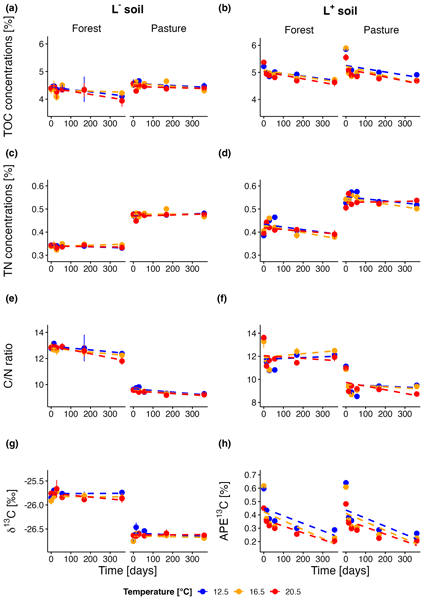
Alpine soils store much carbon but warming and changes in vegetation could reverse this by turning them into carbon sources. In a one-year laboratory study, we examined alpine forest and pasture soils and added fresh grass litter marked with a carbon tracer to track decomposition under different temperatures. Our findings reveal that fresh plant material drives soil breakdown more than temperature alone, offering new insights into how climate change may affect carbon storage in mountain regions.
Binyan Sun, Guido L. B. Wiesenberg, Elaine Pegoraro, Margaret S. Torn, Michael W. I. Schmidt, and Mike C. Rowley
SOIL, 12, 757–771, https://doi.org/10.5194/soil-12-757-2026, https://doi.org/10.5194/soil-12-757-2026, 2026
Short summary
Short summary
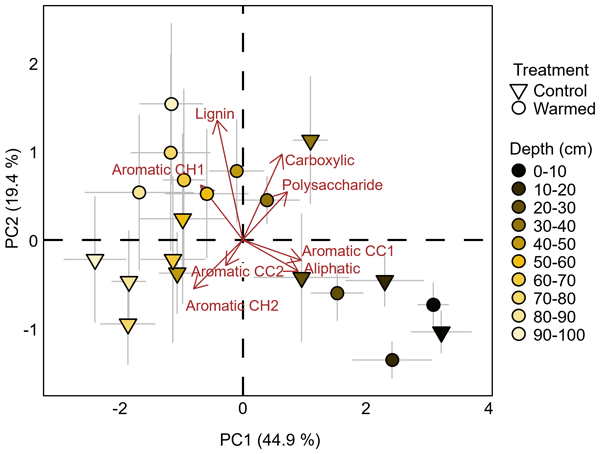
Soil is the largest terrestrial carbon pool but vulnerable to loss under warming. Using a +4 °C whole-soil warming experiment at Blodgett Forest Research Station to 1 m depth, we investigated density fractions across depths. Below 50 cm, carbon quantity and composition shifted, mainly from losses of unprotected soil organic carbon. Soil carbon protected by minerals stayed largely stable, indicating organo-mineral protection buffers subsoil carbon loss.
Binyan Sun, Cyrill Zosso, Guido L. B. Wiesenberg, Elaine Pegoraro, Margaret S. Torn, and Michael W. I. Schmidt
SOIL, 11, 1077–1093, https://doi.org/10.5194/soil-11-1077-2025, https://doi.org/10.5194/soil-11-1077-2025, 2025
Short summary
Short summary
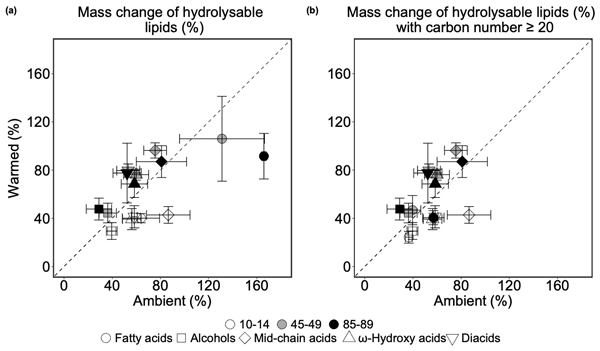
To understand how warming will change the dynamics of roots across soil profile, we took usage of a long-term field warming experiment and incubated 13C-labelled roots at three different depths. After 3 years of incubation, at compound class level, the effects of warming on decomposition of root-derived hydrolysable lipids were compound class specific. At monomer level, warming effects on suberin-derived monomer decomposition were depth-dependent and their resistance increased with chain length.
Dario Püntener, Tatjana C. Speckert, Yves-Alain Brügger, and Guido L. B. Wiesenberg
SOIL, 11, 991–1006, https://doi.org/10.5194/soil-11-991-2025, https://doi.org/10.5194/soil-11-991-2025, 2025
Short summary
Short summary
Alpine soils store much carbon but warming and changes in vegetation could reverse this by turning them into carbon sources. In a one-year laboratory study, we examined alpine forest and pasture soils and added fresh grass litter marked with a carbon tracer to track decomposition under different temperatures. Our findings reveal that fresh plant material drives soil breakdown more than temperature alone, offering new insights into how climate change may affect carbon storage in mountain regions.
Mike C. Rowley, Jasquelin Pena, Matthew A. Marcus, Rachel Porras, Elaine Pegoraro, Cyrill Zosso, Nicholas O. E. Ofiti, Guido L. B. Wiesenberg, Michael W. I. Schmidt, Margaret S. Torn, and Peter S. Nico
SOIL, 11, 381–388, https://doi.org/10.5194/soil-11-381-2025, https://doi.org/10.5194/soil-11-381-2025, 2025
Short summary
Short summary
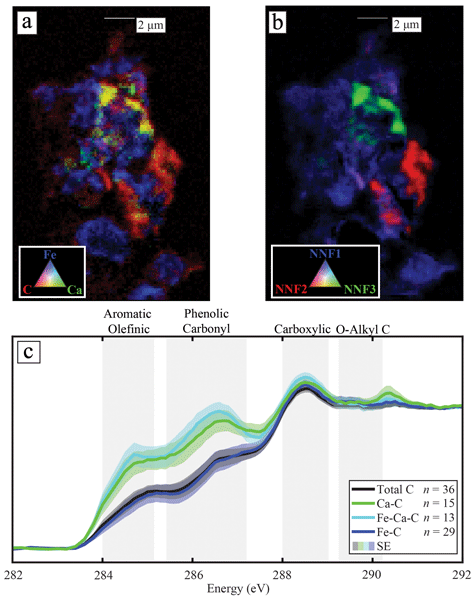
This study shows that calcium (Ca) preserves soil organic carbon (SOC) in acidic soils, challenging beliefs that their interactions were limited to near-neutral or alkaline soils. Using spectromicroscopy, we found that Ca was co-located with a specific fraction of carbon, rich in aromatic and phenolic groups. This association was disrupted when Ca was removed but was reformed during decomposition with added Ca. Overall, this suggests that Ca amendments could enhance SOC stability.
Tatjana Carina Speckert, Arnaud Huguet, and Guido Lars Bruno Wiesenberg
EGUsphere, https://doi.org/10.5194/egusphere-2024-870, https://doi.org/10.5194/egusphere-2024-870, 2024
Preprint archived
Short summary
Short summary
Afforestation on former pasture and its potential implication on the soil microbial community structure remains still an open question, particularly in mountainous regions. We investigate the effect of afforestation on a subalpine pasture on the soil microbial community structure by combining the analysis of PLFA and GDGTs. We found differences in the microbial community structure with evidence of increasing decomposition of soil organic matter due to the alteration in substrate quality.
Carrie L. Thomas, Boris Jansen, Sambor Czerwiński, Mariusz Gałka, Klaus-Holger Knorr, E. Emiel van Loon, Markus Egli, and Guido L. B. Wiesenberg
Biogeosciences, 20, 4893–4914, https://doi.org/10.5194/bg-20-4893-2023, https://doi.org/10.5194/bg-20-4893-2023, 2023
Short summary
Short summary
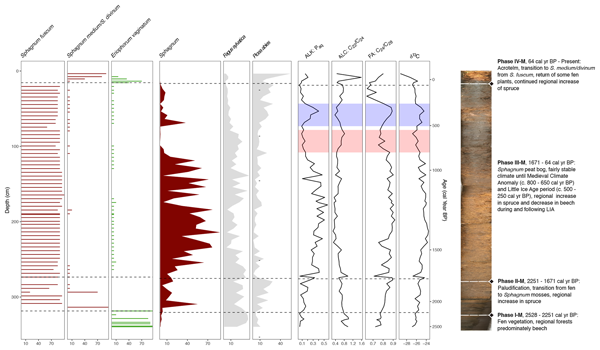
Peatlands are vital terrestrial ecosystems that can serve as archives, preserving records of past vegetation and climate. We reconstructed the vegetation history over the last 2600 years of the Beerberg peatland and surrounding area in the Thuringian Forest in Germany using multiple analyses. We found that, although the forest composition transitioned and human influence increased, the peatland remained relatively stable until more recent times, when drainage and dust deposition had an impact.
Tatjana C. Speckert, Jeannine Suremann, Konstantin Gavazov, Maria J. Santos, Frank Hagedorn, and Guido L. B. Wiesenberg
SOIL, 9, 609–621, https://doi.org/10.5194/soil-9-609-2023, https://doi.org/10.5194/soil-9-609-2023, 2023
Short summary
Short summary
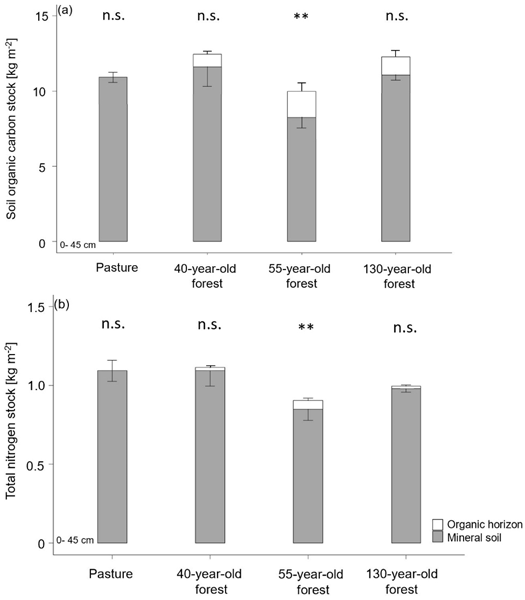
Soil organic carbon (SOC) is key player in the global carbon cycle. Afforestation on pastures potentially alters organic matter input and SOC sequestration. We investigated the effects of a Picea abies L. afforestation sequence (0 to 130 years) on a former subalpine pasture on SOC stocks and dynamics. We found no difference in the SOC stock after 130 years of afforestation and thus no additional SOC sequestration. SOC composition was altered due to a modified SOC input following afforestation.
Carrie L. Thomas, Boris Jansen, E. Emiel van Loon, and Guido L. B. Wiesenberg
SOIL, 7, 785–809, https://doi.org/10.5194/soil-7-785-2021, https://doi.org/10.5194/soil-7-785-2021, 2021
Short summary
Short summary
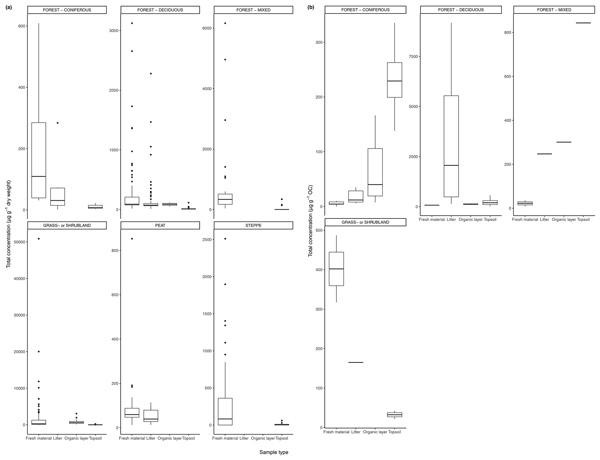
Plant organs, such as leaves, contain a variety of chemicals that are eventually deposited into soil and can be useful for studying organic carbon cycling. We performed a systematic review of available data of one type of plant-derived chemical, n-alkanes, to determine patterns of degradation or preservation from the source plant to the soil. We found that while there was degradation in the amount of n-alkanes from plant to soil, some aspects of the chemical signature were preserved.
Cited articles
Abdalla, K., Schierling, L., Sun, Y., Schuchardt, M. A., Jentsch, A., Deola, T., Wolff, P., Kiese, R., Lehndorff, E., Pausch, J., and Meyer, N.: Temperature sensitivity of soil respiration declines with climate warming in subalpine and alpine grassland soils, Biogeochemistry, 167, 1453–1467, https://doi.org/10.1007/s10533-024-01179-3, 2024. a, b
Abiven, S. and Andreoli, R.: Charcoal does not change the decomposition rate of mixed litters in a mineral cambisol: a controlled conditions study, Biol. Fertil. Soils, 47, 111–114, https://doi.org/10.1007/s00374-010-0489-1, 2011. a, b
Adekanmbi, A. A., Shu, X., Zou, Y., and Sizmur, T.: Legacy effect of constant and diurnally oscillating temperatures on soil respiration and microbial community structure, Eur. J. Soil Sci., 73, https://doi.org/10.1111/ejss.13319, 2022. a
Alster, C. J., van de Laar, A., Goodrich, J. P., Arcus, V. L., Deslippe, J. R., Marshall, A. J., and Schipper, L. A.: Quantifying thermal adaptation of soil microbial respiration, Nat. Commun., 14, 5459, https://doi.org/10.1038/s41467-023-41096-x, 2023. a
Bai, Y., Peng, Y., Zhang, D., Yang, G., Chen, L., Kang, L., Zhou, W., Wei, B., Xie, Y., and Yang, Y.: Heating up the roof of the world: tracing the impacts of in-situ warming on carbon cycle in alpine grasslands on the Tibetan Plateau, Natl. Sci. Rev., 12, nwae371, https://doi.org/10.1093/nsr/nwae371, 2025. a, b
Bastida, F., García, C., Fierer, N., Eldridge, D. J., Bowker, M. A., Abades, S., Alfaro, F. D., Asefaw Berhe, A., Cutler, N. A., Gallardo, A., García-Velázquez, L., Hart, S. C., Hayes, P. E., Hernández, T., Hseu, Z. Y., Jehmlich, N., Kirchmair, M., Lambers, H., Neuhauser, S., Peña-Ramírez, V. M., Pérez, C. A., Reed, S. C., Santos, F., Siebe, C., Sullivan, B. W., Trivedi, P., Vera, A., Williams, M. A., Luis Moreno, J., and Delgado-Baquerizo, M.: Global ecological predictors of the soil priming effect, Nat. Commun., 10, https://doi.org/10.1038/s41467-019-11472-7, 2019. a, b, c, d, e
Bonfanti, N., Clément, J. C., Münkemüller, T., Barré, P., Baudin, F., and Poulenard, J.: Prolonged warming leads to carbon depletion and increases nutrient availability in alpine soils, Appl. Soil Ecol., 213, 106239, https://doi.org/10.1016/j.apsoil.2025.106239, 2025. a, b
Breitenbach, S. F. M. and Bernasconi, S. M.: Carbon and oxygen isotope analysis of small carbonate samples (20 to 100 µg) with a GasBench II preparation device, Rapid Commun. Mass Spectrom., 25, 1910–1914, https://doi.org/10.1002/rcm.5052, 2011. a
Broadbent, A. A. D., Snell, H. S. K., Michas, A., Pritchard, W. J., Newbold, L., Cordero, I., Goodall, T., Schallhart, N., Kaufmann, R., Griffiths, R. I., Schloter, M., Bahn, M., and Bardgett, R. D.: Climate change alters temporal dynamics of alpine soil microbial functioning and biogeochemical cycling via earlier snowmelt, ISME J., 15, 2264–2275, https://doi.org/10.1038/s41396-021-00922-0, 2021. a
Budge, K., Leifeld, J., Hiltbrunner, E., and Fuhrer, J.: Alpine grassland soils contain large proportion of labile carbon but indicate long turnover times, Biogeosciences, 8, 1911–1923, https://doi.org/10.5194/bg-8-1911-2011, 2011. a, b
Chen, J., Luo, Y., García-Palacios, P., Cao, J., Dacal, M., Zhou, X., Li, J., Xia, J., Niu, S., Yang, H., Shelton, S., Guo, W., and van Groenigen, K. J.: Differential responses of carbon-degrading enzyme activities to warming: Implications for soil respiration, Global Change Biol., 24, 4816–4826, https://doi.org/10.1111/gcb.14394, 2018. a, b
Chen, J., Zhang, Y., Kuzyakov, Y., Wang, D., and Olesen, J. E.: Challenges in upscaling laboratory studies to ecosystems in soil microbiology research, Global Change Biol., 29, 569–574, https://doi.org/10.1111/gcb.16537, 2023. a
Chen, Y., Qin, W., Zhang, Q., Wang, X., Feng, J., Han, M., Hou, Y., Zhao, H., Zhang, Z., He, J. S., Torn, M. S., and Zhu, B.: Whole-soil warming leads to substantial soil carbon emission in an alpine grassland, Nat. Commun., 15, https://doi.org/10.1038/s41467-024-48736-w, 2024. a, b, c, d, e, f, g, h
Chersich, S., Rejšek, K., Vranová, V., Bordoni, M., and Meisina, C.: Climate change impacts on the Alpine ecosystem: an overview with focus on the soil, J. Forest Sci., 61, 496–514, https://doi.org/10.17221/47/2015-JFS, 2015. a
Classen, A. T., Sundqvist, M. K., Henning, J. A., Newman, G. S., Moore, J. A., Cregger, M. A., Moorhead, L. C., and Patterson, C. M.: Direct and indirect effects of climate change on soil microbial and soil microbial-plant interactions: What lies ahead?, Ecosphere, 6, https://doi.org/10.1890/ES15-00217.1, 2015. a
Craine, J. M., Fierer, N., and McLauchlan, K. K.: Widespread coupling between the rate and temperature sensitivity of organic matter decay, Nat. Geosci., 3, 854–857, https://doi.org/10.1038/ngeo1009, 2010. a
Creamer, C. A., Jones, D. L., Baldock, J. A., Rui, Y., Murphy, D. V., Hoyle, F. C., and Farrell, M.: Is the fate of glucose-derived carbon more strongly driven by nutrient availability, soil texture, or microbial biomass size?, Soil Biol. Biochem., 103, 201–212, https://doi.org/10.1016/j.soilbio.2016.08.025, 2016. a, b, c, d
Crowther, T. W., Todd-Brown, K. E. O., Rowe, C. W., Wieder, W. R., Carey, J. C., Machmuller, M. B., Snoek, B. L., Fang, S., Zhou, G., Allison, S. D., Blair, J. M., Bridgham, S. D., Burton, A. J., Carrillo, Y., Reich, P. B., Clark, J. S., Classen, A. T., Dijkstra, F. A., Elberling, B., Emmett, B. A., Estiarte, M., Frey, S. D., Guo, J., Harte, J., Jiang, L., Johnson, B. R., Kröel-Dulay, G., Larsen, K. S., Laudon, H., Lavallee, J. M., Luo, Y., Lupascu, M., Ma, L. N., Marhan, S., Michelsen, A., Mohan, J., Niu, S., Pendall, E., Peñuelas, J., Pfeifer-Meister, L., Poll, C., Reinsch, S., Reynolds, L. L., Schmidt, I. K., Sistla, S., Sokol, N. W., Templer, P. H., Treseder, K. K., Welker, J. M., and Bradford, M. A.: Quantifying global soil carbon losses in response to warming, Nature, 540, 104–108, https://doi.org/10.1038/nature20150, 2016. a, b
Cui, J., Ge, T., Nie, M., Kuzyakov, Y., Alharbi, S., Fang, C., and Deng, Z.: Contrasting effects of maize litter and litter-derived biochar on the temperature sensitivity of paddy soil organic matter decomposition, Front. Microbiol., 13, https://doi.org/10.3389/fmicb.2022.1008744, 2022. a
Dang, R., Liu, J., Lichtfouse, E., Zhou, L., Zhou, M., and Xiao, L.: Soil microbial carbon use efficiency and the constraints, Ann. Microbiol., 74, 37, https://doi.org/10.1186/s13213-024-01780-9, 2024. a, b
Dengzeng, Z., Ma, W., Wang, C., Tang, S., and Zhang, D.: Effect of shrub encroachment on alpine grass soil microbial community assembly, Front. Soil Sci., 2, https://doi.org/10.3389/fsoil.2022.829575, 2022. a, b
Dignac, M. F., Bahri, H., Rumpel, C., Rasse, D. P., Bardoux, G., Balesdent, J., Girardin, C., Chenu, C., and Mariotti, A.: Carbon-13 natural abundance as a tool to study the dynamics of lignin monomers in soil: An appraisal at the Closeaux experimental field (France), Geoderma, 128, 3–17, https://doi.org/10.1016/j.geoderma.2004.12.022, 2005. a
Djukic, I., Zehetner, F., Tatzber, M., and Gerzabek, M. H.: Soil organic‐matter stocks and characteristics along an Alpine elevation gradient, J. Plant Nutr. Soil Sci., 173, 30–38, https://doi.org/10.1002/jpln.200900027, 2010. a
Djukic, I., Zehetner, F., Watzinger, A., Horacek, M., and Gerzabek, M. H.: In situ carbon turnover dynamics and the role of soil microorganisms therein: a climate warming study in an Alpine ecosystem, FEMS Microbiol. Ecol., 83, 112–124, https://doi.org/10.1111/j.1574-6941.2012.01449.x, 2013. a
Domeignoz-Horta, L. A., Pold, G., Liu, X. J. A., Frey, S. D., Melillo, J. M., and DeAngelis, K. M.: Microbial diversity drives carbon use efficiency in a model soil, Nat. Commun., 11, https://doi.org/10.1038/s41467-020-17502-z, 2020. a, b
Donhauser, J. and Frey, B.: Alpine soil microbial ecology in a changing world, FEMS Microbiol. Ecol., 94, https://doi.org/10.1093/femsec/fiy099, 2018. a
Donhauser, J., Niklaus, P. A., Rousk, J., Larose, C., and Frey, B.: Temperatures beyond the community optimum promote the dominance of heat-adapted, fast growing and stress resistant bacteria in alpine soils, Soil Biol. Biochem., 148, https://doi.org/10.1016/j.soilbio.2020.107873, 2020. a, b, c, d
Fanin, N., Mooshammer, M., Sauvadet, M., Meng, C., Alvarez, G., Bernard, L., Bertrand, I., Blagodatskaya, E., Bon, L., Fontaine, S., Niu, S., Lashermes, G., Maxwell, T., Weintraub, M. N., Wingate, L., Moorhead, D., and Nottingham, A. T.: Soil enzymes in response to climate warming: Mechanisms and feedbacks, Funct. Ecol., 36, 1378–1395, https://doi.org/10.1111/1365-2435.14027, 2022. a, b
Fierer, N., Craine, J. M., Mclauchlan, K., and Schimel, J. P.: Litter quality and the temperature sensitivity of decomposition, Ecology, 86, 320–326, https://doi.org/10.1890/04-1254, 2005. a
Frey, S. D., Lee, J., Melillo, J. M., and Six, J.: The temperature response of soil microbial efficiency and its feedback to climate, Nat. Clim. Change, 3, 395–398, https://doi.org/10.1038/nclimate1796, 2013. a, b, c
Friedlingstein, P., O'Sullivan, M., Jones, M. W., Andrew, R. M., Hauck, J., Landschützer, P., Le Quéré, C., Li, H., Luijkx, I. T., Olsen, A., Peters, G. P., Peters, W., Pongratz, J., Schwingshackl, C., Sitch, S., Canadell, J. G., Ciais, P., Jackson, R. B., Alin, S. R., Arneth, A., Arora, V., Bates, N. R., Becker, M., Bellouin, N., Berghoff, C. F., Bittig, H. C., Bopp, L., Cadule, P., Campbell, K., Chamberlain, M. A., Chandra, N., Chevallier, F., Chini, L. P., Colligan, T., Decayeux, J., Djeutchouang, L. M., Dou, X., Duran Rojas, C., Enyo, K., Evans, W., Fay, A. R., Feely, R. A., Ford, D. J., Foster, A., Gasser, T., Gehlen, M., Gkritzalis, T., Grassi, G., Gregor, L., Gruber, N., Gürses, Ö., Harris, I., Hefner, M., Heinke, J., Hurtt, G. C., Iida, Y., Ilyina, T., Jacobson, A. R., Jain, A. K., Jarníková, T., Jersild, A., Jiang, F., Jin, Z., Kato, E., Keeling, R. F., Klein Goldewijk, K., Knauer, J., Korsbakken, J. I., Lan, X., Lauvset, S. K., Lefèvre, N., Liu, Z., Liu, J., Ma, L., Maksyutov, S., Marland, G., Mayot, N., McGuire, P. C., Metzl, N., Monacci, N. M., Morgan, E. J., Nakaoka, S.-I., Neill, C., Niwa, Y., Nützel, T., Olivier, L., Ono, T., Palmer, P. I., Pierrot, D., Qin, Z., Resplandy, L., Roobaert, A., Rosan, T. M., Rödenbeck, C., Schwinger, J., Smallman, T. L., Smith, S. M., Sospedra-Alfonso, R., Steinhoff, T., Sun, Q., Sutton, A. J., Séférian, R., Takao, S., Tatebe, H., Tian, H., Tilbrook, B., Torres, O., Tourigny, E., Tsujino, H., Tubiello, F., van der Werf, G., Wanninkhof, R., Wang, X., Yang, D., Yang, X., Yu, Z., Yuan, W., Yue, X., Zaehle, S., Zeng, N., and Zeng, J.: Global Carbon Budget 2024, Earth Syst. Sci. Data, 17, 965–1039, https://doi.org/10.5194/essd-17-965-2025, 2025. a
Frostegård, Å., Tunlid, A., and Bååth, E.: Microbial biomass measured as total lipid phosphate in soils of different organic content, J. Microbiol. Meth., 14, 151–163, https://doi.org/10.1016/0167-7012(91)90018-L, 1991. a
García-Palacios, P., Crowther, T. W., Dacal, M., Hartley, I. P., Reinsch, S., Rinnan, R., Rousk, J., van den Hoogen, J., Ye, J.-S., and Bradford, M. A.: Evidence for large microbial-mediated losses of soil carbon under anthropogenic warming, Nat. Rev. Earth Environ., 2, 507–517, https://doi.org/10.1038/s43017-021-00178-4, 2021. a, b, c
Gavazov, K., Ingrisch, J., Hasibeder, R., Mills, R. T., Buttler, A., Gleixner, G., Pumpanen, J., and Bahn, M.: Winter ecology of a subalpine grassland: Effects of snow removal on soil respiration, microbial structure and function, Sci. Total Environ., 590-591, 316–324, https://doi.org/10.1016/j.scitotenv.2017.03.010, 2017. a
Gehrig‐Fasel, J., Guisan, A., and Zimmermann, N. E.: Tree line shifts in the Swiss Alps: Climate change or land abandonment?, J. Veg. Sci., 18, 571–582, https://doi.org/10.1111/j.1654-1103.2007.tb02571.x, 2007. a, b, c
Gershenson, A., Bader, N. E., and Cheng, W.: Effects of substrate availability on the temperature sensitivity of soil organic matter decomposition, Global Change Biol., 15, 176–183, https://doi.org/10.1111/j.1365-2486.2008.01827.x, 2009. a
Gunina, A., Dippold, M., Glaser, B., and Kuzyakov, Y.: Turnover of microbial groups and cell components in soil: 13C analysis of cellular biomarkers, Biogeosciences, 14, 271–283, https://doi.org/10.5194/bg-14-271-2017, 2017a. a
Gunina, A., Smith, A. R., Godbold, D. L., Jones, D. L., and Kuzyakov, Y.: Response of soil microbial community to afforestation with pure and mixed species, Plant Soil, 412, 357–368, https://doi.org/10.1007/s11104-016-3073-0, 2017b. a, b, c
Hagedorn, F., Mulder, J., and Jandl, R.: Mountain soils under a changing climate and land-use, Biogeochemistry, 97, 1–5, https://doi.org/10.1007/s10533-009-9386-9, 2010. a
Hagedorn, F., Gavazov, K., and Alexander, J. M.: Above- and belowground linkages shape responses of mountain vegetation to climate change, Science, 365, 1119–1123, https://doi.org/10.1126/science.aax4737, 2019. a, b, c, d
Hanson, P. J., Griffiths, N. A., Iversen, C. M., Norby, R. J., Sebestyen, S. D., Phillips, J. R., Chanton, J. P., Kolka, R. K., Malhotra, A., Oleheiser, K. C., Warren, J. M., Shi, X., Yang, X., Mao, J., and Ricciuto, D. M.: Rapid net carbon loss from a whole‐ecosystem warmed peatland, AGU Adv., 1, https://doi.org/10.1029/2020av000163, 2020. a, b
Hiltbrunner, D., Zimmermann, S., and Hagedorn, F.: Afforestation with Norway spruce on a subalpine pasture alters carbon dynamics but only moderately affects soil carbon storage, Biogeochemistry, 115, 251–266, https://doi.org/10.1007/s10533-013-9832-6, 2013. a, b, c
Hock, R., Rasul, G., Adler, C., Cáceres, B., Gruber, S., Hirabayashi, Y., Jackson, M., Kääb, A., Kang, S., Kutuzov, S., Milner, A., Molau, U., Morin, S., Orlove, B., and Steltzer, H.: High Mountain Areas, in: The Ocean and Cryosphere in a Changing Climate, Cambridge University Press, 131–202, https://doi.org/10.1017/9781009157964.004, 2019. a, b
IUSS Working Group WRB: World Reference Base for Soil Resources 2014, update 2015, International soil classification system for naming soils and creating legends for soil maps, Tech. rep., FAO, Rome, ISBN 978-92-5-108369-7, 2015. a
Klein, G., Vitasse, Y., Rixen, C., Marty, C., and Rebetez, M.: Shorter snow cover duration since 970 in the Swiss Alps due to earlier snowmelt more than to later snow onset, Climatic Change, 139, 637–649, https://doi.org/10.1007/s10584-016-1806-y, 2016. a
Kravchenko, I. K., Tikhonova, E. N., Ulanova, R. V., Menko, E. V., and Sukhacheva, M. V.: Effect of temperature on litter decomposition, soil microbial community structure and biomass in a mixed-wood forest in European Russia, Current Sci., 116, 765, https://doi.org/10.18520/cs/v116/i5/765-772, 2019. a
Kuzyakov, Y.: Priming effects: Interactions between living and dead organic matter, Soil Biol. Biochem., 42, 1363–1371, https://doi.org/10.1016/j.soilbio.2010.04.003, 2010. a, b
Kuzyakov, Y., Friedel, J., and Stahr, K.: Review of mechanisms and quantification of priming effects, Soil Biol. Biochem., 32, 1485–1498, https://doi.org/10.1016/S0038-0717(00)00084-5, 2000. a, b, c, d
Laorden-Camacho, L., Grigulis, K., Tello-García, E., Lyonnard, B., Colace, M. P., Gallet, C., Tappeiner, U., Leitinger, G., and Lavorel, S.: Shrub encroachment modifies soil properties through plant resource economics traits, Plant Soil, 514, 2083–2104, https://doi.org/10.1007/s11104-025-07506-3, 2025. a, b
Li, J., Wang, G., Mayes, M. A., Allison, S. D., Frey, S. D., Shi, Z., Hu, X., Luo, Y., and Melillo, J. M.: Reduced carbon use efficiency and increased microbial turnover with soil warming, Global Change Biol., 25, 900–910, https://doi.org/10.1111/gcb.14517, 2019. a
Liu, L., Sayer, E. J., Deng, M., Li, P., Liu, W., Wang, X., Yang, S., Huang, J., Luo, J., Su, Y., Grünzweig, J. M., Jiang, L., Hu, S., and Piao, S.: The grassland carbon cycle: Mechanisms, responses to global changes, and potential contribution to carbon neutrality, Fundament. Res., 3, 209–218, https://doi.org/10.1016/j.fmre.2022.09.028, 2023. a, b
Lu, W., Liu, N., Zhang, Y., Zhou, J., Guo, Y., and Yang, X.: Impact of vegetation community on litter decomposition: Evidence from a reciprocal transplant study with 13C labeled plant litter, Soil Biol. Biochem., 112, 248–257, https://doi.org/10.1016/j.soilbio.2017.05.014, 2017. a, b, c, d
Melillo, J. M., Frey, S. D., DeAngelis, K. M., Werner, W. J., Bernard, M. J., Bowles, F. P., Pold, G., Knorr, M. A., and Grandy, A. S.: Long-term pattern and magnitude of soil carbon feedback to the climate system in a warming world, Science, 358, 101–105, https://doi.org/10.1126/science.aan2874, 2017. a, b, c
Merbold, L., Steinlin, C., and Hagedorn, F.: Winter greenhouse gas fluxes (CO2, CH4 and N2O) from a subalpine grassland, Biogeosciences, 10, 3185–3203, https://doi.org/10.5194/bg-10-3185-2013, 2013. a
Moinet, G. Y., Hunt, J. E., Kirschbaum, M. U., Morcom, C. P., Midwood, A. J., and Millard, P.: The temperature sensitivity of soil organic matter decomposition is constrained by microbial access to substrates, Soil Biol. Biochem., 116, 333–339, https://doi.org/10.1016/j.soilbio.2017.10.031, 2018. a, b
Nottingham, A. T., Whitaker, J., Ostle, N. J., Bardgett, R. D., McNamara, N. P., Fierer, N., Salinas, N., Ccahuana, A. J., Turner, B. L., and Meir, P.: Microbial responses to warming enhance soil carbon loss following translocation across a tropical forest elevation gradient, Ecol. Lett., 22, 1889–1899, https://doi.org/10.1111/ele.13379, 2019. a, b
Nottingham, A. T., Scott, J. J., Saltonstall, K., Broders, K., Montero-Sanchez, M., Püspök, J., Bååth, E., and Meir, P.: Microbial diversity declines in warmed tropical soil and respiration rise exceed predictions as communities adapt, Nat. Microbiol., 7, 1650–1660, https://doi.org/10.1038/s41564-022-01200-1, 2022. a, b
Nyberg, M. and Hovenden, M. J.: Warming increases soil respiration in a carbon-rich soil without changing microbial respiratory potential, Biogeosciences, 17, 4405–4420, https://doi.org/10.5194/bg-17-4405-2020, 2020. a, b
Ofiti, N. O., Zosso, C. U., Soong, J. L., Solly, E. F., Torn, M. S., Wiesenberg, G. L., and Schmidt, M. W.: Warming promotes loss of subsoil carbon through accelerated degradation of plant-derived organic matter, Soil Biol. Biochem., 156, 108185, https://doi.org/10.1016/j.soilbio.2021.108185, 2021. a
Ofiti, N. O., Solly, E. F., Hanson, P. J., Malhotra, A., Wiesenberg, G. L., and Schmidt, M. W.: Warming and elevated CO2 promote rapid incorporation and degradation of plant-derived organic matter in an ombrotrophic peatland, Global Change Biol., 28, 883–898, https://doi.org/10.1111/gcb.15955, 2022. a, b
Ofiti, N. O. E., Schmidt, M. W. I., Abiven, S., Hanson, P. J., Iversen, C. M., Wilson, R. M., Kostka, J. E., Wiesenberg, G. L. B., and Malhotra, A.: Climate warming and elevated CO2 alter peatland soil carbon sources and stability, Nat. Commun., 14, 7533, https://doi.org/10.1038/s41467-023-43410-z, 2023. a
Ortiz, C., Vázquez, E., Rubio, A., Benito, M., Schindlbacher, A., Jandl, R., Butterbach-Bahl, K., and Díaz-Pinés, E.: Soil organic matter dynamics after afforestation of mountain grasslands in both a Mediterranean and a temperate climate, Biogeochemistry, 131, 267–280, https://doi.org/10.1007/s10533-016-0278-5, 2016. a, b
Peplau, T., Poeplau, C., Gregorich, E., and Schroeder, J.: Deforestation for agriculture leads to soil warming and enhanced litter decomposition in subarctic soils, Biogeosciences, 20, 1063–1074, https://doi.org/10.5194/bg-20-1063-2023, 2023. a, b
Poeplau, C., Sigurdsson, P., and Sigurdsson, B. D.: Depletion of soil carbon and aggregation after strong warming of a subarctic Andosol under forest and grassland cover, SOIL, 6, 115–129, https://doi.org/10.5194/soil-6-115-2020, 2020. a, b, c
Pold, G., Domeignoz-Horta, L. A., Morrison, E. W., Frey, S. D., Sistla, S. A., and Deangelis, K. M.: Carbon use efficiency and its temperature sensitivity covary in soil bacteria, mBio, 11, https://doi.org/10.1128/mBio.02293-19, 2020. a, b
Püntener, D., Zürcher, P., Speckert, T. C., Thomas, C. L., and Wiesenberg, G. L. B.: Dataset to Manuscript: Vulnerability of carbon in subalpine soils in the face of warmer temperatures, Zenodo [data set], https://doi.org/10.5281/zenodo.20094476, 2026. a
Qi, Q., Haowei, Y., Zhang, Z., Van Nostrand, J. D., Wu, L., Guo, X., Feng, J., Wang, M., Yang, S., Zhao, J., Gao, Q., Zhang, Q., Zhao, M., Xie, C., Ma, Z., He, J.-S., Chu, H., Huang, Y., Zhou, J., and Yang, Y.: Microbial functional responses explain alpine soil carbon fluxes under future climate scenarios, mBio, 12, 1–13, https://doi.org/10.1128/mBio.00761-20, 2021. a
R Core Team: R: A language and environment for statistical computing, https://www.R-project.org/ (last access: 9 May 2026), 2025. a
Rindt, O., Rosinger, C., Bonkowski, M., Rixen, C., Brüggemann, N., Urich, T., and Fiore-Donno, A. M.: Biogeochemical dynamics during snowmelt and in summer in the Alps, Biogeochemistry, 162, 257–266, https://doi.org/10.1007/s10533-022-01005-8, 2023. a
Rogora, M., Frate, L., Carranza, M. L., Freppaz, M., Stanisci, A., Bertani, I., Bottarin, R., Brambilla, A., Canullo, R., Carbognani, M., Cerrato, C., Chelli, S., Cremonese, E., Cutini, M., Di Musciano, M., Erschbamer, B., Godone, D., Iocchi, M., Isabellon, M., Magnani, A., Mazzola, L., Morra di Cella, U., Pauli, H., Petey, M., Petriccione, B., Porro, F., Psenner, R., Rossetti, G., Scotti, A., Sommaruga, R., Tappeiner, U., Theurillat, J. P., Tomaselli, M., Viglietti, D., Viterbi, R., Vittoz, P., Winkler, M., and Matteucci, G.: Assessment of climate change effects on mountain ecosystems through a cross-site analysis in the Alps and Apennines, Sci. Total Environ., 624, 1429–1442, https://doi.org/10.1016/j.scitotenv.2017.12.155, 2018. a, b
Schiedung, M., Don, A., Beare, M. H., and Abiven, S.: Soil carbon losses due to priming moderated by adaptation and legacy effects, Nat. Geosci., 16, 909–914, https://doi.org/10.1038/s41561-023-01275-3, 2023. a, b
Schindlbacher, A., Rodler, A., Kuffner, M., Kitzler, B., Sessitsch, A., and Zechmeister-Boltenstern, S.: Experimental warming effects on the microbial community of a temperate mountain forest soil, Soil Biol. Biochem., 43, 1417–1425, https://doi.org/10.1016/j.soilbio.2011.03.005, 2011. a, b, c, d
Schmidt, M. W. I., Torn, M. S., Abiven, S., Dittmar, T., Guggenberger, G., Janssens, I. A., Kleber, M., Kögel-Knabner, I., Lehmann, J., Manning, D. A. C., Nannipieri, P., Rasse, D. P., Weiner, S., and Trumbore, S. E.: Persistence of soil organic matter as an ecosystem property, Nature, 478, 49–56, https://doi.org/10.1038/nature10386, 2011. a
Schwörer, C., Colombaroli, D., Kaltenrieder, P., Rey, F., and Tinner, W.: Early human impact (5000–3000 BC) affects mountain forest dynamics in the Alps, J. Ecol., 103, 281–295, https://doi.org/10.1111/1365-2745.12354, 2015. a
Slater, C., Preston, T., and Weaver, L. T.: Stable isotopes and the international system of units, Rapid Commun. Mass Spectrom., 15, 1270–1273, https://doi.org/10.1002/rcm.328, 2001. a
Solly, E. F., Schöning, I., Boch, S., Kandeler, E., Marhan, S., Michalzik, B., Müller, J., Zscheischler, J., Trumbore, S. E., and Schrumpf, M.: Factors controlling decomposition rates of fine root litter in temperate forests and grasslands, Plant Soil, 382, 203–218, https://doi.org/10.1007/s11104-014-2151-4, 2014. a, b, c
Soong, J. L., Castanha, C., Hicks Pries, C. E., Ofiti, N., Porras, R. C., Riley, W. J., Schmidt, M. W., and Torn, M. S.: Five years of whole-soil warming led to loss of subsoil carbon stocks and increased CO2 efflux, Sci. Adv., 7, 1–8, https://doi.org/10.1126/sciadv.abd1343, 2021. a, b, c
Streit, K., Hagedorn, F., Hiltbrunner, D., Portmann, M., Saurer, M., Buchmann, N., Wild, B., Richter, A., Wipf, S., and Siegwolf, R. T.: Soil warming alters microbial substrate use in alpine soils, Global Change Biol., 20, 1327–1338, https://doi.org/10.1111/gcb.12396, 2014. a, b
Tao, X., Yang, Z., Feng, J., Jian, S., Yang, Y., Bates, C. T., Wang, G., Guo, X., Ning, D., Kempher, M. L., Liu, X. J. A., Ouyang, Y., Han, S., Wu, L., Zeng, Y., Kuang, J., Zhang, Y., Zhou, X., Shi, Z., Qin, W., Wang, J., Firestone, M. K., Tiedje, J. M., and Zhou, J.: Experimental warming accelerates positive soil priming in a temperate grassland ecosystem, Nat. Commun., 15, https://doi.org/10.1038/s41467-024-45277-0, 2024. a, b, c, d, e
Verbrigghe, N., Leblans, N. I., Sigurdsson, B. D., Vicca, S., Fang, C., Fuchslueger, L., Soong, J. L., Weedon, J. T., Poeplau, C., Ariza-Carricondo, C., Bahn, M., Guenet, B., Gundersen, P., Gunnarsdóttir, G. E., Kätterer, T., Liu, Z., Maljanen, M., Marañón-Jiménez, S., Meeran, K., Oddsdóttir, E. S., Ostonen, I., Peñuelas, J., Richter, A., Sardans, J., Sigurðsson, P., Torn, M. S., Van Bodegom, P. M., Verbruggen, E., Walker, T. W., Wallander, H., and Janssens, I. A.: Soil carbon loss in warmed subarctic grasslands is rapid and restricted to topsoil, Biogeosciences, 19, 3381–3393, https://doi.org/10.5194/bg-19-3381-2022, 2022. a
Waldrop, M. P. and Firestone, M. K.: Seasonal dynamics of microbial community composition and function in oak canopy and open grassland soils, Microb. Ecol., 52, 470–479, https://doi.org/10.1007/s00248-006-9100-6, 2006. a
Walker, T. W., Gavazov, K., Guillaume, T., Lambert, T., Mariotte, P., Routh, D., Signarbieux, C., Block, S., Münkemüller, T., Nomoto, H., Crowther, T. W., Richter, A., Buttler, A., and Alexander, J. M.: Lowland plant arrival in alpine ecosystems facilitates a decrease in soil carbon content under experimental climate warming, eLife, 11, https://doi.org/10.7554/eLife.78555, 2022. a, b
Wang, M., Guo, X., Zhang, S., Xiao, L., Mishra, U., Yang, Y., Zhu, B., Wang, G., Mao, X., Qian, T., Jiang, T., Shi, Z., and Luo, Z.: Global soil profiles indicate depth-dependent soil carbon losses under a warmer climate, Nat. Commun., 13, https://doi.org/10.1038/s41467-022-33278-w, 2022. a
Wang, Q., Liu, S., and Tian, P.: Carbon quality and soil microbial property control the latitudinal pattern in temperature sensitivity of soil microbial respiration across Chinese forest ecosystems, Global Change Biol., 24, 2841–2849, https://doi.org/10.1111/gcb.14105, 2018. a
Wang, Y., Xiao, J., Ma, Y., Ding, J., Chen, X., Ding, Z., and Luo, Y.: Persistent and enhanced carbon sequestration capacity of alpine grasslands on Earth’s Third Pole, Sci. Adv., 9, 1–15, https://doi.org/10.1126/sciadv.ade6875, 2023. a, b, c
Wiesenberg, G. L. B. and Gocke, M. I.: Analysis of Lipids and Polycyclic Aromatic Hydrocarbons as Indicators of Past and Present (Micro)Biological Activity, in: Hydrocarbon and Lipid Microbiology Protocols, 1st Edn., edited by: McGenity, T. J., Timmis, K. N., and Nogales, B., Springer, Berlin, Heidelberg, 61–91, https://doi.org/10.1007/8623_2015_157, 2017. a
Wild, B., Gentsch, N., Capek, P., Diáková, K., Alves, R. J., Bárta, J., Gittel, A., Hugelius, G., Knoltsch, A., Kuhry, P., Lashchinskiy, N., Mikutta, R., Palmtag, J., Schleper, C., Schnecker, J., Shibistova, O., Takriti, M., Torsvik, V. L., Urich, T., Watzka, M., Šantrūcková, H., Guggenberger, G., and Richter, A.: Plant-derived compounds stimulate the decomposition of organic matter in arctic permafrost soils, Sci. Rep., 6, https://doi.org/10.1038/srep25607, 2016. a, b, c
Willers, C., Jansen van Rensburg, P., and Claassens, S.: Phospholipid fatty acid profiling of microbial communities-a review of interpretations and recent applications, J. Appl. Microbiol., 119, 1207–1218, https://doi.org/10.1111/jam.12902, 2015. a, b, c
Wollum, A. G. and Gomez, J. E.: A conductivity method for measuring microbially evolved carbon dioxide, Ecology, 51, 155–156, https://doi.org/10.2307/1933610, 1970. a
Xu, H., Huang, L., Chen, J., Zhou, H., Wan, Y., Qu, Q., Wang, M., and Xue, S.: Changes in soil microbial activity and their linkages with soil carbon under global warming, Catena, 232, https://doi.org/10.1016/j.catena.2023.107419, 2023. a
Ye, C., Wang, Y., Yan, X., and Guo, H.: Predominant role of air warming in regulating litter decomposition in a Tibetan alpine meadow: A multi-factor global change experiment, Soil Biol. Biochem., 167, https://doi.org/10.1016/j.soilbio.2022.108588, 2022. a
Yuan, M. M., Guo, X., Wu, L., Zhang, Y., Xiao, N., Ning, D., Shi, Z., Zhou, X., Wu, L., Yang, Y., Tiedje, J. M., and Zhou, J.: Climate warming enhances microbial network complexity and stability, Nat. Clim. Change, 11, 343–348, https://doi.org/10.1038/s41558-021-00989-9, 2021. a
Zehnder, T., Lüscher, A., Ritzmann, C., Pauler, C. M., Berard, J., Kreuzer, M., and Schneider, M. K.: Dominant shrub species are a strong predictor of plant species diversity along subalpine pasture-shrub transects, Alp. Bot., 130, 141–156, https://doi.org/10.1007/s00035-020-00241-8, 2020. a, b
Zhang, H., Ding, W., Luo, J., Bolan, N., Yu, H., and Zhu, J.: Temporal responses of microorganisms and native organic carbon mineralization to 13C-glucose addition in a sandy loam soil with long-term fertilization, Eur. J. Soil Biol., 74, 16–22, https://doi.org/10.1016/j.ejsobi.2016.02.007, 2016. a, b
Zheng, T., Miltner, A., Liang, C., Nowak, K. M., and Kästner, M.: Turnover of gram-negative bacterial biomass-derived carbon through the microbial food web of an agricultural soil, Soil Biol. Biochem., 152, https://doi.org/10.1016/j.soilbio.2020.108070, 2021. a, b
Zhu, X., Guo, Z., Wang, N., Liu, J., Zuo, Y., Li, K., Song, C., Song, Y., Gong, C., Xu, X., Yuan, F., and Zhang, L.: Environmental stress stimulates microbial activities as indicated by cyclopropane fatty acid enhancement, Sci. Total Environ., 873, https://doi.org/10.1016/j.scitotenv.2023.162338, 2023. a, b, c
Zosso, C. U. and Wiesenberg, G. L.: Methylation procedures affect PLFA results more than selected extraction parameters, J. Microbiol. Meth., 182, 106164, https://doi.org/10.1016/j.mimet.2021.106164, 2021. a, b, c, d
Zosso, C. U., Ofiti, N. O. E., Soong, J. L., Solly, E. F., Torn, M. S., Huguet, A., Wiesenberg, G. L. B., and Schmidt, M. W. I.: Whole-soil warming decreases abundance and modifies the community structure of microorganisms in the subsoil but not in surface soil, SOIL, 7, 477–494, https://doi.org/10.5194/soil-7-477-2021, 2021. a, b
Zosso, C. U., Ofiti, N. O., Torn, M. S., Wiesenberg, G. L., and Schmidt, M. W.: Rapid loss of complex polymers and pyrogenic carbon in subsoils under whole-soil warming, Nat. Geosci., 16, 344–348, https://doi.org/10.1038/s41561-023-01142-1, 2023. a, b
Short summary
We studied how warmer temperatures affect carbon stored in mountain soils. In a year-long experiment with forest and pasture soils, we found that even moderate warming sped up the breakdown of plant material and soil carbon. Microorganisms became less efficient at higher temperatures. This means that rising temperatures could cause mountain soils to release more carbon, reinforcing climate change.
We studied how warmer temperatures affect carbon stored in mountain soils. In a year-long...


