
Articles | Volume 12, issue 1
https://doi.org/10.5194/soil-12-165-2026
© Author(s) 2026. This work is distributed under
the Creative Commons Attribution 4.0 License.
the Creative Commons Attribution 4.0 License.
Special issue:
https://doi.org/10.5194/soil-12-165-2026
© Author(s) 2026. This work is distributed under
the Creative Commons Attribution 4.0 License.
the Creative Commons Attribution 4.0 License.
Original research article
| 
06 Mar 2026
Original research article |
| 06 Mar 2026
| 06 Mar 2026
Modelling long-term soil organic carbon sequestration under varying environmental drivers and internal protection mechanisms – towards a digital twin
W. Marijn van der Meij
CORRESPONDING AUTHOR

Institute of Geography, University of Cologne, Zülpicher Straße 45, 50674 Cologne, Germany
Peter Finke
Department of Environment, Ghent University, Coupure links 653, 9000 Ghent, Belgium
Related authors
Dennis Handy, W. Marijn van der Meij, Mirijam Zickel, and Tony Reimann
Geosci. Instrum. Method. Data Syst., 15, 165–181, https://doi.org/10.5194/gi-15-165-2026, https://doi.org/10.5194/gi-15-165-2026, 2026
Short summary
Short summary
Geoscientific projects often struggle to manage complex data effectively, resulting in valuable information being lost due to poor findability and accessibility. To address this, we present a comprehensive research data framework for storing and processing data throughout a project, from fieldwork to data analysis. This ensures that datasets are clearly defined, reproducible and adhere to the FAIR principles (findability, accessibility, interoperability and reusability).
Shuran Gao, Zhuodong Zhang, W. Marijn van der Meij, Yuxin Feng, Min Wu, and Yihua Song
EGUsphere, https://doi.org/10.5194/egusphere-2026-1837, https://doi.org/10.5194/egusphere-2026-1837, 2026
Short summary
Short summary
In the study, we reprocessed mapping results using a catchment-based method to reveal how properties change vertically with depth and horizontally across the landscape. Vertically, variations arise from factors like parent material, topography and tree uprooting. Horizontally, soils reflect erosion by wind and water. We identified sensitive areas. By combining two approach, we can better visualize soil variability, supporting better land management decisions in environmentally sensitive zones.
Linda Andrea Elisabeth Maßon, Simon Matthias May, Svenja Riedesel, Willem Marijn van der Meij, Stephan Opitz, Andreas Peffeköver, and Tony Reimann
EGUsphere, https://doi.org/10.5194/egusphere-2025-5895, https://doi.org/10.5194/egusphere-2025-5895, 2025
Short summary
Short summary
We investigated geomorphological activity and stability of surfaces and soils along a climatic transect in the Atacama Desert. Single grain luminescence data and sediment analyses reveal recent deposition and shallow post-depositional mixing. Two distinct phases of enhanced activity align with previously reported wetter intervals, demonstrating the sensitivity of arid landscape dynamics to climatic variability.
W. Marijn van der Meij
Earth Surf. Dynam., 13, 845–860, https://doi.org/10.5194/esurf-13-845-2025, https://doi.org/10.5194/esurf-13-845-2025, 2025
Short summary
Short summary
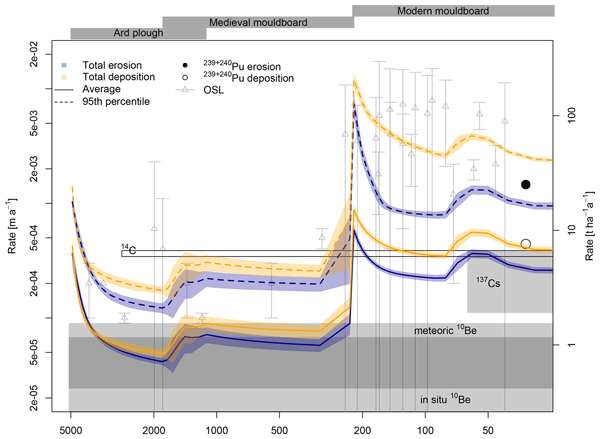
A soil-landscape evolution model was used to calculate hillslope erosion rates from OSL-based (Optically Stimulated Luminescence) deposition ages through inverse modelling, with consideration of uncertainties in model input. The results show that erosion rates differ systematically from the deposition rates, highlighting important shortcomings of assessing land degradation through measurable deposition rates.
W. Marijn van der Meij, Svenja Riedesel, and Tony Reimann
SOIL, 11, 51–66, https://doi.org/10.5194/soil-11-51-2025, https://doi.org/10.5194/soil-11-51-2025, 2025
Short summary
Short summary
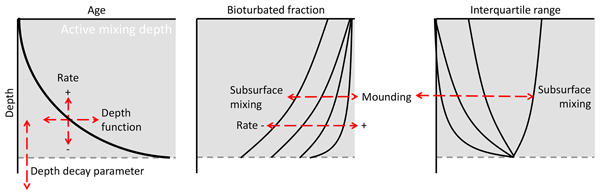
Soil mixing (bioturbation) plays a key role in soil functions, but the underlying processes are poorly understood and difficult to quantify. In this study, we use luminescence, a light-sensitive soil mineral property, and numerical models to better understand different types of bioturbation. We provide a conceptual model that helps to determine which types of bioturbation processes occur in a soil and a numerical model that can derive quantitative process rates from luminescence measurements.
W. Marijn van der Meij, Arnaud J. A. M. Temme, Steven A. Binnie, and Tony Reimann
Geochronology, 5, 241–261, https://doi.org/10.5194/gchron-5-241-2023, https://doi.org/10.5194/gchron-5-241-2023, 2023
Short summary
Short summary
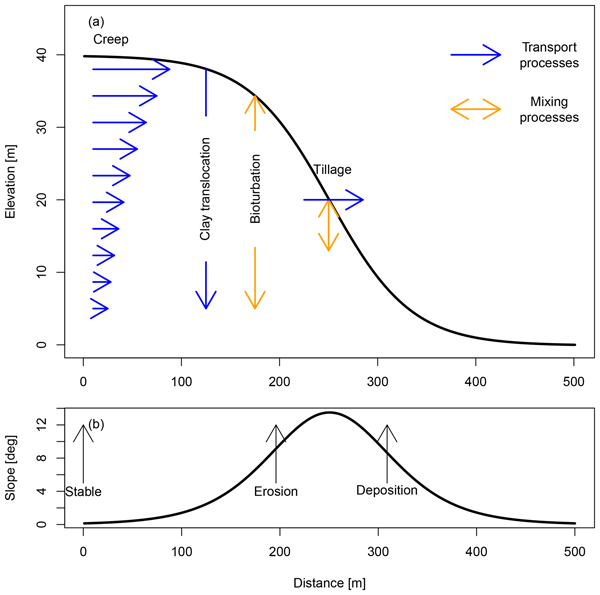
We present our model ChronoLorica. We coupled the original Lorica model, which simulates soil and landscape evolution, with a geochronological module that traces cosmogenic nuclide inventories and particle ages through simulations. These properties are often measured in the field to determine rates of landscape change. The coupling enables calibration of the model and the study of how soil, landscapes and geochronometers change under complex boundary conditions such as intensive land management.

W. Marijn van der Meij
SOIL, 8, 381–389, https://doi.org/10.5194/soil-8-381-2022, https://doi.org/10.5194/soil-8-381-2022, 2022
Short summary
Short summary
The development of soils and landscapes can be complex due to changes in climate and land use. Computer models are required to simulate this complex development. This research presents a new method to analyze and visualize the results of these models. This is done with the use of evolutionary pathways (EPs), which describe how soil properties change in space and through time. I illustrate the EPs with examples from the field and give recommendations for further use of EPs in soil model studies.
Dennis Handy, W. Marijn van der Meij, Mirijam Zickel, and Tony Reimann
Geosci. Instrum. Method. Data Syst., 15, 165–181, https://doi.org/10.5194/gi-15-165-2026, https://doi.org/10.5194/gi-15-165-2026, 2026
Short summary
Short summary
Geoscientific projects often struggle to manage complex data effectively, resulting in valuable information being lost due to poor findability and accessibility. To address this, we present a comprehensive research data framework for storing and processing data throughout a project, from fieldwork to data analysis. This ensures that datasets are clearly defined, reproducible and adhere to the FAIR principles (findability, accessibility, interoperability and reusability).
Shuran Gao, Zhuodong Zhang, W. Marijn van der Meij, Yuxin Feng, Min Wu, and Yihua Song
EGUsphere, https://doi.org/10.5194/egusphere-2026-1837, https://doi.org/10.5194/egusphere-2026-1837, 2026
Short summary
Short summary
In the study, we reprocessed mapping results using a catchment-based method to reveal how properties change vertically with depth and horizontally across the landscape. Vertically, variations arise from factors like parent material, topography and tree uprooting. Horizontally, soils reflect erosion by wind and water. We identified sensitive areas. By combining two approach, we can better visualize soil variability, supporting better land management decisions in environmentally sensitive zones.
Linda Andrea Elisabeth Maßon, Simon Matthias May, Svenja Riedesel, Willem Marijn van der Meij, Stephan Opitz, Andreas Peffeköver, and Tony Reimann
EGUsphere, https://doi.org/10.5194/egusphere-2025-5895, https://doi.org/10.5194/egusphere-2025-5895, 2025
Short summary
Short summary
We investigated geomorphological activity and stability of surfaces and soils along a climatic transect in the Atacama Desert. Single grain luminescence data and sediment analyses reveal recent deposition and shallow post-depositional mixing. Two distinct phases of enhanced activity align with previously reported wetter intervals, demonstrating the sensitivity of arid landscape dynamics to climatic variability.
W. Marijn van der Meij
Earth Surf. Dynam., 13, 845–860, https://doi.org/10.5194/esurf-13-845-2025, https://doi.org/10.5194/esurf-13-845-2025, 2025
Short summary
Short summary
A soil-landscape evolution model was used to calculate hillslope erosion rates from OSL-based (Optically Stimulated Luminescence) deposition ages through inverse modelling, with consideration of uncertainties in model input. The results show that erosion rates differ systematically from the deposition rates, highlighting important shortcomings of assessing land degradation through measurable deposition rates.
W. Marijn van der Meij, Svenja Riedesel, and Tony Reimann
SOIL, 11, 51–66, https://doi.org/10.5194/soil-11-51-2025, https://doi.org/10.5194/soil-11-51-2025, 2025
Short summary
Short summary
Soil mixing (bioturbation) plays a key role in soil functions, but the underlying processes are poorly understood and difficult to quantify. In this study, we use luminescence, a light-sensitive soil mineral property, and numerical models to better understand different types of bioturbation. We provide a conceptual model that helps to determine which types of bioturbation processes occur in a soil and a numerical model that can derive quantitative process rates from luminescence measurements.
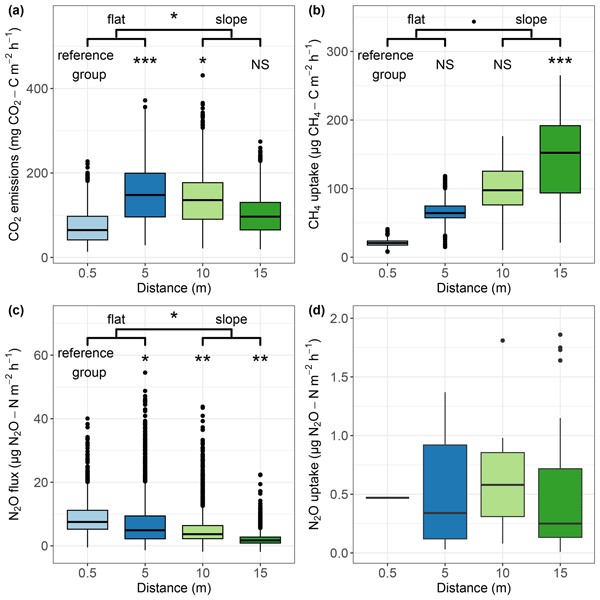
Lauren M. Gillespie, Nathalie Y. Triches, Diego Abalos, Peter Finke, Sophie Zechmeister-Boltenstern, Stephan Glatzel, and Eugenio Díaz-Pinés
SOIL, 9, 517–531, https://doi.org/10.5194/soil-9-517-2023, https://doi.org/10.5194/soil-9-517-2023, 2023
Short summary
Short summary
Forest soil is potentially an important source or sink of greenhouse gases (CO2, N2O, and CH4), but this is affected by soil conditions. We studied how land inclination and soil/litter properties influence the flux of these gases. CO2 and N2O were more affected by inclination than CH4; all were affected by soil/litter properties. This study underlines the importance of inclination and soil/litter properties in predicting greenhouse gas fluxes from forest soil and potential source–sink balance.
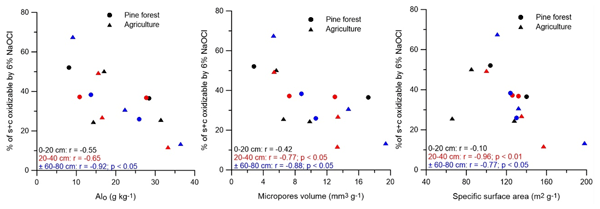
Sastrika Anindita, Peter Finke, and Steven Sleutel
SOIL, 9, 443–459, https://doi.org/10.5194/soil-9-443-2023, https://doi.org/10.5194/soil-9-443-2023, 2023
Short summary
Short summary
This study investigated how land use, through its impact on soil geochemistry, might indirectly control soil organic carbon (SOC) content in tropical volcanic soils in Indonesia. We analyzed SOC fractions, substrate-specific mineralization, and net priming of SOC. Our results indicated that the enhanced formation of aluminum (hydr)oxides promoted aggregation and physical occlusion of OC, which is consistent with the lesser degradability of SOC in agricultural soils.
W. Marijn van der Meij, Arnaud J. A. M. Temme, Steven A. Binnie, and Tony Reimann
Geochronology, 5, 241–261, https://doi.org/10.5194/gchron-5-241-2023, https://doi.org/10.5194/gchron-5-241-2023, 2023
Short summary
Short summary
We present our model ChronoLorica. We coupled the original Lorica model, which simulates soil and landscape evolution, with a geochronological module that traces cosmogenic nuclide inventories and particle ages through simulations. These properties are often measured in the field to determine rates of landscape change. The coupling enables calibration of the model and the study of how soil, landscapes and geochronometers change under complex boundary conditions such as intensive land management.
W. Marijn van der Meij
SOIL, 8, 381–389, https://doi.org/10.5194/soil-8-381-2022, https://doi.org/10.5194/soil-8-381-2022, 2022
Short summary
Short summary
The development of soils and landscapes can be complex due to changes in climate and land use. Computer models are required to simulate this complex development. This research presents a new method to analyze and visualize the results of these models. This is done with the use of evolutionary pathways (EPs), which describe how soil properties change in space and through time. I illustrate the EPs with examples from the field and give recommendations for further use of EPs in soil model studies.
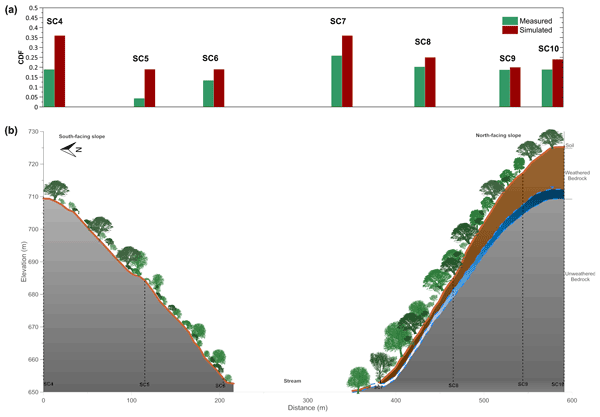
Vanesa García-Gamero, Tom Vanwalleghem, Adolfo Peña, Andrea Román-Sánchez, and Peter A. Finke
SOIL, 8, 319–335, https://doi.org/10.5194/soil-8-319-2022, https://doi.org/10.5194/soil-8-319-2022, 2022
Short summary
Short summary
Short-scale soil variability has received much less attention than at the regional scale. The chemical depletion fraction (CDF), a proxy for chemical weathering, was measured and simulated with SoilGen along two opposite slopes in southern Spain. The results show that differences in CDF could not be explained by topography alone but by hydrological parameters. The model sensitivity test shows the maximum CDF value for intermediate precipitation has similar findings to other soil properties.
Cited articles
Abramoff, R. Z., Guenet, B., Zhang, H., Georgiou, K., Xu, X., Viscarra Rossel, R. A., Yuan, W., and Ciais, P.: Improved global-scale predictions of soil carbon stocks with Millennial Version 2, Soil Biology and Biochemistry, 164, 108466, https://doi.org/10.1016/j.soilbio.2021.108466, 2022.
Alvarez, R.: A quantitative review of the effects of residue removing on soil organic carbon in croplands, Soil and Tillage Research, 240, 106098, https://doi.org/10.1016/j.still.2024.106098, 2024.
Andrén, O. and Kätterer, T.: ICBM: The Introductory Carbon Balance Model for Exploration of Soil Carbon Balances, Ecological Applications, 7, 1226–1236, https://doi.org/10.2307/2641210, 1997.
Anindita, S., Sleutel, S., and Finke, P. A.: Simulating soil organic carbon stock as affected by land use and climate change on volcanic soils in Indonesia, Geoderma Regional, 34, e00698, https://doi.org/10.1016/j.geodrs.2023.e00698, 2023.
Bauer, P., Stevens, B., and Hazeleger, W.: A digital twin of Earth for the green transition, Nat. Clim. Chang., 11, 80–83, https://doi.org/10.1038/s41558-021-00986-y, 2021.
Blair, G. S.: Digital twins of the natural environment, Patterns, 2, 100359, https://doi.org/10.1016/j.patter.2021.100359, 2021.
Bockheim, J. G. and Gennadiyev, A. N.: The role of soil-forming processes in the definition of taxa in Soil Taxonomy and the World Soil Reference Base, Geoderma, 95, 53–72, https://doi.org/10.1016/S0016-7061(99)00083-X, 2000.
Bruni, E., Chenu, C., Abramoff, R. Z., Baldoni, G., Barkusky, D., Clivot, H., Huang, Y., Kätterer, T., Pikuła, D., Spiegel, H., Virto, I., and Guenet, B.: Multi-modelling predictions show high uncertainty of required carbon input changes to reach a 4 ‰ target, European Journal of Soil Science, 73, e13330, https://doi.org/10.1111/ejss.13330, 2022.
Buss, W., Hasemer, H., Sokol, N. W., Rohling, E. J., and Borevitz, J.: Applying minerals to soil to draw down atmospheric carbon dioxide through synergistic organic and inorganic pathways, Commun. Earth Environ., 5, 602, https://doi.org/10.1038/s43247-024-01771-3, 2024.
Coucheney, E., Herrmann, A. M., and Jarvis, N.: A simple model of the turnover of organic carbon in a soil profile: model test, parameter identification and sensitivity, SOIL, 11, 715–733, https://doi.org/10.5194/soil-11-715-2025, 2025.
Creamer, R. E., Barel, J. M., Bongiorno, G., and Zwetsloot, M. J.: The life of soils: Integrating the who and how of multifunctionality, Soil Biology and Biochemistry, 166, 108561, https://doi.org/10.1016/j.soilbio.2022.108561, 2022.
Davis, B. A. S., Brewer, S., Stevenson, A. C., and Guiot, J.: The temperature of Europe during the Holocene reconstructed from pollen data, Quaternary Science Reviews, 22, 1701–1716, https://doi.org/10.1016/S0277-3791(03)00173-2, 2003.
European Commission: Regulation (EU) 2024/3012 of the European Parliament and of the Council of 27 November 2024 establishing a Union certification framework for permanent carbon removals, carbon farming and carbon storage in products, Regulation (EU) No. 2024/3012, http://data.europa.eu/eli/reg/2024/3012/oj (last access: 13 October 2025), 2024.
Feng, X., Dai, G., Liu, T., Jia, J., Zhu, E., Liu, C., Zhao, Y., Wang, Y., Kang, E., Xiao, J., and Li, W.: Understanding the mechanisms and potential pathways of soil carbon sequestration from the biogeochemistry perspective, Sci. China Earth Sci., 67, 3386–3396, https://doi.org/10.1007/s11430-024-1359-9, 2024.
Finke, P. A.: Modeling the genesis of luvisols as a function of topographic position in loess parent material, Quaternary International, 265, 3–17, https://doi.org/10.1016/j.quaint.2011.10.016, 2012.
Finke, P. A.: Modelling Soil Development Under Global Change, Springer Nature Switzerland, Cham, https://doi.org/10.1007/978-3-031-55583-1, 2024a.
Finke, P. A.: SoilGen3.8 model (code, executable, supporting software and cases), Zenodo [code], https://doi.org/10.5281/zenodo.13934823, 2024b.
Finke, P. A. and Hutson, J. L.: Modelling soil genesis in calcareous loess, Geoderma, 145, 462–479, https://doi.org/10.1016/j.geoderma.2008.01.017, 2008.
Finke, P. A., Samouëlian, A., Suarez-Bonnet, M., Laroche, B., and Cornu, S. S.: Assessing the usage potential of SoilGen2 to predict clay translocation under forest and agricultural land uses, European Journal of Soil Science, 66, 194–205, https://doi.org/10.1111/ejss.12190, 2015.
Finke, P. A., Opolot, E., Balesdent, J., Berhe, A. A., Boeckx, P., Cornu, S., Harden, J., Hatté, C., Williams, E., and Doetterl, S.: Can SOC modelling be improved by accounting for pedogenesis?, Geoderma, 338, 513–524, https://doi.org/10.1016/j.geoderma.2018.10.018, 2019.
Fuller, A., Fan, Z., Day, C., and Barlow, C.: Digital Twin: Enabling Technologies, Challenges and Open Research, IEEE Access, 8, 108952–108971, https://doi.org/10.1109/ACCESS.2020.2998358, 2020.
Georgiou, K., Jackson, R. B., Vindušková, O., Abramoff, R. Z., Ahlström, A., Feng, W., Harden, J. W., Pellegrini, A. F. A., Polley, H. W., Soong, J. L., Riley, W. J., and Torn, M. S.: Global stocks and capacity of mineral-associated soil organic carbon, Nat. Commun., 13, 3797, https://doi.org/10.1038/s41467-022-31540-9, 2022.
Gerke, H. H., Vogel, H.-J., Weber, T. K. D., van der Meij, W. M., and Scholten, T.: 3–4D soil model as challenge for future soil research: Quantitative soil modeling based on the solid phase, Journal of Plant Nutrition and Soil Science, 185, 720–744, https://doi.org/10.1002/jpln.202200239, 2022.
Hicks Pries, C. E., Ryals, R., Zhu, B., Min, K., Cooper, A., Goldsmith, S., Pett-Ridge, J., Torn, M., and Berhe, A. A.: The Deep Soil Organic Carbon Response to Global Change, Annual Review of Ecology, Evolution, and Systematics, 54, 375–401, https://doi.org/10.1146/annurev-ecolsys-102320-085332, 2023.
Huang, Y., Xin, Z., Ran, L., Qin, Y., and Cai, M.: Topsoil carbon sequestration of vegetation restoration on the Loess Plateau, Ecological Engineering, 177, 106570, https://doi.org/10.1016/j.ecoleng.2022.106570, 2022.
IUSS Working Group WRB: World reference base for soil resources 2022: International soil classification system for naming soils and creating legends for soil maps, 4th edition, International Union of Soil Sciences, Vienna, Austria, 2022.
Jenkinson, D. S. and Coleman, K.: Calculating the annual input of organic matter to soil from measurements of total organic carbon and radiocarbon, European Journal of Soil Science, 45, 167–174, https://doi.org/10.1111/j.1365-2389.1994.tb00498.x, 1994.
Jia, N., Li, L., Guo, H., and Xie, M.: Important role of Fe oxides in global soil carbon stabilization and stocks, Nat. Commun., 15, 10318, https://doi.org/10.1038/s41467-024-54832-8, 2024.
Jiang, R., Gunina, A., Qu, D., Kuzyakov, Y., Yu, Y., Hatano, R., Frimpong, K. A., and Li, M.: Afforestation of loess soils: Old and new organic carbon in aggregates and density fractions, CATENA, 177, 49–56, https://doi.org/10.1016/j.catena.2019.02.002, 2019.
Keyvanshokouhi, S., Cornu, S., Samouelian, A., and Finke, P. A.: Evaluating SoilGen2 as a tool for projecting soil evolution induced by global change, Science of The Total Environment, 571, 110–123, https://doi.org/10.1016/j.scitotenv.2016.07.119, 2016.
Keyvanshokouhi, S., Cornu, S., Lafolie, F., Balesdent, J., Guenet, B., Moitrier, N., Moitrier, N., Nougier, C., and Finke, P. A.: Effects of soil process formalisms and forcing factors on simulated organic carbon depth-distributions in soils, Science of The Total Environment, 652, 523–537, https://doi.org/10.1016/j.scitotenv.2018.10.236, 2019.
Kou, X., Morriën, E., Tian, Y., Zhang, X., Lu, C., Xie, H., Liang, W., Li, Q., and Liang, C.: Exogenous carbon turnover within the soil food web strengthens soil carbon sequestration through microbial necromass accumulation, Global Change Biology, 29, 4069–4080, https://doi.org/10.1111/gcb.16749, 2023.
Lal, R.: Intensive Agriculture and the Soil Carbon Pool, Journal of Crop Improvement, 27, 735–751, https://doi.org/10.1080/15427528.2013.845053, 2013.
López i Losada, R., Hedlund, K., Haddaway, N. R., Sahlin, U., Jackson, L. E., Kätterer, T., Lugato, E., Jørgensen, H. B., and Isberg, P.-E.: Synergistic effects of multiple “good agricultural practices” for promoting organic carbon in soils: A systematic review of long-term experiments, Ambio, 54, 1715–1728, https://doi.org/10.1007/s13280-025-02188-8, 2025.
Luo, Z., Wang, G., and Wang, E.: Global subsoil organic carbon turnover times dominantly controlled by soil properties rather than climate, Nat. Commun., 10, 3688, https://doi.org/10.1038/s41467-019-11597-9, 2019.
Maenhout, P., Di Bene, C., Cayuela, M. L., Diaz-Pines, E., Govednik, A., Keuper, F., Mavsar, S., Mihelic, R., O'Toole, A., Schwarzmann, A., Suhadolc, M., Syp, A., and Valkama, E.: Trade-offs and synergies of soil carbon sequestration: Addressing knowledge gaps related to soil management strategies, European Journal of Soil Science, 75, e13515, https://doi.org/10.1111/ejss.13515, 2024.
Maimour, M., Ahmed, A., and Rondeau, E.: Survey on digital twins for natural environments: A communication network perspective, Internet of Things, 25, 101070, https://doi.org/10.1016/j.iot.2024.101070, 2024.
Mao, X., Van Zwieten, L., Zhang, M., Qiu, Z., Yao, Y., and Wang, H.: Soil parent material controls organic matter stocks and retention patterns in subtropical China, J. Soils Sediments, 20, 2426–2438, https://doi.org/10.1007/s11368-020-02578-3, 2020.
Meng, X., Kooijman, A. M., Temme, A. J. A. M., and Cammeraat, E. L. H.: The current and future role of biota in soil-landscape evolution models, Earth-Science Reviews, 103945, https://doi.org/10.1016/j.earscirev.2022.103945, 2022.
Meurer, K. H. E., Chenu, C., Coucheney, E., Herrmann, A. M., Keller, T., Kätterer, T., Nimblad Svensson, D., and Jarvis, N.: Modelling dynamic interactions between soil structure and the storage and turnover of soil organic matter, Biogeosciences, 17, 5025–5042, https://doi.org/10.5194/bg-17-5025-2020, 2020.
Minasny, B., Finke, P. A., Stockmann, U., Vanwalleghem, T., and McBratney, A. B.: Resolving the integral connection between pedogenesis and landscape evolution, Earth-Science Reviews, 150, 102–120, https://doi.org/10.1016/j.earscirev.2015.07.004, 2015.
Minasny, B., Malone, B. P., McBratney, A. B., Angers, D. A., Arrouays, D., Chambers, A., Chaplot, V., Chen, Z.-S., Cheng, K., Das, B. S., Field, D. J., Gimona, A., Hedley, C. B., Hong, S. Y., Mandal, B., Marchant, B. P., Martin, M., McConkey, B. G., Mulder, V. L., O'Rourke, S., Richer-de-Forges, A. C., Odeh, I., Padarian, J., Paustian, K., Pan, G., Poggio, L., Savin, I., Stolbovoy, V., Stockmann, U., Sulaeman, Y., Tsui, C.-C., Vågen, T.-G., Van Wesemael, B., and Winowiecki, L.: Soil carbon 4 per mille, Geoderma, 292, 59–86, https://doi.org/10.1016/j.geoderma.2017.01.002, 2017.
Nave, L. E., Swanston, C. W., Mishra, U., and Nadelhoffer, K. J.: Afforestation Effects on Soil Carbon Storage in the United States: A Synthesis, Soil Science Society of America Journal, 77, 1035–1047, https://doi.org/10.2136/sssaj2012.0236, 2013.
Nazir, M. J., Li, G., Nazir, M. M., Zulfiqar, F., Siddique, K. H. M., Iqbal, B., and Du, D.: Harnessing soil carbon sequestration to address climate change challenges in agriculture, Soil and Tillage Research, 237, 105959, https://doi.org/10.1016/j.still.2023.105959, 2024.
Olson, K. R., Al-Kaisi, M., Lal, R., and Cihacek, L.: Impact of soil erosion on soil organic carbon stocks, Journal of Soil and Water Conservation, 71, 61A-67A, https://doi.org/10.2489/jswc.71.3.61A, 2016.
Opolot, E. and Finke, P. A.: Evaluating sensitivity of silicate mineral dissolution rates to physical weathering using a soil evolution model (SoilGen2.25), Biogeosciences, 12, 6791–6808, https://doi.org/10.5194/bg-12-6791-2015, 2015.
Opolot, E., Yu, Y. Y., and Finke, P. A.: Modeling soil genesis at pedon and landscape scales: Achievements and problems, Quaternary International, 376, 34–46, https://doi.org/10.1016/j.quaint.2014.02.017, 2015.
Paradelo, R., Virto, I., and Chenu, C.: Net effect of liming on soil organic carbon stocks: A review, Agriculture, Ecosystems & Environment, 202, 98–107, https://doi.org/10.1016/j.agee.2015.01.005, 2015.
Parewai, I. and Köppen, M.: A Digital Twin Approach for Soil Moisture Measurement with Physically Based Rendering Simulations and Machine Learning, Electronics, 14, 395, https://doi.org/10.3390/electronics14020395, 2025.
Peltre, C., Christensen, B. T., Dragon, S., Icard, C., Kätterer, T., and Houot, S.: RothC simulation of carbon accumulation in soil after repeated application of widely different organic amendments, Soil Biology and Biochemistry, 52, 49–60, https://doi.org/10.1016/j.soilbio.2012.03.023, 2012.
Ranathunga, K. N., Finke, P. A., Yin, Q., Verdoodt, A., and Yu, Y.: Soil modeling for soil loss tolerance estimations: Exploring natural baselines and long-term variations, Global and Planetary Change, 204, 103548, https://doi.org/10.1016/j.gloplacha.2021.103548, 2021.
Ranathunga, K. N., Finke, P. A., Yin, Q., and Yu, Y.: Calibrating SoilGen2 for interglacial soil evolution in the Chinese Loess Plateau considering soil parameters and the effect of dust addition rhythm, Quaternary International, 607, 100–112, https://doi.org/10.1016/j.quaint.2021.08.019, 2022.
Sallaba, F., Lehsten, D., Seaquist, J., and Sykes, M. T.: A rapid NPP meta-model for current and future climate and CO2 scenarios in Europe, Ecological Modelling, 302, 29–41, https://doi.org/10.1016/j.ecolmodel.2015.01.026, 2015.
Salomé, C., Nunan, N., Pouteau, V., Lerch, T. Z., and Chenu, C.: Carbon dynamics in topsoil and in subsoil may be controlled by different regulatory mechanisms, Global Change Biology, 16, 416–426, https://doi.org/10.1111/j.1365-2486.2009.01884.x, 2010.
Sanderman, J., Hengl, T., and Fiske, G. J.: Soil carbon debt of 12,000 years of human land use, P. Natl. Acad. Sci. USA, 114, 9575–9580, https://doi.org/10.1073/pnas.1706103114, 2017.
Sauer, D., Schülli-Maurer, I., Sperstad, R., Sørensen, R., and Stahr, K.: Albeluvisol development with time in loamy marine sediments of southern Norway, Quaternary International, 209, 31–43, https://doi.org/10.1016/j.quaint.2008.09.007, 2009.
Sauer, D., Finke, P. A., Sørensen, R., Sperstad, R., Schülli-Maurer, I., Høeg, H., and Stahr, K.: Testing a soil development model against southern Norway soil chronosequences, Quaternary International, 265, 18–31, https://doi.org/10.1016/j.quaint.2011.12.018, 2012.
Scheel, T., Jansen, B., Van Wijk, A. J., Verstraten, J. M., and Kalbitz, K.: Stabilization of dissolved organic matter by aluminium: a toxic effect or stabilization through precipitation?, European Journal of Soil Science, 59, 1122–1132, https://doi.org/10.1111/j.1365-2389.2008.01074.x, 2008.
Silva, L., Rodríguez-Sedano, F., Baptista, P., and Coelho, J. P.: The Digital Twin Paradigm Applied to Soil Quality Assessment: A Systematic Literature Review, Sensors, 23, 1007, https://doi.org/10.3390/s23021007, 2023.
Temme, A. J. A. M., Armitage, J., Attal, M., Gorp, W. van, Coulthard, T. J., and Schoorl, J. M.: Developing, choosing and using landscape evolution models to inform field-based landscape reconstruction studies, Earth Surface Processes and Landforms, 42, 2167–2183, https://doi.org/10.1002/esp.4162, 2017.
Tsakiridis, N. L., Samarinas, N., Kalopesa, E., and Zalidis, G. C.: Cognitive Soil Digital Twin for Monitoring the Soil Ecosystem: A Conceptual Framework, Soil Systems, 7, 88, https://doi.org/10.3390/soilsystems7040088, 2023.
Van de roek, M., Govers, G., Schrumpf, M., and Six, J.: A microbially driven and depth-explicit soil organic carbon model constrained by carbon isotopes to reduce parameter equifinality, Biogeosciences, 22, 1427–1446, https://doi.org/10.5194/bg-22-1427-2025, 2025.
Van der Meij, W. M., Temme, A. J. A. M., Lin, H. S., Gerke, H. H., and Sommer, M.: On the role of hydrologic processes in soil and landscape evolution modeling: concepts, complications and partial solutions, Earth-Science Reviews, 185, 1088–1106, https://doi.org/10.1016/j.earscirev.2018.09.001, 2018.
Van Oost, K. and Six, J.: Reconciling the paradox of soil organic carbon erosion by water, Biogeosciences, 20, 635–646, https://doi.org/10.5194/bg-20-635-2023, 2023.
van Wesemael, B., Abdelbaki, A., Ben-Dor, E., Chabrillat, S., d'Angelo, P., Demattê, J. A. M., Genova, G., Gholizadeh, A., Heiden, U., Karlshoefer, P., Milewski, R., Poggio, L., Sabetizade, M., Sanz, A., Schwind, P., Tsakiridis, N., Tziolas, N., Yagüe, J., and Žížala, D.: A European soil organic carbon monitoring system leveraging Sentinel 2 imagery and the LUCAS soil data base, Geoderma, 452, 117113, https://doi.org/10.1016/j.geoderma.2024.117113, 2024.
Viscarra Rossel, R. A., Behrens, T., Ben-Dor, E., Brown, D. J., Demattê, J. A. M., Shepherd, K. D., Shi, Z., Stenberg, B., Stevens, A., Adamchuk, V., Aïchi, H., Barthès, B. G., Bartholomeus, H. M., Bayer, A. D., Bernoux, M., Böttcher, K., Brodský, L., Du, C. W., Chappell, A., Fouad, Y., Genot, V., Gomez, C., Grunwald, S., Gubler, A., Guerrero, C., Hedley, C. B., Knadel, M., Morrás, H. J. M., Nocita, M., Ramirez-Lopez, L., Roudier, P., Campos, E. M. R., Sanborn, P., Sellitto, V. M., Sudduth, K. A., Rawlins, B. G., Walter, C., Winowiecki, L. A., Hong, S. Y., and Ji, W.: A global spectral library to characterize the world's soil, Earth-Science Reviews, 155, 198–230, https://doi.org/10.1016/j.earscirev.2016.01.012, 2016.
Wiesmeier, M., Urbanski, L., Hobley, E., Lang, B., Von Lützow, M., Marin-Spiotta, E., Van Wesemael, B., Rabot, E., Ließ, M., Garcia-Franco, N., Wollschläger, U., Vogel, H.-J., and Kögel-Knabner, I.: Soil organic carbon storage as a key function of soils – A review of drivers and indicators at various scales, Geoderma, 333, 149–162, https://doi.org/10.1016/j.geoderma.2018.07.026, 2019.
Wösten, J. H. M., Lilly, A., Nemes, A., and Le Bas, C.: Development and use of a database of hydraulic properties of European soils, Geoderma, 90, 169–185, https://doi.org/10.1016/S0016-7061(98)00132-3, 1999.
Yu, Y. Y., Finke, P. A., Wu, H. B., and Guo, Z. T.: Sensitivity analysis and calibration of a soil carbon model (SoilGen2) in two contrasting loess forest soils, Geosci. Model Dev., 6, 29–44, https://doi.org/10.5194/gmd-6-29-2013, 2013.
Zeng, Y., Verhoef, A., Vereecken, H., Ben-Dor, E., Veldkamp, T., Shaw, L., Van Der Ploeg, M., Wang, Y., and Su, Z.: Monitoring and Modeling the Soil-Plant System Toward Understanding Soil Health, Reviews of Geophysics, 63, e2024RG000836, https://doi.org/10.1029/2024RG000836, 2025.
Zhang, J., Quine, T. A., Ni, S., and Ge, F.: Stocks and dynamics of SOC in relation to soil redistribution by water and tillage erosion, Global Change Biology, 12, 1834–1841, https://doi.org/10.1111/j.1365-2486.2006.01206.x, 2006.
Zhang, L., Yang, L., Crowther, T. W., Zohner, C. M., Doetterl, S., Heuvelink, G. B. M., Wadoux, A. M. J.-C., Zhu, A.-X., Pu, Y., Shen, F., Ma, H., Zou, Y., and Zhou, C.: Mapping global distributions, environmental controls, and uncertainties of apparent topsoil and subsoil organic carbon turnover times, Earth Syst. Sci. Data, 17, 2605–2623, https://doi.org/10.5194/essd-17-2605-2025, 2025.
Zwertvaegher, A., Finke, P. A., De Smedt, P., Gelorini, V., Van Meirvenne, M., Bats, M., De Reu, J., Antrop, M., Bourgeois, J., and De Maeyer, P.: Spatio-temporal modeling of soil characteristics for soilscape reconstruction, Geoderma, 207, 166–179, https://doi.org/10.1016/j.geoderma.2013.05.013, 2013.
Short summary
We used soil evolution model SoilGen to simulate long-term soil organic carbon (SOC) sequestration under varying environmental conditions and internal protection mechanisms. Our results revealed a strong role of pedogenetic and environmental history on current-day and future SOC sequestration potential. We propose a framework for developing topical digital twins of long-term soil processes to monitor and project future development of specific soil properties under global change.
We used soil evolution model SoilGen to simulate long-term soil organic carbon (SOC)...


Special issue