
Articles | Volume 12, issue 1
https://doi.org/10.5194/soil-12-633-2026
© Author(s) 2026. This work is distributed under
the Creative Commons Attribution 4.0 License.
the Creative Commons Attribution 4.0 License.
https://doi.org/10.5194/soil-12-633-2026
© Author(s) 2026. This work is distributed under
the Creative Commons Attribution 4.0 License.
the Creative Commons Attribution 4.0 License.
Original research article
| Highlight paper
| 
18 May 2026
Original research article | Highlight paper |
| 18 May 2026
| 18 May 2026
Mineral-bound organic carbon exposed by hillslope thermokarst terrain: case study in Cape Bounty, Canadian High Arctic

Earth and Life Institute, Université catholique de Louvain, Louvain-la-Neuve, Belgium
Julien Fouché
LISAH, Univ. Montpellier, AgroParisTech, INRAE, Institut Agro, IRD, Montpellier, France
Hugues Titeux
Earth and Life Institute, Université catholique de Louvain, Louvain-la-Neuve, Belgium
Charlotte Morelle
Earth and Life Institute, Université catholique de Louvain, Louvain-la-Neuve, Belgium
Nathan Bemelmans
Earth and Life Institute, Université catholique de Louvain, Louvain-la-Neuve, Belgium
Melissa J. Lafrenière
Department of Geography and Planning, Queen's University, Kingston, ON, K7L 3N6, Canada
Joanne K. Heslop
Department of Geography and Planning, Queen's University, Kingston, ON, K7L 3N6, Canada
now at: The Alaska Earthquake Center, University of Alaska, Fairbanks, Alaska, USA
Sophie Opfergelt
Earth and Life Institute, Université catholique de Louvain, Louvain-la-Neuve, Belgium
Related authors
Maxime Thomas, Thomas Moenaert, Julien Radoux, Baptiste Delhez, Eléonore du Bois d'Aische, Maëlle Villani, Catherine Hirst, Erik Lundin, François Jonard, Sébastien Lambot, Kristof Van Oost, Veerle Vanacker, Matthias B. Siewert, Carl-Magnus Mörth, Michael W. Palace, Ruth K. Varner, Franklin B. Sullivan, Christina Herrick, and Sophie Opfergelt
The Cryosphere, 20, 5271–5301, https://doi.org/10.5194/tc-20-5271-2026, https://doi.org/10.5194/tc-20-5271-2026, 2026
Short summary
Short summary
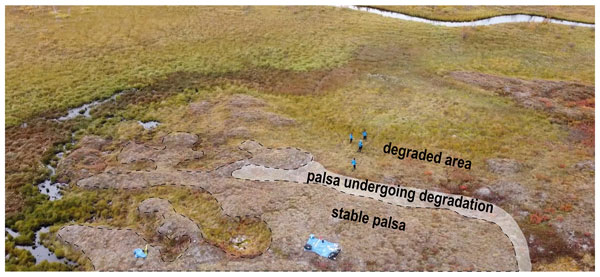
This study examines the rate of permafrost degradation, in the form of the transition from intact well-drained palsa to fully thawed and inundated fen at the Stordalen mire, Abisko, Sweden. Across the 14 hectares of the palsa mire, we demonstrate a 10-fold acceleration of the degradation in 2019–2021 compared to previous periods (1970–2014) which might lead to a pool of 12 × 10³ kg of organic carbon exposed annually for the topsoil (23 cm depth).
Maud Henrion, Sophie Opfergelt, Maëlle Villani, Philippe Roux, Djim Verleene, Eléonore du Bois d'Aische, Maxime Thomas, Gilles Denis, Edward A. G. Schuur, François Jonard, Veerle Vanacker, Kristof Van Oost, and Sébastien Lambot
EGUsphere, https://doi.org/10.5194/egusphere-2025-4667, https://doi.org/10.5194/egusphere-2025-4667, 2025
Preprint archived
Short summary
Short summary
Taliks play an important role in permafrost degradation. This study used Ground-penetrating radar to map taliks in Alaska, focusing on water tracks. The method successfully detected taliks and determined their upper depth. These were more frequent, shallower, and thicker under water tracks. This study showed that water tracks are hotspots for talik formation, with major implications for winter water flow in permafrost landscapes.
Angus Moore, Maud Henrion, Yanfei Li, Eléonore du Bois d'Aische, Philip Gautschi, Marcus Christl, François Jonard, Sébastien Lambot, Kristof Van Oost, Sophie Opfergelt, and Veerle Vanacker
Earth Surf. Dynam., 14, 763–780, https://doi.org/10.5194/esurf-14-763-2026, https://doi.org/10.5194/esurf-14-763-2026, 2026
Short summary
Short summary
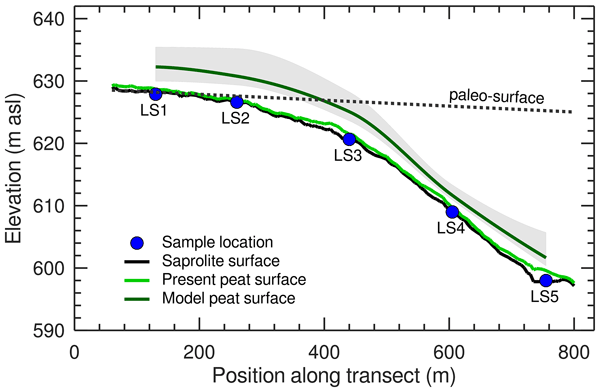
Studying peatland dynamics over long timescales requires a proxy for past peat cover. In this paper, we explore using cosmogenic nuclides to infer peat thicknesses averaged over 100 kyr timescales. We find that long-term peat thicknesses inferred from cosmogenic nuclides at an upland peatland site in the Belgian Ardennes are consistent with independent constraints, but exceed modern peat thicknesses. We attribute this discrepancy to peat degradation associated with historical land use.
Maëlle Villani, Louise M. Farquharson, Vladimir E. Romanovsky, and Sophie Opfergelt
EGUsphere, https://doi.org/10.5194/egusphere-2026-5453, https://doi.org/10.5194/egusphere-2026-5453, 2026
This preprint is open for discussion and under review for Biogeosciences (BG).
Short summary
Short summary
Taliks, unfrozen ground within permafrost, sustain year-round biogeochemical processes, mobilizing carbon, nutrients, and contaminants through lateral and open taliks, while closed and isolated taliks confine reactions locally. In this manuscript, we argue that taliks represent a critical and overlooked driver of Arctic and sub-Arctic biogeochemical processes. We put forward three testable hypotheses to advance the study of talik biogeochemical functioning and we propose a related road map.
Maxime Thomas, Thomas Moenaert, Julien Radoux, Baptiste Delhez, Eléonore du Bois d'Aische, Maëlle Villani, Catherine Hirst, Erik Lundin, François Jonard, Sébastien Lambot, Kristof Van Oost, Veerle Vanacker, Matthias B. Siewert, Carl-Magnus Mörth, Michael W. Palace, Ruth K. Varner, Franklin B. Sullivan, Christina Herrick, and Sophie Opfergelt
The Cryosphere, 20, 5271–5301, https://doi.org/10.5194/tc-20-5271-2026, https://doi.org/10.5194/tc-20-5271-2026, 2026
Short summary
Short summary
This study examines the rate of permafrost degradation, in the form of the transition from intact well-drained palsa to fully thawed and inundated fen at the Stordalen mire, Abisko, Sweden. Across the 14 hectares of the palsa mire, we demonstrate a 10-fold acceleration of the degradation in 2019–2021 compared to previous periods (1970–2014) which might lead to a pool of 12 × 10³ kg of organic carbon exposed annually for the topsoil (23 cm depth).
Gabrielle K. F. Hatten, Steven V. Kokelj, Sophie Opfergelt, Duane G. Froese, Alejandro Alvarez, Joseph M. Young, and Suzanne E. Tank
EGUsphere, https://doi.org/10.5194/egusphere-2026-1844, https://doi.org/10.5194/egusphere-2026-1844, 2026
Short summary
Short summary
Sorption of organic matter (OM) to recently thawed permafrost sediments can critically alter OM fate. Using 32 sediment samples from a suite of diverse permafrost landscapes, we show that organo-mineral interactions “sort” dissolved OM, enriching the aquatic matrix in labile compounds and increasing biodegradation via shifts in OM composition and nutrient release. Sorption potential varied across and within regions and was tied to sediment characteristics, dictated by landscape history.

Joséphine Hazera, David Sebag, Isabelle Kowalewski, Herman Ravelojaona, Eric Verrecchia, Gergely Jakab, Dóra Zacháry, Florian Schneider, Luca Trombino, Raphaël J. Manlay, Julien Fouché, and Tiphaine Chevallier
Biogeosciences, 23, 1881–1895, https://doi.org/10.5194/bg-23-1881-2026, https://doi.org/10.5194/bg-23-1881-2026, 2026
Short summary
Short summary
Adjusting Rock-Eval® cycle is needed to avoid the need for post-hoc corrections to estimate soil organic (SOC) and inorganic (SIC) carbon. PYRO520 is a cycle with a pyrolysis ending at 520°C instead of 650°C to avoid SIC decomposition while preserving the SOC characterization during pyrolysis. This cycle corrects the misallocation of the end-of-pyrolysis signals and thus repeatably and accurately estimates SOC and SIC contents without using corrections, while preserving the SOC characterization.
Yanfei Li, Maud Henrion, Angus Moore, Sébastien Lambot, Sophie Opfergelt, Veerle Vanacker, François Jonard, and Kristof Van Oost
Biogeosciences, 22, 6369–6392, https://doi.org/10.5194/bg-22-6369-2025, https://doi.org/10.5194/bg-22-6369-2025, 2025
Short summary
Short summary
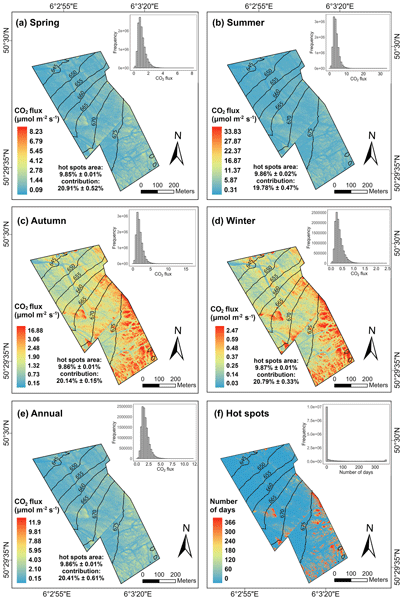
Combining Unmanned Aerial Vehicle (UAV) remote sensing with in-situ monitoring provides high spatial-temporal insights into CO2 fluxes from temperate peatlands. Dynamic factors (soil temperature and moisture) are the primary drivers contributing to 29 % of the spatial and 43 % of the seasonal variation. UAVs are effective tools for mapping daily soil respiration. CO2 fluxes from hot spots & moments contribute 20 % and 30 % of total CO2 fluxes, despite representing only 10 % of the area and time.
Maud Henrion, Sophie Opfergelt, Maëlle Villani, Philippe Roux, Djim Verleene, Eléonore du Bois d'Aische, Maxime Thomas, Gilles Denis, Edward A. G. Schuur, François Jonard, Veerle Vanacker, Kristof Van Oost, and Sébastien Lambot
EGUsphere, https://doi.org/10.5194/egusphere-2025-4667, https://doi.org/10.5194/egusphere-2025-4667, 2025
Preprint archived
Short summary
Short summary
Taliks play an important role in permafrost degradation. This study used Ground-penetrating radar to map taliks in Alaska, focusing on water tracks. The method successfully detected taliks and determined their upper depth. These were more frequent, shallower, and thicker under water tracks. This study showed that water tracks are hotspots for talik formation, with major implications for winter water flow in permafrost landscapes.
Cansu Culha, Sarah Godsey, Shawn Chartrand, Melissa Lafreniere, James McNamara, and James Kirchner
EGUsphere, https://doi.org/10.5194/egusphere-2025-4275, https://doi.org/10.5194/egusphere-2025-4275, 2025
Short summary
Short summary
We study how Arctic rivers respond to rainfall in a warming climate. We show that runoff response can increase more than 5x under wetter conditions, and Active Layer Detachments amplify water and material runoff response to rainfall. Increasing subsurface storage can reduce runoff sensitivity to rainfall. Our results inform the flashiness of rainfall-runoff predictions based on expected weather and erosion conditions.
Alexandre Lhosmot, Gabriel Hould Gosselin, Manuel Helbig, Julien Fouché, Youngryel Ryu, Matteo Detto, Ryan Connon, William Quinton, Tim Moore, and Oliver Sonnentag
Hydrol. Earth Syst. Sci., 29, 4871–4892, https://doi.org/10.5194/hess-29-4871-2025, https://doi.org/10.5194/hess-29-4871-2025, 2025
Short summary
Short summary
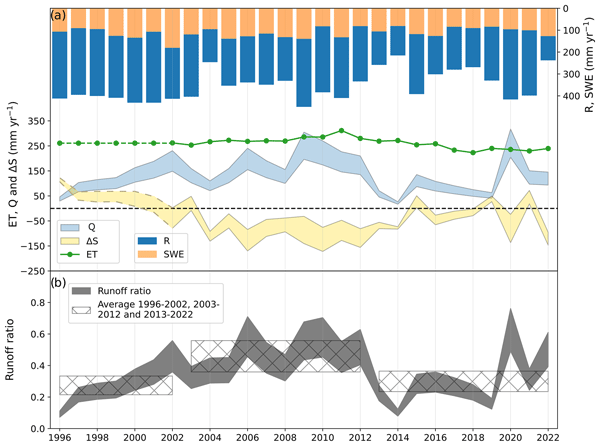
Thawing permafrost changes how water is stored and moves across landscapes. We measured water inputs and outputs in a basin with thawing peatland complexes and three sub-basins. In addition to yearly changes in precipitation and evapotranspiration, we found that hydrological responses are shaped by thaw-driven landscape connectivity. These findings highlight the need for long-term monitoring of ecosystem service shifts.
Cécile Osy, Sophie Opfergelt, Arsène Druel, and François Massonnet
EGUsphere, https://doi.org/10.5194/egusphere-2025-3680, https://doi.org/10.5194/egusphere-2025-3680, 2025
Preprint archived
Short summary
Short summary
The refreezing period of the active layer (the layer on top of the permafrost that freezes and thaws each year) is changing, with a delay of about five days over a large area in Siberia from 1950 to 2020 in the ERA5-Land reanalysis data. We investigate the drivers of this delay, and find that 2 m air temperature is the main driver of these changes at the large scale, which contrasts with field results in which snow cover is the main driver of changes in refreezing dynamics.
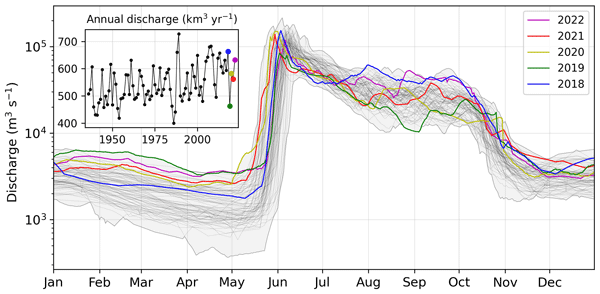
Bennet Juhls, Anne Morgenstern, Jens Hölemann, Antje Eulenburg, Birgit Heim, Frederieke Miesner, Hendrik Grotheer, Gesine Mollenhauer, Hanno Meyer, Ephraim Erkens, Felica Yara Gehde, Sofia Antonova, Sergey Chalov, Maria Tereshina, Oxana Erina, Evgeniya Fingert, Ekaterina Abramova, Tina Sanders, Liudmila Lebedeva, Nikolai Torgovkin, Georgii Maksimov, Vasily Povazhnyi, Rafael Gonçalves-Araujo, Urban Wünsch, Antonina Chetverova, Sophie Opfergelt, and Pier Paul Overduin
Earth Syst. Sci. Data, 17, 1–28, https://doi.org/10.5194/essd-17-1-2025, https://doi.org/10.5194/essd-17-1-2025, 2025
Short summary
Short summary
The Siberian Arctic is warming fast: permafrost is thawing, river chemistry is changing, and coastal ecosystems are affected. We aimed to understand changes in the Lena River, a major Arctic river flowing to the Arctic Ocean, by collecting 4.5 years of detailed water data, including temperature and carbon and nutrient contents. This dataset records current conditions and helps us to detect future changes. Explore it at https://doi.org/10.1594/PANGAEA.913197 and https://lena-monitoring.awi.de/.
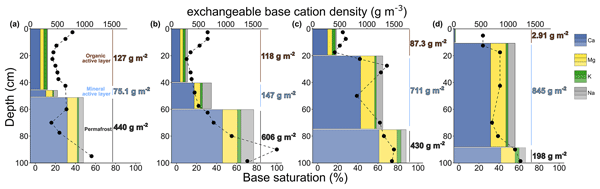
Elisabeth Mauclet, Maëlle Villani, Arthur Monhonval, Catherine Hirst, Edward A. G. Schuur, and Sophie Opfergelt
Earth Syst. Sci. Data, 15, 3891–3904, https://doi.org/10.5194/essd-15-3891-2023, https://doi.org/10.5194/essd-15-3891-2023, 2023
Short summary
Short summary
Permafrost ecosystems are limited in nutrients for vegetation development and constrain the biological activity to the active layer. Upon Arctic warming, permafrost degradation exposes organic and mineral soil material that may directly influence the capacity of the soil to retain key nutrients for vegetation growth and development. Here, we demonstrate that the average total exchangeable nutrient density (Ca, K, Mg, and Na) is more than 2 times higher in the permafrost than in the active layer.
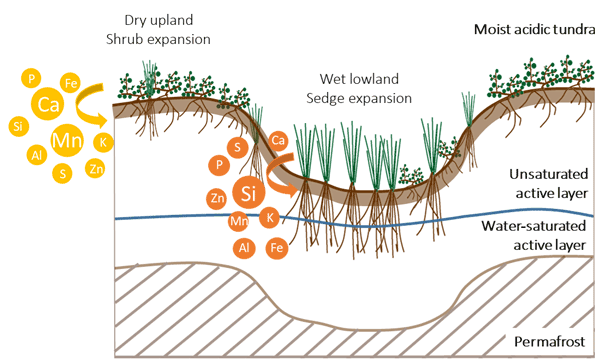
Elisabeth Mauclet, Yannick Agnan, Catherine Hirst, Arthur Monhonval, Benoît Pereira, Aubry Vandeuren, Maëlle Villani, Justin Ledman, Meghan Taylor, Briana L. Jasinski, Edward A. G. Schuur, and Sophie Opfergelt
Biogeosciences, 19, 2333–2351, https://doi.org/10.5194/bg-19-2333-2022, https://doi.org/10.5194/bg-19-2333-2022, 2022
Short summary
Short summary
Arctic warming and permafrost degradation largely affect tundra vegetation. Wetter lowlands show an increase in sedges, whereas drier uplands favor shrub expansion. Here, we demonstrate that the difference in the foliar elemental composition of typical tundra vegetation species controls the change in local foliar elemental stock and potential mineral element cycling through litter production upon a shift in tundra vegetation.
Cited articles
Abbott, B. W. and Jones, J. B.: Permafrost collapse alters soil carbon stocks, respiration, CH4, and N2O in upland tundra, Glob. Change Biol., 21, 4570–4587, https://doi.org/10.1111/gcb.13069, 2015.
AMAP: Arctic Climate Change Update 2021: Key Trends and Impacts. Summary for Policy-makers, Arctic Monitoring and Assessment Programme (AMAP), Tromsø, Norway, 2021.
Baize, D.: Guide des analyses en pédologie, in: 3rd Edn., Quae Editions, Versailles, 328 pp., ISBN 978-2-7592-2836-2, 2018.
Bascomb, C. L.: Distribution of Pyrophosphate-Extractable Iron and Organic Carbon in Soils of Various Groups, J. Soil Sci., 19, 251–268, https://doi.org/10.1111/j.1365-2389.1968.tb01538.x, 1968.
Beel, C. R., Lamoureux, S. F., and Orwin, J. F.: Fluvial Response to a Period of Hydrometeorological Change and Landscape Disturbance in the Canadian High Arctic, Geophys. Res. Lett., 45, 10446-10455, https://doi.org/10.1029/2018GL079660, 2018.
Beel, C. R., Lamoureux, S. F., Orwin, J. F., Pope, M. A., Lafrenière, M. J., and Scott, N. A.: Differential impact of thermal and physical permafrost disturbances on High Arctic dissolved and particulate fluvial fluxes, Sci. Rep., 10, 11836, https://doi.org/10.1038/s41598-020-68824-3, 2020.
Beel, C. R., Heslop, J. K., Orwin, J. F., Pope, M. A., Schevers, A. J., Hung, J. K. Y., Lafrenière, M. J., and Lamoureux, S. F.: Emerging dominance of summer rainfall driving High Arctic terrestrial-aquatic connectivity, Nat. Commun., 12, 1448, https://doi.org/10.1038/s41467-021-21759-3, 2021.
Bischoff, N., Mikutta, R., Shibistova, O., Puzanov, A., Silanteva, M., Grebennikova, A., Fuß, R., and Guggenberger, G.: Limited protection of macro-aggregate-occluded organic carbon in Siberian steppe soils, Biogeosciences, 14, 2627–2640, https://doi.org/10.5194/bg-14-2627-2017, 2017.
Blakemore, L. C., Searle, P. L., and Daly, B. K.: Methods for chemical analysis of soils, New Zealand Soil Bur, Sci. Rep., 10A, https://doi.org/10.7931/DL1-SBSR-10A, 1981.
Boudot, J. P., Bel Hadj∧Brahim, A., Steiman, R., and Seigle-Murandi, F.: Biodegradation of synthetic organo-metallic complexes of iron and aluminium with selected metal to carbon ratios, Soil Biol. Biochem., 21, 961–966, https://doi.org/10.1016/0038-0717(89)90088-6, 1989.
Brooker, A., Fraser, R. H., Olthof, I., Kokelj, S. V., and Lacelle, D.: Mapping the Activity and Evolution of Retrogressive Thaw Slumps by Tasselled Cap Trend Analysis of a Landsat Satellite Image Stack, Permafrost Periglac., 25, 243–256, https://doi.org/10.1002/ppp.1819, 2014.
Burgeon, V., Fouché, J., Leifeld, J., Chenu, C., and Cornélis, J.-T.: Organo–mineral associations largely contribute to the stabilization of century-old pyrogenic organic matter in cropland soils, Geoderma, 388, 114841, https://doi.org/10.1016/j.geoderma.2020.114841, 2021.
Cotrufo, M. F. and Lavallee, J. M.: Chapter One– Soil organic matter formation, persistence, and functioning: A synthesis of current understanding to inform its conservation and regeneration, in: Advances in Agronomy, vol. 172, edited by: Sparks, D. L., Academic Press, 1–66, https://doi.org/10.1016/bs.agron.2021.11.002, 2022.
Courchesne, F. and Turmel, M.-C.: Extractable Al, Fe, Mn, and Si, in: Soil sampling and methods of analysis, edited by: Carter, M. R. and Gregorich, E. G., Canadian Society of Soil Science, CRC Press, Pinawa, Manitoba, Boca Raton, FL, 307–315, https://doi.org/10.1201/9781420005271, 2008.
Cui, J., Li, Z., Liu, Z., Ge, B., Fang, C., Zhou, C., and Tang, B.: Physical and chemical stabilization of soil organic carbon along a 500-year cultived soil chronosequence originating from estuarine wetlands: Temporal patterns and land use effects, Agr. Ecosyst. Environ., 196, 10–20, https://doi.org/10.1016/j.agee.2014.06.013, 2014.
Daly, B. K.: Identification of podzols and podzolised soils in New Zealand by relative absorbance of oxalate extracts of A and B horizons, Geoderma, 28, 29–38, https://doi.org/10.1016/0016-7061(82)90038-6, 1982.
Derrien, D., Barré, P., Basile-Doelsch, I., Cécillon, L., Chabbi, A., Crème, A., Fontaine, S., Henneron, L., Janot, N., Lashermes, G., Quénéa, K., Rees, F., and Dignac, M.-F.: Current controversies on mechanisms controlling soil carbon storage: implications for interactions with practitioners and policy-makers. A review, Agron. Sustain. Dev., 43, 21, https://doi.org/10.1007/s13593-023-00876-x, 2023.
Dutta, K., Schuur, E. a. G., Neff, J. C., and Zimov, S. A.: Potential carbon release from permafrost soils of Northeastern Siberia, Glob. Change Biol., 12, 2336–2351, https://doi.org/10.1111/j.1365-2486.2006.01259.x, 2006.
England, J. H., Furze, M. F. A., and Doupé, J. P.: Revision of the NW Laurentide Ice Sheet: implications for paleoclimate, the northeast extremity of Beringia, and Arctic Ocean sedimentation, Quaternary Sci. Rev., 28, 1573–1596, https://doi.org/10.1016/j.quascirev.2009.04.006, 2009.
Esri, Maxar, Earthstar Geographics, and GIS User Community: “World Imagery” [basemap], https://services.arcgisonline.com/ArcGIS/rest/services/World_Imagery/MapServer (last access: 7 July 2024), 2024.
Fox-Kemper, B., Hewitt, H. T., Xiao, C., Aðalgeirsdóttir, G., Drijfhout, S. S., Edwards, T. L., Golledge, N. R., Hemer, M., Koop, R. E., Krinner, G., Mix, A., Notz, D., Nowicki, S., Nurhati, I. S., Ruiz, L., Sallée, J.-B., Slangen, A. B. A., and Yu, Y.: Ocean, Cryosphere and Sea Level Change, in: Climate Change 2021: The Physical Science Basis. Contribution of Working Group I to the Sixth Assessment Report of the Intergovernmental Panel on Climate Change, edited by: Masson-Delmotte, V., Zhai, P., Pirani, A., Connors, S. L., Péan, C., Berger, S., Caud, N., Chen, Y., Goldfarb, L., Gomis, M. I., Huang, M., Leitzell, K., Lonnoy, E., Matthews, J. B. R., Maycock, T. K., Waterfield, T., Yelekçi, O., Yu, R., and Zhou, B., Cambridge University Press, Cambridge, United Kingdom and New York, NY, USA, 1211–1362, https://doi.org/10.1017/9781009157896.011, 2021.
French, H. M.: The Periglacial Environment, Third Edition, John Wiley & Sons, Ltd, Chichester, England, ISBN 978-1-118-68493-1, 2007.
García-Palacios, P., Bradford, M. A., Benavente-Ferraces, I., de Celis, M., Delgado-Baquerizo, M., García-Gil, J. C., Gaitán, J. J., Goñi-Urtiaga, A., Mueller, C. W., Panettieri, M., Rey, A., Sáez-Sandino, T., Schuur, E. A. G., Sokol, N. W., Tedersoo, L., and Plaza, C.: Dominance of particulate organic carbon in top mineral soils in cold regions, Nat. Geosci., 1–6, https://doi.org/10.1038/s41561-023-01354-5, 2024.
Gentsch, N., Mikutta, R., Shibistova, O., Wild, B., Schnecker, J., Richter, A., Urich, T., Gittel, A., Šantrůčková, H., Bárta, J., Lashchinskiy, N., Mueller, C. W., Fuß, R., and Guggenberger, G.: Properties and bioavailability of particulate and mineral-associated organic matter in Arctic permafrost soils, Lower Kolyma Region, Russia, European J. Soil Sci., 66, 722–734, https://doi.org/10.1111/ejss.12269, 2015.
Georgiou, K., Jackson, R. B., Vindušková, O., Abramoff, R. Z., Ahlström, A., Feng, W., Harden, J. W., Pellegrini, A. F. A., Polley, H. W., Soong, J. L., Riley, W. J., and Torn, M. S.: Global stocks and capacity of mineral-associated soil organic carbon, Nat. Commun., 13, 3797, https://doi.org/10.1038/s41467-022-31540-9, 2022.
Günther, F., Grosse, G., Wetterich, S., Jones, B. M., Kunitsky, V. V., Kienast, F., and Schirrmeister, L.: The Batagay mega thaw slump, Yana Uplands, Yakutia, Russia: permafrost thaw dynamics on decadal time scale, in: PAST Gateways – Palaeo-Arctic Spatial and Temporal Gateways – Third International Conference and Workshop, Potsdam, Germany, 18–22 May 2015, http://hdl.handle.net/10013/epic.45563.d001 (last access: 23 February 2023), 2015.
Heginbottom, J. A., Brown, J., Humlum, O., and Svensson, H.: Permafrost and Periglacial Environments, in: State of the Earth's cryosphere at the beginning of the 21st century: glaciers, global snow cover, floating ice, and permafrost and periglacial environments, U. S. Geological Survey, Reston, VA, A425–A496, 2012.
Hodgson, D. A., Vincent, J.-S., and Fyles, J. G.: Surficial geology, Central Melville Island, Northwest Territories, Map 1583A, scale 1:250 000, Geological Survey of Canada, 1984.
Hugelius, G., Strauss, J., Zubrzycki, S., Harden, J. W., Schuur, E. A. G., Ping, C.-L., Schirrmeister, L., Grosse, G., Michaelson, G. J., Koven, C. D., O'Donnell, J. A., Elberling, B., Mishra, U., Camill, P., Yu, Z., Palmtag, J., and Kuhry, P.: Estimated stocks of circumpolar permafrost carbon with quantified uncertainty ranges and identified data gaps, Biogeosciences, 11, 6573–6593, https://doi.org/10.5194/bg-11-6573-2014, 2014.
Jeanroy, E. and Guillet, B.: The occurrence of suspended ferruginous particles in pyrophosphate extracts of some soil horizons, Geoderma, 26, 95–105, https://doi.org/10.1016/0016-7061(81)90078-1, 1981.
Jilling, A., Grandy, A. S., Daly, A. B., Hestrin, R., Possinger, A., Abramoff, R., Annis, M., Cates, A. M., Dynarski, K., Georgiou, K., Heckman, K., Keiluweit, M., Lang, A. K., Phillips, R. P., Rocci, K., Shabtai, I. A., Sokol, N. W., and Whalen, E. D.: Evidence for the existence and ecological relevance of fast-cycling mineral-associated organic matter, Commun. Earth Environ., 6, 690, https://doi.org/10.1038/s43247-025-02681-8, 2025.
Jongejans, L. L., Mangelsdorf, K., Karger, C., Opel, T., Wetterich, S., Courtin, J., Meyer, H., Kizyakov, A. I., Grosse, G., Shepelev, A. G., Syromyatnikov, I. I., Fedorov, A. N., and Strauss, J.: Molecular biomarkers in Batagay megaslump permafrost deposits reveal clear differences in organic matter preservation between glacial and interglacial periods, The Cryosphere, 16, 3601–3617, https://doi.org/10.5194/tc-16-3601-2022, 2022.
Kaiser, K. and Guggenberger, G.: Sorptive stabilization of organic matter by microporous goethite: sorption into small pores vs. surface complexation, Eur. J. Soil Sci., 58, 45–59, https://doi.org/10.1111/j.1365-2389.2006.00799.x, 2007.
Kaiser, K., Guggenberger, G., Haumaier, L., and Zech, W.: Dissolved organic matter sorption on sub soils and minerals studied by 13C-NMR and DRIFT spectroscopy, Eur. J. Soil Sci., 48, 301–310, https://doi.org/10.1111/j.1365-2389.1997.tb00550.x, 1997.
Klaminder, J., Yoo, K., and Giesler, R.: Soil carbon accumulation in the dry tundra: Important role played by precipitation, J. Geophys. Res.-Biogeo., 114, https://doi.org/10.1029/2009JG000947, 2009.
Kleber, M., Eusterhues, K., Keiluweit, M., Mikutta, C., Mikutta, R., and Nico, P. S.: Mineral–Organic Associations: Formation, Properties, and Relevance in Soil Environments, in: Advances in Agronomy, vol. 130, edited by: Sparks, D. L., Academic Press, 1–140, https://doi.org/10.1016/bs.agron.2014.10.005, 2015.
Kokelj, S. V. and Jorgenson, M. T.: Advances in Thermokarst Research, Permafrost Periglac., 24, 108–119, https://doi.org/10.1002/ppp.1779, 2013.
Kokelj, S. V., Tunnicliffe, J., Lacelle, D., Lantz, T. C., Chin, K. S., and Fraser, R.: Increased precipitation drives mega slump development and destabilization of ice-rich permafrost terrain, northwestern Canada, Global Planet. Change, 129, 56–68, https://doi.org/10.1016/j.gloplacha.2015.02.008, 2015.
Kokelj, S. V., Kokoszka, J., van der Sluijs, J., Rudy, A. C. A., Tunnicliffe, J., Shakil, S., Tank, S. E., and Zolkos, S.: Thaw-driven mass wasting couples slopes with downstream systems, and effects propagate through Arctic drainage networks, The Cryosphere, 15, 3059–3081, https://doi.org/10.5194/tc-15-3059-2021, 2021.
Koller, M.: robustlmm: An R Package for Robust Estimation of Linear Mixed-Effects Models, J. Stat. Softw., 75, 1–24, https://doi.org/10.18637/jss.v075.i06, 2016.
Koven, C. D., Ringeval, B., Friedlingstein, P., Ciais, P., Cadule, P., Khvorostyanov, D., Krinner, G., and Tarnocai, C.: Permafrost carbon-climate feedbacks accelerate global warming, P. Natl. Acad. Sci. USA, 108, 14769–14774, https://doi.org/10.1073/pnas.1103910108, 2011.
Kramer, M. G. and Chadwick, O. A.: Climate-driven thresholds in reactive mineral retention of soil carbon at the global scale, Nat. Clim. Change, 8, 1104–1108, https://doi.org/10.1038/s41558-018-0341-4, 2018.
Kunitsky, V. V., Syromyatnikov, I., Schirrmeister, L., Skachov, Y. B., Grosse, G., Wetterich, S., and Grigoriev, M. N.: Ice-rich Permafrost and thermal denudation in the Batagay area (Yana Upland, East Siberia), Earth Cryosphere (Kriosfera Zemli), 17, 56–58, 2013.
Lacelle, D., Brooker, A., Fraser, R. H., and Kokelj, S. V.: Distribution and growth of thaw slumps in the Richardson Mountains–Peel Plateau region, northwestern Canada, Geomorphology, 235, 40–51, https://doi.org/10.1016/j.geomorph.2015.01.024, 2015.
Lafrenière, M. J. and Lamoureux, S. F.: Thermal Perturbation and Rainfall Runoff have Greater Impact on Seasonal Solute Loads than Physical Disturbance of the Active Layer, Permafrost Periglac., 24, 241–251, https://doi.org/10.1002/ppp.1784, 2013.
Lajeunesse, P. and Hanson, M. A.: Field observations of recent transgression on northern and eastern Melville Island, western Canadian Arctic Archipelago, Geomorphology, 101, 618–630, https://doi.org/10.1016/j.geomorph.2008.03.002, 2008.
Lamhonwah, D., Lafreniere, M., Lamoureux, S., and Wolfe, B.: Multi-year impacts of permafrost disturbance and thermal perturbation on High Arctic stream chemistry, Arctic Science, 3, 254–276, https://doi.org/10.1139/AS-2016-0024, 2016.
Lamhonwah, D., Lafrenière, M. J., Lamoureux, S. F., and Wolfe, B. B.: Evaluating the hydrological and hydrochemical responses of a High Arctic catchment during an exceptionally warm summer, Hydrol. Process., 31, 2296–2313, https://doi.org/10.1002/hyp.11191, 2017.
Lamoureux, S. F. and Lafrenière, M. J.: Fluvial Impact of Extensive Active Layer Detachments, Cape Bounty, Melville Island, Canada, Arct. Antarct. Alp. Res., 41, 59–68, https://doi.org/10.1657/1523-0430-41.1.59, 2009.
Lamoureux, S. F. and Lafrenière, M. J.: More than just snowmelt: integrated watershed science for changing climate and permafrost at the Cape Bounty Arctic Watershed Observatory, WIREs Water, 5, e1255, https://doi.org/10.1002/wat2.1255, 2018.
Lavallee, J. M., Soong, J. L., and Cotrufo, M. F.: Conceptualizing soil organic matter into particulate and mineral-associated forms to address global change in the 21st century, Glob. Change Biol., 26, 261–273, https://doi.org/10.1111/gcb.14859, 2020.
Leibman, M., Kizyakov, A., Zhdanova, Y., Sonyushkin, A., and Zimin, M.: Coastal Retreat Due to Thermodenudation on the Yugorsky Peninsula, Russia during the Last Decade, Update since 2001–2010, Remote Sens., 13, 4042, https://doi.org/10.3390/rs13204042, 2021.
Martens, J., Mueller, C. W., Joshi, P., Rosinger, C., Maisch, M., Kappler, A., Bonkowski, M., Schwamborn, G., Schirrmeister, L., and Rethemeyer, J.: Stabilization of mineral-associated organic carbon in Pleistocene permafrost, Nat. Commun., 14, 2120, https://doi.org/10.1038/s41467-023-37766-5, 2023.
McGuire, A. D., Lawrence, D. M., Koven, C., Clein, J. S., Burke, E., Chen, G., Jafarov, E., MacDougall, A. H., Marchenko, S., Nicolsky, D., Peng, S., Rinke, A., Ciais, P., Gouttevin, I., Hayes, D. J., Ji, D., Krinner, G., Moore, J. C., Romanovsky, V., Schädel, C., Schaefer, K., Schuur, E. A. G., and Zhuang, Q.: Dependence of the evolution of carbon dynamics in the northern permafrost region on the trajectory of climate change, P. Natl. Acad. Sci. USA, 115, 3882–3887, https://doi.org/10.1073/pnas.1719903115, 2018.
Meredith, M., Sommerkorn, M., Cassotta, S., Derksen, C., Ekaykin, A., Hollowed, A., Kofinas, G., Mackintosh, A., Melbourne-Thomas, J., Muelbert, M. M. C., Ottersen, G., Pritchard, H., and Schuur, E. A. G.: Polar Regions, in: IPCC Special Report on the Ocean and Cryosphere in a Changing Climate, edited by: Pörtner, H.-O., Roberts, D. C., Masson-Delmotte, V., Zhai, P., Tignor, M., Poloczanska, E., Mintenbeck, K., Alegría, A., Nicolai, M., Okem, A., Petzold, J., Rama, B., and Weyer, N. M., Cambridge University Press, Cambridge, UK and New York, NY, USA, 203–320, https://doi.org/10.1017/9781009157964.005, 2019.
Mikutta, R., Kleber, M., Torn, M. S., and Jahn, R.: Stabilization of Soil Organic Matter: Association with Minerals or Chemical Recalcitrance?, Biogeochemistry, 77, 25–56, https://doi.org/10.1007/s10533-005-0712-6, 2006.
Monhonval, A., Strauss, J., Mauclet, E., Hirst, C., Bemelmans, N., Grosse, G., Schirrmeister, L., Fuchs, M., and Opfergelt, S.: Iron Redistribution Upon Thermokarst Processes in the Yedoma Domain, Front. Earth Sci., 9, 703339, https://doi.org/10.3389/feart.2021.703339, 2021a.
Monhonval, A., Mauclet, E., Pereira, B., Vandeuren, A., Strauss, J., Grosse, G., Schirrmeister, L., Fuchs, M., Kuhry, P., and Opfergelt, S.: Mineral Element Stocks in the Yedoma Domain: A Novel Method Applied to Ice-Rich Permafrost Regions, Front. Earth Sci., 9, 773, https://doi.org/10.3389/feart.2021.703304, 2021b.
Monhonval, A., Strauss, J., Thomas, M., Hirst, C., Titeux, H., Louis, J., Gilliot, A., du Bois d'Aische, E., Pereira, B., Vandeuren, A., Grosse, G., Schirrmeister, L., Jongejans, L. L., Ulrich, M., and Opfergelt, S.: Thermokarst processes increase the supply of stabilizing surfaces and elements (Fe, Mn, Al, and Ca) for mineral–organic carbon interactions, Permafrost Periglac., 33, 452–469, https://doi.org/10.1002/ppp.2162, 2022.
Monhonval, A., Mauclet, E., Hirst, C., Bemelmans, N., Eekman, E., Schuur, E. A. G., and Opfergelt, S.: Mineral organic carbon interactions in dry versus wet tundra soils, Geoderma, 436, 116552, https://doi.org/10.1016/j.geoderma.2023.116552, 2023.
Natali, S. M., Holdren, J. P., Rogers, B. M., Treharne, R., Duffy, P. B., Pomerance, R., and MacDonald, E.: Permafrost carbon feedbacks threaten global climate goals, P. Natl. Acad. Sci. USA, 118, e2100163118, https://doi.org/10.1073/pnas.2100163118, 2021.
Opfergelt, S.: The next generation of climate model should account for the evolution of mineral-organic interactions with permafrost thaw, Environ. Res. Lett., 15, 091003, https://doi.org/10.1088/1748-9326/ab9a6d, 2020.
Opfergelt, S., Mauclet, E., Lefebvre, B., Monhonval, A., Bertouille, N., Vandeuren, A., Pereira, B., Hirst, C., Kuhry, P., Strauss, J., Grosse, G., and Conley, D. J.: The permafrost mineral reserve: identify potential mineral nutrient hotspots upon thawing, in: 5th European Conference on Permafrost, Chamonix Mont-Blanc, France, 780–781, https://hdl.handle.net/2078.5/127981 (last access; 7 April 2020), 2018.
Paquette, M., Lafrenière, M. J., and Lamoureux, S. F.: Landscape influence on permafrost ground ice geochemistry in a polar desert environment, Resolute Bay, Nunavut, Arctic Science, 9, 465–482, https://doi.org/10.1139/as-2021-0049, 2023.
Parfitt, R. L. and Childs, C. W.: Estimation of forms of Fe and Al – a review, and analysis of contrasting soils by dissolution and Mossbauer methods, Soil Res., 26, 121–144, https://doi.org/10.1071/sr9880121, 1988.
Patzner, M. S., Mueller, C. W., Malusova, M., Baur, M., Nikeleit, V., Scholten, T., Hoeschen, C., Byrne, J. M., Borch, T., Kappler, A., and Bryce, C.: Iron mineral dissolution releases iron and associated organic carbon during permafrost thaw, Nat. Commun., 11, 6329, https://doi.org/10.1038/s41467-020-20102-6, 2020.
Rantanen, M., Karpechko, A. Y., Lipponen, A., Nordling, K., Hyvärinen, O., Ruosteenoja, K., Vihma, T., and Laaksonen, A.: The Arctic has warmed nearly four times faster than the globe since 1979, Commun. Earth Environ., 3, 1–10, https://doi.org/10.1038/s43247-022-00498-3, 2022.
Ravansari, R., Wilson, S. C., and Tighe, M.: Portable X-ray fluorescence for environmental assessment of soils: Not just a point and shoot method, Environ. Int., 134, 105250, https://doi.org/10.1016/j.envint.2019.105250, 2020.
R Core Team: R: A Language and Environment for Statistical Computing, https://www.r-project.org/ (last access: 23 October 2025), 2025.
Rennert, T.: Wet-chemical extractions to characterise pedogenic Al and Fe species – a critical review, Soil Res., 57, 1–16, https://doi.org/10.1071/SR18299, 2019.
Rowley, M. C., Grand, S., and Verrecchia, É. P.: Calcium-mediated stabilisation of soil organic carbon, Biogeochemistry, 137, 27–49, https://doi.org/10.1007/s10533-017-0410-1, 2018.
Rowley, M. C., Pena, J., Marcus, M. A., Porras, R., Pegoraro, E., Zosso, C., Ofiti, N. O. E., Wiesenberg, G. L. B., Schmidt, M. W. I., Torn, M. S., and Nico, P. S.: Calcium is associated with specific soil organic carbon decomposition products, SOIL, 11, 381–388, https://doi.org/10.5194/soil-11-381-2025, 2025.
Rudy, A. C. A., Lamoureux, S. F., Treitz, P., and Collingwood, A.: Identifying permafrost slope disturbance using multi-temporal optical satellite images and change detection techniques, Cold Reg. Sci. Technol., 88, 37–49, https://doi.org/10.1016/j.coldregions.2012.12.008, 2013.
Salvadó, J. A., Tesi, T., Andersson, A., Ingri, J., Dudarev, O. V., Semiletov, I. P., and Gustafsson, Ö.: Organic carbon remobilized from thawing permafrost is resequestered by reactive iron on the Eurasian Arctic Shelf, Geophys. Res. Lett., 42, 8122–8130, https://doi.org/10.1002/2015GL066058, 2015.
Schuur, E. A. G., McGuire, A. D., Schädel, C., Grosse, G., Harden, J. W., Hayes, D. J., Hugelius, G., Koven, C. D., Kuhry, P., Lawrence, D. M., Natali, S. M., Olefeldt, D., Romanovsky, V. E., Schaefer, K., Turetsky, M. R., Treat, C. C., and Vonk, J. E.: Climate change and the permafrost carbon feedback, Nature, 520, 171–179, https://doi.org/10.1038/nature14338, 2015.
Schuur, E. A. G., Abbott, B. W., Commane, R., Ernakovich, J., Euskirchen, E., Hugelius, G., Grosse, G., Jones, M., Koven, C., Leshyk, V., Lawrence, D., Loranty, M. M., Mauritz, M., Olefeldt, D., Natali, S., Rodenhizer, H., Salmon, V., Schädel, C., Strauss, J., Treat, C., and Turetsky, M.: Permafrost and Climate Change: Carbon Cycle Feedbacks From the Warming Arctic, Annu. Rev. Env. Resour., 47, 343–371, https://doi.org/10.1146/annurev-environ-012220-011847, 2022.
Séjourné, A., Costard, F., Fedorov, A., Gargani, J., Skorve, J., Massé, M., and Mège, D.: Evolution of the banks of thermokarst lakes in Central Yakutia (Central Siberia) due to retrogressive thaw slump activity controlled by insolation, Geomorphology, 241, 31–40, https://doi.org/10.1016/j.geomorph.2015.03.033, 2015.
Shakil, S., Tank, S. E., Kokelj, S. V., Vonk, J. E., and Zolkos, S.: Particulate dominance of organic carbon mobilization from thaw slumps on the Peel Plateau, NT: Quantification and implications for stream systems and permafrost carbon release, Environ. Res. Lett., 15, 114019, https://doi.org/10.1088/1748-9326/abac36, 2020.
Stanton, T.: Soil Properties and Trace Gas Fluxes in a Chronosequence of Permafrost Disturbances, Cape Bounty, Melville Island, Nunavut, Master Thesis, Queen's University, Kingston, Ontario, Canada, 128 pp., 2023.
Strauss, J., Abbott, B. W., Hugelius, G., Schuur, E. A. G., Treat, C., Fuchs, M., Schädel, C., Ulrich, M., Turetsky, M., Keuschnig, M., Biasi, C., Yang, Y., and Grosse, G.: Permafrost, in: Recarbonizing global soils – A technical manual of recommended management practices, vol. Volume 2: Hot spots and bright spots of soil organic carbon, FAO, Rome, Italy, https://doi.org/10.4060/cb6378en, 2021.
Strauss, J., Fuchs, M., Hugelius, G., Miesner, F., Nitze, I., Opfergelt, S., Schuur, E., Treat, C., Turetsky, M., Yang, Y., and Grosse, G.: Organic matter storage and vulnerability in the permafrost domain, in: Reference Module in Earth Systems and Environmental Sciences, Elsevier, https://doi.org/10.1016/B978-0-323-99931-1.00164-1, 2024.
Tanski, G., Lantuit, H., Ruttor, S., Knoblauch, C., Radosavljevic, B., Strauss, J., Wolter, J., Irrgang, A. M., Ramage, J., and Fritz, M.: Transformation of terrestrial organic matter along thermokarst-affected permafrost coasts in the Arctic, Sci. Total Environ., 581–582, 434–447, https://doi.org/10.1016/j.scitotenv.2016.12.152, 2017.
Thomas, M., Monhonval, A., Hirst, C., Bröder, L., Zolkos, S., Vonk, J. E., Tank, S. E., Keskitalo, K. H., Shakil, S., Kokelj, S. V., van der Sluijs, J., and Opfergelt, S.: Evidence for preservation of organic carbon interacting with iron in material displaced from retrogressive thaw slumps: Case study in Peel Plateau, western Canadian Arctic, Geoderma, 433, 116443, https://doi.org/10.1016/j.geoderma.2023.116443, 2023.
Thomas, M., Jongejans, L. L., Strauss, J., Vermylen, C., Calcus, S., Opel, T., Kizyakov, A., Wetterich, S., Grosse, G., and Opfergelt, S.: A Third of Organic Carbon Is Mineral Bound in Permafrost Sediments Exposed by the World's Largest Thaw Slump, Batagay, Siberia, Permafrost Periglac., 35, 278–293, https://doi.org/10.1002/ppp.2230, 2024.
Thomas, M., Fouché, J., Titeux, H., Morelle, C., Bemelmans, N., Lafrenière, M., Heslop, J. K., and Opfergelt, S.: Mineral-bound organic carbon exposed by hillslope thermokarst terrain: case study in Cape Bounty, Canadian High Arctic, V1, Open Data @ UCLouvain [data set], https://doi.org/10.14428/DVN/5O6FJ3, 2025.
Treitz, P. M., Atkinson, D. M., Blaser, A., Bonney, M. T., Braybrook, C. A., Buckley, E. C., Collingwood, A., Edwards, R., van Ewijk, K., Freemantle, V., Gregory, F., Holloway, J., Hung, J. K. Y., Lamoureux, S. F., Liu, N., Ljubicic, G., Robson, G., Rudy, A. C. A., Scott, N. A., Shang, C., and Wall, J.: Remote sensing of biogeophysical variables at the Cape Bounty Arctic Watershed Observatory, Melville Island, Nunavut, Canada, Arctic Science, 10, 281–304, https://doi.org/10.1139/as-2023-0043, 2024.
Turetsky, M. R., Abbott, B. W., Jones, M. C., Anthony, K. W., Olefeldt, D., Schuur, E. A. G., Grosse, G., Kuhry, P., Hugelius, G., Koven, C., Lawrence, D. M., Gibson, C., Sannel, A. B. K., and McGuire, A. D.: Carbon release through abrupt permafrost thaw, Nat. Geosci., 13, 138–143, https://doi.org/10.1038/s41561-019-0526-0, 2020.
Vadakkedath, V., Zawadzki, J., and Przeździecki, K.: Multisensory satellite observations of the expansion of the Batagaika crater and succession of vegetation in its interior from 1991 to 2018, Environ. Earth Sci., 79, 150, https://doi.org/10.1007/s12665-020-8895-7, 2020.
van der Sluijs, J., Kokelj, S. V., Fraser, R. H., Tunnicliffe, J., and Lacelle, D.: Permafrost Terrain Dynamics and Infrastructure Impacts Revealed by UAV Photogrammetry and Thermal Imaging, Remote Sens., 10, 1734, https://doi.org/10.3390/rs10111734, 2018.
van der Sluijs, J., Kokelj, S. V., and Tunnicliffe, J. F.: Allometric scaling of retrogressive thaw slumps, The Cryosphere, 17, 4511–4533, https://doi.org/10.5194/tc-17-4511-2023, 2023.
von Lützow, M., Kögel-Knabner, I., Ekschmitt, K., Matzner, E., Guggenberger, G., Marschner, B., and Flessa, H.: Stabilization of organic matter in temperate soils: mechanisms and their relevance under different soil conditions – a review, European J. Soil Sci., 57, 426–445, https://doi.org/10.1111/j.1365-2389.2006.00809.x, 2006.
Wagai, R. and Mayer, L. M.: Sorptive stabilization of organic matter in soils by hydrous iron oxides, Geochim. Cosmochim. Ac., 71, 25–35, https://doi.org/10.1016/j.gca.2006.08.047, 2007.
Editorial statement
The study unveils stabilization and destabilization processes of soil organic carbon under thawing, in a hotspot of climate change impact, the Arctic. It shows deep thawing could expose organic carbon more readily accessible to degradation. This could result in a positive feedback loop, further enhancing greenhouse gas emissions and aggravating global warming.
The study unveils stabilization and destabilization processes of soil organic carbon under...
Short summary
This study examines organic carbon (OC)–mineral interactions in permafrost soils undergoing thermokarst degradation in Cape Bounty (Melville Island, Canada). Chemically stabilized OC accounts for 13 ± 5 % as organo-metallic complexes and 6 ± 2 % as associations with iron oxides. Including physical protection, up to 64 ± 10 % of OC is mineral-protected. Deeper layers show a sharp decline in mineral-bound OC, suggesting increased vulnerability to degradation when exposed by deep thaw features.
This study examines organic carbon (OC)–mineral interactions in permafrost soils undergoing...


