
Articles | Volume 12, issue 1
https://doi.org/10.5194/soil-12-113-2026
© Author(s) 2026. This work is distributed under
the Creative Commons Attribution 4.0 License.
the Creative Commons Attribution 4.0 License.
https://doi.org/10.5194/soil-12-113-2026
© Author(s) 2026. This work is distributed under
the Creative Commons Attribution 4.0 License.
the Creative Commons Attribution 4.0 License.
Original research article
| 
10 Feb 2026
Original research article |
| 10 Feb 2026
| 10 Feb 2026
Challenges in the use of local data for regional scale mapping of C and N stocks in the continuous permafrost zone at the Yukon Coastal Plain

Department of Physical Geography, Stockholm University, Stockholm, Sweden
Bolin Centre for Climate Research, Stockholm, Sweden
Juliane Wolter
Institute of Biochemistry and Biology, University of Potsdam, Potsdam, Germany
Alfred Wegener Institute Helmholtz Centre for Polar and Marine Research, Potsdam, Germany
Justine Ramage
Department of Physical Geography, Stockholm University, Stockholm, Sweden
Bolin Centre for Climate Research, Stockholm, Sweden
Victoria Martin
Centre for Microbiology and Environmental Systems Science, University of Vienna, Vienna, Austria
Andreas Richter
Centre for Microbiology and Environmental Systems Science, University of Vienna, Vienna, Austria
Niek Jesse Speetjens
School of Environmental Studies, University of Victoria, Victoria, BC, Canada
Jorien E. Vonk
Department of Earth Sciences, Vrije Universiteit Amsterdam, Amsterdam, the Netherlands
Rachele Lodi
National Research Council (CNR), Institute of Polar Sciences, Venice, Italy
Department of Environmental Sciences Informatics and Statistics, Ca' Foscari University of Venice, Venice, Italy
Annett Bartsch
b.geos GmbH, Korneuburg, Austria
Michael Fritz
Alfred Wegener Institute Helmholtz Centre for Polar and Marine Research, Potsdam, Germany
Hugues Lantuit
Alfred Wegener Institute Helmholtz Centre for Polar and Marine Research, Potsdam, Germany
Institute of Geosciences, University of Potsdam, Potsdam, Germany
Gustaf Hugelius
Department of Physical Geography, Stockholm University, Stockholm, Sweden
Bolin Centre for Climate Research, Stockholm, Sweden
Related authors
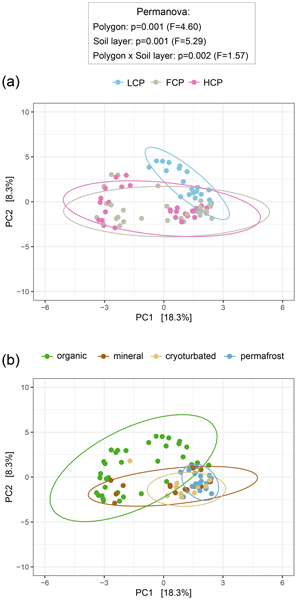
Victoria Martin, Cornelia Rottensteiner, Hannes Schmidt, Moritz Mohrlok, Julia Horak, Carolina Urbina-Malo, Julia Wagner, Willeke A'Campo, Luca Durstewitz, Niek Jesse Speetjens, Rachele Lodi, Bela Hausmann, Michael Fritz, Gustaf Hugelius, and Andreas Richter
Biogeosciences, 23, 2761–2785, https://doi.org/10.5194/bg-23-2761-2026, https://doi.org/10.5194/bg-23-2761-2026, 2026
Short summary
Short summary
We asked how organic matter pools and microbial communities vary across polygon types and soil layers in Arctic lowland tundra. Low-center polygons had lower microbial abundance, enzyme potential, and organic matter bioavailability. Organic topsoils were microbial hotspots, but thaw may also rapidly mobilize carbon from upper permafrost. Patterns consistently followed gradients in organic matter and redox conditions, offering a practical framework for scaling landscape-scale soil carbon changes.
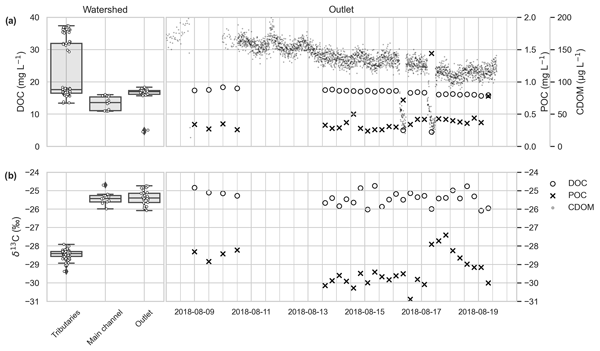
Niek Jesse Speetjens, George Tanski, Victoria Martin, Julia Wagner, Andreas Richter, Gustaf Hugelius, Chris Boucher, Rachele Lodi, Christian Knoblauch, Boris P. Koch, Urban Wünsch, Hugues Lantuit, and Jorien E. Vonk
Biogeosciences, 19, 3073–3097, https://doi.org/10.5194/bg-19-3073-2022, https://doi.org/10.5194/bg-19-3073-2022, 2022
Short summary
Short summary
Climate change and warming in the Arctic exceed global averages. As a result, permanently frozen soils (permafrost) which store vast quantities of carbon in the form of dead plant material (organic matter) are thawing. Our study shows that as permafrost landscapes degrade, high concentrations of organic matter are released. Partly, this organic matter is degraded rapidly upon release, while another significant fraction enters stream networks and enters the Arctic Ocean.
Tazio Strozzi, Barbara Widhalm, Nina Jones, Julia Boike, Sofia Antonova, Birgit Heim, Sebastian Westermann, Andreas Kääb, and Annett Bartsch
EGUsphere, https://doi.org/10.5194/egusphere-2026-5477, https://doi.org/10.5194/egusphere-2026-5477, 2026
This preprint is open for discussion and under review for Earth Observation (EO).
Short summary
Short summary
Monitoring long-term surface subsidence induced by ground ice thaw across the pan-Arctic is crucial to detect permafrost changes and assess impacts caused by recent atmospheric warming. Using Sentinel-1 satellite radar data, we successfully measured subsidence rates in Siberia’s Lena Delta and found that they vary remarkably among the three main geomorphological units. To enable continuous, large-scale monitoring, satellite data records must maintain coherence from one summer season to the next.
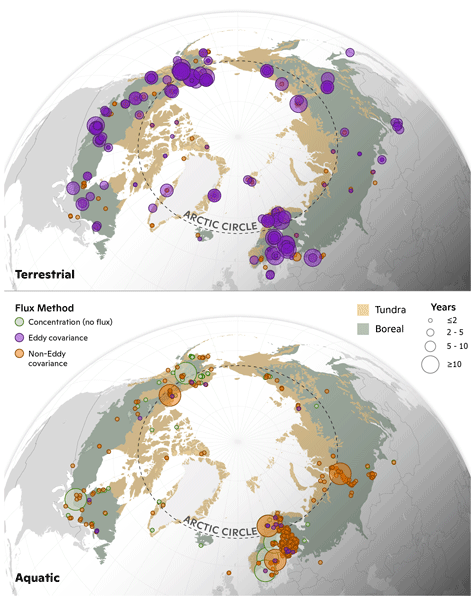
Anna-Maria Virkkala, Isabel Wargowsky, Judith Vogt, McKenzie A. Kuhn, Simran Madaan, Tiffany Windholz, Kyle A. Arndt, Gerard Rocher-Ros, Mathias Göckede, David Olefeldt, Edward A. G. Schuur, David Bastviken, Richard O'Keefe, Brendan M. Rogers, Jennifer D. Watts, Kelcy Kent, Kristoffer Aalstad, Kelly Aho, Joonatan Ala-Könni, Haley Alcock, Inge Althuizen, Christopher D. Arp, Jun Asanuma, Mika Aurela, Sivakiruthika Balathandayuthabani, Katrin Attermeyer, Alan Barr, Maialen Barret, Ochirbat Batkhishig, Christina Biasi, Mats P. Björkman, Andrew Black, Elena Blanc-Betes, Pascal Bodmer, Julia Boike, Abdullah Bolek, Frédéric Bouchard, Ingeborg Bussmann, Lea Cabrol, Eleonora Canfora, Sean Carey, Karel Castro-Morales, Namyi Chae, Andreas Christen, Torben R. Christensen, Casper T. Christiansen, Housen Chu, Graham Clark, Francois Clayer, Patrick Crill, Christopher Cunada, Scott J. Davidson, Joshua F. Dean, Sigrid Dengel, Matteo Detto, Catherine Dieleman, Florent Domine, Egor Dyukarev, Colin Edgar, Bo Elberling, Craig A. Emmerton, Eugenie Euskirchen, Grant Falvo, Thomas Friborg, Michelle Garneau, Mariasilvia Giamberini, Mikhail V. Glagolev, Miquel A. Gonzalez-Meler, Gustaf Granath, Jón Guðmundsson, Konsta Happonen, Yoshinobu Harazono, Lorna Harris, Josh Hashemi, Nicholas Hasson, Janna Heerah, Liam Heffernan, Manuel Helbig, Warren Helgason, Michal Heliasz, Greg Henry, Geert Hensgens, Tetsuya Hiyama, Beth Holmes, Macall Hock, David Holl, Jutta Holst, Thomas Holst, Gabriel Hould-Gosselin, Elyn Humphreys, Jacqueline Hung, Jussi Huotari, Hiroki Ikawa, Danil V. Ilyasov, Mamoru Ishikawa, Go Iwahana, Hiroki Iwata, Marcin Antoni Jackowicz-Korczynski, Joachim Jansen, Järvi Järveoja, Vincent E. J. Jassey, Rasmus Jensen, Katharina Jentzsch, Robert G. Jespersen, Carl-Fredrik Johannesson, Cheristy P. Jones, Anders Jonsson, Ji Young Jung, Sari Juutinen, Evan Kane, Jan Karlsson, Sergey Karsanaev, Kuno Kasak, Julia Kelly, Kasha Kempton, Marcus Klaus, George W. Kling, Natascha Kljun, Jacqueline Knutson, Hideki Kobayashi, John Kochendorfer, Kukka-Maaria Kohonen, Pasi Kolari, Mika Korkiakoski, Aino Korrensalo, Pirkko Kortelainen, Egle Koster, Kajar Koster, Ayumi Kotani, Praveena Krishnan, Juliya Kurbatova, Lars Kutzbach, Min Jung Kwon, Ethan D. Kyzivat, Jessica Lagroix, Theodore Langhorst, Elena Lapshina, Tuula Larmola, Klaus S. Larsen, Isabelle Laurion, Justin Ledman, Hanna Lee, A. Joshua Leffler, Lance Lesack, Anders Lindroth, David Lipson, Annalea Lohila, Efrén López-Blanco, Vincent L. St. Louis, Erik Lundin, Miska Luoto, Takashi Machimura, Marta Magnani, Avni Malhotra, Marja Maljanen, Ivan Mammarella, Elisa Männistö, Luca Belelli Marchesini, Phil Marsh, Pertti J. Martikainen, Maija E. Marushchak, Mikhail Mastepanov, Alex Mavrovic, Trofim Maximov, Christina Minions, Daniel F. Nadeau, Marco Montemayor, Tomoaki Morishita, Patrick Murphy, Erin Nicholls, Mats B. Nilsson, Anastasia Niyazova, Jenni Nordén, Koffi Dodji Noumonvi, Hannu Nykänen, Walter Oechel, Anne Ojala, Tomohiro Okadera, Sujan Pal, Alexey V. Panov, Tim Papakyriakou, Dario Papale, Sang-Jong Park, Frans-Jan W. Parmentier, Gilberto Pastorello, Mike Peacock, Matthias Peichl, Roman Petrov, Kyra St. Pierre, Norbert Pirk, Jessica Plein, Vilmantas Preskienis, Anatoly Prokushkin, Jukka Pumpanen, Hilary A. Rains, Niklas Rakos, Aleksi Räsänen, Helena Rautakoski, Riikka Rinnan, Janne Rinne, Adrian Rocha, Nigel Roulet, Alexandre Roy, Anna Rutgersson, Aleksandr F. Sabrekov, Torsten Sachs, Erik Sahlée, Alejandro Salazar, Henrique Oliveira Sawakuchi, Christopher Schulze, Roger Seco, Armando Sepulveda-Jauregui, Svetlana Serikova, Abbey Serrone, Hanna M. Silvennoinen, Sofie Sjogersten, June Skeeter, Jo Snöälv, Sebastian Sobek, Oliver Sonnentag, Emily H. Stanley, Maria Strack, Lena Strom, Patrick Sullivan, Ryan Sullivan, Anna Sytiuk, Torbern Tagesson, Pierre Taillardat, Julie Talbot, Suzanne E. Tank, Mario Tenuta, Irina Terenteva, Frederic Thalasso, Antoine Thiboult, Halldor Thorgeirsson, Fenix Garcia Tigreros, Margaret Torn, Amy Townsend-Small, Claire Treat, Alain Tremblay, Carlo Trotta, Eeva-Stiina Tuittila, Merritt Turetsky, Masahito Ueyama, Muhammad Umair, Aki Vähä, Lona van Delden, Maarten van Hardenbroek, Andrej Varlagin, Ruth K. Varner, Tarmo Virtanen, Elena Veretennikova, Timo Vesala, Carolina Voigt, Jorien E. Vonk, Robert Wagner, Katey Walter Anthony, Qinxue Wang, Masataka Watanabe, Hailey Webb, Jeffrey M. Welker, Andreas Westergaard-Nielsen, Sebastian Westermann, Jeffrey R. White, Christian Wille, Scott N. Williamson, Scott Zolkos, Donatella Zona, and Susan M. Natali
Earth Syst. Sci. Data, 18, 6357–6409, https://doi.org/10.5194/essd-18-6357-2026, https://doi.org/10.5194/essd-18-6357-2026, 2026
Short summary
Short summary
This dataset includes monthly measurements of carbon dioxide and methane exchange between land, water, and the atmosphere from over 1000 sites in Arctic and boreal regions. It combines measurements from a variety of ecosystems, including wetlands, forests, tundra, lakes, and rivers, gathered by over 260 researchers from 1984–2024. This dataset can be used to improve and reduce uncertainty in carbon budgets in order to strengthen our understanding of climate feedbacks in a warming world.
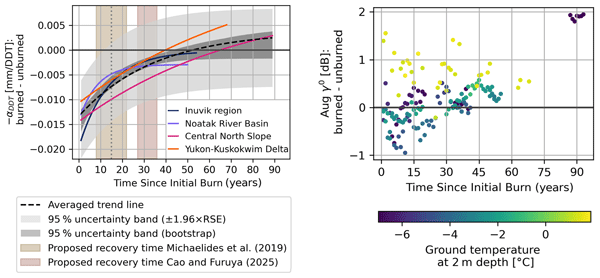
Barbara Widhalm, Annett Bartsch, and Benjamin Jones
The Cryosphere, 20, 4619–4654, https://doi.org/10.5194/tc-20-4619-2026, https://doi.org/10.5194/tc-20-4619-2026, 2026
Short summary
Short summary
This study examines the impacts of wildfires on permafrost thaw in the Arctic spanning up to ~90 years post-fire and explores the potential of using radar satellite observations to enhance our understanding of environmental change. By assessing diverse high-latitude permafrost landscapes, we show that ground deformation anomalies after fires display similar patterns across regions, while radar backscatter varies depending on predominant ground temperatures.
Paul Nörenberg and Hugues Lantuit
EGUsphere, https://doi.org/10.5194/egusphere-2026-4130, https://doi.org/10.5194/egusphere-2026-4130, 2026
Short summary
Short summary
We flooded a video game and the results matched the science. Using GIS software and UN climate projections, we simulated sea level rise in Los Santos, the fictional city in Grand Theft Auto V, and found that it floods in exactly the same places as Los Angeles. The paper demonstrates that the topographic realism of modern open-world video games can be scientifically validated and used to communicate climate change to audiences that conventional scientific visualisation struggles to reach.
Man Chen, Philippe Ciais, Gustaf Hugelius, and Filipe Aires
Earth Syst. Sci. Data Discuss., https://doi.org/10.5194/essd-2026-254, https://doi.org/10.5194/essd-2026-254, 2026
Preprint under review for ESSD
Short summary
Short summary
Peatlands are vital carbon stores, yet mapping them consistently across borders is challenging due to varying data quality and definitions. We developed PeatCover, a ~90 m resolution map that harmonizes existing inventories with Earth observation and hydro-topographic data through machine learning. PeatCover provides a spatially coherent dataset that resolves fine landscape structures. These improvements enable refined carbon assessments and methane emission models.
Marco A. Bolandini, Jordon D. Hemingway, Negar Haghipour, Kirsi H. Keskitalo, Jorien E. Vonk, Timothy I. Eglinton, and Lisa Bröder
Biogeosciences, 23, 4447–4462, https://doi.org/10.5194/bg-23-4447-2026, https://doi.org/10.5194/bg-23-4447-2026, 2026
Short summary
Short summary
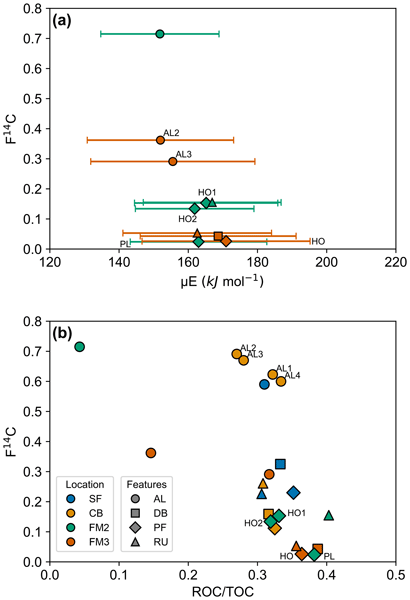
Abrupt permafrost thaw mobilizes ancient organic matter, which could fuel further warming, yet its fate remains uncertain. We studied thaw slumps in Arctic Canada using thermal, radiocarbon, and molecular analyses. Recently thawed debris and runoff exiting the slumps contained old, thermally stable organic matter, compositionally similar to surrounding permafrost. This suggests that much of the thaw-mobilised carbon survives initial transport and may be processed or sequestered downstream.
Christine L. Olson, Kevin Schaefer, Alyssa Azaroff, Hélène Angot, Sasiri Bandara, Thomas A. Douglas, Bo Elberling, Maria Florencia Fahnestock, Xinbin Feng, Charlotte Haugk, Gustaf Hugelius, Erfan Jahangir, Sofi Jonsson, Shichang Kang, Adam Kirkwood, Jennifer Korosi, Igor Lehnherr, Artem Lim, Rinat Manasypov, Dmitriy Moskovchenko, Mina Nasr, Daniel Obrist, David Olefeldt, Connor Olson, Oleg Pokrovsky, Laura Sereni, Sarah Shakil, M. Isabel Smith, Jens Søndergaard, Jeroen Sonke, Kasia Staniszewska, Jens Strauss, Kyra St. Pierre, Lauren Thompson, Andrey Yurtaev, Yanxu Zhang, and Scott Zolkos
Earth Syst. Sci. Data, 18, 4509–4522, https://doi.org/10.5194/essd-18-4509-2026, https://doi.org/10.5194/essd-18-4509-2026, 2026
Short summary
Short summary
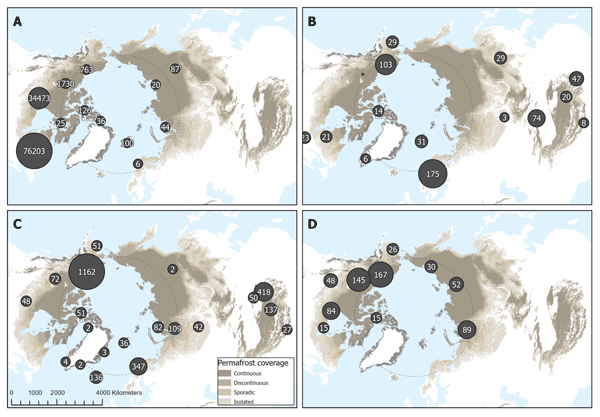
Permafrost regions store large amounts of mercury, a toxic pollutant that can be released as the ground warms. We combined thousands of measurements from soils, plants, water, and lake sediments into one open database to better understand where mercury is stored and how it moves. The results show clear differences among environments and reveal major data gaps, helping improve future research, monitoring, and decision-making.
George Tanski, Michael Fritz, Jorien E. Vonk, Jens Strauss, Léo Chassiot, Vladislav Carnero-Bravo, Jade Falardeau, Kostantin Klein, Parick Lajeunesse, Hugues Lantuit, Niek J. Speetjens, Anne de Vernal, Dustin Whalen, and Anna M. Irrgang
EGUsphere, https://doi.org/10.5194/egusphere-2026-2314, https://doi.org/10.5194/egusphere-2026-2314, 2026
Short summary
Short summary
As the Arctic warms, permafrost coasts erode rapidly, flushing carbon from frozen ground into the sea. We studied a lagoon in the western Canadian Arctic, collecting sediments and analyzing organic carbon content, stable isotopes, and grain size, alongside satellite imagery. Carbon content fell by over 50 % from land to open ocean, while erosion rates quintupled since the 1950s. Arctic lagoons bury, degrade, and export terrestrial carbon, acting as coastal reactors whose role will grow.
Victoria Martin, Cornelia Rottensteiner, Hannes Schmidt, Moritz Mohrlok, Julia Horak, Carolina Urbina-Malo, Julia Wagner, Willeke A'Campo, Luca Durstewitz, Niek Jesse Speetjens, Rachele Lodi, Bela Hausmann, Michael Fritz, Gustaf Hugelius, and Andreas Richter
Biogeosciences, 23, 2761–2785, https://doi.org/10.5194/bg-23-2761-2026, https://doi.org/10.5194/bg-23-2761-2026, 2026
Short summary
Short summary
We asked how organic matter pools and microbial communities vary across polygon types and soil layers in Arctic lowland tundra. Low-center polygons had lower microbial abundance, enzyme potential, and organic matter bioavailability. Organic topsoils were microbial hotspots, but thaw may also rapidly mobilize carbon from upper permafrost. Patterns consistently followed gradients in organic matter and redox conditions, offering a practical framework for scaling landscape-scale soil carbon changes.
Valeria Briones, Hélène Genet, Elchin Jafarov, Brendan Rogers, Jennifer Watts, Anna-Maria Virkkala, Annett Bartsch, Benjamin Maglio, Joshua Rady, and Susan Natali
Earth Syst. Sci. Data Discuss., https://doi.org/10.5194/essd-2026-29, https://doi.org/10.5194/essd-2026-29, 2026
Preprint under review for ESSD
Short summary
Short summary
Rapid warming is reshaping Arctic landscapes as frozen ground thaws, affecting ecosystems and climate. To better understand these changes, we created a map showing the distribution of land types such as forests, shrubs, and wetlands across the Arctic and northern regions. We combined several existing maps using computer-based pattern recognition to develop a harmonized circumpolar land cover dataset that maps ecosystems across the Arctic–Boreal region at 1-km resolution for the period 2000–2023.
Anne L. van Poecke, Laëtitia Bréchet, Clément Stahl, Giacomo Sellan, Lore T. Verryckt, Leandro Van Langenhove, Jordi Sardans, Josep Peñuelas, Andreas Richter, Maarten Op de Beeck, Gabriëlle Hoogsteyns, Benoit Burban, and Ivan A. Janssens
EGUsphere, https://doi.org/10.5194/egusphere-2026-682, https://doi.org/10.5194/egusphere-2026-682, 2026
Preprint archived
Short summary
Short summary
In the Amazon rainforest, long-term fertilisation stimulated the forest canopy to produce more leaves, reducing light availability for young trees. There was no overall increase in volume or improved photosynthesis for young trees. However, increased nutrients combined with lower light availability led to shade adaptations, such as taller stems and thinner leaves. Increases in foliar nutrients varied among species, potentially altering the long-term selection of trees that will grow into adults.
Madeleine Santos, Lisa Bröder, Matt O'Regan, Iván Hernández-Almeida, Tommaso Tesi, Lukas Bigler, Negar Haghipour, Daniel B. Nelson, Michael Fritz, and Julie Lattaud
Clim. Past, 22, 187–203, https://doi.org/10.5194/cp-22-187-2026, https://doi.org/10.5194/cp-22-187-2026, 2026
Short summary
Short summary
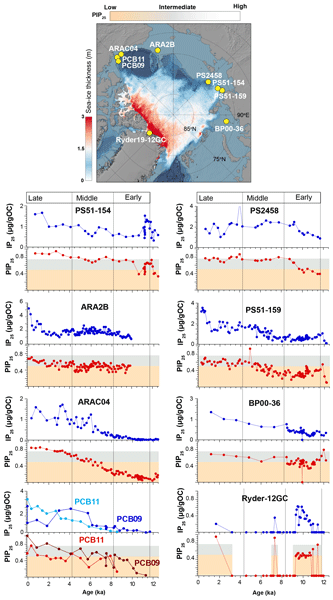
Our study examined how sea ice in the Beaufort Sea has changed over the past 13 000 years to better understand today's rapid losses. By analyzing chemical tracers preserved in seafloor sediments, we found that the Early Holocene was largely ice-free, with warmer waters and lower salinity. Seasonal ice began forming about 7000 years ago and expanded as the climate cooled. These long-term patterns show that continued warming could return the region to mostly ice-free conditions.
Hong Lin, Jinyang Du, John S. Kimball, Xiao Cheng, J. Patrick Donnelly, Jennifer D. Watts, and Annett Bartsch
Earth Syst. Sci. Data, 18, 535–549, https://doi.org/10.5194/essd-18-535-2026, https://doi.org/10.5194/essd-18-535-2026, 2026
Short summary
Short summary
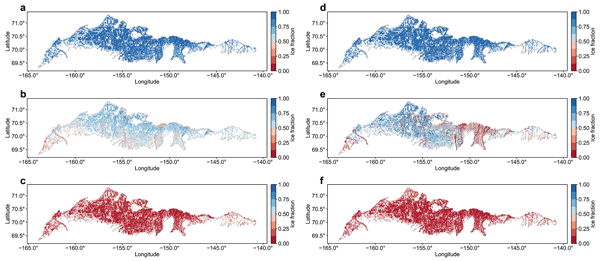
Ice cover on small water bodies is highly sensitive to climate change and influences ecosystems, water, and the carbon cycle. We produced a satellite-based ice fraction dataset for small water bodies on the Arctic Coastal Plain from 2017 to 2023. The dataset captures freeze-up and break-up timing and reveals spatial variability. It will support studies of climate–ice interactions and improve models of water and carbon processes.
Kseniia Ivanova, Anna-Maria Virkkala, Victor Brovkin, Tobias Stacke, Barbara Widhalm, Annett Bartsch, Carolina Voigt, Oliver Sonnentag, and Mathias Göckede
Biogeosciences, 23, 233–262, https://doi.org/10.5194/bg-23-233-2026, https://doi.org/10.5194/bg-23-233-2026, 2026
Short summary
Short summary
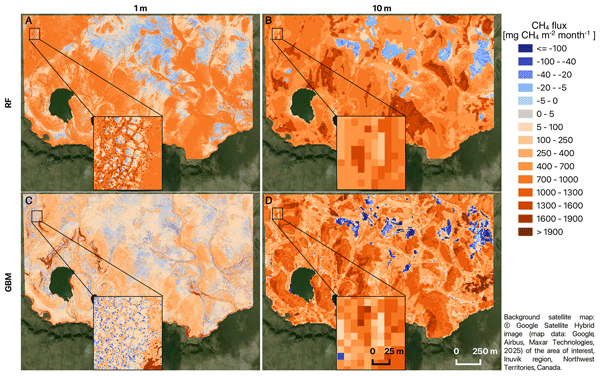
We measured over 13,000 methane fluxes at a site in the Canadian Arctic and linked them with drone and free satellite images. We tested four machine-learning methods and two map scales. Metre-scale maps captured small wet and dry features that strongly affect methane release, while coarser maps blurred them. Different models shifted the monthly methane estimate. This helps choose the right data and tools to map methane, design monitoring networks, and check climate models.
Annett Bartsch, Rodrigue Tanguy, Helena Bergstedt, Clemens von Baeckmann, Hans Tømmervik, Marc Macias-Fauria, Juha Lemmetyinen, Kimmo Rautiainen, Chiara Gruber, and Bruce C. Forbes
The Cryosphere, 19, 4929–4967, https://doi.org/10.5194/tc-19-4929-2025, https://doi.org/10.5194/tc-19-4929-2025, 2025
Short summary
Short summary
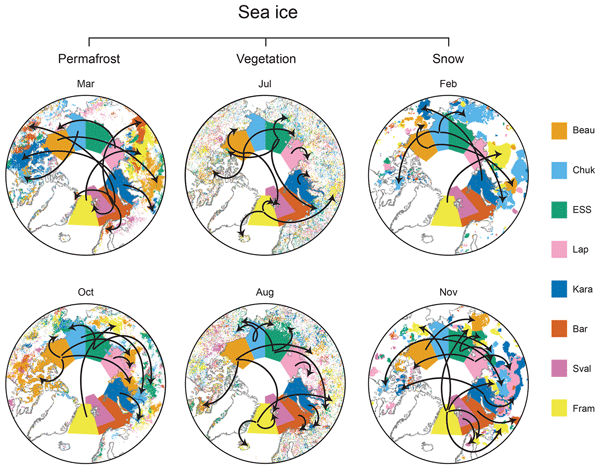
We identified similarities between sea ice dynamics and conditions on land across the Arctic, above 60° N, for 2000–2019. Significant correlations were more common for snow water equivalent and permafrost ground temperature than for the vegetation parameters. Changes across all the different parameters could specifically be determined for eastern Siberia. The results provide a baseline for future studies on common drivers of essential climate variables and causative effects across the Arctic.

Yi Xi, Philippe Ciais, Dan Zhu, Chunjing Qiu, Yuan Zhang, Shushi Peng, Gustaf Hugelius, Simon P. K. Bowring, Daniel S. Goll, and Ying-Ping Wang
Geosci. Model Dev., 18, 6043–6062, https://doi.org/10.5194/gmd-18-6043-2025, https://doi.org/10.5194/gmd-18-6043-2025, 2025
Short summary
Short summary
Including high-latitude deep carbon is critical for projecting future soil carbon emissions, yet it is absent in most land surface models. Here we propose a new carbon accumulation protocol by integrating deep carbon from Yedoma deposits and representing the observed history of peat carbon formation in ORCHIDEE-MICT. Our results show an additional 157 Pg C in present-day Yedoma deposits and a 1–5 m shallower peat depth and 43 % less passive soil carbon in peatlands compared to the conventional protocol.
Xiankun Li, Marleen Pallandt, Dilip Naidu, Johannes Rousk, Gustaf Hugelius, and Stefano Manzoni
Biogeosciences, 22, 2691–2705, https://doi.org/10.5194/bg-22-2691-2025, https://doi.org/10.5194/bg-22-2691-2025, 2025
Short summary
Short summary
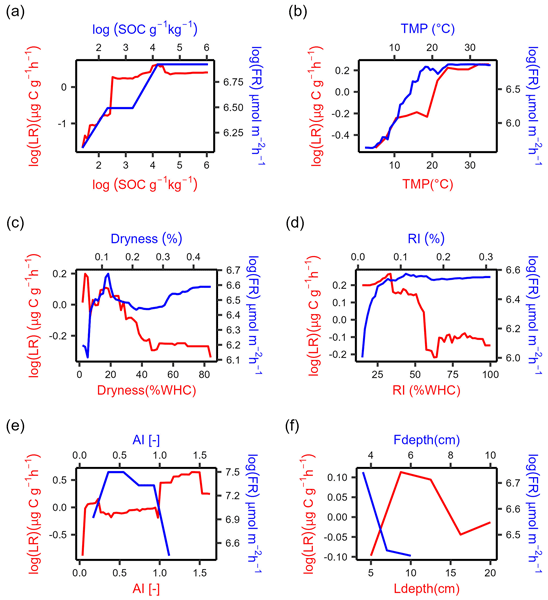
While laboratory studies have identified many drivers and their effects on the carbon emission pulse after rewetting of dry soils, a validation with field data is still missing. Here, we show that the carbon emission pulse in the laboratory and in the field increases with soil organic carbon and temperature, but their trends with pre-rewetting dryness and moisture increment at rewetting differ. We conclude that the laboratory findings can be partially validated.
Qing Ying, Benjamin Poulter, Jennifer D. Watts, Kyle A. Arndt, Anna-Maria Virkkala, Lori Bruhwiler, Youmi Oh, Brendan M. Rogers, Susan M. Natali, Hilary Sullivan, Amanda Armstrong, Eric J. Ward, Luke D. Schiferl, Clayton D. Elder, Olli Peltola, Annett Bartsch, Ankur R. Desai, Eugénie Euskirchen, Mathias Göckede, Bernhard Lehner, Mats B. Nilsson, Matthias Peichl, Oliver Sonnentag, Eeva-Stiina Tuittila, Torsten Sachs, Aram Kalhori, Masahito Ueyama, and Zhen Zhang
Earth Syst. Sci. Data, 17, 2507–2534, https://doi.org/10.5194/essd-17-2507-2025, https://doi.org/10.5194/essd-17-2507-2025, 2025
Short summary
Short summary
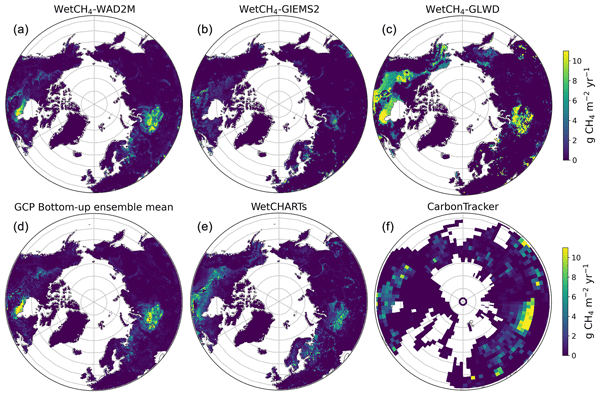
We present daily methane (CH4) fluxes of northern wetlands at 10 km resolution during 2016–2022 (WetCH4) derived from a novel machine learning framework. We estimated an average annual CH4 emission of 22.8 ± 2.4 Tg CH4 yr−1 (15.7–51.6 Tg CH4 yr−1). Emissions were intensified in 2016, 2020, and 2022, with the largest interannual variation coming from Western Siberia. Continued, all-season tower observations and improved soil moisture products are needed for future improvement of CH4 upscaling.
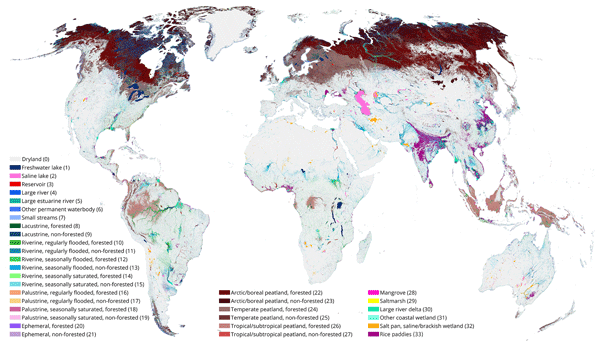
Bernhard Lehner, Mira Anand, Etienne Fluet-Chouinard, Florence Tan, Filipe Aires, George H. Allen, Philippe Bousquet, Josep G. Canadell, Nick Davidson, Meng Ding, C. Max Finlayson, Thomas Gumbricht, Lammert Hilarides, Gustaf Hugelius, Robert B. Jackson, Maartje C. Korver, Liangyun Liu, Peter B. McIntyre, Szabolcs Nagy, David Olefeldt, Tamlin M. Pavelsky, Jean-Francois Pekel, Benjamin Poulter, Catherine Prigent, Jida Wang, Thomas A. Worthington, Dai Yamazaki, Xiao Zhang, and Michele Thieme
Earth Syst. Sci. Data, 17, 2277–2329, https://doi.org/10.5194/essd-17-2277-2025, https://doi.org/10.5194/essd-17-2277-2025, 2025
Short summary
Short summary
The Global Lakes and Wetlands Database (GLWD) version 2 distinguishes a total of 33 non-overlapping wetland classes, providing a static map of the world’s inland surface waters. It contains cell fractions of wetland extents per class at a grid cell resolution of ~500 m. The total combined extent of all classes including all inland and coastal waterbodies and wetlands of all inundation frequencies – that is, the maximum extent – covers 18.2 × 10⁶ km2, equivalent to 13.4 % of total global land area.
Valeria Briones, Hélène Genet, Elchin E. Jafarov, Brendan M. Rogers, Jennifer D. Watts, Anna-Maria Virkkala, Annett Bartsch, Benjamin C. Maglio, Joshua Rady, and Susan M. Natali
Earth Syst. Sci. Data Discuss., https://doi.org/10.5194/essd-2025-226, https://doi.org/10.5194/essd-2025-226, 2025
Manuscript not accepted for further review
Short summary
Short summary
Arctic warming is causing permafrost to thaw, affecting ecosystems and climate. Since land cover, especially vegetation, shapes how permafrost responds, accurate maps are crucial. Using machine learning, we combined existing global and regional datasets to create a hybrid detailed 1-km map of Arctic-Boreal land cover, improving the representation of forests, shrubs, and wetlands across the circumpolar.
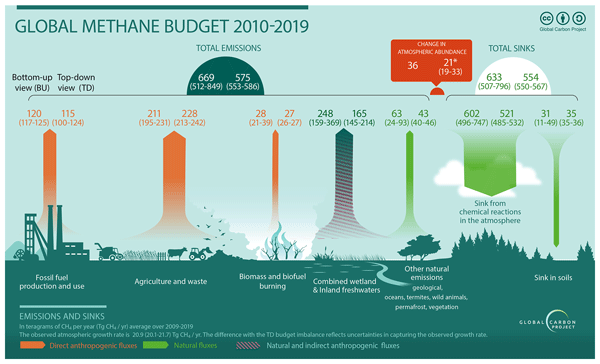
Marielle Saunois, Adrien Martinez, Benjamin Poulter, Zhen Zhang, Peter A. Raymond, Pierre Regnier, Josep G. Canadell, Robert B. Jackson, Prabir K. Patra, Philippe Bousquet, Philippe Ciais, Edward J. Dlugokencky, Xin Lan, George H. Allen, David Bastviken, David J. Beerling, Dmitry A. Belikov, Donald R. Blake, Simona Castaldi, Monica Crippa, Bridget R. Deemer, Fraser Dennison, Giuseppe Etiope, Nicola Gedney, Lena Höglund-Isaksson, Meredith A. Holgerson, Peter O. Hopcroft, Gustaf Hugelius, Akihiko Ito, Atul K. Jain, Rajesh Janardanan, Matthew S. Johnson, Thomas Kleinen, Paul B. Krummel, Ronny Lauerwald, Tingting Li, Xiangyu Liu, Kyle C. McDonald, Joe R. Melton, Jens Mühle, Jurek Müller, Fabiola Murguia-Flores, Yosuke Niwa, Sergio Noce, Shufen Pan, Robert J. Parker, Changhui Peng, Michel Ramonet, William J. Riley, Gerard Rocher-Ros, Judith A. Rosentreter, Motoki Sasakawa, Arjo Segers, Steven J. Smith, Emily H. Stanley, Joël Thanwerdas, Hanqin Tian, Aki Tsuruta, Francesco N. Tubiello, Thomas S. Weber, Guido R. van der Werf, Douglas E. J. Worthy, Yi Xi, Yukio Yoshida, Wenxin Zhang, Bo Zheng, Qing Zhu, Qiuan Zhu, and Qianlai Zhuang
Earth Syst. Sci. Data, 17, 1873–1958, https://doi.org/10.5194/essd-17-1873-2025, https://doi.org/10.5194/essd-17-1873-2025, 2025
Short summary
Short summary
Methane (CH4) is the second most important human-influenced greenhouse gas in terms of climate forcing after carbon dioxide (CO2). A consortium of multi-disciplinary scientists synthesise and update the budget of the sources and sinks of CH4. This edition benefits from important progress in estimating emissions from lakes and ponds, reservoirs, and streams and rivers. For the 2010s decade, global CH4 emissions are estimated at 575 Tg CH4 yr-1, including ~65 % from anthropogenic sources.
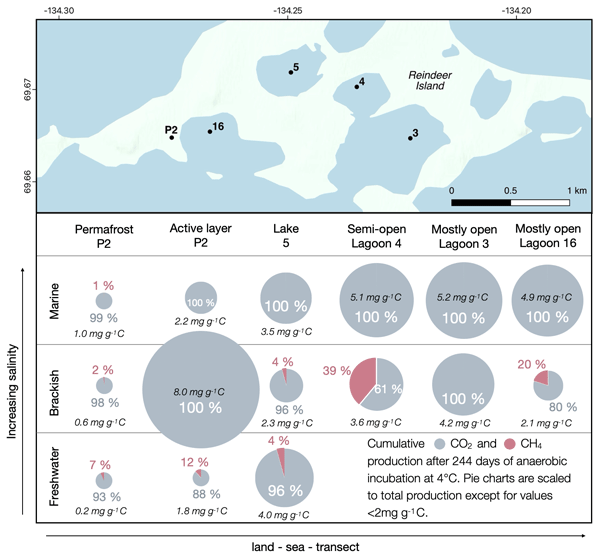
Maren Jenrich, Juliane Wolter, Susanne Liebner, Christian Knoblauch, Guido Grosse, Fiona Giebeler, Dustin Whalen, and Jens Strauss
Biogeosciences, 22, 2069–2086, https://doi.org/10.5194/bg-22-2069-2025, https://doi.org/10.5194/bg-22-2069-2025, 2025
Short summary
Short summary
Climate warming in the Arctic is causing the erosion of permafrost coasts and the transformation of permafrost lakes into lagoons. To understand how this affects greenhouse gas (GHG) emissions, we studied carbon dioxide (CO₂) and methane (CH₄) production in lagoons with varying sea connections. Younger lagoons produce more CH₄, while CO₂ increases under more marine conditions. Flooding of permafrost lowlands due to rising sea levels may lead to higher GHG emissions from Arctic coasts in future.
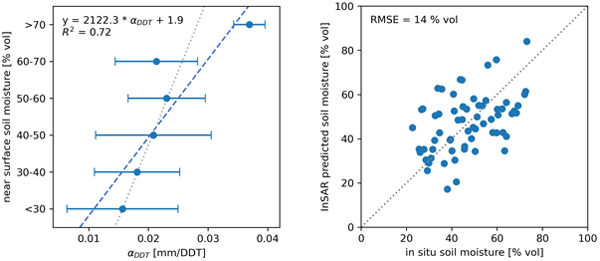
Barbara Widhalm, Annett Bartsch, Tazio Strozzi, Nina Jones, Artem Khomutov, Elena Babkina, Marina Leibman, Rustam Khairullin, Mathias Göckede, Helena Bergstedt, Clemens von Baeckmann, and Xaver Muri
The Cryosphere, 19, 1103–1133, https://doi.org/10.5194/tc-19-1103-2025, https://doi.org/10.5194/tc-19-1103-2025, 2025
Short summary
Short summary
Mapping soil moisture in Arctic permafrost regions is crucial for various activities, but it is challenging with typical satellite methods due to the landscape's diversity. Seasonal freezing and thawing cause the ground to periodically rise and subside. Our research demonstrates that this seasonal ground settlement, measured with Sentinel-1 satellite data, is larger in areas with wetter soils. This method helps to monitor permafrost degradation.
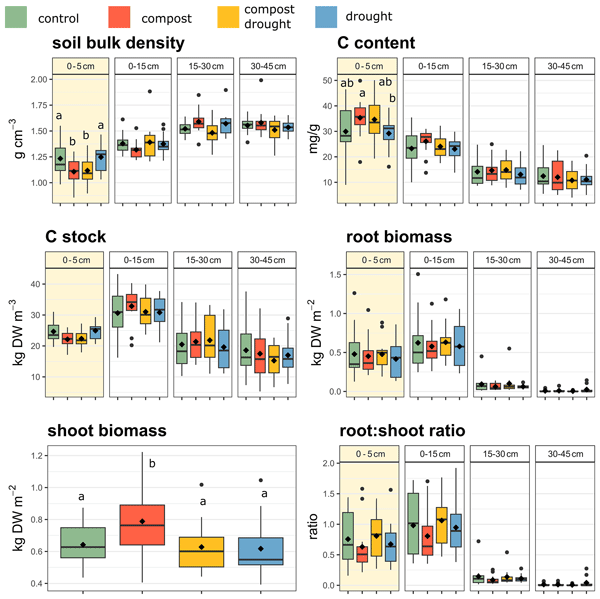
Daniela Guasconi, Sara A. O. Cousins, Stefano Manzoni, Nina Roth, and Gustaf Hugelius
SOIL, 11, 233–246, https://doi.org/10.5194/soil-11-233-2025, https://doi.org/10.5194/soil-11-233-2025, 2025
Short summary
Short summary
This study assesses the effects of experimental drought and soil amendment on soil and vegetation carbon pools at different soil depths. Drought consistently reduced soil moisture and aboveground biomass, while compost increased total soil carbon content and aboveground biomass, and effects were more pronounced in the topsoil. Root biomass was not significantly affected by the treatments. The contrasting response of roots and shoots improves our understanding of ecosystem carbon dynamics.
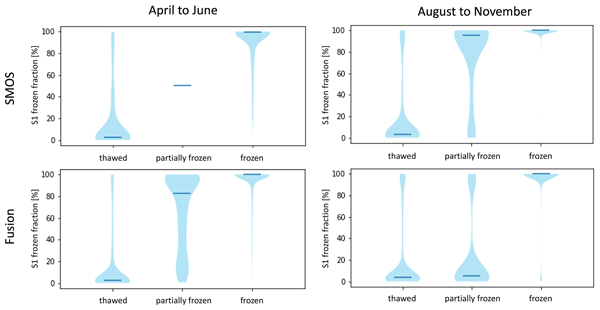
Annett Bartsch, Xaver Muri, Markus Hetzenecker, Kimmo Rautiainen, Helena Bergstedt, Jan Wuite, Thomas Nagler, and Dmitry Nicolsky
The Cryosphere, 19, 459–483, https://doi.org/10.5194/tc-19-459-2025, https://doi.org/10.5194/tc-19-459-2025, 2025
Short summary
Short summary
We developed a robust freeze–thaw detection approach, applying a constant threshold to Copernicus Sentinel-1 data that is suitable for tundra regions. All global, coarser-resolution products, tested with the resulting benchmarking dataset, are of value for freeze–thaw retrieval, although differences were found depending on the seasons, particularly during the spring and autumn transition.
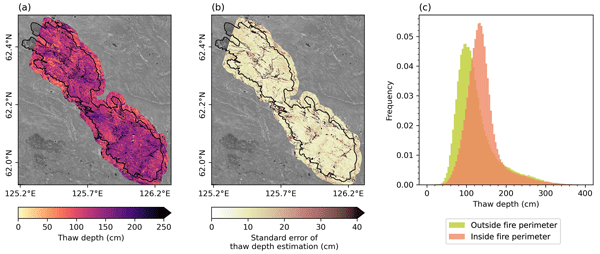
Lucas R. Diaz, Clement J. F. Delcourt, Moritz Langer, Michael M. Loranty, Brendan M. Rogers, Rebecca C. Scholten, Tatiana A. Shestakova, Anna C. Talucci, Jorien E. Vonk, Sonam Wangchuk, and Sander Veraverbeke
Earth Syst. Dynam., 15, 1459–1482, https://doi.org/10.5194/esd-15-1459-2024, https://doi.org/10.5194/esd-15-1459-2024, 2024
Short summary
Short summary
Our study in eastern Siberia investigated how fires affect permafrost thaw depth in larch forests. We found that fire induces deeper thaw, yet this process was mediated by topography and vegetation. By combining field and satellite data, we estimated summer thaw depth across an entire fire scar. This research provides insights into post-fire permafrost dynamics and the use of satellite data for mapping fire-induced permafrost thaw.
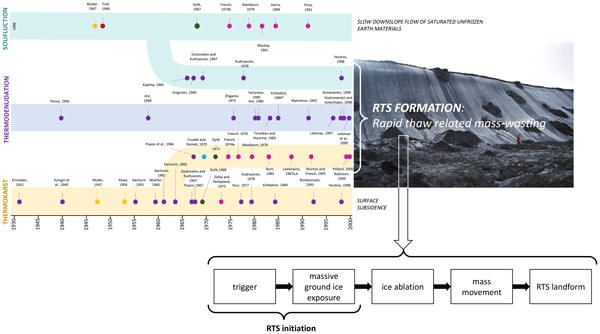
Nina Nesterova, Marina Leibman, Alexander Kizyakov, Hugues Lantuit, Ilya Tarasevich, Ingmar Nitze, Alexandra Veremeeva, and Guido Grosse
The Cryosphere, 18, 4787–4810, https://doi.org/10.5194/tc-18-4787-2024, https://doi.org/10.5194/tc-18-4787-2024, 2024
Short summary
Short summary
Retrogressive thaw slumps (RTSs) are widespread in the Arctic permafrost landforms. RTSs present a big interest for researchers because of their expansion due to climate change. There are currently different scientific schools and terminology used in the literature on this topic. We have critically reviewed existing concepts and terminology and provided clarifications to present a useful base for experts in the field and ease the introduction to the topic for scientists who are new to it.
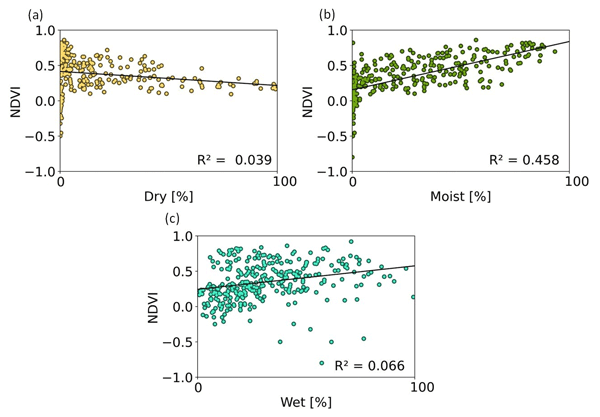
Clemens von Baeckmann, Annett Bartsch, Helena Bergstedt, Aleksandra Efimova, Barbara Widhalm, Dorothee Ehrich, Timo Kumpula, Alexander Sokolov, and Svetlana Abdulmanova
The Cryosphere, 18, 4703–4722, https://doi.org/10.5194/tc-18-4703-2024, https://doi.org/10.5194/tc-18-4703-2024, 2024
Short summary
Short summary
Lakes are common features in Arctic permafrost areas. Land cover change following their drainage needs to be monitored since it has implications for ecology and the carbon cycle. Satellite data are key in this context. We compared a common vegetation index approach with a novel land-cover-monitoring scheme. Land cover information provides specific information on wetland features. We also showed that the bioclimatic gradients play a significant role after drainage within the first 10 years.
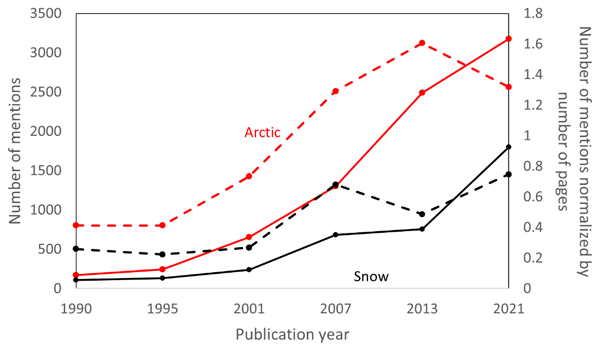
Cecile B. Menard, Sirpa Rasmus, Ioanna Merkouriadi, Gianpaolo Balsamo, Annett Bartsch, Chris Derksen, Florent Domine, Marie Dumont, Dorothee Ehrich, Richard Essery, Bruce C. Forbes, Gerhard Krinner, David Lawrence, Glen Liston, Heidrun Matthes, Nick Rutter, Melody Sandells, Martin Schneebeli, and Sari Stark
The Cryosphere, 18, 4671–4686, https://doi.org/10.5194/tc-18-4671-2024, https://doi.org/10.5194/tc-18-4671-2024, 2024
Short summary
Short summary
Computer models, like those used in climate change studies, are written by modellers who have to decide how best to construct the models in order to satisfy the purpose they serve. Using snow modelling as an example, we examine the process behind the decisions to understand what motivates or limits modellers in their decision-making. We find that the context in which research is undertaken is often more crucial than scientific limitations. We argue for more transparency in our research practice.
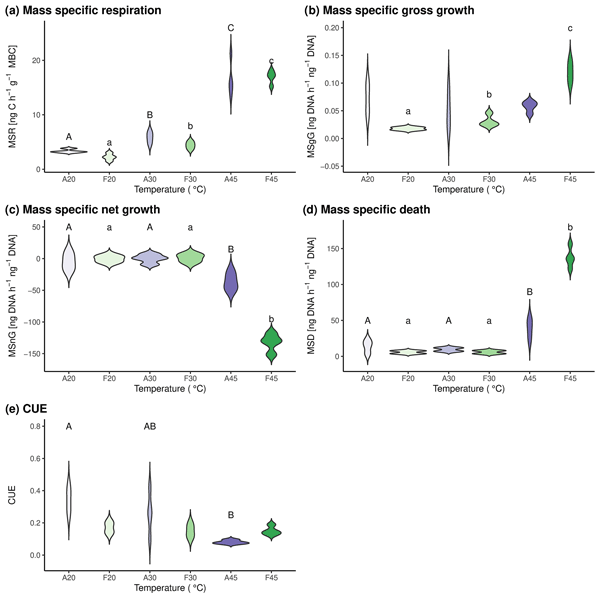
Jörg Schnecker, Theresa Böckle, Julia Horak, Victoria Martin, Taru Sandén, and Heide Spiegel
SOIL, 10, 521–531, https://doi.org/10.5194/soil-10-521-2024, https://doi.org/10.5194/soil-10-521-2024, 2024
Short summary
Short summary
Microbial processes are driving the formation and decomposition of soil organic matter. In contrast to respiration and growth, microbial death rates currently lack distinct methods to be determined. Here, we propose a new approach to measure microbial death rates. This new approach to determine microbial death rates as well as dynamics of intracellular and extracellular DNA separately will help to improve concepts and models of C dynamics in soils in the future.
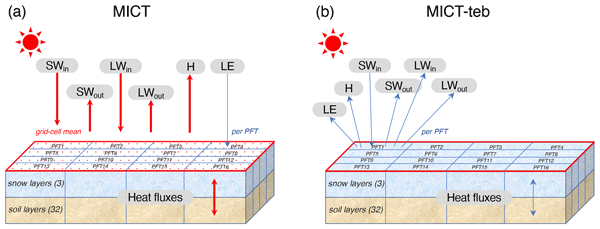
Yi Xi, Chunjing Qiu, Yuan Zhang, Dan Zhu, Shushi Peng, Gustaf Hugelius, Jinfeng Chang, Elodie Salmon, and Philippe Ciais
Geosci. Model Dev., 17, 4727–4754, https://doi.org/10.5194/gmd-17-4727-2024, https://doi.org/10.5194/gmd-17-4727-2024, 2024
Short summary
Short summary
The ORCHIDEE-MICT model can simulate the carbon cycle and hydrology at a sub-grid scale but energy budgets only at a grid scale. This paper assessed the implementation of a multi-tiling energy budget approach in ORCHIDEE-MICT and found warmer surface and soil temperatures, higher soil moisture, and more soil organic carbon across the Northern Hemisphere compared with the original version.
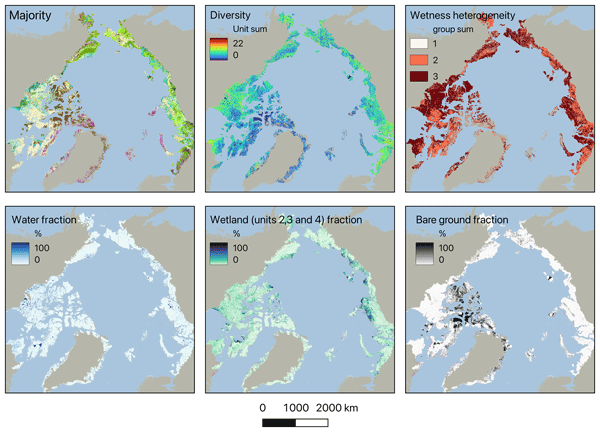
Annett Bartsch, Aleksandra Efimova, Barbara Widhalm, Xaver Muri, Clemens von Baeckmann, Helena Bergstedt, Ksenia Ermokhina, Gustaf Hugelius, Birgit Heim, and Marina Leibman
Hydrol. Earth Syst. Sci., 28, 2421–2481, https://doi.org/10.5194/hess-28-2421-2024, https://doi.org/10.5194/hess-28-2421-2024, 2024
Short summary
Short summary
Wetness gradients and landcover diversity for the entire Arctic tundra have been assessed using a novel satellite-data-based map. Patterns of lakes, wetlands, general soil moisture conditions and vegetation physiognomy are represented at 10 m. About 40 % of the area north of the treeline falls into three units of dry types, with limited shrub growth. Wetter regions have higher landcover diversity than drier regions.
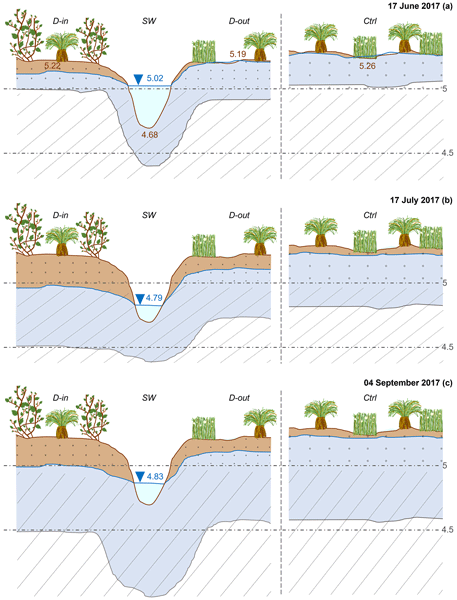
Sandra Raab, Karel Castro-Morales, Anke Hildebrandt, Martin Heimann, Jorien Elisabeth Vonk, Nikita Zimov, and Mathias Goeckede
Biogeosciences, 21, 2571–2597, https://doi.org/10.5194/bg-21-2571-2024, https://doi.org/10.5194/bg-21-2571-2024, 2024
Short summary
Short summary
Water status is an important control factor on sustainability of Arctic permafrost soils, including production and transport of carbon. We compared a drained permafrost ecosystem with a natural control area, investigating water levels, thaw depths, and lateral water flows. We found that shifts in water levels following drainage affected soil water availability and that lateral transport patterns were of major relevance. Understanding these shifts is crucial for future carbon budget studies.
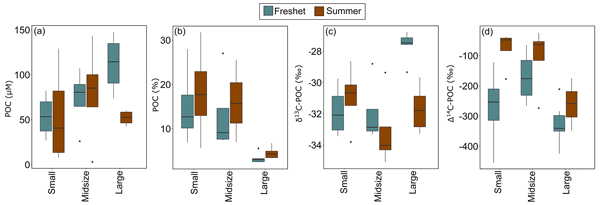
Kirsi H. Keskitalo, Lisa Bröder, Tommaso Tesi, Paul J. Mann, Dirk J. Jong, Sergio Bulte Garcia, Anna Davydova, Sergei Davydov, Nikita Zimov, Negar Haghipour, Timothy I. Eglinton, and Jorien E. Vonk
Biogeosciences, 21, 357–379, https://doi.org/10.5194/bg-21-357-2024, https://doi.org/10.5194/bg-21-357-2024, 2024
Short summary
Short summary
Permafrost thaw releases organic carbon into waterways. Decomposition of this carbon pool emits greenhouse gases into the atmosphere, enhancing climate warming. We show that Arctic river carbon and water chemistry are different between the spring ice breakup and summer and that primary production is initiated in small Arctic rivers right after ice breakup, in contrast to in large rivers. This may have implications for fluvial carbon dynamics and greenhouse gas uptake and emission balance.
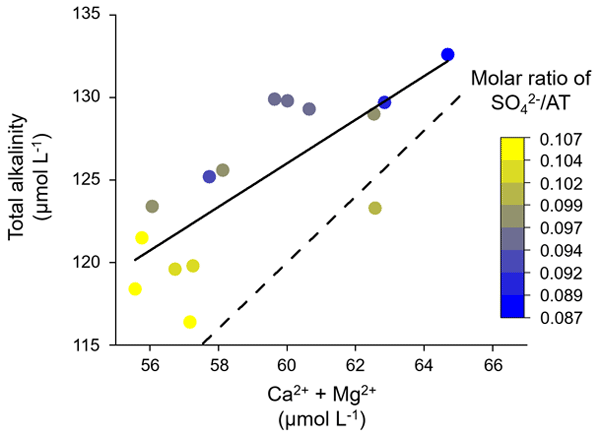
Nele Lehmann, Hugues Lantuit, Michael Ernst Böttcher, Jens Hartmann, Antje Eulenburg, and Helmuth Thomas
Biogeosciences, 20, 3459–3479, https://doi.org/10.5194/bg-20-3459-2023, https://doi.org/10.5194/bg-20-3459-2023, 2023
Short summary
Short summary
Riverine alkalinity in the silicate-dominated headwater catchment at subarctic Iskorasfjellet, northern Norway, was almost entirely derived from weathering of minor carbonate occurrences in the riparian zone. The uphill catchment appeared limited by insufficient contact time of weathering agents and weatherable material. Further, alkalinity increased with decreasing permafrost extent. Thus, with climate change, alkalinity generation is expected to increase in this permafrost-degrading landscape.
Lukas Rimondini, Thomas Gumbricht, Anders Ahlström, and Gustaf Hugelius
Earth Syst. Sci. Data, 15, 3473–3482, https://doi.org/10.5194/essd-15-3473-2023, https://doi.org/10.5194/essd-15-3473-2023, 2023
Short summary
Short summary
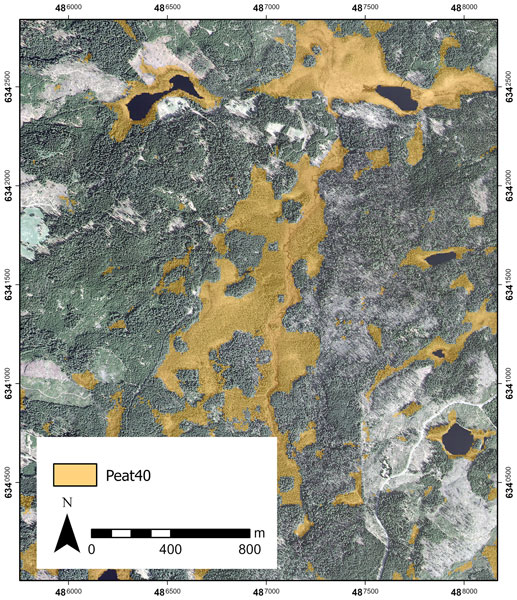
Peatlands have historically sequestrated large amounts of carbon and contributed to atmospheric cooling. However, human activities and climate change may instead turn them into considerable carbon emitters. In this study, we produced high-quality maps showing the extent of peatlands in the forests of Sweden, one of the most peatland-dense countries in the world. The maps are publicly available and may be used to support work promoting sustainable peatland management and combat their degradation.
Martine Lizotte, Bennet Juhls, Atsushi Matsuoka, Philippe Massicotte, Gaëlle Mével, David Obie James Anikina, Sofia Antonova, Guislain Bécu, Marine Béguin, Simon Bélanger, Thomas Bossé-Demers, Lisa Bröder, Flavienne Bruyant, Gwénaëlle Chaillou, Jérôme Comte, Raoul-Marie Couture, Emmanuel Devred, Gabrièle Deslongchamps, Thibaud Dezutter, Miles Dillon, David Doxaran, Aude Flamand, Frank Fell, Joannie Ferland, Marie-Hélène Forget, Michael Fritz, Thomas J. Gordon, Caroline Guilmette, Andrea Hilborn, Rachel Hussherr, Charlotte Irish, Fabien Joux, Lauren Kipp, Audrey Laberge-Carignan, Hugues Lantuit, Edouard Leymarie, Antonio Mannino, Juliette Maury, Paul Overduin, Laurent Oziel, Colin Stedmon, Crystal Thomas, Lucas Tisserand, Jean-Éric Tremblay, Jorien Vonk, Dustin Whalen, and Marcel Babin
Earth Syst. Sci. Data, 15, 1617–1653, https://doi.org/10.5194/essd-15-1617-2023, https://doi.org/10.5194/essd-15-1617-2023, 2023
Short summary
Short summary
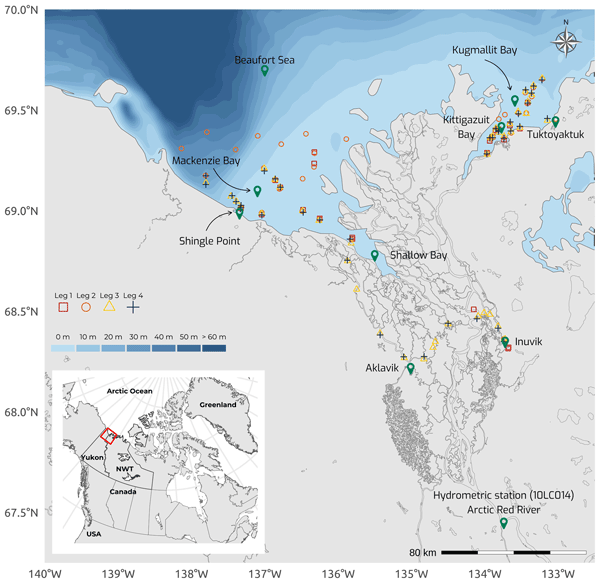
Permafrost thaw in the Mackenzie Delta region results in the release of organic matter into the coastal marine environment. What happens to this carbon-rich organic matter as it transits along the fresh to salty aquatic environments is still underdocumented. Four expeditions were conducted from April to September 2019 in the coastal area of the Beaufort Sea to study the fate of organic matter. This paper describes a rich set of data characterizing the composition and sources of organic matter.
Peter Stimmler, Mathias Goeckede, Bo Elberling, Susan Natali, Peter Kuhry, Nia Perron, Fabrice Lacroix, Gustaf Hugelius, Oliver Sonnentag, Jens Strauss, Christina Minions, Michael Sommer, and Jörg Schaller
Earth Syst. Sci. Data, 15, 1059–1075, https://doi.org/10.5194/essd-15-1059-2023, https://doi.org/10.5194/essd-15-1059-2023, 2023
Short summary
Short summary
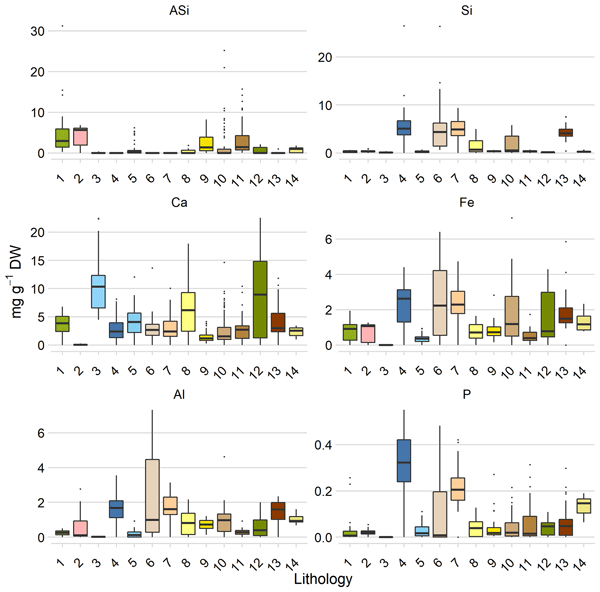
Arctic soils store large amounts of carbon and nutrients. The availability of nutrients, such as silicon, calcium, iron, aluminum, phosphorus, and amorphous silica, is crucial to understand future carbon fluxes in the Arctic. Here, we provide, for the first time, a unique dataset of the availability of the abovementioned nutrients for the different soil layers, including the currently frozen permafrost layer. We relate these data to several geographical and geological parameters.
Annett Bartsch, Helena Bergstedt, Georg Pointner, Xaver Muri, Kimmo Rautiainen, Leena Leppänen, Kyle Joly, Aleksandr Sokolov, Pavel Orekhov, Dorothee Ehrich, and Eeva Mariatta Soininen
The Cryosphere, 17, 889–915, https://doi.org/10.5194/tc-17-889-2023, https://doi.org/10.5194/tc-17-889-2023, 2023
Short summary
Short summary
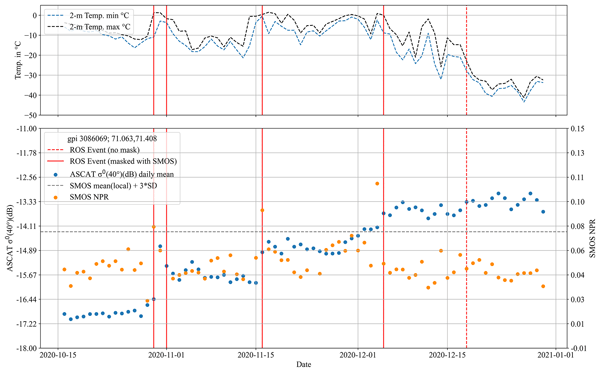
Rain-on-snow (ROS) events occur across many regions of the terrestrial Arctic in mid-winter. In extreme cases ice layers form which affect wildlife, vegetation and soils beyond the duration of the event. The fusion of multiple types of microwave satellite observations is suggested for the creation of a climate data record. Retrieval is most robust in the tundra biome, where records can be used to identify extremes and the results can be applied to impact studies at regional scale.
Niek Jesse Speetjens, Gustaf Hugelius, Thomas Gumbricht, Hugues Lantuit, Wouter R. Berghuijs, Philip A. Pika, Amanda Poste, and Jorien E. Vonk
Earth Syst. Sci. Data, 15, 541–554, https://doi.org/10.5194/essd-15-541-2023, https://doi.org/10.5194/essd-15-541-2023, 2023
Short summary
Short summary
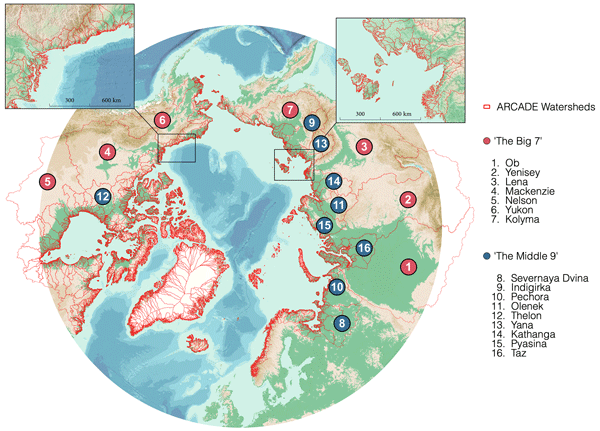
The Arctic is rapidly changing. Outside the Arctic, large databases changed how researchers look at river systems and land-to-ocean processes. We present the first integrated pan-ARctic CAtchments summary DatabasE (ARCADE) (> 40 000 river catchments draining into the Arctic Ocean). It incorporates information about the drainage area with 103 geospatial, environmental, climatic, and physiographic properties and covers small watersheds , which are especially subject to change, at a high resolution
Dirk Jong, Lisa Bröder, Tommaso Tesi, Kirsi H. Keskitalo, Nikita Zimov, Anna Davydova, Philip Pika, Negar Haghipour, Timothy I. Eglinton, and Jorien E. Vonk
Biogeosciences, 20, 271–294, https://doi.org/10.5194/bg-20-271-2023, https://doi.org/10.5194/bg-20-271-2023, 2023
Short summary
Short summary
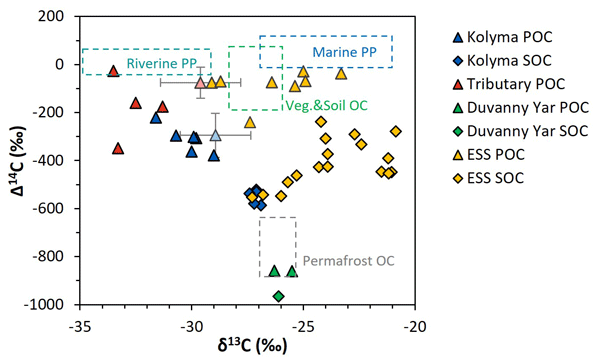
With this study, we want to highlight the importance of studying both land and ocean together, and water and sediment together, as these systems function as a continuum, and determine how organic carbon derived from permafrost is broken down and its effect on global warming. Although on the one hand it appears that organic carbon is removed from sediments along the pathway of transport from river to ocean, it also appears to remain relatively ‘fresh’, despite this removal and its very old age.
Juri Palmtag, Jaroslav Obu, Peter Kuhry, Andreas Richter, Matthias B. Siewert, Niels Weiss, Sebastian Westermann, and Gustaf Hugelius
Earth Syst. Sci. Data, 14, 4095–4110, https://doi.org/10.5194/essd-14-4095-2022, https://doi.org/10.5194/essd-14-4095-2022, 2022
Short summary
Short summary
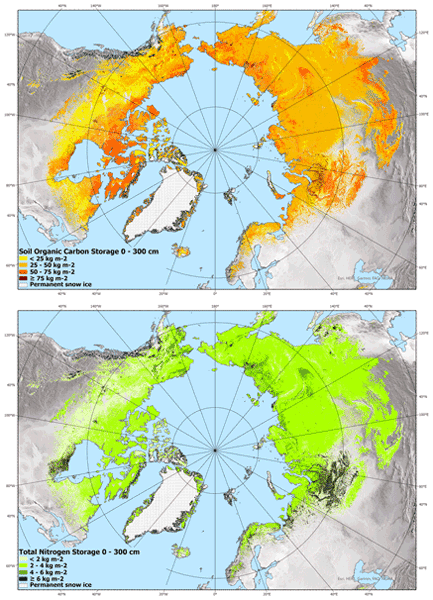
The northern permafrost region covers 22 % of the Northern Hemisphere and holds almost twice as much carbon as the atmosphere. This paper presents data from 651 soil pedons encompassing more than 6500 samples from 16 different study areas across the northern permafrost region. We use this dataset together with ESA's global land cover dataset to estimate soil organic carbon and total nitrogen storage up to 300 cm soil depth, with estimated values of 813 Pg for carbon and 55 Pg for nitrogen.
Niel Verbrigghe, Niki I. W. Leblans, Bjarni D. Sigurdsson, Sara Vicca, Chao Fang, Lucia Fuchslueger, Jennifer L. Soong, James T. Weedon, Christopher Poeplau, Cristina Ariza-Carricondo, Michael Bahn, Bertrand Guenet, Per Gundersen, Gunnhildur E. Gunnarsdóttir, Thomas Kätterer, Zhanfeng Liu, Marja Maljanen, Sara Marañón-Jiménez, Kathiravan Meeran, Edda S. Oddsdóttir, Ivika Ostonen, Josep Peñuelas, Andreas Richter, Jordi Sardans, Páll Sigurðsson, Margaret S. Torn, Peter M. Van Bodegom, Erik Verbruggen, Tom W. N. Walker, Håkan Wallander, and Ivan A. Janssens
Biogeosciences, 19, 3381–3393, https://doi.org/10.5194/bg-19-3381-2022, https://doi.org/10.5194/bg-19-3381-2022, 2022
Short summary
Short summary
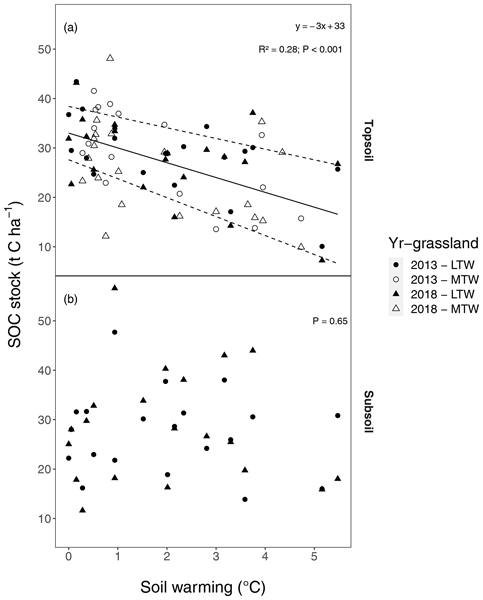
In subarctic grassland on a geothermal warming gradient, we found large reductions in topsoil carbon stocks, with carbon stocks linearly declining with warming intensity. Most importantly, however, we observed that soil carbon stocks stabilised within 5 years of warming and remained unaffected by warming thereafter, even after > 50 years of warming. Moreover, in contrast to the large topsoil carbon losses, subsoil carbon stocks remained unaffected after > 50 years of soil warming.
Niek Jesse Speetjens, George Tanski, Victoria Martin, Julia Wagner, Andreas Richter, Gustaf Hugelius, Chris Boucher, Rachele Lodi, Christian Knoblauch, Boris P. Koch, Urban Wünsch, Hugues Lantuit, and Jorien E. Vonk
Biogeosciences, 19, 3073–3097, https://doi.org/10.5194/bg-19-3073-2022, https://doi.org/10.5194/bg-19-3073-2022, 2022
Short summary
Short summary
Climate change and warming in the Arctic exceed global averages. As a result, permanently frozen soils (permafrost) which store vast quantities of carbon in the form of dead plant material (organic matter) are thawing. Our study shows that as permafrost landscapes degrade, high concentrations of organic matter are released. Partly, this organic matter is degraded rapidly upon release, while another significant fraction enters stream networks and enters the Arctic Ocean.
Joëlle Voglimacci-Stephanopoli, Anna Wendleder, Hugues Lantuit, Alexandre Langlois, Samuel Stettner, Andreas Schmitt, Jean-Pierre Dedieu, Achim Roth, and Alain Royer
The Cryosphere, 16, 2163–2181, https://doi.org/10.5194/tc-16-2163-2022, https://doi.org/10.5194/tc-16-2163-2022, 2022
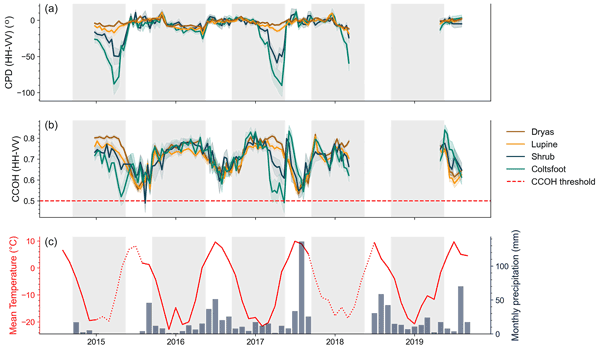
Short summary
Short summary
Changes in the state of the snowpack in the context of observed global warming must be considered to improve our understanding of the processes within the cryosphere. This study aims to characterize an arctic snowpack using the TerraSAR-X satellite. Using a high-spatial-resolution vegetation classification, we were able to quantify the variability in snow depth, as well as the topographic soil wetness index, which provided a better understanding of the electromagnetic wave–ground interaction.

Sarah Shakil, Suzanne E. Tank, Jorien E. Vonk, and Scott Zolkos
Biogeosciences, 19, 1871–1890, https://doi.org/10.5194/bg-19-1871-2022, https://doi.org/10.5194/bg-19-1871-2022, 2022
Short summary
Short summary
Permafrost thaw-driven landslides in the western Arctic are increasing organic carbon delivered to headwaters of drainage networks in the western Canadian Arctic by orders of magnitude. Through a series of laboratory experiments, we show that less than 10 % of this organic carbon is likely to be mineralized to greenhouse gases during transport in these networks. Rather most of the organic carbon is likely destined for burial and sequestration for centuries to millennia.
H. E. Markus Meier, Madline Kniebusch, Christian Dieterich, Matthias Gröger, Eduardo Zorita, Ragnar Elmgren, Kai Myrberg, Markus P. Ahola, Alena Bartosova, Erik Bonsdorff, Florian Börgel, Rene Capell, Ida Carlén, Thomas Carlund, Jacob Carstensen, Ole B. Christensen, Volker Dierschke, Claudia Frauen, Morten Frederiksen, Elie Gaget, Anders Galatius, Jari J. Haapala, Antti Halkka, Gustaf Hugelius, Birgit Hünicke, Jaak Jaagus, Mart Jüssi, Jukka Käyhkö, Nina Kirchner, Erik Kjellström, Karol Kulinski, Andreas Lehmann, Göran Lindström, Wilhelm May, Paul A. Miller, Volker Mohrholz, Bärbel Müller-Karulis, Diego Pavón-Jordán, Markus Quante, Marcus Reckermann, Anna Rutgersson, Oleg P. Savchuk, Martin Stendel, Laura Tuomi, Markku Viitasalo, Ralf Weisse, and Wenyan Zhang
Earth Syst. Dynam., 13, 457–593, https://doi.org/10.5194/esd-13-457-2022, https://doi.org/10.5194/esd-13-457-2022, 2022
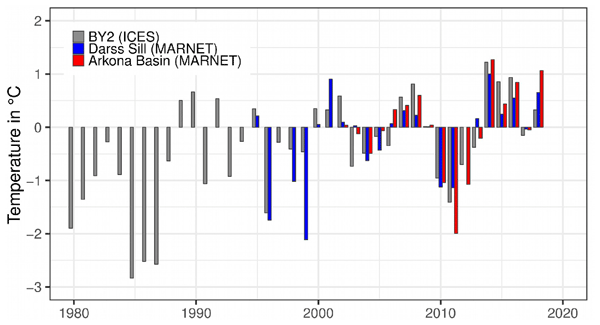
Short summary
Short summary
Based on the Baltic Earth Assessment Reports of this thematic issue in Earth System Dynamics and recent peer-reviewed literature, current knowledge about the effects of global warming on past and future changes in the climate of the Baltic Sea region is summarised and assessed. The study is an update of the Second Assessment of Climate Change (BACC II) published in 2015 and focuses on the atmosphere, land, cryosphere, ocean, sediments, and the terrestrial and marine biosphere.
Philippe Ciais, Ana Bastos, Frédéric Chevallier, Ronny Lauerwald, Ben Poulter, Josep G. Canadell, Gustaf Hugelius, Robert B. Jackson, Atul Jain, Matthew Jones, Masayuki Kondo, Ingrid T. Luijkx, Prabir K. Patra, Wouter Peters, Julia Pongratz, Ana Maria Roxana Petrescu, Shilong Piao, Chunjing Qiu, Celso Von Randow, Pierre Regnier, Marielle Saunois, Robert Scholes, Anatoly Shvidenko, Hanqin Tian, Hui Yang, Xuhui Wang, and Bo Zheng
Geosci. Model Dev., 15, 1289–1316, https://doi.org/10.5194/gmd-15-1289-2022, https://doi.org/10.5194/gmd-15-1289-2022, 2022
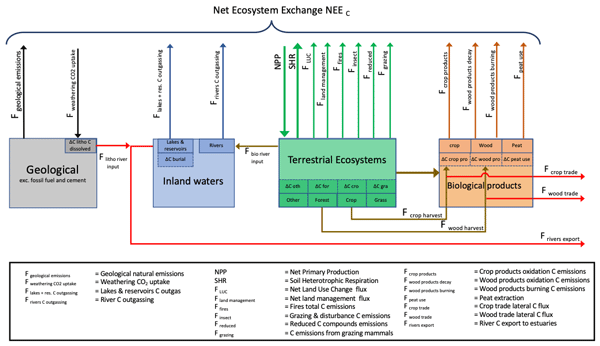
Short summary
Short summary
The second phase of the Regional Carbon Cycle Assessment and Processes (RECCAP) will provide updated quantification and process understanding of CO2, CH4, and N2O emissions and sinks for ten regions of the globe. In this paper, we give definitions, review different methods, and make recommendations for estimating different components of the total land–atmosphere carbon exchange for each region in a consistent and complete approach.
Michael Fritz, Sebastian Wetterich, Joel McAlister, and Hanno Meyer
Earth Syst. Sci. Data, 14, 57–63, https://doi.org/10.5194/essd-14-57-2022, https://doi.org/10.5194/essd-14-57-2022, 2022
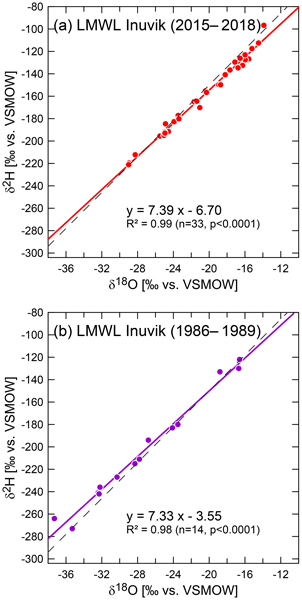
Short summary
Short summary
From 2015 to 2018 we collected rain and snow samples in Inuvik, Canada. We measured the stable water isotope composition of oxygen (δ18O) and hydrogen (δ2H) with a mass spectrometer. This data will be of interest for other scientists who work in the Arctic. They will be able to compare our modern data with their own isotope data in old ice, for example in glaciers, and in permafrost. This will help to correctly interpret the climate signals of the environmental history of the Earth.
David Olefeldt, Mikael Hovemyr, McKenzie A. Kuhn, David Bastviken, Theodore J. Bohn, John Connolly, Patrick Crill, Eugénie S. Euskirchen, Sarah A. Finkelstein, Hélène Genet, Guido Grosse, Lorna I. Harris, Liam Heffernan, Manuel Helbig, Gustaf Hugelius, Ryan Hutchins, Sari Juutinen, Mark J. Lara, Avni Malhotra, Kristen Manies, A. David McGuire, Susan M. Natali, Jonathan A. O'Donnell, Frans-Jan W. Parmentier, Aleksi Räsänen, Christina Schädel, Oliver Sonnentag, Maria Strack, Suzanne E. Tank, Claire Treat, Ruth K. Varner, Tarmo Virtanen, Rebecca K. Warren, and Jennifer D. Watts
Earth Syst. Sci. Data, 13, 5127–5149, https://doi.org/10.5194/essd-13-5127-2021, https://doi.org/10.5194/essd-13-5127-2021, 2021
Short summary
Short summary
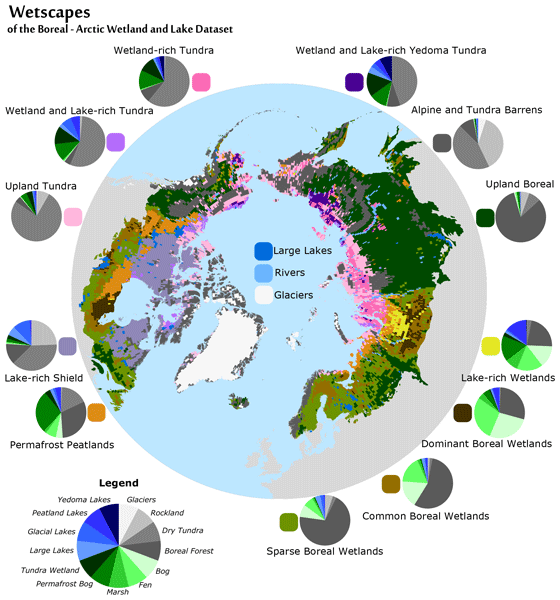
Wetlands, lakes, and rivers are important sources of the greenhouse gas methane to the atmosphere. To understand current and future methane emissions from northern regions, we need maps that show the extent and distribution of specific types of wetlands, lakes, and rivers. The Boreal–Arctic Wetland and Lake Dataset (BAWLD) provides maps of five wetland types, seven lake types, and three river types for northern regions and will improve our ability to predict future methane emissions.
Cited articles
Bartsch, A., Widhalm, B., and Pointner, G.: Vegetation height derived from Sentinel-1 and Sentinel-2 satellite data (2015–2018) for tundra regions, PANGAEA [data set], https://doi.org/10.1594/PANGAEA.897045, 2019a. a, b
Bartsch, A., Widhalm, B., Pointner, G., Ermokhina, K., Leibman, M., and Heim, B.: Landcover derived from Sentinel-1 and Sentinel-2 satellite data (2015–2018) for Subarctic and Arctic environments, PANGAEA [data set], https://doi.org/10.1594/PANGAEA.897916, 2019b. a
Bartsch, A., Efimova, A., Widhalm, B., Muri, X., von Baeckmann, C., Bergstedt, H., Ermokhina, K., Hugelius, G., Heim, B., and Leibman, M.: Circumarctic land cover diversity considering wetness gradients, Hydrology and Earth System Sciences, 28, 2421–2481, https://doi.org/10.5194/hess-28-2421-2024, 2024a. a, b, c, d
Bartsch, A., Khairullin, R., Efimova, A., Widhalm, B., Muri, X., von Baeckmann, C., Bergstedt, H., Ermokhina, K., Hugelius, G., Heim, B., Leibman, M., and Gruber, C.: Circumarctic Landcover Units, Zenodo [data set], https://doi.org/10.5281/zenodo.14235736, 2024b. a
Biskaborn, B. K., Smith, S. L., Noetzli, J., Matthes, H., Vieira, G., Streletskiy, D. A., Schoeneich, P., Romanovsky, V. E., Lewkowicz, A. G., Abramov, A., Allard, M., Boike, J., Cable, W. L., Christiansen, H. H., Delaloye, R., Diekmann, B., Drozdov, D., Etzelmüller, B., Grosse, G., Guglielmin, M., Ingeman-Nielsen, T., Isaksen, K., Ishikawa, M., Johansson, M., Johannsson, H., Joo, A., Kaverin, D., Kholodov, A., Konstantinov, P., Kröger, T., Lambiel, C., Lanckman, J. P., Luo, D., Malkova, G., Meiklejohn, I., Moskalenko, N., Oliva, M., Phillips, M., Ramos, M., Sannel, A. B. K., Sergeev, D., Seybold, C., Skryabin, P., Vasiliev, A., Wu, Q., Yoshikawa, K., Zheleznyak, M., and Lantuit, H.: Permafrost is warming at a global scale, Nature Communications, 10, 1–11, https://doi.org/10.1038/s41467-018-08240-4, 2019. a
Breiman, L.: Bagging predictors, Machine Learning, 24, 123–140, https://doi.org/10.1007/bf00058655, 1996. a
Breiman, L.: Random Forests, Machine Learning, 45, 5–32, https://doi.org/10.1023/A:1010933404324, 2001. a
Burn, C. R.: Herschel Island: Qikiqtaryuk: A Natural & Cultural History of Yukon's Arctic Island, Calgary, AB: University of Calgary Press, Calgary, Alberta, 1st edn., ISBN-13: 978-0988000919, 2012. a
Couture, N., Irrgang, A. M., Pollard, W. H., Lantuit, H., and Fritz, M.: Soil organic carbon (SOC) and sediment contents and fluxes for terrain units along the Yukon Coastal Plain, Canada, including corrections for volumetric ground ice contents, PANGAEA [data set], https://doi.org/10.1594/PANGAEA.884689, 2018a. a, b, c
Couture, N. J. and Pollard, W. H.: A Model for Quantifying Ground‐Ice Volume, Yukon Coast, Western Arctic Canada, Permafrost and Periglacial Processes, 28, 534–542, https://doi.org/10.1002/ppp.1952, 2017. a
Couture, N. J., Irrgang, A., Pollard, W., Lantuit, H., and Fritz, M.: Coastal Erosion of Permafrost Soils Along the Yukon Coastal Plain and Fluxes of Organic Carbon to the Canadian Beaufort Sea, Journal of Geophysical Research: Biogeosciences, https://doi.org/10.1002/2017JG004166, 2018b. a, b, c, d
Ehlers, J., Gibbard, P. L., and Hughes, P. D.: Quaternary Glaciations – Extent and Chronology: a closer look, Elsevier Science, ISBN 9780444535375, 2011. a
Fritz, M., Wetterich, S., Meyer, H., Schirrmeister, L., Lantuit, H., and Pollard, W. H.: Origin and characteristics of massive ground ice on Herschel Island (western Canadian Arctic) as revealed by stable water isotope and Hydrochemical signatures, Permafrost and Periglacial Processes, 22, 26–38, https://doi.org/10.1002/ppp.714, 2011. a
Fritz, M., Wetterich, S., Schirrmeister, L., Meyer, H., Lantuit, H., Preusser, F., and Pollard, W. H.: Eastern Beringia and beyond: Late Wisconsinan and Holocene landscape dynamics along the Yukon Coastal Plain, Canada, Palaeogeography, Palaeoclimatology, Palaeoecology, 319–320, 28–45, https://doi.org/10.1016/j.palaeo.2011.12.015, 2012. a
Fritz, M., Wolter, J., Rudaya, N., Palagushkina, O., Nazarova, L., Obu, J., Rethemeyer, J., Lantuit, H., and Wetterich, S.: Holocene ice-wedge polygon development in northern Yukon permafrost peatlands (Canada), Quaternary Science Reviews, 147, 279–297, https://doi.org/10.1016/j.quascirev.2016.02.008, 2016. a
Government of Canada: Canadian Climate Normals and Averages, http://climate.weather.gc.ca/climate_normals/index_e.html (last access: 25 May 2024), 2024. a
Hengl, T., de Jesus, J. M., Heuvelink, G. B. M., Gonzalez, M. R., Kilibarda, M., Blagotić, A., Shangguan, W., Wright, M. N., Geng, X., Bauer-Marschallinger, B., Guevara, M. A., Vargas, R., MacMillan, R. A., Batjes, N. H., Leenaars, J. G. B., Ribeiro, E., Wheeler, I., Mantel, S., and Kempen, B.: SoilGrids250m: Global gridded soil information based on machine learning, PloS one, 12, e0169748, https://doi.org/10.1371/journal.pone.0169748, 2017. a
Hugelius, G., Bockheim, J. G., Camill, P., Elberling, B., Grosse, G., Harden, J. W., Johnson, K., Jorgenson, T., Koven, C. D., Kuhry, P., Michaelson, G., Mishra, U., Palmtag, J., Ping, C.-L., O'Donnell, J., Schirrmeister, L., Schuur, E. A. G., Sheng, Y., Smith, L. C., Strauss, J., and Yu, Z.: A new data set for estimating organic carbon storage to 3 m depth in soils of the northern circumpolar permafrost region, Earth System Science Data, 5, 393–402, https://doi.org/10.5194/essd-5-393-2013, 2013. a, b, c, d
Hugelius, G., Strauss, J., Zubrzycki, S., Harden, J. W., Schuur, E. A. G., Ping, C.-L., Schirrmeister, L., Grosse, G., Michaelson, G. J., Koven, C. D., O'Donnell, J. A., Elberling, B., Mishra, U., Camill, P., Yu, Z., Palmtag, J., and Kuhry, P.: Estimated stocks of circumpolar permafrost carbon with quantified uncertainty ranges and identified data gaps, Biogeosciences, 11, 6573–6593, https://doi.org/10.5194/bg-11-6573-2014, 2014. a, b
Irrgang, A. M., Lantuit, H., Manson, G. K., Günther, F., Grosse, G., and Overduin, P. P.: Variability in Rates of Coastal Change Along the Yukon Coast, 1951 to 2015, Journal of Geophysical Research: Earth Surface, 123, 779–800, https://doi.org/10.1002/2017JF004326, 2018. a, b
Kuhn, M.: Building Predictive Models in R Using the caret Package, Journal of Statistical Software, 28, https://doi.org/10.18637/jss.v028.i05, 2008. a
Kuhn, M.: caret: Classification and Regression Training, R package version 6.0-92, CRAN [code], https://cran.r-project.org/web/packages/caret/ (last access: 2 February 2026), 2022. a
Kursa, M. B. and Rudnicki, W. R.: Feature selection with the boruta package, Journal of Statistical Software, 36, 1–13, https://doi.org/10.18637/jss.v036.i11, 2010. a, b
Lagacherie, P.: Digital soil mapping: A state of the art, Springer Netherlands, 3–14, ISBN 9781402085918, https://doi.org/10.1007/978-1-4020-8592-5_1, 2008. a
Lantuit, H. and Pollard, W. H.: Fifty years of coastal erosion and retrogressive thaw slump activity on Herschel Island, southern Beaufort Sea, Yukon Territory, Canada, Geomorphology, 95, 84–102, https://doi.org/10.1016/j.geomorph.2006.07.040, 2008. a
Lantuit, H., Overduin, P. P., Couture, N., Wetterich, S., Aré, F., Atkinson, D., Brown, J., Cherkashov, G., Drozdov, D., Forbes, L. D., Graves-Gaylord, A., Grigoriev, M., Hubberten, H. W., Jordan, J., Jorgenson, T., Ødegård, R. S., Ogorodov, S., Pollard, W. H., Rachold, V., Sedenko, S., Solomon, S., Steenhuisen, F., Streletskaya, I., and Vasiliev, A.: The Arctic Coastal Dynamics Database: A New Classification Scheme and Statistics on Arctic Permafrost Coastlines, Estuaries and Coasts, 35, 383–400, https://doi.org/10.1007/s12237-010-9362-6, 2012. a
Lin, L. I.-K.: A Concordance Correlation Coefficient to Evaluate Reproducibility, Biometrics, 45, 255, https://doi.org/10.2307/2532051, 1989. a
McBratney, A. B., Santos, M. L. M., and Minasny, B.: On digital soil mapping, Geoderma, 117, 3–52, https://doi.org/10.1016/S0016-7061(03)00223-4, 2003. a
Meredith, M., Sommerkorn, M., Cassotta, S., Derksen, C., Ekaykin, A., Hollo, A., Kofinas, G., Mackintosh, A., Melbourne-Thomas, J., Muelbert, M. M., Ottersen, G., Pritchard, H., and Schuur, E. A.: Polar Regions, Cambridge University Press, 203–320, https://doi.org/10.1017/9781009157964.005, 2022. a
Meyer, H. and Pebesma, E.: Predicting into unknown space? Estimating the area of applicability of spatial prediction models, Methods in Ecology and Evolution, 12, 1620–1633, https://doi.org/10.1111/2041-210X.13650, 2021. a, b, c, d
Meyer, H. and Pebesma, E.: Machine learning-based global maps of ecological variables and the challenge of assessing them, Nature Communications, 13, 1–4, https://doi.org/10.1038/s41467-022-29838-9, 2022. a
Meyer, H., Ludwig, M., Milà, C., Linnenbrink, J., and Schumacher, F.: The CAST package for training and assessment of spatial prediction models in R, arXiv [preprint], https://doi.org/10.48550/arXiv.2404.06978, 10 April 2024. a
Mishra, U. and Gautam, S.: Spatial heterogeneity and environmental predictors of permafrost region soil organic carbon stocks, DRYAD [data set], https://doi.org/10.7941/D1GD1H, 2022. a, b, c, d
Mishra, U., Hugelius, G., Shelef, E., Yang, Y., Strauss, J., Lupachev, A., Harden, J. W., Jastrow, J. D., Ping, C. L., Riley, W. J., Schuur, E. A. G., Matamala, R., Siewert, M., Nave, L. E., Koven, C. D., Fuchs, M., Palmtag, J., Kuhry, P., Treat, C. C., Zubrzycki, S., Hoffman, F. M., Elberling, B., Camill, P., Veremeeva, A., and Orr, A.: Spatial heterogeneity and environmental predictors of permafrost region soil organic carbon stocks, Science Advances, 7, https://doi.org/10.1126/sciadv.aaz5236, 2021. a, b, c, d, e
Obu, J.: How Much of the Earth's Surface is Underlain by Permafrost?, Journal of Geophysical Research: Earth Surface, 126, 1–5, https://doi.org/10.1029/2021JF006123, 2021. a
Obu, J., Lantuit, H., Myers-Smith, I. H., Heim, B., Wolter, J., and Fritz, M.: Permafrost cores and active layer pits on Herschel Island: link to shape files, PANGAEA [data set], https://doi.org/10.1594/PANGAEA.859661, 2016. a, b
Obu, J., Lantuit, H., Myers-Smith, I., Heim, B., Wolter, J., and Fritz, M.: Effect of Terrain Characteristics on Soil Organic Carbon and Total Nitrogen Stocks in Soils of Herschel Island, Western Canadian Arctic, Permafrost and Periglacial Processes, 28, 92–107, https://doi.org/10.1002/ppp.1881, 2017. a, b, c, d, e, f, g, h, i, j, k
Obu, J., Westermann, S., Bartsch, A., Berdnikov, N., Christiansen, H. H., Dashtseren, A., Delaloye, R., Elberling, B., Etzelmüller, B., Kholodov, A., Khomutov, A., Kääb, A., Leibman, M. O., Lewkowicz, A. G., Panda, S. K., Romanovsky, V., Way, R. G., Westergaard-Nielsen, A., Wu, T., Yamkhin, J., and Zou, D.: Northern Hemisphere permafrost map based on TTOP modelling for 2000–2016 at 1 km2 scale, Earth-Science Reviews, 193, 299–316, https://doi.org/10.1016/j.earscirev.2019.04.023, 2019. a
Pachepsky, Y. and Hill, R. L.: Scale and scaling in soils, Geoderma, 287, 4–30, https://doi.org/10.1016/j.geoderma.2016.08.017, 2017. a
Palmtag, J. and Kuhry, P.: Grain size controls on cryoturbation and soil organic carbon density in permafrost-affected soils, Permafrost and Periglacial Processes, 29, 112–120, https://doi.org/10.1002/ppp.1975, 2018. a
Palmtag, J., Cable, S., Christiansen, H. H., Hugelius, G., and Kuhry, P.: Landform partitioning and estimates of deep storage of soil organic matter in Zackenberg, Greenland, The Cryosphere, 12, 1735–1744, https://doi.org/10.5194/tc-12-1735-2018, 2018. a, b
Palmtag, J., Obu, J., Kuhry, P., Richter, A., Siewert, M. B., Weiss, N., Westermann, S., and Hugelius, G.: A high spatial resolution soil carbon and nitrogen dataset for the northern permafrost region based on circumpolar land cover upscaling, Earth System Science Data, 14, 4095–4110, https://doi.org/10.5194/essd-14-4095-2022, 2022. a
Ping, C., Clark, M. H., Kimble, J. M., Michaelson, G. J., Shur, Y., and Stiles, C. A.: Sampling Protocols for Permafrost‐Affected Soils, Soil Horizons, 54, 13–19, https://doi.org/10.2136/sh12-09-0027, 2013. a
Porter, C., Morin, P., Howat, I., Noh, M., Bates, B., Peterman, K., Keesey, S., Schlenk, M., Gardiner, J., Tomko, K., Willis, M., Kelleher, C., Cloutier, M., Husby, E., Foga, S., Nakamura, H., Platson, M., Wethington, M. J., Williamson, C., Bauer, G., Enos, J., Arnold, G., Kramer, W., Becker, P., Doshi, A., D’Souza, C., Cummens, P., Laurier, F., and Bojesen, M.: ArcticDEM, Harvard Dataverse [data set], https://doi.org/10.7910/DVN/OHHUKH, 2018. a
R Development Core Team: R: A language and environment for statistical computing. R Foundation for Statistical Computing, Vienna, Austria, ISBN 3-900051-07-0, http://www.R-project.org (last access: 12 August 2017), 2021. a
Rantanen, M., Karpechko, A. Y., Lipponen, A., Nordling, K., Hyvärinen, O., Ruosteenoja, K., Vihma, T., and Laaksonen, A.: The Arctic has warmed nearly four times faster than the globe since 1979, Communications Earth and Environment, 3, 1–10, https://doi.org/10.1038/s43247-022-00498-3, 2022. a
Schuur, E. A. G., McGuire, A. D., Schädel, C., Grosse, G., Harden, J. W., Hayes, D. J., Hugelius, G., Koven, C. D., Kuhry, P., Lawrence, D. M., Natali, S. M., Olefeldt, D., Romanovsky, V. E., Schaefer, K., Turetsky, M. R., Treat, C. C., and Vonk, J. E.: Climate change and the permafrost carbon feedback, Nature, 520, 171–179, https://doi.org/10.1038/nature14338, 2015. a
Siewert, M. B.: High-resolution digital mapping of soil organic carbon in permafrost terrain using machine learning: a case study in a sub-Arctic peatland environment, Biogeosciences, 15, 1663–1682, https://doi.org/10.5194/bg-15-1663-2018, 2018. a, b
Siewert, M. B., Hanisch, J., Weiss, N., Kuhry, P., Maximov, T. C., and Hugelius, G.: Comparing carbon storage of Siberian tundra and taiga permafrost ecosystems at very high spatial resolution, Journal of Geophysical Research: Biogeosciences, 120, 1973–1994, https://doi.org/10.1002/2015JG002999, 2015. a
Siewert, M. B., Hugelius, G., Heim, B., and Faucherre, S.: Landscape controls and vertical variability of soil organic carbon storage in permafrost-affected soils of the Lena River Delta, Catena, 147, 725–741, https://doi.org/10.1016/j.catena.2016.07.048, 2016. a
Siewert, M. B., Lantuit, H., Richter, A., and Hugelius, G.: Soil organic carbon, active layer depth and visible ground ice content for Herschel Island (Qikiqtaruk), PANGAEA [data set], https://doi.org/10.1594/PANGAEA.927861, 2021b. a
Signorell, A.: DescTools: Tools for Descriptive Statistics, R package version 0.99.60, CRAN [code], https://doi.org/10.32614/CRAN.package.DescTools, 2025. a
Speetjens, N. J., Berghuijs, W. R., Wagner, J., and Vonk, J. E.: Degradation of ice-wedge polygons leads to increased fluxes of water and DOC, Science of The Total Environment, 920, 170931, https://doi.org/10.1016/j.scitotenv.2024.170931, 2024. a
Strauss, J., Abbott, B. W., Hugelius, G., Schuur, E., Treat, C., Fuchs, M., Schädel, C., Ulrich, M., Turetsky, M., Keuschnig, M., Biasi, C., Yang, Y., and Grosse, G.: 9. Permafrost, in: Recarbonizing global soils – A technical manual of recommended management practices, FAO, 127–147, https://www.fao.org/publications/card/en/c/CB6378EN/ (last access: 2 February 2026), 2021. a
The Government of Yukon: Watercourses, Mapdataservice, https://map-data.service.yukon.ca/GeoYukon/Base/Watercourses_1M/ (last access: 3 December 2025), 2025. a
Turetsky, M. R., Abbott, B. W., Jones, M. C., Anthony, K. W., Olefeldt, D., Schuur, E. A. G., Grosse, G., Kuhry, P., Hugelius, G., Koven, C., Lawrence, D. M., Gibson, C., Sannel, A. B. K., and McGuire, A. D.: Carbon release through abrupt permafrost thaw, Nature Geoscience, 13, 138–143, https://doi.org/10.1038/s41561-019-0526-0, 2020. a
Virkkala, A.-M., Niittynen, P., Kemppinen, J., Marushchak, M. E., Voigt, C., Hensgens, G., Kerttula, J., Happonen, K., Tyystjärvi, V., Biasi, C., Hultman, J., Rinne, J., and Luoto, M.: High-resolution spatial patterns and drivers of terrestrial ecosystem carbon dioxide, methane, and nitrous oxide fluxes in the tundra, Biogeosciences, 21, 335–355, https://doi.org/10.5194/bg-21-335-2024, 2024. a
Wagner, J., Martin, V., Speetjens, N. J., A'Campo, W., Durstewitz, L., Lodi, R., Fritz, M., Tanski, G., Vonk, J. E., Richter, A., Bartsch, A., Lantuit, H., and Hugelius, G.: High resolution mapping shows differences in soil carbon and nitrogen stocks in areas of varying landscape history in Canadian lowland tundra, Geoderma, 438, 116652, https://doi.org/10.1016/j.geoderma.2023.116652, 2023. a, b, c, d, e, f, g, h, i, j, k, l
Wagner, J., Martin, V. S., Speetjens, N. J., A'Campo, W., Durstewitz, L., Lodi, R., Fritz, M., Tanski, G., Vonk, J. E., Richter, A., Bartsch, A., Lantuit, H., and Hugelius, G.: High resolution datasets of soil organic carbon and nitrogen stocks in Canadian lowland tundra, Dataset version 1, Bolin Centre Database [data set], https://doi.org/10.17043/wagner-2024-soc-1, 2024. a
Walker, D. A., Reynolds, M. K., Daniëls, F. J., Einarsson, E., Elvebakk, A., Gould, W. A., Katenin, A. E., Kholod, S. S., Markon, C. J., Melnikov, E. S., Moskalenko, N. G., Talbot, S. S., Yurtsev, B. A., Bliss, L. C., Edlund, S. A., Zoltai, S. C., Wilhelm, M., Bay, C., Gudjónsson, G., Moskalenko, N. G., Ananjeva, G. V., Drozdov, D. S., Konchenko, L. A., Korostelev, Y. V., Melnikov, E. S., Ponomareva, O. E., Matveyeva, N. V., Safranova, I. N., Shelkunova, R., Polezhaev, A. N., Johansen, B. E., Maier, H. A., Murray, D. F., Fleming, M. D., Trahan, N. G., Charron, T. M., Lauritzen, S. M., and Vairin, B. A.: The Circumpolar Arctic vegetation map, Journal of Vegetation Science, 16, 267–282, https://doi.org/10.1111/j.1654-1103.2005.tb02365.x, 2005. a
Widhalm, B., Bartsch, A., and Goler, R.: Normalized C-HH backscatter from Sentinel-1 (December, 2014–2017) for selected tundra regions, PANGAEA [data set], https://doi.org/10.1594/PANGAEA.897046, 2019. a, b
Wolter, J., Lantuit, H., Fritz, M., Macias-Fauria, M., Myers-Smith, I., and Herzschuh, U.: Vegetation composition and shrub extent on the Yukon coast, Canada, are strongly linked to ice-wedge polygon degradation, Polar Research, https://doi.org/10.3402/polar.v35.27489, 2016. a
Wolter, J., Lantuit, H., Wetterich, S., Rethemeyer, J., and Fritz, M.: Climatic, geomorphologic and hydrologic perturbations as drivers for mid- to late Holocene development of ice-wedge polygons in the western Canadian Arctic, Permafrost and Periglacial Processes, 29, 164–181, https://doi.org/10.1002/ppp.1977, 2018. a, b
Wolter, J., Jones, B. M., Fuchs, M., Breen, A., Bussmann, I., Koch, B., Lenz, J., Myers-Smith, I. H., Sachs, T., Strauss, J., Nitze, I., and Grosse, G.: Post-drainage vegetation, microtopography and organic matter in Arctic drained lake basins, Environmental Research Letters, 19, 045001, https://doi.org/10.1088/1748-9326/ad2eeb, 2024. a
Short summary
Permafrost soils store vast amounts of organic carbon, key to understanding climate change. This study uses machine learning and combines existing data with new field data to create detailed regional maps of soil carbon and nitrogen stocks for the Yukon coastal plain. The results show how soil properties vary across the landscape highlighting the importance of data selection for accurate predictions. These findings improve carbon storage estimates and may aid regional carbon budget assessments.
Permafrost soils store vast amounts of organic carbon, key to understanding climate change. This...


