
the Creative Commons Attribution 4.0 License.
the Creative Commons Attribution 4.0 License.
 | 31 Aug 2026
Field application of rice straw–sewage sludge compost in Mediterranean citrus orchards: effects on soil properties, nutrient status and fruit quality
Isabel Rodríguez-Carretero

Rodolfo Canet
Ana Pérez-Piqueres
Ana Quiñones
Intensive agricultural practices have degraded soil fertility and polluted natural resources in Spanish citrus orchards, highlighting the need for more sustainable management strategies. Composting rice straw (RS) and sewage sludge (SS), two residues that are difficult to manage in Mediterranean regions, offers an environmentally sound alternative for residue valorisation and soil fertility restoration. This study assessed the agronomic performance of two industrial-scale composts produced from pruning residues (PR)/SS and RS/SS in a commercial Mediterranean citrus orchard. The effects of compost application at two rates were evaluated through analyses of soil physical, chemical, and biological properties, as well as foliar nutrient concentrations, yield, and fruit quality. RS/SS compost contained higher nutrient levels, particularly P, suggesting its potential as a P-rich organic fertiliser. Compost application reduced soil pH and slightly increased electrical conductivity without exceeding critical thresholds. Soil organic matter, organic N, available P and K, and Zn contents generally increased following compost application, while improvements in soil biological indicators were mainly observed during the first growing season. Effects on foliar nutrient status, yield, and fruit quality were limited. These results indicate that industrial-scale RS/SS compost application represents a sustainable strategy for residue valorisation and soil fertility improvement in Mediterranean citrus systems. Moreover, successive compost applications improved several soil fertility indicators and support the partial replacement of mineral P fertilisation under similar conditions.
- Article
(496 KB) - Full-text XML
- BibTeX
- EndNote


In recent years, the need to develop more sustainable strategies for managing organic waste and improving soil fertility has become increasingly urgent. This transition is supported by European and national policies promoting circular economy principles and sustainable soil management, including the European Green Deal (EC, 2019) and Spanish Real Decreto (RD) 1051/2022 (Ministerio de la Presidencia, Relaciones con las Cortes y Memoria Democrática, 2022). Within this context, increasing attention has been given to the valorisation of agricultural by-products and agro-industrial residues as organic nutrient sources.
Among these residues, rice straw (RS) is one of the most significant agricultural residues generated in the Valencia region, where rice cultivation is mainly concentrated in the Albufera Natural Park (ANP). Annual production is estimated at 75 000–90 000 t yr−1 (Ribó et al., 2017). Traditionally, this residue has been managed by open-field burning; however, the environmental impact of this practice has led to increasing restrictions, making it necessary to identify sustainable alternatives for its management and valorisation. In addition to RS, sewage sludge (SS) from wastewater treatment plants represents another relevant organic residue with high potential for agricultural reuse. In Spain, 1.2 million t of sludge are produced annually. These residues are rich in organic matter (OM) and nutrients but may also contain high levels of heavy metals, pathogens, and organic pollutants (MITECO, 2024).
In this context, composting represents an efficient strategy for the valorisation of these residues, as it enables their stabilisation and transformation into agronomically valuable products while reducing potential environmental risks (López Bravo et al., 2017). In the process, the choice of bulking agent is a key factor in composting performance, influencing aeration, moisture regulation, and decomposition dynamics. Pruning residues (PR) are commonly used for this purpose; however, their availability may be limited and not always aligned with regional residue management strategies. In this regard, rice straw represents a promising locally available alternative as a bulking agent in composting processes.
Specifically, the composting of rice straw and sewage sludge (RS–SS) constitutes a promising approach, combining residues with complementary properties (Iranzo et al., 2004). Although previous studies have evaluated RS–SS composting at pilot and medium scales (Ferrer et al., 2002; Roca-Pérez et al., 2009), information under industrial-scale production conditions remains limited (Rodríguez-Carretero et al., 2023). In addition, SS may present certain limitations; however, properly stabilised composts are widely accepted under current regulations for agricultural applications.
Compost application can improve soil physical, chemical, and biological properties, enhancing soil structure, nutrient availability, and microbial activity (Aggelides and Londra, 2000; Bouajila and Sanaa, 2011; Pérez-Piqueres et al., 2006). However, its agronomic performance under field conditions remains variable and is still poorly documented in perennial woody crops such as citrus, one of the most important fruit crops in the Mediterranean region, particularly in Spain and the Valencian Community.
In addition, irrigation management constitutes another key factor influencing soil processes and crop response in citrus systems. Although irrigation systems have progressively modernised towards localized irrigation, flood irrigation is still used in approximately 13 % of irrigated citrus orchards in Spain (MAPA, 2024).
The limited availability of information highlights the need to evaluate sustainable fertilisation strategies, including organic products, in these systems.
Based on these considerations, it was hypothesised that successive applications of SS-based composts produced with different structuring materials would contribute to the progressive improvement of soil fertility and crop performance under Mediterranean conditions. Furthermore, compost produced with RS as a bulking agent was expected to provide agronomic benefits comparable to those obtained with PR, supporting its use as a sustainable and locally available alternative for conventional compost production. The specific objectives were to (i) analyse the agronomic quality and regulatory compliance of industrial-scale SS-based composts produced using RS or PR as bulking agents, and (ii) evaluate both the short-term and cumulative effects of compost applications on soil physicochemical properties, plant nutritional status, yield, and fruit quality in a commercial citrus orchard under flood irrigation over two growing seasons.
2.1 Characterisation of the composts
Experiments were conducted using two composts from “La Vintena” commercial composting facility, located in Carcaixent (39°6′32.207′′ N; 0°29′6.87′′ W), Valencia, Spain: compost 1 (COMP1) from PR and SS (ratio 1:3, w:w fresh weight), typically produced at this facility; and compost 2 (COMP2) from RS originated from commercial rice orchards in the Park and SS (ratio 1:8, w:w fresh weight) obtained following the methodology described by Rodríguez-Carretero et al. (2023), without modifying the usual protocol followed in the facility. The physicochemical characteristics of the feedstocks used for compost production (RS, PR and SS) have been previously reported by Rodríguez-Carretero et al. (2023).
Four representative samples of each compost were collected to determine their physical and chemical properties. Each sample was homogenised and divided into two subsamples. One subsample was refrigerated at 4 °C for organic, ammonium, and nitrate N determinations. The other subsample was oven-dried at 60 °C, ground using a cutting mill (SM 100, Retsch, Germany), sieved through a 0.25 mm mesh, and stored for subsequent analyses. Parameters determined were: moisture (drying at 105 °C to constant weight), pH (1:25 water extract), electrical conductivity [(EC), 1:5 water extract], total OM (TOM) and TOC (ashing at 560 °C), oxidisable organic C [(OOC), oxidisation with K2Cr2O7], humic substances [(HS), extraction with 0.1 N Na2P2O7 + NaOH], humic acids [(HA), precipitation of humic substances extract at pH 2], organic N (Kjeldahl method), NH–N and NO–N (2 N KCl extract), macronutrients (HCl digestion), micronutrients, and heavy metals (aqua regia digestion) following the Official Methods of the Spanish MAPA (1994) with minor modifications.
pH was measured with a pH meter (Basic 20, Crison, Spain), EC with a conductometer (Sensor+ EC7, Hach, Spain), organic and mineral N using a 8200 Kjeltec digestor (Foss, Tecator AB, Sweden), and the total concentrations of P, K, Ca, Mg, sodium (Na), iron (Fe), copper (Cu), manganese (Mn), zinc (Zn), nickel (Ni), lead (Pb), cadmium (Cd), mercury (Hg), and Cr were measured in simultaneous inductively coupled plasma atomic emission spectrometry (iCAP-AES 6000, Thermo Scientific, UK). The ratio was calculated from the TOC [TOM (%)/1.724] and total N concentration (TN, organic–N + NH–N + NO–N).
2.2 Field experiments
2.2.1 Experimental development of the field trials
Field trials were carried out over two consecutive seasons, S1 (season 1) and S2 (season 2), in a commercial orchard of adult “Tango” mandarins (Citrus reticulata Blanco), grafted onto a hybrid rootstock (Citrus sinensis × Poncirus trifoliata), located in Manuel (39°3′29.1′′ N; 0°29′17.4′′ W), Valencia, Spain. Trees were planted at 5×4 m in clay loam soil (27.9 % sand, 34.9 % clay, 37.2 % silt) and irrigated via surface flooding.
The field trial followed a randomized complete block design with three treatments: (i) control (no compost application), (ii) single compost dose (10 t ha−1), and (iii) double compost dose (20 t ha−1), with annual application rates established according to Orden 10/2018 (Conselleria de Agricultura, Medio Ambiente, Cambio Climático y Desarrollo Rural, 2018). Each treatment was replicated three times, with eight trees per replicate, resulting in a total of nine experimental plots. These were separated by buffer rows to prevent cross-interference between treatments. Concerning compost treatments, COMP1, produced from PR and SS (PR–SS; 1:3 w:w fresh weight), was applied in S1, whereas COMP2, produced from RS and SS (RS–SS; 1:8 w:w fresh weight), was applied in S2 to the same trees that had previously received COMP1. This approach reflects a realistic agronomic practice, where compost composition varies between seasons depending on available organic residues. Consequently, S2 evaluation represents the cumulative effect of successive compost applications (COMP1 + COMP2) under commercial orchard conditions.
Composts were surface applied in June within the tree canopy projection zone using a trailer spreader attached to a tractor. Mineral fertilisation was initially maintained in S1 to ensure adequate crop nutritional requirements under commercial management conditions (205 kg N ha−1; 54 kg P2O5 ha−1; 156 kg K2O ha−1; 0.8 kg Fe ha−1; and 11 kg of organic products per ha). In S2, fertilisation rates were adjusted based on soil and foliar analysis results, reflecting the increased availability of nutrients in the soil. The irrigation water used in the field trials had the following composition: pH 8.14; electrical conductivity 1.08 dS m−1 (25 °C); chloride 99.0 mg L−1; sulfate 299 mg L−1; bicarbonate 206 mg L−1; carbonate < 10.0 mg L−1; nitrate < 10.0 mg L−1; calcium 113 mg L−1; magnesium 38.4 mg L−1; potassium 3.06 mg L−1; and sodium 59.2 mg L−1.
2.2.2 Soil and plant sampling during the crop cycle
In each season, soil, foliar and fruit sampling was performed to evaluate the effect of the different treatments. Soil sampling was carried out in March, by taking two subsamples per tree; with a cylindrical auger at a depth of 0–20 cm. Foliar samples were collected during the dormant period in December, by taking 12 leaves per tree from the spring flush, without terminal fruit, across all four cardinal orientations. Additionally, at harvest, in February, yield was recorded and six fruits per tree were collected from each replicate for fruit quality assessment.
2.2.3 Sample processing
Soil samples were homogenised and subdivided into three fractions. One fraction was used for moisture content determination. A second was sealed in a plastic bag and stored at 4 °C for microbial biomass C and dehydrogenase activity analyses. The remaining fraction was air-dried for subsequent physicochemical analyses. Dried samples were ground using a ball mill (OABM 255, Orto Alresa, Spain) and passed through a 2 mm sieve. Foliar samples were washed with deionised water and a non-ionic detergent, dried in a forced-air oven (JP Selecta) at 65 °C until constant weight, and ground using a water-refrigerated mill (M 20, IKA, Germany) to a particle size of <0.3 mm.
2.2.4 Analytical determinations
Soil analyses included texture (Bouyoucos hydrometer), moisture content (drying at 105 °C to constant weight), pH (1:2.5 water extract), total carbonates and active lime (Bernard calcimeter), oxidisable OM (OOM) and OOC (oxidisation with K2Cr2O7), organic N (Kjeldahl method), ratio, available P (Olsen P, sodium bicarbonate extraction), available cations (ammonium acetate extraction), micronutrients and heavy metals (aqua regia digestion), and EC (in saturation extract), following the Official Methods of the Spanish Ministry of Agriculture, Food and Fisheries (MAPA, 1994) with minor modifications. Microbial biomass C and dehydrogenase activity were determined according to Vance et al. (1987) and Casida et al. (1964), respectively. The ratio was calculated from the OOC (%) [OOM (%)/1.724] and organic N (%). Concentrations of available cations and metals were determined by flame atomic absorption spectrophotometry (FAAS, AAnalyst 200, Perkin Elmer, USA), while micronutrients and heavy metals were measured by ICP-OES (Thermo Scientific). Microbial biomass C content was determined using a TOC Analyser (TOC-VCSN, Shimadzu, Japan); and Olsen P was measured with a UV-VIS spectrophotometer (UV-1800, Shimadzu, Japan).
In the foliar material, total N (Kjeldahl method); micronutrients and macronutrients were determined following the methodology described by Morales et al. (2022); with analysis by ICP-OES (Thermo Scientific). In the fruits, physical and chemical parameters were measured. Physical parameters included fruit weight, number of fruits per tree, diameter, colour index (CI), peel thickness, and weight of peel plus pulp and juice. Chemical properties included total soluble solids (TSS), titratable acidity (TA, titration with 0.1 N NaOH solution), and maturity index (MI, calculated as TSS/TA), according to the methodology described by González-Sicilia (1968) with slight modifications. Juice was extracted using an electric juice extractor (Model 4, Lomi®, Spain) and filtered. Fruit diameter and peel thickness were measured using a digital calliper (CD-15D, Mitutoyo, Japan). CI was determined with a colourimeter (CR-300, Konica Minolta, Japan), and TSS in juice was measured with a digital refractometer (PR-32, Atago, Japan). CI was determined as per Jiménez-Cuesta et al. (1981).
2.2.5 Statistical analyses
Data from each growing season (S1 and S2) were analysed separately using analysis of variance (ANOVA) to assess the effect of compost application treatments (including the different compost application rates and the non-amended control) on analysed parameters. Before statistical analysis, data normality was evaluated using the Kolmogorov–Smirnov test. When the normality assumption was not met at the 95 % confidence level, data were log-transformed. The variance of the transformed or non-transformed data was, subsequently, analysed by one-way ANOVA using Statgraphics Centurion for Windows (Statistical Graphics Corp., The Plains, VA, USA). Treatment means were compared using Fisher's least significance difference (LSD) test at p < 0.05.
3.1 Characterisation of composts
The main physicochemical and chemical properties of COMP1 and COMP2 are presented in Table 1. COMP1 had lower moisture content than COMP2, but both complied with the legal limit of 40 % (established by RD 999/2017; Ministerio de la Presidencia y para las Administraciones Territoriales, 2017). pH values also differed, being 7.16 in COMP1 and 6.71 in COMP2. On the other hand, regardless of the structural material used, the composts did not differ in EC, with high values in both cases. TOM exceeded the minimum required threshold established by legislation (35 %; RD 999/2017) in both composts. No significant differences were observed in TOM, and therefore in TOC, despite the use of different bulking agents and varying sludge proportions. However, the OOC content was significantly higher in COMP1, as were the concentrations of HS, HA, and FA.
Table 1Composition of the obtained composts.
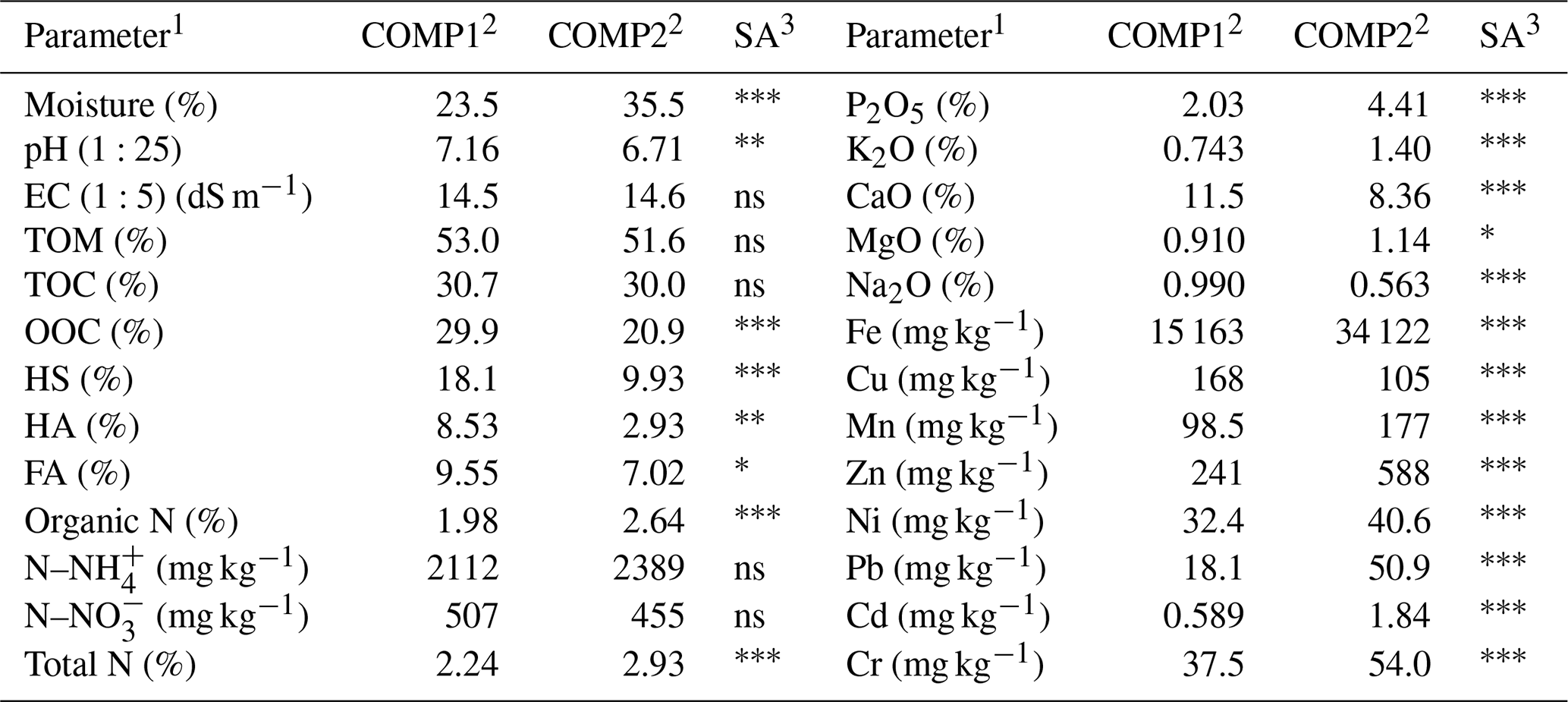
1 EC: electrical conductivity at 25 °C; TOM: total organic matter; TOC: total organic carbon; OOC: oxidisable organic carbon; HS: humic substances; HA: humic acids; FA: fulvic acids. All data are expressed on a dry weight basis. 2 COMP1: compost 1 (PR); COMP2: compost 2 (RS). 3 SA: statistical analysis of the effect of the bulking agent in the compost on the analysed parameters. ns: not significant; * significant at p<0.05; significant at p<0.01; significant at p<0.001 (Fisher's LSD).
On the other hand, COMP2 presented a significantly higher total N concentration, mainly due to the greater amount of organic N, since mineral N, N–NH, and N–NO, showed very similar values in both composts. The ratio differed significantly between composts (p<0.001), with lower values in COMP2 (10.3) compared to COMP1 (13.8), due to the higher total N concentration in COMP2. Both composts met the legal requirement established for use as fertilising products ( ratio < 20; RD 999/2017). Regarding macronutrient content, significant differences were observed between COMP1 and COMP2, with higher concentrations of P2O5, K2O, and MgO in COMP2, and lower contents of CaO and Na2O. Similarly, micronutrient and heavy metal concentrations were generally higher in COMP2 than in COMP1, with the exception of Cu. According to RD 506/2013 (Ministerio de la Presidencia, 2013), COMP1 could be classified as a Class B fertilising product, but COMP2 slightly exceeded the maximum permitted Zn concentration (500 mg kg−1) for inclusion in this category. However, this compost complies with the limits established by the more recent Spanish legislation (RD 1051/2022).
3.2 Effect of compost application on citrus nutrition
Results from S1 and S2 are presented separately because the second growing season evaluated the effects of a subsequent compost application on plots previously amended with compost. Consequently, each season was analysed independently, and treatment effects are reported within each growing season.
3.2.1 Soil fertility
Compost application did not result in significant differences in soil moisture content in either season, regardless of the dose applied, when compared to the control soil (Table 2). The high soil pH, typical of agricultural soils in the citrus-growing regions of eastern Spain, was significantly reduced in the second year following the application of the double dose of COMP2 (Table 2). Regarding salinity, estimated through soil EC, significantly higher values were recorded with the double compost application in both seasons, with increases of 21 % and 105 % in S1 and S2, respectively, compared to the control soil (Table 2).
Table 2Moisture, pH, electrical conductivity, and concentration of total carbonates and active lime in the soil from both seasons.
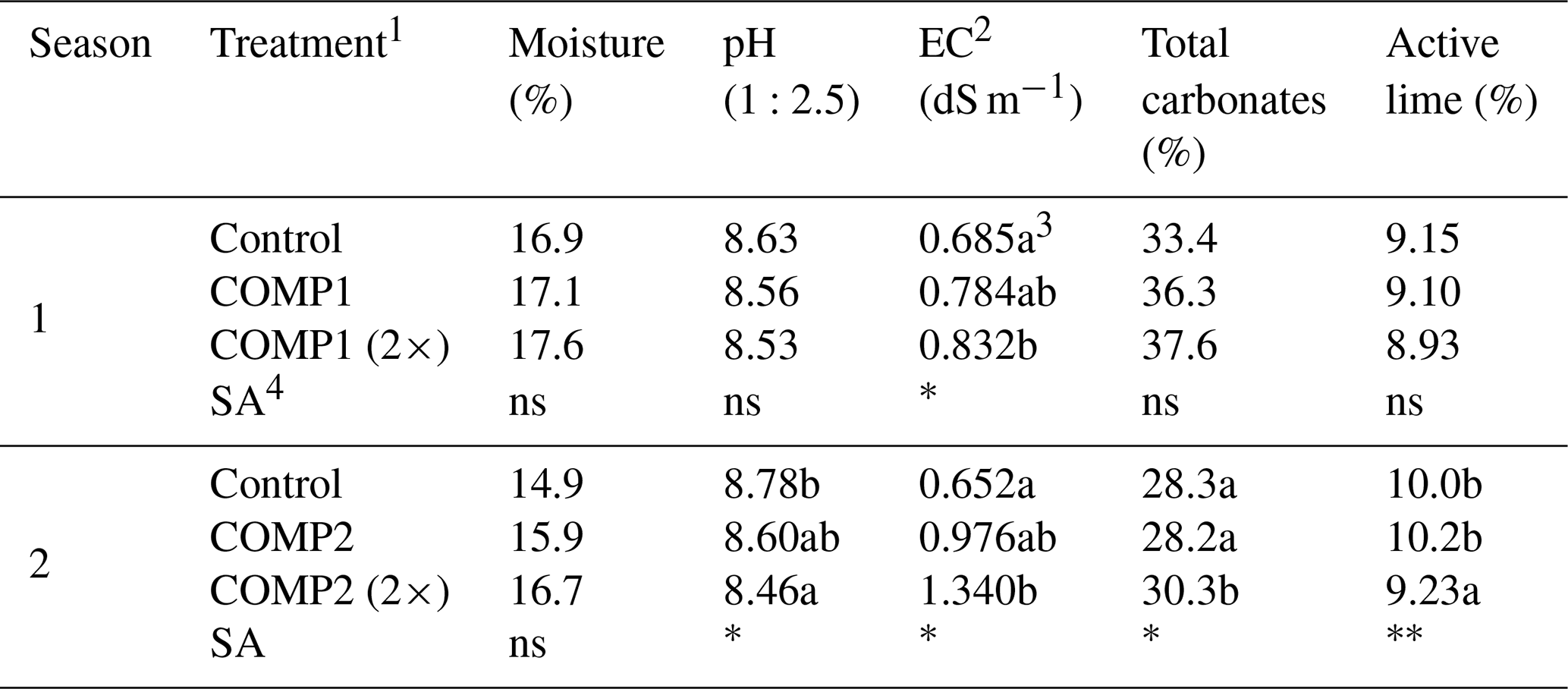
1 COMP1: compost 1 (PR); COMP2 (RS): compost 2 (RS). 2 EC: electrical conductivity at 25 °C. 3 Different letters within a column indicate significant differences between treatments in each season according to Fisher's LSD test (p<0.05). 4 SA: statistical analysis; ns: not significant at p>0.05; * significant at p<0.05; significant at p<0.01 (Fisher's LSD test).
The total carbonate concentration in the soil exceeded 21 % (Table 2), a percentage considered high for citrus orchards according to Legaz et al. (1995). At such levels, it is also important to assess active lime content, as both parameters can affect tree development (Garrido Valero, 1993). In S1, compost application did not lead to significant differences in either total carbonates or active lime (Table 2). In contrast, in S2, a significantly higher concentration of total carbonates and a significantly lower concentration of active lime were observed with the double compost dose compared to the remaining treatments (Control and COMP1).
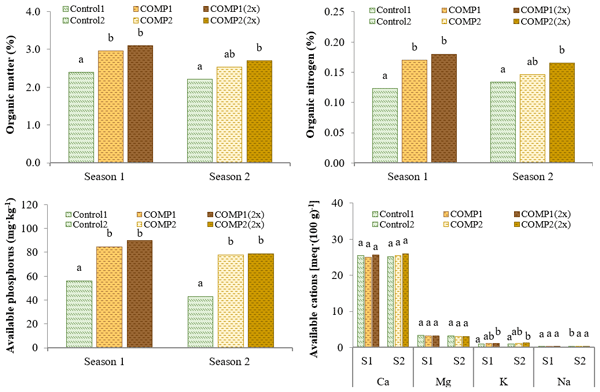
According to the classification proposed by Legaz et al. (1995) for clay soils, soil OM contents ranged from normal to very high in both seasons (Fig. 1). Compost application resulted in a significant increase in OM in S1 with both doses, and only with the double dose in S2, even though COMP1 and COMP2 did not show significant differences in their OM content. It is worth noting that OM concentration decreased between the two seasons across all treatments.
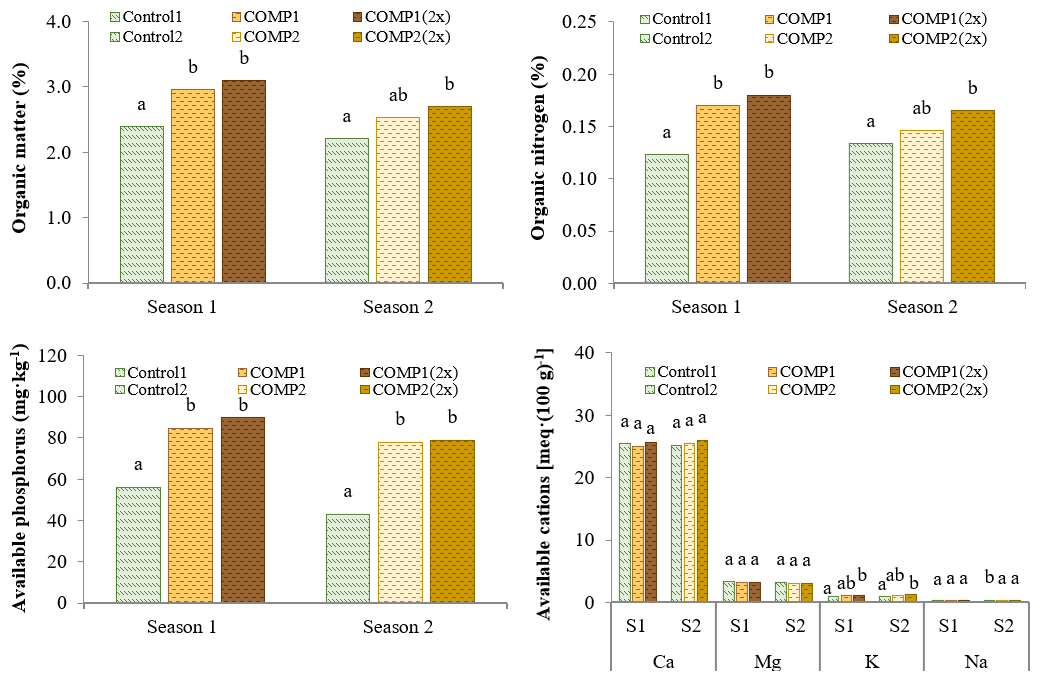
Figure 1Concentration of organic matter, organic nitrogen, available phosphorus and cations of the soil from both seasons. COMP1: compost 1 (PR); COMP2 (RS): compost 2 (RS). Different letters indicate significant differences between treatments in each season according to Fisher's LSD test (p<0.05).
Regarding organic N concentration, in S1 the control soil showed slightly low values; however, compost application increased this parameter to levels within the normal range (0.13 %–0.18 %) (Legaz et al., 1995). In S2, both the control and treated soils were within the normal range. As observed for OM, compost application led to a significant increase in S1 at both doses, and in S2 only with the double dose (Fig. 1). The ratio values obtained in all treatments, in both seasons, were within the normal range (Legaz et al., 1995; Ministerio de Medio Ambiente y Medio Rural y Marino, 2010), and no significant differences were observed between treatments in either season.
The level of available P in the control soil was high in S1 and normal in S2; however, compost application increased these values to very high levels in S1 and high levels in S2 (Legaz et al., 1995). In both seasons, this application resulted in a significantly higher concentration of available P, regardless of the dose (Fig. 1).
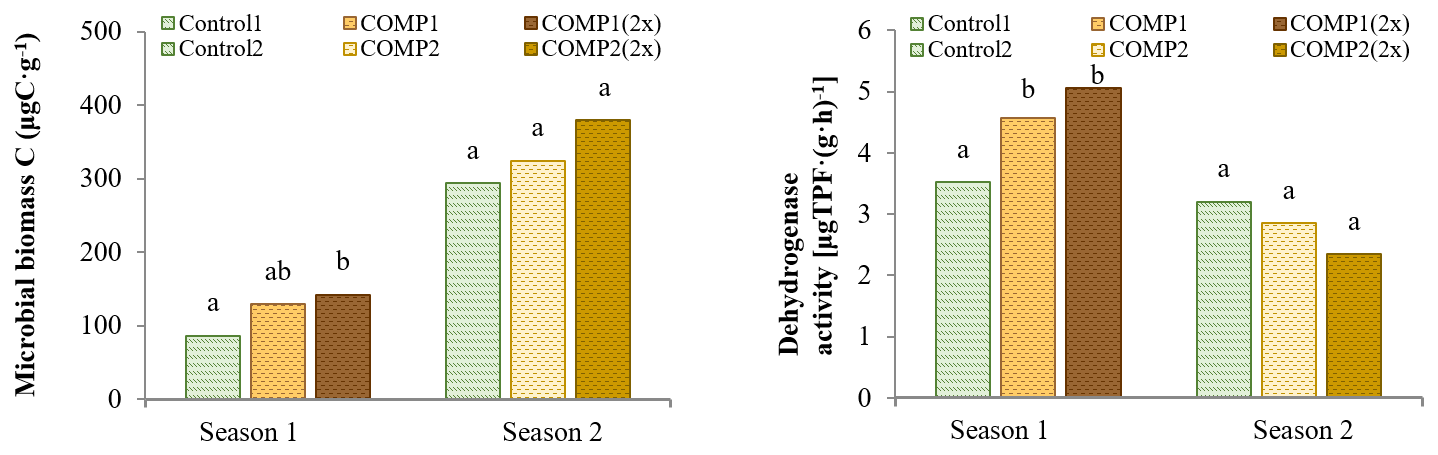
Figure 2Soil biomass carbon and dehydrogenase activity from both seasons. COMP1: compost 1 (PR); COMP2 (RS): compost 2 (RS). Different letters indicate significant differences between treatments in each season according to Fisher's LSD test (p<0.05).
Among the assimilable cations (Fig. 1), Ca concentration was very high across all treatments and both seasons, whereas Mg levels were within normal ranges throughout. The control soil and the soil receiving the single compost dose exhibited normal levels of available K; however, this level was high with the double compost dose in both seasons, according to Legaz et al. (1995). With respect to the effect of compost application on the concentration of assimilable cations, significant differences between treatments were only observed in K and Na concentrations (Fig. 1). Compost application increased K concentration in both seasons, although the increase was only significant with the double dose, which led to an increase of 17 % and 29 % in S1 and S2, respectively, compared to the control soil. Regarding Na, in S2, soils with compost application at both doses presented a significantly lower concentration than the non-amended soil.
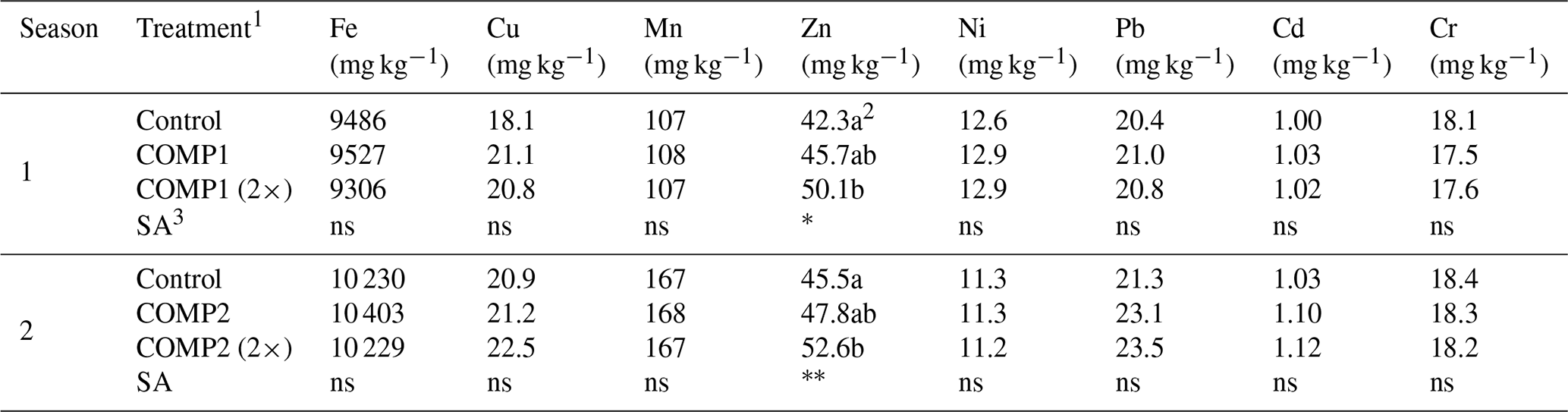
The total concentrations of heavy metals in the soil (Cu, Zn, Ni, Pb, Cd, and Cr) remained within the permissible limits established by RD 1310/1990 (MAPA, 1990) and RD 1051/2022 across all treatments (Table 3). The application of compost at double rates significantly increased soil Zn concentrations in both seasons, by 18.1 % and 16.6 %, respectively.
Table 3Concentration of total heavy metal in the soil from both seasons.
1 COMP1: compost 1 (PR); COMP2 (RS): compost 2 (RS). 2 Different letters within a column indicate significant differences between treatments in each season according to Fisher's LSD test (p<0.05). 3 SA: statistical analysis; ns: not significant at p>0.05; * significant at p<0.05; significant at p<0.01 (Fisher's LSD test).
Finally, microbial biomass C and dehydrogenase activity increased significantly with compost application in S1, whereas no significant differences among treatments were detected in S2 (Fig. 2). In S1, microbial biomass C showed a significant increase of 65 % with the double dose compared to the control soil, while dehydrogenase activity increased under both application rates.
Table 4Foliar concentration of macronutrients and micronutrients from both growing seasons.
1 COMP1: compost 1 (PR); COMP2 (RS): compost 2 (RS). 2 Different letters within a column indicate significant differences between treatments in each season according to Fisher's LSD test (p<0.05). 3 In parentheses: nutritional diagnosis – low (L); optimal (O) and high (H). 4 SA: statistical analysis; ns: not significant at p>0.05; * significant at p<0.05 (Fisher's LSD test).
3.2.2 Plant nutrient uptake
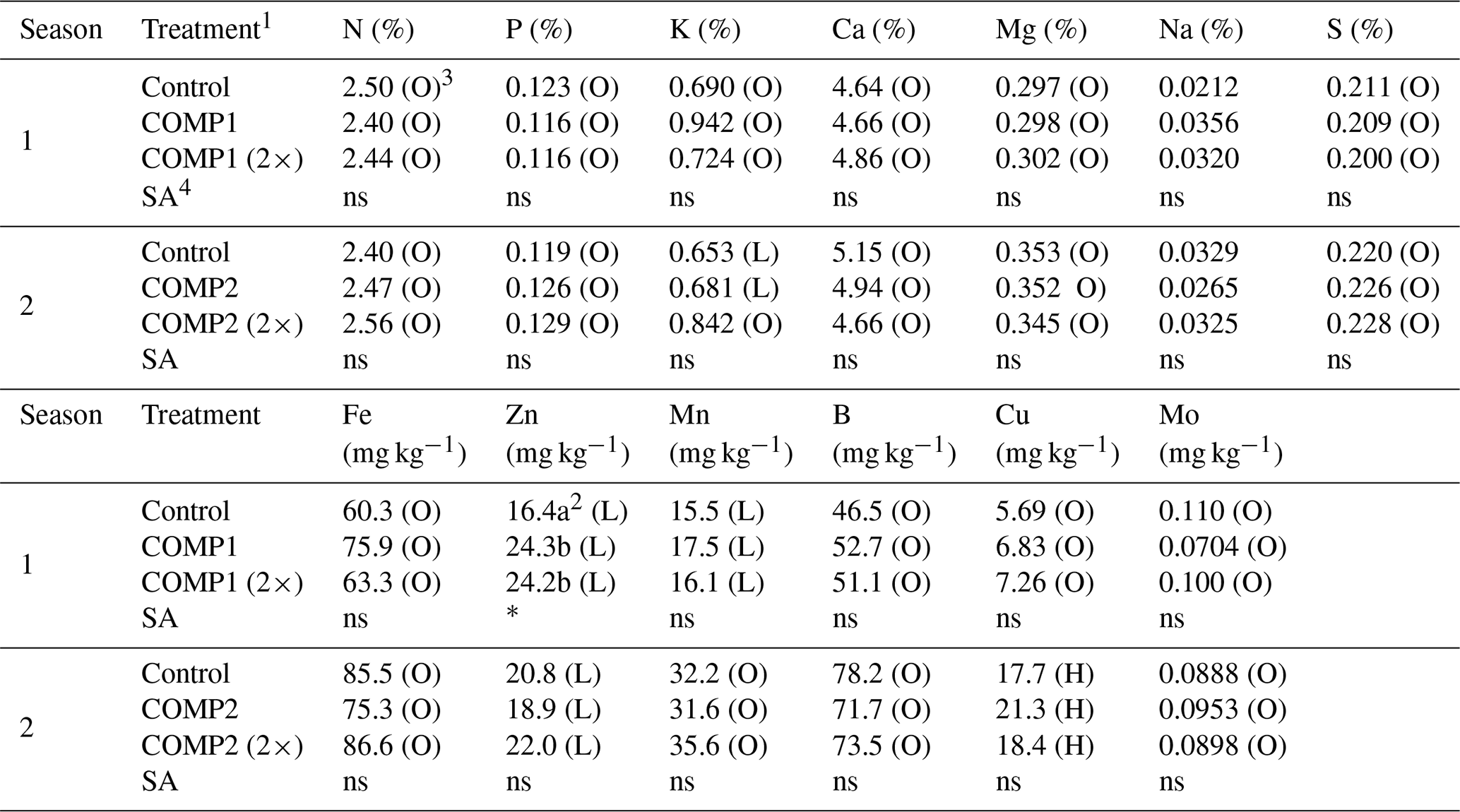
Foliar macronutrient concentrations in all treatments remained within optimal ranges across both seasons (Quiñones et al., 2012), with the exception of K in S2 (Table 4). Regarding micronutrients, foliar concentrations of Fe, B and Mo were within optimal levels for citrus. Foliar Cu levels were optimal in S1 but high in S2, whereas Mn showed the opposite trend, with low concentrations in S1 and optimal levels in S2. Zinc concentrations remained below optimal levels in all treatments and seasons. Compost application significantly increased foliar Zn only in S1 (Table 4).
3.2.3 Fruit yield and quality
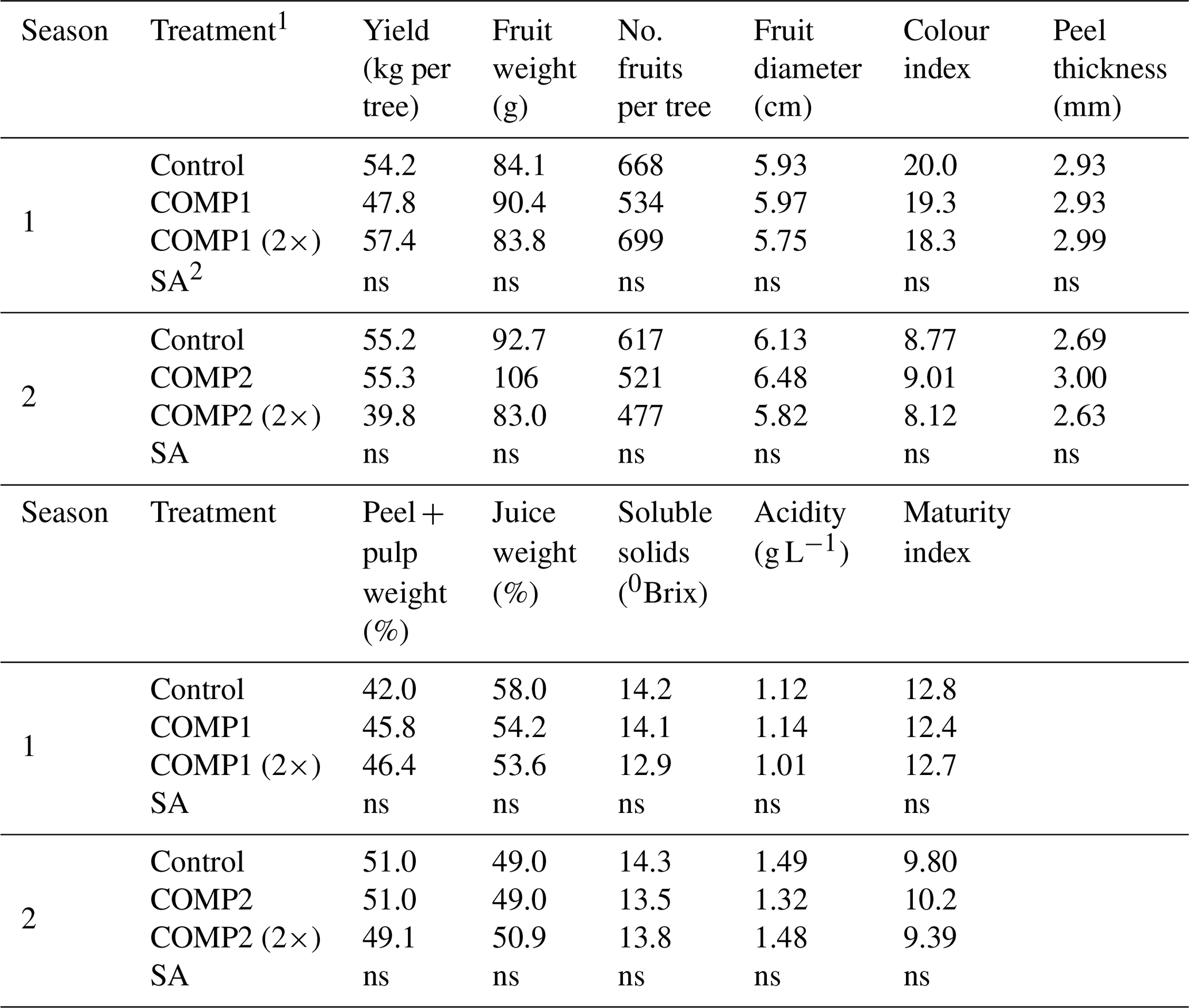
Citrus yield and physical and chemical quality parameters of fruit are presented in Table 5.
Table 5Citrus yield, physical and chemical quality parameters of fruit at harvest from both growing seasons.
1 COMP1: compost 1 (PR); COMP2 (RS): compost 2 (RS). 2 SA: statistical analysis; ns: not significant (p>0.05, Fisher's LSD test).
Across both growing seasons and all treatments, mandarin fruit weight, TSS and juice acidity were within the ranges established for the cultivar USPP17863 (Roose and Williams, 2007). Furthermore, in both seasons, the fruits met the size and maturity requirements according to the EU Citrus Quality Standards for the marketing of mandarins and their hybrids under Regulation EU No. 1890/2021 (EC, 2021), as fruit diameter exceeded 45 mm, minimum juice content surpassed 33 %, and the MI of the fruits exceeded the minimum value of 7.5.
No significant differences were observed in yield or in the physical and chemical quality parameters between the control trees and those receiving compost in either growing season. Although some differences in fruit weight and diameter were observed in S2 depending on compost dose, these variations were not agronomically relevant.
4.1 Agronomic potential of RS–SS compost under industrial-scale conditions
Compost derived from the large-scale composting of SS and RS (COMP2) exhibits considerable agronomic potential due to the complementary properties of both materials. Compared with the reference compost produced from PR and SS (COMP1), COMP2 exhibited similar or even higher nutrient contents, particularly in N and P, confirming its suitability as a fertilising organic product for Mediterranean agricultural systems. COMP2 also showed a slightly acidic pH, lower than the optimal range reported for SS–plant residue composts (Azim et al., 2018). This lower pH may be advantageous in alkaline Mediterranean soils, as it can enhance nutrient solubility and availability. Both composts showed high EC values, indicating that application rates should be carefully managed, although the improvement of soil physical properties following compost application may promote salt leaching and reduce salt accumulation over time (Aggelides and Londra, 2000; Tejada et al., 2006).
Although both composts showed similar TOC contents, COMP2 exhibited a lower ratio due to its higher total N concentration. Indeed, the larger proportion of SS relative to the bulking agent used in this compost resulted in an N content exceeding that of most manures (Dadrasnia et al., 2021; Rayne and Aula, 2020), highlighting its promising potential as a N fertiliser. P concentration was also particularly noteworthy, as the P2O5 fertiliser unit (FU) value of COMP2 was more than twice that of COMP1 and exceeded the average values commonly reported for livestock manures (Pomares, 2000). Moreover, despite the higher micronutrient and metal contents associated with SS, COMP2 was generally richer in micronutrients than COMP1 and complied with the limits established by Spanish legislation (RD 1051/2022), confirming the environmental suitability of the compost under the studied conditions.
4.2 Soil fertility response
Compost application improved several soil fertility indicators, with responses differing between S1 and S2, highlighting the importance of temporal dynamics in the effects of organic product applications.
Soil moisture was not significantly affected in either season, suggesting that two consecutive years of application were insufficient to induce noticeable changes in soil water retention capacity, despite the recognised contribution of organic applications to soil physical properties associated with water storage and availability (Bronick and Lal, 2005). In contrast, soil pH showed a clearer temporal response. Significant decreases were mainly observed in S2, particularly under the double-dose treatment, suggesting a cumulative effect associated with repeated organic matter inputs and mineralisation processes. Roca-Pérez et al. (2009) reported similar effect after the application of RS-SS compost to citrus trees grown in clay soil, also observing a more pronounced pH decline (from 8 to 7) with increasing compost rates (0 % to 6 % ). The slightly acidic pH of the RS-SS compost may have further contributed to this trend.
Soil electrical conductivity increased after compost application in S1, especially under the higher application rate, and this trend persisted in S2 following the second compost application. This indicates that, within the duration of the study, the beneficial effects of compost on soil physical properties were insufficient to offset salt inputs resulting from successive compost application. Moreover, the EC values obtained did not exceed the limit of 4 dS m−1, established to classify a soil as saline, nor did they surpass the threshold of 1.7 dS m−1, above which citrus yield begins to decline (Juárez Sanz et al., 2006; Pomares, 1986). However, reducing annual application rates or applying compost biennially could be advisable under long-term management scenarios. Proper irrigation management could also help reduce EC through salt leaching and cation redistribution (Madejón et al., 2003), particularly considering the positive effects of OM on soil physical properties and permeability (Lakhdar et al., 2009).
Carbonate concentrations were high in S1 and S2, as is commonly observed in most soils of the Valencian Community. Interestingly, although total carbonate concentrations increased in S2 under the double-dose treatment, active lime decreased slightly. This suggests enhanced carbonate solubilisation driven by organic acid release during the decomposition of organic matter, potentially increasing nutrient availability (Ma et al., 2022).
As for soil, OM concentrations increased following compost application in both seasons. However, the response was not proportional to compost dose, suggesting that higher application rates do not necessarily result in greater stabilised organic carbon accumulation. Moreover, the decrease in OM observed in the control soil in S2 indicates that mineralisation exceeded organic matter inputs in non-amended plots, reinforcing the importance of repeated organic amendments to maintain soil carbon levels under Mediterranean conditions. Furthermore, the overall decrease in OM observed between seasons across all treatments suggests that, in addition to compost management, differences in environmental conditions between seasons, variations in mineralisation rates, and the inherent variability associated with field soil sampling may also have contributed to the observed trend.
4.3 Nutrient availability
Compost application increased soil organic N and plant-available P and K in both seasons, although treatment responses were not always consistent across the study period. Madejón et al. (2003) also reported an increase in soil N concentration after the application of both organic and mineral fertilisers over three years in a “Valencia” orange orchard, using composted olive mill sludge at rates comparable to the double dose applied, as well as with higher doses of MSW compost, in comparison with soils fertilised solely with mineral inputs. Similarly, Roca-Pérez et al. (2009) observed increased soil N concentrations following the application of compost made from SS and RS in citrus orchards cultivated on clay soils in the Valencia region. The ratios across all treatments and seasons remained within the range considered optimal (10–12), indicating adequate conditions for N release (Ministerio de Medio Ambiente y Medio Rural y Marino, 2010).
Available P in soil increased with both compost doses in both seasons, in agreement with previous studies conducted in citrus systems (Madejón et al., 2003; Roca-Pérez et al., 2009). Despite the alkaline pH and high carbonate content of the soil, the organic amendment successfully enhanced P availability, reaching high to very high values. Based on these results and the adequate foliar P concentrations observed in S1, mineral P fertilisation was reduced by 10 % in S2. Despite this reduction, foliar P concentrations remained within the optimal range (Quiñones et al., 2012), suggesting that compost-derived P may contribute to reducing mineral P fertilisation requirements under similar conditions.
Soil K availability increased with compost application in both seasons, although only under the double dose. These results align with previous studies that reported higher available K concentrations after compost addition to agricultural soils (Fernández-Hernández et al., 2014; Madejón et al., 2003; Magdich and Rouina, 2022). Because this effect was only observed under the double dose and given the optimal foliar K levels recorded in S1, no reductions in mineral K fertilisation were made. This decision proved correct, as foliar K concentrations were low in S2.
In contrast to K and P, plant-available Na decreased after compost application, especially in S2. Although this effect could be attributed to an improvement in soil physical properties, and consequently, enhanced salt leaching, the EC results do not support this hypothesis.
Total metals concentrations (Fe, Cu, Mn, Zn, Ni, Pb, and Cr) remained within the ranges reported by Pomares et al. (1998) in a study conducted on conventionally managed citrus soils in the Valencian Community. Soils that received the double compost exhibited significantly higher Zn concentrations than the other treatments. However, all metals concentrations remained below the maximum limits established by RD 1310/1990, in force during the experimental period, and the stricter thresholds defined by the current RD 1051/2022, indicating that compost application did not entail a risk of exceeding regulatory thresholds.
4.4 Biological activity
Microbial biomass C and dehydrogenase activity are widely used indicators of the size and activity of soil microbial communities. Agricultural practices that stimulate microbial biomass and enzymatic activity can promote OM mineralisation, improve soil quality, and enhance plant resilience to biotic and abiotic stresses (Erhart and Hartl, 2010). In the present study, compost addition increased microbial biomass C and dehydrogenase activity in S1, whereas no significant treatment effects were detected in S2. A possible explanation for this contrasting response is that, despite their similar total OM and TOC contents, the composts differed significantly in the composition of their organic fraction, particularly in oxidisable organic carbon (OOC) and organic N contents. Oxidisable organic carbon represents a more readily available substrate for soil microorganisms than total OM. Therefore, the higher OOC content of the compost applied in S1 may have stimulated microbial growth and activity to a greater extent, contributing to the stronger microbial response observed during this season (S1).
Furthermore, microbial activity indicators are highly sensitive to environmental conditions, including soil moisture, temperature, and substrate availability at the time of sampling which may also have contributed to the variability observed between seasons. Consequently, the absence of significant treatment effects in S2 does not necessarily indicate a reduction in microbial activity but rather highlights the influence of multiple factors regulating soil microbial dynamics. Similar variability has been widely reported in the literature, where the effects of organic amendments on microbial biomass and enzymatic activity depend not only on the quantity but also on the quality of the organic substrates applied and the prevailing environmental conditions. Madejón et al. (2003) observed an enhanced dehydrogenase activity after repeated compost application. However, Albiach (1997) found no significant effects on microbial biomass C or dehydrogenase activity following the application of different organic products under Mediterranean conditions. These contrasting findings illustrate the high variability commonly reported for soil biological indicators and support the view that their response depends not only on the characteristics of the organic amendments applied but also on the environmental conditions prevailing at the time of sampling. Therefore, future studies should include multiple sampling dates, ideally covering different crop phenological stages, to improve the interpretation of soil biochemical parameters.
4.5 Plant nutrition, yield and agronomic implications
Despite improvements in several soil fertility indicators, foliar macronutrient contents remained largely unaffected by compost application. This suggests that mineral fertilisation, which was applied equally across treatments (except for P FUs in S2), was sufficient to meet the plants' nutritional requirements, so that significant changes in foliar macronutrient contents were not produced. Similar results have been reported in olive and citrus orchards under Mediterranean conditions, where repeated applications of organic amendments did not significantly affect foliar macronutrient concentrations (Canali et al., 2012; Fernández-Hernández et al., 2014). Based on the results of soil and foliar analyses, and considering the high P content of COMP2, mineral P fertiliser inputs were reduced by 10 % in S2. Despite this reduction, foliar P concentrations remained within the optimal range (Quiñones et al., 2012). These results suggest that compost-derived P may contribute to reducing mineral P fertilisation requirements under similar conditions. Moreover, trees grown in compost-amended soils showed no significant differences compared to those in non-amended soils, suggesting that a more sustainable nutrient management approach is feasible.
Foliar micronutrient concentrations were influenced by compost amendment only in the case of Zn, for which significantly higher values were observed in S1 with both compost application rates. This increase is consistent with the results of the soil analysis from the same season, in which the plots receiving compost exhibited the highest total Zn concentrations in the soil. Other authors have also reported increases in foliar Zn concentration following the application of organic products. Canali et al. (2012) reported increased foliar Zn concentrations following compost application, whereas Fernández-Hernández et al. (2014) observed variable responses depending on the type of compost applied.
Foliar concentrations of Mn and Zn were generally low in the studied plot (Quiñones et al., 2012). The fertilisation plan implemented in the plot only included the application of Fe chelates, which likely contributed to these low values. While long-term organic amendments could potentially fulfil the requirements for these elements, micronutrient supplementation should be considered during the initial years following application.
Compost application did not result in agronomically relevant changes in yield or in the physicochemical characteristics of the fruit. Although the application of organic products can enhance these parameters (Abouziena et al., 2008; Bhuyan et al., 2016; Fikry et al., 2020; Kumar et al., 2013; Madejón et al., 2003), their effects depend on multiple factors, including initial soil fertility, crop nutrient demand, climatic conditions, and the number of years of application (Diacono and Montemurro, 2010). In the present study, no agronomically relevant effects on yield or fruit quality were observed. This may be partly explained by the fact that crop nutritional requirements were adequately met in all treatments, as indicated by foliar analyses. Under these conditions, improvements in soil fertility associated with compost application were not translated into additional gains in productivity or fruit quality during the study period.
In the literature, studies on citrus on the effects of organic fertilisation on citrus yield and fruit quality showed variable results. For example, in a long-term study by Canali et al. (2012) comparing organic and mineral fertilisation in Valencia late oranges, no significant differences were found in yield, fruit weight, or rind thickness after 12 years of application. Conversely, Madejón et al. (2003) reported increased yields in Valencia oranges trees when organic and mineral fertilisation were combined, compared with exclusive mineral fertilisation. These contrasting findings suggest that crop responses to organic products are highly site-specific and may only become evident after prolonged application periods.
Nevertheless, since the experiment was conducted under flood irrigation conditions, caution should be exercised when extrapolating these findings to drip-irrigated citrus orchards, where soil water distribution and nutrient dynamics may differ.
The compost produced from rice straw and sewage sludge showed a favourable nutrient composition, particularly with respect to phosphorus content, confirming its potential as an alternative organic fertiliser and a sustainable strategy for rice straw valorisation. Moreover, its agronomic quality and regulatory compliance support its use as a viable alternative to conventional sewage sludge composts produced with pruning residues.
Successive compost applications enhanced several soil fertility indicators, including soil OM, organic N and the availability of P and K. Improvements in soil biological indicators were detected during the first growing season, although responses varied over time, highlighting the temporal variability of soil microbial processes.
Despite these positive effects on soil fertility, compost application had limited effects on plant nutritional status, yield, and fruit quality under the conditions of the present study.
Overall, these findings highlight the potential of industrial-scale composting of rice straw and sewage sludge as a circular and sustainable strategy to improve soil fertility while valorising agricultural residues. Further long-term studies under different irrigation systems are needed to evaluate the persistence of the observed soil responses, the cumulative effects of successive compost applications, and the potential to optimise compost use in combination with reduced mineral fertilisation strategies in different citrus production systems.
The data generated and analysed during this study are available from the corresponding author upon reasonable request.
Conceptualization, AP, AQ; Formal analysis, AP, AQ, IRC; Funding acquisition, RC; Investigation, AP, AQ, IRC, RC; Methodology, AP, AQ, IRC, RC; Supervision, AP, AQ; Validation, AP, AQ; Writing – original draft, IRC; Writing – review & editing, AP, AQ, IRC. All authors have read and agreed to the published version of the manuscript.
The contact author has declared that none of the authors has any competing interests.
Publisher's note: Copernicus Publications remains neutral with regard to jurisdictional claims made in the text, published maps, institutional affiliations, or any other geographical representation in this paper. The authors bear the ultimate responsibility for providing appropriate place names. Views expressed in the text are those of the authors and do not necessarily reflect the views of the publisher.
The authors gratefully acknowledge Mercedes Sais, José Puchades, and Ramón Pardo for their valuable technical assistance with the laboratory analyses and fieldwork.
This paper was edited by Axel Don and reviewed by Susana Ferreira and two anonymous referees.
This research was funded by FEADER, Ministerio de Agricultura y Pesca, Alimentación y Medio Ambiente and Generalitat Valenciana. Programa de Desarrollo Rural de la Comunitat Valenciana 2014–2020, AGCOOP_B/2018/037. The project was carried out by a consortium composed of three entities: Instituto Valenciano de Investigaciones Agrarias (IVIA), Cooperatives-Agroalimentàries de la Comunitat Valenciana (CACV) and Depuración de Aguas del Mediterráneo S. L. (DAM). The principal investigator of the project was R. C. (IVIA).
Abouziena, H. F., Hafez, O. M., El-Metwally, I. M., Sharma, S. D., and Singh, M.: Comparison of weed suppression and mandarin fruit yield and quality obtained with organic mulches, synthetic mulches, cultivation, and glyphosate, HortScience, 43, 795–799, 2008.
Aggelides, S. M. and Londra, P. A.: Effects of compost produced from town wastes and sewage sludge on the physical properties of a loamy and a clay soil, Bioresour. Technol., 71, 253–259, 2000.
Albiach, R.: Estudio de varios índices de actividad biológica del suelo en relación a diferentes aportaciones de enmiendas orgánicas, PhD thesis, Universitat de València, Spain, https://dialnet.unirioja.es/servlet/tesis?codigo=226241 (last access: 24 August 2026), 1997.
Azim, K., Soudi, B., Boukhari, S., Perissol, C., Roussos, S., and Thami Alami, I.: Composting parameters and compost quality: a literature review, Org. Agricult., 8, 141–158, 2018.
Bhuyan, M. H. M. B., Sarker, J., Rahman, S., Fujita, M., and Hasanuzzaman, M.: Evaluation of integrated nutrient management for mandarin orange production in hot humid region of Bangladesh, Am. J. Exp. Agricult., 10, 1–10, 2016.
Bouajila, K. and Sanaa, M.: Effects of organic amendments on soil physico-chemical and biological properties, J. Mater. Environ. Sci., 2, 485–490, 2011.
Bronick, C. J. and Lal, R.: Soil structure and management: a review, Geoderma, 124, 3–22, 2005.
Canali, S., Roccuzzo, G., Tittarelli, F., Ciaccia, C., Fiorella, S., and Intrigliolo, F.: Organic citrus: soil fertility and plant nutrition management, in: Advances in Citrus Nutrition, Springer, Dordrecht, 353–368, https://doi.org/10.1007/978-94-007-4171-3_24, 2012.
Casida, J. E., Klein, D. A., and Santoro, T.: Soil dehydrogenase activity, Soil Sci., 98, 371–376, 1964.
Conselleria de Agricultura, Medio Ambiente, Cambio Climático y Desarrollo Rural: Orden 10/2018, de 27 de febrero, sobre la utilización de materias fertilizantes nitrogenadas en las explotaciones agrarias de la Comunitat Valenciana, Spain, https://dogv.gva.es/es/eli/esvc/o/2018/02/27/10/dof/spa/html (last access: 24 August 2026), 2018.
Dadrasnia, A., de Bona Muñoz, I., Yáñez, E. H., Lamkaddam, I. U., Mora, M., Ponsá, S., Ahmed, M., Argelaguet, L. L., Williams, P. M., and Oatley-Radcliffe, D. L.: Sustainable nutrient recovery from animal manure: a review of current best practice technology and the potential for freeze concentration, J. Clean. Product., 315, 128106, https://doi.org/10.1016/j.jclepro.2021.128106, 2021.
Diacono, M. and Montemurro, F.: Long-term effects of organic amendments on soil fertility: a review, Agron. Sustain. Dev., 30, 401–422, 2010.
EC – European Commission: The European Green Deal, https://commission.europa.eu/strategy-and-policy/priorities-2019-2024/european-green-deal_en (last access: 3 November 2025), 2019.
EC – European Commission: Commission Delegated Regulation (EU) 2021/1890 of 2 August 2021 amending Implementing Regulation (EU) No 543/2011 as regards marketing standards in the fruit and vegetables sector, Official Journal of the European Union, L 384, 23–83, 2021.
Erhart, E. and Hartl, W.: Compost use in organic farming, in: Genetic Engineering, Biofertilisation, Soil Quality and Organic Farming, Springer, Dordrecht, https://doi.org/10.1007/978-90-481-8741-6_11, 311–345, 2010.
Fernández-Hernández, A., Roig, A., Serramiá, N., Civantos, C. G. O., and Sánchez-Monedero, M. A.: Application of compost of two-phase olive mill waste on olive grove: effects on soil, olive fruit and olive oil quality, Waste Manage., 34, 1139–1147, 2014.
Ferrer, E., Canet, R., Pomares, F., and Moreno, R.: Effects of inoculation and urea addition on the composting of sewage sludge and rice straw, WIT Trans. Ecol. Environ., 56, 297–303, 2002.
Fikry, A. M., Sayed-Ahmed, A., Mohsen, F. S., and Ibrahim, M. M.: Effect of nitrogen fertilization through inorganic, organic and biofertilizers sources on growth, yield and nutritional status in murcott tangerine trees, Plant Arch., 20, 1–10, 2020.
Garrido Valero, M. S.: Interpretación de análisis de suelos, Ministerio de Agricultura, Pesca y Alimentación, Madrid, Spain, https://www.mapa.gob.es/ministerio/pags/biblioteca/hojas/hd_1993_05.pdf (last access: 25 August 2026), 1993.
González-Sicilia, E.: El cultivo de los agrios, Ediciones Bello, Valencia, Spain, 1968.
Iranzo, M., Cañizares, J. V., Roca-Pérez, L., Sainz-Pardo, I., Mormeneo, S., and Boluda, R.: Characteristics of rice straw and sewage sludge as composting materials in Valencia (Spain), Bioresour. Technol., 95, 107–112, https://doi.org/10.1016/j.biortech.2004.01.013, 2004.
Jiménez-Cuesta, M., Cuquerella, J., and Martínez-Jávega, J. M.: Determination of a colour index for citrus de-greening, P. Int. Soc. Citricult., 4, 750–753, 1981.
Juárez Sanz, M., Sánchez Andreu, J., and Sánchez Sánchez, A.: Química del suelo y medio ambiente, Publicaciones Universidad de Alicante, Alicante, Spain, ISBN: 84-7908-893-1, 2006.
Kumar, P. S., Choudhary, V. K., Kanwat, M., and Sangeetha, A.: Influence of different nutrient sources on growth, yield and quality of Khasi mandarin, J. Appl. Horticult., 15, 220–223, 2013.
Lakhdar, A., Rabhi, M., Ghnaya, T., Montemurro, F., Jedidi, N., and Abdelly, C.: Effectiveness of compost use in salt-affected soil, J. Hazard. Mater., 171, 29–37, 2009.
Legaz, F., Serna, M. D., Ferrer, P., Cebolla, V., and Primo-Millo, E.: Análisis de hojas, suelos y aguas para el diagnóstico nutricional de plantaciones de cítricos. Procedimiento de toma de muestras, Generalitat Valenciana, Conselleria de Agricultura, Pesca y Alimentación, Spain, 1995.
López Bravo, E., Rivera, A., Herrera Suárez, M., González Cueto, O., and García de la Figal Costales, A.: Propiedades de un compost obtenido a partir de residuos de la producción de azúcar de caña, Centro Agrícola, 44, 49–55, 2017.
Ma, W., Tang, S., Dengzeng, Z., Zhang, D., Zhang, T., and Ma, X.: Root exudates contribute to belowground ecosystem hotspots: a review, Front. Microbiol., 13, 937940, https://doi.org/10.3389/fmicb.2022.937940, 2022.
Madejón, E., Burgos, P., López, R., and Cabrera, F.: Agricultural use of three organic residues: effect on orange production and on soil properties in Huelva (SW Spain), Nutr. Cycl. Agroecosyst., 65, 281–288, 2003.
Magdich, S. and Rouina, B.: Impact of compost agronomic application on soil chemical properties and olive tree growth parameters, J. Agricult. Agron., 1, 42–54, 2022.
MAPA – Ministerio de Agricultura, Pesca y Alimentación: Real Decreto 1310/1990, de 29 de octubre, por el que se regula la utilización de los lodos de depuración en el sector agrario, Boletín Oficial del Estado, 262, 32339–32340, 1990.
MAPA – Ministerio de Agricultura, Pesca y Alimentación: Métodos oficiales de análisis de suelos y aguas para el riego, in: Plantas, Productos Orgánicos Fertilizantes, Suelos, Aguas, Productos Fitosanitarios, Fertilizantes Inorgánicos, Vol. 3, Madrid, Spain, p. 662, ISBN: 84-491-0003-8 (Vol. 3); 84-491-0000-3 (complete work), 1994.
MAPA – Ministerio de Agricultura, Pesca y Alimentación: Regadíos en España 2024, Gobierno de España, Madrid, https://www.mapa.gob.es/temas/regadio2024 (last access: 10 November 2025), 2024.
Ministerio de la Presidencia: Real Decreto 506/2013, de 28 de junio, sobre productos fertilizantes, Boletín Oficial del Estado, 164, 51119–51207, 2013.
Ministerio de la Presidencia y para las Administraciones Territoriales: Real Decreto 999/2017, de 24 de noviembre, por el que se modifica el Real Decreto 506/2013, de 28 de junio, sobre productos fertilizantes, Boletín Oficial del Estado, 296, 119396–119450, 2017.
Ministerio de la Presidencia, Relaciones con las Cortes y Memoria Democrática: Real Decreto 1051/2022, de 27 de diciembre, por el que se establecen normas para la nutrición sostenible en los suelos agrarios, Boletín Oficial del Estado, 312, 188873–188916, 2022.
Ministerio de Medio Ambiente y Medio Rural y Marino: Guía práctica de la fertilización racional de los cultivos en España, Sebastián Ruano Criado (coord.), Parte I, España, https://www.mapa.gob.es/dam/mapa/contenido/agricultura/publicaciones/01_fertilizacion-baja-.pdf (last access: 25 August 2026), 2010.
MITECO – Ministerio para la Transición Ecológica y el Reto Demográfico: Lodos de depuración de aguas residuales, https://www.miteco.gob.es/es/calidad-y-evaluacion-ambiental/temas/prevencion-y-gestion-residuos/flujos/lodos-depuradora.html (last access: 10 November 2025), 2024.
Morales, J., Rodríguez-Carretero, I., Martínez-Alcántara, B., Canet, R., and Quiñones, A.: DRIS norms and sufficiency ranges for persimmon `Rojo Brillante' grown under Mediterranean conditions, Agronomy, 12, 1269, https://doi.org/10.3390/agronomy12051269, 2022.
Pérez-Piqueres, A., Edel-Hermann, V., Alabouvette, C., and Steinberg, C.: Response of soil microbial communities to compost amendments, Soil Biol. Biochem., 38, 460–470, 2006.
Pomares, F.: La salinidad del suelo en los cítricos, Generalitat Valenciana, Conselleria de Agricultura, Pesca y Alimentación, Spain, ISBN: 84-7579-088-7, 1986.
Pomares, F.: La fertilización orgánica, in: Curso de fertirrigación de cítricos, Phytoma España–Conselleria d'Agricultura–UPV, 93–115, 2000.
Pomares, F., Estela, M., Tarazona, F., Sala, M. O., and Canet, R.: Estado de contaminación por metales pesados en suelos de cítricos con cultivo ecológico, in: Actas del III Congreso de la SEAE, 247–252, https://redivia.gva.es/handle/20.500.11939/7262 (last access: 25 August 2026), 1998.
Quiñones, A., Martínez-Alcántara, B., Primo-Millo, E., and Legaz, F.: Fertigation: concept and application in citrus, in: Advances in Citrus Nutrition, Springer, Dordrecht, https://doi.org/10.1007/978-94-007-4171-3_20, 281–301, 2012.
Rayne, N. and Aula, L.: Livestock manure and the impacts on soil health: a review, Soil Syst., 4, 64, https://doi.org/10.3390/soilsystems4040064, 2020.
Ribó, M., Albiach, R., Pomares, F., and Canet, R.: Alternativas de gestión de la paja de arroz en la Albufera de Valencia, Vida Rural, 430, 56–60, 2017.
Roca-Pérez, L., Martínez, C., Marcilla, P., and Boluda, R.: Composting rice straw with sewage sludge and compost effects on the soil–plant system, Chemosphere, 75, 781–787, 2009.
Rodríguez-Carretero, I., Canet, R., Quiñones, A., and Pérez-Piqueres, A.: Industrial-scale composting of rice straw and sewage sludge, Agronomy, 13, 2295, https://doi.org/10.3390/agronomy13092295, 2023.
Roose, M. and Williams, T.: U.S. Patent Application No. 11/220,875, 2007.
Tejada, M., Garcia, C., Gonzalez, J. L., and Hernandez, M. T.: Use of organic amendment as a strategy for saline soil remediation: influence on physical, chemical and biological soil properties, Soil Biol. Biochem., 38, 1413–1421, 2006.
Vance, E. D., Brookes, P. C., and Jenkinson, D. S.: An extraction method for measuring soil microbial biomass C, Soil Biol. Biochem., 19, 703–707, 1987.