
Articles | Volume 12, issue 2
https://doi.org/10.5194/soil-12-805-2026
© Author(s) 2026. This work is distributed under
the Creative Commons Attribution 4.0 License.
the Creative Commons Attribution 4.0 License.
https://doi.org/10.5194/soil-12-805-2026
© Author(s) 2026. This work is distributed under
the Creative Commons Attribution 4.0 License.
the Creative Commons Attribution 4.0 License.
Original research article
| 
03 Aug 2026
Original research article |
| 03 Aug 2026
| 03 Aug 2026
Temporal dynamics of particulate and mineral-associated carbon reveal three timescales of response to experimental manipulation
Franco Fernández-Catinot
CORRESPONDING AUTHOR

Max Planck Institute for Biogeochemistry, 07745 Jena, Germany
Instituto Multidisciplinario de Biología Vegetal (UNC-CONICET) 5016 Córdoba, Argentina
Wanjia Hu
Max Planck Institute for Biogeochemistry, 07745 Jena, Germany
State Key Laboratory of Forage Breeding-by-Design and Utilization, and Key Laboratory of Vegetation and Environmental Change, Institute of Botany, Chinese Academy of Sciences, Beijing, 100093, China
Agustín Sarquis
Instituto de Investigaciones Fisiológicas y Ecolígicas Vinculadas a la Agricultura (UBA-CONICET), Buenos Aires, Argentina
Cátedra de Ecología, Facultad de Agronomía, Universidad de Buenos Aires, Buenos Aires, Argentina
María Victoria Vaieretti
Instituto Multidisciplinario de Biología Vegetal (UNC-CONICET) 5016 Córdoba, Argentina
Departamento de Diversidad Biológica y Ecología, Facultad de Ciencias Exactas, Físicas y Naturales, Universidad Nacional de Córdoba, Córdoba, Argentina
Natalia Pérez-Harguindeguy
Instituto Multidisciplinario de Biología Vegetal (UNC-CONICET) 5016 Córdoba, Argentina
Departamento de Diversidad Biológica y Ecología, Facultad de Ciencias Exactas, Físicas y Naturales, Universidad Nacional de Córdoba, Córdoba, Argentina
Xiaojuan Feng
State Key Laboratory of Forage Breeding-by-Design and Utilization, and Key Laboratory of Vegetation and Environmental Change, Institute of Botany, Chinese Academy of Sciences, Beijing, 100093, China
Carlos A. Sierra
Max Planck Institute for Biogeochemistry, 07745 Jena, Germany
Related authors
No articles found.
Marie Spohn, Carina Josefsson Ortiz, and Carlos A. Sierra
EGUsphere, https://doi.org/10.5194/egusphere-2026-3238, https://doi.org/10.5194/egusphere-2026-3238, 2026
Short summary
Short summary
We found that old soil organic matter (SOM) fractions in temperate forests are very nitrogen-rich. A larger proportion of the total organic nitrogen than of the total organic carbon was found in the old SOM fractions suggesting that organic nitrogen compounds decompose on average more slowly than nitrogen-free organic compounds. These results indicate that nitrogen in temperate forests persists for a long period in SOM.
Joao Henrique Fernandes Amaral, Santiago Botía, Paula Torres Quintero, Anghy Sthephany Gutierrez Rincon, David Ho, Adriana Sanchez, Alvaro Avila-Diaz, Antje Uhde, Benjamin Quesada, Juan C. Benavides, R. Scott Winton, Carlos A. Sierra, Miguel A. Navarro-Ramírez, Diego David Pardo Buitrago, and Stijn Hantson
EGUsphere, https://doi.org/10.5194/egusphere-2026-2080, https://doi.org/10.5194/egusphere-2026-2080, 2026
Short summary
Short summary
Methane is a powerful greenhouse gas driving climate change. Atmospheric methane levels are rising by anthropogenic emissions from livestock, oil and gas, rice farms, fires, and, naturally, mainly from wetlands. Tropical wetlands are a major source, yet data is uncertain. Our study examines South America's Orinoco wetlands (Colombia, Venezuela), reviewing emissions from natural and anthropogenic sources. We discuss and identify research needed to better understand this ecosystem's methane cycle.
Maximiliano González-Sosa, Carlos A. Sierra, J. Andrés Quincke, Walter E. Baethgen, Andrés Tangarife-Escobar, Susan Trumbore, and M. Virginia Pravia
EGUsphere, https://doi.org/10.5194/egusphere-2026-2227, https://doi.org/10.5194/egusphere-2026-2227, 2026
Short summary
Short summary
Based on a time series of soil organic carbon (SOC) and radiocarbon data from a long-term experiment (LTE) in Uruguay and their incorporation into dynamic compartmental models, we determined that integrated crop-pasture systems have a very high capacity to recover SOC stocks in previously degraded systems. However, this newly gained C would likely be stored in forms susceptible to environmental or management changes that could lead to its subsequent preferential loss.
Jeffrey Beem-Miller, William J. Riley, Peter B. Reich, Michael W. I. Schmidt, Yuxuan Bai, Raimundo Bermudez Villanueva, Zach Brown, Abad Chabbi, Susan E. Crow, Wenxu Dong, Serita D. Frey, Paul J. Hanson, Kai Jensen, Melissa A. Knorr, Emma Lathrop, Avni Malhotra, Patrick Megonigal, Adrienne Nicotra, Andrew Nottingham, Genevieve L. Noyce, Roy L. Rich, Heidi Rodenhizer, Agustín Sarquis, Andreas Schindlbacher, Edward A. G. Schuur, Zheng Shi, Artur Stefanski, Viktoria Unger, Tana E. Wood, Yuanhe Yang, Zhijie Yang, Jizhong Zhou, Biao Zhu, and Margaret S. Torn
Earth Syst. Sci. Data Discuss., https://doi.org/10.5194/essd-2026-23, https://doi.org/10.5194/essd-2026-23, 2026
Revised manuscript accepted for ESSD
Short summary
Short summary
The Soil Warming to Depth Data Integration Effort (SWEDDIE) synthesizes data from deep soil warming experiments around the world (n = 23), offering new insight into warming responses of both surface and subsoils. We demonstrate that variation in soil warming with depth is driven largely by warming methodology, while soil moisture changes due to warming differ by ecosystem. This work serves a foundation for future syntheses with SWEDDIE.
Maximiliano González-Sosa, Carlos A. Sierra, Juan A. Quincke, Walter E. Baethgen, Susan Trumbore, and M. Virginia Pravia
EGUsphere, https://doi.org/10.5194/egusphere-2025-6451, https://doi.org/10.5194/egusphere-2025-6451, 2026
Short summary
Short summary
Through the analysis and modeling of SOC and isotope (Δ14C and δ13C) data from contrasting treatments in a 60-year agricultural experiment, we found that mineral-associated SOC is highly isolated from recent atmospheric CO₂ inputs, with isolation increasing with soil depth. Integrated crop-pasture rotational systems have not been able to sequester substantial new carbon along the profile, particularly at depth, but they are relevant to preserve the natural carbon legacy of these soils.
Carlos A. Sierra, Ingrid Chanca, Meinrat O. Andreae, Alessandro Carioca de Araújo, Hella van Asperen, Lars Borchardt, Santiago Botía, Luiz Antonio Candido, Caio S. C. Correa, Cléo Quaresma Dias-Junior, Markus Eritt, Annica Fröhlich, Luciana V. Gatti, Marcus Guderle, Samuel Hammer, Martin Heimann, Viviana Horna, Armin Jordan, Steffen Knabe, Richard Kneißl, Jost Valentin Lavric, Ingeborg Levin, Kita Macario, Juliana Menger, Heiko Moossen, Carlos Alberto Quesada, Michael Rothe, Christian Rödenbeck, Yago Santos, Axel Steinhof, Bruno Takeshi, Susan Trumbore, and Sönke Zaehle
Earth Syst. Sci. Data, 17, 5871–5884, https://doi.org/10.5194/essd-17-5871-2025, https://doi.org/10.5194/essd-17-5871-2025, 2025
Short summary
Short summary
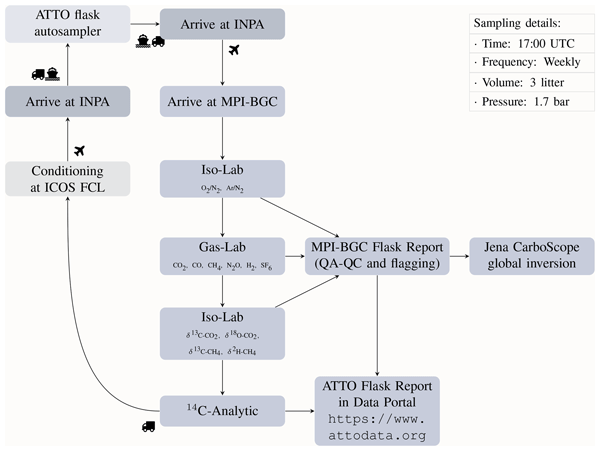
We present here a unique dataset of atmospheric observations of greenhouse gases and isotopes that provide key information on land-atmosphere interactions for the Amazon forests of central Brazil. The data show a relatively large level of variability, but also important trends in greenhouse gases, and signals from fires as well as seasonal biological activity.
Carlos A. Sierra and Estefanía Muñoz
Geosci. Model Dev., 18, 6701–6716, https://doi.org/10.5194/gmd-18-6701-2025, https://doi.org/10.5194/gmd-18-6701-2025, 2025
Short summary
Short summary
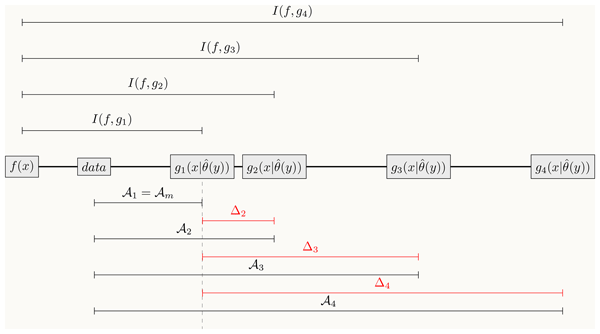
We propose an approach to obtain weights for calculating averages of variables from Earth system models (ESM) based on concepts from information theory. It quantifies a relative distance between model output and reality, even though it is impossible to know the absolute distance from model predictions to reality. The relative ranking among models is based on concepts of model selection and multi-model averages previously developed for simple statistical models, but adapted here for ESMs.
Valentina Lara, Carlos A. Sierra, Miguel A. Peña, Sebastián Ramirez, Diego Navarrete, Juan F. Phillips, and Álvaro Duque
EGUsphere, https://doi.org/10.5194/egusphere-2025-2959, https://doi.org/10.5194/egusphere-2025-2959, 2025
Short summary
Short summary
Impacts of deforestation on the soil level are commonly overlooked. Conversion of Amazon rainforest to pastures increases soil compaction and decreases soil carbon storage, with lasting effects over time and across soil depth. After decades, pasture accumulated soil carbon doesn't match the original forest stocks. These changes may worsen climate change by reducing the Amazon basin ability to store carbon, highlighting the need to protect these ecosystems, from canopy to soil.
Ingrid Chanca, Ingeborg Levin, Susan Trumbore, Kita Macario, Jost Lavric, Carlos Alberto Quesada, Alessandro Carioca de Araújo, Cléo Quaresma Dias Júnior, Hella van Asperen, Samuel Hammer, and Carlos A. Sierra
Biogeosciences, 22, 455–472, https://doi.org/10.5194/bg-22-455-2025, https://doi.org/10.5194/bg-22-455-2025, 2025
Short summary
Short summary
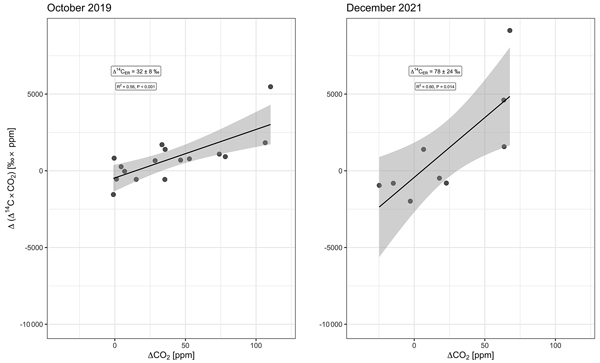
Assessing the net carbon (C) budget of the Amazon entails considering the magnitude and timing of C absorption and losses through respiration (transit time of C). Radiocarbon-based estimates of the transit time of C in the Amazon Tall Tower Observatory (ATTO) suggest a change in the transit time from 6 ± 2 years and 18 ± 4 years within 2 years (October 2019 and December 2021, respectively). This variability indicates that only a fraction of newly fixed C can be stored for decades or longer.
Maximiliano González-Sosa, Carlos A. Sierra, J. Andrés Quincke, Walter E. Baethgen, Susan Trumbore, and M. Virginia Pravia
SOIL, 10, 467–486, https://doi.org/10.5194/soil-10-467-2024, https://doi.org/10.5194/soil-10-467-2024, 2024
Short summary
Short summary
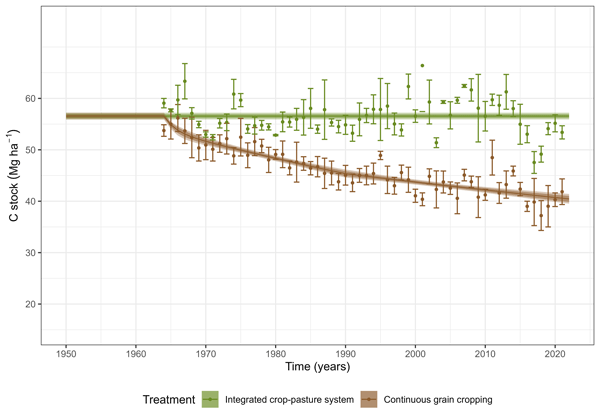
Based on an approach that involved soil organic carbon (SOC) monitoring, radiocarbon measurement in bulk soil, and incubations from a long-term 60-year experiment, it was concluded that the avoidance of old carbon losses in the integrated crop–pasture systems is the main reason that explains their greater carbon storage capacities compared to continuous cropping. A better understanding of these processes is essential for making agronomic decisions to increase the carbon sequestration capacity.
Andrés Tangarife-Escobar, Georg Guggenberger, Xiaojuan Feng, Guohua Dai, Carolina Urbina-Malo, Mina Azizi-Rad, and Carlos A. Sierra
Biogeosciences, 21, 1277–1299, https://doi.org/10.5194/bg-21-1277-2024, https://doi.org/10.5194/bg-21-1277-2024, 2024
Short summary
Short summary
Soil organic matter stability depends on future temperature and precipitation scenarios. We used radiocarbon (14C) data and model predictions to understand how the transit time of carbon varies under environmental change in grasslands and peatlands. Soil moisture affected the Δ14C of peatlands, while temperature did not have any influence. Our models show the correspondence between Δ14C and transit time and could allow understanding future interactions between terrestrial and atmospheric carbon
Shane W. Stoner, Marion Schrumpf, Alison Hoyt, Carlos A. Sierra, Sebastian Doetterl, Valier Galy, and Susan Trumbore
Biogeosciences, 20, 3151–3163, https://doi.org/10.5194/bg-20-3151-2023, https://doi.org/10.5194/bg-20-3151-2023, 2023
Short summary
Short summary
Soils store more carbon (C) than any other terrestrial C reservoir, but the processes that control how much C stays in soil, and for how long, are very complex. Here, we used a recent method that involves heating soil in the lab to measure the range of C ages in soil. We found that most C in soil is decades to centuries old, while some stays for much shorter times (days to months), and some is thousands of years old. Such detail helps us to estimate how soil C may react to changing climate.
Agustín Sarquis and Carlos A. Sierra
Biogeosciences, 20, 1759–1771, https://doi.org/10.5194/bg-20-1759-2023, https://doi.org/10.5194/bg-20-1759-2023, 2023
Short summary
Short summary
Although plant litter is chemically and physically heterogenous and undergoes multiple transformations, models that represent litter dynamics often ignore this complexity. We used a multi-model inference framework to include information content in litter decomposition datasets and studied the time it takes for litter to decompose as measured by the transit time. In arid lands, the median transit time of litter is about 3 years and has a negative correlation with mean annual temperature.
Song Wang, Carlos Sierra, Yiqi Luo, Jinsong Wang, Weinan Chen, Yahai Zhang, Aizhong Ye, and Shuli Niu
Biogeosciences Discuss., https://doi.org/10.5194/bg-2023-33, https://doi.org/10.5194/bg-2023-33, 2023
Manuscript not accepted for further review
Short summary
Short summary
Nitrogen is important for plant growth and carbon uptake, which is uaually limited in nature and can constrain carbon storage and impact efforts to combat climate change. We developed a new method of combining data and models to determine if and how much an ecosystem is nitrogen limited. This new method can help determine if and to what extent an ecosystem is nitrogen-limited, providing insight into nutrient limitations on a global scale and guiding ecosystem management decisions.
Andrea Scheibe, Carlos A. Sierra, and Marie Spohn
Biogeosciences, 20, 827–838, https://doi.org/10.5194/bg-20-827-2023, https://doi.org/10.5194/bg-20-827-2023, 2023
Short summary
Short summary
We explored carbon cycling in soils in three climate zones in Chile down to a depth of 6 m, using carbon isotopes. Our results show that microbial activity several meters below the soil surface is mostly fueled by recently fixed carbon and that strong decomposition of soil organic matter only occurs in the upper decimeters of the soils. The study shows that different layers of the critical zone are tightly connected and that processes in the deep soil depend on recently fixed carbon.
Carlos A. Sierra, Verónika Ceballos-Núñez, Henrik Hartmann, David Herrera-Ramírez, and Holger Metzler
Biogeosciences, 19, 3727–3738, https://doi.org/10.5194/bg-19-3727-2022, https://doi.org/10.5194/bg-19-3727-2022, 2022
Short summary
Short summary
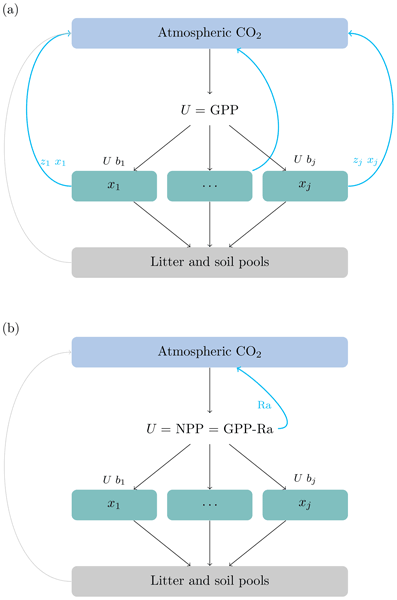
Empirical work that estimates the age of respired CO2 from vegetation tissue shows that it may take from years to decades to respire previously produced photosynthates. However, many ecosystem models represent respiration processes in a form that cannot reproduce these observations. In this contribution, we attempt to provide compelling evidence, based on recent research, with the aim to promote a change in the predominant paradigm implemented in ecosystem models.
Agustín Sarquis, Ignacio Andrés Siebenhart, Amy Theresa Austin, and Carlos A. Sierra
Earth Syst. Sci. Data, 14, 3471–3488, https://doi.org/10.5194/essd-14-3471-2022, https://doi.org/10.5194/essd-14-3471-2022, 2022
Short summary
Short summary
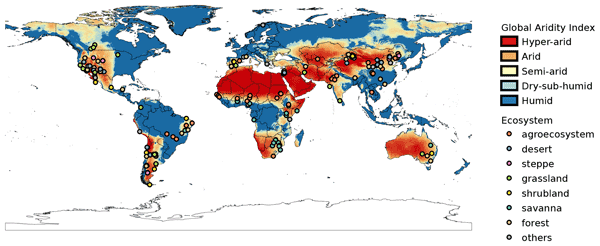
Plant litter breakdown in aridlands is driven by processes different from those in more humid ecosystems. A better understanding of these processes will allow us to make better predictions of future carbon cycling. We have compiled aridec, a database of plant litter decomposition studies in aridlands and tested some modeling applications for potential users. Aridec is open for use and collaboration, and we hope it will help answer newer and more important questions as the database develops.
Cited articles
Abramoff, R., Xu, X., Hartman, M., O'Brien, S., Feng, W., Davidson, E., Finzi, A., Moorhead, D., Schimel, J., Torn, M., and Mayes, M. A.: The Millennial model: in search of measurable pools and transformations for modeling soil carbon in the new century, Biogeochemistry, 137, 51–71, https://doi.org/10.1007/s10533-017-0409-7, 2018.
Barré, P., Fernandez-Ugalde, O., Virto, I., Velde, B., and Chenu, C.: Impact of phyllosilicate mineralogy on organic carbon stabilization in soils: incomplete knowledge and exciting prospects, Geoderma, 235–236, 382–395, https://doi.org/10.1016/j.geoderma.2014.07.029, 2014.
Beare, M. H., McNeill, S. J., Curtin, D., Parfitt, R. L., Jones, H. S., Dodd, M. B., and Sharp, J.: Estimating the organic carbon stabilisation capacity and saturation deficit of soils: a New Zealand case study, Biogeochemistry, 120, 71–87, https://doi.org/10.1007/s10533-014-9982-1, 2014.
Cabido, M., Breimer, R., and Vega, G.: Plant Communities and Associated Soil Types in a High Plateau of the Cordoba Mountains, Central Argentina, Mt. Res. Dev., 7, 25, https://doi.org/10.2307/3673322, 1987.
Campbell, E. E. and Paustian, K.: Current developments in soil organic matter modeling and the expansion of model applications: a review, Environ. Res. Lett., 10, 123004, https://doi.org/10.1088/1748-9326/10/12/123004, 2015.
Cassel, D. K. and Nielsen, D. R.: Field Capacity and Available Water Capacity, in: SSSA Book Series, vol. 5, edited by: Klute, A., Wiley, 901–926, https://doi.org/10.2136/sssabookser5.1.2ed.c36, 1986.
Castellano, M. J., Mueller, K. E., Olk, D. C., Sawyer, J. E., and Six, J.: Integrating plant litter quality, soil organic matter stabilization, and the carbon saturation concept, Global Change Biol., 21, 3200–3209, https://doi.org/10.1111/gcb.12982, 2015.
Cotrufo, M. F. and Lavallee, J. M.: Soil organic matter formation, persistence, and functioning: A synthesis of current understanding to inform its conservation and regeneration, in: Advances in Agronomy, vol. 172, Elsevier, 1–66, https://doi.org/10.1016/bs.agron.2021.11.002, 2022.
Cotrufo, M. F., Wallenstein, M. D., Boot, C. M., Denef, K., and Paul, E.: The Microbial Efficiency-Matrix Stabilization (MEMS) framework integrates plant litter decomposition with soil organic matter stabilization: do labile plant inputs form stable soil organic matter?, Global Change Biol., 19, 988–995, https://doi.org/10.1111/gcb.12113, 2013.
Cotrufo, M. F., Soong, J. L., Horton, A. J., Campbell, E. E., Haddix, M. L., Wall, D. H., and Parton, W. J.: Formation of soil organic matter via biochemical and physical pathways of litter mass loss, Nat. Geosci., 8, 776–779, https://doi.org/10.1038/ngeo2520, 2015.
Curtin, D., Beare, M. H., Qiu, W., and Sharp, J.: Does Particulate Organic Matter Fraction Meet the Criteria for a Model Soil Organic Matter Pool?, Pedosphere, 29, 195–203, https://doi.org/10.1016/S1002-0160(18)60049-9, 2019.
Dangal, S. R. S., Schwalm, C., Cavigelli, M. A., Gollany, H. T., Jin, V. L., and Sanderman, J.: Improving Soil Carbon Estimates by Linking Conceptual Pools Against Measurable Carbon Fractions in the DAYCENT Model Version 4.5, J. Adv. Model. Earth Syst., 14, e2021MS002622, https://doi.org/10.1029/2021MS002622, 2022.
Deng, L., Zhu, G., Tang, Z., and Shangguan, Z.: Global patterns of the effects of land-use changes on soil carbon stocks, Global Ecol. Conserv., 5, 127–138, https://doi.org/10.1016/j.gecco.2015.12.004, 2016.
Duval, M. E., Galantini, J. A., Martínez, J. M., and Limbozzi, F.: Labile soil organic carbon for assessing soil quality: influence of management practices and edaphic conditions, Catena, 171, 316–326, https://doi.org/10.1016/j.catena.2018.07.023, 2018.
Fernández-Catinot, F., Hu, W., Sarquis, A., Vaieretti, M. V., Pérez-Harguindeguy, N., Feng, X., and Sierra, C. A.: Appendix dataset for “Temporal dynamics of particulate and mineral-associated carbon reveal three timescales of response to experimental manipulation” (Version data) [Computer software], Zenodo [code and data set], https://doi.org/10.5281/zenodo.21510931, 2026.
Garsia, A., Moinet, A., Vazquez, C., Creamer, R. E., and Moinet, G. Y. K.: The challenge of selecting an appropriate soil organic carbon simulation model: A comprehensive global review and validation assessment, Global Change Biol., 29, 5760–5774, https://doi.org/10.1111/gcb.16896, 2023.
Georgiou, K., Jackson, R. B., Vindušková, O., Abramoff, R. Z., Ahlström, A., Feng, W., Harden, J. W., Pellegrini, A. F. A., Polley, H. W., Soong, J. L., Riley, W. J., and Torn, M. S.: Global stocks and capacity of mineral-associated soil organic carbon, Nat. Commun., 13, 3797, https://doi.org/10.1038/s41467-022-31540-9, 2022.
Georgiou, K., Koven, C. D., Wieder, W. R., Hartman, M. D., Riley, W. J., Pett-Ridge, J., Bouskill, N. J., Abramoff, R. Z., Slessarev, E. W., Ahlström, A., Parton, W. J., Pellegrini, A. F. A., Pierson, D., Sulman, B. N., Zhu, Q., and Jackson, R. B.: Emergent temperature sensitivity of soil organic carbon driven by mineral associations, Nat. Geosci., 17, 205–212, https://doi.org/10.1038/s41561-024-01384-7, 2024.
Gomes, C. L., Faria, R. M., De Souza, E., Veloso, G. V., Schaefer, C. E. G. R., and Filho, E. I. F.: Modelling and mapping soil organic carbon stocks in Brazil, Geoderma, 340, 337–350, https://doi.org/10.1016/j.geoderma.2019.01.007, 2019.
Guo, X., Viscarra Rossel, R. A., Wang, G., Xiao, L., Wang, M., Zhang, S., and Luo, Z.: Particulate and mineral-associated organic carbon turnover revealed by modelling their long-term dynamics, Soil Biol. Biochem., 173, 108780, https://doi.org/10.1016/j.soilbio.2022.108780, 2022.
Jobbágy, E. G. and Jackson, R. B.: The vertical distribution of soil organic carbon and its relation to climate and vegetation, Ecol. Appl., 10, 423–436, https://doi.org/10.1890/1051-0761(2000)010[0423:TVDOSO]2.0.CO;2, 2000.
King, A. E. and Sokol, N. W.: Soil carbon formation is promoted by saturation deficit and existing mineral-associated carbon, not by microbial carbon-use efficiency, Sci. Adv., 11, eadv9482, https://doi.org/10.1126/sciadv.adv9482, 2025.
Kleber, M., Eusterhues, K., Keiluweit, M., Mikutta, C., Mikutta, R., and Nico, P. S.: Mineral–Organic Associations: Formation, Properties, and Relevance in Soil Environments, in: Advances in Agronomy, vol. 130, Elsevier, 1–140, https://doi.org/10.1016/bs.agron.2014.10.005, 2015.
Kögel‐Knabner, I., Guggenberger, G., Kleber, M., Kandeler, E., Kalbitz, K., Scheu, S., Eusterhues, K., and Leinweber, P.: Organo‐mineral associations in temperate soils: Integrating biology, mineralogy, and organic matter chemistry, J. Plant Nutr. Soil Sci., 171, 61–82, https://doi.org/10.1002/jpln.200700048, 2008.
Lal, R.: Soil health and carbon management, Food Energy Secur., 5, 212–222, https://doi.org/10.1002/fes3.96, 2016.
Lavallee, J. M., Soong, J. L., and Cotrufo, M. F.: Conceptualizing soil organic matter into particulate and mineral‐associated forms to address global change in the 21st century, Global Change Biol., 26, 261–273, https://doi.org/10.1111/gcb.14859, 2019.
Lehmann, J. and Kleber, M.: The contentious nature of soil organic matter, Nature, 528, 60–68, https://doi.org/10.1038/nature16069, 2015.
Le Noë, J., Manzoni, S., Abramoff, R., Bölscher, T., Bruni, E., Cardinael, R., Ciais, P., Chenu, C., Clivot, H., Derrien, D., Ferchaud, F., Garnier, P., Goll, D., Lashermes, G., Martin, M., Rasse, D., Rees, F., Sainte-Marie, J., Salmon, E., Schiedung, M., Schimel, J., Wieder, W., Abiven, S., Barré, P., Cécillon, L., and Guenet, B.: Soil organic carbon models need independent time-series validation for reliable prediction, Commun. Earth Environ., 4, 158, https://doi.org/10.1038/s43247-023-00830-5, 2023.
Leuthold, S., Lavallee, J. M., Haddix, M. L., and Cotrufo, M. F.: Contrasting properties of soil organic matter fractions isolated by different physical separation methodologies, Geoderma, 445, 116870, https://doi.org/10.1016/j.geoderma.2024.116870, 2024.
Manzoni, S. and Porporato, A.: Soil carbon and nitrogen mineralization: Theory and models across scales, Soil Biol. Biochem., 41, 1355–1379, https://doi.org/10.1016/j.soilbio.2009.02.031, 2009.
Manzoni, S., Katul, G. G., and Porporato, A.: Analysis of soil carbon transit times and age distributions using network theories, J. Geophys. Res.-Biogeo., 114, 2009JG001070, https://doi.org/10.1029/2009JG001070, 2009.
Marschner, B., Brodowski, S., Dreves, A., Gleixner, G., Gude, A., Grootes, P. M., Hamer, U., Heim, A., Jandl, G., Ji, R., Kaiser, K., Kalbitz, K., Kramer, C., Leinweber, P., Rethemeyer, J., Schäffer, A., Schmidt, M. W. I., Schwark, L., and Wiesenberg, G. L. B.: How relevant is recalcitrance for the stabilization of organic matter in soils?, J. Plant Nutr. Soil Sci., 171, 91–110, https://doi.org/10.1002/jpln.200700049, 2008.
Metzler, H. and Sierra, C. A.: Linear Autonomous Compartmental Models as Continuous-Time Markov Chains: Transit-Time and Age Distributions, Math. Geosci., 50, 1–34, https://doi.org/10.1007/s11004-017-9690-1, 2018.
Metzler, H. and Sierra, C. A.: Information Content and Maximum Entropy of Compartmental Systems in Equilibrium, Entropy, 27, 1085, https://doi.org/10.3390/e27101085, 2025.
Mikutta, R., Turner, S., Schippers, A., Gentsch, N., Meyer-Stüve, S., Condron, L. M., Peltzer, D. A., Richardson, S. J., Eger, A., Hempel, G., Kaiser, K., Klotzbücher, T., and Guggenberger, G.: Microbial and abiotic controls on mineral-associated organic matter in soil profiles along an ecosystem gradient, Sci. Rep., 9, 10294, https://doi.org/10.1038/s41598-019-46501-4, 2019.
Nabuurs, G. J., Mrabet, R., Abu Hatab, A., Bustamante, M., Clark, H., Havlík, P., House, J., Mbow, C., Ninan, K. N., Popp, A., Roe, S., Sohngen, B., and Towprayoon, S.: Agriculture, Forestry and Other Land Uses (AFOLU), in: Climate Change 2022: Mitigation of Climate Change, Contribution of Working Group III to the Sixth Assessment Report of the Intergovernmental Panel on Climate Change, edited by: Shukla, P. R., Skea, J., Slade, R., Al Khourdajie, A., van Diemen, R., McCollum, D., Pathak, M., Some, S., Vyas, P., Fradera, R., Belkacemi, M., Hasija, A., Lisboa, G., Luz, S., and Malley, J., Cambridge University Press, Cambridge, UK and New York, NY, USA, 747–860, https://doi.org/10.1017/9781009157926.009, 2022.
Nelson, D. W. and Sommers, L. E.: Total Carbon, Organic Carbon, and Organic Matter, in: Methods of Soil Analysis. Part 3. Chemical Methods, Madison, WI, 961–1010, https://doi.org/10.2136/sssabookser5.3.c34, 1996.
Pasquini, A. I., Lecomte, K. L., and Depetris, P. J.: Geoquímica de ríos de montaña en las Sierras Pampeanas: II. El río Los Reartes, sierra de Comenchingones, provincia de Córdoba, Rev. Asoc. Geológica Argent., 59, 129–140, 2002.
Pestoni, S., Gallardo, N., Harguindeguy, N. P., and Kowaljow, E.: Influencia del método de dispersión en el fraccionamiento físico de un suelo de Argentina central, Cienc. Suelo, 38, 187–191, http://www.suelos.org.ar/publicaciones/Volumen38n1/17-500.pdf (last access: 23 July 2026), 2020.
Poca, M., Pérez-Harguindeguy, N., Vaieretti, M. V., and Cingolani, A. M.: Descomposición y calidad físico-química foliar de 24 especies dominantes de los pastizales de altura de las sierras de Córdoba, Argentina, Ecol. Austral, 24, 249–257, https://doi.org/10.25260/EA.14.24.2.0.28, 2014.
R Core Team: R: A Language and Environment for Statistical Computing, R Foundation for Statistical Computing, Vienna, Austria, https://www.R-project.org/ (last access: 23 July 2026), 2024.
Riggers, C., Poeplau, C., Don, A., Bamminger, C., Höper, H., and Dechow, R.: Multi-model ensemble improved the prediction of trends in soil organic carbon stocks in German croplands, Geoderma, 345, 17–30, https://doi.org/10.1016/j.geoderma.2019.03.014, 2019.
Robertson, A. D., Paustian, K., Ogle, S., Wallenstein, M. D., Lugato, E., and Cotrufo, M. F.: Unifying soil organic matter formation and persistence frameworks: the MEMS model, Biogeosciences, 16, 1225–1248, https://doi.org/10.5194/bg-16-1225-2019, 2019.
Saidy, A. R., Smernik, R. J., Baldock, J. A., Kaiser, K., and Sanderman, J.: The sorption of organic carbon onto differing clay minerals in the presence and absence of hydrous iron oxide, Geoderma, 209–210, 15–21, https://doi.org/10.1016/j.geoderma.2013.05.026, 2013.
Sanderman, J., Hengl, T., and Fiske, G. J.: Soil carbon debt of 12,000 years of human land use, P. Natl. Acad. Sci. USA, 114, 9575–9580, https://doi.org/10.1073/pnas.1706103114, 2017.
Sarquis, A. and Sierra, C. A.: Information content in time series of litter decomposition studies and the transit time of litter in arid lands, Biogeosciences, 20, 1759–1771, https://doi.org/10.5194/bg-20-1759-2023, 2023.
Schrumpf, M., Kaiser, K., Guggenberger, G., Persson, T., Kögel-Knabner, I., and Schulze, E.-D.: Storage and stability of organic carbon in soils as related to depth, occlusion within aggregates, and attachment to minerals, Biogeosciences, 10, 1675–1691, https://doi.org/10.5194/bg-10-1675-2013, 2013.
Shi, Z., Crowell, S., Luo, Y., and Moore, B.: Model structures amplify uncertainty in predicted soil carbon responses to climate change, Nat. Commun., 9, 2171, https://doi.org/10.1038/s41467-018-04526-9, 2018.
Sierra, C. A. and Müller, M.: A general mathematical framework for representing soil organic matter dynamics, Ecol. Monogr., 85, 505–524, https://doi.org/10.1890/15-0361.1, 2015.
Sierra, C. A., Müller, M., and Trumbore, S. E.: Models of soil organic matter decomposition: the SoilR package, version 1.0, Geosci. Model Dev., 5, 1045–1060, https://doi.org/10.5194/gmd-5-1045-2012, 2012.
Sierra, C. A., Malghani, S., and Müller, M.: Model structure and parameter identification of soil organic matter models, Soil Biol. Biochem., 90, 197–203, https://doi.org/10.1016/j.soilbio.2015.08.012, 2015.
Sierra, C. A., Müller, M., Metzler, H., Manzoni, S., and Trumbore, S. E.: The muddle of ages, turnover, transit, and residence times in the carbon cycle, Global Change Biol., 23, 1763–1773, https://doi.org/10.1111/gcb.13556, 2017.
Six, J., Conant, R. T., Paul, E. A., and Paustian, K.: Stabilization mechanisms of soil organic matter: Implications for C-saturation of soils, Plant Soil, 241, 155–176, https://doi.org/10.1023/A:1016125726789, 2002.
Smith, P., Cotrufo, M. F., Rumpel, C., Paustian, K., Kuikman, P. J., Elliott, J. A., McDowell, R., Griffiths, R. I., Asakawa, S., Bustamante, M., House, J. I., Sobocká, J., Harper, R., Pan, G., West, P. C., Gerber, J. S., Clark, J. M., Adhya, T., Scholes, R. J., and Scholes, M. C.: Biogeochemical cycles and biodiversity as key drivers of ecosystem services provided by soils, SOIL, 1, 665–685, https://doi.org/10.5194/soil-1-665-2015, 2015.
Soetaert, K. and Petzoldt, T.: Inverse Modelling, Sensitivity and Monte Carlo Analysis in R Using Package FME, J. Stat. Softw., 33, https://doi.org/10.18637/jss.v033.i03, 2010.
Sokol, N. W. and Bradford, M. A.: Microbial formation of stable soil carbon is more efficient from belowground than aboveground input, Nat. Geosci., 12, 46–53, https://doi.org/10.1038/s41561-018-0258-6, 2019.
Sokol, N. W., Whalen, E. D., Jilling, A., Kallenbach, C., Pett‐Ridge, J., and Georgiou, K.: Global distribution, formation and fate of mineral‐associated soil organic matter under a changing climate: A trait‐based perspective, Funct. Ecol., 36, 1411–1429, https://doi.org/10.1111/1365-2435.14040, 2022.
Stewart, C. E., Plante, A. F., Paustian, K., Conant, R. T., and Six, J.: Soil Carbon Saturation: Linking Concept and Measurable Carbon Pools, Soil Sci. Soc. Am. J., 72, 379–392, https://doi.org/10.2136/sssaj2007.0104, 2008.
Tao, F., Houlton, B. Z., Huang, Y., Wang, Y., Manzoni, S., Ahrens, B., Mishra, U., Jiang, L., Huang, X., and Luo, Y.: Convergence in simulating global soil organic carbon by structurally different models after data assimilation, Global Change Biol., 30, e17297, https://doi.org/10.1111/gcb.17297, 2024.
Vaieretti, M. V., Cingolani, A. M., Pérez Harguindeguy, N., and Cabido, M.: Effects of differential grazing on decomposition rate and nitrogen availability in a productive mountain grassland, Plant Soil, 371, 675–691, https://doi.org/10.1007/s11104-013-1831-9, 2013.
Vaieretti, M. V., Iamamoto, S., Pérez Harguindeguy, N., and Cingolani, A. M.: Livestock grazing affects microclimate conditions for decomposition process through changes in vegetation structure in mountain grasslands, Acta Oecol., 91, 101–107, https://doi.org/10.1016/j.actao.2018.07.002, 2018.
Villarino, S. H., Pinto, P., Jackson, R. B., and Piñeiro, G.: Plant rhizodeposition: A key factor for soil organic matter formation in stable fractions, Sci. Adv., 7, eabd3176, https://doi.org/10.1126/sciadv.abd3176, 2021.
Von Lützow, M., Kögel-Knabner, I., Ekschmitt, K., Flessa, H., Guggenberger, G., Matzner, E., and Marschner, B.: SOM fractionation methods: Relevance to functional pools and to stabilization mechanisms, Soil Biol. Biochem., 39, 2183–2207, https://doi.org/10.1016/j.soilbio.2007.03.007, 2007.
Wei, Y., Xiong, X., Ryo, M., Badgery, W. B., Bi, Y., Yang, G., Zhang, Y., and Liu, N.: Repeated litter inputs promoted stable soil organic carbon formation by increasing fungal dominance and carbon use efficiency, Biol. Fertil. Soils, 58, 619–631, https://doi.org/10.1007/s00374-022-01647-8, 2022.
Whalen, E. D., Grandy, A. S., Sokol, N. W., Keiluweit, M., Ernakovich, J., Smith, R. G., and Frey, S. D.: Clarifying the evidence for microbial- and plant-derived soil organic matter, and the path toward a more quantitative understanding, Global Change Biol., 28, 7167–7185, https://doi.org/10.1111/gcb.16413, 2022.
Wieder, W. R., Hartman, M. D., Sulman, B. N., Wang, Y., Koven, C. D., and Bonan, G. B.: Carbon cycle confidence and uncertainty: Exploring variation among soil biogeochemical models, Global Change Biol., 24, 1563–1579, https://doi.org/10.1111/gcb.13979, 2018.
Wiesmeier, M., Urbanski, L., Hobley, E., Lang, B., Von Lützow, M., Marin-Spiotta, E., Van Wesemael, B., Rabot, E., Ließ, M., Garcia-Franco, N., Wollschläger, U., Vogel, H.-J., and Kögel-Knabner, I.: Soil organic carbon storage as a key function of soils – A review of drivers and indicators at various scales, Geoderma, 333, 149–162, https://doi.org/10.1016/j.geoderma.2018.07.026, 2019.
Witzgall, K., Vidal, A., Schubert, D. I., Höschen, C., Schweizer, S. A., Buegger, F., Pouteau, V., Chenu, C., and Mueller, C. W.: Particulate organic matter as a functional soil component for persistent soil organic carbon, Nat. Commun., 12, 4115, https://doi.org/10.1038/s41467-021-24192-8, 2021.
Yang, Y., Gunina, A., Cheng, H., Liu, L., Wang, B., Dou, Y., Wang, Y., Liang, C., An, S., and Chang, S. X.: Unlocking Mechanisms for Soil Organic Matter Accumulation: Carbon Use Efficiency and Microbial Necromass as the Keys, Global Change Biol., 31, e70033, https://doi.org/10.1111/gcb.70033, 2025.
Yin, Q., Liu, Y., Li, J., Wu, J., Wang, Y., Zhang, H., Liu, H., Jiang, L., Yang, J., Wang, Y., Jiang, Y., Han, X., and Wang, J.: Soil organic carbon formation in grassland ecosystems: Higher efficiency of roots than shoots and rhizodeposition, Soil Till. Res., 250, 106523, https://doi.org/10.1016/j.still.2025.106523, 2025.
Zhang, Y., Lavallee, J. M., Robertson, A. D., Even, R., Ogle, S. M., Paustian, K., and Cotrufo, M. F.: Simulating measurable ecosystem carbon and nitrogen dynamics with the mechanistically defined MEMS 2.0 model, Biogeosciences, 18, 3147–3171, https://doi.org/10.5194/bg-18-3147-2021, 2021.
Zhang, Y., King, A. E., Hamilton, E., and Cotrufo, M. F.: Representing cropping systems with the MEMS 2 ecosystem model, Agron. J., 116, 2328–2345, https://doi.org/10.1002/agj2.21611, 2024.
Zhou, Z., Ren, C., Wang, C., Delgado-Baquerizo, M., Luo, Y., Luo, Z., Du, Z., Zhu, B., Yang, Y., Jiao, S., Zhao, F., Cai, A., Yang, G., and Wei, G.: Global turnover of soil mineral-associated and particulate organic carbon, Nat. Commun., 15, 5329, https://doi.org/10.1038/s41467-024-49743-7, 2024.
Short summary
We tested how soil carbon models predict carbon storage and respiration using soil incubation data. We compared 2-pool models based on particulate and mineral-associated carbon with 3-pool models that also include faster-cycling carbon. 3-pool models performed better because they captured carbon dynamics operating at different timescales. We then simulated alternative model structures and found that transfer rates into the most persistent pool were the main control on overall carbon persistence.
We tested how soil carbon models predict carbon storage and respiration using soil incubation...


