
Articles | Volume 12, issue 1
https://doi.org/10.5194/soil-12-451-2026
© Author(s) 2026. This work is distributed under
the Creative Commons Attribution 4.0 License.
the Creative Commons Attribution 4.0 License.
https://doi.org/10.5194/soil-12-451-2026
© Author(s) 2026. This work is distributed under
the Creative Commons Attribution 4.0 License.
the Creative Commons Attribution 4.0 License.
Original research article
| 
22 Apr 2026
Original research article |
| 22 Apr 2026
| 22 Apr 2026
Soil degradation assessment across tropical grassland of Western Kenya
John N. Quinton
CORRESPONDING AUTHOR

Lancaster Environment Centre, Lancaster University, Lancaster, UK
Gabriel Yesuf
Rural Payments Agency, Geospatial Services, Reading, UK
German Baldi
Instituto de Matemática Aplicada San Luis – Universidad Nacional de San Luis & CONICET, San Luis, Argentina
Mengyi Gong
School of Mathematical Sciences, Lancaster University, Lancaster, UK
Kelvin Kinuthia
Mazingira Centre for Environmental Research and Education, International Livestock Research Institute, Naivasha Rd, PO 30709, Nairobi, Kenya
Ellen L. Fry
Department of Earth and Environmental Sciences, The University of Manchester, Oxford Road, Manchester, M13 9PT, UK
Yuda Odongo
School of Agricultural Sciences and Natural Resources, University of Kabianga, P.O. Box 2030-20200, Kericho, Kenya
Barthelemew Nyakundi
School of Agricultural Sciences and Natural Resources, University of Kabianga, P.O. Box 2030-20200, Kericho, Kenya
Joseph Hitimana
School of Agricultural Sciences and Natural Resources, University of Kabianga, P.O. Box 2030-20200, Kericho, Kenya
deceased, 9 January 2025 and 19 September 2025
Patricia de Britto Costa
Department of Earth and Environmental Sciences, The University of Manchester, Oxford Road, Manchester, M13 9PT, UK
Alice A. Onyango
Mazingira Centre for Environmental Research and Education, International Livestock Research Institute, Naivasha Rd, PO 30709, Nairobi, Kenya
Sonja M. Leitner
Mazingira Centre for Environmental Research and Education, International Livestock Research Institute, Naivasha Rd, PO 30709, Nairobi, Kenya
Richard D. Bardgett
Lancaster Environment Centre, Lancaster University, Lancaster, UK
Department of Earth and Environmental Sciences, The University of Manchester, Oxford Road, Manchester, M13 9PT, UK
Mariana C. Rufino
Chair of Livestock Systems, TUM School of Life Sciences, Building 4308, Liesel-Beckmann Straße 4, 85354 Freising, Germany
deceased, 9 January 2025 and 19 September 2025
Related authors
Karl Auerswald, Juergen Geist, John N. Quinton, and Peter Fiener
Hydrol. Earth Syst. Sci., 29, 2185–2200, https://doi.org/10.5194/hess-29-2185-2025, https://doi.org/10.5194/hess-29-2185-2025, 2025
Short summary
Short summary
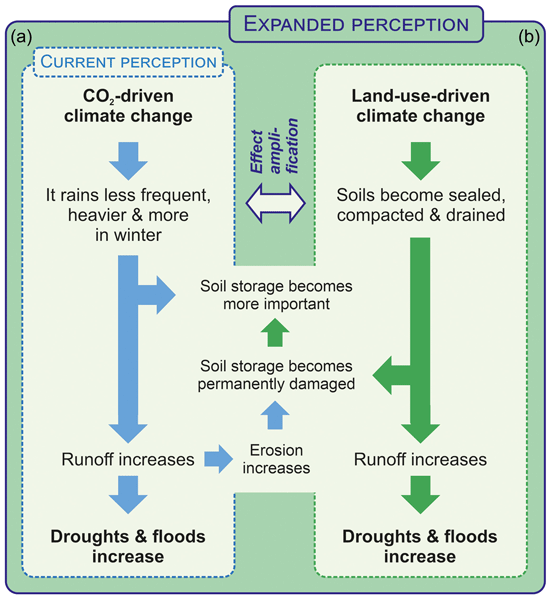
Floods, droughts, and heatwaves are increasing globally. This is often attributed to CO2-driven climate change. However, at the global scale, CO2-driven climate change neither reduces precipitation nor adequately explains droughts. Land-use change, particularly soil sealing, compaction, and drainage, is likely to be more significant for water losses by runoff leading to flooding and water scarcity and is therefore an important part of the solution to mitigate floods, droughts, and heatwaves.
Sharon Gubamwoyo, Sonja M. Leitner, Gabriele Weigelhofer, Damaris G. Kisha, Oswald Omuron, Dominik Henrik Zak, Thomas Hein, and Gretchen M. Gettel
EGUsphere, https://doi.org/10.5194/egusphere-2026-3028, https://doi.org/10.5194/egusphere-2026-3028, 2026
Short summary
Short summary
Wetlands regulate greenhouse gas (GHG) dynamics, but data from tropical and sub-Saharan African wetlands are limited. This study measured N₂O, CO₂, and CH₄ fluxes in intact, recovering, and converted highland valley-bottom wetlands in Taita Hills, Kenya, to assess effects of conversion on GHG dynamics, biogeochemical drivers, and soil organic carbon stocks. Conversion shifted systems from CH₄- to N₂O-dominated, while intact wetlands had the highest SOC stocks.
Karl Auerswald, Juergen Geist, John N. Quinton, and Peter Fiener
Hydrol. Earth Syst. Sci., 29, 2185–2200, https://doi.org/10.5194/hess-29-2185-2025, https://doi.org/10.5194/hess-29-2185-2025, 2025
Short summary
Short summary
Floods, droughts, and heatwaves are increasing globally. This is often attributed to CO2-driven climate change. However, at the global scale, CO2-driven climate change neither reduces precipitation nor adequately explains droughts. Land-use change, particularly soil sealing, compaction, and drainage, is likely to be more significant for water losses by runoff leading to flooding and water scarcity and is therefore an important part of the solution to mitigate floods, droughts, and heatwaves.

Jiaming Wen, Giulia Tagliabue, Micol Rossini, Francesco Pietro Fava, Cinzia Panigada, Lutz Merbold, Sonja Leitner, and Ying Sun
Biogeosciences, 22, 2049–2067, https://doi.org/10.5194/bg-22-2049-2025, https://doi.org/10.5194/bg-22-2049-2025, 2025
Short summary
Short summary
Solar-induced chlorophyll fluorescence (SIF), a tiny optical signal emitted from the core photosynthetic machinery, has emerged as a promising tool to evaluate vegetation growth from satellites. We find satellite SIF can capture intra-seasonal (i.e., from days to weeks) vegetation dynamics of dryland ecosystems, while greenness-based vegetation indices cannot. This study generates novel insights for developing effective real-time vegetation monitoring systems to inform climate risk management.
Cited articles
Arias-Navarro, C., Díaz-Pinés, E., Zuazo, P., Rufino, M. C., Verchot, L. V., and Butterbach-Bahl, K.: Quantifying the contribution of land use to N2O, NO and CO2 fluxes in a montane forest ecosystem of Kenya, Biogeochemistry, 134, 95–114, https://doi.org/10.1007/s10533-017-0348-3, 2017.
Augustine, D. J., McNaughton, S. J., and Frank, D. A.: Feedbacks between soil nutrients and large herbivores in a managed savanna ecosystem, Ecol. Appl., 13, 1325–1337, https://doi.org/10.1890/02-5283, 2003.
Bai, Y. and Cotrufo, M. F.: Grassland soil carbon sequestration: Current understanding, challenges, and solutions, Science, 377, 603–608, https://doi.org/10.1126/science.abo2380, 2022.
Barbier, E. B. and Hochard, J. P.: Does land degradation increase poverty in developing countries?, PloS One, 11, e0152973, https://doi.org/10.1371/journal.pone.0152973, 2016.
Bardgett, R. D., Bullock, J. M., Lavorel, S., Manning, P., Schaffner, U., Ostle, N., Chomel, M., Durigan, G., Fry, E. L., and Johnson, D.: Combatting global grassland degradation, Nat. Rev. Earth Environ., 2, 720–735, https://doi.org/10.1038/s43017-021-00207-2, 2021.
Bebe, B. O., Udo, H. M. J., Rowlands, G. J., and Thorpe, W.: Smallholder dairy systems in the Kenya highlands: cattle population dynamics under increasing intensification, Livestock Product. Sci., 82, 211–221, https://doi.org/10.1016/S0301-6226(03)00013-7, 2003.
Berisso, F. E., Schjønning, P., Keller, T., Lamandé, M., Etana, A., de Jonge, L. W., Iversen, B. V., Arvidsson, J., and Forkman, J.: Persistent effects of subsoil compaction on pore size distribution and gas transport in a loamy soil, Soil Till. Res., 122, 42–51, https://doi.org/10.1016/j.still.2012.02.005, 2012.
Brandt, M., Wigneron, J.-P., Chave, J., Tagesson, T., Penuelas, J., Ciais, P., Rasmussen, K., Tian, F., Mbow, C., and Al-Yaari, A.: Satellite passive microwaves reveal recent climate-induced carbon losses in African drylands, Nat. Ecol. Evol., 2, 827-835, https://doi.org/10.1038/s41559-018-0530-6, 2018.
Bridges, E. and Oldeman, L.: Global assessment of human-induced soil degradation, Arid Soil Res. Rehabil., 13, 319–325, https://doi.org/10.1080/089030699263212, 1999.
Broadbent, A. A., Bahn, M., Pritchard, W. J., Newbold, L. K., Goodall, T., Guinta, A., Snell, H. S., Cordero, I., Michas, A., and Grant, H. K.: Shrub expansion modulates belowground impacts of changing snow conditions in alpine grasslands, Ecol. Lett., 25, 52-64, https://doi.org/10.1111/ele.13903, 2022.
Chen, C., Chen, H. Y. H., Chen, X., and Huang, Z.: Meta-analysis shows positive effects of plant diversity on microbial biomass and respiration, Nat. Commun., 10, 1332, https://doi.org/10.1038/s41467-019-09258-y, 2019.
Cordell, S., Questad, E. J., Asner, G. P., Kinney, K. M., Thaxton, J. M., Uowolo, A., Brooks, S., and Chynoweth, M. W.: Remote sensing for restoration planning: how the big picture can inform stakeholders, Restor. Ecol., 25, S147–S154, https://doi.org/10.1111/rec.12448, 2017.
Cordero, I., Leizeaga, A., Hicks, L. C., Rousk, J., and Bardgett, R. D.: High intensity perturbations induce an abrupt shift in soil microbial state, ISME J., 17, 2190–2199, https://doi.org/10.1038/s41396-023-01512-y, 2023.
Dai, L., Guo, X., Ke, X., Du, Y., Zhang, F., and Cao, G.: The variation in soil water retention of alpine shrub meadow under different degrees of degradation on northeastern Qinghai-Tibetan plateau, Plant Soil, 458, 231–244, https://doi.org/10.1007/s11104-020-04522-3, 2021a.
Dai, W., Peng, B., Liu, J., Wang, C., Wang, X., Jiang, P., and Bai, E.: Four years of litter input manipulation changes soil microbial characteristics in a temperate mixed forest, Biogeochemistry, 154, 371-383, https://doi.org/10.1007/s10533-021-00792-w, 2021b.
Eckert, S., Hüsler, F., Liniger, H., and Hodel, E.: Trend analysis of MODIS NDVI time series for detecting land degradation and regeneration in Mongolia, J. Arid Environ., 113, 16-28, https://doi.org/10.1016/j.jaridenv.2014.09.001, 2015.
Eklundh, L. and Jönsson, P.: TIMESAT: A software package for time-series processing and assessment of vegetation dynamics, in: Remote Sensing Time Series, Springer, 141–158, https://doi.org/10.1007/978-3-319-15967-6_7, 2015.
Eklundh, L. and Jönsson, P.: TIMESAT 3.3 software manual, Lund and Malmö University, Lund, Sweden, https://web.nateko.lu.se/timesat/docs/TIMESAT33_SoftwareManual.pdf (last access: 17 April 2026), 2017.
Ellis, J. E. and Swift, D. M.: Stability of African Pastoral Ecosystems: Alternate Paradigms and Implications for Development, J. Range Manage., 41, 450–459, https://doi.org/10.2307/3899515, 1988.
ESA: Project 2017, CCI Land Cover – S2 Prototype Land Cover 20M Map of Africa, European Space Agency, https://2016africalandcover20m.esrin.esa.int/ (last access: 21 April 2026), 2016.
Fraley, C. and Raftery, A. E.: Model-Based Clustering, Discriminant Analysis, and Density Estimation, J. Am. Stat. Assoc., 97, 611–631, https://doi.org/10.1198/016214502760047131, 2002.
Gibbs, H. K. and Salmon, J. M.: Mapping the world's degraded lands, Appl. Geogr., 57, 12–21, https://doi.org/10.1016/j.apgeog.2014.11.024, 2015.
Hartigan, J. A. and Wong, M. A.: Algorithm AS 136: A K-Means Clustering Algorithm, J. Roy. Stat. Soc. Ser. C, 28, 100–108, https://doi.org/10.2307/2346830, 1979.
He, M., Kimball, S. J., Maneta, P. M., Maxwell, D. B., Moreno, A., Beguería, S., and Wu, X.: Regional Crop Gross Primary Productivity and Yield Estimation Using Fused Landsat-MODIS Data, Remote Sens., 10, https://doi.org/10.3390/rs10030372, 2018.
Huete, A. R., HuiQing, L., and v. Leeuwen, W. J. D.: The use of vegetation indices in forested regions: issues of linearity and saturation, in: IGARSS'97, 1997 IEEE International Geoscience and Remote Sensing Symposium Proceedings, Remote Sensing – A Scientific Vision for Sustainable Development, 1966–1968, https://doi.org/10.1109/IGARSS.1997.606359, 1997.
Hulett, J. L., Weiss, R. E., Bwibo, N. O., Galal, O. M., Drorbaugh, N., and Neumann, C. G.: Animal source foods have a positive impact on the primary school test scores of Kenyan schoolchildren in a cluster-randomised, controlled feeding intervention trial, Brit. J. Nutrit., 111, 875–886, https://doi.org/10.1017/S0007114513003310, 2014.
IUSS: World reference base for soil resources 2014, Update 2015, International soil classification system for naming soils and creating legends for soil maps, World Soil Resources Reports No. 106, FAO, Rome, http://www.fao.org/3/i3794en/i3794en.pdf (last access: 20 April 2026), 2015.
Jackson, C. R., Tyler, H. L., and Millar, J. J.: Determination of Microbial Extracellular Enzyme Activity in Waters, Soils, and Sediments using High Throughput Microplate Assays, J. Visual. Exp., 80, https://doi.org/10.3791/50399, 2013.
Jacobs, S. R., Breuer, L., Butterbach-Bahl, K., Pelster, D. E., and Rufino, M. C.: Land use affects total dissolved nitrogen and nitrate concentrations in tropical montane streams in Kenya, Sci. Total Environ., 603–604, 519–532, https://doi.org/10.1016/j.scitotenv.2017.06.100, 2017.
Jennings, D. J.: Geology of the Molo area (No. 86), Geological Survey of Kenya, Nairobi, Kenya, 1971.
Johnson, R. A. and Wichern, D. W.: Applied Multivariate Statistical Analysis, Pearson Prentice Hall, USA, 2007.
Kemper, W. D. and Koch, E. J.: Aggregate stability of soils from Western United States and Canada: Measurement procedure, correlations with soil constituents, 1355, Agricultural Research Service, US Department of Agriculture, 1966.
Kjeldahl, J.: Neue Methode zur Bestimmung des Stickstoffs in organischen Körpern, Z. Anal. Chem., 22, 366–382, https://doi.org/10.1007/BF01338151, 1883.
Kong, D., McVicar, T. R., Xiao, M., Zhang, Y., Peña-Arancibia, J. L., Filippa, G., Xie, Y., and Gu, X.: phenofit: An R package for extracting vegetation phenology from time series remote sensing, Meth. Ecol. Evol., 13, 1508–1527, https://doi.org/10.1111/2041-210X.13870, 2022.
Kuo, S.: Phosphorus, in: Methods of Soil Analysis, Part 3. Chemical Methods, American Society of Agronomy, Inc., Soil Science Society of America, Inc., Madison, USA, 869–909, https://doi.org/10.2136/sssabookser5.3.c32, 1996.
Lal, R.: Soil health and carbon management, Food Energ. Secur., 5, 212–222, https://doi.org/10.1002/fes3.96, 2016.
Le Bissonnais, Y.: Aggregate stability and assessment of soil crustability and erodibility. 1. Theory and methodology, Eur. J. Soil Sci., 47, 425–437, https://doi.org/10.1111/ejss.4_12311, 1996.
Lloyd, S.: Least squares quantization in PCM, IEEE T. Inf. Theory, 28, 129–137, https://doi.org/10.1109/TIT.1982.1056489, 1982.
Lowder, S. K., Skoet, J., and Raney, T.: The number, size, and distribution of farms, smallholder farms, and family farms worldwide, World Dev., 87, 16–29, https://doi.org/10.1016/j.worlddev.2015.10.041, 2016.
MacQueen, J.: Some methods for classification and analysis of multivariate observations, in: Proceedings of the Fifth Berkeley Symposium on Mathematical Statistics and Probability, 1967.
Manić, M., Đorđević, M., Đokić, M., Dragović, R., Kićović, D., Đorđević, D., Jović, M., Smičiklas, I., and Dragović, S.: Remote Sensing and Nuclear Techniques for Soil Erosion Research in Forest Areas: Case Study of the Crveni Potok Catchment, Front. Environ. Sci., 10, https://doi.org/10.3389/fenvs.2022.897248, 2022.
Moll, H. A. J.: Costs and benefits of livestock systems and the role of market and nonmarket relationships, Agricult. Econ., 32, 181–193, https://doi.org/10.1111/j.0169-5150.2005.00210.x, 2005.
Mullah, J. A., Ngonga, B. O., and Bii, W.: The impact of livestock grazing on forest structure, ground flora and regeneration of disturbed areas in Mau Forest, Kenya Forestry Research Institute Nairobi, Kenya, https://www.kefri.org/assets/publications/tech/livestockgrazing.pdf (last access: 20 April 2026), 2023.
Nzau, M., Mwangi, S. W., and Kinyenze, J. M.: Degradation of Grassland Ecosystems, Climate Change and Impacts on Pastoral Communities in Kenya, Afr. Multidisciplin. J. Res., 3, https://doi.org/10.71064/spu.amjr.3.2.46, 2018.
Olsen, S. R. and Sommers, L. E.: Phosphorus, in: Methods of Soil Analysis: Part 2 Chemical and Microbial properties, American Society of Agronomy, Inc., Soil Science Society of America, Inc., Madison, USA, 403–430, https://doi.org/10.2134/agronmonogr9.2.2ed.c24, 1982.
Ortiz-Gonzalo, D., Vaast, P., Oelofse, M., de Neergaard, A., Albrecht, A., and Rosenstock, T. S.: Farm-scale greenhouse gas balances, hotspots and uncertainties in smallholder crop-livestock systems in Central Kenya, Agr. Ecosyst. Environ., 248, 58–70, https://doi.org/10.1016/j.agee.2017.06.002, 2017.
Owuor, S. O., Butterbach-Bahl, K., Guzha, A., Jacobs, S., Merbold, L., Rufino, M. C., Pelster, D. E., Díaz-Pinés, E., and Breuer, L.: Conversion of natural forest results in a significant degradation of soil hydraulic properties in the highlands of Kenya, Soil Till. Res., 176, 36–44, https://doi.org/10.1016/j.still.2017.10.003, 2018.
Patoine, G., Eisenhauer, N., Cesarz, S., Phillips, H. R. P., Xu, X., Zhang, L., and Guerra, C. A.: Drivers and trends of global soil microbial carbon over two decades, Nat. Commun., 13, 4195, https://doi.org/10.1038/s41467-022-31833-z, 2022.
Pelster, D., Rufino, M., Rosenstock, T., Mango, J., Saiz, G., Diaz-Pines, E., Baldi, G., and Butterbach-Bahl, K.: Smallholder farms in eastern African tropical highlands have low soil greenhouse gas fluxes, Biogeosciences, 14, 187–202, https://doi.org/10.5194/bg-14-187-2017, 2017.
Quinton, J. N. and Fiener, P.: Soil erosion on arable land: An unresolved global environmental threat, Prog. Phys. Geogr., 48, 136–161, https://doi.org/10.1177/03091333231216595, 2024.
R Core Team: R: A Language and Environment for Statistical Computing, R Foundation for Statistical Computing, Vienna, Austria, https://www.R-project.org/ (last access: 15 April 2026), 2023.
Rufino, M. C., Atzberger, C., Baldi, G., Butterbach-Bahl, K., Rosenstock, T. S., and Stern, D.: Targeting landscapes to identify mitigation options in smallholder agriculture, Methods for Measuring Greenhouse Gas Balances and Evaluating Mitigation Options in Smallholder Agriculture, Springer, 15–36, https://doi.org/10.1007/978-3-319-29794-1, 2016.
Rulinda, C. M., Dilo, A., Bijker, W., and Stein, A.: Characterising and quantifying vegetative drought in East Africa using fuzzy modelling and NDVI data, J. Arid Environ., 78, 169–178, https://doi.org/10.1016/j.jaridenv.2011.11.016, 2012.
Scrucca, L., Fraley, C., Murphy, T. B., and Raftery, A. E.: Model-Based Clustering, Classification, and Density Estimation Using mclust in R, Chapman and Hall/CRC, https://doi.org/10.1201/9781003277965, 2023.
Steinley, D.: K-means clustering: A half-century synthesis, Brit. J. Math. Stat. Psychol., 59, 1–34, https://doi.org/10.1348/000711005X48266, 2006.
Sun, S. and Chen, S. S.: Extensive Decline of Soil Nitrogen and Its Drivers in the Lake Victoria Basin of Tropical Africa (1996–2015), Land Degrad. Dev., 36, 5911–5926, https://doi.org/10.1002/ldr.70045, 2025.
Tagesson, T., Fensholt, R., Guiro, I., Rasmussen, M. O., Huber, S., Mbow, C., Garcia, M., Horion, S., Sandholt, I., Holm-Rasmussen, B., Göttsche, F. M., Ridler, M. E., Olén, N., Lundegard Olsen, J., Ehammer, A., Madsen, M., Olesen, F. S., and Ardö, J.: Ecosystem properties of semiarid savanna grassland in West Africa and its relationship with environmental variability, Global Change Biol., 21, 250–264, https://doi.org/10.1111/gcb.12734, 2015.
Tate, K. R.: Microbial Biomass: A Paradigm Shift in Terrestrial Biogeochemistry, World Scienntific (Europe), London, 348 pp., https://doi.org/10.1142/q0038, 2017.
Tibshirani, R., Walther, G., and Hastie, T.: Estimating the Number of Clusters in a Data Set Via the Gap Statistic, J. Roy. Stat. Soc. Ser. B, 63, 411–423, https://doi.org/10.1111/1467-9868.00293, 2001.
Todd, S. W., Hoffer, R. M., and Milchunas, D. G.: Biomass estimation on grazed and ungrazed rangelands using spectral indices, Int. J. Remote Sens., 19, 427–438, https://doi.org/10.1080/014311698216071, 1998.
Tully, K., Sullivan, C., Weil, R., and Sanchez, P.: The State of Soil Degradation in Sub-Saharan Africa: Baselines, Trajectories, and Solutions, Sustainability, 7, 6523–6552, https://doi.org/10.3390/su7066523, 2015.
United Nations Environment Programme: United Nations decade on ecosystem restoration 2021–2030, https://www.decadeonrestoration.org/ (last access: 23 Apritl 2025), 2019.
Vågen, T.-G., Winowiecki, L. A., Tondoh, J. E., Desta, L. T., and Gumbricht, T.: Mapping of soil properties and land degradation risk in Africa using MODIS reflectance, Geoderma, 263, 216–225, https://doi.org/10.1016/j.geoderma.2015.06.023, 2016.
Vance, E. D., Brookes, P. C., and Jenkinson, D. S.: An extraction method for measuring soil microbial biomass C, Soil Biol. Biochem., 19, 703–707, https://doi.org/10.1016/0038-0717(87)90052-6, 1987.
van de Koppel, J., Rietkerk, M., and Weissing, F. J.: Catastrophic vegetation shifts and soil degradation in terrestrial grazing systems, Trends Ecol. Evol., 12, 352–356, https://doi.org/10.1016/S0169-5347(97)01133-6, 1997.
Vavrek, M. J.: fossil: palaeoecological and palaeogeographical analysis tools, Palaeontol. Electron., 14, 1T:16p, 2011.
Wang, R., Sun, Y., Zong, J., Wang, Y., Cao, X., Wang, Y., Cheng, X., and Zhang, W.: Remote Sensing Application in Ecological Restoration Monitoring: A Systematic Review, Remote Sens., 16, 2204, https://doi.org/10.3390/rs16122204, 2024.
Were, C. A., Okumu, T. A., and Kimeli, P.: Feeding practices and animal-level factors associated with daily milk yield in lactating smallholder dairy cows in Kiambu County, Kenya, Prevent. Vet. Med., 243, 106607, https://doi.org/10.1016/j.prevetmed.2025.106607, 2025.
Wessels, K. J., Prince, S. D., Malherbe, J., Small, J., Frost, P. E., and VanZyl, D.: Can human-induced land degradation be distinguished from the effects of rainfall variability? A case study in South Africa, J. Arid Environ., 68, 271–297, https://doi.org/10.1016/j.jaridenv.2006.05.015, 2007.
Winterfeldt, S., Bardgett, R. D., Brangarí, A. C., Eisenhauer, N., Hicks, L. C., Liu, S., and Rousk, J.: Plant diversity increases microbial resistance to drought and soil carbon accumulation, J. Ecology, 114, e70250, https://doi.org/10.1111/1365-2745.70250, 2026.
World Resources Institute: African forest landscape restoration initiative (AFR100): restoring 100 million hectares of degraded and deforested land in Africa by 2030, https://www.wri.org/initiatives/african-forest-landscape-restoration-initiative-afr100 (last access: 17 April 2026), 2026.
Xiao, X., Hagen, S., Zhang, Q., Keller, M., and Moore, B.: Detecting leaf phenology of seasonally moist tropical forests in South America with multi-temporal MODIS images, Remote Sens. Environ., 103, 465–473, https://doi.org/10.1016/j.rse.2006.04.013, 2006.
Yesuf, G.: GabYESUF/ReDEAL: ReDEAL – Ecological degradation Units – R code (v1.0.0), Zenodo [code], https://doi.org/10.5281/zenodo.19665109, 2026.
Yi, X., Li, G., and Yin, Y.: The impacts of grassland vegetation degradation on soil hydrological and ecological effects in the source region of the Yellow River – A case study in Junmuchang region of Maqin country, Proced. Environ. Sci., 13, 967–981, https://doi.org/10.1016/j.proenv.2012.01.090, 2012.
Yu, H., Xu, J., Okuto, E., and Luedeling, E.: Seasonal response of grasslands to climate change on the Tibetan Plateau, PLoS One, 7, e49230, https://doi.org/10.1371/journal.pone.0049230, 2012.
Zeng, C., Zhang, F., Wang, Q., Chen, Y., and Joswiak, D. R.: Impact of alpine meadow degradation on soil hydraulic properties over the Qinghai-Tibetan Plateau, J. Hydrol., 478, 148–156, https://doi.org/10.1016/j.jhydrol.2012.11.058, 2013.
Zhou, W., Yang, H., Huang, L., Chen, C., Lin, X., Hu, Z., and Li, J.: Grassland degradation remote sensing monitoring and driving factors quantitative assessment in China from 1982 to 2010, Ecol. Indicat., 83, 303–313, https://doi.org/10.1016/j.ecolind.2017.08.019, 2017.
Short summary
We studied soil degradation in smallholder grazing areas in Western Kenya, comparing remote sensing (RS) classifications with soil data from 90 sites. Carbon and nutrient measures aligned somewhat with RS, but fast-changing variables did not. Results suggest combining RS with microbial biomass C, soil P, % C, % N, and pH can improve detection of degraded soils and guide restoration efforts
We studied soil degradation in smallholder grazing areas in Western Kenya, comparing remote...


