
Articles | Volume 12, issue 1
https://doi.org/10.5194/soil-12-371-2026
© Author(s) 2026. This work is distributed under
the Creative Commons Attribution 4.0 License.
the Creative Commons Attribution 4.0 License.
Special issue:
https://doi.org/10.5194/soil-12-371-2026
© Author(s) 2026. This work is distributed under
the Creative Commons Attribution 4.0 License.
the Creative Commons Attribution 4.0 License.
Original research article
| 
02 Apr 2026
Original research article |
| 02 Apr 2026
| 02 Apr 2026
In silico analysis of carbon and water dynamics in the rhizosphere under drought conditions

Institute of Bio- and Geosciences (IBG-3), Forschungszentrum Jülich, 52428, Jülich, Germany
Institute of Crop Science and Resource Conservation, University of Bonn, 53115 Bonn, Germany
Ahmet Kürşad Sırcan
Institute of Soil Science and Land Evaluation, Department of Biogeophysics, University of Hohenheim, Stuttgart, Germany
Thilo Streck
Institute of Soil Science and Land Evaluation, Department of Biogeophysics, University of Hohenheim, Stuttgart, Germany
Daniel Leitner
Institute of Bio- and Geosciences (IBG-3), Forschungszentrum Jülich, 52428, Jülich, Germany
Guillaume Lobet
Earth and Life Institute, Université catholique de Louvain, is Louvain-la-Neuve, Belgium
Holger Pagel
Institute of Bio- and Geosciences (IBG-3), Forschungszentrum Jülich, 52428, Jülich, Germany
Institute of Crop Science and Resource Conservation, University of Bonn, 53115 Bonn, Germany
Andrea Schnepf
Institute of Bio- and Geosciences (IBG-3), Forschungszentrum Jülich, 52428, Jülich, Germany
Institute of Crop Science and Resource Conservation, University of Bonn, 53115 Bonn, Germany
Related authors
No articles found.
Hermin Saki, Kateryna Kostiuk, Joachim Ingwersen, Galina Krauße, Valentin L’hospital, Nolven Guilhaume, Marilena Radoiu, David Farrusseng, Thilo Streck, Ellen Kandeler, and Sven Marhan
EGUsphere, https://doi.org/10.5194/egusphere-2025-3866, https://doi.org/10.5194/egusphere-2025-3866, 2025
Short summary
Short summary
Scientists tested two new solid carbon materials produced from hydrogen as soil improvers. These materials are produced by breaking down methane gas using different technologies. One material improved water retention and reduced heavy metals, but harmed soil organisms. The other offered fewer benefits and increased metal pollution. This research will help determine the conditions under which these carbon materials can safely be used to improve agricultural soils.
Daniel Leitner, Andrea Schnepf, and Jan Vanderborght
Hydrol. Earth Syst. Sci., 29, 1759–1782, https://doi.org/10.5194/hess-29-1759-2025, https://doi.org/10.5194/hess-29-1759-2025, 2025
Short summary
Short summary
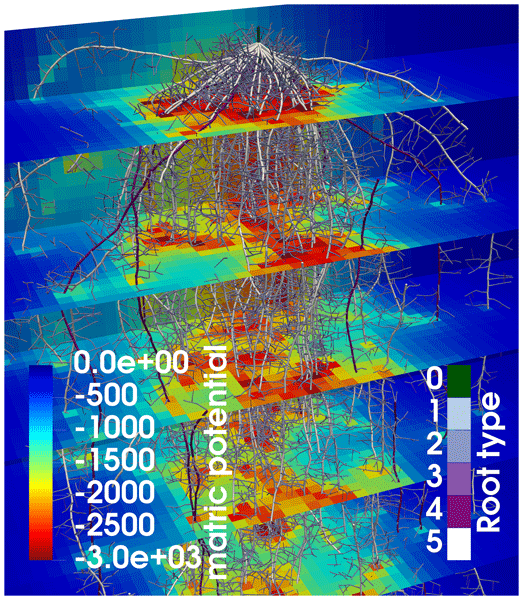
Root water uptake strongly affects plant development and soil water balance. We use novel upscaling methods to develop land surface and crop models from detailed mechanistic models. We examine the mathematics behind this upscaling, pinpointing where errors occur. By simulating different crops and soils, we found that the accuracy loss varies based on root architecture and soil type. Our findings offer insights into balancing model complexity and accuracy for better predictions in agriculture.
Thuy Huu Nguyen, Thomas Gaiser, Jan Vanderborght, Andrea Schnepf, Felix Bauer, Anja Klotzsche, Lena Lärm, Hubert Hüging, and Frank Ewert
Biogeosciences, 21, 5495–5515, https://doi.org/10.5194/bg-21-5495-2024, https://doi.org/10.5194/bg-21-5495-2024, 2024
Short summary
Short summary
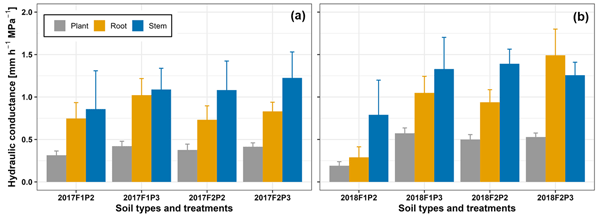
Leaf water potential was at certain thresholds, depending on soil type, water treatment, and weather conditions. In rainfed plots, the lower water availability in the stony soil resulted in fewer roots with a higher root tissue conductance than the silty soil. In the silty soil, higher stress in the rainfed soil led to more roots with a lower root tissue conductance than in the irrigated plot. Crop responses to water stress can be opposite, depending on soil water conditions that are compared.
Tobias Karl David Weber, Lutz Weihermüller, Attila Nemes, Michel Bechtold, Aurore Degré, Efstathios Diamantopoulos, Simone Fatichi, Vilim Filipović, Surya Gupta, Tobias L. Hohenbrink, Daniel R. Hirmas, Conrad Jackisch, Quirijn de Jong van Lier, John Koestel, Peter Lehmann, Toby R. Marthews, Budiman Minasny, Holger Pagel, Martine van der Ploeg, Shahab Aldin Shojaeezadeh, Simon Fiil Svane, Brigitta Szabó, Harry Vereecken, Anne Verhoef, Michael Young, Yijian Zeng, Yonggen Zhang, and Sara Bonetti
Hydrol. Earth Syst. Sci., 28, 3391–3433, https://doi.org/10.5194/hess-28-3391-2024, https://doi.org/10.5194/hess-28-3391-2024, 2024
Short summary
Short summary
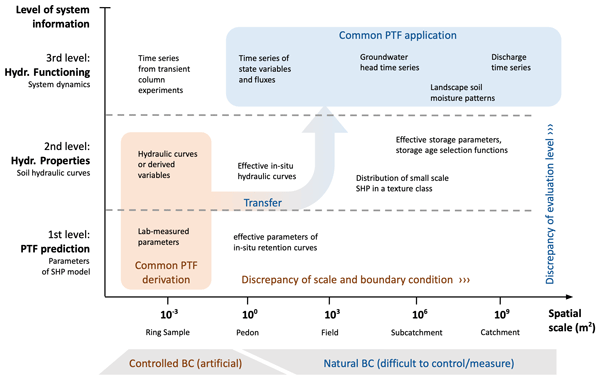
Pedotransfer functions (PTFs) are used to predict parameters of models describing the hydraulic properties of soils. The appropriateness of these predictions critically relies on the nature of the datasets for training the PTFs and the physical comprehensiveness of the models. This roadmap paper is addressed to PTF developers and users and critically reflects the utility and future of PTFs. To this end, we present a manifesto aiming at a paradigm shift in PTF research.
Noa Ligot, Patrick Bogaert, Sébastien Biass, Guillaume Lobet, and Pierre Delmelle
Nat. Hazards Earth Syst. Sci., 23, 1355–1369, https://doi.org/10.5194/nhess-23-1355-2023, https://doi.org/10.5194/nhess-23-1355-2023, 2023
Short summary
Short summary
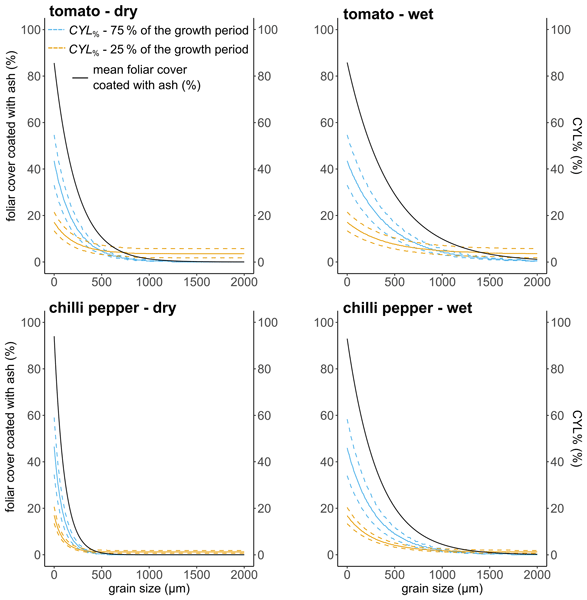
Assessing risk to crops from volcanic ashfall is critical to protect people who rely on agriculture for their livelihood and food security. Ash retention on crop leaves is a key process in damage initiation. Experiments with tomato and chilli pepper plants revealed that ash retention increases with decreasing ash grain size and is enhanced when leaves are pubescent or their surfaces are wet. We propose a new relationship to quantify potential crop yield loss as a function of ash retention.
Florian Späth, Verena Rajtschan, Tobias K. D. Weber, Shehan Morandage, Diego Lange, Syed Saqlain Abbas, Andreas Behrendt, Joachim Ingwersen, Thilo Streck, and Volker Wulfmeyer
Geosci. Instrum. Method. Data Syst., 12, 25–44, https://doi.org/10.5194/gi-12-25-2023, https://doi.org/10.5194/gi-12-25-2023, 2023
Short summary
Short summary
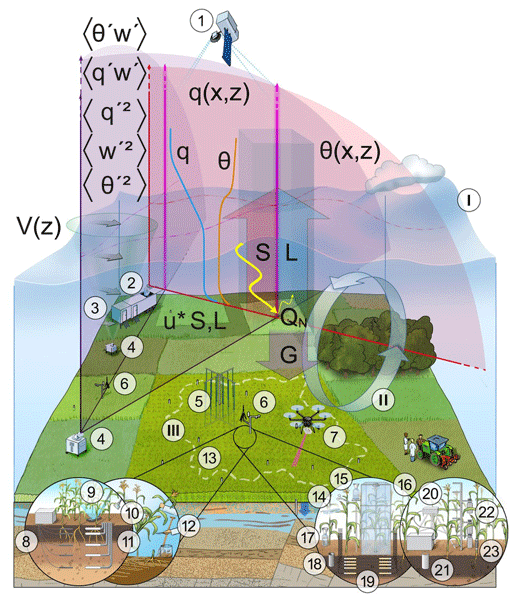
Important topics in land–atmosphere feedback research are water and energy balances and heterogeneities of fluxes at the land surface and in the atmosphere. To target these questions, the Land–Atmosphere Feedback Observatory (LAFO) has been installed in Germany. The instrumentation allows for comprehensive measurements from the bedrock to the troposphere. The LAFO observation strategy aims for simultaneous measurements in all three compartments: atmosphere, soil and land surface, and vegetation.
Michelle Viswanathan, Tobias K. D. Weber, Sebastian Gayler, Juliane Mai, and Thilo Streck
Biogeosciences, 19, 2187–2209, https://doi.org/10.5194/bg-19-2187-2022, https://doi.org/10.5194/bg-19-2187-2022, 2022
Short summary
Short summary
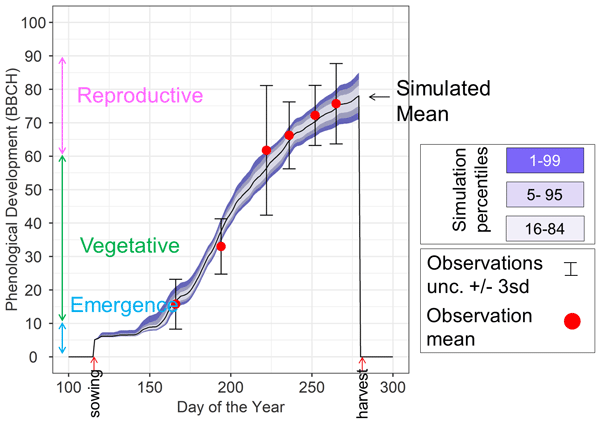
We analysed the evolution of model parameter uncertainty and prediction error as we updated parameters of a maize phenology model based on yearly observations, by sequentially applying Bayesian calibration. Although parameter uncertainty was reduced, prediction quality deteriorated when calibration and prediction data were from different maize ripening groups or temperature conditions. The study highlights that Bayesian methods should account for model limitations and inherent data structures.
Tobias K. D. Weber, Joachim Ingwersen, Petra Högy, Arne Poyda, Hans-Dieter Wizemann, Michael Scott Demyan, Kristina Bohm, Ravshan Eshonkulov, Sebastian Gayler, Pascal Kremer, Moritz Laub, Yvonne Funkiun Nkwain, Christian Troost, Irene Witte, Tim Reichenau, Thomas Berger, Georg Cadisch, Torsten Müller, Andreas Fangmeier, Volker Wulfmeyer, and Thilo Streck
Earth Syst. Sci. Data, 14, 1153–1181, https://doi.org/10.5194/essd-14-1153-2022, https://doi.org/10.5194/essd-14-1153-2022, 2022
Short summary
Short summary
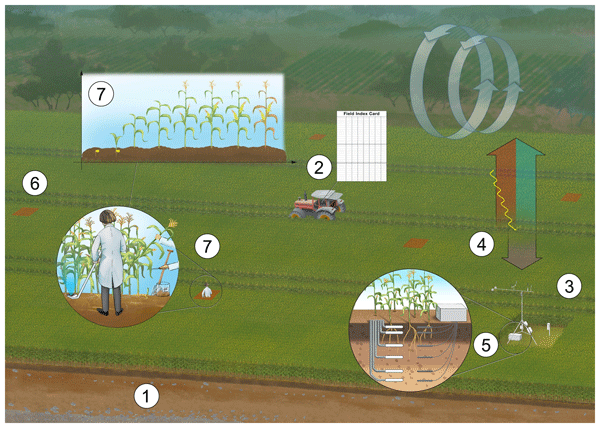
Presented are measurement results from six agricultural fields operated by local farmers in southwestern Germany over 9 years. Six eddy-covariance stations measuring water, energy, and carbon fluxes between the vegetated soil surface and the atmosphere provided the backbone of the measurement sites and were supplemented by extensive soil and vegetation state monitoring. The dataset is ideal for testing process models characterizing fluxes at the vegetated soil surface and in the atmosphere.
Cited articles
Ahrens, B., Guggenberger, G., Rethemeyer, J., John, S., Marschner, B., Heinze, S., Angst, G., Mueller, C. W., Kögel-Knabner, I., Leuschner, C., Hertel, D., Bachmann, J., Reichstein, M., and Schrumpf, M.: Combination of energy limitation and sorption capacity explains 14C depth gradients, Soil Biol. Biochem., 148, https://doi.org/10.1016/j.soilbio.2020.107912, 2020. a, b, c
Ahusborde, E., Kern, M., and Vostrikov, V.: Numerical simulation of two-phase multicomponent flow with reactive transport in porous media: application to geological sequestration of CO2, ESAIM: Proceedings and Surveys, 49, 21–39, https://doi.org/10.1051/proc/201550002, 2015. a
Badri, D. V. and Vivanco, J. M.: Regulation and function of root exudates, Plant Cell Environ., 32, 666–681, https://doi.org/10.1111/j.1365-3040.2009.01926.x, 2009. a
Bardgett, R. D. and Caruso, T.: Soil microbial community responses to climate extremes: resistance, resilience and transitions to alternative states, Philos. T. Roy. Soc. B, 375, https://doi.org/10.1098/rstb.2019.0112, 2020. a, b
Barillot, R., De Swaef, T., Combes, D., Durand, J.-L., Escobar-Gutiérrez, A. J., Martre, P., Perrot, C., Roy, E., and Frak, E.: Leaf elongation response to blue light is mediated by stomatal-induced variations in transpiration in Festuca arundinacea, J. Exp. Bot., 72, 2642–2656, https://doi.org/10.1093/jxb/eraa585, 2020. a, b
Bazot, S., Mikola, J., Nguyen, C., and Robin, C.: Defoliation-induced changes in carbon allocation and root soluble carbon concentration in field-grown Lolium perenne plants: do they affect carbon availability, microbes and animal trophic groups in soil?, Funct. Ecol., 19, 886–896, https://doi.org/10.1111/j.1365-2435.2005.01037.x, 2005. a, b
Blum, A.: Osmotic adjustment is a prime drought stress adaptive engine in support of plant production, Plant Cell Environ., 40, 4–10, https://doi.org/10.1111/pce.12800, 2017. a, b
Bonkowski, M., Tarkka, M., Razavi, B., Schmidt, H., Blagodatskaya, E., Koller, R., Yu, P., Knief, C., Hochholdinger, F., and Vetterlein, D.: Spatiotemporal Dynamics of Maize (Zea mays L.) Root Growth and Its Potential Consequences for the Assembly of the Rhizosphere Microbiota, Front. Microbiol., 12, https://doi.org/10.3389/fmicb.2021.619499, 2021. a, b, c
Borken, W. and Matzner, E.: Reappraisal of drying and wetting effects on C and N mineralization and fluxes in soils, Glob. Change Biol., 15, 808–824, https://doi.org/10.1111/j.1365-2486.2008.01681.x, 2009. a, b, c, d
Bramley, H., Turner, D., Tyerman, S., and Turner, N.: Water Flow in the Roots of Crop Species: The Influence of Root Structure, Aquaporin Activity, and Waterlogging, in: Advances in Agronomy, vol. 96 of Advances in Agronomy, Academic Press, 133–196, https://doi.org/10.1016/S0065-2113(07)96002-2, 2007. a, b, c
Brown, R. W., Chadwick, D. R., Bending, G. D., Collins, C. D., Whelton, H. L., Daulton, E., Covington, J. A., Bull, I. D., and Jones, D. L.: Nutrient (C, N and P) enrichment induces significant changes in the soil metabolite profile and microbial carbon partitioning, Soil Biol. Biochem., 172, https://doi.org/10.1016/j.soilbio.2022.108779, 2022. a
Canarini, A., Kaiser, C., Merchant, A., Richter, A., and Wanek, W.: Root Exudation of Primary Metabolites: Mechanisms and Their Roles in Plant Responses to Environmental Stimuli, Front. Plant. Sci., 10, 157, https://doi.org/10.3389/fpls.2019.00157, 2019. a, b
Carminati, A., Kroener, E., Ahmed, M. A., Zarebanadkouki, M., Holz, M., and Ghezzehei, T.: Water for Carbon, Carbon for Water, Vadose Zone J., 15, vzj2015.04.0060, https://doi.org/10.2136/vzj2015.04.0060, 2016. a
Coussement, J., Swaef, T., Lootens, P., Roldán-Ruiz, I., and Steppe, K.: Introducing turgor-driven growth dynamics into functional-structural plant models, Ann. Bot., 121, https://doi.org/10.1093/aob/mcx144, 2018. a, b
Debnath, L.: Linear Partial Differential Equations, Birkhäuser Boston, Boston, MA, 1–148, ISBN 978-0-8176-4418-5, https://doi.org/10.1007/0-8176-4418-0_1, 2005. a
De Swaef, T., Pieters, O., Appeltans, S., Borra-Serrano, I., Coudron, W., Couvreur, V., Garré, S., Lootens, P., Nicolaï, B., Pols, L., Saint Cast, C., Šalagovič, J., Van Haeverbeke, M., Stock, M., and wyffels, F.: On the pivotal role of water potential to model plant physiological processes, In Silico Plants, 4, https://doi.org/10.1093/insilicoplants/diab038, 2022. a, b, c
Deng, L., Peng, C., Kim, D.-G., Li, J., Liu, Y., Hai, X., Liu, Q., Huang, C., Shangguan, Z., and Kuzyakov, Y.: Drought effects on soil carbon and nitrogen dynamics in global natural ecosystems, Earth-Sci. Rev., 214, https://doi.org/10.1016/j.earscirev.2020.103501, 2021. a, b
Dilkes, N. B., Jones, D. L., and Farrar, J.: Temporal Dynamics of Carbon Partitioning and Rhizodeposition in Wheat, Plant Physiol., 134, 706–715, https://doi.org/10.1104/pp.103.032045, 2004. a
Drake, J. E., Darby, B. A., Giasson, M.-A., Kramer, M. A., Phillips, R. P., and Finzi, A. C.: Stoichiometry constrains microbial response to root exudation- insights from a model and a field experiment in a temperate forest, Biogeosciences, 10, 821–838, https://doi.org/10.5194/bg-10-821-2013, 2013. a
Dupuy, L. X. and Silk, W. K.: Mechanisms of Early Microbial Establishment on Growing Root Surfaces, Vadose Zone J., 15, https://doi.org/10.2136/vzj2015.06.0094, 2016. a
Farquhar, G. D., von Caemmerer, S., and Berry, J. A.: A biochemical model of photosynthetic CO2 assimilation in leaves of C3 species, Planta, 149, 78–90, https://doi.org/10.1007/BF00386231, 1980. a
Galindo-Castañeda, T., Lynch, J., Six, J., and Hartmann, M.: Improving Soil Resource Uptake by Plants Through Capitalizing on Synergies Between Root Architecture and Anatomy and Root-Associated Microorganisms, Front. Plant Sci., 13, https://doi.org/10.3389/fpls.2022.827369, 2022. a
Galindo-Castañeda, T., Hartmann, M., and Lynch, J. P.: Location: root architecture structures rhizosphere microbial associations, J. Exp. Bot., 75, 594–604, https://doi.org/10.1093/jxb/erad421, 2023. a, b, c
Gaudio, N., Louarn, G., Barillot, R., Meunier, C., Vezy, R., and Launay, M.: Exploring complementarities between modelling approaches that enable upscaling from plant community functioning to ecosystem services as a way to support agroecological transition, In Silico Plants, 4, https://doi.org/10.1093/insilicoplants/diab037, 2021. a, b
George, T. S., Bulgarelli, D., Carminati, A., Chen, Y., Jones, D., Kuzyakov, Y., Schnepf, A., Wissuwa, M., and Roose, T.: Bottom-up perspective – The role of roots and rhizosphere in climate change adaptation and mitigation in agroecosystems, Plant Soil, https://doi.org/10.1007/s11104-024-06626-6, 2024. a, b, c, d
Giraud, M.: In silico analysis of carbon and water dynamics in the rhizosphere under drought conditions, TIB [video], https://doi.org/10.5446/72787, 2026b. a, b
Giraud, M., Le Gall, S., Harings, M., Javaux, M., Leitner, D., Meunier, F., Rothfuss, Y., van Dusschoten, D., Vanderborght, J., Vereecken, H., Lobet, G., and Schnepf, A.: CPlantBox: a fully coupled modeling platform for the water and carbon fluxes in the Soil-Plant-Atmosphere-Continuum, In Silico Plants, https://doi.org/10.1093/insilicoplants/diad009, 2023. a, b, c, d, e, f, g, h, i, j, k, l, m, n, o, p, q, r, s, t, u, v, w, x
Giraud, M., Schnepf, A., Leitner, D., Lobet, G., Sircan, A., Streck, T., Pagel, H., and Schnepf, A.: dumux-rosi, branch Giraud2025_CarbonStabilisation, Zenodo [code], https://doi.org/10.5281/zenodo.19206064, 2026. a
Hartmann, H., Bahn, M., Carbone, M., and Richardson, A. D.: Plant carbon allocation in a changing world – challenges and progress: introduction to a Virtual Issue on carbon allocation, New Phytol., 227, 981–988, https://doi.org/10.1111/nph.16757, 2020. a
Helmig, R.: Multiphase Flow and Transport Processes in the Subsurface: A Contribution to the Modeling of Hydrosystems, Springer, ISBN 978-3-642-64545-7, 1997. a
Hirschberg, K., Miller, C. M., Ellenberg, J., Presley, J. F., Siggia, E. D., Phair, R. D., and Lippincott-Schwartz, J.: Kinetic analysis of secretory protein traffic and characterization of golgi to plasma membrane transport intermediates in living cells, J. Cell. Biol., 143, https://doi.org/10.1083/jcb.143.6.1485, 1998. a
Hobbie, J. E. and Hobbie, E. A.: Microbes in nature are limited by carbon and energy: the starving-survival lifestyle in soil and consequences for estimating microbial rates, Front. Microbiol., 4, https://doi.org/10.3389/fmicb.2013.00324, 2013. a, b
Jiang, C., Séquaris, J.-M., Wacha, A., Bóta, A., Vereecken, H., and Klumpp, E.: Effect of metal oxide on surface area and pore size of water-dispersible colloids from three German silt loam topsoils, Geoderma, 235–236, 260–270, https://doi.org/10.1016/j.geoderma.2014.07.017, 2014. a
Jorda Guerra, H., Huber, K., Kunkel, A., Vanderborght, J., Javaux, M., Oberdörster, C., Hammel, K., and Schnepf, A.: Mechanistic modeling of pesticide uptake with a 3D plant architecture model, Environ. Sci. Pollut. Res., 28, https://doi.org/10.1007/s11356-021-14878-3, 2021. a
Khare, D., Selzner, T., Leitner, D., Vanderborght, J., Vereecken, H., and Schnepf, A.: Root System Scale Models Significantly Overestimate Root Water Uptake at Drying Soil Conditions, Front. Plant Sci., 13, https://doi.org/10.3389/fpls.2022.798741, 2022. a, b, c
Koch, T., Glaser, D., Weishaupt, K., Ackermann, S., Beck, M., Becker, B., Burbulla, S., Class, H., Coltman, E., Emmert, S., Fetzer, T., Grüninger, C., Heck, K., Hommel, J., Kurz, T., Lipp, M., Mohammadi, F., Scherrer, S., Schneider, M., Seitz, G., Stadler, L., Utz, M., Weinhardt, F., and Flemisch, B.: DuMux 3 – an open-source simulator for solving flow and transport problems in porous media with a focus on model coupling, Comput. Math. Appl., 81, 423–443, https://doi.org/10.1016/j.camwa.2020.02.012, 2021. a, b, c, d, e, f
Kravchenko, L. V., Strigul, N. S., and Shvytov, I. A.: Mathematical Simulation of the Dynamics of Interacting Populations of Rhizosphere Microorganisms, Microbiology, 73, 189–195, https://doi.org/10.1023/B:MICI.0000023988.11064.43, 2004. a
Kuppe, C. W., Schnepf, A., von Lieres, E., Watt, M., and Postma, J. A.: Rhizosphere models: their concepts and application to plant-soil ecosystems, Plant Soil, 474, 17–55, https://doi.org/10.1007/s11104-021-05201-7, 2022. a, b, c
Kutschera-Mitter, L., Barmicheva, K. M., and Sobotik, M.: The Importance of Root-Cap Mucilage for Plant And Soil, Springer Netherlands, Dordrecht, 673–683, ISBN 978-94-011-5270-9, https://doi.org/10.1007/978-94-011-5270-9_60, 1998. a, b
Kuzyakov, Y. and Cheng, W.: Photosynthesis controls of CO2 efflux from maize rhizosphere, Plant Soil, 263, 85–99, https://doi.org/10.1023/B:PLSO.0000047728.61591.fd, 2004. a, b, c
Kuzyakov, Y. and Razavi, B. S.: Rhizosphere size and shape: Temporal dynamics and spatial stationarity, Soil Biol. Biochem., 135, 343–360, https://doi.org/10.1016/j.soilbio.2019.05.011, 2019. a, b
Lacointe, A. and Minchin, P. E. H.: A Mechanistic Model to Predict Distribution of Carbon Among Multiple Sinks, Springer New York, New York, NY, 371–386, https://doi.org/10.1007/978-1-4939-9562-2_28, 2019. a, b, c
Landl, M., Phalempin, M., Schlüter, S., Vetterlein, D., Vanderborght, J., Kroener, E., and Schnepf, A.: Modeling the Impact of Rhizosphere Bulk Density and Mucilage Gradients on Root Water Uptake, Front. Plant Sci., 3, https://doi.org/10.3389/fagro.2021.622367, 2021b. a, b, c
Leuning, R.: A critical appraisal of a combined stomatal-photosynthesis model for C3 plants, Plant Cell Environ., 18, 339–355, https://doi.org/10.1111/j.1365-3040.1995.tb00370.x, 1995. a
Lynch, J. M. and Whipps, J. M.: Substrate flow in the rhizosphere, Plant Soil, 129, 1–10, https://doi.org/10.1007/BF00011685, 1990. a
Lynch, J. P., Strock, C. F., Schneider, H. M., Sidhu, J. S., Ajmera, I., Galindo-Castañeda, T., Klein, S. P., and Hanlon, M. T.: Root anatomy and soil resource capture, Plant Soil, 466, 21–63, https://doi.org/10.1007/s11104-021-05010-y, 2021. a, b
Ma, W., Tang, S., Dengzeng, Z., Zhang, D., Zhang, T., and Ma, X.: Root exudates contribute to belowground ecosystem hotspots: A review, Front. Microbiol., 13, https://doi.org/10.3389/fmicb.2022.937940, 2022. a, b
Mai, T. H., Schnepf, A., Vereecken, H., and Vanderborght, J.: Continuum multiscale model of root water and nutrient uptake from soil with explicit consideration of the 3D root architecture and the rhizosphere gradients, Plant Soil, 439, 273–292, https://doi.org/10.1007/s11104-018-3890-4, 2019. a, b, c, d, e, f, g, h, i, j, k, l, m, n
Meunier, F., Draye, X., Vanderborght, J., Javaux, M., and Couvreur, V.: A hybrid analytical-numerical method for solving water flow equations in root hydraulic architectures, Appl. Math. Model., 52, 648–663, https://doi.org/10.1016/j.apm.2017.08.011, 2017. a
Millington, R. J. and Quirk, J. P.: Permeability of porous solids, T. Faraday Soc., 57, 1200–1207, https://doi.org/10.1039/TF9615701200, 1961. a
Moyano, F. E., Manzoni, S., and Chenu, C.: Responses of soil heterotrophic respiration to moisture availability: An exploration of processes and models, Soil Biol. Biochem., 59, 72–85, https://doi.org/10.1016/j.soilbio.2013.01.002, 2013. a, b, c, d
Mualem, Y.: A new model for predicting the hydraulic conductivity of unsaturated porous media, Water Resour. Res., 12, 513–522, https://doi.org/10.1029/WR012i003p00513, 1976. a
Neumann, G. and Römheld, V.: The release of root exudates as affected by the plant’s physiological status, CRC Press, 23–54, https://doi.org/10.1201/9781420005585.ch2, 2009. a
Nguyen, C.: Rhizodeposition of Organic C by Plant: Mechanisms and Controls, Springer Netherlands, 23, 97–123, ISBN 978-90-481-2665-1, https://doi.org/10.1007/978-90-481-2666-8_9, 2009. a, b
Personeni, E., Nguyen, C., Marchal, P., and Pagès, L.: Experimental evaluation of an efflux–influx model of C exudation by individual apical root segments, J. Exp. Bot., 58, 2091–2099, https://doi.org/10.1093/jxb/erm065, 2007. a
Pot, V., Portell, X., Otten, W., Garnier, P., Monga, O., and Baveye, P. C.: Accounting for soil architecture and microbial dynamics in microscale models: Current practices in soil science and the path ahead, Eur. J. Soil Sci., 73, https://doi.org/10.1111/ejss.13142, 2022. a, b
Prescott, C. E., Grayston, S. J., Helmisaari, H.-S., Kaštovská, E., Körner, C., Lambers, H., Meier, I. C., Millard, P., and Ostonen, I.: Surplus Carbon Drives Allocation and Plant–Soil Interactions, Trends Ecol. Evol., 35, 1110–1118, https://doi.org/10.1016/j.tree.2020.08.007, 2020. a
Putten, W., Bardgett, R., Bever, J., Bezemer, T., Casper, B., Fukami, T., Kardol, P., Klironomos, J., Kulmatiski, A., Schweitzer, J., Suding, K., Voorde, T., and Wardle, D.: Plant-Soil Feedbacks: the past, the present and future challenges, J. Ecol., 101, 265–276, https://doi.org/10.1111/1365-2745.12054, 2013. a
Python Software Foundation: Python 3.12 Documentation, https://docs.python.org/3.12/ (last access: 1 April 2026), 2023. a
Rakshit, A., Singh, S., Abhilash, P. C., and Biswas, A., eds.: Soil Science: Fundamentals to Recent Advances, Springer, Singapore, https://doi.org/10.1007/978-981-16-0917-6, 2021. a, b
Rees, F., Gérault, T., Gauthier, M., Barillot, R., Richard-Molard, C., Jullien, A., Chenu, C., Pradal, C., and Andrieu, B.: Deciphering spatiotemporal patterns of rhizodeposition with a functional-structural root model: RhizoDep, Plant Soil, 516, 777–795, https://doi.org/10.1007/s11104-025-07766-z, 2025. a
Richards, L. A.: Capillary conduction of liquids through porous mediums, Physics, 1, 318–333, https://doi.org/10.1063/1.1745010, 1931. a
Roose, T., Keyes, S., Daly, K., Carminati, A., Otten, W., Vetterlein, D., and Peth, S.: Challenges in imaging and predictive modeling of rhizosphere processes, Plant Soil, 407, https://doi.org/10.1007/s11104-016-2872-7, 2016. a, b
Rougier, M.: Secretory Activity of the Root Cap, vol. 13/B of Encyclopedia of Plant Physiology, Springer, Berlin, Heidelberg, p. 772, ISBN 978-3-642-68234-6, https://doi.org/10.1007/978-3-642-68234-6, 1981. a
Ruiz, S., McKay Fletcher, D., Williams, K., and Roose, T.: Plant–Soil Modelling, John Wiley & Sons, Ltd, vol. 4, 127–198, ISBN 9781119312994, https://doi.org/10.1002/9781119312994.apr0755, 2021. a, b, c
Schey, H. M.: Div, grad, curl, and all that, ISBN 0-393-96997-5, 1973. a
Schnepf, A., Carminati, A., Ahmed, M., Ani, M., Benard, P., Bentz, J., Bonkowski, M., Knott, M., Diehl, D., Duddek, P., Kroener, E., Javaux, M., Landl, M., Lehndorff, E., Lippold, E., Lieu, A., Mueller, C., Oburger, E., Otten, W., and Vetterlein, D.: Linking rhizosphere processes across scales: Opinion, Plant Soil, 478, https://doi.org/10.1007/s11104-022-05306-7, 2022. a, b, c, d
Schnepf, A., Leitner, D., Landl, M., Khare, D., Heck, A., Giraud, M., Selzner, T., Helmrich, D., Lobet, G., Zhou, X., Bouvri, A., Ullah, S., Feron, T., Heymans, A., and Koch, T.: CPlantBox, branch Giraud2025_CarbonStabilisation, Zenodo [code], https://doi.org/10.5281/zenodo.14809628, 2025. a
Schultes, S., Rüger, L., Niedeggen, D., Freudenthal, J., Frindte, K., Becker, M., Metzner, R., Pflugfelder, D., Chlubek, A., Hinz, C., Dusschoten, D., Bauke, S., Bonkowski, M., Watt, M., Koller, R., and Knief, C.: Photosynthate distribution determines spatial patterns in the rhizosphere microbiota of the maize root system, Nat. Commun., 16, https://doi.org/10.1038/s41467-025-62550-y, 2025. a
Silva, L. C. R. and Lambers, H.: Soil-plant-atmosphere interactions: structure, function, and predictive scaling for climate change mitigation, Plant Soil, 461, 5–27, https://doi.org/10.1007/s11104-020-04427-1, 2021. a, b
Sırcan, A. K., Streck, T., Schnepf, A., Giraud, M., Lattacher, A., Kandeler, E., Poll, C., and Pagel, H.: Trait-based Modeling of Microbial Interactions and Carbon Turnover in the Rhizosphere, Soil Biol. Biochem., https://doi.org/10.1016/j.soilbio.2024.109698, 2025. a, b, c, d, e, f, g, h, i, j, k, l, m, n, o, p, q, r, s, t, u, v, w, x, y
Thorpe, M. R., Lacointe, A., and Minchin, P. E. H.: Modelling phloem transport within a pruned dwarf bean: a 2-source-3-sink system, Funct. Plant. Biol., 38, 127–138, https://doi.org/10.1071/fp10156, 2011. a
Tixier, A., Forest, M., Prudent, M., Durey, V., Zwieniecki, M., and Barnard, R. L.: Root exudation of carbon and nitrogen compounds varies over the day–night cycle in pea: The role of diurnal changes in internal pools, Plant Cell Environ., 46, 962–974, https://doi.org/10.1111/pce.14523, 2023. a
Trofymow, J. A., Coleman, D. C., and Cambardella, C.: Rates of rhizodeposition and ammonium depletion in the rhizosphere of axenic oat roots, Plant Soil, 97, 333–344, https://doi.org/10.1007/BF02383223, 1987. a
van Genuchten, M. T.: A Closed-form Equation for Predicting the Hydraulic Conductivity of Unsaturated Soils, Soil Sci. Soc. Am. J., 44, 892–898, https://doi.org/10.2136/sssaj1980.03615995004400050002x, 1980. a
Verbančič, J., Lunn, J. E., Stitt, M., and Persson, S.: Carbon Supply and the Regulation of Cell Wall Synthesis, Mol. Plant, 11, 75–94, https://doi.org/10.1016/j.molp.2017.10.004, 2018. a, b, c
Wang, G., Li, W., Wang, K., and Huang, W.: Uncertainty quantification of the soil moisture response functions for microbial dormancy and resuscitation, Soil Biol. Biochem., 160, https://doi.org/10.1016/j.soilbio.2021.108337, 2021. a, b, c, d
Wiesenbauer, J., König, A., Gorka, S., Marchand, L., Nunan, N., Kitzler, B., Inselsbacher, E., and Kaiser, C.: A pulse of simulated root exudation alters the composition and temporal dynamics of microbial metabolites in its immediate vicinity, Soil Biol. Biochem., 189, https://doi.org/10.1016/j.soilbio.2023.109259, 2024. a
Short summary
We developed a multiscale model that combines 3D plant architecture with carbon flow in the rhizosphere and soil to understand how dry spells impact carbon and water dynamics, focusing on the activity of the soil microbes. We found that the microbial communities’ characteristics and dry spells’ start dates significantly affect rhizosphere CO2 emissions and short-term carbon allocation. This model can help understand the effects of climate change on plant growth and rhizosphere carbon dynamics.
We developed a multiscale model that combines 3D plant architecture with carbon flow in the...


Special issue