
Articles | Volume 12, issue 1
https://doi.org/10.5194/soil-12-295-2026
Original research article
 | 
30 Mar 2026
Original research article |  | 30 Mar 2026

Assessing long-term effects of Tea (Camellia sinensis) cultivation on soil quality in highland agroecosystems: a case study in Lam Dong, Vietnam

Tao Anh Khoi
Abstract

Long-term monoculture systems such as tea (Camellia sinensis) plantations can lead to significant changes in soil quality, directly influencing crop productivity and sustainability. This study investigates the impacts of tea cultivation over a 20-year period on key soil quality indicators in Lam Dong province, Vietnam – a major highland tea-growing region.

Soils were sampled from plantations of varying ages (5, 10, and 20 years) and compared with native forest soils. Chemical, physical, and biological properties were assessed, including soil organic carbon (SOC), nutrient availability (N, P, K), pH, bulk density, plant-available water capacity (PAWC), aggregate stability, and earthworm populations. Results show a significant decline in SOC, available P and K, and PAWC with increasing plantation age, while bulk density and mechanical resistance increased, indicating progressive soil compaction.

A multiple regression analysis revealed that SOC, available P, total K, and PAWC were the most predictive indicators of long-term tea productivity. Cost-benefit analysis suggested that tea cultivation remains marginally profitable after 20 years, provided that adequate fertilization is maintained. This study proposes threshold values for soil quality indicators to support sustainable tea production in tropical highland systems.

Share
1 Introduction

Tea (Camellia sinensis) is one of the most important perennial crops worldwide, cultivated on more than 5.1 million hectares and providing livelihoods for millions of smallholder farmers (FAO, 2023). Vietnam ranks among the top ten tea-producing countries, with Lam Dong province recognized for high-quality green and oolong teas (Vietnam Tea Association, 2022). However, the long-term sustainability of tea plantations is increasingly questioned due to observed declines in yield and deterioration of soil quality. Continuous monoculture on sloping terrain, often without soil conservation practices, has been linked to erosion, compaction, and nutrient loss in tropical systems (Lal, 1998; Zhou et al., 2014; Chen et al., 2021).

Numerous studies in China, India, and Kenya have documented soil acidification, organic carbon decline, and nutrient depletion under long-term tea cultivation (Li et al., 2019; Das et al., 2020; Wachira et al., 2017). For example, SOC was reported to decrease by 25 %–30 % within two decades of continuous tea monoculture in southern China (Li et al., 2019), while similar declines in nutrient availability were observed in Indian and Kenyan plantations (Das et al., 2020; Wachira et al., 2017). These findings highlight the fragility of Ferralsols and Nitisols under intensive management, emphasizing the need for better soil stewardship. Nevertheless, empirical evidence from Southeast Asia, particularly Vietnam, remains scarce, despite the country's growing role in global tea production.

Existing Vietnamese studies have focused primarily on short-term yield responses or fertilizer management strategies (Nguyen et al., 2021), while systematic assessments of long-term soil quality dynamics and their economic implications are lacking. In particular, critical thresholds for soil indicators that sustain both yield and profitability under continuous tea cultivation are poorly defined.

This study addresses these knowledge gaps by evaluating chemical, physical, and biological changes in soils under tea plantations aged 5, 10, and 20 years in Lam Dong province, compared with native forest controls. Specifically, we aimed to: (i) quantify changes in soil organic carbon, nutrient availability, bulk density, plant-available water capacity, aggregate stability, and earthworm populations across plantation ages; (ii) identify key soil indicators most predictive of tea yield through regression analysis; and (iii) propose threshold values of soil quality parameters that support sustainable tea production in tropical highland systems.

2 Materials and Methods (Revised Draft)

2.1 Study Area

The study was conducted in Bao Loc district, Lam Dong province, Vietnam (11°32–11°36 N, 107°42–107°47 E), located at an elevation of 850–950 m. The region is characterized by a tropical monsoon climate with an annual rainfall of 2300–2500 mm, mean temperature of 21–22 °C, and Ferralsols derived from basalt. Four land-use types were selected: native evergreen forest (control), and tea plantations cultivated for 5, 10, and 20 years. Each plot measured 0.5 ha, with GPS coordinates recorded for all sites.

2.2 Experimental Design and Soil Sampling

In each land-use type, five subplots were established, and composite soil samples (0–20 cm) were collected using an auger at five random points per subplot. Bulk density was measured using the core method (Topp et al., 1997). Plant-available water capacity (PAWC) was determined with a pressure plate apparatus at 0.33 bar (field capacity) and 15 bar (permanent wilting point). Soil mechanical resistance was measured with a cone penetrometer (Ehlers et al., 1983).

2.3 Soil Chemical and Biological Analyses

SOC and total N were determined by dry combustion using an Elementar analyzer (Reeves et al., 1997). Total P and K were analyzed after H2SO4–HClO4 digestion (Lal, 1998). Available P was extracted using the Bray-1 method, and available K was determined by ammonium acetate extraction (Jackson, 1973). Soil pH was measured in a 1:2.5 soil-to-water suspension. Earthworm populations were estimated by hand-sorting from 0.25 m2× 20 cm deep soil monoliths.

2.4 Fertilizer Management

Fertilizer input was categorized into two levels based on farmer practices:

  • Adequate fertilization:  150 kg N ha−1, 35 kg P ha−1, 66 kg K ha−1 yr−1.

  • Inadequate fertilization: < 100 kg N ha−1, < 20 kg P ha−1, < 40 kg K ha−1 yr−1.

Nutrient contents are expressed as % element rather than oxide forms, in accordance with reviewer suggestions.

2.5 Crop Yield and Economic Analysis

Fresh leaf yield was measured from ten randomly selected bushes per subplot and scaled to per-hectare yields. Economic analysis was based on farm-gate prices, production costs (fertilizer, labor, mechanization), and calculated net benefit and benefit–cost ratio (BCR).

2.6 Statistical Analysis

One-way ANOVA with Tukey's post hoc test was applied to detect differences among land-use types. Regression analysis was used to identify soil indicators predictive of yield. Statistical significance was set at p<0.05.

3 Results

3.1 Changes in Soil Properties

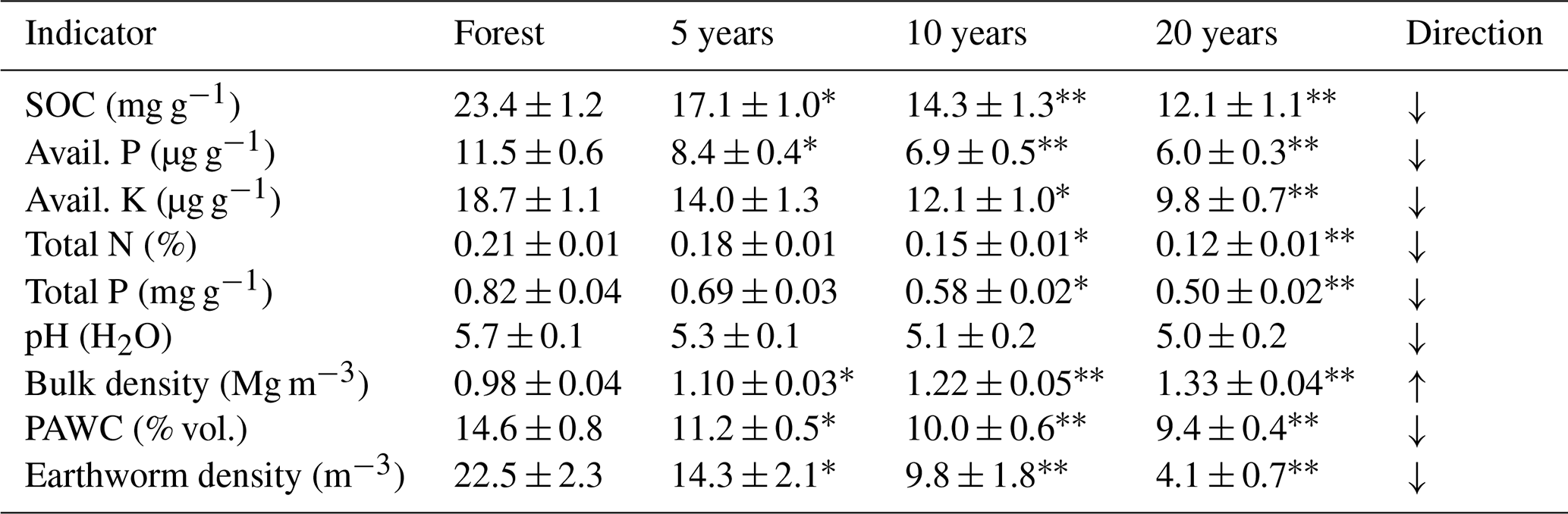
Table 1 presents the chemical, physical, and biological soil indicators across plantation ages and the forest control.

Table 1Soil quality indicators across tea plantation ages (0–20 cm depth).

Values are means ± SE. Asterisks indicate significance level compared with forest control (* p<0.05, ** p<0.01).

Download Print Version | Download XLSX

Analysis

SOC showed a progressive decline of  48 % after 20 years, reflecting loss of organic matter inputs and accelerated decomposition under monoculture. Available P and K decreased by nearly half, suggesting nutrient mining and insufficient replenishment through fertilization. The decline in PAWC (36 %) indicates deteriorating soil structure and porosity, while the  82 % reduction in earthworm populations highlights severe biological degradation. These findings are consistent with reports from China (Li et al., 2019) and India (Das et al., 2020), but the magnitude of change in Lam Dong appears stronger, reflecting the fragility of Ferralsols under intensive management.

3.2 Crop Yield

Analysis

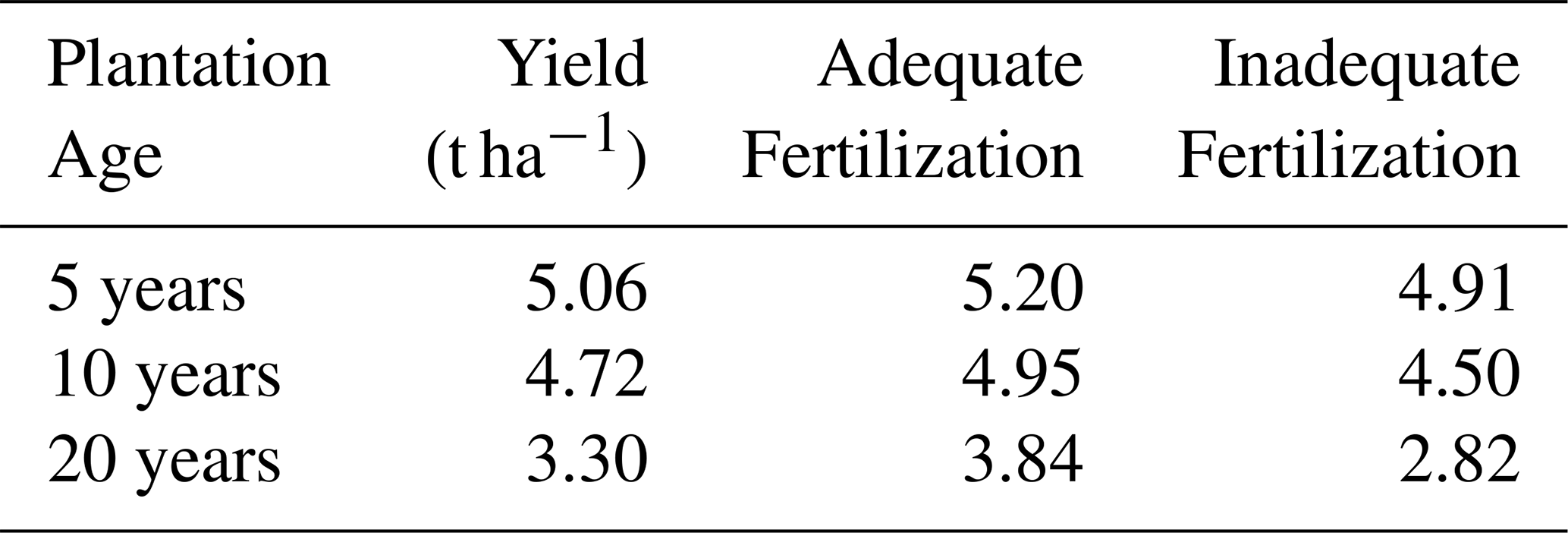
Tea yield declined steadily with plantation age (35 % from 5 to 20 years). Adequate fertilization consistently improved yields compared with inadequate fertilization, particularly at 20 years where the difference reached +1.02 t ha−1. However, even with sufficient fertilization, yields at 20 years remained significantly lower than at 5 years, indicating that soil degradation outweighed fertilizer effects. This aligns with long-term studies in Kenya showing declining productivity despite fertilizer application (Wachira et al., 2017).

Table 2Tea yield under different plantation ages and fertilizer inputs.

Download Print Version | Download XLSX

3.2.1 Soil–Yield Relationships

Analysis:

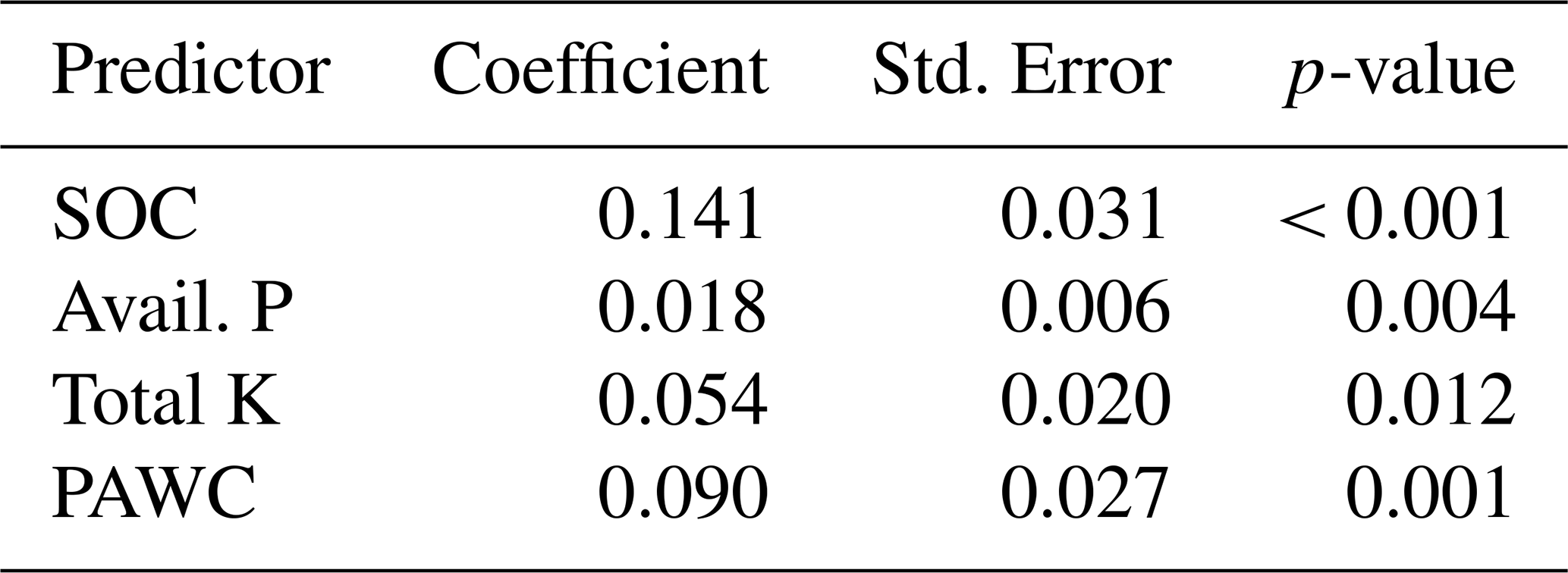
The regression model explained 76.4% of yield variation, confirming that SOC, available P, total K, and PAWC are key drivers of productivity. SOC had the strongest effect, indicating its central role in maintaining soil fertility, nutrient cycling, and water retention. The significance of PAWC emphasizes that soil physical properties, not only chemical fertility, are critical for sustaining yields. Bulk density and mechanical resistance were excluded due to collinearity, but their indirect impacts on SOC and PAWC cannot be ignored.

Table 3Regression model predicting tea yield from soil indicators.

Model R2= 0.764; p<0.001.

Download Print Version | Download XLSX

3.3 Economic Performance

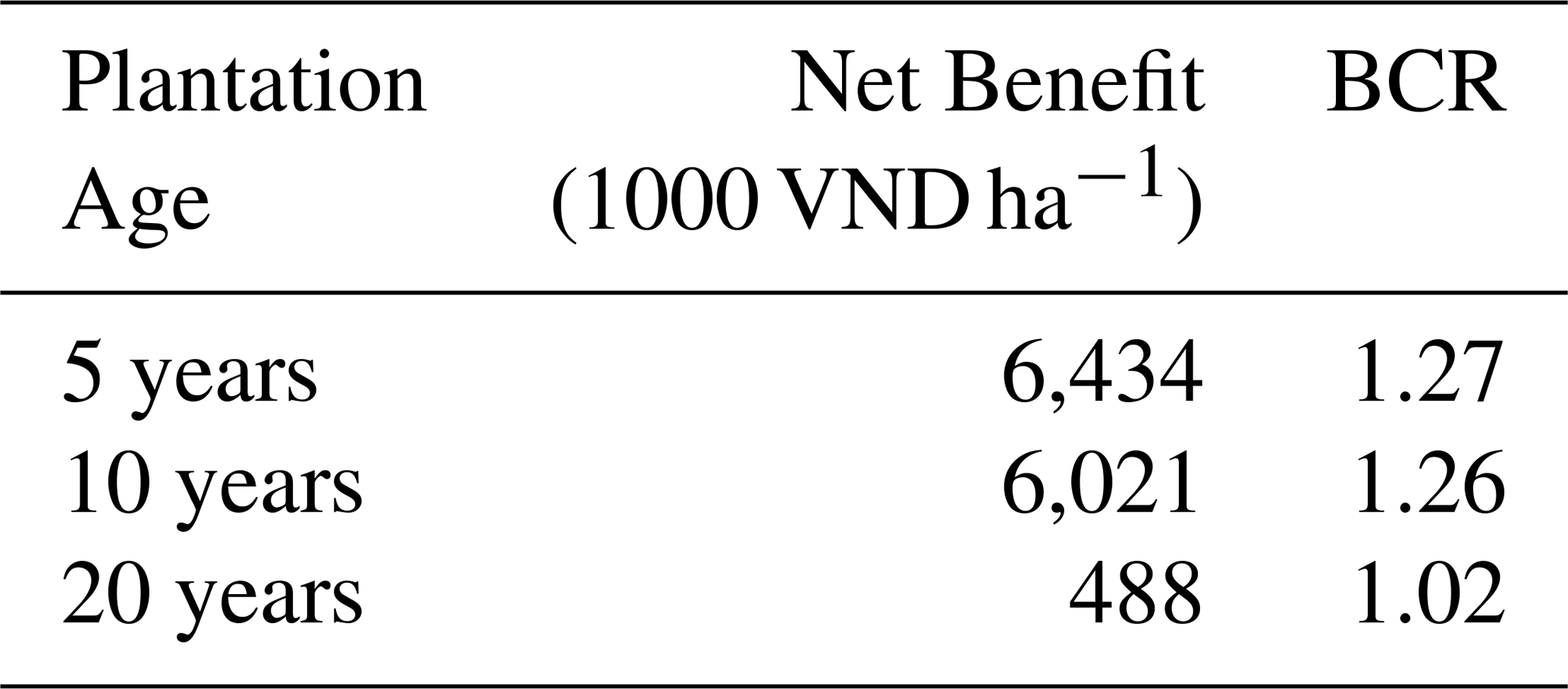
Table 4Economic performance of tea plantations by age.

Download Print Version | Download XLSX

Analysis

Economic returns declined drastically with plantation age. Net benefit at 20 years was reduced by > 90 % compared with 5-year plantations, and the BCR dropped close to unity, indicating that continued cultivation at this stage provides minimal financial advantage. These results highlight the need for soil management interventions before plantations reach 20 years to avoid economic unsustainability. Comparable studies in China also reported declining profitability after 15–20 years due to soil fertility loss (Zhou et al., 2014).

4 Discussion

4.1 Soil degradation under long-term tea monoculture

The study demonstrated that tea monoculture significantly reduced soil fertility, physical quality, and biological activity compared with native forest. After 20 years of continuous cultivation, SOC declined by nearly 48 %, available P and K by  48 %, and earthworm populations by  82 %. These results corroborate findings from China (Li et al., 2019; Chen et al., 2021), India (Das et al., 2020), and Kenya (Wachira et al., 2017), where long-term tea cultivation similarly depleted SOC and nutrients. However, the magnitude of decline in Lam Dong appears more severe, reflecting both the fragility of Ferralsols and the steep slopes common in the Vietnamese highlands.

4.2 Soil physical degradation and biological decline

Increased bulk density (0.98  1.33 Mg m−3) and reduced PAWC (14.6 %  9.4 %) indicate structural deterioration, likely driven by frequent mechanized operations ( 120 kPa ground pressure) and low organic matter return. This is consistent with studies on Ferralsols in Brazil and Indonesia, which highlight their susceptibility to compaction and water stress under intensive use (Craswell and Lefroy, 2001; Hartemink, 2006). The sharp decline in earthworm density confirms the loss of soil biological resilience, which further exacerbates poor aggregation and nutrient cycling.

4.3 Linking soil quality with yield performance

Regression analysis revealed SOC, available P, total K, and PAWC as the strongest predictors of yield (R2= 0.764). SOC contributed 0.141 t ha−1 per mg g−1, underscoring its role in nutrient supply, moisture retention, and soil structure. Similar associations have been reported in Chinese and Kenyan tea systems (Li et al., 2019; Wachira et al., 2017). Bulk density was excluded due to collinearity, but its indirect effects on SOC and PAWC highlight the importance of maintaining favorable soil structure.

4.4 Economic implications and sustainability thresholds

Declining soil fertility directly translated into reduced economic returns. Net benefits dropped from 6434 × 103 VND ha−1 at 5 years to only 488 × 103 VND ha−1 at 20 years, with the BCR approaching unity. This suggests that without intervention, plantations older than 20 years are no longer economically viable. Threshold values identified in this study – SOC  12 mg g−1 and available P  6 µg g−1 – represent critical limits below which both yield and profitability collapse. These thresholds provide practical benchmarks for monitoring soil health in tropical tea systems.

4.5 Management recommendations

The findings highlight the urgent need for improved soil management strategies in Vietnamese tea plantations. Potential interventions include: (i) organic matter amendments (compost, green manure), (ii) cover cropping to reduce erosion and enhance SOC, (iii) reduced mechanization to limit compaction, and (iv) balanced nutrient application tailored to site-specific conditions. Such measures have proven effective in rehabilitating degraded tea soils in China and India (Das et al., 2020; Chen et al., 2021).

5 Conclusion

This study demonstrated that long-term tea (Camellia sinensis) cultivation on Ferralsols in Lam Dong province, Vietnam, leads to severe soil degradation and declining economic returns. After 20 years of monoculture, SOC declined by  48 % (23.4  12.1 mg g−1), available P and K by  48 %, PAWC by  36 % (14.6 %  9.4 %), and earthworm density by  82 % (22.5  4.1 m−3), while bulk density increased by  36 % (0.98  1.33 Mg m−3). These changes corresponded to yield reductions from 5.06 to 3.30 t ha−1 and a drop in benefit–cost ratio from 1.27 to 1.02.

Regression analysis confirmed SOC, available P, total K, and PAWC as the strongest predictors of yield (R2= 0.764), with critical thresholds identified at SOC  12 mg g−1 and available P  6 µg g−1. Beyond these thresholds, both yield and profitability collapse.

To sustain tea productivity in tropical highlands, integrated soil management is essential, including organic matter addition, cover crops, reduced mechanization, and balanced nutrient inputs. The threshold values identified here provide practical benchmarks for monitoring and managing soil quality in Vietnamese tea plantations and similar agroecosystems.

Code availability

This study did not use any custom code or software requiring public access.

Data availability

The data that support the findings of this study are available from the corresponding author upon reasonable request.

Competing interests

The author has declared that there are no competing interests.

Special issue statement

This article is part of the special issue “Advances in dynamic soil modelling across scales”. It is not associated with a conference.

Disclaimer

Publisher’s note: Copernicus Publications remains neutral with regard to jurisdictional claims made in the text, published maps, institutional affiliations, or any other geographical representation in this paper. While Copernicus Publications makes every effort to include appropriate place names, the final responsibility lies with the authors. Views expressed in the text are those of the authors and do not necessarily reflect the views of the publisher.

Acknowledgements

The author would like to thank Bao Loc College of Technology and Economics for institutional support. Special thanks are extended to local farmers in Lam Dong province for their cooperation during field sampling.

Review statement

This paper was edited by Katharina Meurer and reviewed by Bernhard Wehr and one anonymous referee.

References

Chen, X., Liu, B., Zhang, Y., and Li, H.: Long-term tea cultivation accelerates soil acidification and organic matter decline in subtropical China, Geoderma, 404, 115287, https://doi.org/10.1016/j.geoderma.2021.115287, 2021. 

Craswell, E. T., and Lefroy, R. D. B.: The role and function of organic matter in tropical soils, Nutrient Cycling in Agroecosystems, 61, 7–18, 2001. 

Das, A., Bera, B., and Sharma, R. K.: Impact of continuous tea cultivation on soil quality in India: A review, Archives of Agronomy and Soil Science, 66, 1664–1680, 2020. 

Ehlers, W., Köpke, U., Hesse, F., and Böhm, W.: Penetration resistance and root growth of oats in tilled and untilled loess soil, Soil & Tillage Research, 3(3), 261–275, https://doi.org/10.1016/0167-1987(83)90027-2, 1983. 

FAO: FAOSTAT: Crops and livestock products, Food and Agriculture Organization of the United Nations, https://www.fao.org/faostat (last access: 20 March 2026), 2023. 

Hartemink, A. E.: Soil fertility decline: Definitions and assessment, in: Soil fertility decline in the tropics: With case studies on plantations, edited by: Hartemink, A. E., CABI Publishing, Wallingford, 3–22, ISBN 9780849338304, 2006. 

Jackson, M. L.: Soil chemical analysis, Prentice Hall of India, New Delhi, 1973. 

Lal, R.: Soil quality changes under continuous cropping for seventeen seasons of an alfisol in western Nigeria, Land Degradation & Development, 9, 259–274, 1998.  

Li, Y., Wu, J., Chen, Y., and Zhang, Y.: Effects of long-term tea monoculture on soil acidification and nutrient availability in subtropical China, Soil & Tillage Research, 195, 104385, https://doi.org/10.1016/j.still.2019.104385, 2019. 

Nguyen, T. T., Tran, Q. H., and Dao, M. C.: Fertilizer management and soil fertility in Vietnamese tea plantations: Current practices and challenges, Vietnam Journal of Agricultural Science, 19, 55–66, 2021. 

Reeves, J. B., McCarty, G. W., and Meisinger, J. J.: Near infrared reflectance spectroscopy for the analysis of agricultural soils, Journal of Near Infrared Spectroscopy, 5, 179–193, https://doi.org/10.1255/jnirs.92, 1997. 

Topp, G. C., Reynolds, W. D., and Cook, F. J.: Physical attributes of soil quality, in: Soil quality for crop production and ecosystem health, edited by: Gregorich, E. G. and Carter, M. R., Elsevier, Amsterdam, 21–58, https://doi.org/10.1016/S0166-2481(97)80029-3, 1997. 

Vietnam Tea Association: Vietnam tea industry report 2022, Vietnam Tea Association, Hanoi, 2022. 

Wachira, P. M., Ngetich, W. K., and Wanyoko, J. K.: Soil quality and productivity decline in long-term tea monocropping systems in Kenya, International Journal of Tea Science, 13, 15–28, 2017. 

Zhou, G., Xu, J., and Sun, C.: Soil degradation in tea plantations under long-term continuous cropping in subtropical China, Plant and Soil, 377, 259–272, 2014. 

Download
Short summary
This study evaluates how long-term tea cultivation affects soil quality and yield in Vietnam's highlands. Results show declines in organic carbon, phosphorus, and water capacity, leading to reduced profitability. The study identifies critical soil thresholds to support sustainable management of tropical tea plantations.
Share