
Articles | Volume 12, issue 1
https://doi.org/10.5194/soil-12-227-2026
© Author(s) 2026. This work is distributed under
the Creative Commons Attribution 4.0 License.
the Creative Commons Attribution 4.0 License.
https://doi.org/10.5194/soil-12-227-2026
© Author(s) 2026. This work is distributed under
the Creative Commons Attribution 4.0 License.
the Creative Commons Attribution 4.0 License.
Review article
| 
16 Mar 2026
Review article |
| 16 Mar 2026
| 16 Mar 2026
On soil health and the pivotal role of sensing
Yang Hu
CORRESPONDING AUTHOR

Soil & Landscape Science, School of Molecular & Life Sciences, Faculty of Science & Engineering, Curtin University, GPO Box U1987, Perth WA 6845, Australia
Adam Cross
School of Molecular & Life Sciences, Curtin University, GPO Box U1987, Perth WA 6845, Australia
EcoHealth Network, 1330 Beacon St, Suite 355a, Brookline, MA 02446, United States
Zefang Shen
Soil & Landscape Science, School of Molecular & Life Sciences, Faculty of Science & Engineering, Curtin University, GPO Box U1987, Perth WA 6845, Australia
Johan Bouma
Soil Science, Wageningen University, the Netherlands
Raphael A. Viscarra Rossel
CORRESPONDING AUTHOR
Soil & Landscape Science, School of Molecular & Life Sciences, Faculty of Science & Engineering, Curtin University, GPO Box U1987, Perth WA 6845, Australia
Related authors
Yang Hu and Raphael A. Viscarra Rossel
SOIL, 12, 619–631, https://doi.org/10.5194/soil-12-619-2026, https://doi.org/10.5194/soil-12-619-2026, 2026
Short summary
Short summary
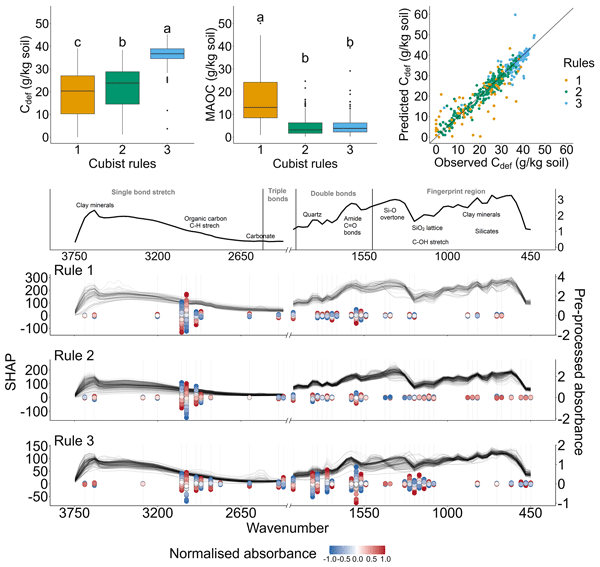
We analysed 482 Australian topsoils to estimate mineral-associated organic carbon (MAOC) and the carbon storage deficit (Cdef). Using mid-infrared spectra with explainable machine learning, we predicted MAOC (R2=0.86) and Cdef (R2=0.89). Model interpretation revealed signals from organic matter and clay minerals were most significant in predicting MAOC and Cdef. Our work provides an accurate, cost-effective means to assess and better understand the drivers of soil carbon sequestration potential.
This article is included in the Encyclopedia of Geosciences
Zefang Shen, Haylee D'Agui, Lewis Walden, Mingxi Zhang, Tsoek Man Yiu, Kingsley Dixon, Paul Nevill, Adam Cross, Mohana Matangulu, Yang Hu, and Raphael A. Viscarra Rossel
SOIL, 8, 467–486, https://doi.org/10.5194/soil-8-467-2022, https://doi.org/10.5194/soil-8-467-2022, 2022
Short summary
Short summary
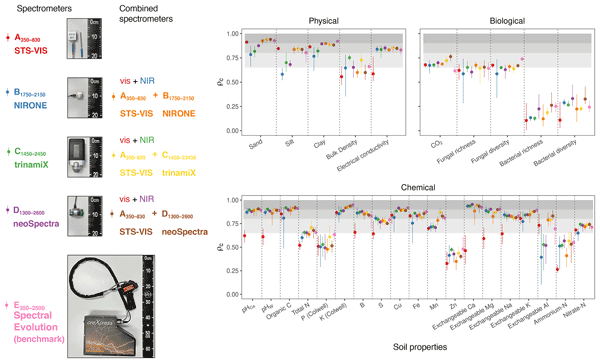
We compared miniaturised visible and near-infrared spectrometers to a portable visible–near-infrared instrument, which is more expensive. Statistical and machine learning algorithms were used to model 29 key soil health indicators. Accuracy of the miniaturised spectrometers was comparable to the portable system. Soil spectroscopy with these tiny sensors is cost-effective and could diagnose soil health, help monitor soil rehabilitation, and deliver positive environmental and economic outcomes.
This article is included in the Encyclopedia of Geosciences
Raphael A. Viscarra Rossel, Lewis Walden, and Andrea Bravo-Escobar
EGUsphere, https://doi.org/10.5194/egusphere-2026-3957, https://doi.org/10.5194/egusphere-2026-3957, 2026
Short summary
Short summary
Reasoning about soil as a coupled system is central to graduate training, but is being squeezed out as soil science moves into broader degrees without dedicated specialists. Accessible LLMs make this harder to ignore. We propose four principles for undergraduate teaching: interactivity, place, plural knowledge, and AI discernment, delivered via interactive models, landscape comparisons, Two-Way knowledge, and AI interrogation. Assessment integrates these into place-specific reasoning.
This article is included in the Encyclopedia of Geosciences
Raphael A. Viscarra Rossel, Lewis Walden, and Farid Sepanta
EGUsphere, https://doi.org/10.5194/egusphere-2026-2905, https://doi.org/10.5194/egusphere-2026-2905, 2026
Short summary
Short summary
We present a probabilistic compositional framework for farm-scale mapping of soil carbon fractions and totals with calibrated uncertainty. We combine mid-IR, probabilistic gradient-boosted trend and Bayesian SPDE spatial modelling to jointly map POC, MAOC, ROC, TOC, TIC, and TC. The framework preserves the compositional closure of the organic fractions and the mass balance between organic and inorganic carbon while propagating uncertainty from the laboratory through to spatial inference.
This article is included in the Encyclopedia of Geosciences
Yang Hu and Raphael A. Viscarra Rossel
SOIL, 12, 619–631, https://doi.org/10.5194/soil-12-619-2026, https://doi.org/10.5194/soil-12-619-2026, 2026
Short summary
Short summary
We analysed 482 Australian topsoils to estimate mineral-associated organic carbon (MAOC) and the carbon storage deficit (Cdef). Using mid-infrared spectra with explainable machine learning, we predicted MAOC (R2=0.86) and Cdef (R2=0.89). Model interpretation revealed signals from organic matter and clay minerals were most significant in predicting MAOC and Cdef. Our work provides an accurate, cost-effective means to assess and better understand the drivers of soil carbon sequestration potential.
This article is included in the Encyclopedia of Geosciences
Thorsten Behrens, Karsten Schmidt, Felix Stumpf, Simon Tutsch, Marie Hertzog, Urs Grob, Armin Keller, and Raphael Viscarra Rossel
EGUsphere, https://doi.org/10.5194/egusphere-2024-2810, https://doi.org/10.5194/egusphere-2024-2810, 2024
Preprint archived
Short summary
Short summary
We integrate various methods to create soil property maps for soil surveyors, which they can utilize as a reference before beginning their fieldwork. A new sampling design based on a geographical stratification is proposed focussing on local feature space variability. It allows for a systematic analysis of predictive accuracy for varying densities. The spectral and spatial models yielded high accuracies. Our study highlights the value of integrating pedometric technologies in soil surveys.
This article is included in the Encyclopedia of Geosciences
Lingfei Wang, Gab Abramowitz, Ying-Ping Wang, Andy Pitman, and Raphael A. Viscarra Rossel
SOIL, 10, 619–636, https://doi.org/10.5194/soil-10-619-2024, https://doi.org/10.5194/soil-10-619-2024, 2024
Short summary
Short summary
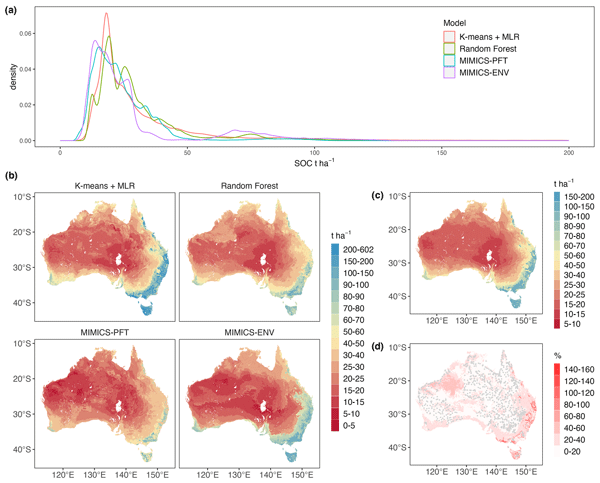
Effective management of soil organic carbon (SOC) requires accurate knowledge of its distribution and factors influencing its dynamics. We identify the importance of variables in spatial SOC variation and estimate SOC stocks in Australia using various models. We find there are significant disparities in SOC estimates when different models are used, highlighting the need for a critical re-evaluation of land management strategies that rely on the SOC distribution derived from a single approach.
This article is included in the Encyclopedia of Geosciences
Lewis Walden, Farid Sepanta, and Raphael Viscarra Rossel
EGUsphere, https://doi.org/10.5194/egusphere-2023-2464, https://doi.org/10.5194/egusphere-2023-2464, 2023
Preprint archived
Short summary
Short summary
We characterised the chemical and mineral composition of soil organic carbon fractions with mid-infrared spectroscopy. We identified unique and shared features of the spectra of carbon fractions, and the interactions between their organic and mineral components. These interactions are key to the persistence of C in soils, and we propose that mid-infrared spectroscopy could help to infer stability of soil C.
This article is included in the Encyclopedia of Geosciences

Johan Bouma
SOIL, 8, 751–759, https://doi.org/10.5194/soil-8-751-2022, https://doi.org/10.5194/soil-8-751-2022, 2022
Short summary
Short summary
In the new
This article is included in the Encyclopedia of Geosciences
Soil Deal for Europe, land users, mostly farmers, and scientists are required to work jointly in
living labsto develop sustainable land use systems. We propose that threshold values for different ecosystem services in line with the UN Sustainable Development Goals (SDGs) and the EU Green Deal (GD) have to be met to define
lighthousesthat demonstrate successful sustainable land use systems, functioning as inspiring examples. A case study illustrates the important role of soils.
Zefang Shen, Haylee D'Agui, Lewis Walden, Mingxi Zhang, Tsoek Man Yiu, Kingsley Dixon, Paul Nevill, Adam Cross, Mohana Matangulu, Yang Hu, and Raphael A. Viscarra Rossel
SOIL, 8, 467–486, https://doi.org/10.5194/soil-8-467-2022, https://doi.org/10.5194/soil-8-467-2022, 2022
Short summary
Short summary
We compared miniaturised visible and near-infrared spectrometers to a portable visible–near-infrared instrument, which is more expensive. Statistical and machine learning algorithms were used to model 29 key soil health indicators. Accuracy of the miniaturised spectrometers was comparable to the portable system. Soil spectroscopy with these tiny sensors is cost-effective and could diagnose soil health, help monitor soil rehabilitation, and deliver positive environmental and economic outcomes.
This article is included in the Encyclopedia of Geosciences
Yuanyuan Yang, Zefang Shen, Andrew Bissett, and Raphael A. Viscarra Rossel
SOIL, 8, 223–235, https://doi.org/10.5194/soil-8-223-2022, https://doi.org/10.5194/soil-8-223-2022, 2022
Short summary
Short summary
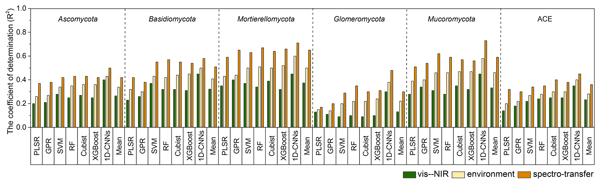
We present a new method to estimate the relative abundance of the dominant phyla and diversity of fungi in Australian soil. It uses state-of-the-art machine learning with publicly available data on soil and environmental proxies for edaphic, climatic, biotic and topographic factors, and visible–near infrared wavelengths. The estimates could serve to supplement the more expensive molecular approaches towards a better understanding of soil fungal abundance and diversity in agronomy and ecology.
This article is included in the Encyclopedia of Geosciences
Cited articles
Adamchuk, V. and Viscarra Rossel, R.: Development of on-the-go proximal soil sensor systems, Proximal Soil Sensing, 15–28, https://doi.org/10.1007/978-90-481-8859-8_2, 2010. a, b, c
Alexander, E. B.: Rates of soil formation: implications for soil-loss tolerance, Soil Science, 145, 37–45, 1988. a
Allen, D. E., Singh, B. P., and Dalal, R. C.: Soil health indicators under climate change: a review of current knowledge, Soil Health and Climate Change, 25–45, https://doi.org/10.1007/978-3-642-20256-8_2, 2011. a
Amacher, M. C., O'Neil, K. P., and Perry, C. H.: Soil vital signs: a new soil quality index (SQI) for assessing forest soil health, Res. Pap. RMRS-RP-65, Fort Collins, CO, US Department of Agriculture, Forest Service, Rocky Mountain Research Station, 12 pp., 65, https://doi.org/10.2737/RMRS-RP-65, 2007. a
Azcarate, S. M., Ríos-Reina, R., Amigo, J. M., and Goicoechea, H. C.: Data handling in data fusion: Methodologies and applications, TrAC Trends in Analytical Chemistry, 143, 116355, https://doi.org/10.1016/j.trac.2021.116355, 2021. a, b
Baldock, J., McNally, S., Beare, M., Curtin, D., and Hawke, B.: Predicting soil carbon saturation deficit and related properties of New Zealand soils using infrared spectroscopy, Soil Research, 57, 835–844, 2019. a
Baumann, P., Lee, J., Behrens, T., Biswas, A., Six, J., McLachlan, G., and Viscarra Rossel, R. A.: Modelling soil water retention and water-holding capacity with visible–near-infrared spectra and machine learning, European Journal of Soil Science, 73, e13220, https://doi.org/10.1111/ejss.13220, 2022. a
Bekku, Y., Koizumi, H., Nakadai, T., and Iwaki, H.: Measurement of soil respiration using closed chamber method: An IRGA technique, Tech. rep., Wiley Online Library, https://doi.org/10.1007/BF02347863, 1995. a, b, c
Borsboom, D., Mellenbergh, G. J., and Van Heerden, J.: The theoretical status of latent variables, Psychological Review, 110, 203, https://doi.org/10.1037/0033-295X.110.2.203, 2003. a
Bouchard, V., Gillon, D., Joffre, R., and Lefeuvre, J.-C.: Actual litter decomposition rates in salt marshes measured using near-infrared reflectance spectroscopy, Journal of Experimental Marine Biology and Ecology, 290, 149–163, 2003. a
Bouma, J.: Soil science contributions towards sustainable development goals and their implementation: linking soil functions with ecosystem services, Journal of Plant Nutrition and Soil Science, 177, 111–120, 2014. a
Bouma, J.: Soil challenges beyond publication issues, European Journal of Soil Science, 72, 29–30, 2021. a
Bouma, J.: Feeding existing expertise into a possibly “new” theory for soil health?, European Journal of Soil Science, 73, e13312, https://doi.org/10.1111/ejss.13312, 2022a. a
Bouma, J.: Transforming living labs into lighthouses: a promising policy to achieve land-related sustainable development, SOIL, 8, 751–759, https://doi.org/10.5194/soil-8-751-2022, 2022b. a, b
Bouma, J. and Reijneveld, J. A.: How meeting the ten pedometrics challenges can deliver healthy-soil contributions to SDG-related ecosystem services, European Journal of Soil Science, 75, e13550, https://doi.org/10.1111/ejss.13550, 2024. a
Bouma, J. and Scrope, T.: How to focus soil research when contributing to environmental agricultural regulations aimed at sustainable development, European Journal of Soil Science, 75, e13581, https://doi.org/10.1111/ejss.13581, 2024. a, b, c
Brady, N. C. and Weil, R. R.: The nature and properties of soils, Harlow, England, Pearson, 15th edition, ISBN 9780132279383, 2017. a
Brevik, E. C.: A brief history of the soil health concept, Soil Science Society of America, Madison, WI, USA, https://www.researchgate.net/profile/Eric-Brevik-2/publication/360608649_A_Brief_History_of_the_Soil_Health_Concept/links/628082933a23744a72817cf1/A-Brief-History-of-the-Soil-Health-Concept.pdf (last access: 26 January 2026), 2018. a, b
Brevik, E. C., Slaughter, L., Singh, B. R., Steffan, J. J., Collier, D., Barnhart, P., and Pereira, P.: Soil and human health: current status and future needs, Air, Soil and Water Research, 13, 1178622120934441, https://doi.org/10.1177/1178622120934441, 2020. a, b, c
Brus, D. and De Gruijter, J.: Random sampling or geostatistical modelling? Choosing between design-based and model-based sampling strategies for soil (with discussion), Geoderma, 80, 1–44, 1997. a
Buma, W., Abelev, A., and Merrick, T.: Vegetation spectra as an integrated measure to explain underlying soil characteristics: a review of recent advances, Frontiers in Environmental Science, 12, 1430818, https://doi.org/10.3389/fenvs.2024.1430818, 2024. a
Burrell, A., Evans, J., and De Kauwe, M.: Anthropogenic climate change has driven over 5 million km2 of drylands towards desertification, Nature Communications, 11, 3853, https://doi.org/10.1038/s41467-020-17710-7, 2020. a
Buters, T. M., Bateman, P. W., Robinson, T., Belton, D., Dixon, K. W., and Cross, A. T.: Methodological ambiguity and inconsistency constrain unmanned aerial vehicles as a silver bullet for monitoring ecological restoration, Remote Sensing, 11, 1180, https://doi.org/10.3390/rs11101180, 2019. a
Cécillon, L., Cassagne, N., Czarnes, S., Gros, R., Vennetier, M., and Brun, J.-J.: Predicting soil quality indices with near infrared analysis in a wildfire chronosequence, Science of the Total Environment, 407, 1200–1205, 2009. a
Chang, T., Feng, G., Paul, V., Adeli, A., and Brooks, J. P.: Soil health assessment methods: Progress, applications and comparison, Advances in Agronomy, 129–210, https://doi.org/10.1016/bs.agron.2021.10.002, 2022. a
Chen, C. R. and Xu, Z. H.: Analysis and behavior of soluble organic nitrogen in forest soils, Journal of Soils and Sediments, 8, 363–378, 2008. a
Chodak, M.: Near-infrared spectroscopy for rapid estimation of microbial properties in reclaimed mine soils, Journal of Plant Nutrition and Soil Science, 174, 702–709, 2011. a
Cohen, M., Dabral, S., Graham, W. D., Prenger, J., and Debusk, W.: Evaluating ecological condition using soil biogeochemical parameters and near infrared reflectance spectra, Environmental Monitoring and Assessment, 116, 427–457, 2006. a
Cohen, M. J., Prenger, J. P., and DeBusk, W. F.: Visible-near infrared reflectance spectroscopy for rapid, nondestructive assessment of wetland soil quality, Journal of Environmental Quality, 34, 1422–1434, 2005. a
DAWE: National Soil Strategy, Department of Agriculture, Water and the Environment (Australia), ISBN 978-1-76003-395-8, 2021. a
Debeljak, M., Trajanov, A., Kuzmanovski, V., Schröder, J., Sandén, T., Spiegel, H., Wall, D. P., Van de Broek, M., Rutgers, M., Bampa, F., and Creamer, R. E.: A field-scale decision support system for assessment and management of soil functions, Frontiers in Environmental Science, 7, 115, https://doi.org/10.3389/fenvs.2019.00115, 2019. a, b, c, d, e, f, g, h
Deel, H. L., Moore, J. M., and Manter, D. K.: SEMWISE: A national soil health scoring framework for agricultural systems, Applied Soil Ecology, 195, 105273, https://doi.org/10.1016/j.apsoil.2024.105273, 2024. a, b, c, d
De Groot, R. S., Fisher, B., Christie, M., Aronson, J., Braat, L., Haines-Young, R., Gowdy, J., Maltby, E., Neuville, A., Polasky, S., and Portela, R.: Integrating the ecological and economic dimensions in biodiversity and ecosystem service valuation, in: The economics of ecosystems and biodiversity (TEEB): ecological and economic foundations, 9–40, Earthscan, Routledge, https://doi.org/10.4324/9781849775489, 2010. a
Deiss, L., Demyan, M. S., Fulford, A., Hurisso, T., and Culman, S. W.: High-throughput soil health assessment to predict corn agronomic performance, Field Crops Research, 297, 108930, https://doi.org/10.1016/j.fcr.2023.108930, 2023. a
Deng, F., Minasny, B., Knadel, M., McBratney, A., Heckrath, G., and Greve, M. H.: Using vis-NIR spectroscopy for monitoring temporal changes in soil organic carbon, Soil Science, 178, 389–399, 2013. a
Dickson, B., Miles, L., Thornton, H., and O'Connell, E.: Becoming #GenerationRestoration: Ecosystem restoration for people, nature and climate, United Nations Environment Programme (UNEP),UN Environment Programme World Conservation Monitoring Centre (UNEP-WCMC), ISBN 978-92-807-3864-3, 2021. a
Doran, J. W. and Parkin, T. B.: Defining and assessing soil quality, Defining soil quality for a sustainable environment, 35, 1–21, Soil Science Society of America, https://doi.org/10.2136/sssaspecpub35.c1, 1994. a
Doran, J. W. and Safley, M.: Defining and assessing soil health and sustainable productivity, Biological indicators of soil health, 1–28, edited by: Pankhurst, C., Doube, B. M., and Gupta, V. V. S. R., CAB International, Wallingford, ISBN 978-0-85199-158-0, 1997. a
Elliott, G. N., Worgan, H., Broadhurst, D., Draper, J., and Scullion, J.: Soil differentiation using fingerprint Fourier transform infrared spectroscopy, chemometrics and genetic algorithm-based feature selection, Soil Biology and Biochemistry, 39, 2888–2896, 2007. a
Elmqvist, T., Maltby, E., Barker, T., Mortimer, M., Perrings, C., Aronson, J., De Groot, R., Fitter, A., Mace, G., Norberg, J., and Pinto, I. S.: Biodiversity, ecosystems and ecosystem services, in: The Economics of Ecosystems and Biodiversity: Ecological and economic foundations, 41–111, Routledge, https://doi.org/10.4324/9781849775489, 2012. a
England, J. R. and Viscarra Rossel, R. A.: Proximal sensing for soil carbon accounting, SOIL, 4, 101–122, https://doi.org/10.5194/soil-4-101-2018, 2018. a, b
European Commission: Communication from the Commission to the European Parliament, the Council, the European Economic and Social Committee and the Committee of the Regions. EU Soil Strategy for 2030: Reaping the benefits of healthy soils for people, food, nature and climate, https://eur-lex.europa.eu/legal-content/EN/TXT/PDF/?uri=CELEX:52021DC0699 (last access: 26 January 2026), 2021. a, b
Fan, Y., Wang, X., Funk, T., Rashid, I., Herman, B., Bompoti, N., Mahmud, M. S., Chrysochoou, M., Yang, M., Vadas, T. M., and Lei, Y.: A critical review for real-time continuous soil monitoring: Advantages, challenges, and perspectives, Environmental Science & Technology, 56, 13546–13564, 2022. a, b
Fischer, G., van Velthuizen, H. T., and Nachtergaele, F. O.: Global agro-ecological zones assessment: methodology and results, International Institute for Applied Systems Analysis (IIASA), Laxenburg, Austria, https://pure.iiasa.ac.at/6182 (last access: 26 January 2026), 2000. a
Food and Agriculture Organization of the United Nations: All Definitions, https://www.fao.org/soils-portal/about/all-definitions/en/ (last access: 16 June 2025), 2025. a
Friedrichsen, C. N., Hagen-Zakarison, S., Friesen, M. L., McFarland, C. R., Tao, H., and Wulfhorst, J.: Soil health and well-being: redefining soil health based upon a plurality of values, Soil Security, 2, 100004, https://doi.org/10.1016/j.soisec.2021.100004, 2021. a, b, c, d
Fystro, G.: The prediction of C and N content and their potential mineralisation in heterogeneous soil samples using Vis–NIR spectroscopy and comparative methods, Plant and Soil, 246, 139–149, 2002. a
Gann, G. D., McDonald, T., Walder, B., Aronson, J., Nelson, C. R., Jonson, J., Hallett, J. G., Eisenberg, C., Guariguata, M. R., Liu, J., and Hua, F.: International principles and standards for the practice of ecological restoration, Restoration Ecology, 27, S1–S46, 2019. a
Gerke, J.: The central role of soil organic matter in soil fertility and carbon storage, Soil Systems, 6, 33, https://doi.org/10.3390/soilsystems6020033, 2022. a
Gozukara, G., Acar, M., Ozlu, E., Dengiz, O., Hartemink, A. E., and Zhang, Y.: A soil quality index using Vis-NIR and pXRF spectra of a soil profile, Catena, 211, 105954, https://doi.org/10.1016/j.catena.2021.105954, 2022. a
Griffiths, B. S., Römbke, J., Schmelz, R. M., Scheffczyk, A., Faber, J. H., Bloem, J., Pérès, G., Cluzeau, D., Chabbi, A., Suhadolc, M., and Sousa, J. P.: Selecting cost effective and policy-relevant biological indicators for European monitoring of soil biodiversity and ecosystem function, Ecological Indicators, 69, 213–223, 2016. a
Grunwald, S., Vasques, G. M., and Rivero, R. G.: Fusion of soil and remote sensing data to model soil properties, Advances in Agronomy, 131, 1–109, 2015. a
Gyawali, A. J., Lester, B. J., and Stewart, R. D.: Talking SMAAC: a new tool to measure soil respiration and microbial activity, Frontiers in Earth Science, 7, 138, https://doi.org/10.3389/feart.2019.00138, 2020. a, b, c
Harris, J., Evans, D., and Mooney, S.: A new theory for soil health, European Journal of Soil Science, e13292, https://doi.org/10.1111/ejss.13292, 2022. a, b
Hellekås, J., Sæbø, M., and Sønstebø, J. H.: Next-generation sequencing of soil samples. Illumina MiSeq vs. Oxford Nanopore MinION, Master's thesis, University of South-Eastern Norway, 2021. a
Hossain, M., Khaleque, M., Ali, M., Bacchu, M., Hossain, M., Shahed, S., Aly, M. A. S., and Khan, M. Z.: Development of electrochemical sensors for quick detection of environmental (soil and water) NPK ions, RSC Advances, 14, 9137–9158, 2024. a
Hussain, Z., Deng, L., Wang, X., Cui, R., and Liu, G.: A review of farmland soil health assessment methods: Current status and a novel approach, Sustainability, 14, 9300, https://doi.org/10.3390/su14159300, 2022. a
Inselsbacher, E., Öhlund, J., Jämtgård, S., Huss-Danell, K., and Näsholm, T.: The potential of microdialysis to monitor organic and inorganic nitrogen compounds in soil, Soil Biology and Biochemistry, 43, 1321–1332, 2011. a
Jenkins, E. M., Galbraith, J., and Paltseva, A. A.: Portable X-ray fluorescence as a tool for urban soil contamination analysis: accuracy, precision, and practicality, SOIL, 11, 565–582, https://doi.org/10.5194/soil-11-565-2025, 2025. a, b
Ji, W., Viscarra Rossel, R., and Shi, Z.: Accounting for the effects of water and the environment on proximally sensed vis–NIR soil spectra and their calibrations, European Journal of Soil Science, 66, 555–565, 2015. a
Karlen, D. L. and Stott, D. E.: A framework for evaluating physical and chemical indicators of soil quality, Defining soil quality for a sustainable environment, Soil Science Society of America, 35, 53–72, https://doi.org/10.2136/sssaspecpub35.c4, 1994. a
Karlen, D. L., Stott, D. E., and Mikha, M. M. (Eds.): Approaches to soil health analysis, vol. 1 of ASA, CSSA, and SSSA Books, Wiley, 1st edn., ISBN 978-0-89118-984-8, https://doi.org/10.1002/9780891189817.fmatter, 2021. a
Karunaratne, S., Asanopoulos, C., Jin, H., Baldock, J., Searle, R., Macdonald, B., and Macdonald, L. M.: Estimating the attainable soil organic carbon deficit in the soil fine fraction to inform feasible storage targets and de-risk carbon farming decisions, Soil Research, 62, https://doi.org/10.1071/SR23096, 2024. a
Keesstra, S., Sannigrahi, S., López-Vicente, M., Pulido, M., Novara, A., Visser, S., and Kalantari, Z.: The role of soils in regulation and provision of blue and green water, Philosophical Transactions of the Royal Society B, 376, 20200175, https://doi.org/10.1098/rstb.2020.0175, 2021. a
Keesstra, S. D., Bouma, J., Wallinga, J., Tittonell, P., Smith, P., Cerdà, A., Montanarella, L., Quinton, J. N., Pachepsky, Y., van der Putten, W. H., Bardgett, R. D., Moolenaar, S., Mol, G., Jansen, B., and Fresco, L. O.: The significance of soils and soil science towards realization of the United Nations Sustainable Development Goals, SOIL, 2, 111–128, https://doi.org/10.5194/soil-2-111-2016, 2016. a, b
Kennedy, C. M., Oakleaf, J. R., Theobald, D. M., Baruch-Mordo, S., and Kiesecker, J.: Managing the middle: A shift in conservation priorities based on the global human modification gradient, Global Change Biology, 25, 811–826, 2019. a
Kestel, J. H., Field, D. L., Bateman, P. W., White, N. E., Allentoft, M. E., Hopkins, A., Gibberd, M., and Nevill, P.: Applications of environmental DNA (eDNA) in agricultural systems: Current uses, limitations and future prospects, Science of The Total Environment, 847, 157556, https://doi.org/10.1016/j.scitotenv.2022.157556, 2022. a
Kinoshita, R., Moebius-Clune, B. N., van Es, H. M., Hively, W. D., and Bilgilis, A. V.: Strategies for soil quality assessment using visible and near-infrared reflectance spectroscopy in a Western Kenya chronosequence, Soil Science Society of America Journal, 76, 1776–1788, 2012. a
Kraamwinkel, C. T., Beaulieu, A., Dias, T., and Howison, R. A.: Planetary limits to soil degradation, Communications Earth & Environment, 2, 249, https://doi.org/10.1038/s43247-021-00323-3, 2021. a
Kuang, B., Mahmood, H., Quraishi, M., Hoogmoed, W., Mouazen, A., and van Henten, E.: Chapter four-sensing soil properties in the laboratory, in situ, and on-line: a review, Advances in Agronomy, 114, 155–223, 2012. a
Kuzyakov, Y., Gunina, A., Zamanian, K., Tian, J., Luo, Y., Xu, X., Yudina, A., Aponte, H., Alharbi, H., Ovsepyan, L., and Kurganova, I.: New approaches for evaluation of soil health, sensitivity and resistance to degradation, Frontiers of Agricultural Science and Engineering, 7, 282–288, 2020. a
Lal, R.: Soil health and carbon management, Food and Energy Security, 5, 212–222, 2016. a
Lambers, H., Raven, J. A., Shaver, G. R., and Smith, S. E.: Plant nutrient-acquisition strategies change with soil age, Trends in Ecology & Evolution, 23, 95–103, 2008. a
Lehman, R. M., Cambardella, C. A., Stott, D. E., Acosta-Martinez, V., Manter, D. K., Buyer, J. S., Maul, J. E., Smith, J. L., Collins, H. P., Halvorson, J. J., and Kremer, R. J.: Understanding and enhancing soil biological health: the solution for reversing soil degradation, Sustainability, 7, 988–1027, 2015. a
Li, S., Viscarra Rossel, R. A., and Webster, R.: The cost-effectiveness of reflectance spectroscopy for estimating soil organic carbon, European Journal of Soil Science, 73, e13202, https://doi.org/10.1111/ejss.13202, 2022. a, b, c, d
Liu, N., Liu, C., Chen, L., Yu, J., Sun, X., Zhang, S., and Wu, J.: Research on model transfer strategies based on the fusion of NIR-MIR spectral data, Infrared Physics & Technology, 142, 105545, https://doi.org/10.1016/j.infrared.2024.105545, 2024. a
Liu, X., Dong, X., and Leskovar, D. I.: Ground penetrating radar for underground sensing in agriculture: a review, International Agrophysics, 30, https://doi.org/10.1515/intag-2016-0010, 2016. a, b
Lobsey, C. R., Viscarra Rossel, R., and Mcbratney, A. B.: Proximal soil nutrient sensing using electrochemical sensors, Proximal soil sensing, Progress in Soil Science, Springer, Dordrecht, https://doi.org/10.1007/978-90-481-8859-8_6, 77–88, 2010. a, b
Maaz, T. M., Heck, R. H., Glazer, C. T., Loo, M. K., Zayas, J. R., Krenz, A., Beckstrom, T., Crow, S. E., and Deenik, J. L.: Measuring the immeasurable: A structural equation modeling approach to assessing soil health, Science of The Total Environment, 870, 161900, https://doi.org/10.1016/j.scitotenv.2023.161900, 2023. a, b, c, d
Magdoff, F. and Van Es, H.: Building Soils for Better Crops: Ecological Management for Healthy Soils, Sustainable Agriculture Network handbook series, Sustainable Agriculture Research and Education Program (SARE), Sustainable Agriculture Network (SAN), Beltsville, Maryland, USA, ISBN 9781888626193, https://books.google.com.au/books?id=GnJpzgEACAAJ (last access: 26 January 2026), 2021. a
Maharjan, B., Das, S., and Acharya, B. S.: Soil Health Gap: A concept to establish a benchmark for soil health management, Global Ecology and Conservation, 23, e01116, https://doi.org/10.1016/j.gecco.2020.e01116, 2020. a, b
Mandal, N., Adhikary, S., and Rakshit, R.: Nanobiosensors: Recent developments in soil health assessment, Soil Analysis: Recent Trends and Applications, Springer, Singapore, 285–304, https://doi.org/10.1007/978-981-15-2039-6_15, 2020. a
Manning, P., Van Der Plas, F., Soliveres, S., Allan, E., Maestre, F. T., Mace, G., Whittingham, M. J., and Fischer, M.: Redefining ecosystem multifunctionality, Nature Ecology & Evolution, 2, 427–436, 2018. a
Matson, A., Fantappiè, M., Campbell, G. A., Miranda-Vélez, J. F., Faber, J. H., Gomes, L. C., Hessel, R., Lana, M., Mocali, S., Smith, P., and Robinson, D. A.: Four approaches to setting soil health targets and thresholds in agricultural soils, Journal of Environmental Management, 371, 123141, https://doi.org/10.1016/j.jenvman.2024.123141, 2024. a, b, c
Mausel, P. W.: Soil quality in Illinois – an example of a soils geography resource analysis, The Professional Geographer, 23, 127–136, 1971. a
National Resources Conservation Services of the US Dept. of Agriculture: Soil Health, https://www.nrcs.usda.gov/conservation-basics/natural-resource-concerns/soil/soil-health (last access: 26 January 2026), 2019. a
Neßhöver, C., Aronson, J., Blignaut, J., Eppink, F., Vakrou, A., Wittmer, H., and Shine, C.: Investing in ecological infrastructure, in: The economics of ecosystems and biodiversity in national and international policy making, 401–448, Routledge, ISBN 978-1-84971-250-7, 2012. a
Nouri, A., Yoder, D. C., Raji, M., Ceylan, S., Jagadamma, S., Lee, J., Walker, F. R., Yin, X., Fitzpatrick, J., Trexler, B., and Arelli, P.: Conservation agriculture increases the soil resilience and cotton yield stability in climate extremes of the southeast US, Communications Earth & Environment, 2, 1–12, 2021. a, b
Oliver, M. A. and Brevik, E. C.: Chapter One – The history of soil and human health, Advances in Agronomy, 1–100, https://doi.org/10.1016/bs.agron.2024.07.001, 2024. a
Omer, M., Idowu, O. J., Brungard, C. W., Ulery, A. L., Adedokun, B., and McMillan, N.: Visible near-infrared reflectance and laser-induced breakdown spectroscopy for estimating soil quality in arid and semiarid agroecosystems, Soil Systems, 4, 42, https://doi.org/10.3390/soilsystems4030042, 2020. a
O'Neill, K. P.: Soils as an indicator of forest health: a guide to the collection, analysis, and interpretation of soil indicator data in the Forest Inventory and Analysis program, Vol. 258, USDA Forest Service, North Central Research Station, https://doi.org/10.2737/NC-GTR-258, 2005. a
Pankhurst, C., Doube, B. M., and Gupta, V.: Biological indicators of soil health, Cab International Wallingford, ISBN 0 85199 158 0, 1997. a
Patzel, N., Sticher, H., and Karlen, D. L.: Soil fertility–phenomenon and concept, Journal of Plant Nutrition and Soil Science, 163, 129–142, 2000. a
Pepers, K. H., van Egmond, F., Koomans, R., Teuling, K., Staats, G., and van Os, G.: Validation of a new gamma ray soil bulk density sensor, European Journal of Soil Science, 75, e13542, https://doi.org/10.1111/ejss.13542, 2024. a, b
Pepper, I. L.: The soil health-human health nexus, Critical Reviews in Environmental Science and Technology, 43, 2617–2652, 2013. a
Pino, V., McBratney, A., O'Brien, E., Singh, K., and Pozza, L.: Citizen science & soil connectivity: Where are we?, Soil Security, 9, 100073, https://doi.org/10.1080/10643389.2012.694330, 2022. a
Pires, L. F., Rosa, J. A., Pereira, A., Arthur, R. C. J., and Bacchi, O. O. S.: Gamma-ray attenuation method as an efficient tool to investigate soil bulk density spatial variability, Annals of Nuclear Energy, 36, 1734–1739, 2009. a
Pongratz, J., Dolman, H., Don, A., Erb, K.-H., Fuchs, R., Herold, M., Jones, C., Kuemmerle, T., Luyssaert, S., Meyfroidt, P., and Naudts, K.: Models meet data: Challenges and opportunities in implementing land management in Earth system models, Global Change Biology, 24, 1470–1487, 2018. a
Powlson, D. S.: Soil health – useful terminology for communication or meaningless concept? Or both?, Frontiers of Agricultural Science and Engineering-FASE, https://doi.org/10.15302/J-FASE-2020326, 2020. a, b, c
Prăvălie, R., Patriche, C., Borrelli, P., Panagos, P., Roşca, B., Dumitraşcu, M., Nita, I.-A., Săvulescu, I., Birsan, M.-V., and Bandoc, G.: Arable lands under the pressure of multiple land degradation processes. A global perspective, Environmental Research, 194, 110697, https://doi.org/10.1016/j.envres.2020.110697, 2021. a
Pucetaite, M., Ohlsson, P., Persson, P., and Hammer, E.: Shining new light into soil systems: spectroscopy in microfluidic soil chips reveals microbial biogeochemistry, Soil Biology and Biochemistry, 153, 108078, https://doi.org/10.1016/j.soilbio.2020.108078, 2021. a, b
Reinhardt, N. and Herrmann, L.: Gamma-ray spectrometry as versatile tool in soil science: A critical review, Journal of Plant Nutrition and Soil Science, 182, 9–27, 2019. a
Russell, C., Angus, J., Batten, G., Dunn, B., and Williams, R.: The potential of NIR spectroscopy to predict nitrogen mineralization in rice soils, Plant and Soil, 247, 243–252, 2002. a
Schmidinger, J., Barkov, V., Tavakoli, H., Correa, J. E., Ostermann, M., Atzmueller, M., Gebbers, R., and Vogel, S.: Which and How Many Soil Sensors are Ideal to Predict Key Soil Properties: A Case Study with Seven Sensors, Geoderma, 450, 117017, https://doi.org/10.1016/j.geoderma.2024.117017, 2024. a
Senesi, G., Dell'Aglio, M., Gaudiuso, R., De Giacomo, A., Zaccone, C., De Pascale, O., Miano, T., and Capitelli, M.: Heavy metal concentrations in soils as determined by laser-induced breakdown spectroscopy (LIBS), with special emphasis on chromium, Environmental Research, 109, 413–420, 2009. a
Senesi, G. S., Harmon, R. S., and Hark, R. R.: Field-portable and handheld laser-induced breakdown spectroscopy: Historical review, current status and future prospects, Spectrochimica Acta Part B: Atomic Spectroscopy, 175, 106013, https://doi.org/10.1016/j.sab.2020.106013, 2021. a, b
Shen, Z., D'Agui, H., Walden, L., Zhang, M., Yiu, T. M., Dixon, K., Nevill, P., Cross, A., Matangulu, M., Hu, Y., and Viscarra Rossel, R. A.: Miniaturised visible and near-infrared spectrometers for assessing soil health indicators in mine site rehabilitation, SOIL, 8, 467–486, https://doi.org/10.5194/soil-8-467-2022, 2022. a, b, c, d, e
Shi, L., O'Rourke, S., de Santana, F. B., and Daly, K.: Prediction of soil bulk density in agricultural soils using mid-infrared spectroscopy, Geoderma, 434, 116487, https://doi.org/10.1016/j.geoderma.2023.116487, 2023. a
Silva, F., Wijewardane, N. K., Cox, M. S., and Zhang, X.: Assessment of different VisNIR and MIR spectroscopic techniques and the potential of calibration transfer between MIR laboratory and portable instruments to estimate soil properties, Soil and Tillage Research, 251, 106555, https://doi.org/10.1016/j.still.2025.106555, 2025. a
Silva, S. H. G., Weindorf, D. C., Pinto, L. C., Faria, W. M., Junior, F. W. A., Gomide, L. R., de Mello, J. M., de Pádua Junior, A. L., de Souza, I. A., dos Santos Teixeira, A. F., and Guilherme, L. R. G.: Soil texture prediction in tropical soils: A portable X-ray fluorescence spectrometry approach, Geoderma, 362, 114136, https://doi.org/10.1016/j.geoderma.2019.114136, 2020. a, b
Silvero, N. E. Q., Demattê, J. A. M., Minasny, B., Rosin, N. A., Nascimento, J. G., Albarracín, H. S. R., Bellinaso, H., and Gómez, A. M. R.: Sensing technologies for characterizing and monitoring soil functions: A review, Advances in Agronomy, 177, 125, https://doi.org/10.1016/bs.agron.2022.08.002, 2023. a, b, c
Sojka, R. and Upchurch, D.: Reservations regarding the soil quality concept, Soil Science Society of America Journal, 63, 1039–1054, 1999. a
Song, J., Shi, X., Wang, H., Lv, X., Zhang, W., Wang, J., Li, T., and Li, W.: Improving Soil Quality Index Prediction by Fusion of Vis-NIR and pXRF spectral data, Geoderma, 447, 116938, https://doi.org/10.1016/j.geoderma.2024.116938, 2024. a
Soriano-Disla, J. M., Janik, L. J., Viscarra Rossel, R. A., Macdonald, L. M., and McLaughlin, M. J.: The performance of visible, near-, and mid-infrared reflectance spectroscopy for prediction of soil physical, chemical, and biological properties, Applied Spectroscopy Reviews, 49, 139–186, 2014. a, b, c, d
Stewart, R. D., Jian, J., Gyawali, A. J., Thomason, W. E., Badgley, B. D., Reiter, M. S., and Strickland, M. S.: What we talk about when we talk about soil health, Agricultural & Environmental Letters, 3, 180033, https://doi.org/10.2134/ael2018.06.0033, 2018. a
Stott, D.: Recommended soil health indicators and associated laboratory procedures, U.S. Department of Agriculture, Natural Resources Conservation Service, Soil Health Technical Note No. 450-03, https://efotg.sc.egov.usda.gov/references/public/CO/Tech_Note_450_06_Recommended_Soil_Health_Indicators_and_Lab_procedures.pdf (last access: 27 January 2026), 2019. a
Thoumazeau, A., Bessou, C., Renevier, M.-S., Trap, J., Marichal, R., Mareschal, L., Decaëns, T., Bottinelli, N., Jaillard, B., Chevallier, T., and Suvannang, N.: Biofunctool®: a new framework to assess the impact of land management on soil quality. Part A: concept and validation of the set of indicators, Ecological Indicators, 97, 100–110, 2019. a, b
Vågen, T.-G., Shepherd, K. D., and Walsh, M. G.: Sensing landscape level change in soil fertility following deforestation and conversion in the highlands of Madagascar using Vis-NIR spectroscopy, Geoderma, 133, 281–294, 2006. a
van Leeuwen, C. C., Mulder, V. L., Batjes, N. H., and Heuvelink, G. B.: Statistical modelling of measurement error in wet chemistry soil data, European Journal of Soil Science, 73, e13137, https://doi.org/10.1111/ejss.13137, 2022. a, b
Veerman, C., Correia, T. P., Bastioli, C., Biro, B., Bouma, J., Cienciala, E., Emmett, B., Frison, E. A., Grand, A., Filchev, L. H., and Kriauciuniene, Z.: Caring for soil is caring for life – Ensure 75 % of soils are healthy by 2030 for food, people, nature and climate – Report of the Mission board for Soil health and food, Publications Office of European Union, https://doi.org/10.2777/821504, 2020. a
Vereecken, H., Schnepf, A., Hopmans, J. W., Javaux, M., Or, D., Roose, T., Vanderborght, J., Young, M. H., Amelung, W., Aitkenhead, M., and Allison, S. D.: Modeling soil processes: Review, key challenges, and new perspectives, Vadose Zone Journal, 15, https://doi.org/10.2136/vzj2015.09.0131, 2016. a, b, c, d
Veum, K. S., Sudduth, K. A., Kremer, R. J., and Kitchen, N. R.: Estimating a soil quality index with VNIR reflectance spectroscopy, Soil Science Society of America Journal, 79, 637–649, 2015. a
Viscarra Rossel, R. A. and Hicks, W.: Soil organic carbon and its fractions estimated by visible–near infrared transfer functions, European Journal of Soil Science, 66, 438–450, 2015. a
Viscarra Rossel, R. A. and Webster, R.: Discrimination of Australian soil horizons and classes from their visible–near infrared spectra, European Journal of Soil Science, 62, 637–647, 2011. a
Viscarra Rossel, R. A., Walvoort, D., McBratney, A., Janik, L. J., and Skjemstad, J.: Visible, near infrared, mid infrared or combined diffuse reflectance spectroscopy for simultaneous assessment of various soil properties, Geoderma, 131, 59–75, 2006. a
Viscarra Rossel, R. A., Cattle, S. R., Ortega, A., and Fouad, Y.: In situ measurements of soil colour, mineral composition and clay content by vis–NIR spectroscopy, Geoderma, 150, 253–266, 2009. a
Viscarra Rossel, R. A., Rizzo, R., Demattê, J. A. M., and Behrens, T.: Spatial Modeling of a Soil Fertility Index using Visible–Near-Infrared Spectra and Terrain Attributes, Soil Science Society of America Journal, 74, 1293–1300, 2010. a
Viscarra Rossel, R. A., Webster, R., Bui, E. N., and Baldock, J. A.: Baseline map of organic carbon in Australian soil to support national carbon accounting and monitoring under climate change, Global Change Biology, 20, 2953–2970, 2014. a
Viscarra Rossel, R. A., Brus, D., Lobsey, C., Shi, Z., and McLachlan, G.: Baseline estimates of soil organic carbon by proximal sensing: Comparing design-based, model-assisted and model-based inference, Geoderma, 265, 152–163, 2016. a
Viscarra Rossel, R. A., Behrens, T., Ben-Dor, E., Chabrillat, S., Demattê, J. A. M., Ge, Y., Gomez, C., Guerrero, C., Peng, Y., Ramirez-Lopez, L., and Shi, Z.: Diffuse reflectance spectroscopy for estimating soil properties: A technology for the 21st century, European Journal of Soil Science, 73, e13271, https://doi.org/10.1111/ejss.13271, 2022. a, b, c, d, e, f
Viscarra Rossel, R. A., Shen, Z., Lopez, L. R., Behrens, T., Shi, Z., Wetterlind, J., Sudduth, K. A., Stenberg, B., Guerrero, C., Gholizadeh, A., and Ben-Dor, E.: An imperative for soil spectroscopic modelling is to think global but fit local with transfer learning, Earth-Science Reviews, 104797, https://doi.org/10.1016/j.earscirev.2024.104797, 2024. a, b, c, d
Vogel, H.-J., Betancur-Corredor, B., Franke, L., König, S., Lang, B., Lucas, M., Rabot, E., Stößel, B., Weller, U., Wiesmeier, M., and Wollschläger, U.: The soil knowledge library (KLIB) – a structured literature database on soil process research, SOIL, 9, 533–543, https://doi.org/10.5194/soil-9-533-2023, 2023. a
Wade, J., Maltais-Landry, G., Lucas, D. E., Bongiorno, G., Bowles, T. M., Calderón, F. J., Culman, S. W., Daughtridge, R., Ernakovich, J. G., Fonte, S. J., and Giang, D.: Assessing the sensitivity and repeatability of permanganate oxidizable carbon as a soil health metric: An interlab comparison across soils, Geoderma, 366, 114235, https://doi.org/10.1016/j.geoderma.2020.114235, 2020. a
Wade, J., Culman, S. W., Gasch, C. K., Lazcano, C., Maltais-Landry, G., Margenot, A. J., Martin, T. K., Potter, T. S., Roper, W. R., Ruark, M. D., and Sprunger, C. D.: Rigorous, empirical, and quantitative: a proposed pipeline for soil health assessments, Soil Biology and Biochemistry, 108710, https://doi.org/10.1016/j.soilbio.2022.108710, 2022. a, b, c, d
Walden, L., Serrano, O., Shen, Z., Zhang, M., Lavery, P., Luo, Z., Gao, L., and Viscarra Rossel, R. A.: Mid-infrared spectroscopy determines the provenance of coastal marine soils and their organic and inorganic carbon content, Science of The Total Environment, 949, 174871, https://doi.org/10.1016/j.scitotenv.2024.174871, 2024. a
Walden, L., Sepanta, F., and Viscarra Rossel, R.: FT-MIR Spectroscopic Analysis of the Organic Carbon Fractions in Australian Mineral Soils, European Journal of Soil Science, 76, e70084, https://doi.org/10.1111/ejss.70084, 2025. a
Wallace, H.: Relation between live stock farming and the fertility of the land, Iowa State University, Ames, IA, https://doi.org/10.31274/rtd-180813-7404, 1910. a
Wander, M. M., Cihacek, L. J., Coyne, M., Drijber, R. A., Grossman, J. M., Gutknecht, J. L. M., Horwath, W. R., Jagadamma, S., Olk, D. C., Ruark, M., and Snapp, S. S.: Developments in agricultural soil quality and health: Reflections by the research committee on soil organic matter management, Frontiers in Environmental Science, 7, 109, https://doi.org/10.3389/fenvs.2019.00109, 2019. a
Wang, D., Chakraborty, S., Weindorf, D. C., Li, B., Sharma, A., Paul, S., and Ali, M. N.: Synthesized use of VisNIR DRS and PXRF for soil characterization: Total carbon and total nitrogen, Geoderma, 243, 157–167, 2015. a
WCED: Our common future: The Brundtland report, United Nations, https://digitallibrary.un.org/record/139811?ln=en&v=pdf (last access: 27 January 2026), 1987. a
Wengler, J., Cottenot, L., Darboux, F., Saby, N., and Lacoste, M.: Description of ASTAVIT, a rapid assessment method of soil structural stability based on image recognition, Soil and Tillage Research, 244, 106222, https://doi.org/10.1016/j.still.2024.106222, 2024. a, b
Wijewardane, N. K., Hetrick, S., Ackerson, J., Morgan, C. L., and Ge, Y.: VisNIR integrated multi-sensing penetrometer for in situ high-resolution vertical soil sensing, Soil and Tillage Research, 199, 104604, https://doi.org/10.1016/j.still.2020.104604, 2020. a
Woods End Laboratories: Soil Health and Nutrient Test Quick Guide, https://www.woodsend.com/wp-content/uploads/2021/05/Soil-Health-Quick-Guide-Vers-4.4.pdf (last access: 26 January 2026), 2021. a
Wymore, A. W.: Model-based systems engineering, CRC press, https://doi.org/10.1201/9780203746936, 2018. a
Yang, Y., Shen, Z., Bissett, A., and Viscarra Rossel, R. A.: Estimating soil fungal abundance and diversity at a macroecological scale with deep learning spectrotransfer functions, SOIL, 8, 223–235, https://doi.org/10.5194/soil-8-223-2022, 2022. a, b
Young, R. E., Gann, G. D., Walder, B., Liu, J., Cui, W., Newton, V., Nelson, C. R., Tashe, N., Jasper, D., Silveira, F. A., and Carrick, P.: International principles and standards for the ecological restoration and recovery of mine sites, Restoration Ecology, 30, e13771, https://doi.org/10.1111/rec.13771, 2022. a, b
Yu, P., Liu, S., Zhang, L., Li, Q., and Zhou, D.: Selecting the minimum data set and quantitative soil quality indexing of alkaline soils under different land uses in northeastern China, Science of the Total Environment, 616, 564–571, 2018. a
Zimnicki, T., Boring, T., Evenson, G., Kalcic, M., Karlen, D. L., Wilson, R. S., Zhang, Y., and Blesh, J.: On quantifying water quality benefits of healthy soils, BioScience, 70, 343–352, 2020. a
Zwetsloot, M. J., Bongiorno, G., Barel, J. M., di Lonardo, D. P., and Creamer, R. E.: A flexible selection tool for the inclusion of soil biology methods in the assessment of soil multifunctionality, Soil Biology and Biochemistry, 166, 108514, https://doi.org/10.1016/j.soilbio.2021.108514, 2022. a, b
Short summary
Effective management of soil health is essential to managing widespread soil degradation. Current frameworks for defining and assessing soil health are limited, focusing on agricultural contexts and relying on expensive, impractical lab analysis. Our socio-ecological framework offers a way forward, grounding soil health in ecological perspective and using modern sensing and data-driven technologies for rapid, scalable, policy-relevant assessment.
Effective management of soil health is essential to managing widespread soil degradation....


