
Articles | Volume 12, issue 1
https://doi.org/10.5194/soil-12-151-2026
© Author(s) 2026. This work is distributed under
the Creative Commons Attribution 4.0 License.
the Creative Commons Attribution 4.0 License.
Special issue:
https://doi.org/10.5194/soil-12-151-2026
© Author(s) 2026. This work is distributed under
the Creative Commons Attribution 4.0 License.
the Creative Commons Attribution 4.0 License.
Original research article
| 
23 Feb 2026
Original research article |
| 23 Feb 2026
| 23 Feb 2026
Assessing the impact of rewetting agricultural fen peat soil via open drain damming: an agrogeophysical approach
Teagasc, Animal and Grassland Research and Innovation Centre, Moorepark, Fermoy, Cork, Ireland
HYRES Research Group, Earth and Life Sciences, School of Natural Sciences, University of Galway, Galway, Ireland
Patrick Tuohy
Teagasc, Animal and Grassland Research and Innovation Centre, Moorepark, Fermoy, Cork, Ireland
Owen Fenton
Teagasc, Crops, Environment and Land-Use Programme, Johnstown Castle, Wexford, Ireland
Mark G. Healy
Civil Engineering and Ryan Institute, College of Science and Engineering, University of Galway, Ireland
Hilary Pierce
HYRES Research Group, Earth and Life Sciences, School of Natural Sciences, University of Galway, Galway, Ireland
Asaf Shnel
Teagasc, Animal and Grassland Research and Innovation Centre, Moorepark, Fermoy, Cork, Ireland
Eve Daly
HYRES Research Group, Earth and Life Sciences, School of Natural Sciences, University of Galway, Galway, Ireland
Related authors
Alejandro Romero-Ruiz, Dave O'Leary, Dongxue Zhao, Yuxin Wu, and Sarah Garré
SOIL, 11, 1041–1051, https://doi.org/10.5194/soil-11-1041-2025, https://doi.org/10.5194/soil-11-1041-2025, 2025
Short summary
Short summary
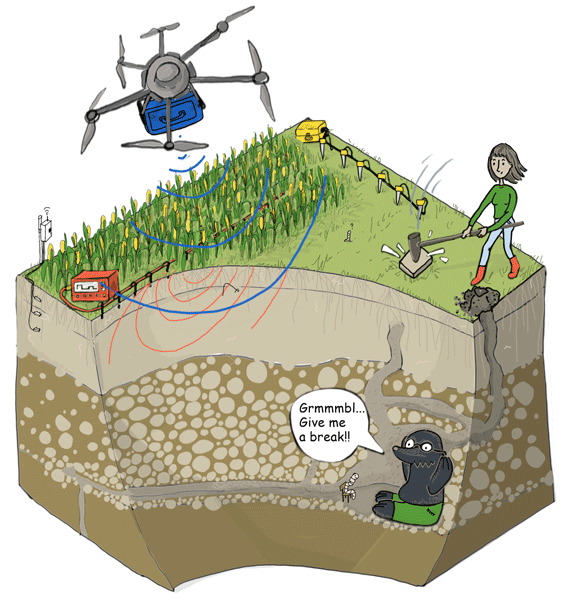
Agrogeophysics harnesses geophysical methods for non-invasive, multiscale mapping and monitoring of soil properties and processes in the plant-soil-atmosphere continuum, which are responsible for climate regulation, food production and water security. Here, we present an overview of advances in Agrogeophysics in the last decade and discuss how the contributions to the Special Issue “Agrogeophysics: Illuminating soil’s hidden dimensions” help addressing agricultural and environmental challenges.
Salar Saeed Dogar, Cosimo Brogi, Dave O'Leary, Ixchel M. Hernández-Ochoa, Marco Donat, Harry Vereecken, and Johan Alexander Huisman
SOIL, 11, 655–679, https://doi.org/10.5194/soil-11-655-2025, https://doi.org/10.5194/soil-11-655-2025, 2025
Short summary
Short summary
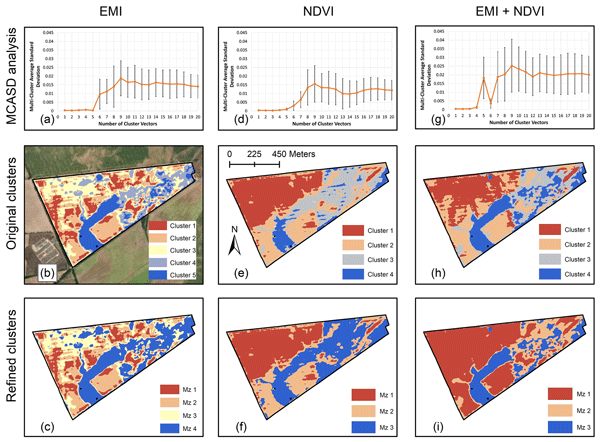
Farmers need precise information about their fields to use water, fertilizers, and other resources efficiently. This study combines underground soil data and satellite images to create detailed field maps using advanced machine learning. By testing different ways of processing data, we ensured a balanced and accurate approach. The results help farmers manage their land more effectively, leading to better harvests and more sustainable farming practices.
Alejandro Romero-Ruiz, Dave O'Leary, Dongxue Zhao, Yuxin Wu, and Sarah Garré
SOIL, 11, 1041–1051, https://doi.org/10.5194/soil-11-1041-2025, https://doi.org/10.5194/soil-11-1041-2025, 2025
Short summary
Short summary
Agrogeophysics harnesses geophysical methods for non-invasive, multiscale mapping and monitoring of soil properties and processes in the plant-soil-atmosphere continuum, which are responsible for climate regulation, food production and water security. Here, we present an overview of advances in Agrogeophysics in the last decade and discuss how the contributions to the Special Issue “Agrogeophysics: Illuminating soil’s hidden dimensions” help addressing agricultural and environmental challenges.
Salar Saeed Dogar, Cosimo Brogi, Dave O'Leary, Ixchel M. Hernández-Ochoa, Marco Donat, Harry Vereecken, and Johan Alexander Huisman
SOIL, 11, 655–679, https://doi.org/10.5194/soil-11-655-2025, https://doi.org/10.5194/soil-11-655-2025, 2025
Short summary
Short summary
Farmers need precise information about their fields to use water, fertilizers, and other resources efficiently. This study combines underground soil data and satellite images to create detailed field maps using advanced machine learning. By testing different ways of processing data, we ensured a balanced and accurate approach. The results help farmers manage their land more effectively, leading to better harvests and more sustainable farming practices.
Mariana P. Silva, Mark G. Healy, and Laurence Gill
Biogeosciences, 21, 3143–3163, https://doi.org/10.5194/bg-21-3143-2024, https://doi.org/10.5194/bg-21-3143-2024, 2024
Short summary
Short summary
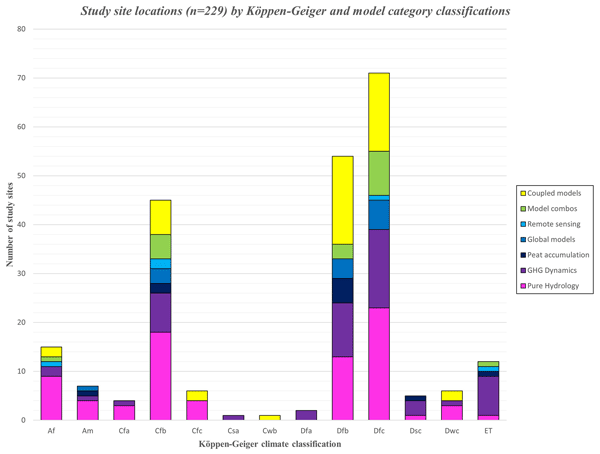
Peatland restoration combats climate change and protects ecosystem health in many northern regions. This review gathers data about models used on northern peatlands to further envision their application in the specific scenario of restoration. A total of 211 papers were included in the review: location trends for peatland modelling were catalogued, and key themes in model outputs were highlighted. Valuable context is provided for future efforts in modelling the peatland restoration process.
Cited articles
Adetsu, D. V., Koganti, T., Petersen, R. J., Pedersen, J. B., Zak, D., Greve, M. H., and Beucher, A.: Sensor-based peat thickness mapping of a cultivated bog in Denmark, Geoderma, 452, 117091, https://doi.org/10.1016/j.geoderma.2024.117091, 2024.
Ahmad, S., Liu, H., Alam, S., Günther, A., Jurasinski, G., and Lennartz, B.: Meteorological Controls on Water Table Dynamics in Fen Peatlands Depend on Management Regimes, Frontiers in Earth Science, 9, https://doi.org/10.3389/feart.2021.630469, 2021.
Altdorff, D., Bechtold, M., Van Der Kruk, J., Vereecken, H., and Huisman, J. A.: Mapping peat layer properties with multi-coil offset electromagnetic induction and laser scanning elevation data, Geoderma, 261, 178–189, https://doi.org/10.1016/j.geoderma.2015.07.015, 2016.
Baird, A. J. and Low, R. G.: The water table: Its conceptual basis, its measurement and its usefulness as a hydrological variable, Hydrol. Process., 36, e14622, https://doi.org/10.1002/hyp.14622, 2022.
Binley, A., Hubbard, S., Huisman, J., Revil, A., Robinson, D., Singha, K., and Slater, L.: The emergence of hydrogeophysics for improved understanding of subsurface processes over multiple scales, Water Resources Research, 51, 3837–3866, https://doi.org/10.1002/2015WR017016, 2015.
Blanchy, G., Watts, C. W., Richards, J., Bussell, J., Huntenburg, K., Sparkes, D. L., Stalham, M., Hawkesford, M. J., Whalley, W. R., and Binley, A.: Time-lapse geophysical assessment of agricultural practices on soil moisture dynamics, Vadose Zone J., 19, e20080, https://doi.org/10.1002/vzj2.20080, 2020.
Boaga, J.: The use of FDEM in hydrogeophysics: A review, Journal of Applied Geophysics, 139, 36–46, https://doi.org/10.1016/j.jappgeo.2017.02.011, 2017.
Brogi, C., Huisman, J. A., Patzold, S., Von Hebel, C., Weihermuller, L., Kaufmann, M. S., Van Der Kruk, J., and Vereecken, H.: Large-scale soil mapping using multi-configuration EMI and supervised image classification, Geoderma, 335, 133–148, https://doi.org/10.1016/j.geoderma.2018.08.001, 2019.
Corwin, D. L. and Lesch, S. M.: Apparent soil electrical conductivity measurements in agriculture, Comput. Electron. Agr., 46, 11–43, https://doi.org/10.1016/j.compag.2004.10.005, 2005.
Department of Environment and Climate Change (DECC): Climate Action Plan 2024: https://www.gov.ie/en/publication/79659-climate-action-plan-2024/ (last access: 28 July 2024), 2024.
Doolittle, J. A. and Brevik, E. C.: The use of electromagnetic induction techniques in soils studies, Geoderma, 223, 33–45, https://doi.org/10.1016/j.geoderma.2014.01.027, 2014.
EMTOMO: EM4Soil: Software for Electromagnetic Tomography, http://www.emtomo.com/home/ (last access: 28 July 2023), 2013.
EU: Nature restoration law – For people, climate, and planet, Publications Office of the European Union, https://doi.org/10.2779/86148, 2022.
Everett, M. E. and Chave, A. D.: On the physical principles underlying electromagnetic induction, Geophysics, 84, W21–W32, https://doi.org/10.1190/geo2018-0232.1, 2019.
FAO: Peatland mapping and monitoring, FAO, Rome, Italy, 82 pp., https://doi.org/10.4060/ca8200en, 2020.
Fluet-Chouinard, E., Stocker, B. D., Zhang, Z., Malhotra, A., Melton, J. R., Poulter, B., Kaplan, J. O., Goldewijk, K. K., Siebert, S., Minayeva, T., Hugelius, G., Joosten, H., Barthelmes, A., Prigent, C., Aires, F., Hoyt, A. M., Davidson, N., Finlayson, C. M., Lehner, B., Jackson, R. B., and Mcintyre, P. B.: Extensive global wetland loss over the past three centuries, Nature, 614, 281–286, https://doi.org/10.1038/s41586-022-05572-6, 2023.
Fossitt, J. A. and Heritage, C.: A Guide to Habitats in Ireland, Heritage Council of Ireland series, Heritage Council/Chomhairle Oidhreachta, https://www.npws.ie/sites/default/files/publications/pdf/A Guide to Habitats in Ireland - Fossitt.pdf (last access: 2 December 2025), 2000.
Galvin, L. F.: Physical-Properties of Irish Peats, Irish J. Agr. Res., 15, 207–221, http://www.jstor.org/stable/25555820 (last access: 2 December 2025), 1976.
Garré, S., Hyndman, D., Mary, B., and Werban, U.: Geophysics conquering new territories: The rise of “agrogeophysics”, Vadose Zone J., 20, e20115, https://doi.org/10.1002/vzj2.20115, 2021.
GF Instruments: CMD Electromagnetic conductivity meter user manual V. 1.5 & 2.1: http://www.gfinstruments.cz/index.php?menu=gi&cont=cmd_ov, last access: 1 August 2023.
Gilet, L., Morley, T. R., Flynn, R., and Connolly, J.: An adaptive mapping framework for the management of peat soils: A new Irish peat soils map, Geoderma, 447, 116933, https://doi.org/10.1016/j.geoderma.2024.116933, 2024.
Habib, W. and Connolly, J.: A national-scale assessment of land use change in peatlands between 1989 and 2020 using Landsat data and Google Earth Engine – a case study of Ireland, Regional Environmental Change, 23, 124, https://doi.org/10.1007/s10113-023-02116-0, 2023.
Heller, S., Tiemeyer, B., Oehmke, W., Gatersleben, P., and Dettmann, U.: Wetter, but not wet enough – Limited greenhouse gas mitigation effects of subsurface irrigation and blocked ditches in an intensively cultivated grassland on fen peat, Agricultural and Forest Meteorology, 362, 110367, https://doi.org/10.1016/j.agrformet.2024.110367, 2025.
Henrion, M., Li, Y., Koganti, T., Bechtold, M., Jonard, F., Opfergelt, S., Vanacker, V., Van Oost, K., and Lambot, S.: Mapping and monitoring peatlands in the Belgian Hautes Fagnes: Insights from Ground-penetrating radar and Electromagnetic induction characterization, Geoderma Regional, 37, e00795, https://doi.org/10.1016/j.geodrs.2024.e00795, 2024.
Holden, J.: Peatland hydrology and carbon release: why small-scale process matters, Philosophical Transactions of the Royal Society A: Mathematical, Physical and Engineering Sciences, 363, 2891–2913, https://doi.org/10.1098/rsta.2005.1671, 2005.
Huth, N. I. and Poulton, P. L.: An electromagnetic induction method for monitoring variation in soil moisture in agroforestry systems, Aust. J. Soil Res., 45, 63–72, https://doi.org/10.1071/SR06093, 2007.
Kaufman, L.: Finding groups in data an introduction to cluster analysis, Wiley-Interscience, Hoboken, N.J., https://doi.org/10.1002/9780470316801, 2005.
Koch, J., Elsgaard, L., Greve, M. H., Gyldenkærne, S., Hermansen, C., Levin, G., Wu, S., and Stisen, S.: Water-table-driven greenhouse gas emission estimates guide peatland restoration at national scale, Biogeosciences, 20, 2387–2403, https://doi.org/10.5194/bg-20-2387-2023, 2023.
Koganti, T., Narjary, B., Zare, E., Pathan, A. L., Huang, J., and Triantafilis, J.: Quantitative mapping of soil salinity using the DUALEM-21S instrument and EM inversion software, Land Degrad. Dev., 29, 1768–1781, https://doi.org/10.1002/ldr.2973, 2018.
Kohonen, T.: Essentials of the self-organizing map, Neural Networks, 37, 52–65, https://doi.org/10.1016/j.neunet.2012.09.018, 2013.
Lindsay, R.: Peatbogs and carbon: a critical synthesis to inform policy developmentin oceanic peat bog conservation and restoration in the context of climate change, RSPB Scotland, https://www.iucn-uk-peatlandprogramme.org/sites/default/files/2024-03/Peatbogs_and_carbon.pdf (last access: 2 December 2025), 2010.
Lourenco, M., Fitchett, J. M., and Woodborne, S.: Peat definitions: A critical review, Progress in Physical Geography: Earth and Environment, https://doi.org/10.1177/03091333221118353, 2022.
McNeill, J. D.: Electromagnetic terrain conductivity measurement at low induction numbers, Geonics Technical Note TN-6, https://geonics.com/pdfs/technicalnotes/tn6.pdf (last access: 28 July 2024), 1980.
Met Eireann: Climate Statement for Summer 2024, https://www.met.ie/climate-statement-for-summer-2024 (last access: 28 July 2025), 2024.
Met Eireann: Climate Statement for Winter 2024/2025, https://www.met.ie/ga/climate-statement-for-winter-2024-2025 (last access: 28 July 2025), 2025.
Minasny, B., Adetsu, D. V., Aitkenhead, M., Artz, R. R. E., Baggaley, N., Barthelmes, A., Beucher, A., Caron, J., Conchedda, G., Connolly, J., Deragon, R., Evans, C., Fadnes, K., Fiantis, D., Gagkas, Z., Gilet, L., Gimona, A., Glatzel, S., Greve, M. H., Habib, W., Hergoualc'h, K., Hermansen, C., Kidd, D. B., Koganti, T., Kopansky, D., Large, D. J., Larmola, T., Lilly, A., Liu, H., Marcus, M., Middleton, M., Morrison, K., Petersen, R. J., Quaife, T., Rochefort, L., Rudiyanto, Toca, L., Tubiello, F. N., Weber, P. L., Weldon, S., Widyatmanti, W., Williamson, J., and Zak, D.: Mapping and monitoring peatland conditions from global to field scale, Biogeochemistry, https://doi.org/10.1007/s10533-023-01084-1, 2023.
Minsley, B. J., Smith, B. D., Hammack, R., Sams, J. I., and Veloski, G.: Calibration and filtering strategies for frequency domain electromagnetic data, Journal of Applied Geophysics, 80, 56–66, https://doi.org/10.1016/j.jappgeo.2012.01.008, 2012.
Moghadas, D., Jadoon, K. Z., and Mccabe, M. F.: Spatiotemporal monitoring of soil water content profiles in an irrigated field using probabilistic inversion of time-lapse EMI data, Advances in Water Resources, 110, 238–248, https://doi.org/10.1016/j.advwatres.2017.10.019, 2017.
Monteiro, A., Santos, S., and Gonçalves, P.: Precision Agriculture for Crop and Livestock Farming-Brief Review, Animals, https://doi.org/10.3390/ani11082345, 2021.
Monteverde, S., Healy, M. G., O'leary, D., Daly, E., and Callery, O.: Management and rehabilitation of peatlands: The role of water chemistry, hydrology, policy, and emerging monitoring methods to ensure informed decision making, Ecological Informatics, 69, 101638, https://doi.org/10.1016/j.ecoinf.2022.101638, 2022.
O'Leary, D., Brown, C., Healy, M. G., Regan, S., and Daly, E.: Observations of intra-peatland variability using multiple spatially coincident remotely sensed data sources and machine learning, Geoderma, 430, 116348, https://doi.org/10.1016/j.geoderma.2023.116348, 2023.
O'Leary, D., Brogi, C., Brown, C., Tuohy, P., and Daly, E.: Linking electromagnetic induction data to soil properties at field scale aided by neural network clustering, Frontiers in Soil Science, 4, https://doi.org/10.3389/fsoil.2024.1346028, 2024.
O'Leary, D., Brown, C., Hodgson, J., Connolly, J., Gilet, L., Tuohy, P., Fenton, O., and Daly, E.: Airborne radiometric data for digital soil mapping of peat at broad and local scales, Geoderma, 453, 117129, https://doi.org/10.1016/j.geoderma.2024.117129, 2025.
Page, S. E. and Baird, A. J.: Peatlands and Global Change: Response and Resilience, Annu. Rev. Env. Resour., 41, 35–57, https://doi.org/10.1146/annurev-environ-110615-085520, 2016.
Pierce, H., Fenton, O., Daly, E., Shnel, A., O'leary, D., Healy, M. G., and Tuohy, P.: Assessing localised rainfall and water table depth relationships in agricultural grassland peat soils, Science of The Total Environment, 994, 180074, https://doi.org/10.1016/j.scitotenv.2025.180074, 2025.
Price, J., Heathwaite, A., and Baird, A.: Hydrological processes in abandoned and restored peatlands: an overview of management approaches, Wetlands Ecology and Management, 11, 65–83, https://doi.org/10.1023/A:1022046409485, 2003.
Ramsar: Resolution XIII.13, Restoration of degraded peatlands to mitigate and adapt to climate change and enhance biodiversity and disaster risk, “Wetlands for a Sustainable Urban Future” Dubai, United Arab Emirates, 21–29 October 2018, 13th Meeting of the Conference of the Contracting Parties to the Ramsar Convention on Wetlands, https://redd.unfccc.int/uploads/2_230_xiii.13_peatland_restoration_e.pdf (last access: 2 December 2025), 2018.
Romero-Ruiz, A., O'leary, D., Daly, E., Tuohy, P., Milne, A., Coleman, K., and Whitmore, A. P.: An agrogeophysical modelling framework for the detection of soil compaction spatial variability due to grazing using field-scale electromagnetic induction data, Soil Use and Management, 40, e13039, https://doi.org/10.1111/sum.13039, 2024.
Sasaki, Y.: Full 3-D inversion of electromagnetic data on PC, Journal of Applied Geophysics, 46, 45–54, https://doi.org/10.1016/S0926-9851(00)00038-0, 2001.
Stachowicz, M., Lyngstad, A., Osuch, P., and Grygoruk, M.: Hydrological Response to Rewetting of Drained Peatlands – A Case Study of Three Raised Bogs in Norway, Land, https://doi.org/10.3390/land14010142, 2025.
Strack, M., Davidson, S. J., Hirano, T., and Dunn, C.: The Potential of Peatlands as Nature-Based Climate Solutions, Current Climate Change Reports, 8, 71–82, https://doi.org/10.1007/s40641-022-00183-9, 2022.
Tailte Éireann: National Land Cover Map: https://www.epa.ie/our-services/monitoring--assessment/assessment/mapping/national-land-cover-map/ (last access: 2 February 2025), 2023.
Teagasc: ReWET, https://sites.google.com/view/rewet (last access: 10 April 2024), 2023.
Tuohy, P., O' Sullivan, L., Bracken, C. J., and Fenton, O.: Drainage status of grassland peat soils in Ireland: Extent, efficacy and implications for GHG emissions and rewetting efforts, Journal of Environmental Management, 344, 118391, https://doi.org/10.1016/j.jenvman.2023.118391, 2023.
UNEP: Global Peatlands Assessment – The State of the World's Peatlands: Evidence for action toward the conservation, restoration, and sustainable management of peatlands. Main Report, United Nations Environment Programme, Nairobi, https://wedocs.unep.org/bitstream/handle/20.500.11822/41222/peatland_assessment.pdf?sequence=1&isAllowed=y (last access: 2 December 2025), 2022.
UNFCCC: The Paris Agreement, United Nations Framework Convention on Climate Change, https://unfccc.int/documents/184656 (last access: 2 December 2025), 2018.
VanWalt: Peat Probes, https://www.vanwalt.com/equipment/peat-probes/ (last access: 10 April 2024), 2023a.
VanWalt: Russian Auger, https://www.vanwalt.com/equipment/russian-peat-corer-set/ (last access: 1 July 2024), 2023b.
VanWalt: Seametrics LevelSCOUT Smart Sensor, https://www.vanwalt.com/equipment/levelscout/ (last access: 28 January 2025), 2025a.
VanWalt: GroPoint Profile, https://www.vanwalt.com/equipment/gropoint-profile/ (last access: 28 January 2025), 2025b.
Von Hebel, C., Rudolph, S., Mester, A., Huisman, J. A., Kumbhar, P., Vereecken, H., and Van Der Kruk, J.: Three-dimensional imaging of subsurface structural patterns using quantitative large-scale multiconfiguration electromagnetic induction data, Water Resources Research, 50, 2732–2748, https://doi.org/10.1002/2013WR014864, 2014.
Von Hebel, C., Matveeva, M., Verweij, E., Rademske, P., Kaufmann, M. S., Brogi, C., Vereecken, H., Rascher, U., and Van Der Kruk, J.: Understanding Soil and Plant Interaction by Combining Ground-Based Quantitative Electromagnetic Induction and Airborne Hyperspectral Data, Geophysical Research Letters, 45, 7571–7579, https://doi.org/10.1029/2018GL078658, 2018.
Wang, Y., Ksienzyk, A. K., Liu, M., and Brönner, M.: Multigeophysical data integration using cluster analysis: assisting geological mapping in Trøndelag, Mid-Norway, Geophys. J. Int., 225, 1142–1157, https://doi.org/10.1093/gji/ggaa571, 2021.
Wilson, D., Blain, D., Couwenberg, J., Evans, C. D., Murdiyarso, D., Page, S. E., Renou-Wilson, F., Rieley, J. O., Sirin, A., Strack, M., and Tuittila, E. S.: Greenhouse gas emission factors associated with rewetting of organic soils, Mires Peat, 17, https://doi.org/10.19189/MaP.2016.OMB.222, 2016.
Xu, J. R., Morris, P. J., Liu, J. G., and Holden, J.: PEATMAP: Refining estimates of global peatland distribution based on a meta-analysis, Catena, 160, 134–140, https://doi.org/10.1016/j.catena.2017.09.010, 2018.
YSI: Professional Plus (Pro Plus) Multiparameter Instrument, https://www.ysi.com/proplus?srsltid=AfmBOopf0n-IERY9OtOittyBYt746fkxso2VJyTuD18ARPECc9yi80zw (last access: 20 January 2025), 2025.
Short summary
We assess the impact of open drain damming to help restore drained peat soils. We measured how water levels and soil moisture changed over time and space using field sensors and geophysical mapping tools. Our results show that the impact of damming is limited to < 20 m on our site. This approach could support efforts to reduce carbon loss and improve the health of peatland landscapes in a practical, scalable way.
We assess the impact of open drain damming to help restore drained peat soils. We measured how...


Special issue