Articles | Volume 12, issue 2
https://doi.org/10.5194/soil-12-1241-2026
© Author(s) 2026. This work is distributed under
the Creative Commons Attribution 4.0 License.
https://doi.org/10.5194/soil-12-1241-2026
© Author(s) 2026. This work is distributed under
the Creative Commons Attribution 4.0 License.
Teaching soil as a system: interactivity, place, plural knowledge, and AI

Raphael A. Viscarra Rossel
CORRESPONDING AUTHOR
Soil and Landscape Science, School of Molecular and Life Sciences, Curtin University, Bentley, WA 6102, Australia
ARC Training Centre Healing Country, Curtin University, Bentley, WA 6102, Australia
Lewis Walden
Soil and Landscape Science, School of Molecular and Life Sciences, Curtin University, Bentley, WA 6102, Australia
Andrea Bravo-Escobar
Soil and Landscape Science, School of Molecular and Life Sciences, Curtin University, Bentley, WA 6102, Australia
ARC Training Centre Healing Country, Curtin University, Bentley, WA 6102, Australia
Related authors
Raphael A. Viscarra Rossel, Lewis Walden, and Farid Sepanta
EGUsphere, https://doi.org/10.5194/egusphere-2026-2905, https://doi.org/10.5194/egusphere-2026-2905, 2026
Short summary
Short summary
We present a probabilistic compositional framework for farm-scale mapping of soil carbon fractions and totals with calibrated uncertainty. We combine mid-IR, probabilistic gradient-boosted trend and Bayesian SPDE spatial modelling to jointly map POC, MAOC, ROC, TOC, TIC, and TC. The framework preserves the compositional closure of the organic fractions and the mass balance between organic and inorganic carbon while propagating uncertainty from the laboratory through to spatial inference.
Yang Hu and Raphael A. Viscarra Rossel
SOIL, 12, 619–631, https://doi.org/10.5194/soil-12-619-2026, https://doi.org/10.5194/soil-12-619-2026, 2026
Short summary
Short summary
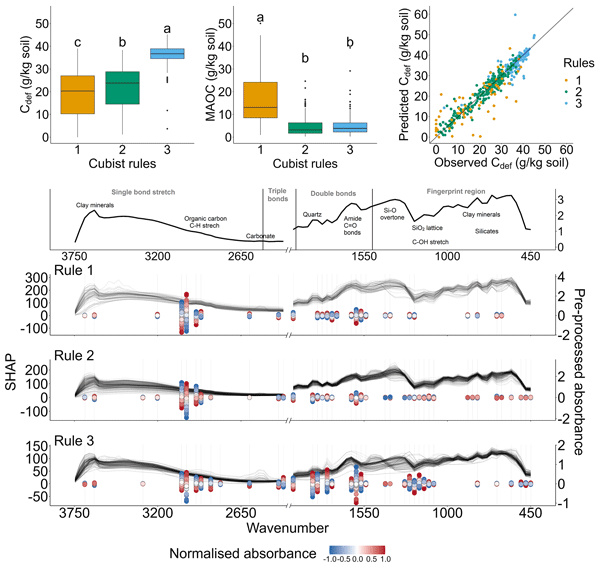
We analysed 482 Australian topsoils to estimate mineral-associated organic carbon (MAOC) and the carbon storage deficit (Cdef). Using mid-infrared spectra with explainable machine learning, we predicted MAOC (R2=0.86) and Cdef (R2=0.89). Model interpretation revealed signals from organic matter and clay minerals were most significant in predicting MAOC and Cdef. Our work provides an accurate, cost-effective means to assess and better understand the drivers of soil carbon sequestration potential.
Yang Hu, Adam Cross, Zefang Shen, Johan Bouma, and Raphael A. Viscarra Rossel
SOIL, 12, 227–252, https://doi.org/10.5194/soil-12-227-2026, https://doi.org/10.5194/soil-12-227-2026, 2026
Short summary
Short summary
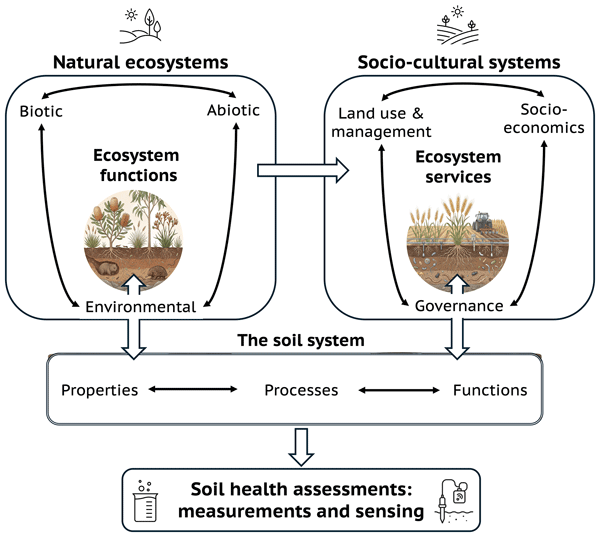
Effective management of soil health is essential to managing widespread soil degradation. Current frameworks for defining and assessing soil health are limited, focusing on agricultural contexts and relying on expensive, impractical lab analysis. Our socio-ecological framework offers a way forward, grounding soil health in ecological perspective and using modern sensing and data-driven technologies for rapid, scalable, policy-relevant assessment.
Thorsten Behrens, Karsten Schmidt, Felix Stumpf, Simon Tutsch, Marie Hertzog, Urs Grob, Armin Keller, and Raphael Viscarra Rossel
EGUsphere, https://doi.org/10.5194/egusphere-2024-2810, https://doi.org/10.5194/egusphere-2024-2810, 2024
Preprint archived
Short summary
Short summary
We integrate various methods to create soil property maps for soil surveyors, which they can utilize as a reference before beginning their fieldwork. A new sampling design based on a geographical stratification is proposed focussing on local feature space variability. It allows for a systematic analysis of predictive accuracy for varying densities. The spectral and spatial models yielded high accuracies. Our study highlights the value of integrating pedometric technologies in soil surveys.
Lingfei Wang, Gab Abramowitz, Ying-Ping Wang, Andy Pitman, and Raphael A. Viscarra Rossel
SOIL, 10, 619–636, https://doi.org/10.5194/soil-10-619-2024, https://doi.org/10.5194/soil-10-619-2024, 2024
Short summary
Short summary
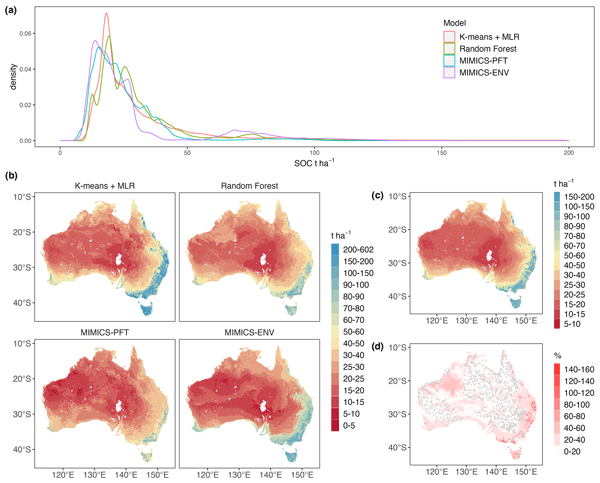
Effective management of soil organic carbon (SOC) requires accurate knowledge of its distribution and factors influencing its dynamics. We identify the importance of variables in spatial SOC variation and estimate SOC stocks in Australia using various models. We find there are significant disparities in SOC estimates when different models are used, highlighting the need for a critical re-evaluation of land management strategies that rely on the SOC distribution derived from a single approach.
Lewis Walden, Farid Sepanta, and Raphael Viscarra Rossel
EGUsphere, https://doi.org/10.5194/egusphere-2023-2464, https://doi.org/10.5194/egusphere-2023-2464, 2023
Preprint archived
Short summary
Short summary
We characterised the chemical and mineral composition of soil organic carbon fractions with mid-infrared spectroscopy. We identified unique and shared features of the spectra of carbon fractions, and the interactions between their organic and mineral components. These interactions are key to the persistence of C in soils, and we propose that mid-infrared spectroscopy could help to infer stability of soil C.
Zefang Shen, Haylee D'Agui, Lewis Walden, Mingxi Zhang, Tsoek Man Yiu, Kingsley Dixon, Paul Nevill, Adam Cross, Mohana Matangulu, Yang Hu, and Raphael A. Viscarra Rossel
SOIL, 8, 467–486, https://doi.org/10.5194/soil-8-467-2022, https://doi.org/10.5194/soil-8-467-2022, 2022
Short summary
Short summary
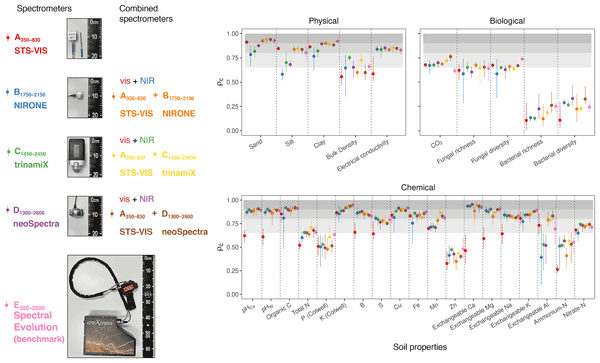
We compared miniaturised visible and near-infrared spectrometers to a portable visible–near-infrared instrument, which is more expensive. Statistical and machine learning algorithms were used to model 29 key soil health indicators. Accuracy of the miniaturised spectrometers was comparable to the portable system. Soil spectroscopy with these tiny sensors is cost-effective and could diagnose soil health, help monitor soil rehabilitation, and deliver positive environmental and economic outcomes.
Yuanyuan Yang, Zefang Shen, Andrew Bissett, and Raphael A. Viscarra Rossel
SOIL, 8, 223–235, https://doi.org/10.5194/soil-8-223-2022, https://doi.org/10.5194/soil-8-223-2022, 2022
Short summary
Short summary
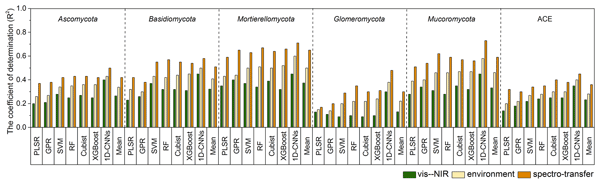
We present a new method to estimate the relative abundance of the dominant phyla and diversity of fungi in Australian soil. It uses state-of-the-art machine learning with publicly available data on soil and environmental proxies for edaphic, climatic, biotic and topographic factors, and visible–near infrared wavelengths. The estimates could serve to supplement the more expensive molecular approaches towards a better understanding of soil fungal abundance and diversity in agronomy and ecology.
Cited articles
Aikenhead, G. S. and Ogawa, M.: Indigenous knowledge and science revisited, Cultural Studies of Science Education, 2, 539–620, https://doi.org/10.1007/s11422-007-9067-8, 2007. a
Al-Ismaily, S., Umarova, A., and Bouma, J.: Reforming soil science curricula for a data-driven and digital discipline, Spanish Journal of Soil Science, https://doi.org/10.3389/sjss.2025.15173, 2025. a
Barnhardt, R. and Kawagley, A. O.: Indigenous Knowledge Systems and Alaska Native Ways of Knowing, Anthropology and Education Quarterly, 36, 8–23, https://doi.org/10.1525/aeq.2005.36.1.008, 2005. a
Bearman, M., Tai, J., Dawson, P., Boud, D., and Ajjawi, R.: Developing evaluative judgement for a time of generative artificial intelligence, Assessment and Evaluation in Higher Education, 49, 893–905, https://doi.org/10.1080/02602938.2024.2335321, 2024. a
Biggs, J.: Enhancing teaching through constructive alignment, High. Educ., 32, 347–364, https://doi.org/10.1007/BF00138871, 1996. a
Bonyhady, T. and Griffiths, T.: Words for Country: Landscape and Language in Australia, UNSW Press, Sydney, Australia, ISBN 9780868406282, 2002. a
Davey, S. K., Birbeck, D., Nallaya, S., Sallows, G., and Della Vedova, C. B.: Utilising one-on-one interactive oral assessments as the major final assessment within a bioscience course, Assessment and Evaluation in Higher Education, 50, 1154–1171, https://doi.org/10.1080/02602938.2025.2502577, 2025. a, b
Deslandes, C., Deslandes, S., Broun, D., Hugh, C., Walsh, F., Bradshaw, F., and Griffith, J.: Two-Way Science: An Integrated Learning Program for Aboriginal Desert Schools, CSIRO Publishing, Melbourne, ISBN 9781486313143, 2019. a
Eachempati, P., Komattil, R., and Arakala, A.: Should oral examination be reimagined in the era of AI?, Adv. Physiol. Educ., 49, 208–209, https://doi.org/10.1152/advan.00191.2024, 2025. a
Elshall, A. and Badir, A.: Balancing AI-assisted learning and traditional assessment: the FACT assessment in environmental data science education, Frontiers in Education, https://doi.org/10.3389/feduc.2025.1596462, 2025. a
Field, D., Yates, D., Koppi, A., McBratney, A., and Jarrett, L.: Framing a modern context of soil science learning and teaching, Geoderma, 289, 117–123, https://doi.org/10.1016/j.geoderma.2016.11.034, 2017. a
Field, D. J., Koppi, A. J., Jarrett, L. E., Abbott, L. K., Cattle, S. R., Grant, C. D., McBratney, A. B., Menzies, N. W., and Weatherley, A. J.: Soil science teaching principles, Geoderma, 167–168, 9–14, https://doi.org/10.1016/j.geoderma.2011.09.017, 2011. a
Finkelstein, N., Adams, W., Keller, C., Kohl, P., Perkins, K., Podolefsky, N., Reid, S., and LeMaster, R.: When learning about the real world is better done virtually: a study of substituting computer simulations for laboratory equipment, Phys. Rev. Spec. Top.-Ph., 1, https://doi.org/10.1103/PhysRevSTPER.1.010103, 2005. a
Freeman, S., Eddy, S., McDonough, M., Smith, M., Okoroafor, N., Jordt, H., and Wenderoth, M.: Active learning increases student performance in science, engineering, and mathematics, P. Natl. Acad. Sci. USA, 111, 8410–8415, https://doi.org/10.1073/pnas.1319030111, 2014. a
Gannon, J. and McGuire, K.: An interactive web application helps students explore water balance concepts, Frontiers in Education, 7, 873196, https://doi.org/10.3389/feduc.2022.873196, 2022. a
Hairiah, K., Fiantis, D., Utami, S. R., Nurbaity, A., Utami, S. N. H., Ginting, F. I., Ariyanto, D. P., Nurcholis, M., Minasny, B., and van Noordwijk, M.: Hundred fifty years of soil security research in Indonesia: shifting topics, modes of research and gender balance, Soil Security, 6, 100049, https://doi.org/10.1016/j.soisec.2022.100049, 2022. a
Hake, R.: Interactive-engagement versus traditional methods: a six-thousand-student survey of mechanics test data for introductory physics courses, Am. J. Phys., 66, 64–74, https://doi.org/10.1119/1.18809, 1998. a
Hartemink, A. E., McBratney, A., and Minasny, B.: Trends in soil science education: looking beyond the number of students, J. Soil Water Conserv., 63, 76A–83A, https://doi.org/10.2489/jswc.63.3.76A, 2008. a
Hartemink, A. E., Balks, M. R., Chen, Z.-S., Drohan, P., Field, D. J., Krasilnikov, P., Lowe, D. J., Rabenhorst, M., van Rees, K., Schad, P., Schipper, L. A., Sonneveld, M., and Walter, C.: The joy of teaching soil science, Geoderma, 217–218, 1–9, https://doi.org/10.1016/j.geoderma.2013.10.016, 2014. a, b, c
Havlin, J., Balster, N., Chapman, S., Ferris, D., Thompson, T., and Smith, T.: Trends in soil science education and employment, Soil Sci. Soc. Am. J., 74, 1429–1432, https://doi.org/10.2136/sssaj2010.0143, 2010. a
Holder, L., Scherer, H., and Herbert, B.: Student learning of complex Earth systems: a model to guide development of student expertise in problem-solving, Journal of Geoscience Education, 65, 490–505, https://doi.org/10.5408/17-261.1, 2017. a
Huxham, M., Campbell, F., and Westwood, J.: Oral versus written assessments: a test of student performance and attitudes, Assessment and Evaluation in Higher Education, 37, 125–136, https://doi.org/10.1080/02602938.2010.515012, 2012. a
IUSS Working Group WRB: World Reference Base for Soil Resources: International Soil Classification System for Naming Soils and Creating Legends for Soil Maps, International Union of Soil Sciences (IUSS), Vienna, Austria, 4 edn., https://wrb.isric.org/files/WRB_fourth_edition_2022-12-18.pdf (last access: 25 November 2026), 2022. a
Kastens, K. A. and Manduca, C. A.: Using Systems Thinking in the Design, Implementation, and Evaluation of Complex Educational Innovations, with Examples from the InTeGrate Project, Journal of Geoscience Education, 65, 219–230, https://doi.org/10.5408/16-225.1, 2017. a
Krzic, M., Bidulock, A., Crowley, C., Dampier, D., Dyanatkar, S., Hazzi, M., Hoffman, K., Nolin, D., Simili, R., Titus, B., and Utzig, G.: Virtual soil monoliths: blending traditional and web-based educational approaches, Natural Sciences Education, 42, 1–7, https://doi.org/10.4195/nse.2012.0014, 2013. a
Lally, D., Forbes, C. T., McNeal, K. S., and Soltis, N. A.: National geoscience faculty survey 2016: prevalence of systems thinking and scientific modeling learning opportunities, Journal of Geoscience Education, 67, 174–191, https://doi.org/10.1080/10899995.2019.1565286, 2019. a
Long, D. and Magerko, B.: What is AI Literacy? Competencies and Design Considerations, in: Proceedings of the 2020 CHI Conference on Human Factors in Computing Systems, https://doi.org/10.1145/3313831.3376727, 1–16, 2020. a
Lull Noguera, C., Moreno Ramón, H., and Roca Perez, L.: Editorial: teaching and researching in soil science, Spanish Journal of Soil Science, 16, https://doi.org/10.3389/sjss.2026.16650, 2026. a
Perkins, M., Furze, L., Roe, J., and MacVaugh, J.: The artificial intelligence assessment scale (AIAS): a framework for ethical integration of generative AI in educational assessment, Journal of University Teaching and Learning Practice, 21, https://doi.org/10.53761/q3azde36, 2024. a
Rutten, N., van Joolingen, W., and van der Veen, J.: The learning effects of computer simulations in science education, Computers and Education, 58, 136–153, https://doi.org/10.1016/j.compedu.2011.07.017, 2012. a
Scherer, H., Holder, L., and Herbert, B.: Student learning of complex Earth systems: conceptual frameworks of Earth systems and instructional design, Journal of Geoscience Education, 65, 473–489, https://doi.org/10.5408/16-208.1, 2017. a
Schulze, D. G., Rahmani, S. R., Minai, J. O., Johnston, C. T., Fulk-Bringman, S. S., Scott, J. R., Kong, N. N., Li, Y. S. and Mashtare Jr., M. L.: Virtualizing soil science field trips, Natural Sciences Education, 50, e20046, https://doi.org/10.1002/nse2.20046, 2021. a
Semken, S.: Sense of place and place-based introductory geoscience teaching for American Indian and Alaska Native undergraduates, Journal of Geoscience Education, 53, 149–157, https://doi.org/10.5408/1089-9995-53.2.149, 2005. a
Tai, J., Ajjawi, R., Boud, D., Dawson, P., and Panadero, E.: Developing evaluative judgement: enabling students to make decisions about the quality of work, High. Educ., 76, 467–481, https://doi.org/10.1007/s10734-017-0220-3, 2017. a
Toolin, R. and Blouin, M.: Place as context, place as inquiry: a phenomenographic study of teachers' conceptions of place-based education in the CZ-CREST program, Journal of Geoscience Education, 73, 402–413, https://doi.org/10.1080/10899995.2025.2530763, 2025. a, b
Villa, M., Fahlbeck, L., and Barron, D.: Survey of soil science higher education across Europe, Eur. J. Soil Sci., 76, e70112, https://doi.org/10.1111/ejss.70112, 2025. a
Wang, N., Stern, R. J., and Waite, L.: Workflow for designing instructional videos to support place-based geoscience education for geoscience majors, Journal of Geoscience Education, 71, 107–125, https://doi.org/10.1080/10899995.2022.2093543, 2022. a
Ward, M., O'Riordan, F., Logan-Fleming, D., Cooke, D., Concannon-Gibney, T., Efthymiou, M., and Watkins, N.: Interactive oral assessment case studies: an innovative, academically rigorous, authentic assessment approach, Innovations in Education and Teaching International, https://doi.org/10.1080/14703297.2023.2251967, 2023. a
White, T., Wymore, A., Dere, A., Hoffman, A., Washburne, J., and Conklin, M.: Integrated interdisciplinary science of the critical zone as a foundational curriculum for addressing issues of environmental sustainability, Journal of Geoscience Education, 65, 136–145, https://doi.org/10.5408/16-171.1, 2017. a
Wiggins, G. and McTighe, J.: Understanding by Design, ASCD, Alexandria, VA, 2nd edn., ISBN 9781416600350, 2005. a
Short summary
Reasoning about soil as a coupled system is central to graduate training, but is being squeezed out as soil science moves into broader degrees without dedicated specialists. Accessible LLMs make this harder to ignore. We propose four principles for undergraduate teaching: interactivity, place, plural knowledge, and AI discernment, delivered via interactive models, landscape comparisons, Two-Way knowledge, and AI interrogation. Assessment integrates these into place-specific reasoning.
Reasoning about soil as a coupled system is central to graduate training, but is being squeezed...
Altmetrics
Final-revised paper
Preprint