
Articles | Volume 12, issue 2
https://doi.org/10.5194/soil-12-1101-2026
© Author(s) 2026. This work is distributed under
the Creative Commons Attribution 4.0 License.
the Creative Commons Attribution 4.0 License.
https://doi.org/10.5194/soil-12-1101-2026
© Author(s) 2026. This work is distributed under
the Creative Commons Attribution 4.0 License.
the Creative Commons Attribution 4.0 License.
Original research article
| 
05 Nov 2026
Original research article |
| 05 Nov 2026
| 05 Nov 2026
Effects of moss restoration on topsoil water dynamics in a temperate vineyard
Silvana Oldenburg
CORRESPONDING AUTHOR

Soil Science and Geomorphology, Department of Geosciences, University of Tübingen, Rümelinstr. 19–23, 72070 Tübingen, Germany
Martin Nebel
Nees Institute for Biodiversity of Plants, University of Bonn, Meckenheimer Allee 170, 53115 Bonn, Germany
Steffen Seitz
Soil Science and Geomorphology, Department of Geosciences, University of Tübingen, Rümelinstr. 19–23, 72070 Tübingen, Germany
Physical Geography, Institute of Geography, Osnabrück University, Seminarstr. 19, 49074 Osnabrück, Germany
Corinna Gall
Soil Science and Geomorphology, Department of Geosciences, University of Tübingen, Rümelinstr. 19–23, 72070 Tübingen, Germany
Related authors
Corinna Gall, Silvana Oldenburg, Martin Nebel, Thomas Scholten, and Steffen Seitz
SOIL, 11, 199–212, https://doi.org/10.5194/soil-11-199-2025, https://doi.org/10.5194/soil-11-199-2025, 2025
Short summary
Short summary
Soil erosion is a major issue in vineyards due to often steep slopes and fallow interlines. While cover crops are typically used for erosion control, moss restoration has not yet been explored. In this study, moss restoration reduced surface runoff by 71.4 % and sediment discharge by 75.8 % compared with bare soil, similar to cover crops. Mosses could serve as ground cover where mowing is impractical, potentially reducing herbicide use in viticulture, although further research is needed.
Rabindra Adhikari, Jan Huber, Amrit Maharjan, Madhavi Parajuli, Corinna Gall, Steffen Seitz, Chandra Kanta Subedi, Niels Schwab, Ram Prasad Chaudhary, Udo Schickhoff, Jürgen Böhner, Yvonne Oelmann, and Thomas Scholten
EGUsphere, https://doi.org/10.5194/egusphere-2026-3815, https://doi.org/10.5194/egusphere-2026-3815, 2026
Short summary
Short summary
Mountain treeline ecosystems are highly sensitive to climate change, yet the role of soil microbes remains poorly understood. We investigated microbial biomass and soil nutrients across a near-natural Himalayan treeline ecotone in Nepal. Our results show that soil horizon development and altitudinal-vegetation zonation are stronger controls on microbial biomass than bulk soil nutrient concentrations, providing new insights into nutrient cycling in mountain soils.
Madhavi Parajuli, Rabindra Adhikari, Xiaoxia Yang, Luisa Brosch, Nadja Fürst, Thomas Scholten, Steffen Seitz, and Corinna Gall
EGUsphere, https://doi.org/10.5194/egusphere-2026-4029, https://doi.org/10.5194/egusphere-2026-4029, 2026
Short summary
Short summary
We studied how moss growing on forest soils influences long-term carbon storage in two temperate forests in Germany. By separating soil into different organic matter components, we found that moss can increase the amount of carbon held in the most stable form, especially in coniferous forests. These findings show that moss plays an important role in helping forests store carbon and should be considered in forest carbon assessments and climate change research.
Raquel N. R. Falcão, Josef Krása, Martin Neumann, Jan-František Kubát, Corinna Gall, and Steffen Seitz
EGUsphere, https://doi.org/10.5194/egusphere-2025-5908, https://doi.org/10.5194/egusphere-2025-5908, 2026
Preprint archived
Short summary
Short summary
We tested five tools that simulate rainfall to study how water affects soil. Because these tools differ in size and performance, we measured how evenly they spray and how strong the falling drops are. We found that each tool produces distinct rain patterns, but all can support soil studies when properly checked. Our work helps researchers choose practical and reliable equipment, especially when working in remote locations.
Corinna Gall, Silvana Oldenburg, Martin Nebel, Thomas Scholten, and Steffen Seitz
SOIL, 11, 199–212, https://doi.org/10.5194/soil-11-199-2025, https://doi.org/10.5194/soil-11-199-2025, 2025
Short summary
Short summary
Soil erosion is a major issue in vineyards due to often steep slopes and fallow interlines. While cover crops are typically used for erosion control, moss restoration has not yet been explored. In this study, moss restoration reduced surface runoff by 71.4 % and sediment discharge by 75.8 % compared with bare soil, similar to cover crops. Mosses could serve as ground cover where mowing is impractical, potentially reducing herbicide use in viticulture, although further research is needed.
Wanjun Zhang, Thomas Scholten, Steffen Seitz, Qianmei Zhang, Guowei Chu, Linhua Wang, Xin Xiong, and Juxiu Liu
Hydrol. Earth Syst. Sci., 28, 3837–3854, https://doi.org/10.5194/hess-28-3837-2024, https://doi.org/10.5194/hess-28-3837-2024, 2024
Short summary
Short summary
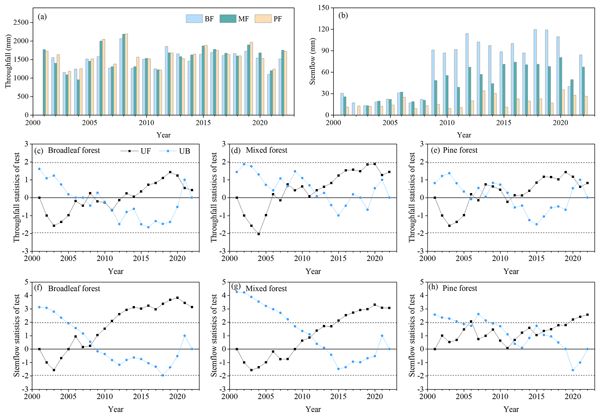
Rainfall input generally controls soil water and plant growth. We focus on rainfall redistribution in succession sequence forests over 22 years. Some changes in rainwater volume and chemistry in the throughfall and stemflow and drivers were investigated. Results show that shifted open rainfall over time and forest factors induced remarkable variability in throughfall and stemflow, which potentially makes forecasting future changes in water resources in the forest ecosystems more difficult.

Ayumi Katayama, Kazuki Nanko, Seonghun Jeong, Tomonori Kume, Yoshinori Shinohara, and Steffen Seitz
Earth Surf. Dynam., 11, 1275–1282, https://doi.org/10.5194/esurf-11-1275-2023, https://doi.org/10.5194/esurf-11-1275-2023, 2023
Short summary
Short summary
Even under forests, soil is eroded by rainfall. This is particularly true when human impact damages vegetation layers. We found that the erosion risk can be greatly increased by structural drip points at branches forming large drops under the tree canopy in the foliated and non-foliated seasons. Our measurements with sand-filled splash cups in Japanese beech forests showed drop energies up to 50 times greater than under freefall precipitation, indicating locally severe sediment detachment.
Nicolás Riveras-Muñoz, Steffen Seitz, Kristina Witzgall, Victoria Rodríguez, Peter Kühn, Carsten W. Mueller, Rómulo Oses, Oscar Seguel, Dirk Wagner, and Thomas Scholten
SOIL, 8, 717–731, https://doi.org/10.5194/soil-8-717-2022, https://doi.org/10.5194/soil-8-717-2022, 2022
Short summary
Short summary
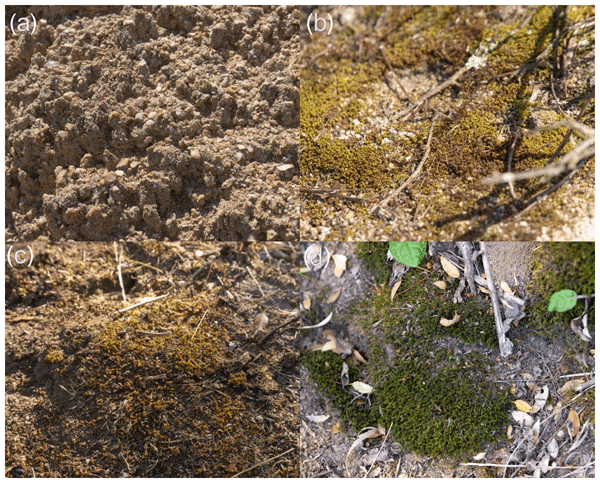
Biological soil crusts (biocrusts) stabilize the soil surface mainly in arid regions but are also present in Mediterranean and humid climates. We studied this stabilizing effect through wet and dry sieving along a large climatic gradient in Chile and found that the stabilization of soil aggregates persists in all climates, but their role is masked and reserved for a limited number of size fractions under humid conditions by higher vegetation and organic matter contents in the topsoil.
Corinna Gall, Martin Nebel, Dietmar Quandt, Thomas Scholten, and Steffen Seitz
Biogeosciences, 19, 3225–3245, https://doi.org/10.5194/bg-19-3225-2022, https://doi.org/10.5194/bg-19-3225-2022, 2022
Short summary
Short summary
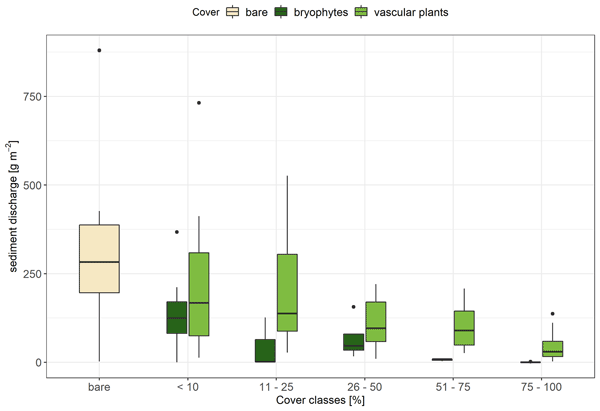
Soil erosion is one of the most serious environmental challenges of our time, which also applies to forests when forest soil is disturbed. Biological soil crusts (biocrusts) can play a key role as erosion control. In this study, we combined soil erosion measurements with vegetation surveys in disturbed forest areas. We found that soil erosion was reduced primarily by pioneer bryophyte-dominated biocrusts and that bryophytes contributed more to soil erosion mitigation than vascular plants.
Cited articles
Agrarmeteorologie Baden-Württemberg: Stundenwerte der Globalstrahlung und der relativen Luftfeuchtigkeit an der Wetterstation in Fellbach, Agrarmeteorologie Baden-Württemberg [data set], https://www.wetter-bw.de/Internet/AM/NotesBwAM.nsf/bwweb/353153acec539eb8c1257ca7003c1860?OpenDocument (last access: 5 September 2025), 2025a.
Agrarmeteorologie Baden-Württemberg: Stundenwerte für Lufttemperatur (2m) und Niederschlag an der Wetterstation in Fellbach, Agrarmeteorologie Baden-Württemberg [data set], https://www.wetter-bw.de/Internet/AM/NotesBwAM.nsf/bwweb/353153acec539eb8c1257ca7003c1860?OpenDocument (last access: 5 September 2025), 2025b.
Antoninka, A., Faist, A., Rodriguez-Caballero, E., Young, K. E., Chaudhary, V. B., Condon, L. A., and Pyke, D. A.: Biological soil crusts in ecological restoration: emerging research and perspectives, Restor. Ecol., 28, 150–59, https://doi.org/10.1111/rec.13201, 2020.
Atherton, I., Bosanquet, S., and Lawley, M.: Mosses and Liverworts of Britain and Ireland – A field guide, 1, British Bryological Society, Plymouth, ISBN 978-0-9561310-1-0, 2010.
Belnap, J.: The potential roles of biological soil crusts in dryland hydrologic cycles, Hydrol. Process., 20, 3159–3178, https://doi.org/10.1002/hyp.6325, 2006.
Belnap, J., Kaltenecker, J. H., Rosentreter, R., Williams, J., Leonard, S., and Eldridge, D.: Biological soil crusts: ecology and management, US Department of the Interior, Bureau of Land Management, Denver, Colorado, https://www.ars.usda.gov/ARSUserFiles/6112/biologicalSoilCrusts2.pdf (last access: 8 August 2024), 2001.
Biddoccu, M., Ferraris, S., Opsi, F., and Cavallo, E.: Longterm monitoring of soil management effects on runoff and soil erosion in sloping vineyards in Alto Monferrato (North–West Italy), Soil Till. Res., 155, 176–189, https://doi.org/10.1016/j.still.2015.07.005, 2016.
BKG (Bundesamt für Kartographie und Geodäsie): WFS Verwaltungsgebiete 1 : 2 500 000, licence: dl-de/by-2-0, https://gdz.bkg.bund.de/, last access: 23 June 2026.
Bodner, G., Loiskandl, W., Buchan, G., and Kaul, H. P.: Natural and management-induced dynamics of hydraulic conductivity along a cover-cropped field slope, Geoderma, 146, 317–325, https://doi.org/10.1016/j.geoderma.2008.05.009, 2008.
Bu, C., Wu, S., Han, F., Yang, Y., and Meng, J.: The combined effects of moss-dominated biocrusts and vegetation on erosion and soil moisture and implications for disturbance on the Loess Plateau, China, Plos One, 10, e0127394, https://doi.org/10.1371/journal.pone.0127394, 2015.
Bu, C., Li, R., Wang, C., and Bowker, M. A.: Successful field cultivation of moss biocrusts on disturbed soil surfaces in the short term, Plant Soil, 429, 227–240, https://doi.org/10.1007/s11104-017-3453-0, 2018.
Capri, C., Gatti, M., Fiorini, A., Ardenti, F., Tabaglio, V., and Poni, S.: A comparative study of fifteen cover crop species for orchard soil management: water uptake, root density traits and soil aggregate stability, Sci. Rep., 13, 721, https://doi.org/10.1038/s41598-023-27915-7, 2023.
Celette, F., Wery, J., Chantelot, E., Celette, J., and Gary, C.: Belowground interactions in a vine (Vitis vinifera L.) tall fescue (Festuca arundinacea Shreb.) intercropping system: water relations and growth, Plant Soil, 276, 205–217, https://doi.org/10.1007/s11104-005-4415-5, 2005.
Celette, F., Gaudin, R., and Gary, C.: Spatial and temporal changes to the water regime of a Mediterranean vineyard due to the adoption of cover cropping, Eur. J. Agron., 29, 153–162, https://doi.org/10.1016/j.eja.2008.05.001, 2008.
Corbin, J. D. and Thiet, R. K.: Temperate biocrusts: mesic counterparts to their better-known dryland cousins, Front. Ecol. Environ., 18, 456–464, https://doi.org/10.1002/fee.2234, 2020.
Cruz de Carvalho, R., Varela, Z., do Paço, T. A., and Branquinho, C.: Selecting potential moss species for green roofs in the Mediterranean Basin, Urban Sci., 3, 57, https://doi.org/10.3390/urbansci3020057, 2019.
Da Silva-Dias, R., Raposo-Díaz, X., García-Tomillo, A., and López-Vicente, M.: Response time of soil moisture to rain in a vineyard with permanent cover, Geoderma, 444, 116866, https://doi.org/10.1016/j.geoderma.2024.116866, 2024.
Diago, M. P.: Vineyard water management, in: Advanced Automation for Tree Fruit Orchards and Vineyards, Agriculture Automation and Control, edited by: Vougioukas, S. G. and Zhang, Q., Springer, Cham, https://doi.org/10.1007/978-3-031-26941-7_4, 2023.
Dittrich, F., Iserloh, T., Treseler, C.-H., Hüppi, R., Ogan, S., Seeger, M., and Thiele-Bruhn, S.: Crop diversification in viticulture with aromatic plants: effects of intercropping on grapevine productivity in a steep-slope vineyard in the Mosel area, Germany, Agriculture, 11, 95, https://doi.org/10.3390/agriculture11020095, 2021.
Doherty, K. D., Grover, H. S., Bowker, M. A., Durham, R. A., Antoninka, A. J., and Ramsey, P. W.: Producing moss-colonized burlap fabric in a fog chamber for restoration of biocrust, Ecol. Eng., 158, 106019, https://doi.org/10.1016/j.ecoleng.2020.106019, 2020.
Dollery, R., Bowie, M. H., and Dickinson, N. M.: The ecological importance of moss ground cover in dry shrubland restoration within an irrigated agricultural landscape matrix, Ecol. Evol., 12, e8843, https://doi.org/10.1002/ece3.8843, 2022.
Duan, J., Liu, Y.-J., Wang, L.-Y., Yang, J., Tang, C.-J., and Zheng, H.-J.: Importance of grass stolons in mitigating runoff and sediment yield under simulated rainstorms, Catena, 213, 106132, https://doi.org/10.1016/j.catena.2022.106132, 2022.
Duan, J., Wang, L., Tang, C., Liu, Y., Zheng, H., and Yang, J.: Divergent effects of grass cover on soil infiltration patterns and water recharge in orchards: Taproot vs. fibrous root systems, Soil Till. Res., 258, 107045, https://doi.org/10.1016/j.still.2025.107045, 2026.
DWD (Deutscher Wetterdienst): Deutschlandwetter im Jahr 2022 – Deutschland erlebt eines der zwei wärmsten Jahre und einen Sonnenscheinrekord, https://www.dwd.de/DE/presse/pressemitteilungen/DE/2022/20221230_deutschlandwetter_jahr2022.pdf;jsessionid=E94FDE4F6E53E8686CBAD046BDA9A0EF.live11043?__blob=publicationFile&v=3 (last access: 10 January 2026), 2022.
DWD (Deutscher Wetterdienst): Klimastatusbericht Deutschland Jahr 2022, DWD, Geschäftsbereich Klima und Umwelt, Offenbach, 27 pp., https://www.dwd.de/DE/leistungen/klimastatusbericht/publikationen/ksb_2022.pdf;jsessionid=5925C76118607CCBAB65F9BF1B2B0F9B.live11042?__blob=publicationFile&v=5 (last access: 10 January 2026), 2023a.
DWD (Deutscher Wetterdienst): Deutschlandwetter im Jahr 2023 – Erwärmungstrend hält an: 2023 mit neuem Rekord und reichlich Niederschlag, https://www.dwd.de/DE/presse/pressemitteilungen/DE/2023/20231229_deutschlandwetter_jahr2023.pdf?__blob=publicationFile&v=4 (last access: 10 January 2026), 2023b.
DWD (Deutscher Wetterdienst): Klimastatusbericht Deutschland Jahr 2023, DWD, Geschäftsbereich Klima und Umwelt, Offenbach, 27 pp., https://www.dwd.de/DE/leistungen/klimastatusbericht/klimastatusbericht.html (last access: 10 January 2026), 2024.
DWD (Deutscher Wetterdienst): Niederschlagsintensität, https://www.dwd.de/DE/service/lexikon/Functions/glossar.html?lv3=101906&lv2=101812 (last access: 10 January 2026), 2026.
Fan, J., Wang, C., Bu, C., Chen, X., Wang, H., Mo, Q., Zhang, Z., Zeng, Y., and Li, H.: Key Factors for the Rapid Cultivation of Lithophytic Moss Crusts and Preliminary Trials in the Ecological Restoration of Rocky Slopes, Land Degrad. Dev., 36, 6125–6136, https://doi.org/10.1002/ldr.70059, 2025.
Fischer, T., Kholiavko, T., Schaaf, W., and Veste, M.: Soil respiration responses of moss and lichen biocoenoses to moderate and severe rainfall events after summer drought in a temperate early-successional ecosystem, Ecohydrology, 16, e2578, https://doi.org/10.1002/eco.2578, 2023.
Gall, C., Nebel, M., Quandt, D., Scholten, T., and Seitz, S.: Pioneer biocrust communities prevent soil erosion in temperate forests after disturbances, Biogeosciences, 19, 3225–3245, https://doi.org/10.5194/bg-19-3225-2022, 2022.
Gall, C., Nebel, M., Scholten, T., Thielen, S. M., and Seitz, S.: Water's path from moss to soil Vol. 2: how soil-moss combinations affect soil water fluxes and soil loss in a temperate forest, Biologia, 80, 1101–1113, https://doi.org/10.1007/s11756-024-01666-w, 2024.
Gall, C., Oldenburg, S., Nebel, M., Scholten, T., and Seitz, S.: Effects of moss restoration on surface runoff and initial soil erosion in a temperate vineyard, SOIL, 11, 199–212, https://doi.org/10.5194/soil-11-199-2025, 2025.
Glime, J. M. (Ed.): Volume 1: Physiological Ecology, Michigan Technological University, Michigan, https://digitalcommons.mtu.edu/oabooks/4 (last access: 10 January 2026), 2021.
Gypser, S., Veste, M., Fischer, T., and Lange, P.: Infiltration and water retention of biological soil crusts on reclaimed soils of former open-cast lignite mining sites in Brandenburg, north-east Germany, J. Hydrol. Hydromech., 64, 1–11, https://doi.org/10.1515/johh-2016-0001, 2016.
Hu, X., Gao, Z., Li, X.-Y., Wang, R.-Z., and Wang, Y.-M.: Structural characteristics of the moss (bryophyte) layer and its underlying soil structure and water retention characteristics, Plant Soil, https://doi.org/10.1007/s11104-023-06079-3, 2023.
Huang, J., Wen, J., Luo, D., and Zhu, C.: Response characteristics of soil moisture to rainfall for a single grass type in an urban area, Hydrol. Res., 54, 99–115, https://doi.org/10.2166/nh.2023.095, 2023.
IPCC: Climate Change 2021: The Physical Science Basis. Contribution of Working Group I to the Sixth Assessment Report of the Intergovernmental Panel on Climate Change, edited by: Masson-Delmotte, V., Zhai, P., Pirani, A., Connors, S. L., Péan, C., Berger, S., Caud, N., Chen, Y., Goldfarb, L., Gomis, M. I., Huang, M., Leitzell, K., Lonnoy, E., Matthews, J. B. R., Maycock, T. K., Waterfield, T., Yelekçi, O., Yu, R., and Zhou, B., Cambridge University Press, Cambridge, United Kingdom and New York, NY, USA, https://doi.org/10.1017/9781009157896, 2021.
IUSS Working Group WRB (Ed.): World Reference Base for Soil Resources, International soil classification system for naming soils and creating legends for soil maps, International Union of Soil Sciences, Vienna, Austria, https://wrb.isric.org/files/WRB_fourth_edition_2022-12-18_errata_correction_2024-09-24.pdf (last access: 19 November 2024), 2022.
Jäger, J. E. and Werner, K.: Rothmaler – Exkursionsflora von Deutschland, Band 4: Kritischer Band, Spektrum Akademischer Verlag, München, ISBN 978-3-8274-1496-0, 2005.
Ju, M., Hill, R. L., Bu, C., Wang, Q., Li, X., and Bai, H.: Disturbance reduces the moss-dominated biocrust inhibition on infiltration and improves soil moisture storage within the Loess Plateau, China, Restor. Ecol., 32, e14067, https://doi.org/10.1111/rec.14067, 2024.
Karthik, R., Wickham, H., Richards, C., and Bagget, A.: wesanderson: A Wes Anderson palette generator (R package version 0.3.7), CRAN [code], https://cran.r-project.org/web/packages/wesanderson/index.html (last access: 8 August 2024), 2018.
Kim, S.: Characterization of soil moisture responses on a hillslope to sequential rainfall events during late autumn and spring, Water Resour. Res., 45, https://doi.org/10.1029/2008WR007239, 2009.
Kirchhoff, M., Rodrigo-Comino, J., Seeger, M., and Ries, J. B.: Soil erosion in sloping vineyards under conventional and organic land use managements (Saar-Mosel Valley, Germany), Cuad. Investig. Geogr., 43, 119–140, https://doi.org/10.18172/cig.3161, 2017.
Kögler, L., Ruby, A., Iserloh, T., Seeger, M., and Ries, J. B.: Laboratory flume experiments for detection and quantification of subsurface particle transport in steep-slope vineyards, J. Hydrol. Hydromech., 73, 1–10, https://doi.org/10.2478/johh-2024-0031, 2025.
Lanari, V., Pallotti, L., Lattanzi, T., and Silvestroni, O.: Grapevine root distribution and density in deep soil layers under different soil management practices, Plants, 14, 1823, https://doi.org/10.3390/plants14121823, 2025.
Lehnart, R., Michel, H., Löhnertz, O., and Linsenmeier, A.: Root dynamics and pattern of “Riesling” on 5C rootstock using minirhizotrons, Vitis, 47, 197–200, https://doi.org/10.5073/vitis.2008.47.197-200), 2008.
Leonard, J. and Andrieux, P.: Infiltration characteristics of soils in Mediterranean vineyards in Southern France, Catena, 32, 209–223, https://doi.org/10.1016/S0341-8162(98)00049-6, 1998.
LGL (Landesamt für Geoinformation und Landentwicklung Baden-Württemberg): Digital Orthophotos (Open Geodata Baden-Württemberg), licence: dl-de/by-2-0, https://opengeodata.lgl-bw.de (last access: 27 July 2026), 2023.
Li, B., Gao, J., Wang, X., Ma, L., Cui, Q., and Vest, M.: Effects of biological soil crusts on water infiltration and evaporation in Yanchi, Ningxia, Maowusu Desert, China, Int. J. Sediment Res., 31, 311–323, https://doi.org/10.1016/j.ijsrc.2016.05.005, 2016.
Li, X., Bai, W., Yang, Q., Yin, B., Zhang, Z., Zhao, B., Kuang, T., Zhang, Y., and Zhang, D.: The extremotolerant desert moss Syntrichia caninervis is a promising pioneer plant for colonizing extraterrestrial environments, Innovation, 5, 100657, https://doi.org/10.1016/j.xinn.2024.100657, 2024.
Li, X., Mu, Z., Bu, C., Wu, S., Yang, C., Peng, X., and Song, F.: Successful Field Establishment and Short-Term Ecological Benefits of a Prefabricated Moss Biocrust Carpet in a Desertified Sandy Land, Land Degrad. Dev., 37, 8854–8867, https://doi.org/10.1002/ldr.70703, 2026.
Liu, Y., Guo, L., Huang, Z., López-Vicente, M., and Wu, G. L.: Root morphological characteristics and soil water infiltration capacity in semi-arid artificial grassland soils, Agr. Water Manage., 235, 106153, https://doi.org/10.1016/j.agwat.2020.106153, 2020.
Liu, Z., Chen, R., Qi, J., Dang, Z., Han, C., and Yang, Y.: Control of mosses on water flux in an alpine shrub site on the Qilian Mountains, Northwest China, Plants, 11, 3111, https://doi.org/10.3390/plants11223111, 2022.
Lulu, C. and Dongdong, L.: Combined effects of moss colonization and rock fragment cover on evaporation and water storage of shallow carbonate-derived laterite in karst mountainous lands, Catena, 258, 109299, https://doi.org/10.1016/j.catena.2025.109299, 2025.
Mirás-Avalos, J. M. and Araujo, E. S.: Optimization of vineyard water management: Challenges, strategies, and perspectives, Water, 13, 746, https://doi.org/10.3390/w13060746, 2021.
Monteiro, A. and Lopes, C. M.: Influence of cover crop on water use and performance of vineyard in Mediterranean Portugal, Agr. Ecosyst. Environ., 121, 336–342, https://doi.org/10.1016/j.agee.2006.12.013, 2007.
Morvan, X., Naisse, C., Malam Issa, O., Desprats, J. F., Combaud, A., and Cerdan, O.: Effect of ground-cover type on surface runoff and subsequent soil erosion in Champagne vineyards in France, Soil Use Manage., 30, 372–381, https://doi.org/10.1111/sum.12129, 2014.
Nebel, M., Philippi, G., Ahrens, M., Holz, I., Sauer, M., and Schoepe, G.: Die Moose Baden-Württembergs, Band 1: Bryophytina I, Andreaeales bis Funariales, Eugen Ulmer Verlag, Stuttgart, ISBN 9783800135271, 2000.
O'Brien, F., Nesbitt, A., Sykes, R., and Kemp, B.: Regenerative viticulture and climate change resilience, OENO One, 59, https://doi.org/10.20870/oeno-one.2025.59.1.8089, 2025.
Oishi, Y.: Evaluation of the water-storage capacity of bryophytes along an altitudinal gradient from temperate forests to the Alpine zone, Forests, 9, 433, https://doi.org/10.3390/f9070433, 2018.
Oldenburg, S.: Code Soil Moisture Fellbach Vineyard, figshare [software], https://doi.org/10.6084/m9.figshare.31439944.v1, 2026.
Oldenburg, S. and Gall, C.: Dataset Soil Moisture Fellbach Vineyard, figshare [data set], https://doi.org/10.6084/m9.figshare.31438390.v1, 2026.
Price, A. G., Dunham, K., Carleton, T., and Band, L.: Variability of water fluxes through the black spruce (Picea mariana) canopy and feather moss (Pleurozium schreberi) carpet in the boreal forest of Northern Manitoba, J. Hydrol., 196, 310–323, https://doi.org/10.1016/S0022-1694(96)03233-7, 1997.
Proctor, M. C. F., Nagy, Z., Csintalan, Z., and Takács, Z.: Water-content components in bryophytes: Analysis of pressure-volume relationships, J. Exp. Bot., 49, 1845–1854, https://doi.org/10.1093/jxb/49.328.1845, 1998.
Proctor, M. C. F., Oliver, M., Wood, A., Alpert, P., Stark, L., Cleavitt, N., and Mishler, B.: Desiccation-tolerance in bryophytes: A review, Bryologist, 110, 595–621, https://doi.org/10.1639/0007-2745(2007)110[595:DIBAR]2.0.CO;2, 2007.
Prosdocimi, M., Cerdà, A., and Tarolli, P.: Soil water erosion on Mediterranean vineyards: A review, Catena, 141, 1–21, https://doi.org/10.1016/j.catena.2016.02.010, 2016.
Qu, M., Duan, W., and Chen, L.: The role of cryptogams in soil property regulation and vascular plant regeneration: a review, Appl. Sci., 14, 2, https://doi.org/10.3390/app14010002, 2023.
R Core Team: R: A language and environment for statistical computing, R Foundation for Statistical Computing [code], https://www.R-project.org/ (last access: 10 January 2026), 2025.
Rice, S. K. and Schneider, N.: Cushion size, surface roughness, and the control of water balance and carbon flux in the cushion moss Leucobryum glaucum (Leucobryaceae), Am. J. Bot., 91, 1164–1172, https://doi.org/10.3732/ajb.91.8.1164, 2004.
Rice, S. K., Gagliardi, T. A., and Krasa, R. A.: Canopy structure affects temperature distributions and free convection in moss shoot systems, Am. J. Bot., 105, 1499–1511, https://doi.org/10.1002/ajb2.1145, 2018.
Rodrigo Comino, J., Iserloh, T., Lassu, T., Cerdà, A., Keestra, S. D., Prosdocimi, M., Brings, C., Marzen, M., Ramos, M. C., Senciales, J. M., Ruiz Sinoga, J. D., Seeger, M., and Ries, J. B.: Quantitative comparison of initial soil erosion processes and runoff generation in Spanish and German vineyards, Sci. Total Environ., 565, 1165–1174, https://doi.org/10.1016/j.scitotenv.2016.05.163, 2016.
Ruiz-Colmenero, M., Bienes, R., and Marques, M. J.: Soil and water conservation dilemmas associated with the use of green cover in steep vineyards, Soil Till. Res., 117, 211–223, https://doi.org/10.1016/j.still.2011.10.004, 2011.
Singh, N. K., Emanuel, R. E., McGlynn, B. L., and Miniat, C. F.: Soil moisture responses to rainfall: Implications for runoff generation, Water Resour. Res., 57, e2020WR028827, https://doi.org/10.1029/2020WR028827, 2021
Siwach, A., Kaushal, S., and Baishya, R.: Effect of mosses on physical and chemical properties of soil in temperate forests of Garhwal Himalayas, J. Trop. Ecol., 37, 126–135, https://doi.org/10.1017/S0266467421000249, 2021.
Smart, D. R., Schwass, E., Lakso, A., and Morano, L.: Grapevine rooting patterns: a comprehensive analysis and a review, Am. J. Enol. Viticult., 57, 89–104, https://doi.org/10.5344/ajev.2006.57.1.89, 2006.
Steenwerth, K. L. and Belina, K. M.: Vineyard weed management practices influence nitrate leaching and nitrous oxide emissions, Agr. Ecosyst. Environ., 138, 127–131, https://doi.org/10.1016/j.agee.2010.03.016, 2010.
Straffelini, E., Wang, W., and Tarolli, P.: European vineyards and their cultural landscapes exposed to record drought and heat, Agr. Syst., 219, 104034, https://doi.org/10.1016/j.agsy.2024.104034, 2024.
Sun, F., Xiao, B., Li, S., and Kidron, G. J.: Towards moss biocrust effects on surface soil water holding capacity: Soil water retention curve analysis and modelling, Geoderma, 399, 115120, https://doi.org/10.1016/j.geoderma.2021.115120, 2021.
Teschemacher, S., Rieger, W., and Disse, M.: Experimental Investigation of Lateral Subsurface Flow Depending on Land Use and Soil Cultivation, Water, 11, 766, https://doi.org/10.3390/w11040766, 2019.
Thielen, S. M., Gall, C., Ebner, M., Nebel, M., Scholten, T., and Seitz, S.: Water's path from moss to soil: A multimethodological study on water absorption and evaporation of soil-moss combinations, J. Hydrol. Hydromech., 69, 421–435, https://doi.org/10.2478/johh-2021-0021, 2021.
Tu, N., Dai, Q., Yan, Y., Peng, X., Meng, W., and Cen, L.: Effects of moss overlay on soil patch infiltration and runoff in karst rocky desertification slope land, Water, 14, 3429, https://doi.org/10.3390/w14213429, 2022.
Turetsky, M. R., Bond-Lamberty, B., Euskirchen, E., Talbot, J., Frolking, S., McGuire, A. D., and Tuittila, E. S.: The resilience and functional role of moss in boreal and arctic ecosystems, New Phytol., 196, 49–67, https://doi.org/10.1111/j.1469-8137.2012.04254.x, 2012.
Van Leeuwen, C., Destrac-Irvine, A., Dubernet, M., Duchêne, E., Gowdy, M., Marguerit, E., Pieri, P., Parker, A., de Rességuier, L., and Ollat, N.: An update on the impact of climate change in viticulture and potential adaptations, Agronomy, 9, 514, https://doi.org/10.3390/agronomy9090514, 2019.
Van Leeuwen, C., Sgubin, G., Bois, B., Ollat, N., Swingedouw, D., Zito, S., and Gambetta, G. A.: Climate change impacts and adaptations of wine production, Nat. Rev. Earth Environ., 5, 258–275, https://doi.org/10.1038/s43017-024-00521-5, 2024.
Varela, Z., Real, C., Branquinho, C., do Paço, T. A., and Cruz de Carvalho, R.: Optimising Artificial Moss Growth for Environmental Studies in the Mediterranean Area, Plants, 10, 2523, https://doi.org/10.3390/plants10112523, 2021.
Wickham, H.: Data Analysis, in: ggplot2. Use R!, Springer, Cham. https://doi.org/10.1007/978-3-319-24277-4_9, 2016.
Wild, J., Kopecký, M., Macek, M., Šanda, M., Jankovec, J., and Haase, T.: Climate at ecologically relevant scales: A new temperature and soil moisture logger for long-term microclimate measurement, Agr. Forest Meteorol., 268, 40–47, https://doi.org/10.1016/j.agrformet.2018.12.018, 2019.
Xiao, B., Zhao, Y., Wang, Q., and Li, C.: Development of artificial moss-dominated biological soil crusts and their effects on runoff and soil water content in a semi-arid environment, J. Arid Environ., 117, 75–83, https://doi.org/10.1016/j.jaridenv.2015.02.017, 2015.
Ya, Y., Dongdong, L., and Lin, Y.: Staging effects of biological soil crust-driven coupled soil–water-vegetation mechanisms in vegetation-limited areas, Catena, 260, 109430, https://doi.org/10.1016/j.catena.2025.109430, 2025.
Yair, A., Almog, R., and Veste, M.: Differential hydrological response of biological topsoil crusts along a rainfall gradient in a sandy arid area: Northern Negev desert, Israel, Catena, 87, 326–333, https://doi.org/10.1016/j.catena.2011.06.015, 2011.
Yang, Y., Deng, Y., Cai, C., Wang, F., Fang, Y., and Duan, X.: Biocrusts' impact on hydrological processes and erosion dynamics: A review, Geoderma, 459, 117383, https://doi.org/10.1016/j.geoderma.2025.117383, 2025.
Zeng, Z., Liu, D., Dai, Q., Zeng, J., and Jiang, J.: Effects of moss patches on the sediment loss, flow hydraulics and surface microtopography of soil slopes in karst mountainous areas, Catena, 249, 108672, https://doi.org/10.1016/j.catena.2024.108672, 2025.
Zhang, J. Y. and Liu, T. X.: Experimental analysis of soil moisture response to rainfall in a typical grassland hillslope under different vegetation treatments, Environ. Res., 213, 113608, https://doi.org/10.1016/j.envres.2022.113608, 2022.
Zhao, M., Felde, V. J., Liu, P., Xu, X., Xia, L., Wu, L., and Lan, S.: Influence of artificially-induced biocrust development on soil matrix infiltration: insights from a long-term field experiment and random forest modelling, J. Hydrol., 134211, https://doi.org/10.1016/j.jhydrol.2025.134211, 2025.
Zi, R., Han, Z., Fang, Q., Yin, X., Fang, F., Qian, X., Li, S., and Zhao, L.: Mosses and cyanobacteria increased soil moisture and alleviated soil dehydration caused by dry-wet alternation in subtropical humid region, Catena, 264, 109792, https://doi.org/10.1016/j.catena.2026.109792, 2026.
Short summary
Climate change is putting pressure on the water management of vineyards. We tested in a temperate vineyard in Germany, whether moss could serve as a ground cover underneath the vines, as an alternative to bare soil or grass. Over 22 months, we measured how quickly and how much the soil became wet after rainfall. Moss kept soil moisture similar to bare soil, without the slower water entry seen under grass. This suggests moss could offer a low-maintenance option for future vineyard management.
Climate change is putting pressure on the water management of vineyards. We tested in a...


Altmetrics
Final-revised paper
Preprint