
Articles | Volume 12, issue 2
https://doi.org/10.5194/soil-12-1079-2026
© Author(s) 2026. This work is distributed under
the Creative Commons Attribution 4.0 License.
the Creative Commons Attribution 4.0 License.
Special issue:
https://doi.org/10.5194/soil-12-1079-2026
© Author(s) 2026. This work is distributed under
the Creative Commons Attribution 4.0 License.
the Creative Commons Attribution 4.0 License.
Original research article
| 
02 Nov 2026
Original research article |
| 02 Nov 2026
| 02 Nov 2026
Microbial carbon use efficiency emerges from interactions between soil structure and life-history strategies
Maëlle Maestrali
CORRESPONDING AUTHOR

Sorbonne Université, Université Paris Cité, Univ. Paris Est Créteil, CNRS, IRD, INRAE, Institut d'écologie et des sciences de l'environnement de Paris, IEES, 75005 Paris, France
Naoise Nunan
Sorbonne Université, Université Paris Cité, Univ. Paris Est Créteil, CNRS, IRD, INRAE, Institut d'écologie et des sciences de l'environnement de Paris, IEES, 75005 Paris, France
Antsa Sarobidy-Randrianantenaina
Sorbonne Université, Université Paris Cité, Univ. Paris Est Créteil, CNRS, IRD, INRAE, Institut d'écologie et des sciences de l'environnement de Paris, IEES, 75005 Paris, France
Haotian Wu
Technical University of Munich, TUM, School of Life Science, Chair of Soil Science, Emil-Ramann Straße 2, 85354 Freising, Germany
Steffen A. Schweizer
Technical University of Munich, TUM, School of Life Science, Chair of Soil Science, Emil-Ramann Straße 2, 85354 Freising, Germany
Xavier Raynaud
Sorbonne Université, Université Paris Cité, Univ. Paris Est Créteil, CNRS, IRD, INRAE, Institut d'écologie et des sciences de l'environnement de Paris, IEES, 75005 Paris, France
Related authors
No articles found.
Orsolya Fülöp, Naoise Nunan, Mamadou Gueye, and Damien Jougnot
SOIL, 12, 703–714, https://doi.org/10.5194/soil-12-703-2026, https://doi.org/10.5194/soil-12-703-2026, 2026
Short summary
Short summary
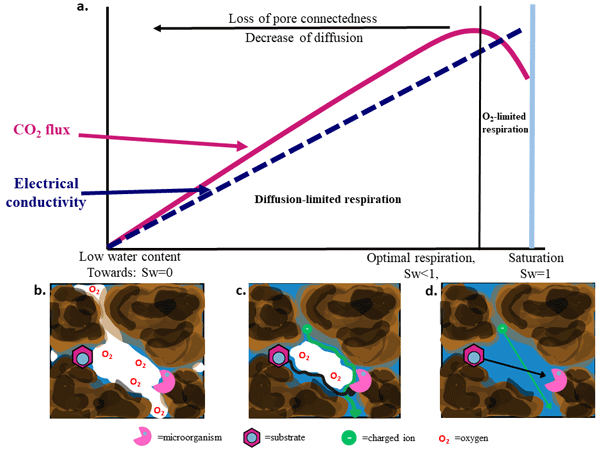
Soil microorganisms play a key role in carbon cycling, yet their activity depends strongly on soil water connectivity. We investigated whether electrical conductivity, a non-destructive geophysical measurement, could provide information about microbial respiration under drying conditions. Our results suggest that electrical conductivity measurements may help better understand diffusion-limited soil respiration.
Julie-Maï Paris, Naoise Nunan, and Xavier Raynaud
EGUsphere, https://doi.org/10.5194/egusphere-2026-1841, https://doi.org/10.5194/egusphere-2026-1841, 2026
Short summary
Short summary
Soil hosts diverse microorganisms forming complex metabolic networks. Their interactions depend on spatial distribution, often overlooked in studies. We propose a new geometric model that show that spatial arrangement affects resource use: density and interaction ranges can alter resource transformations. Spatial structure thus regulates microbial community function and resource transformation in soils.
Naoise Nunan, Claire Chenu, Valérie Pouteau, André Soro, Kevin Potard, Célia R. Montes, Patricia Merdy, Adolpho J. Melfi, and Yves Lucas
Biogeosciences, 23, 1279–1289, https://doi.org/10.5194/bg-23-1279-2026, https://doi.org/10.5194/bg-23-1279-2026, 2026
Short summary
Short summary
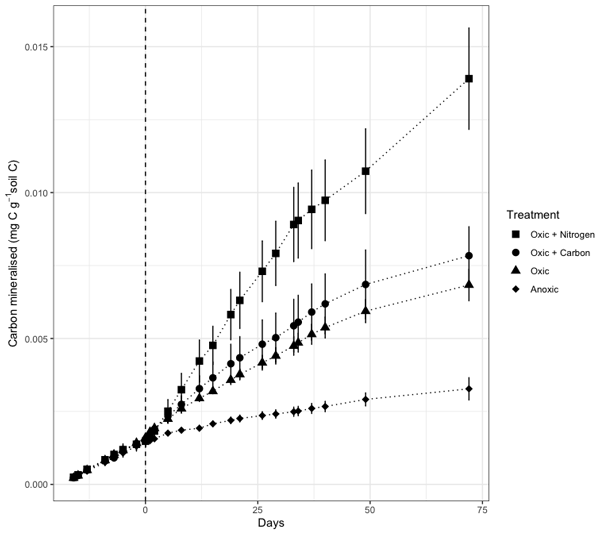
The vulnerability to decomposition of organic C in Amazonian podzols as a result of predicted drier soil moisture regimes was tested: more than four times as much CO2 was released from soils under oxic conditions with the addition of N relative to soils under the prevailing anoxic conditions. An extrapolation of the data to the whole of the Amazonian podzols suggests that this increased C-CO2 flux to the atmosphere could be equivalent to 8 % of the current net global C flux to the atmosphere.
Cited articles
Allison, S. D.: Cheaters, diffusion and nutrients constrain decomposition by microbial enzymes in spatially structured environments, Ecol. Lett., 8, 626–635, https://doi.org/10.1111/j.1461-0248.2005.00756.x, 2005.
Allison, S. D.: A trait-based approach for modelling microbial litter decomposition, Ecol. Lett., 15, 1058–1070, https://doi.org/10.1111/j.1461-0248.2012.01807.x, 2012.
Barton, J. W. and Ford, R. M.: Mathematical model for characterization of bacterial migration through sand cores, Biotechnol. Bioeng., 53, 487–496, https://doi.org/10.1002/(SICI)1097-0290(19970305)53:5<487::AID-BIT6>3.0.CO;2-D, 1997.
Baveye, P. C., Rangel, D., Jacobson, A. R., Laba, M., Darnault, C., Otten, W., Radulovich, R., and Camargo, F. A. O.: From Dust Bowl to Dust Bowl: Soils are Still Very Much a Frontier of Science, Soil Sci. Soc. Am. J., 75, 2037–2048, https://doi.org/10.2136/sssaj2011.0145, 2011.
Bongiorno, G., Bünemann, E. K., Oguejiofor, C. U., Meier, J., Gort, G., Comans, R., Mäder, P., Brussaard, L., and de Goede, R.: Sensitivity of labile carbon fractions to tillage and organic matter management and their potential as comprehensive soil quality indicators across pedoclimatic conditions in Europe, Ecol. Indic., 99, 38–50, https://doi.org/10.1016/j.ecolind.2018.12.008, 2019.
Bouckaert, L., Sleutel, S., Loo, D. V., Brabant, L., Cnudde, V., Hoorebeke, L. V., and Neve, S. D.: Carbon mineralisation and pore size classes in undisturbed soil cores, Soil Res., 51, 14–22, https://doi.org/10.1071/SR12116, 2013.
Bresenham, J. E.: Algorithm for computer control of a digital plotter, IBM Syst. J., 4, 25–30, https://doi.org/10.1147/sj.41.0025, 1965.
Camenzind, T., Mason-Jones, K., Mansour, I., Rillig, M. C., and Lehmann, J.: Formation of necromass-derived soil organic carbon determined by microbial death pathways, Nat. Geosci., 16, 115–122, https://doi.org/10.1038/s41561-022-01100-3, 2023.
Cellular Automata – The Moore neighbourhood: https://cell-auto.com/neighbourhood/moore/, last access: 10 October 2026.
Ceriotti, G., Borisov, S. M., Berg, J. S., and de Anna, P.: Morphology and Size of Bacterial Colonies Control Anoxic Microenvironment Formation in Porous Media, Environ. Sci. Technol., 56, 17471–17480, https://doi.org/10.1021/acs.est.2c05842, 2022.
Chang, W.-S., Li, X., and Halverson, L. J.: Influence of water limitation on endogenous oxidative stress and cell death within unsaturated Pseudomonas putida biofilms, Environ. Microbiol., 11, 1482–1492, https://doi.org/10.1111/j.1462-2920.2009.01876.x, 2009.
Chen, H., Jing, Q., Liu, X., Zhou, X., Fang, C., Li, B., Zhou, S., and Nie, M.: Microbial respiratory thermal adaptation is regulated by r-/K-strategy dominance, Ecol. Lett., 25, 2489–2499, https://doi.org/10.1111/ele.14106, 2022.
Chenu, C., Hassink, J., and Bloem, J.: Short-term changes in the spatial distribution of microorganisms in soil aggregates as affected by glucose addition, Biol. Fertil. Soils, 34, 349–356, https://doi.org/10.1007/s003740100419, 2001.
Chenu, C., Pouteau, V., and Nunan, N.: Pore scale microbial biogeography across different soil types, Soil Biol. Biochem., 209, 109896, https://doi.org/10.1016/j.soilbio.2025.109896, 2025.
Cui, Y., Moorhead, D. L., Guo, X., Peng, S., Wang, Y., Zhang, X., and Fang, L.: Stoichiometric models of microbial metabolic limitation in soil systems, Global Ecol. Biogeogr., 30, 2297–2311, https://doi.org/10.1111/geb.13378, 2021.
Darrah, P. R.: Models of the rhizosphere: I. Microbial population dynamics around a root releasing soluble and insoluble carbon, Plant Soil, 133, 187–199, https://doi.org/10.1007/BF00009191, 1991.
Dehkharghani, A., Waisbord, N., and Guasto, J. S.: Self-transport of swimming bacteria is impaired by porous microstructure, Commun. Phys., 6, 18, https://doi.org/10.1038/s42005-023-01136-w, 2023.
Dignac, M.-F., Derrien, D., Barré, P., Barot, S., Cécillon, L., Chenu, C., Chevallier, T., Freschet, G. T., Garnier, P., Guenet, B., Hedde, M., Klumpp, K., Lashermes, G., Maron, P.-A., Nunan, N., Roumet, C., and Basile-Doelsch, I.: Increasing soil carbon storage: mechanisms, effects of agricultural practices and proxies. A review, Agron. Sustain. Dev., 37, 14, https://doi.org/10.1007/s13593-017-0421-2, 2017.
Dor, M., Guber, A. K., Tiemann, L., Kuzyakov, Y., and Kravchenko, A. N.: Nitrogen availability decouples soil pore size-defined microhabitat control of microbial carbon use efficiency, Soil Biol. Biochem., 221, 110249, https://doi.org/10.1016/j.soilbio.2026.110249, 2026.
Duffy, K. J., Cummings, P. T., and Ford, R. M.: Random walk calculations for bacterial migration in porous media, Biophys. J., 68, 800–806, https://doi.org/10.1016/S0006-3495(95)80256-0, 1995.
Dusenbery, D. B.: Minimum size limit for useful locomotion by free-swimming microbes, P. Natl. Acad. Sci. USA, 94, 10949–10954, https://doi.org/10.1073/pnas.94.20.10949, 1997.
Endress, M.-G., Dehghani, F., Blagodatsky, S., Reitz, T., Schlüter, S., and Blagodatskaya, E.: Spatial substrate heterogeneity limits microbial growth as revealed by the joint experimental quantification and modeling of carbon and heat fluxes, Soil Biol. Biochem., 197, 109509, https://doi.org/10.1016/j.soilbio.2024.109509, 2024.
Erktan, A., Or, D., and Scheu, S.: The physical structure of soil: Determinant and consequence of trophic interactions, Soil Biol. Biochem., 148, 107876, https://doi.org/10.1016/j.soilbio.2020.107876, 2020.
Fierer, N., Bradford, M. A., and Jackson, R. B.: Toward an Ecological Classification of Soil Bacteria, Ecology, 88, 1354–1364, https://doi.org/10.1890/05-1839, 2007.
Franzluebbers, A. J., Hons, F. M., and Zuberer, D. A.: Seasonal changes in soil microbial biomass and mineralizable c and n in wheat management systems, Soil Biol. Biochem., 26, 1469–1475, https://doi.org/10.1016/0038-0717(94)90086-8, 1994.
Gangwe Nana, G. Y., Ripoll, C., Cabin-Flaman, A., Gibouin, D., Delaune, A., Janniere, L., Grancher, G., Chagny, G., Loutelier-Bourhis, C., Lentzen, E., Grysan, P., Audinot, J.-N., and Norris, V.: Division-Based, Growth Rate Diversity in Bacteria, Front. Microbiol., 9, 849, https://doi.org/10.3389/fmicb.2018.00849, 2018.
Gao, Y., Zhou, J., Lin, T., Li, Y., Zeng, Q., Chen, S., Xiong, D., Zhang, Q., Yang, Z., and Yang, Y.: The dominance of K-strategy microbes enhances the potential of soil carbon decomposition under long-term warming, Appl. Soil Ecol., 206, 105854, https://doi.org/10.1016/j.apsoil.2024.105854, 2025.
Gupta, V. V. S. R. and Germida, J. J.: Distribution of microbial biomass and its activity in different soil aggregate size classes as affected by cultivation, Soil Biol. Biochem., 20, 777–786, https://doi.org/10.1016/0038-0717(88)90082-X, 1988.
Haynes, R. J.: Labile Organic Matter Fractions as Central Components of the Quality of Agricultural Soils: An Overview, Adv. Agron., 85, 221–268, https://doi.org/10.1016/S0065-2113(04)85005-3, 2005.
He, L., Lipson, D. A., Mazza Rodrigues, J. L., Mayes, M., Björk, R. G., Glaser, B., Thornton, P., and Xu, X.: Dynamics of Fungal and Bacterial Biomass Carbon in Natural Ecosystems: Site-Level Applications of the CLM-Microbe Model, J. Adv. Model. Earth Syst., 13, e2020MS002283, https://doi.org/10.1029/2020MS002283, 2021.
He, X., Abs, E., Allison, S. D., Tao, F., Huang, Y., Manzoni, S., Abramoff, R., Bruni, E., Bowring, S. P. K., Chakrawal, A., Ciais, P., Elsgaard, L., Friedlingstein, P., Georgiou, K., Hugelius, G., Holm, L. B., Li, W., Luo, Y., Marmasse, G., Nunan, N., Qiu, C., Sitch, S., Wang, Y.-P., and Goll, D. S.: Emerging multiscale insights on microbial carbon use efficiency in the land carbon cycle, Nat. Commun., 15, 8010, https://doi.org/10.1038/s41467-024-52160-5, 2024.
Ho, A., Kerckhof, F.-M., Luke, C., Reim, A., Krause, S., Boon, N., and Bodelier, P. L. E.: Conceptualizing functional traits and ecological characteristics of methane-oxidizing bacteria as life strategies, Environ. Microbiol. Rep., 5, 335–345, https://doi.org/10.1111/j.1758-2229.2012.00370.x, 2013.
Hoffmann, S., Schmidt, C., Walter, S., Bender, J. K., and Gerlach, R. G.: Scarless deletion of up to seven methyl-accepting chemotaxis genes with an optimized method highlights key function of CheM in Salmonella Typhimurium, PLOS ONE, 12, e0172630, https://doi.org/10.1371/journal.pone.0172630, 2017.
Hu, J., Huang, C., Zhou, S., and Kuzyakov, Y.: Nitrogen addition to soil affects microbial carbon use efficiency: Meta-analysis of similarities and differences in 13C and 18O approaches, Global Change Biol., 28, 4977–4988, https://doi.org/10.1111/gcb.16226, 2022.
Hudson, B. D.: Soil organic matter and available water capacity, J. Soil Water Conserv., 49, 189–194, https://doi.org/10.1080/00224561.1994.12456850, 1994.
Jenkinson, D. S. and Powlson, D. S.: The effects of biocidal treatments on metabolism in soil – V: A method for measuring soil biomass, Soil Biol. Biochem., 8, 209–213, https://doi.org/10.1016/0038-0717(76)90005-5, 1976.
Jin, C. and Sengupta, A.: Microbes in porous environments: from active interactions to emergent feedback, Biophys. Rev., 16, 173–188, https://doi.org/10.1007/s12551-024-01185-7, 2024.
Jones, D. L., Hill, P. W., Smith, A. R., Farrell, M., Ge, T., Banning, N. C., and Murphy, D. V.: Role of substrate supply on microbial carbon use efficiency and its role in interpreting soil microbial community-level physiological profiles (CLPP), Soil Biol. Biochem., 123, 1–6, https://doi.org/10.1016/j.soilbio.2018.04.014, 2018.
Kästner, M., Miltner, A., Thiele-Bruhn, S., and Liang, C.: Microbial Necromass in Soils – Linking Microbes to Soil Processes and Carbon Turnover, Front. Environ. Sci., 9, https://doi.org/10.3389/fenvs.2021.756378, 2021.
Kempes, C. P., van Bodegom, P. M., Wolpert, D., Libby, E., Amend, J., and Hoehler, T.: Drivers of Bacterial Maintenance and Minimal Energy Requirements, Front. Microbiol., 8, https://doi.org/10.3389/fmicb.2017.00031, 2017.
Kravchenko, A. N. and Guber, A. K.: Soil pores and their contributions to soil carbon processes, Geoderma, 287, 31–39, https://doi.org/10.1016/j.geoderma.2016.06.027, 2017.
Kravchenko, A. N., Guber, A. K., Razavi, B. S., Koestel, J., Quigley, M. Y., Robertson, G. P., and Kuzyakov, Y.: Reply to: Variables in the effect of land use on soil extrapore enzymatic activity and carbon stabilization by Glenn (2020), Nat. Commun., 11, 6427, https://doi.org/10.1038/s41467-020-19901-8, 2020.
Lehmann, J., Hansel, C., Kaiser, C., Kleber, M., Maher, K., Manzoni, S., Nunan, N., Reichstein, M., Schimel, J., and Torn, M.: Persistence of soil organic carbon caused by functional complexity, Nat. Geosci., 13, 1–6, 2020.
Li, Z., Kravchenko, A. N., Cupples, A., Guber, A. K., Kuzyakov, Y., Philip Robertson, G., and Blagodatskaya, E.: Composition and metabolism of microbial communities in soil pores, Nat. Commun., 15, 3578, https://doi.org/10.1038/s41467-024-47755-x, 2024.
Liang, C., Amelung, W., Lehmann, J., and Kästner, M.: Quantitative assessment of microbial necromass contribution to soil organic matter, Global Change Biol., 25, 3578–3590, https://doi.org/10.1111/gcb.14781, 2019.
Libohova, Z., Seybold, C., Wysocki, D., Wills, S., Schoeneberger, P., Williams, C., Lindbo, D., Stott, D., and Owens, P. R.: Reevaluating the effects of soil organic matter and other properties on available water-holding capacity using the National Cooperative Soil Survey Characterization Database, J. Soil Water Conserv., 73, 411–421, https://doi.org/10.2489/jswc.73.4.411, 2018.
Lisevich, I., Colin, R., Yang, H. Y., Ni, B., and Sourjik, V.: Physics of swimming and its fitness cost determine strategies of bacterial investment in flagellar motility, Nat. Commun., 16, 1731, https://doi.org/10.1038/s41467-025-56980-x, 2025.
Ma, S., Zhu, W., Wang, W., Li, X., and Sheng, Z.: Microbial assemblies with distinct trophic strategies drive changes in soil microbial carbon use efficiency along vegetation primary succession in a glacier retreat area of the southeastern Tibetan Plateau, Sci. Total Environ., 867, 161587, https://doi.org/10.1016/j.scitotenv.2023.161587, 2023.
Maelmstr.: Maelmstr/soil-cellular-automaton: Cellular automaton (Version v1.0.0), Zenodo [computer software], https://doi.org/10.5281/zenodo.21336136, 2026.
Maestrali, M.: Compiled data from CA simulations, Zenodo [data set], https://doi.org/10.5281/zenodo.23335725, 2026.
Maestrali, M., Raynaud, X., Wu, H., Schweizer, S. A., Guillot, I., Lerch, T., Paolillo, S., and Nunan, N.: How is the carbon use efficiency of microbial communities distributed within the soil pore network, Appl. Soil Ecol., 219, 106771, https://doi.org/10.1016/j.apsoil.2025.106771, 2026.
Malik, A. A., Martiny, J. B. H., Brodie, E. L., Martiny, A. C., Treseder, K. K., and Allison, S. D.: Defining trait-based microbial strategies with consequences for soil carbon cycling under climate change, ISME J., 14, 1–9, 2020.
McLauchlan, K. K. and Hobbie, S. E.: Comparison of Labile Soil Organic Matter Fractionation Techniques, Soil Sci. Soc. Am. J. 68, 1616–1625, https://doi.org/10.2136/sssaj2004.1616, 2004.
Narayanaswamy, K., Ford, R. M., Smith, J. A., and Fernandez, E. J.: Surface association of motile bacteria and apparent tortuosity values in packed column experiments, Water Resour. Res., 45, https://doi.org/10.1029/2008WR006851, 2009.
Newman, E. I. and Watson, A.: Microbial abundance in the rhizosphere: A computer model, Plant Soil, 48, 17–56, https://doi.org/10.1007/BF00015157, 1977.
Nunan, N., Schmidt, H., and Raynaud, X.: The ecology of heterogeneity: soil bacterial communities and C dynamics, Philos. Trans. R. Soc. B Biol. Sci., 375, 20190249, https://doi.org/10.1098/rstb.2019.0249, 2020.
Olson, M. S., Ford, R. M., Smith, J. A., and Fernandez, E. J.: Analysis of Column Tortuosity for MnCl2 and Bacterial Diffusion Using Magnetic Resonance Imaging, Environ. Sci. Technol., 39, 149–154, https://doi.org/10.1021/es049577x, 2005.
Or, D., Smets, B. F., Wraith, J. M., Dechesne, A., and Friedman, S. P.: Physical constraints affecting bacterial habitats and activity in unsaturated porous media – a review, Adv. Water Resour., 30, 1505–1527, https://doi.org/10.1016/j.advwatres.2006.05.025, 2007.
Otten, W., Hall, D., Harris, K., Ritz, K., Young, I. M., and Gilligan, C. A.: Soil physics, fungal epidemiology and the spread of Rhizoctonia solani, New Phytol., 151, 459–468, https://doi.org/10.1046/j.0028-646x.2001.00190.x, 2001.
Panikov, N. S.: Understanding and prediction of soil microbial community dynamics under global change, Appl. Soil Ecol., 11, 161–176, https://doi.org/10.1016/S0929-1393(98)00143-7, 1999.
Peng, J., Liu, H., Sun, Y., Liu, Q., Li, J., and Dong, Y.: Shift in soil bacterial communities from K- to r-strategists facilitates adaptation to grassland degradation, Land Degrad. Dev., 33, https://doi.org/10.1002/ldr.4304, 2022.
Pfeiffer, T., Schuster, S., and Bonhoeffer, S.: Cooperation and Competition in the Evolution of ATP-Producing Pathways, Science, 292, 504–507, https://doi.org/10.1126/science.1058079, 2001.
Pianka, E. R.: On r- and K-Selection, Am. Nat., 104, 592–597, https://doi.org/10.1086/282697, 1970.
Portell, X., Pot, V., Garnier, P., Otten, W., and Baveye, P. C.: Microscale Heterogeneity of the Spatial Distribution of Organic Matter Can Promote Bacterial Biodiversity in Soils: Insights From Computer Simulations, Front. Microbiol., 9, https://doi.org/10.3389/fmicb.2018.01583, 2018.
Pot, V., Portell, X., Otten, W., Garnier, P., Monga, O., and Baveye, P. C.: Accounting for soil architecture and microbial dynamics in microscale models: Current practices in soil science and the path ahead, Eur. J. Soil Sci., 73, e13142, https://doi.org/10.1111/ejss.13142, 2021.
R: The R Project for Statistical Computing, https://www.r-project.org/, last access: 29 October 2026.
Rabot, E., Wiesmeier, M., Schlüter, S., and Vogel, H.-J.: Soil structure as an indicator of soil functions: A review, Geoderma, 314, 122–137, 2018.
Ramoneda, J., Fan, K., Lucas, J. M., Chu, H., Bissett, A., Strickland, M. S., and Fierer, N.: Ecological relevance of flagellar motility in soil bacterial communities, ISME J., 18, wrae067, https://doi.org/10.1093/ismejo/wrae067, 2024.
Ray, N., Rupp, A., and Prechtel, A.: Discrete-continuum multiscale model for transport, biomass development and solid restructuring in porous media, Adv. Water Resour., 107, 393–404, https://doi.org/10.1016/j.advwatres.2017.04.001, 2017.
Reznick, D., Bryant, M., and Bashey, F.: r- and K-Selection Revisited: The Role of Population Regulation in Life-History Evolution, Ecology, 83, 1509–1520, https://doi.org/10.2307/3071970, 2002.
Ritschel, T. and Totsche, K. U.: Modeling the formation of soil microaggregates, Comput. Geosci., 127, 36–43, https://doi.org/10.1016/j.cageo.2019.02.010, 2019.
Rötzer, M., Braunmiller, H., Lehndorff, E., Ray, N., Scheibe, A., and Prechtel, A.: Coupled C and N turnover in a dynamic pore scale model reveal the impact of exudate quality on microbial necromass formation, SOIL, 12, 205–226, https://doi.org/10.5194/soil-12-205-2026, 2026.
Schimel, J. and Schaeffer, S. M.: Microbial control over carbon cycling in soil, Front. Microbiol., 3, https://doi.org/10.3389/fmicb.2012.00348, 2012.
Schlüter, S., Sammartino, S., and Koestel, J.: Exploring the relationship between soil structure and soil functions via pore-scale imaging, Geoderma, 370, 114370, https://doi.org/10.1016/j.geoderma.2020.114370, 2020.
Schlüter, S., Gil, E., Doniger, T., Applebaum, I., and Steinberger, Y.: Abundance and community composition of free-living nematodes as a function of soil structure under different vineyard managements, Appl. Soil Ecol., 170, 104291, https://doi.org/10.1016/j.apsoil.2021.104291, 2022.
Schnecker, J., Baldaszti, L., Gündler, P., Pleitner, M., Sandén, T., Simon, E., Spiegel, F., Spiegel, H., Urbina Malo, C., Zechmeister-Boltenstern, S., and Richter, A.: Seasonal dynamics of soil microbial growth, respiration, biomass, and carbon use efficiency in temperate soils, Geoderma, 440, 116693, https://doi.org/10.1016/j.geoderma.2023.116693, 2023.
Shi, A., Chakrawal, A., Manzoni, S., Fischer, B. M. C., Nunan, N., and Herrmann, A. M.: Substrate spatial heterogeneity reduces soil microbial activity, Soil Biol. Biochem., 152, 108068, https://doi.org/10.1016/j.soilbio.2020.108068, 2021.
Smet, S., Plougonven, E., Leonard, A., Degré, A., and Beckers, E.: X-ray Micro-CT: How Soil Pore Space Description Can Be Altered by Image Processing, Vadose Zone J., 17, 160049, https://doi.org/10.2136/vzj2016.06.0049, 2018.
Sparling, G. P. and West, A. W.: A direct extraction method to estimate soil microbial C: calibration in situ using microbial respiration and 14C labelled cells, Soil Biol. Biochem., 20, 337–343, https://doi.org/10.1016/0038-0717(88)90014-4, 1988.
van Albada, S. B., Tănase-Nicola, S., and ten Wolde, P. R.: The switching dynamics of the bacterial flagellar motor, Molec. Syst. Biol., 5, 316, https://doi.org/10.1038/msb.2009.74, 2009.
Wang, G. and Or, D.: Aqueous films limit bacterial cell motility and colony expansion on partially saturated rough surfaces, Environ. Microbiol., 12, 1363–1373, https://doi.org/10.1111/j.1462-2920.2010.02180.x, 2010.
Wang, Y., Ebrahimi, A., Chen, G., Zhang, Z., Zhu, K., Franklin, S., Jin, Y., Liu, Y., and Wang, G.: Active motility and chemotactic movement regulate the microbial early-colonization and biodiversity, Geoderma, 460, 117419, https://doi.org/10.1016/j.geoderma.2025.117419, 2025.
Weller, U., Albrecht, L., Schlüter, S., and Vogel, H.-J.: An open Soil Structure Library based on X-ray CT data, SOIL, 8, 507–515, https://doi.org/10.5194/soil-8-507-2022, 2022.
Wiesenbauer, J., König, A., Gorka, S., Marchand, L., Nunan, N., Kitzler, B., Inselsbacher, E., and Kaiser, C.: A pulse of simulated root exudation alters the composition and temporal dynamics of microbial metabolites in its immediate vicinity, Soil Biol. Biochem., 189, 109259, https://doi.org/10.1016/j.soilbio.2023.109259, 2024.
Wolfram, S.: Cellular Automaton Fluids 1: Basic Theory, in: Lattice Gas Methods For Partial Differential Equations, CRC Press, 1990.
Wright, D. A., Killham, K., Glover, L. A., and Prosser, J. I.: Role of Pore Size Location in Determining Bacterial Activity during Predation by Protozoa in Soil, Appl. Environ. Microbiol., 61, 3537–3543, 1995.
Xia, Q., Zheng, N., Heitman, J. L., and Shi, W.: Soil pore size distribution shaped not only compositions but also networks of the soil microbial community, Appl. Soil Ecol., 170, 104273, https://doi.org/10.1016/j.apsoil.2021.104273, 2022.
Young, I. M. and Crawford, J. W.: Interactions and Self-Organization in the Soil-Microbe Complex, Science, 304, 1634–1637, https://doi.org/10.1126/science.1097394, 2004.
Yuan, X., Niu, D., Gherardi, L. A., Liu, Y., Wang, Y., Elser, J. J., and Fu, H.: Linkages of stoichiometric imbalances to soil microbial respiration with increasing nitrogen addition: Evidence from a long-term grassland experiment, Soil Biol. Biochem., 138, 107580, https://doi.org/10.1016/j.soilbio.2019.107580, 2019.
Zech, S., Ritschel, T., Ray, N., Totsche, K. U., and Prechtel, A.: How water connectivity and substrate supply shape the turnover of organic matter – Insights from simulations at the scale of microaggregates, Geoderma, 405, 115394, https://doi.org/10.1016/j.geoderma.2021.115394, 2022.
Zelenev, V. V., van Bruggen, A. H. C., and Semenov, A. M.: “BACWAVE,” a Spatial-Temporal Model for Traveling Waves of Bacterial Populations in Response to a Moving Carbon Source in Soil, Microb. Ecol., 40, 260–272, 2000.
Zhang, H., Wetherington, M. T., Ko, H., FitzGerald, C. E., and Nirody, J. A.: Bacterial motility patterns adapt smoothly in response to spatial confinement and disorder, bioRxiv, https://doi.org/10.1101/2024.09.29.615714, 2024.
Zhao, X., Tian, P., Sun, Z., Liu, S., Wang, Q., and Zeng, Z.: Rhizosphere effects on soil organic carbon processes in terrestrial ecosystems: A meta-analysis, Geoderma, 412, 115739, https://doi.org/10.1016/j.geoderma.2022.115739, 2022.
Zheng, W., Fan, X., Chen, H., Ye, M., Yin, C., Wu, C., and Liang, Y.: The response patterns of r- and K-strategist bacteria to long-term organic and inorganic fertilization regimes within the microbial food web are closely linked to rice production, Sci. Total Environ., 942, 173681, https://doi.org/10.1016/j.scitotenv.2024.173681, 2024.
Short summary
Soil microorganisms contribute to carbon storage, but their efficacy depends on their environment. We have developed a computer model based on real soil structures to investigate how pore shape, resource location and water content influence microbial behaviour. Small, poorly interconnected pores favour slower but more efficient microorganisms, whilst large, interconnected pores favour fast-growing but less efficient ones, demonstrating that soil structure plays a decisive role in carbon storage.
Soil microorganisms contribute to carbon storage, but their efficacy depends on their...


Special issue
Altmetrics
Final-revised paper
Preprint