
Articles | Volume 12, issue 2
https://doi.org/10.5194/soil-12-821-2026
© Author(s) 2026. This work is distributed under
the Creative Commons Attribution 4.0 License.
the Creative Commons Attribution 4.0 License.
Special issue:
https://doi.org/10.5194/soil-12-821-2026
© Author(s) 2026. This work is distributed under
the Creative Commons Attribution 4.0 License.
the Creative Commons Attribution 4.0 License.
Original research article
| 
21 Aug 2026
Original research article |
| 21 Aug 2026
| 21 Aug 2026
Ensemble agroecosystem modeling enhances predictions of crop yields and soil carbon across the United States
Sagar Gautam
CORRESPONDING AUTHOR
Bioscience Division, Sandia National Laboratory, Livermore, CA 94550, USA
Joint BioEnergy Institute, Lawrence Berkeley National Laboratory, Emeryville, CA 94608, USA
Chang Gyo Jung
Bioscience Division, Sandia National Laboratory, Livermore, CA 94550, USA
Rattan Lal
The Ohio State University, Rattan Lal Center for Carbon Management and Sequestration, Columbus, OH 43210, USA
Klaus Lorenz
The Ohio State University, Rattan Lal Center for Carbon Management and Sequestration, Columbus, OH 43210, USA
Jinyun Tang
Climate and Ecosystem Sciences Division, Lawrence Berkeley National Laboratory, Berkeley, CA 94720, USA
DeAnn Ricks Presley
Department of Agronomy, Kansas State University, Manhattan, KS, USA
Alan J. Franzluebbers
USDA-Agricultural Research Service, Raleigh, NC 27606, USA
Umakant Mishra
Bioscience Division, Sandia National Laboratory, Livermore, CA 94550, USA
Joint BioEnergy Institute, Lawrence Berkeley National Laboratory, Emeryville, CA 94608, USA
Related authors
Kamal Nyaupane, Umakant Mishra, Feng Tao, Kyongmin Yeo, William J. Riley, Forrest M. Hoffman, and Sagar Gautam
Biogeosciences, 21, 5173–5183, https://doi.org/10.5194/bg-21-5173-2024, https://doi.org/10.5194/bg-21-5173-2024, 2024
Short summary
Short summary
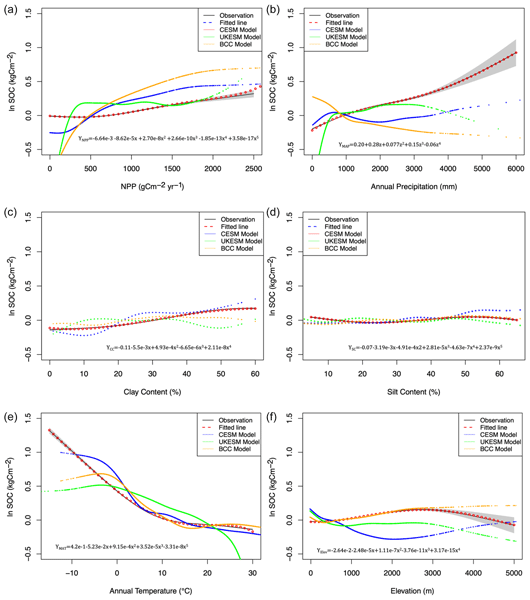
Representing soil organic carbon (SOC) dynamics in Earth system models (ESMs) is a key source of uncertainty in predicting carbon–climate feedbacks. Using machine learning, we develop and compare predictive relationships in observations (Obs) and ESMs. We find different relationships between environmental factors and SOC stocks in Obs and ESMs. SOC prediction in ESMs may be improved by representing the functional relationships of environmental controllers in a way consistent with observations.
Jinyun Tang, William J. Riley, Gianna L. Marschmann, and Eoin L. Brodie
Biogeosciences, 23, 3995–4010, https://doi.org/10.5194/bg-23-3995-2026, https://doi.org/10.5194/bg-23-3995-2026, 2026
Short summary
Short summary
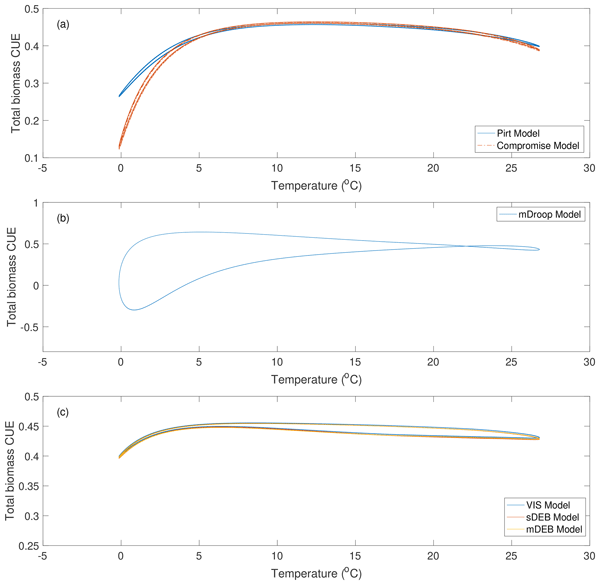
Carbon Use Efficiency (CUE) measures how biological organisms use carbon to synthesize new biomass, inferred to first increase and then decrease with specific growth rate. Our analysis of six biological growth models reveals that source-driven models fail to capture this relationship, while sink-driven models, using a reserve biomass pool, succeed. Existing biogeochemical models often depict a deterministic CUE-controlling factor relationship, which we find should be modeled dynamically instead.
Zewei Ma, Kaiyu Guan, Bin Peng, Wang Zhou, Robert Grant, Jinyun Tang, Murugesu Sivapalan, Ming Pan, Li Li, and Zhenong Jin
Hydrol. Earth Syst. Sci., 29, 6393–6417, https://doi.org/10.5194/hess-29-6393-2025, https://doi.org/10.5194/hess-29-6393-2025, 2025
Short summary
Short summary
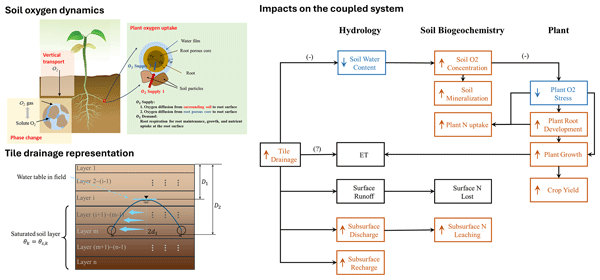
By involving soil oxygen dynamics, we explore tile drainage impacts on the coupled hydrology–biogeochemistry–crop system. We find that soil oxygen dynamics is the key mediator of tile–system dynamics. Tile drainage lowers soil water content and improves soil oxygen levels, helping crops grow during wet springs. The developed roots also help mitigate drought stress in dry summers. Overall, tile drainage increases crop resilience to climate change, making it a valuable future agricultural practice.
Lingbo Li, Hong-Yi Li, Guta Abeshu, Jinyun Tang, L. Ruby Leung, Chang Liao, Zeli Tan, Hanqin Tian, Peter Thornton, and Xiaojuan Yang
Earth Syst. Sci. Data, 17, 2713–2733, https://doi.org/10.5194/essd-17-2713-2025, https://doi.org/10.5194/essd-17-2713-2025, 2025
Short summary
Short summary
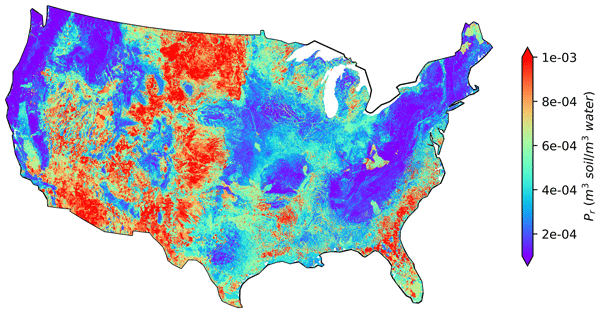
We have developed new maps that reveal how organic carbon from soil leaches into headwater streams over the contiguous United States. We use advanced artificial intelligence techniques and a massive amount of data, including observations at over 2500 gauges and a wealth of climate and environmental information. The maps are a critical step in understanding and predicting how carbon moves through our environment, hence making them a useful tool for tackling climate challenges.
Jinyun Tang and William J. Riley
Biogeosciences, 22, 1809–1819, https://doi.org/10.5194/bg-22-1809-2025, https://doi.org/10.5194/bg-22-1809-2025, 2025
Short summary
Short summary
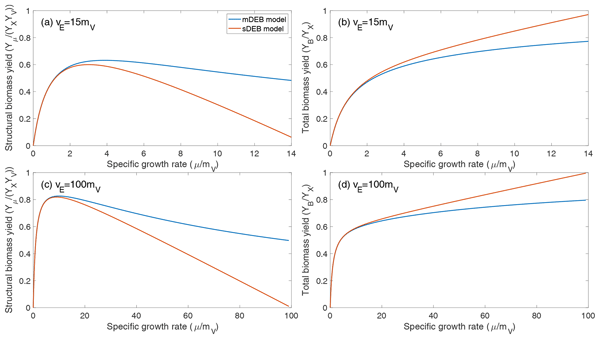
A new mathematical formulation of the dynamic energy budget model is presented for the growth of biological organisms. This new formulation combines mass conservation law and chemical kinetics theory and is computationally faster than the standard formulation of dynamic energy budget models. In simulating the growth of Thalassiosira weissflogii in a nitrogen-limiting chemostat, the new model is as good as the standard dynamic energy budget model using almost the same parameter values.
Kamal Nyaupane, Umakant Mishra, Feng Tao, Kyongmin Yeo, William J. Riley, Forrest M. Hoffman, and Sagar Gautam
Biogeosciences, 21, 5173–5183, https://doi.org/10.5194/bg-21-5173-2024, https://doi.org/10.5194/bg-21-5173-2024, 2024
Short summary
Short summary
Representing soil organic carbon (SOC) dynamics in Earth system models (ESMs) is a key source of uncertainty in predicting carbon–climate feedbacks. Using machine learning, we develop and compare predictive relationships in observations (Obs) and ESMs. We find different relationships between environmental factors and SOC stocks in Obs and ESMs. SOC prediction in ESMs may be improved by representing the functional relationships of environmental controllers in a way consistent with observations.
Jinyun Tang and William J. Riley
Biogeosciences, 21, 1061–1070, https://doi.org/10.5194/bg-21-1061-2024, https://doi.org/10.5194/bg-21-1061-2024, 2024
Short summary
Short summary
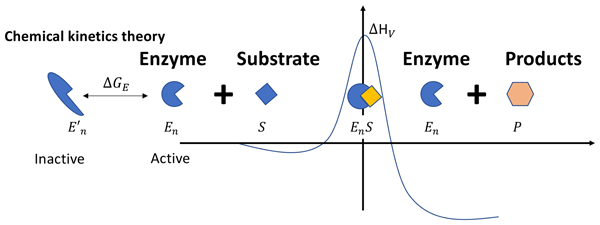
A chemical kinetics theory is proposed to explain the non-monotonic relationship between temperature and biochemical rates. It incorporates the observed thermally reversible enzyme denaturation that is ensured by the ceaseless thermal motion of molecules and ions in an enzyme solution and three well-established theories: (1) law of mass action, (2) diffusion-limited chemical reaction theory, and (3) transition state theory.
Ziqi Lin, Yongjiu Dai, Umakant Mishra, Guocheng Wang, Wei Shangguan, Wen Zhang, and Zhangcai Qin
Earth Syst. Sci. Data Discuss., https://doi.org/10.5194/essd-2022-232, https://doi.org/10.5194/essd-2022-232, 2022
Manuscript not accepted for further review
Short summary
Short summary
Spatial soil organic carbon (SOC) data is critical for predictions in carbon climate feedbacks and future climate trends, but no conclusion has yet been reached on which dataset to be used for specific purposes. We evaluated the SOC estimates from five widely used global soil datasets and a regional permafrost dataset, and identify uncertainties of SOC estimates by region, biome, and data sources, hoping to help improve SOC/soil data in the future.
Licheng Liu, Shaoming Xu, Jinyun Tang, Kaiyu Guan, Timothy J. Griffis, Matthew D. Erickson, Alexander L. Frie, Xiaowei Jia, Taegon Kim, Lee T. Miller, Bin Peng, Shaowei Wu, Yufeng Yang, Wang Zhou, Vipin Kumar, and Zhenong Jin
Geosci. Model Dev., 15, 2839–2858, https://doi.org/10.5194/gmd-15-2839-2022, https://doi.org/10.5194/gmd-15-2839-2022, 2022
Short summary
Short summary
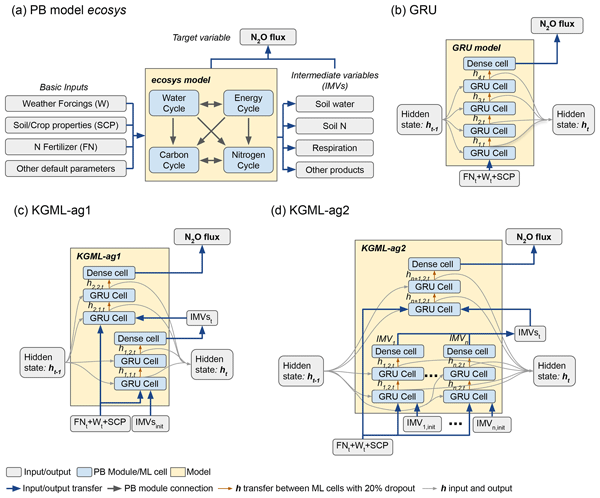
By incorporating the domain knowledge into a machine learning model, KGML-ag overcomes the well-known limitations of process-based models due to insufficient representations and constraints, and unlocks the “black box” of machine learning models. Therefore, KGML-ag can outperform existing approaches on capturing the hot moment and complex dynamics of N2O flux. This study will be a critical reference for the new generation of modeling paradigm for biogeochemistry and other geoscience processes.
Jinyun Tang, William J. Riley, and Qing Zhu
Geosci. Model Dev., 15, 1619–1632, https://doi.org/10.5194/gmd-15-1619-2022, https://doi.org/10.5194/gmd-15-1619-2022, 2022
Short summary
Short summary
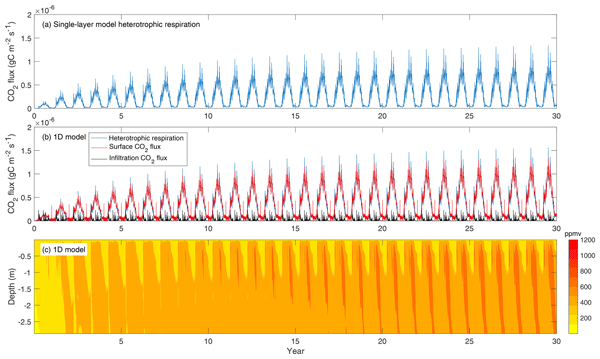
We here describe version 2 of BeTR, a reactive transport model created to help ease the development of biogeochemical capability in Earth system models that are used for quantifying ecosystem–climate feedbacks. We then coupled BeTR-v2 to the Energy Exascale Earth System Model to quantify how different numerical couplings of plants and soils affect simulated ecosystem biogeochemistry. We found that different couplings lead to significant uncertainty that is not correctable by tuning parameters.
Cited articles
Asseng, S., Ewert, F., Rosenzweig, C., Jones, J. W., Hatfield, J. L., Ruane, A. C., Boote, K. J., Thorburn, P. J., Rötter, R. P., and Cammarano, D.: Uncertainty in simulating wheat yields under climate change, Nat. Clim. Change, 3, 827–832, https://doi.org/10.1038/nclimate1916, 2013.
Basso, B., Tadiello, T., Millar, N., Robertson, G. P., Paustian, K., Maureira, F. S., Albarenque, S., Baer, B., Price, L., and Sharma, P.: A multi model ensemble reveals net climate benefits from regenerative practices in US Midwest croplands, Sci. Rep., 15, 24881, https://doi.org/10.1038/s41598-025-08419-y, 2025.
Battisti, R., Sentelhas, P. C., and Boote, K. J.: Inter-comparison of performance of soybean crop simulation models and their ensemble in southern Brazil, Field Crop. Res., 200, 28–37, https://doi.org/10.1016/j.fcr.2016.10.004, 2017.
Campbell, E. E., Johnson, J. M., Jin, V. L., Lehman, R. M., Osborne, S. L., Varvel, G. E., and Paustian, K.: Assessing the soil carbon, biomass production, and nitrous oxide emission impact of corn stover management for bioenergy feedstock production using DAYCENT, BioEnerg. Res., 7, 491–502, https://doi.org/10.1007/s12155-014-9414-z, 2014.
Davis, A. S., Hill, J. D., Chase, C. A., Johanns, A. M., and Liebman, M.: Increasing cropping system diversity balances productivity, profitability and environmental health, PLoS ONE, 7, e47149, https://doi.org/10.1371/journal.pone.0047149, 2012.
Del Grosso, S., Ojima, D., Parton, W., Mosier, A., Peterson, G., and Schimel, D.: Simulated effects of dryland cropping intensification on soil organic matter and greenhouse gas exchanges using the DAYCENT ecosystem model, Environ. Pollut., 116, S75–S83, https://doi.org/10.1016/S0269-7491(01)00260-3, 2002.
Del Grosso, S., Parton, W., Mosier, A., Holland, E., Pendall, E., Schimel, D., and Ojima, D.: Modeling soil CO2 emissions from ecosystems, Biogeochemistry, 73, 71–91, https://doi.org/10.1007/s10533-004-0898-z, 2005.
Ding, W., Chang, N., Zhang, G., Kang, J., Yi, X., Zhang, J., Zhang, J., Wang, L., and Li, H.: Soil organic carbon changes in China's croplands: A newly estimation based on DNDC model, Sci. Total Environ., 905, 167107, https://doi.org/10.1016/j.scitotenv.2023.167107, 2023.
Drinkwater, L. E., Wagoner, P., and Sarrantonio, M.: Legume-based cropping systems have reduced carbon and nitrogen losses, Nature, 396, 262–265, https://doi.org/10.1038/24376, 1998.
FAO: The State of The World's Land & Water Resources For Food & Agriculture 2025, World Bank [data set], https://doi.org/10.4060/cd7488en, 2025.
Gautam, S., Jung, C. G., Mishra, U., Lal, R., Lorenz, K., Tang, J., Presley, D. R., and Franzluebbers, A. J.: Ensemble Agroecosystem Modeling Enhances Predictions of Crop Yields and Soil Carbon Across the United States, Dryad [data set], https://doi.org/10.5061/dryad.jm63xsjrw, 2026.
Grace, P. and Robertson, G. P.: Soil carbon sequestration potential and the identification of hotspots in the eastern Corn Belt of the United States, Soil Sci. Soc. Am. J., 85, 1410–1424, https://doi.org/10.1002/saj2.20273, 2021.
Grant, R.: Simulation of methanogenesis in the mathematical model ecosys, Soil Biol. Biochem., 30, 883–896, https://doi.org/10.1016/S0038-0717(97)00218-6, 1998.
Grant, R., Jarvis, P., Massheder, J., Hale, S., Moncrieff, J., Rayment, M., Scott, S., and Berry, J.: Controls on carbon and energy exchange by a black spruce–moss ecosystem: testing the mathematical model ecosys with data from the BOREAS experiment, Global Biogeochem. Cy., 15, 129–147, https://doi.org/10.1029/2001JD900064, 2001.
Grant, R., Pattey, E., Goddard, T., Kryzanowski, L., and Puurveen, H.: Modeling the effects of fertilizer application rate on nitrous oxide emissions, Soil Sci. Soc. Am. J., 70, 235–248, https://doi.org/10.2136/sssaj2005.0104, 2006.
Gupta, H. V., Kling, H., Yilmaz, K. K., and Martinez, G. F.: Decomposition of the mean squared error and NSE performance criteria: Implications for improving hydrological modelling, J. Hydrol., 377, 80–91, https://doi.org/10.1016/j.jhydrol.2009.08.003, 2009.
Helmers, M., Christianson, R., Brenneman, G., Lockett, D., and Pederson, C.: Water table, drainage, and yield response to drainage water management in southeast Iowa, Journal of soil and Water Conservation, 67, 495–501, https://doi.org/10.2489/jswc.67.6.495, 2012.
Ingraham, P. A. and Salas, W. A.: Assessing nitrous oxide and nitrate leaching mitigation potential in US corn crop systems using the DNDC model, Agr. Syst., 175, 79–87, https://doi.org/10.1016/j.agsy.2019.05.005, 2019.
Jiang, R., Yang, J., Drury, C. F., He, W., Smith, W., Grant, B., He, P., and Zhou, W.: Assessing the impacts of diversified crop rotation systems on yields and nitrous oxide emissions in Canada using the DNDC model, Sci. Total Environ., 759, 143433, https://doi.org/10.1016/j.scitotenv.2020.143433, 2021.
Kaur, N., Hui, D., Riccuito, D. M., Mayes, M. A., and Tian, H.: Response patterns of simulated corn yield and soil nitrous oxide emission to precipitation change, Ecol. Process., 12, 17, https://doi.org/10.1186/s13717-023-00429-w, 2023.
King, A. E. and Blesh, J.: Crop rotations for increased soil carbon: perenniality as a guiding principle, Ecol. Appl., 28, 249–261, https://doi.org/10.1002/eap.1648, 2018.
Klotz, D., Gauch, M., Kratzert, F., Nearing, G., and Zscheischler, J.: Technical Note: The divide and measure nonconformity – how metrics can mislead when we evaluate on different data partitions, Hydrol. Earth Syst. Sci., 28, 3665–3673, https://doi.org/10.5194/hess-28-3665-2024, 2024.
Kumar, S., Meena, R. S., Lal, R., Singh Yadav, G., Mitran, T., Meena, B. L., Dotaniya, M. L., and EL-Sabagh, A.: Role of legumes in soil carbon sequestration, in: Legumes for soil health and sustainable management, edited by: Meena, R. S., Das, A., Yadav, G. S., and Lal, R., Springer, 109–138, https://doi.org/10.1007/978-981-13-0253-4, 2018.
Li, C., Frolking, S., and Frolking, T. A.: A model of nitrous oxide evolution from soil driven by rainfall events: 1. Model structure and sensitivity, J. Geophys. Res.-Atmos., 97, 9759–9776, https://doi.org/10.1029/92JD00509, 1992.
Li, C., Frolking, S., and Harriss, R.: Modeling carbon biogeochemistry in agricultural soils, Global Biogeochem. Cy., 8, 237–254, https://doi.org/10.1029/94GB00767, 1994.
Li, Z., Guan, K., Zhou, W., Peng, B., Jin, Z., Tang, J., Grant, R. F., Nafziger, E. D., Margenot, A. J., and Gentry, L. E.: Assessing the impacts of pre-growing-season weather conditions on soil nitrogen dynamics and corn productivity in the US Midwest, Field Crop. Res., 284, 108563, https://doi.org/10.1016/j.fcr.2022.108563, 2022.
Liu, L., Zhou, W., Guan, K., Peng, B., Xu, S., Tang, J., Zhu, Q., Till, J., Jia, X., and Jiang, C.: Knowledge-guided machine learning can improve carbon cycle quantification in agroecosystems, Nat. Commun., 15, 357, https://doi.org/10.1038/s41467-023-43860-5, 2024.
Martre, P., Wallach, D., Asseng, S., Ewert, F., Jones, J. W., Rötter, R. P., Boote, K. J., Ruane, A. C., Thorburn, P. J., and Cammarano, D.: Multimodel ensembles of wheat growth: many models are better than one, Glob. Change Biol., 21, 911–925, https://doi.org/10.1111/gcb.12768, 2015.
Meena, R. S. and Lal, R.: Legumes and sustainable use of soils, in: Legumes for soil health and sustainable management, edited by: Meena, R. S., Das, A., Yadav, G. S., and Lal, R., Springer, 1–31, https://doi.org/10.1007/978-981-13-0253-4, 2018.
NASS: United States Department of Agriculture (USDA) National Agricultural Statistics Service, Quick Stats Database (Crop Yield Data) [data set], https://quickstats.nass.usda.gov/ (last access: 11 August 2025), 2025.
Ogle, S. M., Breidt, F. J., Easter, M., Williams, S., Killian, K., and Paustian, K.: Scale and uncertainty in modeled soil organic carbon stock changes for US croplands using a process-based model, Glob Change Biol., 16, 810–822, https://doi.org/10.1111/j.1365-2486.2009.01951.x, 2010.
Parton, W. J., Ojima, D. S., Cole, C. V., and Schimel, D. S.: A general model for soil organic matter dynamics: sensitivity to litter chemistry, texture and management, Quantitative Modeling of Soil Forming Processes, 39, 147–167, https://doi.org/10.2136/sssaspecpub39.c9, 1994.
Parton, W. J., Hartman, M., Ojima, D., and Schimel, D.: DAYCENT and its land surface submodel: description and testing, Global Planet. Change, 19, 35–48, https://doi.org/10.1016/S0921-8181(98)00040-X, 1998.
Paustian, K., Lehmann, J., Ogle, S., Reay, D., Robertson, G. P., and Smith, P.: Climate-smart soils, Nature, 532, 49–57, https://doi.org/10.1038/nature17174, 2016.
Robertson, G. P., Gross, K. L., Hamilton, S. K., Landis, D. A., Schmidt, T. M., Snapp, S. S., and Swinton, S. M.: Farming for ecosystem services: An ecological approach to production agriculture, BioScience, 64, 404–415, https://doi.org/10.1093/biosci/biu037, 2014.
Rosenzweig, C., Elliott, J., Deryng, D., Ruane, A. C., Müller, C., Arneth, A., Boote, K. J., Folberth, C., Glotter, M., and Khabarov, N.: Assessing agricultural risks of climate change in the 21st century in a global gridded crop model intercomparison, P. Natl. Acad. Sci. USA, 111, 3268–3273, https://doi.org/10.1073/pnas.1222463110, 2014.
Schimel, D. S., House, J. I., Hibbard, K. A., Bousquet, P., Ciais, P., Peylin, P., Braswell, B. H., Apps, M. J., Baker, D., and Bondeau, A.: Recent patterns and mechanisms of carbon exchange by terrestrial ecosystems, Nature, 414, 169–172, https://doi.org/10.1038/35102500, 2001.
Shekoofa, A., Safikhan, S., Snider, J. L., Raper, T. B., and Bourland, F. M.: Variation in stomatal conductance responses of cotton cultivars to high vapour pressure deficit under controlled and rainfed environments, J. Agron. Crop Sci., 207, 332–343, https://doi.org/10.1111/jac.12440, 2021.
Smith, P., Smith, J., Powlson, D., McGill, W., Arah, J., Chertov, O., Coleman, K., Franko, U., Frolking, S., and Jenkinson, D.: A comparison of the performance of nine soil organic matter models using datasets from seven long-term experiments, Geoderma, 81, 153–225, https://doi.org/10.1016/S0016-7061(97)00087-6, 1997.
Soil Survey Staff: Soil Survey Geographic (SSURGO) Database, USDA-NRCS2023, Natural Resources Conservation Service, United States Department of Agriculture, https://sdmdataaccess.sc.egov.usda.gov/, last access: 16 July 2025.
Tao, F., Rötter, R. P., Palosuo, T., Gregorio Hernández Díaz-Ambrona, C., Mínguez, M. I., Semenov, M. A., Kersebaum, K. C., Nendel, C., Specka, X., and Hoffmann, H.: Contribution of crop model structure, parameters and climate projections to uncertainty in climate change impact assessments, Glob Change Biol., 24, 1291–1307, https://doi.org/10.1111/gcb.14019, 2018.
Thornton, P. E., Thornton, M. M., Mayer, B. W., Wei, Y., Devarakonda, R., Vose, R. S., and Cook, R. B.: Daymet: Daily Surface Weather Data on a 1-km Grid for North America, Version 3, ORNL DAAC [data set], https://doi.org/10.3334/ORNLDAAC/1328, 2016.
USEPA: Inventory of U. S. greenhouse gas emissions and sinks: 1990–2003, U.S. Environmental Protection Agency, Washington, DC, https://www.epa.gov/ghgemissions/inventory-us-greenhouse-gas-emissions-and-sinks-1990-2003 (last access: 11 August 2026), 2005.
USEPA: Inventory of U. S. greenhouse gas emissions and sinks: 1990–2014, Cincinnati, OH, U. S. Environmental Protection Agency, 2015.
USGS: National Land Cover Database (NLCD) 2021 land cover products, U. S. Geological Survey [dataset], https://doi.org/10.5066/p9jz7ao3, 2023.
Wills, S., Loecke, T., Sequeira, C., Teachman, G., Grunwald, S., and West, L. T.: Overview of the US rapid carbon assessment project: sampling design, initial summary and uncertainty estimates, in: Soil Carbon, edited by: Hartemink, A. E. and McSweeney, K., Springer, 95–104, https://doi.org/10.1007/978-3-319-04084-4_10, 2014.
Wu, Y., Davis, E. C., and Sohngen, B. L.: Crop rotation and the impact on soil carbon in the US Corn Belt, Carbon Balance and Management, 20, 6, https://doi.org/10.1186/s13021-025-00293-5, 2025.
Xiao, X., Chen, W., Zong, L., Yang, J., Jiao, S., Lin, Y., Wang, E., and Wei, G.: Two cultivated legume plants reveal the enrichment process of the microbiome in the rhizocompartments, Mol. Ecol., 26, 1641–1651, https://doi.org/10.1111/mec.14027, 2017.
Zhang, L., Yu, D., Shi, X., Xu, S., Xing, S., and Zhao, Y.: Effects of soil data and simulation unit resolution on quantifying changes of soil organic carbon at regional scale with a biogeochemical process model, PLOS ONE, 9, e88622, https://doi.org/10.1371/journal.pone.0088622, 2014.
Zhou, W., Guan, K., Peng, B., Tang, J., Jin, Z., Jiang, C., Grant, R., and Mezbahuddin, S.: Quantifying carbon budget, crop yields and their responses to environmental variability using the ecosys model for US Midwestern agroecosystems, Agr. Forest Meteorol., 307, 108521, https://doi.org/10.1016/j.agrformet.2021.108521, 2021.
Short summary
We developed an ensemble approach that combines three agroecosystem models to predict crop yields and changes in soil carbon across the United States. The ensemble results were more accurate and consistent compared to individual model. Ensemble result matched closely the observed yield data and soil carbon measurements while reducing the uncertainty from the individual models. This work improves our ability to track carbon change and supports carbon farming, climate action, and land management.
We developed an ensemble approach that combines three agroecosystem models to predict crop...


Special issue