
the Creative Commons Attribution 4.0 License.
the Creative Commons Attribution 4.0 License.
 | 28 Jul 2026
The pH and available phosphorus as primary drivers of compost-induced CO2 emissions from Malaysian tropical soil: empirical relationships
Xingxing Cheng
Faridah Othman
Rosazlin Abdullah
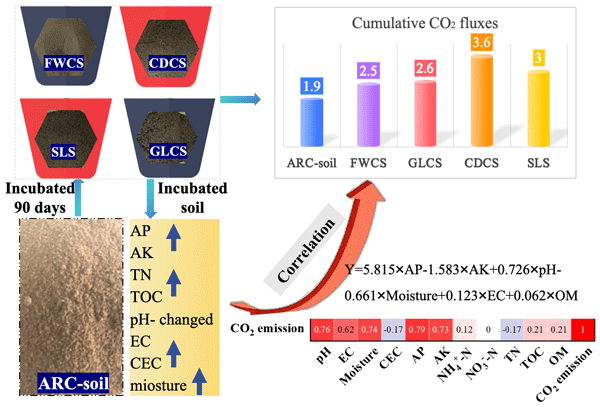
Confronting the global need for climate-smart agriculture, this study investigated the major factors controlling CO2 emissions from a Malaysian tropical soil amended with four composts. The cumulative CO2 emissions followed the descending order: chicken dung compost (CDCS) > sludge compost (SLS) > goat manure-leaf compost (GLCS) > food waste compost (FWCS). Multiple regression analyses identified soil available phosphorus (AP) and pH as the key interactive drivers of CO2 emissions. The significantly higher emissions from CDCS were primarily due to its pronounced elevation of soil pH, likely stimulating microbial activity. The positive correlation with AP indicated that enhanced phosphorus availability further promoted microbial carbon mineralization. The findings demonstrate that compost is not a carbon-neutral amendment; its net climate impact depends on the specific physico-chemical changes it induces in the soil. This provides a scientific basis for optimizing compost selection to reconcile soil fertility improvement with greenhouse gas mitigation in tropical agroecosystems.
In this experiment, four composts (FWC, GLC, CDC, SL) were applied at 2.5 % and 10 % rates to typical Malaysian tropical soils and incubated for 90 d. The CO2 emission characteristics were measured in different soil types. To determine key drivers, the study examined correlations between soil physico-chemical properties and CO2 emissions and selected the relative important factor.
- Article
(3053 KB) - Full-text XML
-
Supplement
(585 KB) - BibTeX
- EndNote


Confronting global climate change and the strategic goals of “carbon peak and carbon neutrality” (IPCC, 2022), agricultural soils play a pivotal dual role in the global carbon cycle due to their vast carbon storage capacity and active biogeochemical processes serving as both a crucial organic carbon sink (Bolinder et al., 2020; Shu et al., 2022; Rumpel et al., 2022; Gu et al., 2024) and a potential significant source of CO2 emissions (Lal, 2004; Paustian et al., 2016). The stability of this massive carbon pool, estimated to exceed the carbon in vegetation and the atmosphere combined, is highly sensitive to land management practices (Amelung et al., 2020; Sanchez-Moreno et al., 2025), with its persistence now understood to be driven by functional complexity beyond mere input quantity (Lehmann et al., 2020). Consequently, strategies that can concurrently enhance soil carbon sequestration and support agricultural productivity are critical for climate-resilient food systems.
In pursuit of sustainable agriculture, organic amendment practices, particularly compost application, have emerged as a cornerstone strategy. Composting transforms organic waste into a stable soil conditioner, closing nutrient loops and reducing reliance on synthetic fertilizers (Bong et al., 2018). Beyond waste management benefits, compost application is widely regarded as a core pathway for enhancing soil fertility by improving nutrient supply, water retention, and aggregate stability, and for actively promoting long-term carbon sequestration (Cotrufo et al., 2013; Oldfield et al., 2019). Recent meta-analyses confirm that organic amendments can significantly increase soil organic carbon (SOC) stocks, with the magnitude of increase dependent on climate, soil type, and application duration (Bai et al., 2023; Huang et al., 2022; Mao et al., 2024). However, integrating this practice into climate-smart frameworks requires a nuanced understanding of its full carbon budget, accounting not only for gains in stable carbon but also for potential losses.
However, this practice entails a fundamental scientific dilemma: while the input of exogenous organic matter enhances the soil's carbon sequestration potential, it may also lead to substantial initial carbon loss by priming microbial metabolism (Bai et al., 2018; Li et al., 2023; Kuzyakov et al., 2000; Bernard et al., 2022). Therefore, precisely quantifying the dynamics of soil CO2 emissions following compost application and deeply deciphering the underlying biogeochemical drivers have become indispensable scientific foundations for accurately assessing the net climate impact of agricultural management practices (Smith et al., 2020) and formulating truly “climate-smart” land management strategies (Lipper et al., 2014).
It is well established that adding compost to soil typically causes a short-term increase in CO2 emissions. This occurs because compost introduces readily decomposable organic carbon, which rapidly stimulates microbial metabolism and accelerates carbon turnover (Sarker et al., 2017). Consequently, a large body of research has focused on monitoring CO2flux dynamics following compost application and on establishing its empirical relationships with environmental factors such as temperature and moisture. However, a critical limitation persists in the current understanding. There is a lack of systematic investigation into the key factors through which compost alters the soil's internal state to drive these emissions (Bardgett et al., 2021). Specifically, compost input triggers a cascade of changes in key soil properties, including the dynamics of labile carbon pools (Chen et al., 2019; Laffely et al., 2020), nitrogen availability (Liu et al., 2019; Li et al., 2021), pH (Aye et al., 2017; Xiao et al., 2021), and microbial biomass with its stoichiometry (Rosinger et al., 2022; Gurmessa et al., 2024; Razavi et al., 2016). Yet, studies that systematically and quantitatively link these specific physico-chemical changes to CO2 emission dynamics remain insufficient (Sarkar et al., 2018; Chen et al., 2018). This gap in process-based understanding hinders our ability to accurately predict the net carbon balance of different compost management practices (Niu et al., 2024; Wang et al., 2024a; Tang et al., 2023), as the ultimate outcome depends on complex interactions among these multiple factors (Cho et al., 2023; Yang et al., 2023) and is highly influenced by initial soil conditions (McFarlane et al., 2024; Oldfield et al., 2024). This limitation, in turn, constrains the development of optimized strategies to maximize soil carbon sequestration potential (Xiao et al., 2021).
To address the research gaps identified above, we propose the following hypotheses. First, compost application is known to induce a short term pulse of soil CO2 emissions. We therefore hypothesize that the magnitude and duration of these emissions will vary significantly among different compost types due to their distinct physico-chemical properties. Second, compost simultaneously alters multiple soil properties, including labile carbon pools, nitrogen availability, pH, etc. We hypothesize that changes in these physico-chemical parameters will collectively drive the dynamics of post compost CO2 emissions. Third, many tropical soils are acidic and limited in phosphorus. We therefore hypothesize that compost induced increases in pH and available phosphorus may exert particularly strong influences on CO2 emissions. Multiple regression analysis will be used to quantitatively assess the relative contribution of each factor and to identify the dominant drivers governing variations in CO2 emissions.
To address the current gaps in process-based understanding and quantitative prediction, this study focuses on a Malaysian typical soil and aims to precisely quantify the soil carbon release process following compost input and to decipher its key driving factors. Through a controlled incubation experiment, this research will systematically achieve the following objectives: (1) to monitor the continuous dynamics of soil CO2 emissions under different compost treatments; (2) to simultaneously determine changes in key soil physico-chemical parameters (including water-soluble organic carbon, microbial biomass carbon, mineral nitrogen, and pH, among others) post-incubation; and (3) to employ correlation analysis and multiple regression modeling to quantitatively assess the independent influence of each physico-chemical parameter on CO2 flux and to calculate their relative contribution weights, thereby identifying the core driving factors governing emission variations.
Consequently, by quantifying the relationships between CO2 emissions and multiple intrinsic soil properties (e.g., labile carbon pools, nitrogen availability) following compost addition and identifying the dominant driving factors, this study provides concrete evidence for understanding the carbon cycle response of tropical soils at a regional scale. The research findings can directly inform localized practices for agricultural soil carbon management in Malaysia, offering direct data support and decision-making references for assessing the short-term carbon loss risk associated with compost application and for optimizing application strategies to reconcile the conflict between soil improvement and carbon emissions.
2.1 Experimental design
This study followed a sequential experimental workflow. First, soil samples were collected and prepared, and four compost types were selected as organic amendments. Second, the soil and compost were mixed and incubated for 90 d. Third, CO2 emissions were monitored periodically throughout the incubation period. Fourth, upon completion of the incubation, a comprehensive suite of physicochemical properties of the incubated soils was analyzed. Fifth, the relationships between CO2 emissions and soil physicochemical properties were examined. Finally, multiple regression analysis was used to quantify the independent effects of each property and calculate their relative contribution weights to CO2 emissions. Details of the materials, CO2 measurement, analytical methods, and statistical procedures are provided in Sect. 2.2–2.5, respectively.
2.2 Soil and compost collection
Using a five-point random sampling strategy, a composite soil sample was collected exclusively from the 10–20 cm subsurface layer (excluding the 0–10 cm topsoil) at the Agricultural Research Center of the Universiti Malaya and named ARC-soil. The 0–10 cm topsoil was intentionally omitted to minimize spatial heterogeneity caused by surface litter, rhizosphere activity, and frequent anthropogenic disturbances (e.g., tillage, weeding), which could otherwise mask the specific effects of compost incorporation. The 10–20 cm layer represents a more homogenized baseline for evaluating the soil physicochemical changes and CO2 emission patterns investigated in this study. The soil is a highly weathered, acidic ultisol typical of the humid tropics, with low natural fertility, a clayey texture, and a mineralogy dominated by kaolinite and oxides. The sample was air-dried, disaggregated, sieved (<2 mm), and stored airtight at 3 °C until use. The methods for testing soil physico-chemical properties are described in Sect 2.3.
Four types of compost were obtained from the composting facility at the Faculty of Science, Universiti Malaya. They were produced from distinct feedstocks and designated as: FWC, primarily derived from food waste; GLC, produced from a mixture of goat manure and shredded leaves; CDC, originating from chicken dung and amended with sawdust and rice bran as bulking agents; and SL, generated from dewatered food and beverage wastewater sludge. The four composts (FWC, GLC, CDC, and SL) used in this study were purchased from the Faculty of Science, Universiti Malaya. Detailed information on their production processes is not disclosed by the supplier. However, it is known that CDC and SL are commercially available products, and additional phosphorus and potassium were supplemented during their production. The physico-chemical properties of the composts, characterizing their quality and maturity, are summarized in Table 1. These parameters indicate that all four composts were well-stabilized and suitable for the subsequent experiments.
Table 1Physico-chemical properties of the four composts used in the incubation experiment.
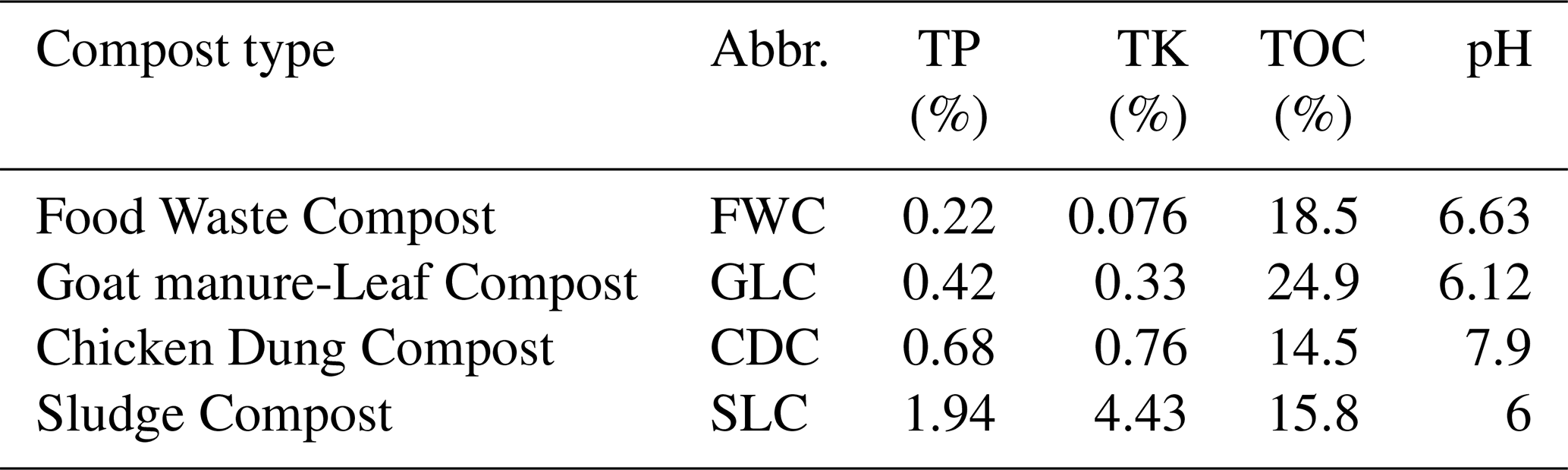
Note: Abbr., Abbreviation; TP, Total Phosphorus; TK, Total Potassium; TOC, Total Organic Carbon.
2.3 Soil incubation and CO2 emission monitoring
The experiment involved preparing soil-compost mixtures at two amendment ratios (2.5 % and 10 %, w/w), both adjusted to a total weight of 200 g per incubation unit. The two amendment ratios (2.5 % and 10 %, ) were selected based on the following: (1) the 2.5 % ratio corresponds to a typical field application rate of approximately 50 t ha−1, which is commonly used in local agricultural practice; (2) the 10 % ratio was chosen to amplify the treatment effects, allowing for clearer observation of compost-induced changes in soil properties and CO2 emissions under controlled incubation conditions. Each of the four composts was tested at both ratios, creating eight distinct amended mixtures. These, along with a pure soil control (200 g), constituted the nine core treatments, each replicated three times for a total of 27 units. The soils were incubated at a constant temperature of 28±2 °C. The CO2 efflux was measured on 12 occasions over the 90 d incubation period, specifically on days 1, 5, 7, 14, 28, 40, 47, 52, 60, 70, 80, and 90.
The CO2 emitted from the soil was trapped in 20 mL of 1 mol L−1 NaOH. After a 24 h accumulation period, BaCl2 was added to precipitate the trapped carbonate as BaCO3. The residual NaOH was then titrated with standardized HCl to quantify the CO2 evolved. These procedures were performed as described by Cheng et al. (2025).
2.4 Determination of physicochemical parameters of soil and incubated soil
Soil pH and electrical conductivity (EC) were measured in a 1:2.5 soil-water suspension (Allison, 1954). Total carbon (TC) was determined by dry combustion using an elemental analyzer (TruSpec Micro, LECO). TOC was determined by wet oxidation (Walkley and Black, 1934). Organic matter (OM) contents were calculated based on TOC values (Estefan et al., 2013) (OM (%) = 1.742 × TOC (%)). AP was extracted with 0.5 M NaHCO3 and measured spectrophotometrically (Olsen et al., 1954). Ammonium (NH–N) and nitrate (NO–N) were extracted with 2 mol⋅L−1 KCl and analyzed by a continuous flow analyzer (Mulvaney, 1996). Available potassium (AK) was extracted with 1 mol L−1 NH4OAc and quantified via flame atomic absorption spectroscopy (AAS) (Helmke and Sparks, 1996). Cation exchange capacity (CEC) was determined by the ammonium acetate (NH4OAc) saturation method at pH 7.0 (Chapman, 1965). Quantitative measurements of bulk density were not performed because the visual difference was so pronounced that sample processing for other analyses was prioritized. Nevertheless, the visual observation suggests a qualitative improvement in soil structure following compost addition.
2.5 Statistical analysis
To determine whether compost type and application rate significantly affected soil physicochemical properties, one-way ANOVA was performed on all measured parameters (pH, moisture, EC, CEC, TOC, TC, OM, NH–N, NO–N, AP, and AK) across the nine treatments (unamended ARC-soil control plus FWCS, GLCS, CDCS, and SLS each at 2.5 % and 10 %, ). Before running ANOVA, the Shapiro–Wilk test confirmed normality of residuals (p>0.05 for all variables) and Levene's test confirmed homogeneity of variances (p>0.05 for all variables), thus satisfying the prerequisites for parametric testing. Where assumptions held, Tukey's HSD post-hoc test was applied for pairwise comparisons among treatment means, with statistical significance defined at p<0.05. All analyses were conducted using SPSS version 26.0 (IBM Corp., Armonk, NY, USA).
A standard multiple linear regression model (Montgomery et al., 2021) was employed to evaluate the effects of soil properties on the response variable, following the general form:
In this formulation, Y is the response variable (cumulative CO2 emission). Each Ki corresponds to an explanatory or predictor variable included in the model. The parameters ξi quantify the partial effect of their respective Ki and Y, holding other variables constant. Finally, ϵ captures all unexplained variation, commonly known as the model residual.
Prior to model interpretation, the following assumptions were verified: (1) significant correlations between predictors and the response; (2) independent, normally distributed, and homoscedastic residuals. Normality was supported by the histogram and normal P–P plot of standardized residuals (Fig. S1a and b in the Supplement), residual independence was confirmed by the Durbin-Watson statistic (value of 2.597, close to 2; Table S1 in the Supplement), and homoscedasticity was examined using scatter plots of standardized residuals vs. predicted values; and (3) absence of severe multicollinearity among predictors, diagnosed using tolerance and variance inflation factor (VIF), with tolerance < 0.2 or VIF > 10 indicating potential multicollinearity (Table S2). To address multicollinearity, ridge regression was performed, and the optimal penalty parameter k was selected based on the ridge trace and the trade-off curve of k vs. R2 (Fig. S1c and d). Only after satisfying these criteria were the regression outputs deemed reliable.
3.1 Changes in soil physico-chemical properties following incubation
The ARC-soil appeared visually compacted, whereas the compost-amended soils exhibited a more aggregated and porous structure (Fig. 1).
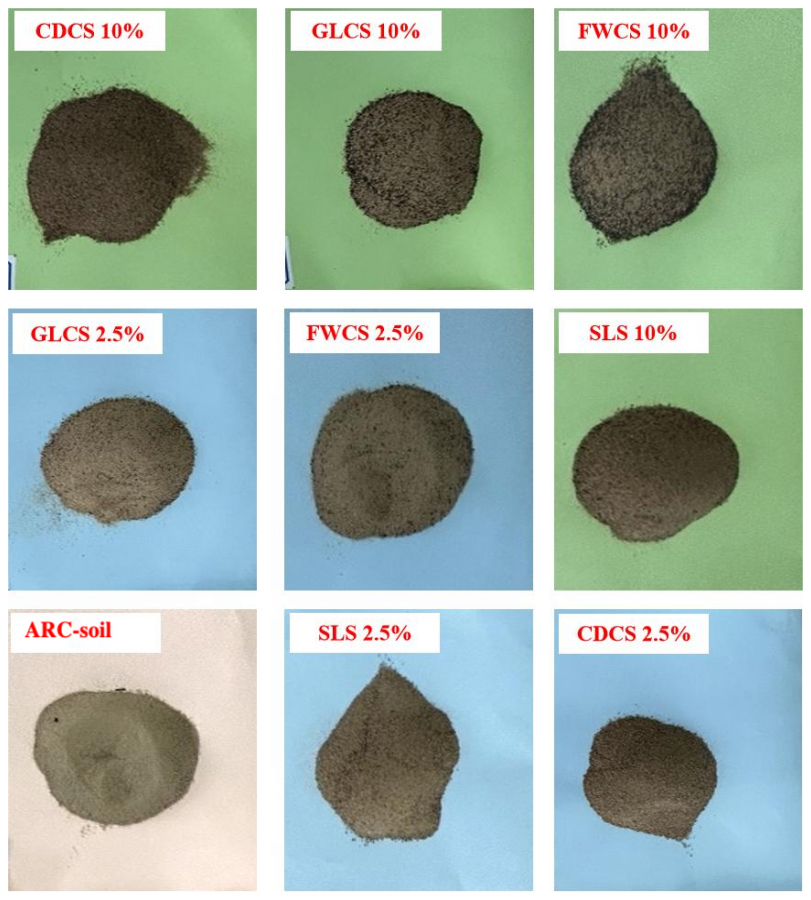
Figure 1Images illustrating soil appearance after incubation under different compost treatments: food waste compost (FWC), goat manure-leaf compost (GLC), chicken dung compost (CDC), and sewage sludge compost (SL), at application rates of 2.5 % and 10 % by mass.
Table 2Physico-chemical parameters of soils treated with different compost types and rates, along with ANOVA F-values and post hoc groupings.

Different lowercase letters within the same column indicate significant differences among treatments according to oneway ANOVA followed by Tukey's HSD post hoc test (p<0.05). Treatments sharing the same letter are not significantly different. df = degrees of freedom, * df (between groups) = 8, df (within groups) = 18 for all parameters. indicates p<0.001. Different lowercase letters within the same column indicate significant differences among treatments at p<0.05 by one-way ANOVA with Tukey’s HSD post-hoc test. Means sharing the same letter are not significantly different.
The detailed ANOVA results and Tukey HSD grouping letters are provided in Table 2. Prior to ANOVA, normality and homogeneity of variances were verified using the Shapiro–Wilk and Levene's tests, respectively (Table S4). Most parameters satisfied both assumptions (p>0.05); for the few cases with minor violations. To further ensure reliability, this study additionally performed the non-parametric Kruskal–Wallis H test for AK, EC, and AP, which confirmed the ANOVA results (Table S5). One-way ANOVA followed by Tukey's HSD post hoc test (p<0.05) was used to compare treatments. Compared to the unamended control, compost application significantly elevated soil TN content by 1.5 to 16 fold, and all compostamended soils showed significantly higher TN than the control (p<0.05). Both NH-N and NO-N levels were also markedly higher in amended soils, with GLCS 10 % exhibiting the highest values among all treatments (p<0.05). Furthermore, increasing the compost addition rate from 2.5 % to 10 % consistently enhanced the concentrations of all three nitrogen forms (p<0.05). Notably, while the levels of NH-N and NO-N in the original soil were similar (Fig. 2a), compost-treated soils exhibited consistently lower NH-N than NO-N across all application rates, indicating that compost addition promoted the nitrification process in the ARC-soil system.
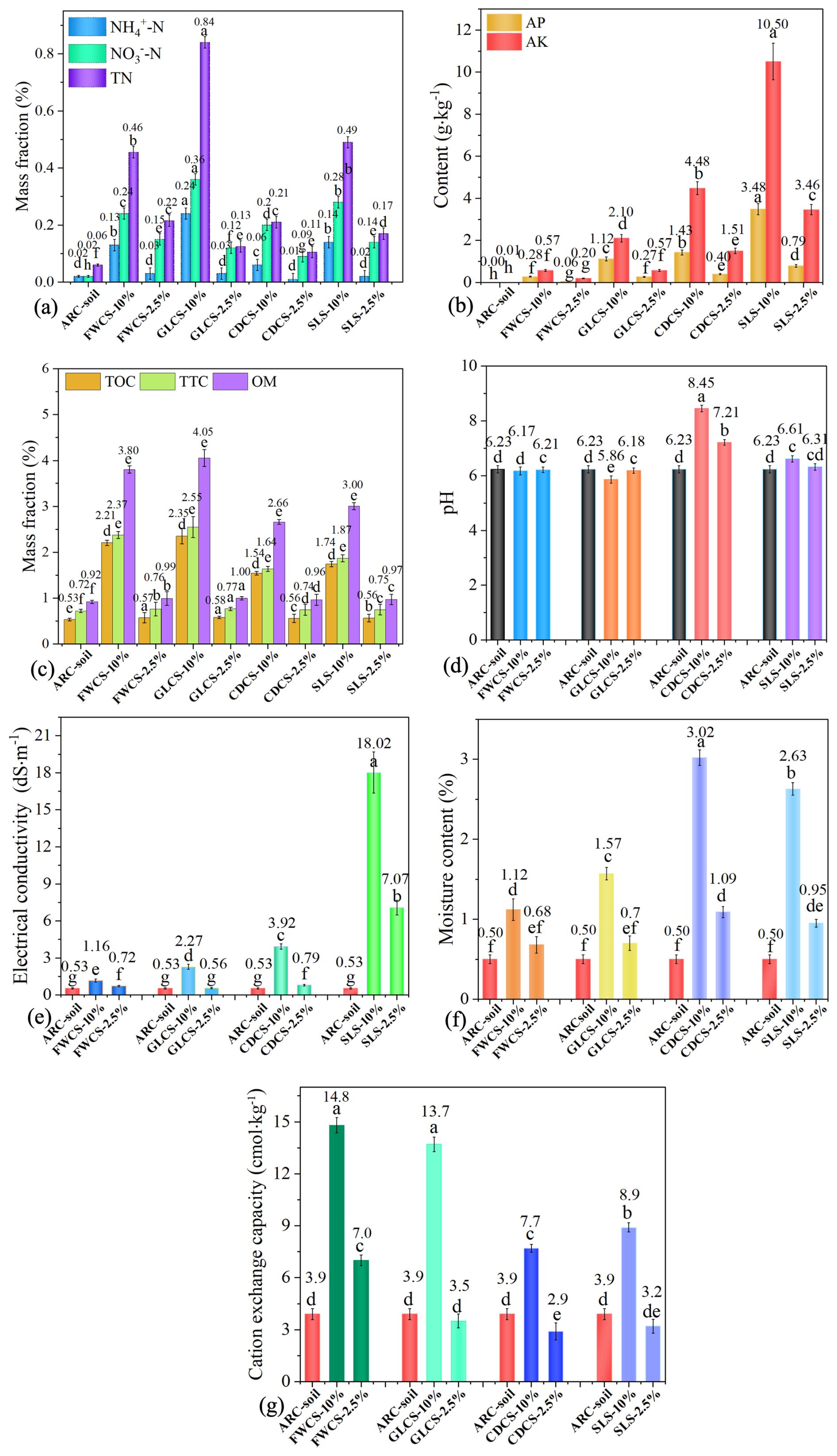
Figure 2A comparison between the original ARC-soil and compost-incubated soils is shown for: (a) nitrogen species (NH–N, NO–N, TN); (b) available phosphorus (AP) and available potassium (AK); (c) total organic carbon (TOC); total carbon (TC); organic matter (OM); (d) pH; (e) electrical conductivity (EC); (f) moisture content; and (g) cation exchange capacity (CEC). (Values are means (n=3); error bars indicate SD. Different lowercase letters above the bars indicate significant differences among treatments according to one-way ANOVA followed by Tukey's HSD post hoc test (p<0.05). Bars sharing the same letter are not significantly different.)
As shown in Fig. 2b, the ARC-soil had a negligible AP content, while all compost-amended soils exhibited significantly elevated AP levels. However, as the compost addition increased from 2.5 % to 10 %, both AP and AK contents increased significantly. According to Tukey's HSD test, SLS 10 % and SLS 2.5 % showed the highest AP levels with no significant difference between them, while SLS 10 % had the highest AK among all treatments (p<0.05). Notably, the high AP and AK contents in CDCS and SLS were due to additional external additions during composting, whereas FWCS and GLCS did not receive external additions of AP and AK. Figure 2c demonstrates that incubation with compost generally increased soil TOC relative to the nonincubated control. Tukey HSD comparisons revealed that FWCS 10 % and GLCS 10 % gave significantly higher TOC than the control and all 2.5 % treatments (p<0.05). Among the amendments, soils receiving FWC and GLC exhibited higher TOC levels than those treated with CDC or SL. It should be noted that lower TOC in a given amendment does not directly translate to reduced CO2 emissions, as the stability of the carbon present also plays a determining role.
As shown in Fig. 2d, after adding 10 % compost, the pH values of FWCS and GLCS were slightly lower than that of the original ARC-soil, with values of 6.17 and 5.86 (the ARC-soil pH was 6.23), while the pH values of CDCS and SLS significantly increased. EC increased substantially with compost addition (Fig. 2e). At the 10 % application rate, FWCS, GLCS, and CDCS raised EC values by approximately 2 to 8 fold relative to the original soil. SLS produced the most pronounced effect: EC reached 18.02 and 7.07 dS m−1 at 10 % and 2.5 % application rates, respectively, which were 13 to 34 times higher than the unamended control. This exceptionally high EC reflects the substantial soluble salt content of the sewage sludge compost, which originated from food and beverage wastewater treatment.
As shown in Fig. 2f, after adding 10 % compost, the moisture contents of FWCS, GLCS, CDCS, and SLS after 90 d were 1.12 %, 1.57 %, 3.03 %, and 2.63 %, respectively, all of which were higher than that of the original ARC-soil (0.5 %). Moreover, as the compost addition increased from 2.5 % to 10 %, the moisture content of FWCS, GLCS, CDCS, and SLS all increased to varying degrees, with CDCS 10 % being significantly higher than other treatments (p<0.05). During the incubation experiment, the irrigation time and water volume were kept consistent for all samples, indicating that CDCS and SLS exhibited higher water retention compared to FWCS and GLCS.
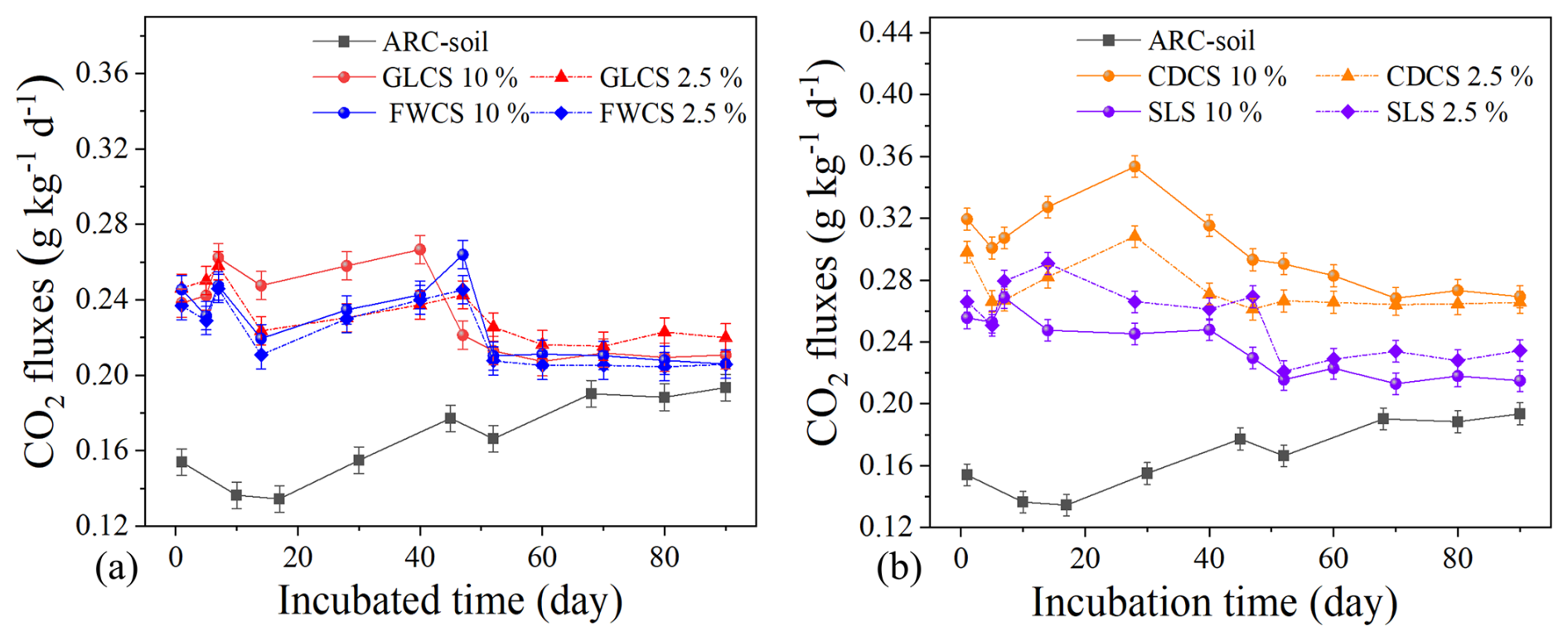
Figure 3(a) Comparative CO2 efflux in ARC-soil and food waste compost-amended soil (FWCS) at 10 % and 2.5 %, and goat manure-leaf compost-amended soil (GLCS) at 10 % and 2.5 %; and (b) comparative CO2 efflux in ARC-soil and chicken dung compost-amended soil (CDCS) at 10 % and 2.5 %, and sewage sludge compost-amended soil (SLS) at 10 % and 2.5 % during the 90 d period.
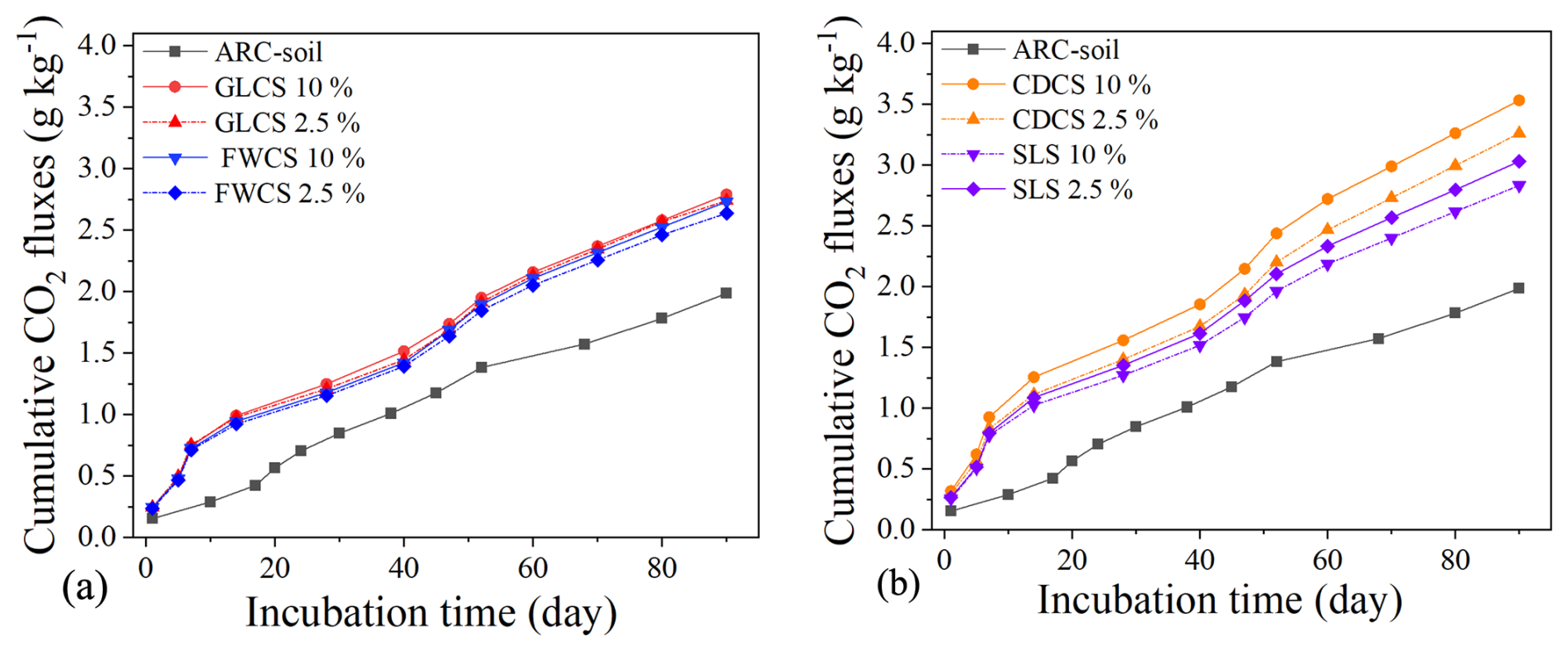
Figure 4Cumulative CO2 emission over the 90 d incubation period for: (a) ARC-soil and food waste compost-amended soil (FWCS) at 10 % and 2.5 %, and goat manure-leaf compost-amended soil (GLCS) at 10 % and 2.5 %; (b) ARC-soil and chicken dung compost-amended soil (CDCS) at 10 % and 2.5 %, and sewage sludge compost-amended soil (SLS) at 10 % and 2.5 %.
As shown in Fig. 2g, after adding 10 % compost, the CEC of the soil increased 3–5 times overall, with SLS 10 % and CDCS 10 % showing significantly higher CEC than FWCS 10 % and GLCS 10 % (p<0.05). A higher CEC indicates a greater capacity to retain nutrient cations, improved soil fertility, and a stronger buffering effect against fluctuations in soil pH and EC. Thus, CDCS and SLS conferred higher soil fertility than FWCS and GLCS, and more effectively regulated pH and EC fluctuations.
3.2 The dynamics of CO2 flux from the soil were monitored throughout the incubation period
Throughout the 90 d incubation period, CO2 emissions from FWCS, GLCS, CDCS, and SLS remained consistently higher than ARC-soil, although temporal fluctuations were observed (Fig. 3a). Over time, the CO2 emissions from FWCS 10 %/FWCS 2.5 % and GLCS 10 %/GLCS 2.5 % significantly increased, peaking around day 52 (0.264/0.245 and 0.266/0.242 g kg−1 d−1, respectively). Thereafter, CO2 emissions declined briefly from day 52 to 60 before stabilizing. At the 10 % application rate, CDCS and SLS also exhibited considerable fluctuation but remained higher than the unamended control (Fig. 3b). CDCS emissions gradually increased after two weeks, peaked around day 30, then declined over the following 20 d before stabilizing. In contrast, SLS emissions showed a declining trend after day 10 and stabilized after day 50. The CO2 emission patterns for both CDCS and SLS were broadly consistent between the 2.5 % and 10 % application rates.
Figure 4 presents the cumulative CO2 emissions from soils amended with four distinct compost types (FWC, GLC, CDC, SL) at two application rates for a total of nine treatments. The emission patterns varied considerably depending on the compost type. As illustrated in Fig. 4a, soils treated with GLCS consistently exhibited slightly higher cumulative emissions than those receiving FWCS. Figure 4b further demonstrates that CDC produced the highest cumulative emissions throughout the experiment, significantly surpassing the levels observed in soils treated with SL, GLC, and FWC. Overall, the compost types can be ranked in descending order of their effect on cumulative soil CO2 emissions as follows: CDCS > SLS > GLCS > FWCS.
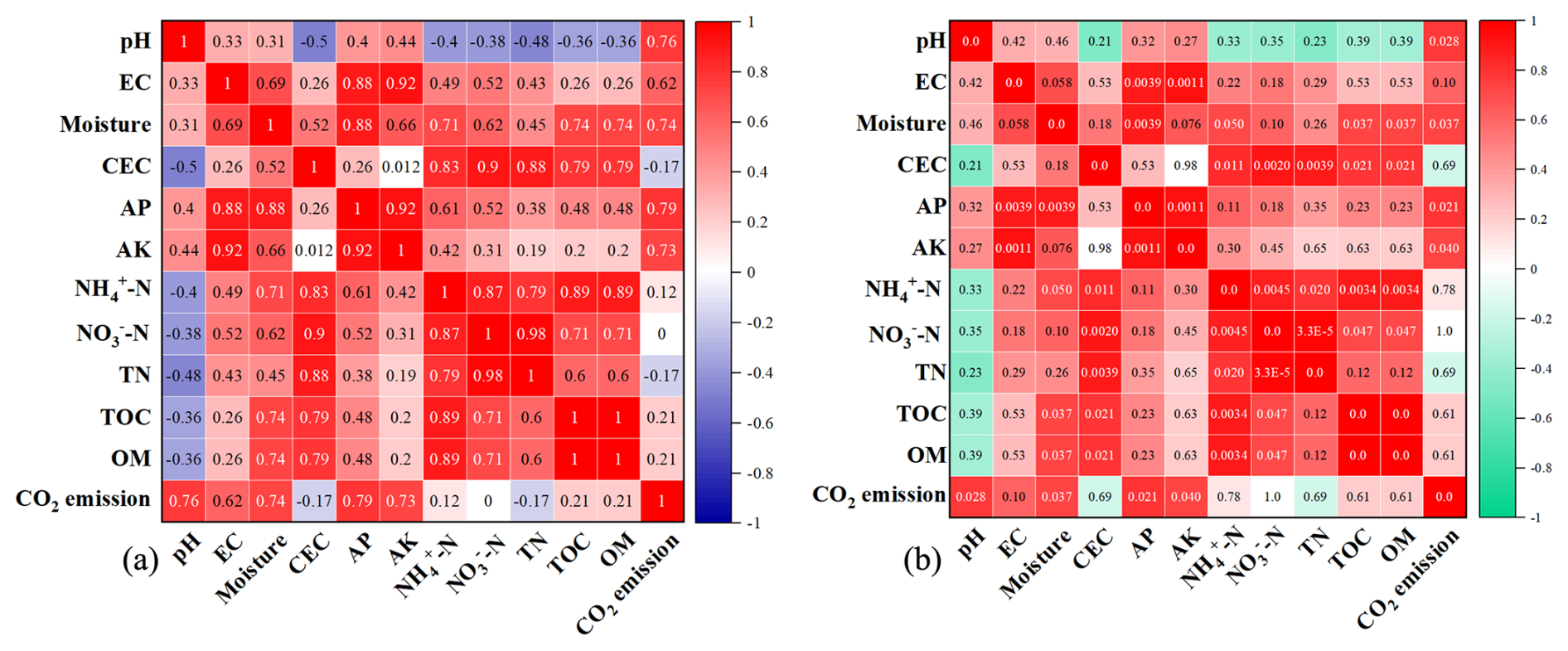
Figure 5Pearson's correlation matrix of soil physicochemical properties and their relationships with cumulative CO2 emission. (a) Correlation coefficients (R values), with colors indicating the direction and strength of correlations (blue: positive; red: negative). (b) Statistical significance levels, with darker colors indicating significant correlations at the p<0.05 level and lighter colors indicating non-significant correlations.
3.3 Multiple linear regression analysis (MLRA)
Figure 5a and b presents the correlation and significance matrices for twelve soil physico-chemical properties and CO2 emissions. The analysis reveals that CO2 efflux is closely linked to several factors, showing strong positive correlations with available phosphorus (0.79), pH (0.76), moisture content (0.74), available potassium (0.73), and electrical conductivity (0.62). Based on the correlation coefficients, the relative influence of these key drivers on CO2 emissions decreased in the following order: AP > pH > moisture content > AK > EC.
Validating the absence of residual autocorrelation is critical for confirming that regression model assumptions hold. The Durbin-Watson statistic, which ranges from 0 to 4, reflects residual independence when near 2. Values deviating toward 0 or 4 imply possible autocorrelation. In this analysis, the obtained statistic of 2.597 (Table S1) closely approaches 2, indicating no substantial autocorrelation and thus satisfying the independence assumption.
The histogram of standardized residuals (Fig. S1a) displays a shape consistent with normality, centered near zero with a standard deviation of about 0.5. Correspondingly, the close alignment of points along the reference line in the first quadrant of the normal probability plot (Fig. S1b) also supports the normality of the residual distribution.
Collinearity diagnostics based on tolerance and variance inflation factor (VIF) are summarized in Table S2. Conventionally, tolerance < 0.2 or VIF > 10 indicates potential multicollinearity. In this dataset, total carbon (TC), moisture content, available phosphorus (AP), and available potassium (AK) all exhibited tolerance values below 0.2 and VIF values exceeding 10, confirming multicollinearity among these predictors.
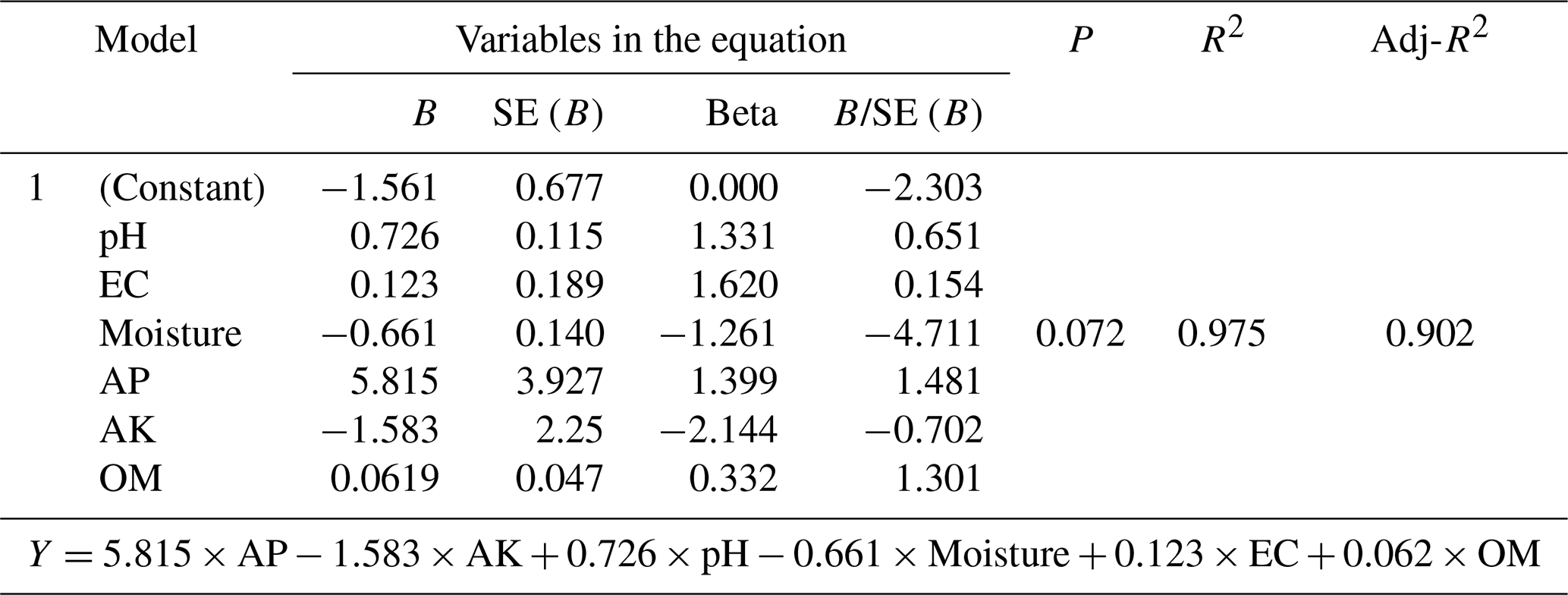
To address this problem, the study used ridge regression analysis. As depicted in Fig. S1c, the trajectories of standardized coefficients across increasing values of the ridge parameter (k) show that each coefficient curve descends rapidly before stabilizing, and all curves converge to a common range. Based on the stabilization patterns in Fig. S1c and the corresponding MSE profile in Fig. S1d, a ridge parameter of k=0.05 was selected. The resulting ridge-regression coefficients are reported in Table 3. The established regression equation is:
In the regression equation, Y represents cumulative CO2 emissions. The regression model's overall validity was confirmed by analysis of variance (ANOVA), which yielded a statistically significant result (p<0.1). The model demonstrated strong explanatory power, as evidenced by an adjusted R2 value of 0.902, indicating that approximately 90.2 % of the variance in the response variable is accounted for by the selected predictors. Within the fitted equation, the estimated coefficient for each independent variable quantifies its individual effect size and direction on the dependent variable.
Table 3Multiple linear regression coefficients for soil physico-chemical properties predicting CO2 emission.
4.1 Mechanisms of compost in improving soil properties
The application of compost significantly enhances key soil physico-chemical properties. Firstly, the visual observations of soil structure (Fig. 1) indicate that compost amendment alleviated soil compaction in a dose-dependent manner. This effect is likely attributable to the humic substances in the compost, which promote the formation of soil aggregates through adhesion, thereby improving soil porosity and structural stability. Secondly, compost application significantly altered soil nitrogen dynamics, as reflected by the decreased NH–N and increased NO–N levels in all compost-treated soils (Fig. 2a), suggesting enhanced nitrification. This is consistent with the findings of Zhang et al. (2015), who reported that the addition of compost to lateritic soils increased the abundance of ammonia-oxidizing bacteria, thereby promoting nitrification. In this study, the CDCS treatment exhibited the strongest nitrification activity, likely due to its highest pH among the treatments. This aligns with the finding that low pH is detrimental to NH3 retention in soil, as it promotes the ionization of NH3 to NH, potentially creating a substrate shortage for nitrification and thus inhibiting the process (Ying et al., 2010). Furthermore, compost amendment markedly improves the bioavailability of phosphorus and potassium. Phosphorus in compost primarily exists in the form of mineral phosphates, such as calcium phosphate (Ca3(PO4)2) and iron phosphate (FePO4). Microbial activity during and after incorporation can solubilize these compounds, converting them into plant-available forms such as H2PO and HPO (Lanno et al., 2021). Potassium in compost remains relatively stable and bioavailable as it exists mainly in ionic form (K+). During the composting process and subsequent soil incubation, these potassium ions are released into the soil solution, directly increasing the soil's readily AK content. The final levels of AP and AK contributed by compost depend on the initial nutrient content of the raw materials or any losses during the composting process.
4.2 Key drivers of CO2 emissions: pH and phosphorus as primary controls
The cumulative CO2 emissions from the four compost-incubated soils followed a distinct descending order: CDCS > SLS > GLCS > FWCS. This pattern demonstrates that the specific type of compost significantly influences the magnitude of soil heterotrophic respiration. Notably, the CDCS treatment, characterized by the highest pH and substantial nutrient availability, also exhibited the greatest CO2 efflux. This correlation suggests a strong link between compost-induced soil conditions and carbon mineralization rates.
Statistical analysis of influencing factors revealed that soil AP and pH were the primary drivers of CO2 emissions in this compost-amended system, followed by moisture content and OM. The high adjusted R2 (0.902) demonstrates that the selected physico-chemical properties are strong predictors of cumulative CO2 emission, collectively accounting for the vast majority of the observed variance. This confirms that compost-induced changes in these soil properties are closely linked to enhanced microbial activity. This hierarchy underscores the complex interplay between compost-derived nutrients, soil abiotic conditions, and microbial activity in controlling carbon dynamics.
The dominant role of pH stems from its comprehensive control over soil biogeochemistry. It is a master variable regulating microbial community composition and metabolic activity. For instance, bacterial growth rates are typically optimized in neutral to slightly alkaline conditions, and specific microbial taxa dominate at pH extremes (e.g., Actinobacteria in alkaline soils) (Rousk et al., 2009; Fierer and Jackson, 2006). Most extracellular enzymes involved in decomposition also exhibit peak activity between pH 6 and 8. Crucially, pH influences the stability of SOM. Lower pH increases the positive surface charge on iron and aluminium oxides, enhancing their capacity to adsorb negatively charged organic molecules and thereby promoting SOM stabilization (Wang et al., 2024b; Oliver et al., 2019). Conversely, a rise in pH, as seen in CDCS, can accelerate the decomposition of particulate organic matter (Hayashi et al., 2024), explaining the higher CO2 emissions from this treatment.
Phosphorus availability emerged as another critical factor. In many ecosystems, especially tropical ones, phosphorus is a key limiting nutrient for biological activity (Yang et al., 2014). The addition of compost, which increased soil AP, likely alleviated this limitation. As suggested by Sanchez-Rodríguez et al. (2024), phosphorus addition can indirectly stimulate CO2 emissions by promoting the desorption of organic carbon compounds from mineral surfaces, thereby increasing substrate availability for microbes. This mechanism may explain the positive correlation between AP and CO2 flux observed here. Soil moisture content, a secondary yet significant driver, primarily regulates the diffusion of oxygen within soil pores. This, in turn, governs the dominant mode of microbial respiration (aerobic vs. anaerobic) and overall microbial activity, making it a fundamental regulator for the soil biota responsible for decomposition (Lacroix et al., 2021).
In summary, our results supported all three hypotheses proposed in the Introduction. Hypothesis 1 was confirmed by the significant differences in cumulative CO2 emissions among compost types, with CDCS > SLS > GLCS > FWCS. Hypothesis 2 was validated by the multiple regression analysis, which identified soil pH and available phosphorus as the primary interactive drivers of emissions. Hypothesis 3 was substantiated by the fact that CDCS induced the highest pH elevation and AP increase, leading to the greatest CO2 flux, whereas FWCS showed the opposite effect.
This study examined the effects of adding four types of compost (FWCS, GLCS, CDCS, SLS) at two rates (2.5 % and 10 %) on ARC-soil properties and CO2 emissions. The main findings are:
-
Compost addition improved soil physical properties (e.g., reduced compaction, increased moisture retention) and significantly enhanced soil fertility. TN, NH–N, AP, and AK all increased markedly. Organic carbon increased significantly only under FWCS 10 % and GLCS 10 %. Notably, CDCS and SLS treatments resulted in higher pH, EC, and nutrient availability compared to FWCS and GLCS.
-
The CO2 emissions from amended soils were consistently higher than from the control, with distinct temporal patterns. Cumulative emissions over the 90 d incubation followed the order: CDCS > SLS > GLCS > FWCS, indicating that compost type strongly influenced heterotrophic respiration.
-
Statistical analysis identified AP and soil pH as the primary drivers of CO2 emissions, followed by moisture content and AK.
-
The observed CO2 emission patterns are linked to compost-induced changes in soil conditions. Higher pH likely stimulated microbial activity and organic matter decomposition, while increased AP alleviated phosphorus limitation. Moisture content further modulated microbial respiration dynamics.
These findings advocate for precision compost management. The core strategy is to select or formulate mature composts with near-neutral pH and controlled phosphorus release, guided by soil testing. This approach mitigates carbon loss risks while delivering agronomic benefits, advancing climate-smart agriculture.
We acknowledge that this study was conducted under controlled laboratory incubation conditions, which may not fully capture the complexity of field environments (e.g., temperature fluctuations, plant root activity, and longer-term carbon dynamics). Future field-scale studies with multi-year monitoring are needed to validate these findings under real agricultural conditions.
The datasets and analysis code supporting this study are publicly available in the Zenodo repository: https://doi.org/10.5281/zenodo.20454193 (Cheng et al., 2026).
The supplement related to this article is available online at https://doi.org/10.5194/soil-12-791-2026-supplement.
XC conceived and designed the study, developed the methodology, performed the formal analysis and data curation, conducted the validation, and wrote the original draft. OF and AR contributed to the investigation and reviewed and edited the manuscript. OCC acquired funding, supervised the project, contributed to the methodology and formal analysis, and reviewed and edited the manuscript. The final manuscript was prepared with contributions from all co-authors.
The authors have the following competing interests: The authors declare the following financial interests/personal relationships which may be considered as potential competing interests: Chiu Chuen Onn reports financial support was provided by Malaysia Ministry of Higher Education. If there are other authors, they declare that they have no known competing financial interests or personal relationships that could have appeared to influence the work reported in this paper.
Publisher's note: Copernicus Publications remains neutral with regard to jurisdictional claims made in the text, published maps, institutional affiliations, or any other geographical representation in this paper. The authors bear the ultimate responsibility for providing appropriate place names. Views expressed in the text are those of the authors and do not necessarily reflect the views of the publisher.
The author would like to thank [Universiti malaya] for their support and assistance.
This work was supported by the Ministry of Higher Education Malaysia under the Fundamental Research Grant Scheme (FRGS) grant no. FRGS/1/2022/TK01/UM/02/2], and the Young Innovative Talent Project-Guangdong Scientific Research Platform and Projects for the Higher-educational Institution & Education Science Planning Scheme [grant no. KY2022036401].
This paper was edited by Rafael Clemente and reviewed by Abel Veloso and three anonymous referees.
Allison, L. E.: Diagnosis and improvement of saline and alkali soils, USDA Handbook, 60, 82–92, 1954.
Amelung, W., Bossio, D., de Vries, W., Kögel-Knabner, I., Lehmann, J., Amundson, R., Bol, R., Collins, C., Lal, R., Leifeld, J., Minasny, B., Pan, G., Paustian, K., Rumpel, C., Sanderman, J., van Groeningen, J. W., Mooney, S., van Wesemael, B., Wander, M., and Chabbi, A.: Towards a global-scale soil climate mitigation strategy, Nat. Commun., 11, 5427, https://doi.org/10.1038/s41467-020-18887-7, 2020.
Aye, N. S., Butterly, C. R., Sale, P. W. G., and Tang, C.: Residue addition and liming history interactively enhance mineralization of native organic carbon in acid soils, Biol. Fertil. Soils, 53, 61–75, https://doi.org/10.1007/s00374-016-1156-y, 2017.
Bai, X. X., Tang, J., Wang, W., Ma, C., and Shi, L.: Organic amendment effects on cropland soil organic carbon and its implications: A global synthesis, Catena, 231, 107343, https://doi.org/10.1016/j.catena.2023.107343, 2023.
Bai, Z., Caspari, T., Ruiperez Gonzalez, M., Batjes, N. H., Mäder, P., Bünemann, E. K., de Goede, R., Brussaard, L., Xu, M., Santos Ferreira, C. S., Reintam, E., Fan, H., Mihelič, R., Glavan, M., and Tóth, Z.: Effects of agricultural management practices on soil quality: A review of long-term experiments for Europe and China, Agr. Ecosyst. Environ., 265, 1–7, https://doi.org/10.1016/j.agee.2018.05.028, 2018.
Bardgett, R. D., Bullock, J. M., Lavorel, S., Manning, P., Schaffner, U., Ostle, N., Chomel, M., Durigan, G., Fry, E. L., Johnson, D., Lavallee, J. M., Le Provost, G., Luo, S., Png, K., Sankaran, M., Shi, X., Shen, R., and van der Plas, F.: Combatting global grassland degradation, Nat. Rev. Earth Environ., 2, 720–735, https://doi.org/10.1038/s43017-021-00207-2, 2021.
Bernard, L., Basile-Doelsch, I., Derrien, D., Fanin, N., Fontaine, S., Guenet, B., Karimi, B., Marsden, C., and Maron, P. A.: Advancing the mechanistic understanding of the priming effect on soil organic matter mineralisation, Funct. Ecol., 36, 1355–1377, https://doi.org/10.1111/1365-2435.14038, 2022.
Bolinder, M. A., Crotty, F., Elsen, A., Frac, M., Kismányoky, T., Lipiec, J., Tits, M., and Tóth, Z.: The effect of crop residues, cover crops, manures and nitrogen fertilization on soil organic carbon changes in agroecosystems: a synthesis of reviews, Mitig. Adapt. Strateg. Glob. Change, 25, 929–952, https://doi.org/10.1007/s11027-020-09916-3, 2020.
Bong, C. P. C., Lim, L. Y., Lee, C. T., Klemeš, J. J., Ho, C. S., and Ho, W. S.: The characterisation and treatment of food waste for improvement of biogas production during anaerobic digestion – A review, J. Clean. Product., 172, 1545–1558, https://doi.org/10.1016/j.jclepro.2017.10.199, 2018.
Chapman, H. D.: Cation exchange capacity, in: Methods of Soil Analysis, Part 2, Agronomy Monograph No. 9, edited by: Black, C. A., American Society of Agronomy, Madison, WI, 891–901, https://doi.org/10.2134/agronmonogr9.2.c6, 1965.
Chen, J., Luo, Y., van Groenigen, K. J., Hungate, B. A., Cao, J., Zhou, X., and Wang, R.: A keystone microbial enzyme for nitrogen control of soil carbon storage, Sci. Adv., 4, eaaq1689, https://doi.org/10.1126/sciadv.aaq1689, 2018.
Chen, J., Seven, J., Zilla, T., Dippold, M. A., Blagodatskaya, E., and Kuzyakov, Y.: Microbial C:N:P stoichiometry and turnover depend on nutrients availability in soil: A 14C, 15N and 33P triple labelling study, Soil Biol. Biochem., 131, 206–216, https://doi.org/10.1016/j.soilbio.2019.01.017, 2019.
Cheng, X., Onn, C. C., Othman, F., Abdullah, R., Guo, W., Gunn, P. F. E., and Yue, L.: Impact of biochars on CO2 emissions and physico-chemical properties in Malaysian tropical soils: Factor analysis and weighted contribution, J. Environ. Sci., 158, 84–97, https://doi.org/10.1016/j.jes.2025.03.002, 2025.
Cheng, X., Onn, C. C., Rosazlin, A., and Faridah, O.: The pH and available phosphorus as primary drivers of compost-induced CO2 emissions from malaysian tropical soil: empirical relationships [Dataset], Zenodo [data set], https://doi.org/10.5281/zenodo.20454193, 2026.
Cho, H. N., Shin, M., Lee, I., Ryoo, H., Acharya, B. S., Park, J. H., Cheong, Y. H., Cho, J. S., and Kang, S. W.: Impact of biochar and compost amendment on corn yield and greenhouse gas emissions under waterlogged conditions, Appl. Biol. Chem., 66, 87, https://doi.org/10.1186/s13765-023-00845-8, 2023.
Cotrufo, M. F., Wallenstein, M. D., Boot, C. M., Denef, K., and Paul, E. A.: The Microbial Efficiency-Matrix Stabilization (MEMS) framework integrates plant litter decomposition with soil organic matter stabilization: do labile plant inputs form stable soil organic matter, Global Change. Biol., 19, 988–995, https://doi.org/10.1111/gcb.12113, 2013.
Estefan, G., Sommer, R., and Ryan, J.: Methods of Soil, Plant, and Water Analysis, in: 3rd Edn., ICARDA – International Center for Agricultural Research in the Dry Areas, Beirut, https://hdl.handle.net/20.500.11766/7512 (last access: 24 July 2026), 2013.
Fierer, N. and Jackson, R. B.: The diversity and biogeography of soil bacterial communities, P. Natl. Acad. Sci. USA, 103, 626–631, https://doi.org/10.1073/pnas.0507535103, 2006.
Gu, B., Qin, T., Qiu, M., Yu, J., Zhang, L., Li, Y., and Hatano, R.: Addition of exogenous organic ameliorants mediates soil bacteriome and microbial community carbon source utilization pattern in coastal saline-alkaline soil, Agriculture, 14, 44, https://doi.org/10.3390/agriculture14010044, 2024.
Gurmessa, B., Cocco, S., Ashworth, A. J., Udawatta, R. P., Cardelli, V., Serrani, D., Ilari, A., Foppa Pedretti, E., Fornasier, F., and Corti, G.: Enzyme activities and microbial nutrient limitations in response to digestate and compost additions in organic matter poor soils in the Marches, Italy, Soil Till. Res., 242, 106136, https://doi.org/10.1016/j.still.2024.106136, 2024.
Hayashi, R., Maie, N., Wagai, R., Hirano, Y., Matsuda, Y., Okamoto, T., Wada, R., and Tanikawa, T.: Soil acidity accelerates soil organic matter decomposition in Cryptomeria japonica stands and Chamaecyparis obtusa stands, Plant Soil, 494, 627–649, https://doi.org/10.1007/s11104-023-06308-9, 2024.
Helmke, P. A. and Sparks, D. L.: Lithium, sodium, potassium, rubidium, and cesium, in: Methods of Soil Analysis, Part 3 – Chemical Methods, SSSA Book Series No. 5, edited by: Sparks, D. L., Soil Science Society of America, Madison, WI, 551–574, https://doi.org/10.2136/sssabookser5.3.c19, 1996.
Huang, X. L., Jia, Z. X., Jiao, X. Y., Wang, J. L., and Huang, X. F.: Long-term manure applications to increase carbon sequestration and macroaggregate-stabilized carbon, Soil Biol. Biochem., 174, 108827, https://doi.org/10.1016/j.soilbio.2022.108827, 2022.
IPCC: Climate Change 2022: Mitigation of Climate Change, in: Contribution of Working Group III to the Sixth Assessment Report of the Intergovernmental Panel on Climate Change, Cambridge University Press, Cambridge, UK and New York, NY, USA, https://doi.org/10.1017/9781009157926, 2022.
Kuzyakov, Y., Friedel, J. K., and Stahr, K.: Review of mechanisms and quantification of priming effects, Soil Biol. Biochem., 32, 1485–1498, https://doi.org/10.1016/S0038-0717(00)00084-5, 2000.
Lacroix, E. M., Rossi, R. J., Bossio, D., and Fendorf, S. E.: Effects of moisture and physical disturbance on pore-scale oxygen content and anaerobic metabolisms in upland soils, Sci. Total Environ., 780, 146572, https://doi.org/10.1016/j.scitotenv.2021.146572, 2021.
Laffely, A., Erich, M. S., and Ohno, T.: Dissolved organic carbon chemical composition controls the rate of CO2 release from rewetted soil, Soil Sci. Soc. Am. J., 84, 483–493, https://doi.org/10.1002/saj2.20035, 2020.
Lal, R.: Soil carbon sequestration impacts on global climate change and food security, Science, 304, 1623–1627, https://doi.org/10.1126/science.1097396, 2004.
Lanno, M., Kriipsalu, M., Shanskiy, M., Silm, M., and Kisand, A.: Distribution of Phosphorus Forms Depends on Compost Source Material, Resources, 10, 102, https://doi.org/10.3390/resources10100102, 2021.
Lehmann, J., Hansel, C. M., Kaiser, C., Kleber, M., Maher, K., Manzoni, S., Nunan, N., Reichstein, M., Schimel, J. P., Torn, M. S., Wieder, W. R., and Kögel-Knabner, I.: Persistence of soil organic carbon caused by functional complexity, Nat. Geosci., 13, 529–534, https://doi.org/10.1038/s41561-020-0612-3, 2020.
Li, J., Sang, C., Yang, J., Qu, L., Xia, Z., Sun, H., Jiang, P., Wang, X., He, H., and Wang, C.: Stoichiometric imbalance and microbial community regulate microbial elements use efficiencies under nitrogen addition, Soil Biol. Biochem., 156, 108207, https://doi.org/10.1016/j.soilbio.2021.108207, 2021.
Li, Y., Wu, L., Tang, L., Ren, F., Wang, X., Zhu, P., Sun, N., and Xu, M.: Manure application decreases soil organic carbon priming by increasing mineral protection and nitrogen availability, Geoderma, 439, 116676, https://doi.org/10.1016/j.geoderma.2023.116676, 2023.
Lipper, L., Thornton, P., Campbell, B. M., Baedeker, T., Braimoh, A., Bwalya, M., Caron, P., Cattaneo, A., Garrity, D., Henry, K., Hottle, R., Jackson, L., Jarvis, A., Kossam, F., Mann, W., McCarthy, N., Meybeck, A., Neufeldt, H., Remington, T., Sen, P. T., Sessa, R., Shula, R., Tibu, A., and Torquebiau, E. F.: Climate-smart agriculture for food security, Nat. Clim. Change, 4, 1068–1072, https://doi.org/10.1038/nclimate2437, 2014.
Liu, H. M., Zhou, G. Y., Zhou, X. H., Zhou, Y. S., Jiang, Q., and Guo, D. L.: Differential response of soil respiration to nitrogen and phosphorus addition in a highly phosphorus-limited subtropical forest, China, Forest Ecol. Manage., 448, 499–508, https://doi.org/10.1016/j.foreco.2019.06.020, 2019.
Mao, X., Sun, T., Zhu, L., Wanek, W., Cheng, Q., Wang, X., Zhou, J., Liu, X., Ma, Q., Wu, L., and Jones, D. L.: Microbial adaption to stoichiometric imbalances regulated the size of soil mineral-associated organic carbon pool under continuous organic amendments, Geoderma, 445, 116883, https://doi.org/10.1016/j.geoderma.2024.116883, 2024.
McFarlane, K. J., Cusack, D. F., Dietterich, L. H., Hedgpeth, A. L., Finstad, K. M., and Nottingham, A. T.: Experimental warming and drying increase older carbon contributions to soil respiration in lowland tropical forests, Nat. Commun., 15, 7084, https://doi.org/10.1038/s41467-024-51422-6, 2024.
Montgomery, D. C., Peck, E. A., and Vining, G. G.: Introduction to Linear Regression Analysis, in: 6th Edn., John Wiley & Sons, Hoboken, NJ, USA, ISBN: 978-1-119-57872-7, 2021.
Mulvaney, R. L.: Nitrogen – inorganic forms, in: Methods of Soil Analysis, Part 3 – Chemical Methods, SSSA Book Series No. 5, edited by: Sparks, D. L., Soil Science Society of America, Madison, WI, 1123–1184, https://doi.org/10.2136/sssabookser5.3.c38, 1996.
Niu, J., Saeed, Q., Wang, W., Zhang, R., Liu, L., Lv, F., Xu, J., Han, Y., Zhang, P., Hu, C., Xu, H., Sun, B., Yang, X., and Zhang, S.: Manure replacing synthetic fertilizer improves crop yield sustainability and reduces carbon footprint under winter wheat–summer maize cropping system, J. Environ. Manage., 358, 120936, https://doi.org/10.1016/j.jenvman.2024.120936, 2024.
Oldfield, E. E., Bradford, M. A., and Wood, S. A.: Global meta-analysis of the relationship between soil organic matter and crop yields, SOIL, 5, 15–32, https://doi.org/10.5194/soil-5-15-2019, 2019.
Oldfield, E. E., Lavallee, J. M., Blesh, J., Bradford, M. A., Cameron-Harp, M., Cotrufo, M. F., Eagle, A. J., Eash, L., Even, R. J., Kuebbing, S. E., Kort, E. A., Lark, T. J., Latka, C., Lin, Y., Machmuller, M. B., O'Neill, B., Raffeld, A. M., RoyChowdhury, T., Rudek, J., Sanderman, J., Sprunger, C. D., Toombs, T. P., Uludere Aragon, N., Vidal, M., Woolf, D., Zelikova, T. J., and Gordon, D. R.: Greenhouse gas mitigation on croplands: clarifying the debate on knowns, unknowns and risks to move forward with effective management interventions, Carbon Manage., 15, 1–12, https://doi.org/10.1080/17583004.2024.2365896, 2024.
Oliver, D. P., Li, Y., Orr, R., Nelson, P., Barnes, M., McLaughlin, M. J., and Kookana, R. S.: The role of surface charge and pH changes in tropical soils on sorption behaviour of per- and polyfluoroalkyl substances (PFASs), Sci. Total Environ., 673, 197–206, https://doi.org/10.1016/j.scitotenv.2019.04.055, 2019.
Olsen, S. R., Cole, C. V., Watanabe, F. S., and Dean, L. A.: Estimation of Available Phosphorus in Soils by Extraction with Sodium Bicarbonate, USDA Circular No. 939, USDA, Washington, D.C., https://pdfs.semanticscholar.org/681a/42d80a5dd02d2917a7ec4af079916c576f29.pdf (last access: 29 June 2026), 1954.
Paustian, K., Lehmann, J., Ogle, S., Reay, D., Robertson, G. P., and Smith, P.: Climate-smart soils, Nature, 532, 49–57, https://doi.org/10.1038/nature17174, 2016.
Razavi, B. S., Zarebanadkouki, M., Blagodatskaya, E., and Kuzyakov, Y.: Rhizosphere shape of lentil and maize: spatial distribution of enzyme activities, Soil Biol. Biochem., 96, 229–237, https://doi.org/10.1016/j.soilbio.2016.02.020, 2016.
Rosinger, C., Keiblinger, K. M., Rousk, J., and Sandén, H.: Shifts in microbial stoichiometry upon nutrient addition do not capture growth-limiting nutrients for soil microorganisms in two subtropical soils, Biogeochemistry, 159, 33–43, https://doi.org/10.1007/s10533-022-00911-1, 2022.
Rousk, J., Brookes, P. C., and Bååth, E.: Contrasting soil pH effects on fungal and bacterial growth suggest functional redundancy in carbon mineralization, Appl. Environ. Microbiol., 75, 1589–1596, https://doi.org/10.1128/AEM.02775-08, 2009.
Rumpel, C., Amiraslani, F., Bossio, D., Chenu, C., Henry, B., Fuentes Espinoza, A., Koutika, L.-S., Ladha, J., Madari, B., Minasny, B., Olaleye, A. O., Shirato, Y., Sall, S. N., Soussana, J.-F., and Varela-Ortega, C.: The role of soil carbon sequestration in enhancing human resilience in tackling global crises including pandemics, Soil Secur., 8, 100069, https://doi.org/10.1016/j.soisec.2022.100069, 2022.
Sanchez-Moreno, S., Ros, M. B. H., Walder, F., Peixoto, L., Gómez-Gallego, T., Jeanbille, M., Juhanson, J., Feiza, V., Aponte, C., Pulido-Moncada, M., Parasotas, I., Kochiieru, M., Amaleviciute-Volunge, K., Dammie, N., van der Heijden, M. G. A., Ramos, J. L., Feizene, D., Philippot, L., Munkholm, L., Velthof, G. L., Petersen, S. O., Hallin, S., and Goberna, M.: A global dataset of experimental agricultural management on soil carbon accrual, its synergies and trade-offs, Sci. Data, 12, 929, https://doi.org/10.1038/s41597-025-05238-8, 2025.
Sanchez-Rodríguez, A. R., del Campillo, M. C., Torrent, J., Cooledge, E. C., Chadwick, D. R., and Jones, D. L.: Phosphorus fertilization promotes carbon cycling and negatively affects microbial carbon use efficiency in agricultural soils: Laboratory incubation experiments, Geoderma, 450, 117038, https://doi.org/10.1016/j.geoderma.2024.117038, 2024.
Sarkar, B., Singh, M., Mandal, S., Churchman, G. J., and Bolan, N. S.: Clay minerals-organic matter interactions in relation to carbon stabilization in soils, The Future of Soil Carbon: Its Conservation and Formation, Elsevier, 71–86, https://doi.org/10.1016/B978-0-12-811687-6.00003-1, 2018.
Sarker, J. R., Singh, B. P., He, X., Fang, Y., Li, G. D., Collins, D., and Cowie, A. L.: Tillage and nitrogen fertilization enhanced belowground carbon allocation and plant nitrogen uptake in a semi-arid canola crop–soil system, Sci. Rep., 7, 10726, https://doi.org/10.1038/s41598-017-11190-4, 2017.
Shu, X. Y., He, J., Zhou, Z. H., Xia, L. L., Hu, Y. F., Zhang, Y. L., Zhang, Y. Y., Luo, Y. Q., Chu, H. Y., Liu, W. J., Yuan, S., Gao, X. S., and Wang, C. Q.: Organic amendments enhance soil microbial diversity, microbial functionality and crop yields: A meta-analysis, Sci. Total Environ., 829, 154627, https://doi.org/10.1016/j.scitotenv.2022.154627, 2022.
Smith, P., Soussana, J.-F., Angers, D., Schipper, L., Chenu, C., Rasse, D. P., Batjes, N. H., van Egmond, F., McNeill, S., Kuhnert, M., Arias-Navarro, C., Olesen, J. E., Chirinda, N., Fornara, D., Wollenberg, E., Álvaro-Fuentes, J., Sanz-Cobena, A., and Klumpp, K.: How to measure, report and verify soil carbon change to realize the potential of soil carbon sequestration for atmospheric greenhouse gas removal, Global Change. Biol., 26, 219–241, https://doi.org/10.1111/gcb.14815, 2020.
Tang, R., Liu, Y., Ma, R., Zhang, L., Li, Y., Li, G., Wang, D., Lin, J., Li, Q., and Yuan, J.: Effect of moisture content, aeration rate, and C/N on maturity and gaseous emissions during kitchen waste rapid composting, J. Environ. Manage., 326, 116662, https://doi.org/10.1016/j.jenvman.2022.116662, 2023.
Walkley, A. and Black, I. A.: An examination of the Degtjareff method for determining soil organic matter and a proposed modification of the chromic acid titration method, Soil Sci., 37, 29–38, https://doi.org/10.1097/00010694-193401000-00003, 1934.
Wang, H., Dong, W., Shao, D., Liu, L., Liao, B., Gu, W., Tang, C., Liu, J., Hu, W., Feng, J., and Huang, J.: Biochar enhances paddy productivity, carbon sequestration, and reduces greenhouse gas emissions in the Middle Yangtze River region, Agronomy, 14, 3067, https://doi.org/10.3390/agronomy14123067, 2024a.
Wang, X., Wang, T., Huang, Y., Liu, A., Li, Q., Wang, Y., Li, M., Fan, F., and Tang, Z.: Effect of biochars on the immobilization and form of Cadmium (Cd) in simulated Cd deposition of iron rich soils, Ecotoxicol. Environ. Saf., 272, 116045, https://doi.org/10.1016/j.ecoenv.2024.116045, 2024b.
Xiao, Q., Huang, Y., Wu, L., Tian, Y., Wang, Q., Wang, B., Xu, M., and Zhang, W.: Long-term manuring increases microbial carbon use efficiency and mitigates priming effect via alleviated soil acidification and resource limitation, Biol. Fertil. Soils, 57, 925–934, https://doi.org/10.1007/s00374-021-01583-z, 2021.
Yang, X., Thornton, P., Ricciuto, D., and Post, W.: The role of phosphorus dynamics in tropical forests – A modeling study using CLM-CNP, Biogeosciences, 11, 1667–1681, https://doi.org/10.5194/bg-11-1667-2014, 2014.
Yang, Y., Cheng, S. L., Fang, H. J., Guo, Y. F., Li, Y. N., and Zhou, Y.: Interactions between soil organic matter chemical structure and microbial communities determine the spatial variation of soil basal respiration in boreal forests, Appl. Soil Ecol., 183, 104743, https://doi.org/10.1016/j.apsoil.2022.104743, 2023.
Ying, J. Y., Zhang, L. M., and He, J. Z.: Putative ammonia-oxidizing bacteria and archaea in an acidic red soil with different land utilization patterns, Environ. Microbiol. Rep., 2, 304–312, https://doi.org/10.1111/j.1758-2229.2009.00130.x, 2010.
Zhang, M. M., Wang, B., Li, D. C., He, J. Z., and Zhang, L. M.: Effects of long-term N fertilizer application and liming on nitrification and ammonia oxidizers in acidic soils, Acta Ecol. Sin., 35, 6362–6370, https://doi.org/10.5846/stxb201402260329, 2015.