Articles | Volume 12, issue 1
https://doi.org/10.5194/soil-12-703-2026
© Author(s) 2026. This work is distributed under
the Creative Commons Attribution 4.0 License.
https://doi.org/10.5194/soil-12-703-2026
© Author(s) 2026. This work is distributed under
the Creative Commons Attribution 4.0 License.
Electrical conductivity measurements as proxies for diffusion-limited microbial activity in soils under controlled laboratory conditions

Orsolya Fülöp
Sorbonne Université, CNRS, EPHE, UMR 7619 METIS, 75005 Paris, France
Sorbonne Université, CNRS, IRD, INRAE, UPEC, Institute of Ecology and Environmental Sciences – Paris, 75005 Paris, France
Department of Soil and Environment, Swedish University of Agricultural Sciences, Uppsala, Sweden
Mamadou Gueye
Sorbonne Université, CNRS, IRD, INRAE, UPEC, Institute of Ecology and Environmental Sciences – Paris, 75005 Paris, France
Damien Jougnot
Sorbonne Université, CNRS, EPHE, UMR 7619 METIS, 75005 Paris, France
Related authors
No articles found.
Julie-Maï Paris, Naoise Nunan, and Xavier Raynaud
EGUsphere, https://doi.org/10.5194/egusphere-2026-1841, https://doi.org/10.5194/egusphere-2026-1841, 2026
Short summary
Short summary
Soil hosts diverse microorganisms forming complex metabolic networks. Their interactions depend on spatial distribution, often overlooked in studies. We propose a new geometric model that show that spatial arrangement affects resource use: density and interaction ranges can alter resource transformations. Spatial structure thus regulates microbial community function and resource transformation in soils.
Maëlle Maestrali, Naoise Nunan, Antsa Sarobidy-Randrianantenaina, Haotian Wu, Steffen A. Schweizer, and Xavier Raynaud
EGUsphere, https://doi.org/10.5194/egusphere-2026-1818, https://doi.org/10.5194/egusphere-2026-1818, 2026
Short summary
Short summary
Soil microorganisms contribute to carbon storage, but their efficacy depends on their environment. We have developed a computer model based on real soil structures to investigate how pore shape, resource location and water content influence microbial behaviour. Small, poorly interconnected pores favour slower but more efficient microorganisms, whilst large, interconnected pores favour fast-growing but less efficient ones, demonstrating that soil structure plays a decisive role in carbon storage.
Naoise Nunan, Claire Chenu, Valérie Pouteau, André Soro, Kevin Potard, Célia R. Montes, Patricia Merdy, Adolpho J. Melfi, and Yves Lucas
Biogeosciences, 23, 1279–1289, https://doi.org/10.5194/bg-23-1279-2026, https://doi.org/10.5194/bg-23-1279-2026, 2026
Short summary
Short summary
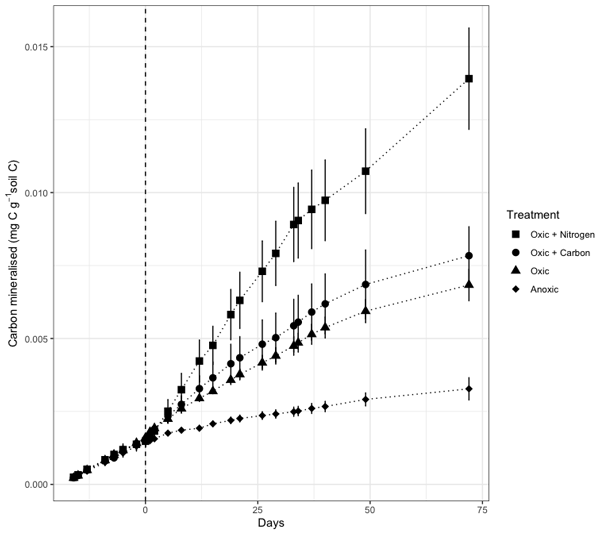
The vulnerability to decomposition of organic C in Amazonian podzols as a result of predicted drier soil moisture regimes was tested: more than four times as much CO2 was released from soils under oxic conditions with the addition of N relative to soils under the prevailing anoxic conditions. An extrapolation of the data to the whole of the Amazonian podzols suggests that this increased C-CO2 flux to the atmosphere could be equivalent to 8 % of the current net global C flux to the atmosphere.
Kaiyan Hu, Bertille Loiseau, Simon D. Carrière, Nolwenn Lesparre, Cédric Champollion, Nicolas K. Martin-StPaul, Niklas Linde, and Damien Jougnot
Hydrol. Earth Syst. Sci., 29, 2997–3018, https://doi.org/10.5194/hess-29-2997-2025, https://doi.org/10.5194/hess-29-2997-2025, 2025
Short summary
Short summary
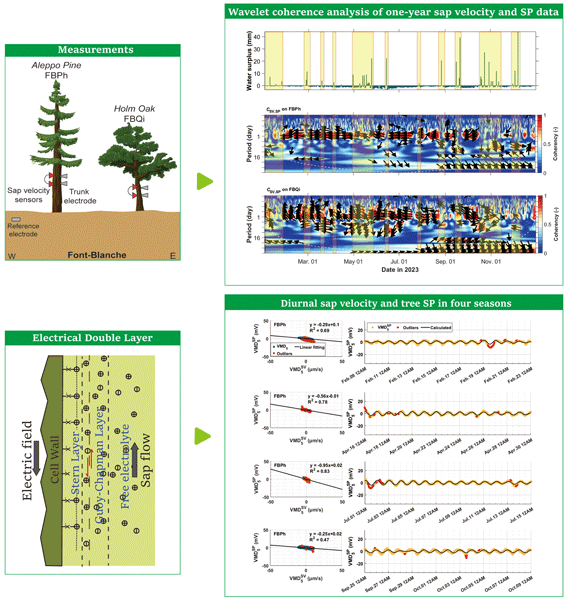
This study explores the potential of the electrical self-potential (SP) method, a passive geophysical technique, to provide additional insights into tree transpiration rates. We measured SP and sap velocity in three tree species over a year in a Mediterranean climate. Results indicate SP may characterize transpiration rates, especially during dry seasons. Additionally, the electrokinetic coupling coefficients of these trees align with values typically found in porous geological media.
Audrey Bonnelye, Pierre Dick, Marco Bohnhoff, Fabrice Cotton, Rüdiger Giese, Jan Henninges, Damien Jougnot, Grzegorz Kwiatek, and Stefan Lüth
Adv. Geosci., 58, 177–188, https://doi.org/10.5194/adgeo-58-177-2023, https://doi.org/10.5194/adgeo-58-177-2023, 2023
Short summary
Short summary
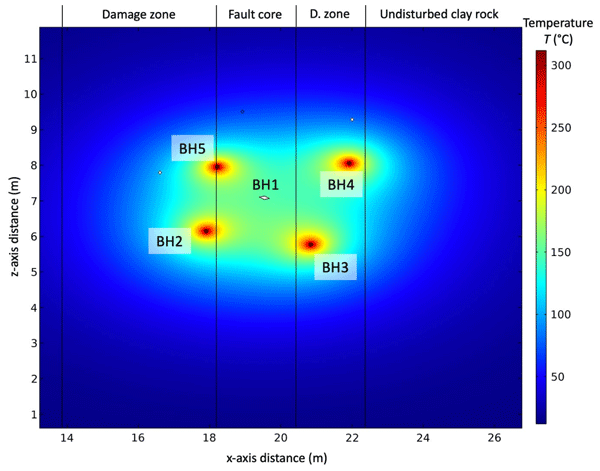
The overall objective of the CHENILLE project is to performed an in-situ experiment in the Underground Reaserch Laboratory of Tournemire (Southern France) consisting of hydraulic and thermal stimulation of a fault zone. This experiment is monitored with extensive geophysical means (passive seismic, active seismic, distributed fiber optics for temperature measurements) in order to unravel the physical processes taking place during the stimulation for a better charactization of fault zones.
Flore Rembert, Marie Léger, Damien Jougnot, and Linda Luquot
Hydrol. Earth Syst. Sci., 27, 417–430, https://doi.org/10.5194/hess-27-417-2023, https://doi.org/10.5194/hess-27-417-2023, 2023
Short summary
Short summary
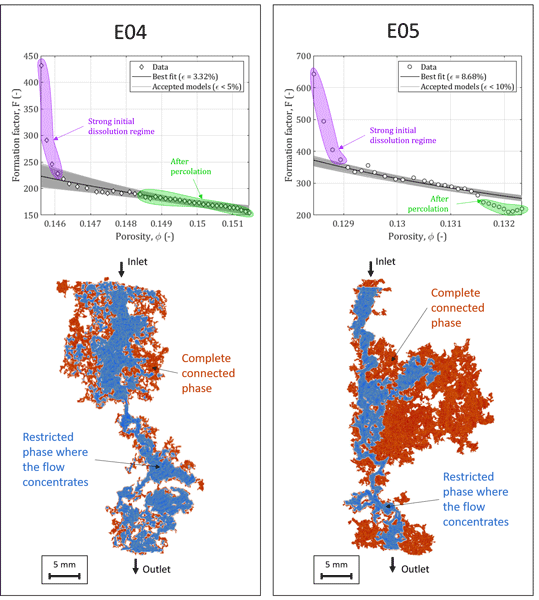
The formation of underground cavities, called karsts, resulting from carbonate rock dissolution, is at stake in many environmental and societal issues, notably through risk management and the administration and quality of drinking water resources. Facing natural environment complexity, we propose a laboratory study combining hydro-chemical monitoring, 3D imaging, and non-invasive observation of electrical properties, showing the benefits of geoelectrical monitoring to map karst formation.
Thomas Hermans, Pascal Goderniaux, Damien Jougnot, Jan H. Fleckenstein, Philip Brunner, Frédéric Nguyen, Niklas Linde, Johan Alexander Huisman, Olivier Bour, Jorge Lopez Alvis, Richard Hoffmann, Andrea Palacios, Anne-Karin Cooke, Álvaro Pardo-Álvarez, Lara Blazevic, Behzad Pouladi, Peleg Haruzi, Alejandro Fernandez Visentini, Guilherme E. H. Nogueira, Joel Tirado-Conde, Majken C. Looms, Meruyert Kenshilikova, Philippe Davy, and Tanguy Le Borgne
Hydrol. Earth Syst. Sci., 27, 255–287, https://doi.org/10.5194/hess-27-255-2023, https://doi.org/10.5194/hess-27-255-2023, 2023
Short summary
Short summary
Although invisible, groundwater plays an essential role for society as a source of drinking water or for ecosystems but is also facing important challenges in terms of contamination. Characterizing groundwater reservoirs with their spatial heterogeneity and their temporal evolution is therefore crucial for their sustainable management. In this paper, we review some important challenges and recent innovations in imaging and modeling the 4D nature of the hydrogeological systems.
Cited articles
Allende-Montalbán, R., San-Juan-Heras, R., Martín-Lammerding, D., Delgado, M. D. M., Albarrán, M. D. M., and Gabriel, J. L.: The soil sample conservation method and its potential impact on ammonium, nitrate and total mineral nitrogen measurements, Geoderma, 448, 116963, https://doi.org/10.1016/j.geoderma.2024.116963, 2024.
Al-Maliki, S. and Ebreesum, H.: Changes in soil carbon mineralization, soil microbes, roots density and soil structure following the application of the arbuscular mycorrhizal fungi and green algae in the arid saline soil, Rhizosphere, 14, 100203. https://doi.org/10.1016/j.rhisph.2020.100203, 2020.
Ameen, F., AlYahya, S. A., AlNadhari, S., Alasmari, H., Alhoshani, F., and Wainwright, M. L.: Phosphate solubilizing bacteria and fungi in desert soils: Species, limitations and mechanisms, Arch. Agron. Soil Sci., 65, 1446–1459, https://doi.org/10.1080/03650340.2019.1566713, 2019.
Autret, B., Mary, B., Chenu, C., Balabane, M., Girardin, C., Bertrand, M., Grandeau, G., and Beaudoin, N.: Alternative arable cropping systems: A key to increase soil organic carbon storage? Results from a 16 year field experiment, Agr. Ecosyst. Environ., 232, 150–164, https://doi.org/10.1016/j.agee.2016.07.008, 2016.
Autret, B., Guillier, H., Pouteau, V., Mary, B., and Chenu, C.: Similar specific mineralization rates of organic carbon and nitrogen in incubated soils under contrasted arable cropping systems, Soil Till. Res., 204, 104712, https://doi.org/10.1016/j.still.2020.104712, 2020.
Bellone, D., Jeuffroy, M.-H., Bertrand, M., Mistou, M.-N., Barbu, C., Ballini, E., Morison-Valantin, M., Gauffreteau, A., and Pashalidou, F. G.: Are innovative cropping systems less dependent on synthetic pesticides to treat Septoria leaf blotch (Zymoseptoria tritici) than conventional systems?, Crop Prot., 170, 106266, https://doi.org/10.1016/j.cropro.2023.106266, 2023.
Blanchy, G., Deroo, W., De Swaef, T., Lootens, P., Quataert, P., Roldán-Ruíz, I., Versteeg, R., and Garré, S.: Closing the phenotyping gap with non-invasive belowground field phenotyping, SOIL, 11, 67–84, https://doi.org/10.5194/soil-11-67-2025, 2025.
Castellini, M. and Ventrella, D.: Impact of conventional and minimum tillage on soil hydraulic conductivity in typical cropping system in Southern Italy, Soil Till. Res., 124, 47–56, https://doi.org/10.1016/j.still.2012.04.008, 2012.
Çelik, İ., Günal, H., Acir, N., Barut, Z. B., and Budak, M.: Soil quality assessment to compare tillage systems in Cukurova Plain, Turkey, Soil Till. Res., 208, 104892, https://doi.org/10.1016/j.still.2020.104892, 2021.
Chabert, A. and Sarthou, J.-P.: Conservation agriculture as a promising trade-off between conventional and organic agriculture in bundling ecosystem services, Agr. Ecosyst. Environ., 292, 106815, https://doi.org/10.1016/j.agee.2019.106815, 2020.
Colas, E.: Impact de l'humidité et des solutions salines sur le comportement dimensionnel de grès du Buntsandstein , Le moteur de recherche des thèses françaises, https://doi.org/10.70675/96ade2f0z6a11z48faza984z3ae9b0ef3c0f, 2011.
Cosentino, D., Chenu, C., and Le Bissonnais, Y.: Aggregate stability and microbial community dynamics under drying–wetting cycles in a silt loam soil, Soil Biol. Biochem., 38, 2053–2062, https://doi.org/10.1016/j.soilbio.2005.12.022, 2006.
Crawford, R. L.: Microbial Diversity and Its Relationship to Planetary Protection, Appl. Environ. Microb., 71, 4163–4168, https://doi.org/10.1128/AEM.71.8.4163-4168.2005, 2005.
Crowther, T. W., Van Den Hoogen, J., Wan, J., Mayes, M. A., Keiser, A. D., Mo, L., Averill, C., and Maynard, D. S.: The global soil community and its influence on biogeochemistry, Science, 365, eaav0550, https://doi.org/10.1126/science.aav0550, 2019.
Curiel Yuste, J., Baldocchi, D. D., Gershenson, A., Goldstein, A., Misson, L., and Wong, S.: Microbial soil respiration and its dependency on carbon inputs, soil temperature and moisture, Glob. Change Biol., 13, 2018–2035, https://doi.org/10.1111/j.1365-2486.2007.01415.x, 2007.
Davidson, E. A., Belk, E., and Boone, R. D.: Soil water content and temperature as independent or confounded factors controlling soil respiration in a temperate mixed hardwood forest, Glob. Change Biol., 4, 217–227, https://doi.org/10.1046/j.1365-2486.1998.00128.x, 1998.
Dignac, M.-F., Derrien, D., Barré, P., Barot, S., Cécillon, L., Chenu, C., Chevallier, T., Freschet, G. T., Garnier, P., Guenet, B., Hedde, M., Klumpp, K., Lashermes, G., Maron, P.-A., Nunan, N., Roumet, C., and Basile-Doelsch, I.: Increasing soil carbon storage: Mechanisms, effects of agricultural practices and proxies. A review, Agron. Sustain. Dev., 37, 14, https://doi.org/10.1007/s13593-017-0421-2, 2017.
Dubey, R. K., Tripathi, V., Prabha, R., Chaurasia, R., Singh, D. P., Rao, Ch. S., El-Keblawy, A., and Abhilash, P. C.: Unravelling the Soil Microbiome: Perspectives For Environmental Sustainability, Springer International Publishing, https://doi.org/10.1007/978-3-030-15516-2, 2020.
Ebrahimi, A. and Or, D.: Hydration and diffusion processes shape microbial community organization and function in model soil aggregates, Water Resour. Res., 51, 9804–9827, https://doi.org/10.1002/2015WR017565, 2015.
Fan, L.-C., Yang, M.-Z., and Han, W.-Y.: Soil Respiration under Different Land Uses in Eastern China, PLOS ONE, 10, e0124198, https://doi.org/10.1371/journal.pone.0124198, 2015.
Franco-Luesma, S., Cavero, J., Plaza-Bonilla, D., Cantero-Martínez, C., Arrúe, J. L., and Álvaro-Fuentes, J.: Tillage and irrigation system effects on soil carbon dioxide (CO2) and methane (CH4) emissions in a maize monoculture under Mediterranean conditions, Soil Till. Res., 196, 104488, https://doi.org/10.1016/j.still.2019.104488, 2020.
Fülöp, O., Nunan, N., Gueye, M., and Jougnot, D.: Dataset supporting: Electrical conductivity measurements as proxies for diffusion-limited microbial activity in soils under controlled laboratory conditions, Zenodo [data set], https://doi.org/10.5281/zenodo.20509879, 2026.
Garre, S., Deswaef, T., Borra-Serrano, I., Lootens, P., and Blanchy, G.: The potential of electrical imaging for field root zone phenotyping, NSG2021 27th European Meeting of Environmental and Engineering Geophysics, 5 pp., https://doi.org/10.3997/2214-4609.202120221, 2021.
Ghanbarian, B., Hunt, A. G., Ewing, R. P., and Sahimi, M.: Tortuosity in Porous Media: A Critical Review, Soil Sci. Soc. Am. J., 77, 1461–1477, https://doi.org/10.2136/sssaj2012.0435, 2013.
Ghezzehei, T. A., Sulman, B., Arnold, C. L., Bogie, N. A., and Berhe, A. A.: On the role of soil water retention characteristic on aerobic microbial respiration, Biogeosciences, 16, 1187–1209, https://doi.org/10.5194/bg-16-1187-2019, 2019.
Greenspan, L.: Humidity fixed points of binary saturated aqueous solutions, J. Res. Nat. Bur. Stand., 81A, https://doi.org/10.6028/jres.081A.011, 1977.
Gupta Choudhury, S., Srivastava, S., Singh, R., Chaudhari, S. K., Sharma, D. K., Singh, S. K., and Sarkar, D.: Tillage and residue management effects on soil aggregation, organic carbon dynamics and yield attribute in rice–wheat cropping system under reclaimed sodic soil, Soil Till. Res., 136, 76–83, https://doi.org/10.1016/j.still.2013.10.001, 2014.
Hargreaves, S. K., Williams, R. J., and Hofmockel, K. S.: Environmental Filtering of Microbial Communities in Agricultural Soil Shifts with Crop Growth, PLOS ONE, 10, e0134345, https://doi.org/10.1371/journal.pone.0134345, 2015.
Hartmann, M. and Six, J.: Soil structure and microbiome functions in agroecosystems, Nature Reviews Earth & Environment, 4, 4–18, https://doi.org/10.1038/s43017-022-00366-w, 2022.
Henneron, L., Bernard, L., Hedde, M., Pelosi, C., Villenave, C., Chenu, C., Bertrand, M., Girardin, C., and Blanchart, E.: Fourteen years of evidence for positive effects of conservation agriculture and organic farming on soil life, Agron. Sustain. Dev., 35, 169–181, https://doi.org/10.1007/s13593-014-0215-8, 2015.
Herbst, M., Tappe, W., Kummer, S., and Vereecken, H.: The impact of sieving on heterotrophic respiration response to water content in loamy and sandy topsoils, Geoderma, 272, 73–82, https://doi.org/10.1016/j.geoderma.2016.03.002, 2016.
Hermans, T., Goderniaux, P., Jougnot, D., Fleckenstein, J. H., Brunner, P., Nguyen, F., Linde, N., Huisman, J. A., Bour, O., Lopez Alvis, J., Hoffmann, R., Palacios, A., Cooke, A.-K., Pardo-Álvarez, Á., Blazevic, L., Pouladi, B., Haruzi, P., Fernandez Visentini, A., Nogueira, G. E. H., Tirado-Conde, J., Looms, M. C., Kenshilikova, M., Davy, P., and Le Borgne, T.: Advancing measurements and representations of subsurface heterogeneity and dynamic processes: towards 4D hydrogeology, Hydrol. Earth Syst. Sci., 27, 255–287, https://doi.org/10.5194/hess-27-255-2023, 2023.
Hoogsteen, M. J. J., Lantinga, E. A., Bakker, E. J., Groot, J. C. J., and Tittonell, P. A.: Estimating soil organic carbon through loss on ignition: Effects of ignition conditions and structural water loss, Eur. J. Soil Sci., 66, 320–328, https://doi.org/10.1111/ejss.12224, 2015.
Hunt, A. G.: Continuum percolation theory for transport properties in porous media, Philos. Mag., 85, 3409–3434, https://doi.org/10.1080/14786430500157094, 2005.
Jougnot, D., Jiménez-Martínez, J., Legendre, R., Le Borgne, T., Méheust, Y., and Linde, N.: Impact of small-scale saline tracer heterogeneity on electrical resistivity monitoring in fully and partially saturated porous media: Insights from geoelectrical milli-fluidic experiments, Adv. Water Resour., 113, 295–309, https://doi.org/10.1016/j.advwatres.2018.01.014, 2018.
Jougnot, D., Revil, A., and Leroy, P.: Diffusion of ionic tracers in the Callovo-Oxfordian clay-rock using the Donnan equilibrium model and the formation factor, Geochim. Cosmochim. Ac., 73, 2712–2726, https://doi.org/10.1016/j.gca.2009.01.035, 2009.
Juarez, S., Nunan, N., Duday, A.-C., Pouteau, V., and Chenu, C.: Soil carbon mineralisation responses to alterations of microbial diversity and soil structure, Biol. Fert. Soils, 49, 939–948, https://doi.org/10.1007/s00374-013-0784-8, 2013.
Kpemoua, T. P. I., Leclerc, S., Barré, P., Houot, S., Pouteau, V., Plessis, C., and Chenu, C.: Are carbon-storing soils more sensitive to climate change? A laboratory evaluation for agricultural temperate soils, Soil Biol. Biochem., 183, 109043, https://doi.org/10.1016/j.soilbio.2023.109043, 2023.
Lang, N. L. and Smith, S. R.: Influence of soil type, moisture content and biosolids application on the fate of Escherichia coli in agricultural soil under controlled laboratory conditions, J. Appl. Microbiol., 103, 2122–2131, https://doi.org/10.1111/j.1365-2672.2007.03490.x, 2007.
Loiseau, B., Carrière, S. D., Jougnot, D., Singha, K., Mary, B., Delpierre, N., Guérin, R., and Martin-StPaul, N. K.: The geophysical toolbox applied to forest ecosystems – A review, Sci. Total Environ., 899, 165503, https://doi.org/10.1016/j.scitotenv.2023.165503, 2023.
Lützow, M. V., Kögel-Knabner, I., Ekschmitt, K., Matzner, E., Guggenberger, G., Marschner, B., and Flessa, H.: Stabilization of organic matter in temperate soils: Mechanisms and their relevance under different soil conditions – a review, Eur. J. Soil Sci., 57, 426–445, https://doi.org/10.1111/j.1365-2389.2006.00809.x, 2006.
Mondal, S. and Chakraborty, D.: Global meta-analysis suggests that no-tillage favourably changes soil structure and porosity, Geoderma, 405, 115443, https://doi.org/10.1016/j.geoderma.2021.115443, 2022.
Moyano, F. E., Manzoni, S., and Chenu, C.: Responses of soil heterotrophic respiration to moisture availability: An exploration of processes and models, Soil Biol. Biochem., 59, 72–85, https://doi.org/10.1016/j.soilbio.2013.01.002, 2013.
Nadler, A.: Effect of soil structure on bulk soil electrical conductivity (ECA) using the TDR and 4P techniques, Soil Sci., 152, 199–203, 1991.
Nasiri, S., Andalibi, B., Tavakoli, A., Delavar, M. A., El-Keblawy, A., Zwieten, L. V., and Mastinu, A.: The Mineral Biochar Alters the Biochemical and Microbial Properties of the Soil and the Grain Yield of Hordeum vulgare L. under Drought Stress, Land, 12, 559, https://doi.org/10.3390/land12030559, 2023.
Nunan, N., Schmidt, H., and Raynaud, X.: The ecology of heterogeneity: Soil bacterial communities and C dynamics, Philos. T. R. Soc. B, https://doi.org/10.1098/rstb.2019.0249, 2020.
Poll, C., Pagel, H., Devers-Lamrani, M., Martin-Laurent, F., Ingwersen, J., Streck, T., and Kandeler, E.: Regulation of bacterial and fungal MCPA degradation at the soil–litter interface, Soil Biol. Biochem., 42, 1879–1887, https://doi.org/10.1016/j.soilbio.2010.07.013, 2010.
Ramoneda, J., Fan, K., Lucas, J. M., Chu, H., Bissett, A., Strickland, M. S., and Fierer, N.: Ecological relevance of flagellar motility in soil bacterial communities, ISME J., 18, wrae067, https://doi.org/10.1093/ismejo/wrae067, 2024.
R Core Team: R: A language and environment for statistical computing, R Foundation for Statistical Computing, Vienna, Austria, https://www.R-project.org/ (last access: 19 June 2026), 2023.
Revil, A. and Jougnot, D.: Diffusion of ions in unsaturated porous materials, J. Colloid Interf. Sci., 319, 226–235, https://doi.org/10.1016/j.jcis.2007.10.041, 2008.
Salomé, C., Nunan, N., Pouteau, V., Lerch, T. Z., and Chenu, C.: Carbon dynamics in topsoil and in subsoil may be controlled by different regulatory mechanisms: CARBON DYNAMICS IN TOPSOIL AND IN SUBSOIL, Glob. Change Biol., 16, 416–426, https://doi.org/10.1111/j.1365-2486.2009.01884.x, 2010.
Shaxson, T. F.: Re-thinking the conservation of carbon, water and soil: A different perspective, Agron. Sustain. Dev., 26, 9–19, https://doi.org/10.1051/agro:2005054, 2006.
Six, J., Frey, S. D., Thiet, R. K., and Batten, K. M.: Bacterial and Fungal Contributions to Carbon Sequestration in Agroecosystems, Soil Sci. Soc. Am. J., 70, 555–569, https://doi.org/10.2136/sssaj2004.0347, 2006.
Stanford, G. and Smith, S. J.: Nitrogen Mineralization Potentials of Soils, Soil Sci. Soc. Am. J., https://doi.org/10.2136/sssaj1972.03615995003600030029x, 1972.
Sun, R., Zhang, W., Liu, Y., Yun, W., Luo, B., Chai, R., Zhang, C., Xiang, X., and Su, X.: Changes in phosphorus mobilization and community assembly of bacterial and fungal communities in rice rhizosphere under phosphate deficiency, Front. Microbiol., 13, 953340, https://doi.org/10.3389/fmicb.2022.953340, 2022.
Van Genuchten, M. Th.: A Closed-form Equation for Predicting the Hydraulic Conductivity of Unsaturated Soils, Soil Sci. Soc. Am. J., 44, 892–898, https://doi.org/10.2136/sssaj1980.03615995004400050002x, 1980.
Waxman, M. H. and Smits, L. J. M.: Electrical Conductivities in Oil-Bearing Shaly Sands, Soc. Petrol. Eng. J., 8, 107–122, https://doi.org/10.2118/1863-A, 1968.
Zsolt, S., Tállai, M., Kincses, I., László, Z., Kátai, J., and Vágó, I.: Effect of various soil cultivation methods on some microbial soil properties, DRC Sustainable Future: Journal of Environment, Agriculture, and Energy, 1, 14–20, https://doi.org/10.37281/DRCSF/1.1.3, 2020.
Short summary
Soil microorganisms play a key role in carbon cycling, yet their activity depends strongly on soil water connectivity. We investigated whether electrical conductivity, a non-destructive geophysical measurement, could provide information about microbial respiration under drying conditions. Our results suggest that electrical conductivity measurements may help better understand diffusion-limited soil respiration.
Soil microorganisms play a key role in carbon cycling, yet their activity depends strongly on...