
Articles | Volume 12, issue 1
https://doi.org/10.5194/soil-12-619-2026
© Author(s) 2026. This work is distributed under
the Creative Commons Attribution 4.0 License.
the Creative Commons Attribution 4.0 License.
https://doi.org/10.5194/soil-12-619-2026
© Author(s) 2026. This work is distributed under
the Creative Commons Attribution 4.0 License.
the Creative Commons Attribution 4.0 License.
Original research article
| 
13 May 2026
Original research article |
| 13 May 2026
| 13 May 2026
Estimating soil carbon sequestration potential with mid-IR spectroscopy and explainable machine learning
Yang Hu
CORRESPONDING AUTHOR

Soil & Landscape Science, School of Molecular & Life Sciences, Faculty of Science & Engineering, Curtin University, GPO Box U1987, Perth WA 6845, Australia
Raphael A. Viscarra Rossel
CORRESPONDING AUTHOR
Soil & Landscape Science, School of Molecular & Life Sciences, Faculty of Science & Engineering, Curtin University, GPO Box U1987, Perth WA 6845, Australia
Related authors
Yang Hu, Adam Cross, Zefang Shen, Johan Bouma, and Raphael A. Viscarra Rossel
SOIL, 12, 227–252, https://doi.org/10.5194/soil-12-227-2026, https://doi.org/10.5194/soil-12-227-2026, 2026
Short summary
Short summary
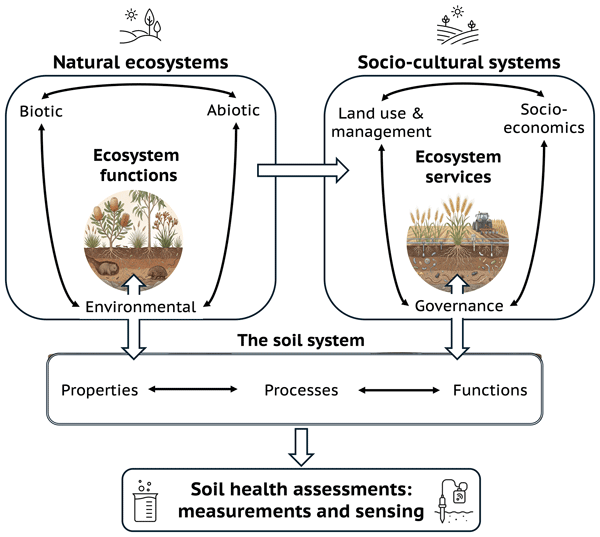
Effective management of soil health is essential to managing widespread soil degradation. Current frameworks for defining and assessing soil health are limited, focusing on agricultural contexts and relying on expensive, impractical lab analysis. Our socio-ecological framework offers a way forward, grounding soil health in ecological perspective and using modern sensing and data-driven technologies for rapid, scalable, policy-relevant assessment.
Zefang Shen, Haylee D'Agui, Lewis Walden, Mingxi Zhang, Tsoek Man Yiu, Kingsley Dixon, Paul Nevill, Adam Cross, Mohana Matangulu, Yang Hu, and Raphael A. Viscarra Rossel
SOIL, 8, 467–486, https://doi.org/10.5194/soil-8-467-2022, https://doi.org/10.5194/soil-8-467-2022, 2022
Short summary
Short summary
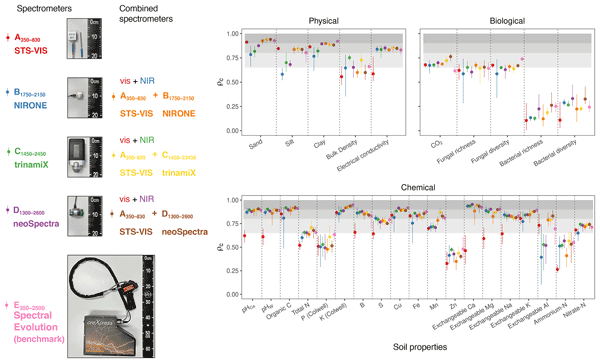
We compared miniaturised visible and near-infrared spectrometers to a portable visible–near-infrared instrument, which is more expensive. Statistical and machine learning algorithms were used to model 29 key soil health indicators. Accuracy of the miniaturised spectrometers was comparable to the portable system. Soil spectroscopy with these tiny sensors is cost-effective and could diagnose soil health, help monitor soil rehabilitation, and deliver positive environmental and economic outcomes.
Raphael A. Viscarra Rossel, Lewis Walden, and Andrea Bravo-Escobar
EGUsphere, https://doi.org/10.5194/egusphere-2026-3957, https://doi.org/10.5194/egusphere-2026-3957, 2026
Short summary
Short summary
Reasoning about soil as a coupled system is central to graduate training, but is being squeezed out as soil science moves into broader degrees without dedicated specialists. Accessible LLMs make this harder to ignore. We propose four principles for undergraduate teaching: interactivity, place, plural knowledge, and AI discernment, delivered via interactive models, landscape comparisons, Two-Way knowledge, and AI interrogation. Assessment integrates these into place-specific reasoning.
Raphael A. Viscarra Rossel, Lewis Walden, and Farid Sepanta
EGUsphere, https://doi.org/10.5194/egusphere-2026-2905, https://doi.org/10.5194/egusphere-2026-2905, 2026
Short summary
Short summary
We present a probabilistic compositional framework for farm-scale mapping of soil carbon fractions and totals with calibrated uncertainty. We combine mid-IR, probabilistic gradient-boosted trend and Bayesian SPDE spatial modelling to jointly map POC, MAOC, ROC, TOC, TIC, and TC. The framework preserves the compositional closure of the organic fractions and the mass balance between organic and inorganic carbon while propagating uncertainty from the laboratory through to spatial inference.
Yang Hu, Adam Cross, Zefang Shen, Johan Bouma, and Raphael A. Viscarra Rossel
SOIL, 12, 227–252, https://doi.org/10.5194/soil-12-227-2026, https://doi.org/10.5194/soil-12-227-2026, 2026
Short summary
Short summary
Effective management of soil health is essential to managing widespread soil degradation. Current frameworks for defining and assessing soil health are limited, focusing on agricultural contexts and relying on expensive, impractical lab analysis. Our socio-ecological framework offers a way forward, grounding soil health in ecological perspective and using modern sensing and data-driven technologies for rapid, scalable, policy-relevant assessment.
Thorsten Behrens, Karsten Schmidt, Felix Stumpf, Simon Tutsch, Marie Hertzog, Urs Grob, Armin Keller, and Raphael Viscarra Rossel
EGUsphere, https://doi.org/10.5194/egusphere-2024-2810, https://doi.org/10.5194/egusphere-2024-2810, 2024
Preprint archived
Short summary
Short summary
We integrate various methods to create soil property maps for soil surveyors, which they can utilize as a reference before beginning their fieldwork. A new sampling design based on a geographical stratification is proposed focussing on local feature space variability. It allows for a systematic analysis of predictive accuracy for varying densities. The spectral and spatial models yielded high accuracies. Our study highlights the value of integrating pedometric technologies in soil surveys.
Lingfei Wang, Gab Abramowitz, Ying-Ping Wang, Andy Pitman, and Raphael A. Viscarra Rossel
SOIL, 10, 619–636, https://doi.org/10.5194/soil-10-619-2024, https://doi.org/10.5194/soil-10-619-2024, 2024
Short summary
Short summary
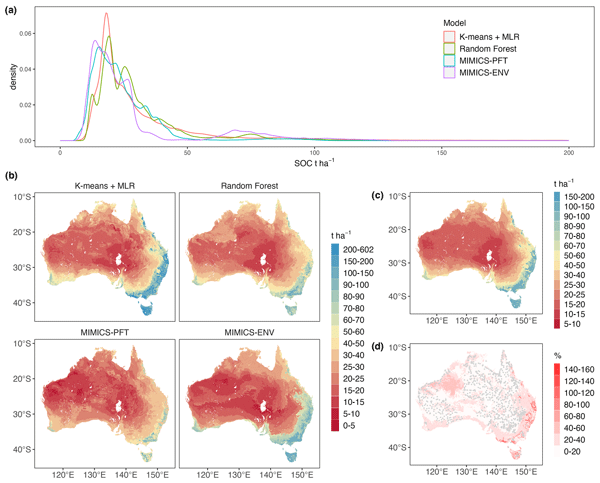
Effective management of soil organic carbon (SOC) requires accurate knowledge of its distribution and factors influencing its dynamics. We identify the importance of variables in spatial SOC variation and estimate SOC stocks in Australia using various models. We find there are significant disparities in SOC estimates when different models are used, highlighting the need for a critical re-evaluation of land management strategies that rely on the SOC distribution derived from a single approach.
Lewis Walden, Farid Sepanta, and Raphael Viscarra Rossel
EGUsphere, https://doi.org/10.5194/egusphere-2023-2464, https://doi.org/10.5194/egusphere-2023-2464, 2023
Preprint archived
Short summary
Short summary
We characterised the chemical and mineral composition of soil organic carbon fractions with mid-infrared spectroscopy. We identified unique and shared features of the spectra of carbon fractions, and the interactions between their organic and mineral components. These interactions are key to the persistence of C in soils, and we propose that mid-infrared spectroscopy could help to infer stability of soil C.
Zefang Shen, Haylee D'Agui, Lewis Walden, Mingxi Zhang, Tsoek Man Yiu, Kingsley Dixon, Paul Nevill, Adam Cross, Mohana Matangulu, Yang Hu, and Raphael A. Viscarra Rossel
SOIL, 8, 467–486, https://doi.org/10.5194/soil-8-467-2022, https://doi.org/10.5194/soil-8-467-2022, 2022
Short summary
Short summary
We compared miniaturised visible and near-infrared spectrometers to a portable visible–near-infrared instrument, which is more expensive. Statistical and machine learning algorithms were used to model 29 key soil health indicators. Accuracy of the miniaturised spectrometers was comparable to the portable system. Soil spectroscopy with these tiny sensors is cost-effective and could diagnose soil health, help monitor soil rehabilitation, and deliver positive environmental and economic outcomes.
Yuanyuan Yang, Zefang Shen, Andrew Bissett, and Raphael A. Viscarra Rossel
SOIL, 8, 223–235, https://doi.org/10.5194/soil-8-223-2022, https://doi.org/10.5194/soil-8-223-2022, 2022
Short summary
Short summary
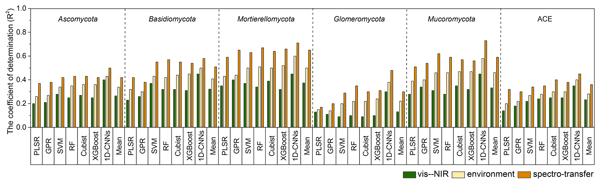
We present a new method to estimate the relative abundance of the dominant phyla and diversity of fungi in Australian soil. It uses state-of-the-art machine learning with publicly available data on soil and environmental proxies for edaphic, climatic, biotic and topographic factors, and visible–near infrared wavelengths. The estimates could serve to supplement the more expensive molecular approaches towards a better understanding of soil fungal abundance and diversity in agronomy and ecology.
Cited articles
ABARES: Land use of Australia 2010–11 to 2015–16, 250 m, CC BY 4.0, Australian Bureau of Agricultural and Resource Economics and Sciences, https://doi.org/10.25814/7ygw-4d64, 2022. a
Abramoff, R. Z., Guenet, B., Zhang, H., Georgiou, K., Xu, X., Viscarra Rossel, R. A., Yuan, W., and Ciais, P.: Improved global-scale predictions of soil carbon stocks with Millennial Version 2, Soil Biol. Biochem., 164, 108466, https://doi.org/10.1016/j.soilbio.2021.108466, 2022. a
Angers, D., Arrouays, D., Saby, N., and Walter, C.: Estimating and mapping the carbon saturation deficit of French agricultural topsoils, Soil Use Manage., 27, 448–452, https://doi.org/10.1111/j.1475-2743.2011.00366.x, 2011. a
Baldock, J., McNally, S., Beare, M., Curtin, D., and Hawke, B.: Predicting soil carbon saturation deficit and related properties of New Zealand soils using infrared spectroscopy, Soil Res., 57, 835–844, https://doi.org/10.1071/SR19149, 2019. a, b
Beare, M., McNeill, S., Curtin, D., Parfitt, R., Jones, H., Dodd, M., and Sharp, J.: Estimating the organic carbon stabilisation capacity and saturation deficit of soils: a New Zealand case study, Biogeochemistry, 120, 71–87, https://doi.org/10.1007/s10533-014-9982-1, 2014. a
Beck, H. E., Zimmermann, N. E., McVicar, T. R., Vergopolan, N., Berg, A., and Wood, E. F.: Present and future Köppen-Geiger climate classification maps at 1-km resolution, Sci. Data, 5, 1–12, https://doi.org/10.1038/sdata.2018.214, 2018. a
Cécillon, L., Cassagne, N., Czarnes, S., Gros, R., Vennetier, M., and Brun, J.-J.: Predicting soil quality indices with near infrared analysis in a wildfire chronosequence, Sci. Total Environ., 407, 1200–1205, https://doi.org/10.1016/j.scitotenv.2008.07.029, 2009. a
Cohen, M., Dabral, S., Graham, W. D., Prenger, J., and Debusk, W.: Evaluating ecological condition using soil biogeochemical parameters and near infrared reflectance spectra, Environ. Monitor. Assess., 116, 427–457, https://doi.org/10.1007/s10661-006-7664-8, 2006. a
Commonwealth of Australia: National Vegetation Information System V6.0, https://erin.maps.arcgis.com/home/item.html?id=1dab9240522d42c5804677bf19ac64af (last access: 30 April 2026), 2020. a
Deiss, L., Margenot, A. J., Culman, S. W., and Demyan, M. S.: Optimizing acquisition parameters in diffuse reflectance infrared Fourier transform spectroscopy of soils, Soil Sci. Soc. Am. J., 84, 930–948, https://doi.org/10.1002/saj2.20028, 2020. a
Deiss, L., Demyan, M. S., Fulford, A., Hurisso, T., and Culman, S. W.: High-throughput soil health assessment to predict corn agronomic performance, Field Crop. Res., 297, 108930, https://doi.org/10.1016/j.fcr.2023.108930, 2023. a
Du, C., Goyne, K. W., Miles, R. J., and Zhou, J.: A 1915–2011 microscale record of soil organic matter under wheat cultivation using FTIR-PAS depth-profiling, Agron. Sustain. Dev., 34, 803–811, https://doi.org/10.1007/s13593-013-0201-6, 2014. a
Elliott, G. N., Worgan, H., Broadhurst, D., Draper, J., and Scullion, J.: Soil differentiation using fingerprint Fourier transform infrared spectroscopy, chemometrics and genetic algorithm-based feature selection, Soil Biol. Biochem., 39, 2888–2896, https://doi.org/10.1016/j.soilbio.2007.05.032, 2007. a
Feng, W., Plante, A. F., and Six, J.: Improving estimates of maximal organic carbon stabilization by fine soil particles, Biogeochemistry, 112, 81–93, https://doi.org/10.1007/s10533-011-9679-7, 2013. a
Georgiou, K., Jackson, R. B., Vindušková, O., Abramoff, R. Z., Ahlström, A., Feng, W., Harden, J. W., Pellegrini, A. F. A., Polley, H. W., Soong, J. L., Riley, W. J., and Torn, M. S.: Global stocks and capacity of mineral-associated soil organic carbon, Nat. Commun., 13, 3797, https://doi.org/10.1038/s41467-022-31540-9, 2022. a, b
Hassink, J.: The capacity of soils to preserve organic C and N by their association with clay and silt particles, Plant Soil, 191, 77–87, https://doi.org/10.1023/A:1004213929699, 1997. a, b
Hassink, J. and Whitmore, A. P.: A model of the physical protection of organic matter in soils, Soil Sci. Soc. Am. J., 61, 131–139, https://doi.org/10.2136/sssaj1997.03615995006100010020x, 1997. a
Hicks, W., Viscarra Rossel, R., and Tuomi, S.: Developing the Australian mid-infrared spectroscopic database using data from the Australian Soil Resource Information System, Soil Res., 53, 922–931, https://doi.org/10.1071/SR15171, 2015. a
Ingram, J. and Fernandes, E.: Managing carbon sequestration in soils: concepts and terminology, Agr. Ecosyst. Environ., 87, 111–117, https://doi.org/10.1016/S0167-8809(01)00145-1, 2001. a
Isbell, R. and the National Committee on Soil and Terrain: The Australian soil classification, CSIRO publishing, ISBN 9781486314775, https://www.publishing.csiro.au/book/8016/ (last access: 30 April 2026), 2016. a
Karunaratne, S., Asanopoulos, C., Jin, H., Baldock, J., Searle, R., Macdonald, B., and Macdonald, L. M.: Estimating the attainable soil organic carbon deficit in the soil fine fraction to inform feasible storage targets and de-risk carbon farming decisions, Soil Res., 62, https://doi.org/10.1071/SR23096, 2024. a, b
Kronenberg, A. K.: Hydrogen speciation and chemical weakening of quartz, Rev. Mineral. Geochem., 29, 123–176, 1994. a
Kuhn, M. and Johnson, K.: Applied predictive modeling, Springer, 1st edn., ISBN 978-1-4614-6848-6, https://doi.org/10.1007/978-1-4614-6849-3, 2013. a
Kuhn, M., Weston, S., Keefer, C., and Coulter, N.: Cubist models for regression, R package Vignette R package version 0.0, 18, 480, https://rdrr.io/rforge/Cubist/f/inst/doc/cubist.pdf (last access: 30 April 2026), 2012. a
Lal, R.: Soil health and carbon management, Food and Energy Security, 5, 212–222, https://doi.org/10.1002/fes3.96, 2016. a
Lal, R., Negassa, W., and Lorenz, K.: Carbon sequestration in soil, Curr. Opin. Env. Sust., 15, 79–86, https://doi.org/10.1079/PAVSNNR20083030, 2015. a
Lehmann, J., Bossio, D. A., Kögel-Knabner, I., and Rillig, M. C.: The concept and future prospects of soil health, Nature Reviews Earth & Environment, 1, 544–553, https://doi.org/10.1038/s43017-020-0080-8, 2020. a
Lin, L. I.: A concordance correlation coefficient to evaluate reproducibility, Biometrics, 45, 255–268, https://www.jstor.org/stable/2532051 (last access: 30 April 2026), 1989. a
Max, J.-J. and Chapados, C.: Isotope effects in liquid water by infrared spectroscopy. III. H2O and D2O spectra from 6000to cm-1, J. Chem. Phys., 131, https://doi.org/10.1063/1.3258646, 2009. a
Maynard, J. J. and Johnson, M. G.: Applying fingerprint Fourier transformed infrared spectroscopy and chemometrics to assess soil ecosystem disturbance and recovery, J. Soil Water Conserv., 73, 443–451, https://doi.org/10.2489/jswc.73.4.443, 2018. a
McKenzie, T.: snfa: Smooth Non-Parametric Frontier Analysis, R package version ≥ 3.5.0, https://cran.r-project.org/web/packages/snfa/snfa.pdf (last access: 30 April 2026), 2022. a
Parmeter, C. F. and Racine, J. S.: Smooth constrained frontier analysis, Recent Advances and Future Directions in Causality, Prediction, and Specification Analysis: Essays in Honor of Halbert L. White Jr., Springer, New York, NY, 463–488, https://doi.org/10.1007/978-1-4614-1653-1_18, 2013. a
Poeplau, C., Don, A., Six, J., Kaiser, M., Benbi, D., Chenu, C., Cotrufo, M. F., Derrien, D., Gioacchini, P., Grand, S., Gregorich, E., Griepentrog, M., Gunina, A., Haddix, M., Kuzyakov, Y., Kühnel, A., Macdonald, L. M., Soong, J., Trigalet, S., Vermeire, M.-L., Rovira, P., van Wesemael, B., Wiesmeier, M., Yeasmin, S., Yevdokimov, I., and Nieder, R.: Isolating organic carbon fractions with varying turnover rates in temperate agricultural soils – A comprehensive method comparison, Soil Biol. Biochem., 125, 10–26, https://doi.org/10.1016/j.soilbio.2018.06.025, 2018. a
Quinlan, J. R.: Learning with continuous classes, in: 5th Australian joint conference on artificial intelligence, Vol. 92, 343–348, World Scientific, https://doi.org/10.1142/1897, 1992. a
R Core Team: R: A language and environment for statistical computing, https://www.R-project.org/ (last access: 30 April 2026), 2024. a
Senesi, N., D'Orazio, V., and Ricca, G.: Humic acids in the first generation of EUROSOILS, Geoderma, 116, 325–344, https://doi.org/10.1016/S0016-7061(03)00107-1, 2003. a
Shapley, L. S.: A value for n-person games, Contribution to the Theory of Games, 2, https://www.rand.org/content/dam/rand/pubs/papers/2021/P295.pdf (last access: 30 April 2026), 1953. a
Shi, L., Daly, K., and O'Rourke, S.: Estimating mineral-associated organic carbon saturation and sequestration potential using MIR spectral based local quantile regression, Geoderma, 454, 117181, https://doi.org/10.1016/j.geoderma.2025.117181, 2025. a
Six, J., Conant, R. T., Paul, E. A., and Paustian, K.: Stabilization mechanisms of soil organic matter: implications for C-saturation of soils, Plant Soil, 241, 155–176, https://doi.org/10.1023/A:1016125726789, 2002. a, b
Six, J., Doetterl, S., Laub, M., Müller, C. R., and Van de Broek, M.: The six rights of how and when to test for soil C saturation, SOIL, 10, 275–279, https://doi.org/10.5194/soil-10-275-2024, 2024. a
Soriano-Disla, J. M., Janik, L. J., Viscarra Rossel, R. A., Macdonald, L. M., and McLaughlin, M. J.: The performance of visible, near-, and mid-infrared reflectance spectroscopy for prediction of soil physical, chemical, and biological properties, Appl. Spectrosc. Rev., 49, 139–186, https://doi.org/10.1080/05704928.2013.811081, 2014. a, b
Spitzer, W. and Kleinman, D.: Infrared lattice bands of quartz, Phys. Rev., 121, 1324, https://doi.org/10.1103/PhysRev.121.1324, 1961. a
Stewart, C. E., Paustian, K., Conant, R. T., Plante, A. F., and Six, J.: Soil carbon saturation: concept, evidence and evaluation, Biogeochemistry, 86, 19–31, https://doi.org/10.1007/s10533-007-9140-0, 2007. a
Tanykova, N., Petrova, Y., Kostina, J., Kozlova, E., Leushina, E., and Spasennykh, M.: Study of organic matter of unconventional reservoirs by IR spectroscopy and IR microscopy, Geosciences, 11, 277, https://doi.org/10.3390/geosciences11070277, 2021. a
Teng, H., Viscarra Rossel, R. A., Shi, Z., and Behrens, T.: Updating a national soil classification with spectroscopic predictions and digital soil mapping, Catena, 164, 125–134, https://doi.org/10.1016/j.catena.2018.01.015, 2018. a
UNFCCC: Improved soil carbon, soil health and soil fertility under grassland and cropland as well as integrated systems, including water management: Workshop report by the secretariat, document GE.19-15339(E), https://unfccc.int/documents/199954 (last access: 30 April 2026), 2019. a
Vereecken, H., Schnepf, A., Hopmans, J. W., Javaux, M., Or, D., Roose, T., Vanderborght, J., Young, M. H., Amelung, W., Aitkenhead, M., Allison, S. D., Assouline, S., Baveye, P., Berli, M., Brüggemann, N., Finke, P., Flury, M., Gaiser, T., Govers, G., Ghezzehei, T., Hallett, P., Hendricks Franssen, H. J., Heppell, J., Horn, R., Huisman, J. A., Jacques, D., Jonard, F., Kollet, S., Lafolie, F., Lamorski, K., Leitner, D., McBratney, A., Minasny, B., Montzka, C., Nowak, W., Pachepsky, Y., Padarian, J., Romano, N., Roth, K., Rothfuss, Y., Rowe, E. C., Schwen, A., Šimůnek, J., Tiktak, A., Van Dam, J., van der Zee, S. E. A. T. M., Vogel, H. J., Vrugt, J. A., Wöhling, T., and Young, I. M.: Modeling soil processes: Review, key challenges, and new perspectives, Vadose Zone J., 15, vzj2015-09, https://doi.org/10.2136/vzj2015.09.0131, 2016. a
Viscarra Rossel, R. and Webster, R.: Predicting soil properties from the Australian soil visible–near infrared spectroscopic database, Eur. J. Soil Sci., 63, 848–860, https://doi.org/10.1111/j.1365-2389.2012.01495.x, 2012. a, b
Viscarra Rossel, R., Walvoort, D., McBratney, A., Janik, L. J., and Skjemstad, J.: Visible, near infrared, mid infrared or combined diffuse reflectance spectroscopy for simultaneous assessment of various soil properties, Geoderma, 131, 59–75, https://doi.org/10.1016/j.geoderma.2005.03.007, 2006. a
Viscarra Rossel, R. A., Rizzo, R., Demattê, J. A. M., and Behrens, T.: Spatial Modeling of a Soil Fertility Index using Visible–Near-Infrared Spectra and Terrain Attributes, Soil Sci. Soc. Am. J., 74, 1293–1300, https://doi.org/10.2136/sssaj2009.0130, 2010. a
Viscarra Rossel, R. A., Behrens, T., Ben-Dor, E., Chabrillat, S., Demattê, J. A. M., Ge, Y., Gomez, C., Guerrero, C., Peng, Y., Ramirez-Lopez, L., Shi, Z., Stenberg, B., Webster, R., Winowiecki, L., and Shen, Z.: Diffuse reflectance spectroscopy for estimating soil properties: A technology for the 21st century, Eur. J. Soil Sci., 73, e13271, https://doi.org/10.1111/ejss.13271, 2022. a
Vogel, H.-J., Eberhardt, E., Franko, U., Lang, B., Ließ, M., Weller, U., Wiesmeier, M., and Wollschläger, U.: Quantitative evaluation of soil functions: Potential and state, Frontiers in Environmental Science, 7, 463905, https://doi.org/10.3389/fenvs.2019.00164, 2019. a
Walden, L., Sepanta, F., and Viscarra Rossel, R.: FT-MIR Spectroscopic Analysis of the Organic Carbon Fractions in Australian Mineral Soils, Eur. J. Soil Sci., 76, e70084, https://doi.org/10.1111/ejss.70084, 2025. a
Wang, Y. and Witten, I. H.: Inducing model trees for continuous classes, in: Proceedings of the ninth European conference on machine learning, Vol. 9, 128–137, Citeseer, https://researchcommons.waikato.ac.nz/entities/publication/d6e1955d-92f8-4993-8999-98be1a1c1b59 (last access: 30 April 2026), 1997. a
Wiesmeier, M., Urbanski, L., Hobley, E., Lang, B., von Lützow, M., Marin-Spiotta, E., van Wesemael, B., Rabot, E., Ließ, M., Garcia-Franco, N., Wollschläger, U., Vogel, H.-J., and Kögel-Knabner, I.: Soil organic carbon storage as a key function of soils – A review of drivers and indicators at various scales, Geoderma, 333, 149–162, https://doi.org/10.1016/j.geoderma.2018.07.026, 2019. a
Short summary
We analysed 482 Australian topsoils to estimate mineral-associated organic carbon (MAOC) and the carbon storage deficit (Cdef). Using mid-infrared spectra with explainable machine learning, we predicted MAOC (R2=0.86) and Cdef (R2=0.89). Model interpretation revealed signals from organic matter and clay minerals were most significant in predicting MAOC and Cdef. Our work provides an accurate, cost-effective means to assess and better understand the drivers of soil carbon sequestration potential.
We analysed 482 Australian topsoils to estimate mineral-associated organic carbon (MAOC) and the...


