
Articles | Volume 12, issue 2
https://doi.org/10.5194/soil-12-1057-2026
© Author(s) 2026. This work is distributed under
the Creative Commons Attribution 4.0 License.
the Creative Commons Attribution 4.0 License.
https://doi.org/10.5194/soil-12-1057-2026
© Author(s) 2026. This work is distributed under
the Creative Commons Attribution 4.0 License.
the Creative Commons Attribution 4.0 License.
Original research article
| 
02 Nov 2026
Original research article |
| 02 Nov 2026
| 02 Nov 2026
Limited effect of basalt amendment and mycorrhizal inoculation on soil chemical properties and maize growth on a nutrient-rich soil
Lucilla Boito
CORRESPONDING AUTHOR

Biobased Sustainability Engineering (SUSTAIN), Department of Bioscience Engineering, University of Antwerp, Antwerp, 2020, Belgium
Jet Rijnders
Biobased Sustainability Engineering (SUSTAIN), Department of Bioscience Engineering, University of Antwerp, Antwerp, 2020, Belgium
Laura Steinwidder
Biobased Sustainability Engineering (SUSTAIN), Department of Bioscience Engineering, University of Antwerp, Antwerp, 2020, Belgium
Patrick Frings
Earth Surface Geochemistry, German Research Centre for Geosciences (GFZ), 14473 Potsdam, Germany
Arthur Vienne
Biobased Sustainability Engineering (SUSTAIN), Department of Bioscience Engineering, University of Antwerp, Antwerp, 2020, Belgium
Mirthe Maes
Plants and Ecosystems (PLECO), Department of Biology, University of Antwerp, Wilrijk, 2610, Belgium
Erik Verbruggen
Plants and Ecosystems (PLECO), Department of Biology, University of Antwerp, Wilrijk, 2610, Belgium
Biobased Sustainability Engineering (SUSTAIN), Department of Bioscience Engineering, University of Antwerp, Antwerp, 2020, Belgium
Related authors
Arthur Vienne, Patrick Frings, Jet Rijnders, Lucilla Boito, Jens Hartmann, Harun Niron, Reinaldy Poetra, Miguel Portillo Estrada, Tom Reershemius, Laura Steinwidder, Tim Jesper Suhrhoff, and Sara Vicca
SOIL, 12, 421–440, https://doi.org/10.5194/soil-12-421-2026, https://doi.org/10.5194/soil-12-421-2026, 2026
Short summary
Short summary
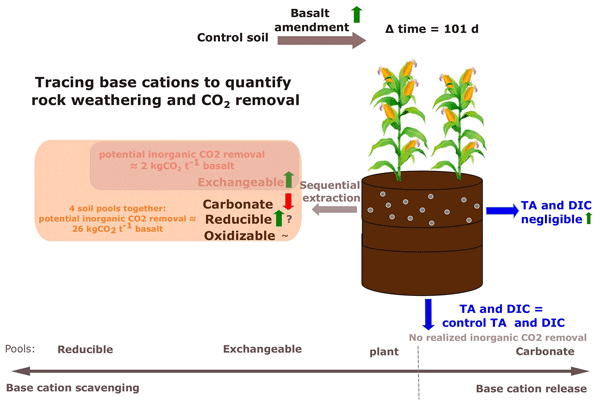
Our study explores Enhanced Weathering (EW) using basalt rock dust to combat climate change. We treated maize-planted mesocosms with varying basalt amounts and monitored them for 101 d. Surprisingly, we found no significant realized inorganic CO2 removal. However, rock weathering was evident through increased exchangeable bases. While inorganic CO2 removal was not realized within this experiment, basalt amendment may enhance soil health and potentially long-term carbon sequestration.
Jet Rijnders, Lucilla Boito, Laura Steinwidder, Jasper Roussard, Patrick Frings, Harun Niron, and Sara Vicca
EGUsphere, https://doi.org/10.5194/egusphere-2026-603, https://doi.org/10.5194/egusphere-2026-603, 2026
Short summary
Short summary
Crushed volcanic rock has been proposed as a way to remove carbon dioxide from the air while improving soil quality. We tested this idea by growing maize in soil with and without the rock and with earthworms. The rock raised soil nutrients, and earthworms boosted these effects. Plant growth stayed similar, but some metals built up in roots. This approach could support farming and climate goals, yet food safety risks must be managed.
Arthur Vienne, Patrick Frings, Jet Rijnders, Lucilla Boito, Jens Hartmann, Harun Niron, Reinaldy Poetra, Miguel Portillo Estrada, Tom Reershemius, Laura Steinwidder, Tim Jesper Suhrhoff, and Sara Vicca
SOIL, 12, 421–440, https://doi.org/10.5194/soil-12-421-2026, https://doi.org/10.5194/soil-12-421-2026, 2026
Short summary
Short summary
Our study explores Enhanced Weathering (EW) using basalt rock dust to combat climate change. We treated maize-planted mesocosms with varying basalt amounts and monitored them for 101 d. Surprisingly, we found no significant realized inorganic CO2 removal. However, rock weathering was evident through increased exchangeable bases. While inorganic CO2 removal was not realized within this experiment, basalt amendment may enhance soil health and potentially long-term carbon sequestration.
Arthur Vienne, Jennifer Newell, Jasper Roussard, Rory Doherty, Siobhan F. Cox, Gary Lyons, and Sara Vicca
Biogeosciences, 23, 1681–1695, https://doi.org/10.5194/bg-23-1681-2026, https://doi.org/10.5194/bg-23-1681-2026, 2026
Short summary
Short summary
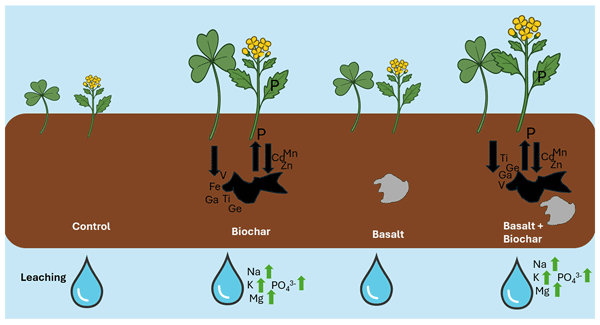
We explored whether adding crushed volcanic rock and charcoal to soil could help store inorganic carbon, improve plant growth and reduce harmful metals in crops. The crushed rock did not increase plant growth or inorganic carbon in soil and nutrients released from the rock may have moved into other stable soil forms rather than forming carbonates. In contrast, charcoal improved plant growth and reduced metal uptake. Using both rocks and charcoal together offered no extra observable benefits.
Jet Rijnders, Lucilla Boito, Laura Steinwidder, Jasper Roussard, Patrick Frings, Harun Niron, and Sara Vicca
EGUsphere, https://doi.org/10.5194/egusphere-2026-603, https://doi.org/10.5194/egusphere-2026-603, 2026
Short summary
Short summary
Crushed volcanic rock has been proposed as a way to remove carbon dioxide from the air while improving soil quality. We tested this idea by growing maize in soil with and without the rock and with earthworms. The rock raised soil nutrients, and earthworms boosted these effects. Plant growth stayed similar, but some metals built up in roots. This approach could support farming and climate goals, yet food safety risks must be managed.
Jelle Bijma, Mathilde Hagens, Jens S. Hammes, Noah Planavsky, Philip A. E. Pogge von Strandmann, Tom Reershemius, Christopher T. Reinhard, Phil Renforth, Tim J. Suhrhoff, Sara Vicca, Arthur Vienne, and Dieter Wolf-Gladrow
Biogeosciences, 23, 53–75, https://doi.org/10.5194/bg-23-53-2026, https://doi.org/10.5194/bg-23-53-2026, 2026
Short summary
Short summary
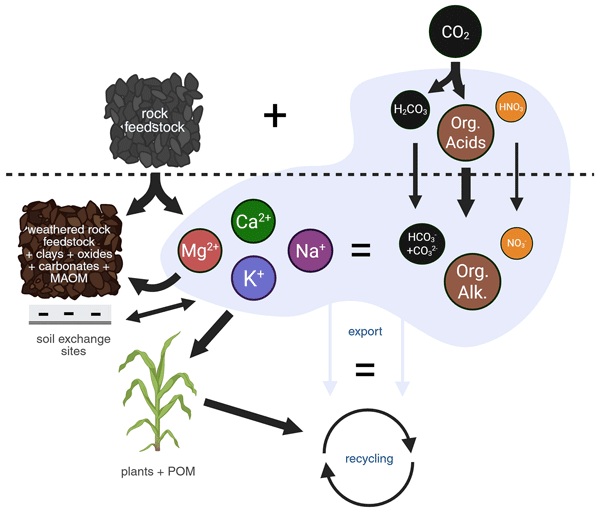
Enhanced rock weathering is a nature based negative emission technology, that permanently stores CO2. It requires rock-flour to be added to arable land with the help of farmers. To be eligible for carbon credits calls for a simple but scientifically solid, so called, Monitoring, Reporting & Verification” (MRV). We demonstrate that the commonly used carbon-based accounting is ill-suited to close the balance in open systems such as arable land, and argue for cation-based accounting strategy.
Camiel Aggenbach, Tjorven Hinzke, Juergen Kreyling, Rudy van Diggelen, Willem-Jan Emsens, Jan Frouz, Izabela Jaszczuk, Agata Klimkowska, Wiktor Kotowski, Łukasz Kozub, Yvonne Liczner, Eugeniusz Pronin, Elke Seeber, Erik Verbruggen, Hanna Silvennoinen, and Franziska Tanneberger
EGUsphere, https://doi.org/10.5194/egusphere-2025-5352, https://doi.org/10.5194/egusphere-2025-5352, 2025
Short summary
Short summary
This study analysed changes of above- and belowground production and litter mass loss of vascular plants due to rewetting of drained temperate fens across Europe by comparing rewetted, drained and undrained fens. Belowground production and decomposition did not differ between hydrological statuses, and were more impacted by soil depth and nutrient availability than water level regime. The results were obtained during an extremely dry, warm growing season with an unknown impact.
Jens S. Hammes, Jens Hartmann, Johannes A. C. Barth, Tobias Linke, Ingrid Smet, Mathilde Hagens, Philip A. E. Pogge von Strandmann, Tom Reershemius, Bruno Casimiro, Arthur Vienne, Anna A. Stoeckel, Ralf Steffens, and Dirk Paessler
EGUsphere, https://doi.org/10.5194/egusphere-2025-5402, https://doi.org/10.5194/egusphere-2025-5402, 2025
Short summary
Short summary
To test enhanced weathering's efficacy, we ran a two-year greenhouse study under warm, wet conditions, comparing several rock additives across farm soils. We tracked alkalinity and cation soil pools. Soil type was decisive: acidic, low-buffer soils exported more additional alkalinity, while alkaline or pH neutral soils retained it in cation pools. The results point to where enhanced weathering can deliver durable carbon removal and underscore the need for long, well-controlled trials.
Charlotte Läuchli, Nestor Gaviria-Lugo, Anne Bernhardt, Hella Wittmann, Patrick J. Frings, Mahyar Mohtadi, Andreas Lückge, and Dirk Sachse
Clim. Past, 21, 2083–2113, https://doi.org/10.5194/cp-21-2083-2025, https://doi.org/10.5194/cp-21-2083-2025, 2025
Short summary
Short summary
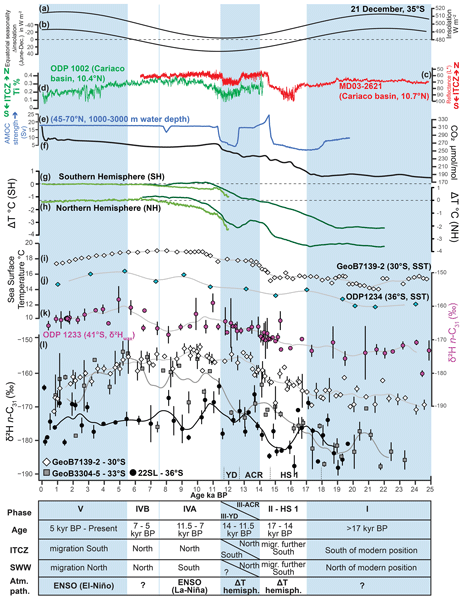
Large-scale atmospheric pathways connecting climate across latitudes are poorly documented in the past. Using a high-resolution spatial and temporal reconstruction of the evolution of the Southern Hemisphere Westerlies since the Last Glacial Maximum and comparing it with the evolution of the Intertropical Convergence Zone, we identified the dominant atmospheric pathways that shaped past South American climate.
Jet Rijnders, Arthur Vienne, and Sara Vicca
Biogeosciences, 22, 2803–2829, https://doi.org/10.5194/bg-22-2803-2025, https://doi.org/10.5194/bg-22-2803-2025, 2025
Short summary
Short summary
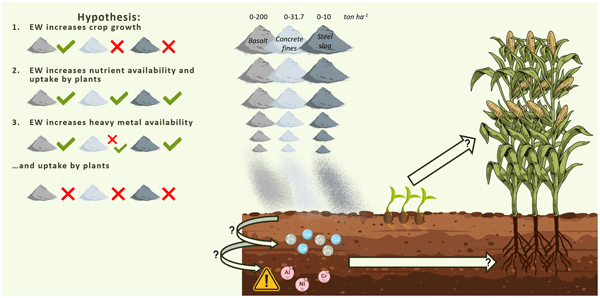
A mesocosm experiment was set up to investigate how maize responds to the application of basalt, concrete fines, and steel slag, using a dose–response approach. Biomass increased with basalt application but did not change with concrete fines or steel slag, except for increased tassel biomass. Mg, Ca, and Si generally increased in the crops, whereas toxic trace elements remained unaffected or even decreased in the plants. Overall, crops were positively affected by the application of silicate materials.
Nestor Gaviria-Lugo, Charlotte Läuchli, Hella Wittmann, Anne Bernhardt, Patrick Frings, Mahyar Mohtadi, Oliver Rach, and Dirk Sachse
Biogeosciences, 20, 4433–4453, https://doi.org/10.5194/bg-20-4433-2023, https://doi.org/10.5194/bg-20-4433-2023, 2023
Short summary
Short summary
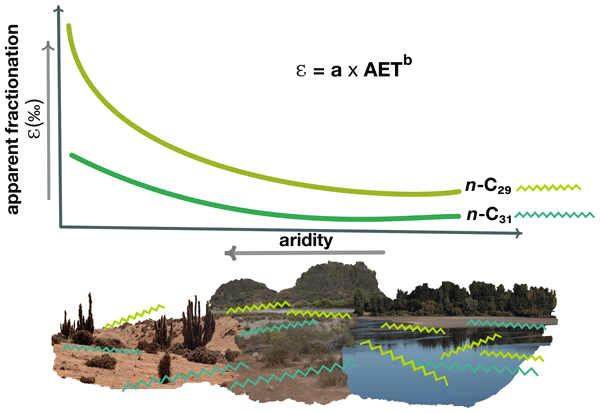
We analyzed how leaf wax hydrogen isotopes in continental and marine sediments respond to climate along one of the strongest aridity gradients in the world, from hyperarid to humid, along Chile. We found that under extreme aridity, the relationship between hydrogen isotopes in waxes and climate is non-linear, suggesting that we should be careful when reconstructing past hydrological changes using leaf wax hydrogen isotopes so as to avoid overestimating how much the climate has changed.
Niel Verbrigghe, Niki I. W. Leblans, Bjarni D. Sigurdsson, Sara Vicca, Chao Fang, Lucia Fuchslueger, Jennifer L. Soong, James T. Weedon, Christopher Poeplau, Cristina Ariza-Carricondo, Michael Bahn, Bertrand Guenet, Per Gundersen, Gunnhildur E. Gunnarsdóttir, Thomas Kätterer, Zhanfeng Liu, Marja Maljanen, Sara Marañón-Jiménez, Kathiravan Meeran, Edda S. Oddsdóttir, Ivika Ostonen, Josep Peñuelas, Andreas Richter, Jordi Sardans, Páll Sigurðsson, Margaret S. Torn, Peter M. Van Bodegom, Erik Verbruggen, Tom W. N. Walker, Håkan Wallander, and Ivan A. Janssens
Biogeosciences, 19, 3381–3393, https://doi.org/10.5194/bg-19-3381-2022, https://doi.org/10.5194/bg-19-3381-2022, 2022
Short summary
Short summary
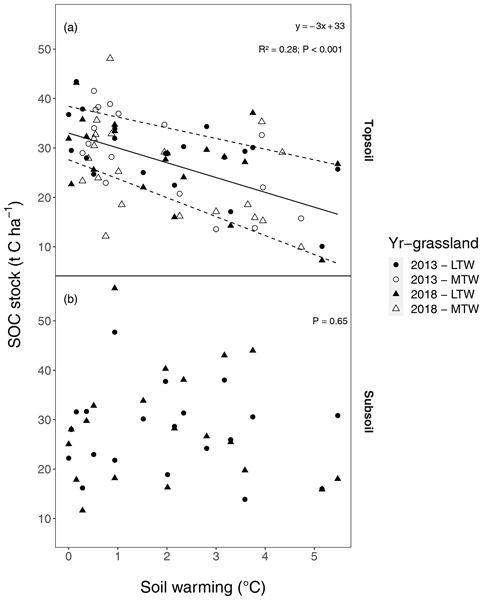
In subarctic grassland on a geothermal warming gradient, we found large reductions in topsoil carbon stocks, with carbon stocks linearly declining with warming intensity. Most importantly, however, we observed that soil carbon stocks stabilised within 5 years of warming and remained unaffected by warming thereafter, even after > 50 years of warming. Moreover, in contrast to the large topsoil carbon losses, subsoil carbon stocks remained unaffected after > 50 years of soil warming.

Melanie S. Verlinden, Hamada AbdElgawad, Arne Ven, Lore T. Verryckt, Sebastian Wieneke, Ivan A. Janssens, and Sara Vicca
Biogeosciences, 19, 2353–2364, https://doi.org/10.5194/bg-19-2353-2022, https://doi.org/10.5194/bg-19-2353-2022, 2022
Short summary
Short summary
Zea mays grows in mesocosms with different soil nutrition levels. At low phosphorus (P) availability, leaf physiological activity initially decreased strongly. P stress decreased over the season. Arbuscular mycorrhizal fungi (AMF) symbiosis increased over the season. AMF symbiosis is most likely responsible for gradual reduction in P stress.
Lore T. Verryckt, Sara Vicca, Leandro Van Langenhove, Clément Stahl, Dolores Asensio, Ifigenia Urbina, Romà Ogaya, Joan Llusià, Oriol Grau, Guille Peguero, Albert Gargallo-Garriga, Elodie A. Courtois, Olga Margalef, Miguel Portillo-Estrada, Philippe Ciais, Michael Obersteiner, Lucia Fuchslueger, Laynara F. Lugli, Pere-Roc Fernandez-Garberí, Helena Vallicrosa, Melanie Verlinden, Christian Ranits, Pieter Vermeir, Sabrina Coste, Erik Verbruggen, Laëtitia Bréchet, Jordi Sardans, Jérôme Chave, Josep Peñuelas, and Ivan A. Janssens
Earth Syst. Sci. Data, 14, 5–18, https://doi.org/10.5194/essd-14-5-2022, https://doi.org/10.5194/essd-14-5-2022, 2022
Short summary
Short summary
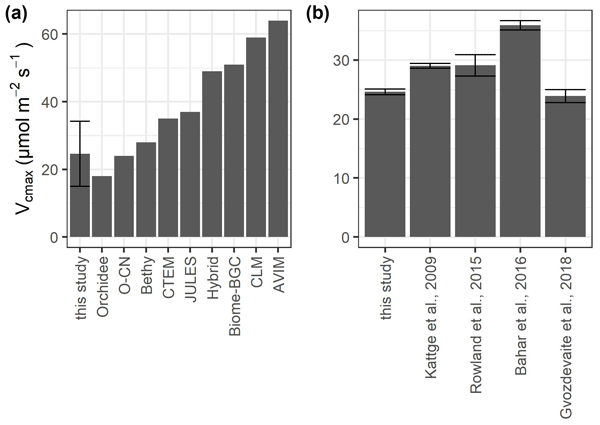
We provide a comprehensive dataset of vertical profiles of photosynthesis and important leaf traits, including leaf N and P concentrations, from two 3-year, large-scale nutrient addition experiments conducted in two tropical rainforests in French Guiana. These data present a unique source of information to further improve model representations of the roles of N and P, and other leaf nutrients, in photosynthesis in tropical forests.
Cited articles
Akortey, W., Oppong Danso, E., Dietzen, C., Amponsah, W., Arthur, E., Boadi Mensah, B. K., Obour, P. B., Nyasapoh, J. B. A., Darko, D. A., Dorvlo, S. Y., Sabi, E. B., Abenney-Mickson, S., and Rosing, M. T.: Short-term effects of Greenlandic glacial rock flour on soil physical properties and maize yield, Nutr. Cycl. Agroecosys., 132, https://doi.org/10.1007/s10705-025-10452-2, 2026.
Amann, T., Hartmann, J., Struyf, E., de Oliveira Garcia, W., Fischer, E. K., Janssens, I., Meire, P., and Schoelynck, J.: Enhanced Weathering and related element fluxes – a cropland mesocosm approach, Biogeosciences, 17, 103–119, https://doi.org/10.5194/bg-17-103-2020, 2020.
Anda, M., Shamshuddin, J., and Fauziah, C. I.: Improving chemical properties of a highly weathered soil using finely ground basalt rocks, Catena, 124, 147–161, https://doi.org/10.1016/j.catena.2014.09.012, 2015.
ANZG: Toxicant default guideline values for aquatic ecosystem protection: Nickel in freshwater, Australian and New Zealand Governments and Australian state and territory governments, https://www.waterquality.gov.au/anz-guidelines/guideline-values/default/water-quality-toxicants (last access: 19 October 2026), 2024.
British Columbia Ministry of Water Land and Resources Stewardship: Nickel Water Quality Guideline for the Protection of Freshwater Aquatic Life-Technical Report, British Columbia Ministry of Water Land and Resources Stewardship, Prov. B.C., Victoria B.C., WQG-22-1, ISBN 9781039901025, https://www2.gov.bc.ca/assets/gov/environment/air-land-water/water/waterquality/water-quality-guidelines/approved-wqgs/bc_nickel_water_quality_guidelines_technical_report.pdf (last access: 19 October 2024), 2024.
Basile-Doelsch, I., Balesdent, J., and Rose, J.: Are interactions between organic compounds and nanoscale weathering minerals the key drivers of carbon storage in soils?, Environ. Sci. Technol., 49, 3997–3998, https://doi.org/10.1021/acs.est.5b00650, 2015.
Basta, N., Pantone, D., and Tabatabai, M.: Path analysis of heavy metal adsorption by soil, Agron. J., 85, 1054–1057, https://doi.org/10.2134/agronj1993.00021962008500050018x, 1993.
Beerling, D. J., Kantzas, E. P., Lomas, M. R., Wade, P., Eufrasio, R. M., Renforth, P., Sarkar, B., Andrews, M. G., James, R. H., Pearce, C. R., Mercure, J. F., Pollitt, H., Holden, P. B., Edwards, N. R., Khanna, M., Koh, L., Quegan, S., Pidgeon, N. F., Janssens, I. A., Hansen, J., and Banwart, S. A.: Potential for large-scale CO(2) removal via enhanced rock weathering with croplands, Nature, 583, 242–248, https://doi.org/10.1038/s41586-020-2448-9, 2020.
Bijma, J., Hagens, M., Hammes, J. S., Planavsky, N., Pogge von Strandmann, P. A. E., Reershemius, T., Reinhard, C. T., Renforth, P., Suhrhoff, T. J., Vicca, S., Vienne, A., and Wolf-Gladrow, D.: Reviews and syntheses: Carbon vs. cation based MRV of Enhanced Rock Weathering and the issue of soil organic carbon, Biogeosciences, 23, 53–75, https://doi.org/10.5194/bg-23-53-2026, 2026.
Blume, H. P., Brümmer, G. W., Horn, R., Kandeler, E., Kögel-Knabner, I., Kretzschmar, R., Stahr, K., Wilke, B.-M., Thiele-Bruhn, S., and Welp, G.: Scheffer/schachtschabel, Lehrbuch der Bodenkunde, 16, 10–1007, https://doi.org/10.1007/978-3-642-30942-7, 2010.
Boito, L., Rijnders, J., Steinwidder, L., Frings, P., Maes, M., Vienne, A., Verbruggen, E., and Vicca, S.: Limited effect of basalt amendment and mycorrhizal inoculation on soil chemical properties and maize growth on a nutrient-rich soil (Version 1), Zenodo [code and data set], https://doi.org/10.5281/zenodo.16813184, 2025.
Boniao, R. D., Shamshuddin, J., Van Ranst, E., Zauyah, S., and Syed Omar, S. R.: Changes in chemical properties and growth of corn in volcanic soils treated with peat, ground basalt pyroclastics, and calcium silicate, Commun. Soil Sci. Plan., 33, 1219–1233, https://doi.org/10.1081/css-120003883, 2006.
Branca, G., Lipper, L., McCarthy, N., and Jolejole, M. C.: Food security, climate change, and sustainable land management. A review, Agron. Sustain. Dev., 33, 635–650, https://doi.org/10.1007/s13593-013-0133-1, 2013.
Brown, I. C.: A rapid method of determining exchangeable hydrogen and total exchangeable bases of soils, Soil Sci., 56, 353–358, 1943.
Buss, W., Hasemer, H., Ferguson, S., and Borevitz, J.: Stabilisation of soil organic matter with rock dust partially counteracted by plants, Glob. Chang Biol., 30, https://doi.org/10.1111/gcb.17052, 2023.
Buss, W., Hasemer, H., Sokol, N. W., Rohling, E. J., and Borevitz, J.: Applying minerals to soil to draw down atmospheric carbon dioxide through synergistic organic and inorganic pathways, Commun. Earth Environ., 5, https://doi.org/10.1038/s43247-024-01771-3, 2024.
CCME (Canadian Council of Ministers of the Environment): Water Quality Guidelines for the Protection of Aquatic Life, https://ccme.ca/en/chemical/139, last access: 06 March 2026.
Clough, G. H., Blatchford, S., and Hamm, P. B.: Common smut reduces sweet corn yield and ear processing quality, Hortscience, 46, 1507–1511, https://doi.org/10.21273/HORTSCI.46.11.1507, 2011.
Conceição, L. T., Silva, G. N., Holsback, H. M. S., Oliveira, C. d. F., Marcante, N. C., Martins, É. d. S., Santos, F. L. d. S., and Santos, E. F.: Potential of basalt dust to improve soil fertility and crop nutrition, Journal of Agriculture and Food Research, 10, https://doi.org/10.1016/j.jafr.2022.100443, 2022.
DeMaster, D. J.: The supply and accumulation of silica in the marine environment, Geochim. Cosmochim. Ac., 45, 1715–1732, https://doi.org/10.1016/0016-7037(81)90006-5, 1981.
Departement Landbouw and Visserij: Bemestingstechnieken Organische Mest, Machinedemonstratie Bemestingstechnieken Organische Mest, Merelbeke, Belgium, Departement Landbouw en Visserij, http://lv.vlaanderen.be/nl/voorlichting-info/publicaties/plant2016, last access: 19 October 2026.
Desmalles, C., Jordan-Meille, L., Hernandez, J., Thomas, C. L., Dunham, S., Deng, F., McGrath, S. P., and Haefele, S. M.: Impact of Basalt Rock Powder on Ryegrass Growth and Nutrition on Sandy and Loamy Acid Soils, Agronomy, 15, https://doi.org/10.3390/agronomy15081791, 2025.
Dietzen, C., Harrison, R., and Michelsen-Correa, S.: Effectiveness of enhanced mineral weathering as a carbon sequestration tool and alternative to agricultural lime: An incubation experiment, International Journal of Greenhouse Gas Control, 74, 251–258, https://doi.org/10.1016/j.ijggc.2018.05.007, 2018.
Dinno, A.: _dunn.test: Dunn'sTest of Multiple Comparisons Using Rank Sums_ (R package version 1.3.6) [code], https://CRAN.R-project.org/package=dunn.test (last access: 19 October 2026), 2024.
Dupla, X., Möller, B., Baveye, P. C., and Grand, S.: Potential accumulation of toxic trace elements in soils during enhanced rock weathering, Eur. J. Soil Sci., 74, https://doi.org/10.1111/ejss.13343, 2023.
Dupla, X., Brantley, S. L., Paulo, C., Möller, B., Power, I. M., and Grand, S.: Geochemical Drivers of Enhanced Rock Weathering in Soils, in: Geoengineering and Climate Change, edited by: Beech, M., https://doi.org/10.1002/9781394204847.ch13, 2025.
EPA: National Recommended Water Quality Criteria – Aquatic Life Criteria Table, https://www.epa.gov/wqc/national-recommended-water-quality-criteria-aquatic-life-criteria-table#table, last access: 06 March 2026.
European Commission: COMMISSION REGULATION (EC) No 1881/2006 of 19 December 2006 setting maximum levels for certain contaminants in foodstuffs, https://eur-lex.europa.eu/legal-content/EN/TXT/PDF/?uri=CELEX:32006R1881 (last access: 19 October 2026), 2006, 2006.
European Commission: COMMISSION REGULATION (EU) 2024/1987 of 30 July 2024 amending Regulation (EU) 2023/915 as regards maximum levels of nickel in certain foodstuffs, https://eur-lex.europa.eu/legal-content/EN/TXT/PDF/?uri=OJ:L_202401987 (last access: 19 October 2026), 2024.
Ferrol, N., Azcon-Aguilar, C., and Perez-Tienda, J.: Review: Arbuscular mycorrhizas as key players in sustainable plant phosphorus acquisition: An overview on the mechanisms involved, Plant Sci., 280, 441–447, https://doi.org/10.1016/j.plantsci.2018.11.011, 2019.
Fierer, N. and Jackson, R. B.: The diversity and biogeography of soil bacterial communities, Proc. Natl. Acad. Sci., 103, 626–631, https://doi.org/10.1073/pnas.0507535103, 2006.
Gillman, G.: The effect of crushed basalt scoria on the cation exchange properties of a highly weathered soil, Soil Sci. Soc. Am. J., 44, 465–468, https://doi.org/10.2136/sssaj1980.03615995004400030005x, 1980.
Gillman, G., Burkett, D., and Coventry, R.: A laboratory study of application of basalt dust to highly weathered soils: effect on soil cation chemistry, Soil Res., 39, 799–811, https://doi.org/10.1071/SR00073, 2001.
Gillman, G., Burkett, D., and Coventry, R.: Amending highly weathered soils with finely ground basalt rock, Appl. Geochem., 17, 987–1001, https://doi.org/10.1016/S0883-2927(02)00078-1, 2002.
Giovannetti, M. and Mosse, B.: An Evaluation of Techniques for Measuring Vesicular Arbuscular Mycorrhizal Infection in Roots, New Phytol., 84, 489–500, https://doi.org/10.1111/j.1469-8137.1980.tb04556.x, 2006.
Goll, D. S., Ciais, P., Amann, T., Buermann, W., Chang, J., Eker, S., Hartmann, J., Janssens, I., Li, W., Obersteiner, M., Penuelas, J., Tanaka, K., and Vicca, S.: Potential CO2 removal from enhanced weathering by ecosystem responses to powdered rock, Nat. Geosci., 14, 545–549, https://doi.org/10.1038/s41561-021-00798-x, 2021.
Gonzalez-Chavez, M. C., Carrillo-Gonzalez, R., Wright, S. F., and Nichols, K. A.: The role of glomalin, a protein produced by arbuscular mycorrhizal fungi, in sequestering potentially toxic elements, Environ. Pollut., 130, 317–323, https://doi.org/10.1016/j.envpol.2004.01.004, 2004.
Goudie, A. S. and Viles, H. A.: Weathering and the global carbon cycle: Geomorphological perspectives, Earth-Sci. Rev., 113, 59–71, https://doi.org/10.1016/j.earscirev.2012.03.005, 2012.
Gudbrandsson, S., Wolff-Boenisch, D., Gislason, S. R., and Oelkers, E. H.: An experimental study of crystalline basalt dissolution from 2 ⩽ pH ⩽ 11 and temperatures from 5 to 75 °C, Geochim. Cosmochim. Ac., 75, 5496–5509, https://doi.org/10.1016/j.gca.2011.06.035, 2011.
Guo, W., Nazim, H., Liang, Z., and Yang, D.: Magnesium deficiency in plants: An urgent problem, The Crop Journal, 4, 83–91, https://doi.org/10.1016/j.cj.2015.11.003, 2016.
Haque, F., Möller, B., Sagina, S., Odhiambo, C., Ondolo, H., Thuo, N., Kamau, K., and Davies, S.: Agronomic Performance of Enhanced Rock Weathering in a Tropical Smallholder System: A Maize Trial in Kenya, CDRXIV, https://doi.org/10.70212/cdrxiv.2025410.v1, 2025.
Hartmann, J., West, A. J., Renforth, P., Köhler, P., De La Rocha, C. L., Wolf-Gladrow, D. A., Dürr, H. H., and Scheffran, J.: Enhanced chemical weathering as a geoengineering strategy to reduce atmospheric carbon dioxide, supply nutrients, and mitigate ocean acidification, Rev. Geophys., 51, 113–149, https://doi.org/10.1002/rog.20004, 2013.
Iff, N., Renforth, P., and Pogge von Strandmann, P. A. E.: The dissolution of olivine added to soil at 32 °C: the fate of weathering products and its implications for enhanced weathering at different temperatures, Frontiers in Climate, 6, https://doi.org/10.3389/fclim.2024.1252210, 2024.
Johnson, N. C., Rowland, D. L., Corkidi, L., Egerton-Warburton, L. M., and Allen, E. B.: Nitrogen enrichment alters mycorrhizal allocation at five mesic to semiarid grasslands, Ecology, 84, 1895–1908, https://doi.org/10.1890/0012-9658(2003)084[1895:NEAMAA]2.0.CO;2, 2003.
Kalamulla, R., Karunarathna, S. C., Tibpromma, S., Galappaththi, M. C. A., Suwannarach, N., Stephenson, S. L., Asad, S., Salem, Z. S., and Yapa, N.: Arbuscular Mycorrhizal Fungi in Sustainable Agriculture, Sustainability, 14, https://doi.org/10.3390/su141912250, 2022.
Kelland, M. E., Wade, P. W., Lewis, A. L., Taylor, L. L., Sarkar, B., Andrews, M. G., Lomas, M. R., Cotton, T. E. A., Kemp, S. J., James, R. H., Pearce, C. R., Hartley, S. E., Hodson, M. E., Leake, J. R., Banwart, S. A., and Beerling, D. J.: Increased yield and CO(2) sequestration potential with the C(4) cereal Sorghum bicolor cultivated in basaltic rock dust-amended agricultural soil, Glob. Chang. Biol., 26, 3658–3676, https://doi.org/10.1111/gcb.15089, 2020.
Kleber, M., Eusterhues, K., Keiluweit, M., Mikutta, C., Mikutta, R., and Nico, P. S.: Mineral–Organic Associations: Formation, Properties, and Relevance in Soil Environments, Adv. Agron., 1–140, https://doi.org/10.1016/bs.agron.2014.10.005, 2015.
Koele, N., Dickie, I. A., Blum, J. D., Gleason, J. D., and de Graaf, L.: Ecological significance of mineral weathering in ectomycorrhizal and arbuscular mycorrhizal ecosystems from a field-based comparison, Soil Biol. Biochem., 69, 63–70, https://doi.org/10.1016/j.soilbio.2013.10.041, 2014.
Koninklijk Meteorologisch Instituut van België: Klimatologische overzichten van 2022, https://www.meteo.be/nl/klimaat/klimaat-van-belgie/klimatologisch-overzicht/2022/zomer, last access: 19 October 2026.
Kuznetsova, A., Brockhoff, P. B., and Christensen, R. H.: lmerTest package: tests in linear mixed effects models, J. Stat. Softw., 82, 1–26, https://doi.org/10.18637/jss.v082.i13, 2017.
Lauber, C. L., Hamady, M., Knight, R., and Fierer, N.: Pyrosequencing-based assessment of soil pH as a predictor of soil bacterial community structure at the continental scale, Appl. Environ. Microbiol., 75, 5111–5120, https://doi.org/10.1128/AEM.00335-09, 2009.
Leake, J. R. and Read, D. J.: Mycorrhizal Symbioses and Pedogenesis Throughout Earth's History, in: Mycorrhizal Mediation of Soil, 9–33, https://doi.org/10.1016/b978-0-12-804312-7.00002-4, 2017.
Lei, K., Bucka, F. B., Teixeira, P. P. C., Buegger, F., Just, C., and Kogel-Knabner, I.: Balancing Organic and Inorganic Carbon Dynamics in Enhanced Rock Weathering: Implications for Carbon Sequestration, Glob. Chang. Biol., 31, https://doi.org/10.1111/gcb.70186, 2025.
Lewis, A. L., Sarkar, B., Wade, P., Kemp, S. J., Hodson, M. E., Taylor, L. L., Yeong, K. L., Davies, K., Nelson, P. N., Bird, M. I., Kantola, I. B., Masters, M. D., DeLucia, E., Leake, J. R., Banwart, S. A., and Beerling, D. J.: Effects of mineralogy, chemistry and physical properties of basalts on carbon capture potential and plant-nutrient element release via enhanced weathering, Appl. Geochem., 132, https://doi.org/10.1016/j.apgeochem.2021.105023, 2021.
Li, J.-G. and Dong, Y.-H.: Effect of a rock dust amendment on disease severity of tomato bacterial wilt, A. Van Leeuw. J. Microb., 103, 11–22, https://doi.org/10.1007/s10482-012-9781-4, 2013.
Maathuis, F. J. and Amtmann, A.: K+ nutrition and Na+ toxicity: the basis of cellular K+
Malmström, M. E., Destouni, G., Banwart, S. A., and Strömberg, B. H.: Resolving the scale-dependence of mineral weathering rates, Environ. Sci. Technol., 34, 1375–1378, https://doi.org/10.1021/es990682u, 2000.
Manning, D. A. C., de Azevedo, A. C., Zani, C. F., and Barneze, A. S.: Soil carbon management and enhanced rock weathering: The separate fates of organic and inorganic carbon, Eu. J. Soil Sci., 75, https://doi.org/10.1111/ejss.13534, 2024.
Matei, A. and Doehlemann, G.: Cell biology of corn smut disease – Ustilago maydis as a model for biotrophic interactions, Curr. Opin. Microbiol., 34, 60–66, https://doi.org/10.1016/j.mib.2016.07.020, 2016.
Miller, R., Jastrow, J., and Reinhardt, D.: External hyphal production of vesicular-arbuscular mycorrhizal fungi in pasture and tallgrass prairie communities, Oecologia, 103, 17–23, https://doi.org/10.1007/BF00328420, 1995.
Moosdorf, N., Renforth, P., and Hartmann, J.: Carbon dioxide efficiency of terrestrial enhanced weathering, Environ. Sci. Technol., 48, 4809–4816, https://doi.org/10.1021/es4052022, 2014.
Moretti, L. G., Bossolani, J. W., Crusciol, C. A. C., Moreira, A., Micheri, P. H., Rossi, R., and Imaizumi, C.: Dunite in Agriculture: Physiological Changes, Nutritional Status and Soybean Yield, Commun. Soil Sci. Plant Anal., 50, 1775–1784, https://doi.org/10.1080/00103624.2019.1635143, 2019.
Moyano, F., Kutsch, W., and Schulze, E.: Response of mycorrhizal, rhizosphere and soil basal respiration to temperature and photosynthesis in a barley field, Soil Biol. Biochem., 39, 843–853, https://doi.org/10.1016/j.soilbio.2006.10.001, 2007.
Neumann, E. and George, E.: Nutrient Uptake: The Arbuscular Mycorrhiza Fungal Symbiosis as a Plant Nutrient Acquisition Strategy, in: Arbuscular Mycorrhizas: Physiology and Function, 137–167, https://doi.org/10.1007/978-90-481-9489-6_7, 2010.
Niron, H., Vienne, A., Frings, P., Poetra, R., and Vicca, S.: Exploring the synergy of enhanced weathering and Bacillus subtilis: A promising strategy for sustainable agriculture, Glob. Chang. Biol., 30, https://doi.org/10.1111/gcb.17511, 2024.
Oldfield, E. E., Bradford, M. A., and Wood, S. A.: Global meta-analysis of the relationship between soil organic matter and crop yields, Soil, 5, 15–32, https://doi.org/10.5194/soil-5-15-2019, 2019.
Palandri, J. L. and Kharaka, Y. K.: A compilation of rate parameters of water-mineral interaction kinetics for application to geochemical modeling, US Geological Survey 2331-1258, USGS, https://doi.org/10.3133/ofr20041068, 2004.
Parniske, M.: Arbuscular mycorrhiza: the mother of plant root endosymbioses, Nat. Rev. Microbiol., 6, 763–775, https://doi.org/10.1038/nrmicro1987, 2008.
Perez-Fodich, A. and Derry, L. A.: Organic acids and high soil CO2 drive intense chemical weathering of Hawaiian basalts: Insights from reactive transport models, Geochim. Cosmochim. Ac., 249, 173–198, https://doi.org/10.1016/j.gca.2019.01.027, 2019.
Pinheiro, J., Bates, D., DebRoy, S., Sarkar, D., and Team, R. C.: Linear and nonlinear mixed effects models, R package version, 3, 1–89, https://cran.r-project.org/web/packages/nlme/nlme.pdf (last access: 19 October 2026), 2007.
Qin, M., Li, L., Miranda, J. P., Tang, Y., Song, B., Oosthuizen, M. K., and Wei, W.: Experimental duration determines the effect of arbuscular mycorrhizal fungi on plant biomass in pot experiments: A meta-analysis, Front. Plant. Sci., 13, 1024874, https://doi.org/10.3389/fpls.2022.1024874, 2022.
Quirk, J., Leake, J. R., Johnson, D. A., Taylor, L. L., Saccone, L., and Beerling, D. J.: Constraining the role of early land plants in Palaeozoic weathering and global cooling, Proc. Biol. Sci., 282, 20151115, https://doi.org/10.1098/rspb.2015.1115, 2015.
R Core Team: RStudio: Integrated Development Environment for R (2024.4.2.764), Posit Software PBC [code], https://dailies.rstudio.com/version/2024.04.2+764.pro1/ (last access: 19 October 2026), 2024.
Renforth, P., Washbourne, C. L., Taylder, J., and Manning, D. A.: Silicate production and availability for mineral carbonation, Environ. Sci. Technol., 45, 2035–2041, https://doi.org/10.1021/es103241w, 2011.
Riaz, M., Kamran, M., Fang, Y., Wang, Q., Cao, H., Yang, G., Deng, L., Wang, Y., Zhou, Y., Anastopoulos, I., and Wang, X.: Arbuscular mycorrhizal fungi-induced mitigation of heavy metal phytotoxicity in metal contaminated soils: A critical review, J. Hazard. Mater., 402, 123919, https://doi.org/10.1016/j.jhazmat.2020.123919, 2021.
Richardson, A. E., Barea, J.-M., McNeill, A. M., and Prigent-Combaret, C.: Acquisition of phosphorus and nitrogen in the rhizosphere and plant growth promotion by microorganisms, Plant Soil, 321, 305–339, https://doi.org/10.1007/s11104-009-9895-2, 2009.
Righi, D. and Meunier, A.: Origin of Clays by Rock Weathering and Soil Formation, in: Origin and Mineralogy of Clays, Springer-Verlag, Berlin, https://doi.org/10.1007/978-3-662-12648-6_3, 1995.
Rijnders, J., Vicca, S., Struyf, E., Amann, T., Hartmann, J., Meire, P., Janssens, I., and Schoelynck, J.: The effects of dunite fertilization on growth and elemental composition of barley and wheat differ with dunite grain size and rainfall regimes, Front. Environ. Sci., 11, https://doi.org/10.3389/fenvs.2023.1172621, 2023.
Rijnders, J., Vienne, A., and Vicca, S.: Effects of basalt, concrete fines, and steel slag on maize growth and toxic trace element accumulation in an enhanced weathering experiment, Biogeosciences, 22, 2803–2829, https://doi.org/10.5194/bg-22-2803-2025, 2025.
Rillig, M. C., Field, C. B., and Allen, M. F.: Soil biota responses to long-term atmospheric CO2 enrichment in two California annual grasslands, Oecologia, 119, 572–577, https://doi.org/10.1007/s004420050821, 1999.
Rillig, M. C., Aguilar-Trigueros, C. A., Bergmann, J., Verbruggen, E., Veresoglou, S. D., and Lehmann, A.: Plant root and mycorrhizal fungal traits for understanding soil aggregation, New Phytol., 205, 1385–1388, https://www.jstor.org/stable/newphytologist.205.4.1385 (last access: 19 October 2026), 2015.
Roy, R. and Finck, A.: Plant nutrition for food security-A guide for integrated nutrient management, Food and Agriculture Organization of the United Nations, 9251054908, https://openknowledge.fao.org/handle/20.500.14283/a0443e (last access: 19 October 2026), 2026.
Rusco, E., Jones, R. J., and Bidoglio, G.: Organic matter in the soils of Europe: Present status and future trends, European Soil Bureau Soil and Waste Unit, Institute for Environment and Sustainability, JRC Ispra, EUR 20556 EN, https://publications.jrc.ec.europa.eu/repository/handle/JRC24739 (last access: 19 October 2026), 2001.
Saccone, L., Conley, D., Koning, E., Sauer, D., Sommer, M., Kaczorek, D., Blecker, S., and Kelly, E.: Assessing the extraction and quantification of amorphous silica in soils of forest and grassland ecosystems, Eu. J. Soil Sci., 58, 1446–1459, https://doi.org/10.1111/j.1365-2389.2007.00949.x, 2007.
Shamshuddin, J., Anda, M., Fauziah, C., and Omar, S. S.: Growth of cocoa planted on highly weathered soil as affected by application of basalt and/or compost, Commun. Soil Sci Plant Anal., 42, 2751–2766, https://doi.org/10.1080/00103624.2011.622822, 2011.
Skov, K., Wardman, J., Healey, M., McBride, A., Bierowiec, T., Cooper, J., Edeh, I., George, D., Kelland, M. E., Mann, J., Manning, D., Murphy, M. J., Pape, R., Teh, Y. A., Turner, W., Wade, P., and Liu, X.: Initial agronomic benefits of enhanced weathering using basalt: A study of spring oat in a temperate climate, PLoS One, 19, https://doi.org/10.1371/journal.pone.0295031, 2024.
Slessarev, E. W., Chadwick, O. A., Sokol, N. W., Nuccio, E. E., and Pett-Ridge, J.: Rock weathering controls the potential for soil carbon storage at a continental scale, Biogeochemistry, 157, 1–13, https://doi.org/10.1007/s10533-021-00859-8, 2021.
Smith, S. E. and Read, D. J.: Mycorrhizal symbiosis, Academic Press, https://doi.org/10.1016/B978-0-12-370526-6.X5001-6, 2010.
Smith, S. E., Jakobsen, I., Grønlund, M., and Smith, F. A.: Roles of arbuscular mycorrhizas in plant phosphorus nutrition: interactions between pathways of phosphorus uptake in arbuscular mycorrhizal roots have important implications for understanding and manipulating plant phosphorus acquisition, Plant Physiol., 156, 1050–1057, https://doi.org/10.1104/pp.111.174581, 2011.
Smits, M. M. and Wallander, H.: Role of Mycorrhizal Symbiosis in Mineral Weathering and Nutrient Mining from Soil Parent Material, Mycorrhizal Mediation of Soil, 35–46, https://doi.org/10.1016/b978-0-12-804312-7.00003-6, 2017.
Sochorová, L., Jansa, J., Verbruggen, E., Hejcman, M., Schellberg, J., Kiers, E. T., and Johnson, N. C.: Long-term agricultural management maximizing hay production can significantly reduce belowground C storage, Agriculture, Ecosystems and Environment, 220, 104–114, https://doi.org/10.1016/j.agee.2015.12.026, 2016.
Steinwidder, L., Boito, L., Frings, P. J., Niron, H., Rijnders, J., de Schutter, A., Vienne, A., and Vicca, S.: Beyond Inorganic C: Soil Organic C as a Key Pathway for Carbon Sequestration in Enhanced Weathering, Glob. Chang. Biol., 31, e70340, https://doi.org/10.1111/gcb.70340, 2025.
Strawn, D. G., Bohn, H. L., and O'Connor, G. A.: Soil chemistry, John Wiley & Sons, ISBN 9781119515159, 2019.
Suhrhoff, T. J.: Phytoprevention of Heavy Metal Contamination From Terrestrial Enhanced Weathering: Can Plants Save the Day?, Frontiers in Climate, 3, https://doi.org/10.3389/fclim.2021.820204, 2022.
Swoboda, P., Doring, T. F., and Hamer, M.: Remineralizing soils? The agricultural usage of silicate rock powders: A review, Sci. Total Environ., 807, 150976, https://doi.org/10.1016/j.scitotenv.2021.150976, 2022.
Taylor, L. L., Leake, J. R., Quirk, J., Hardy, K., Banwart, S. A., and Beerling, D. J.: Biological weathering and the long-term carbon cycle: integrating mycorrhizal evolution and function into the current paradigm, Geobiology, 7, 171–191, https://doi.org/10.1111/j.1472-4669.2009.00194.x, 2009.
te Pas, E. E. E. M., Hagens, M., and Comans, R. N. J.: Assessment of the enhanced weathering potential of different silicate minerals to improve soil quality and sequester CO2, Frontiers in Climate, 4, https://doi.org/10.3389/fclim.2022.954064, 2023.
ten Berge, H. F., van der Meer, H. G., Steenhuizen, J. W., Goedhart, P. W., Knops, P., and Verhagen, J.: Olivine weathering in soil, and its effects on growth and nutrient uptake in Ryegrass (Lolium perenne L.): a pot experiment, PLoS One, 7, https://doi.org/10.1371/journal.pone.0042098, 2012.
Tessier, A., Campbell, P. G., and Bisson, M.: Sequential extraction procedure for the speciation of particulate trace metals, Anal. Chem., 51, 844–851, https://doi.org/10.1021/ac50043a017, 1979.
Totsche, K. U., Amelung, W., Gerzabek, M. H., Guggenberger, G., Klumpp, E., Knief, C., Lehndorff, E., Mikutta, R., Peth, S., Prechtel, A., Ray, N., and Kögel-Knabner, I.: Microaggregates in soils, J. Plant Nutr. Soil Sc., 181, 104–136, https://doi.org/10.1002/jpln.201600451, 2017.
Uhlig, D. and von Blanckenburg, F.: How Slow Rock Weathering Balances Nutrient Loss During Fast Forest Floor Turnover in Montane, Temperate Forest Ecosystems, Front. Earth Sci., 7, https://doi.org/10.3389/feart.2019.00159, 2019.
UN General Assembly: Transforming our world: the 2030 Agenda for Sustainable Development, https://digitallibrary.un.org/record/3923923?v=pdf (last access: 19 October 2026), 2015.
Vaghetti Luchese, A., Pivetta, L. A., Batista, M. A., Steiner, F., Giaretta, A. d. S., and Curtis, J. C. D.: Agronomic feasibility of using basalt powder as soil nutrient remineralizer, Afr. J. Agric. Res., 17, 487–497, https://doi.org/10.5897/AJAR2020.15234, 2021.
van der Heijden, M. G., Bardgett, R. D., and van Straalen, N. M.: The unseen majority: soil microbes as drivers of plant diversity and productivity in terrestrial ecosystems, Ecol. Lett., 11, 296–310, https://doi.org/10.1111/j.1461-0248.2007.01139.x, 2008.
Van Straaten, P.: Farming with rocks and minerals: challenges and opportunities, An. Acad. Bras. Cienc., 78, 731–747, https://doi.org/10.1590/S0001-37652006000400009, 2006.
Ven, A., Verlinden, M. S., Verbruggen, E., Vicca, S., and Hart, M.: Experimental evidence that phosphorus fertilization and arbuscular mycorrhizal symbiosis can reduce the carbon cost of phosphorus uptake, Funct. Ecol., 33, 2215–2225, https://doi.org/10.1111/1365-2435.13452, 2019.
Ven, A., Verlinden, M. S., Fransen, E., Olsson, P. A., Verbruggen, E., Wallander, H., and Vicca, S.: Phosphorus addition increased carbon partitioning to autotrophic respiration but not to biomass production in an experiment with Zea mays, Plant Cell Environ., 43, 2054–2065, https://doi.org/10.1111/pce.13785, 2020.
Verbruggen, E. and Toby Kiers, E.: Evolutionary ecology of mycorrhizal functional diversity in agricultural systems, Evol. Appl., 3, 547–560, https://doi.org/10.1111/j.1752-4571.2010.00145.x, 2010.
Verbruggen, E., Struyf, E., and Vicca, S.: Can arbuscular mycorrhizal fungi speed up carbon sequestration by enhanced weathering?, Plants, People, Planet, 3, 445–453, https://doi.org/10.1002/ppp3.10179, 2021.
Verlinden, M. S., Ven, A., Verbruggen, E., Janssens, I. A., Wallander, H., and Vicca, S.: Favorable effect of mycorrhizae on biomass production efficiency exceeds their carbon cost in a fertilization experiment, Ecology, 99, 2525–2534, https://doi.org/10.1002/ecy.2502, 2018.
Vienne, A., Poblador, S., Portillo-Estrada, M., Hartmann, J., Ijiehon, S., Wade, P., and Vicca, S.: Enhanced Weathering Using Basalt Rock Powder: Carbon Sequestration, Co-benefits and Risks in a Mesocosm Study With Solanum tuberosum, Front. Climate, 4, https://doi.org/10.3389/fclim.2022.869456, 2022.
Vienne, A., Frings, P., Poblador, S., Steinwidder, L., Rijnders, J., Schoelynck, J., Vinduskova, O., and Vicca, S.: Earthworms in an enhanced weathering mesocosm experiment: Effects on soil carbon sequestration, base cation exchange and soil CO2 efflux, Soil Biol. Biochem., 199, https://doi.org/10.1016/j.soilbio.2024.109596, 2024.
Vierheilig, H., Schweiger, P., and Brundrett, M.: An overview of methods for the detection and observation of arbuscular mycorrhizal fungi in roots, Physiol. Plantarum, 125, 393–404, https://doi.org/10.1111/j.1399-3054.2005.00564.x, 2005.
Vlaamse Land Maatschappij: Normen and Richtwaarden 2026, Vlaamse Overheid, 2026
Wagg, C., Jansa, J., Schmid, B., and van der Heijden, M. G.: Belowground biodiversity effects of plant symbionts support aboveground productivity, Ecol. Lett., 14, 1001–1009, https://doi.org/10.1111/j.1461-0248.2011.01666.x, 2011.
Wang, C. and Kuzyakov, Y.: Soil organic matter priming: The pH effects, Glob. Chang. Biol., 30, https://doi.org/10.1111/gcb.17349, 2024.
White, A. F. and Brantley, S. L.: The effect of time on the weathering of silicate minerals: why do weathering rates differ in the laboratory and field?, Chem. Geol., 202, 479–506, https://doi.org/10.1016/j.chemgeo.2003.03.001, 2003.
Wilkes, T. I.: Arbuscular Mycorrhizal Fungi in Agriculture, Encyclopedia, 1, 1132–1154, https://doi.org/10.3390/encyclopedia1040085, 2021.
Winnick, M. J. and Maher, K.: Relationships between CO2, thermodynamic limits on silicate weathering, and the strength of the silicate weathering feedback, Earth Planet. Sci. Lett., 485, 111–120, https://doi.org/10.1016/j.epsl.2018.01.005, 2018.
Wolf-Gladrow, D. A., Zeebe, R. E., Klaas, C., Körtzinger, A., and Dickson, A. G.: Total alkalinity: The explicit conservative expression and its application to biogeochemical processes, Mar. Chem., 106, 287–300, https://doi.org/10.1016/j.marchem.2007.01.006, 2007.
Woomer, P., Martin, A., Albrecht, A., Resck, D., and Scharpenseel, H.: The importance and management of soil organic matter in the tropics, in: The Biological Management of Tropical Soil Fertility, Wiley-Sayce, ISBN 9780471950950, 1994.
World Health Organization: Environmental Health Criteria 61: Chromium, https://iris.who.int/server/api/core/bitstreams/026af2e6-1989-4b90-8a5b-40d3789ee584/content (last access: 19 October 2026), 1988.
Wu, S., Konhauser, K. O., Chen, B., and Huang, L.: “Reactive Mineral Sink” drives soil organic matter dynamics and stabilization, npj Materials Sustainability, 1, https://doi.org/10.1038/s44296-023-00003-7, 2023.
Zeebe, R. E. and Wolf-Gladrow, D. A.: Chapter 1: Equilibrium, in: CO2 in seawater: equilibrium, kinetics, isotopes, edited by: Halpern, D., Elsevier, ISBN 0444509461, 2001.
Short summary
We explored whether adding basalt and beneficial fungi to soil could improve soil health and crop growth. Basalt improved soil chemistry, confirming its role as a soil improver, while the fungi had little effect. Crop yield remained unchanged, showing that benefits depend on soil type. Our study helps clarify how soil amendments work and when they may support farming and climate solutions.
We explored whether adding basalt and beneficial fungi to soil could improve soil health and...


Altmetrics
Final-revised paper
Preprint