
the Creative Commons Attribution 4.0 License.
the Creative Commons Attribution 4.0 License.
 | 19 Oct 2026
Straw and biochar co-application: a strategy to reduce Cd–Zn bioavailability, alleviate microbial nutrient limitations and enhance soil C stability
Xirui Kang
Na Geng
Yaping Li
Hui Wang
Hong Pan
Quangang Yang
Zhongchen Yang
Yanhong Lou

Yuping Zhuge
Biochar is widely used to remediate heavy metal-contaminated soils; however, it can increase carbon (C) limitation in soil microorganisms, potentially compromising soil ecological sustainability. Effective strategies are, therefore, needed to reduce heavy metal bioavailability while maintaining microbial activity and soil fertility. To this end, we aimed to evaluate the effects of different straw–biochar ratios on heavy metal availability, microbial nutrient limitation, C cycling and soil fertility and to identify an optimal remediation strategy for cadmium (Cd) and zinc (Zn) contaminated soil. Cd- and Zn-contaminated soils were amended with varying straw–biochar ratios (S4C0, S3C1, S2C2, S1C3, S0C4 and control) and incubated for 90 d. Soil heavy metal bioavailability, microbial nutrient limitation, CO2 emissions, enzyme activities and organic C stability were analysed. Compared with the control, the straw–biochar treatment at a 1:3 ratio (S1C3) reduced diethylenetriaminepentaacetic acid–extractable Cd and Zn by 30.22 %–32.81 % and 21.31 %–23.06 %, respectively. S1C3 significantly improved soil organic C content and stability, enhanced available nutrients (nitrogen (N), phosphorus (P) and potassium), increased microbial biomass and elevated enzyme activities related to C, N and P acquisition and alleviated microbial C limitation. The optimized straw–biochar ratio (1:3) provides a novel integrated approach for remediating heavy metal-contaminated agricultural soils while simultaneously enhancing soil C stability, nutrient availability and microbial activity. This strategy offers a practical foundation for sustainable farmland management.
- Article
(7670 KB) - Full-text XML
-
Supplement
(585 KB) - BibTeX
- EndNote


The widespread distribution of cadmium (Cd) and zinc (Zn) during large-scale mechanical processing, mining and smelting substantially exacerbates soil contamination (Wang et al., 2024a). These metals are highly persistent, bioaccumulative (Kang et al., 2024a). Cd exhibits high biological toxicity and carcinogenic potential, even for excessive Zn, inhibit plant growth by reducing photosynthetic pigment content and affecting enzyme activity, although Zn is an essential trace element for plants (Natasha et al., 2022). Soil Cd and Zn combined contamination seriously endanger both soil ecology and human health (Huang et al., 2024). Additionally, their high mobility poses a major challenge for complete removal. Thus, mitigating the mobility and toxicity of heavy metals in soil through chemical passivation is an effective strategy for remediating their pollution.
Biochar, a stable carbon (C) material generated via anaerobic pyrolysis of biomass, is widely applied for soil heavy metal passivation and remediation owing to its high surface area and exceptional adsorption capacity (Ahmad et al., 2024; Wang et al., 2024b). Biochar immobilizes heavy metals through precipitation, chelation and complexation, thereby reducing their bioavailability (Kang et al., 2024b). Several studies have examined the effects of biochar on heavy metal immobilization in soil. Burachevskaya et al. (2023) demonstrated that biochar produced from wood, sunflower and rice husks exhibited high adsorption capacity for Cu, Zn and Pb in soil. Using the soil quality index to assess the impacts of coffee parchment biochar remediation on heavy metal-contaminated soils, Carnier et al. (2023) revealed that biochar enhances both soil fertility and heavy metal immobilization by improving overall soil quality. Mohan et al. (2024) reported that tea residue biochar and paddy straw biochar simultaneously immobilize Cd(II) and Cr(VI), sequester C and improve soil fertility. Notably, coupled with the heavy metals stress alleviation, soil microbial activity is improved, and increasing their nutrient requirements, however, its stable C structure limits its availability as a microbial carbon source, which may exacerbate nutrient limitations (Chen et al., 2022).
In China, the annual output of crop straws is >600 million tons, with approximately 230, 130 and 110 million tons from corn, wheat and rice, respectively. Most straw is returned to fields to supply nutrients and organic C, thereby maintaining farmland production capacity and supporting food security (Guo et al., 2024a; Mo et al., 2024). Straw returned to farmland is beneficial for increasing soil C storage. Straw return also boosts the availability of soil nutrients, including N, P, K, Ca and Mg, thereby enhancing crop growth and yield (Guo et al., 2024b; Islam et al., 2022). Furthermore, researchers have investigated changes in soil microbial communities, soil CO2 and other greenhouse gas emissions after straw return (Lin et al., 2023; Peng et al., 2024). Organic matter in straw is more easily decomposed, providing a sustainable source of activated carbon for microorganisms, maintaining stable soil enzyme activity and microbial metabolic functions. However limited studies have investigated the combined influence of straw and remediation agents on soil heavy metals. In particular, the potential of combining straw and biochar in specific ratios to remediate soil heavy metal pollution, while reducing greenhouse gas emissions, improving soil microbial activity and enhancing soil productivity, remains inadequately explored.
Thus, in this study, we sought to simulate the combined application of varying proportions of corn straw and biochar in Cd- and Zn-contaminated soil using laboratory incubation experiments. Specifically, we aimed to (1) analyse the impacts of different straw–biochar ratios on heavy metal activity, CO2 emissions, organic C components, available nutrients, activities of nutrient-acquiring enzymes and microbial biomass; (2) assess microbial nutrient limitation using enzymatic stoichiometry; (3) examine the relationships among measured indicators and treatments; and (4) evaluate the comprehensive treatment effects on polluted soil.
2.1 Experiment materials
Cd- and Zn-contaminated soil was collected from the 0–20 cm cultivated layer of farmland in Liaocheng City, Shandong Province, China. After air-drying, the soil was sieved using a 2 mm mesh and thoroughly mixed for the incubation experiment. The experimental soil is loamy tidal soil. The soil pH, total Cd, total Zn, organic matter and total N contents were 8.05, 0.83 mg kg−1, 407.00 mg kg−1, 18.18 g kg−1 and 1.52 g kg−1, respectively.
Corn straw was collected from a local farm in Tai'an City, Shandong Province, oven-dried and then crushed. The crushed straw was pyrolysed in a muffle furnace at 500 °C for 120 min with a heating rate of 5 °C min−1 under a nitrogen flow rate of 300 mL min−1 to produce biochar. The elemental compositions of corn straw and the resulting biochar are presented in Table S1 in the Supplement.
2.2 Laboratory incubation experiment
200 g soil was weighted and placed in 500 mL plastic culture flask. Straw and biochar were mixed thoroughly with the corresponding amount. Six treatments were established: (1) CK (control; no straw and biochar), (2) S4C0 (4.0 g straw), (3) S3C1 (3.0 g straw and 1.0 g biochar), (4) S2C2 (2.0 g straw and 2.0 g biochar), (5) S1C3 (1.0 g straw and 3.0 g biochar) and (6) S0C4 (4.0 g biochar). The incubation experiment adopted the completely randomized design (CRD), with 9 replicates set for each treatment. The designated amounts of straw and biochar were incorporated into the soil, mixed thoroughly and placed into 500 mL plastic culture bottles. The moisture content was then adjusted to 70 % of field capacity by adding deionized water. The bottles were incubated for 90 d at 25 °C in the dark using an incubator (GXZ-430, Jiangnan Instrument, Ningbo, China). Soil moisture was maintained with adjustments every 3 d using the gravimetric method. Destructive sampling was conducted on days 30, 60 and 90 for each treatment.
2.3 Measurements
2.3.1 Soil chemical properties
Diethylenetriaminepentaacetic acid (DTPA) was used to extract soil Cd and Zn, which were quantified using an inductively coupled plasma optical emission spectrometer (Thermo Scientific CAP 7200, USA). Soil organic carbon (SOC) and alkaline hydrolysable nitrogen (AHN) were determined using the dichromate oxidation–ferrous sulfate titration and alkaline hydrolysis dissolution diffusion methods (Hou et al., 2025). The NaHCO3 extraction–molybdenum antimony colourimetry and acetate extraction–flame photometry methods were used to determine soil available phosphorus (Olsen-P) and available potassium (AK).
Organic carbon fractions were determined using samples collected on day 90. Easily oxidizable organic C (EOC), particulate organic carbon (POC) and mineral-associated organic carbon (MAOC) were measured following Geng et al. (2022). Dissolved organic carbon (DOC) was extracted with deionized water and analysed using a total organic carbon analyser (Acquray TOC, Elementar, Hanau, Germany). The three-dimensional excitation–emission matrix (3D-EEM) of soil DOC was obtained using a Cary Eclipse fluorescence spectrophotometer (Agilent Technologies, CA, USA).
2.3.2 Estimation of CO2 emissions
The alkali absorption method (Geng et al., 2022) was used to measure the soil CO2 emission rate on days 1, 3, 5, 7, 10, 15, 20, 25, 30, 35, 40, 45, 50, 60, 75, 90. During the incubation period, the cumulative release of CO2 was calculated as CO2−C in mg kg−1 of soil.
2.3.3 Microbial biomass assessment
Microbial biomass was assessed using soil samples collected on day 90. The chloroform fumigation method was used to determine microbial biomass carbon (MBC), microbial biomass nitrogen (MBN) and microbial biomass phosphorus (MBP), calculated from the difference between the fumigated and non-fumigated samples (Hu et al., 2025a).
2.3.4 Soil enzymatic stoichiometry
β-glucosidase (C-acquiring), urease (N-acquiring) and alkaline phosphatase (P-acquiring) activities were measured following the protocols of Silva et al. (2024) and Li et al. (2024). Enzyme activity vector analysis (Moorhead et al., 2016) was used to quantify microbial nutrient limitations (C, N and P). The vector endpoint was defined as (X,Y):
and
The vector length and angle were calculated as follows:
The vector length indicates the degree of microbial C limitation, with longer vectors representing stronger C limitation. The vector angle represents the relative N and P limitation experienced by microorganisms. When the vector angle is <45°, microorganisms are relatively limited by N; when >45°, they are relatively limited by P. As the angle increases, N limitation decreases and P limitation increases.
2.4 Data analysis
Data processing was performed using Microsoft Excel 2024 and SPSS 21. To examine significant differences among treatments, one-way analysis of variance was conducted. For post-hoc comparisons, Duncan's multiple range test at a significance level of p=0.05 was employed. Figures were prepared using Origin (2025).
3.1 Available heavy metals
DTPA-extractable heavy metals are commonly used to evaluate bioavailability and biotoxicity owing to their high mobility (Kang et al., 2025). Soil DTPA-extractable Cd and Zn were measured to evaluate the effects of straw and biochar additions (Fig. 1). DTPA-extractable Cd content on days 30, 60 and 90 of CK was 0.220–0.230 mg kg−1 (Fig. 1a), and for S3C1, S2C2, S1C3 and S0C4 treatments, the DTPA-extractable Cd content were 0.197–0.143 mg kg−1 (Day 30), 0.193–0.139 mg kg−1 (Day 60), and 0.218–0.143 mg kg−1 (Day 90), which were reduced by 10.60 %–35.34 % (Day 30), 12.30 %–37.04 % (Day 60), and 10.88 %–37.73 % (Day 90), compared to CK. Meanwhile, the DTPA-extractable Zn content of CK on days 30, 60 and 90 were 122.04, 121.62, and 120.66 mg kg−1, respectively (Fig. 1b). Treatments S2C2, S1C3 and S0C4 also significantly reduced available Zn by 16.57 %–34.41 %. S0C4 produced the lowest available Cd and Zn concentrations, which was attributed to the high porosity, abundant oxygen-containing functional groups and strong adsorption capacity of biochar, thereby immobilizing heavy metals and reducing their bioavailability (Zhang et al., 2025a). This finding was consistent with that of Li et al. (2025a), who reported that rice husk biochar significantly decreased the activities of Zn, Pb, Cu and Cd in sludge compost-amended soil. Regarding soil available Cd, the difference between S1C3 and S0C4 was insignificant at any sampling time, indicating that a straw–biochar ratio of 1:3 provides a comparable effect to biochar alone.
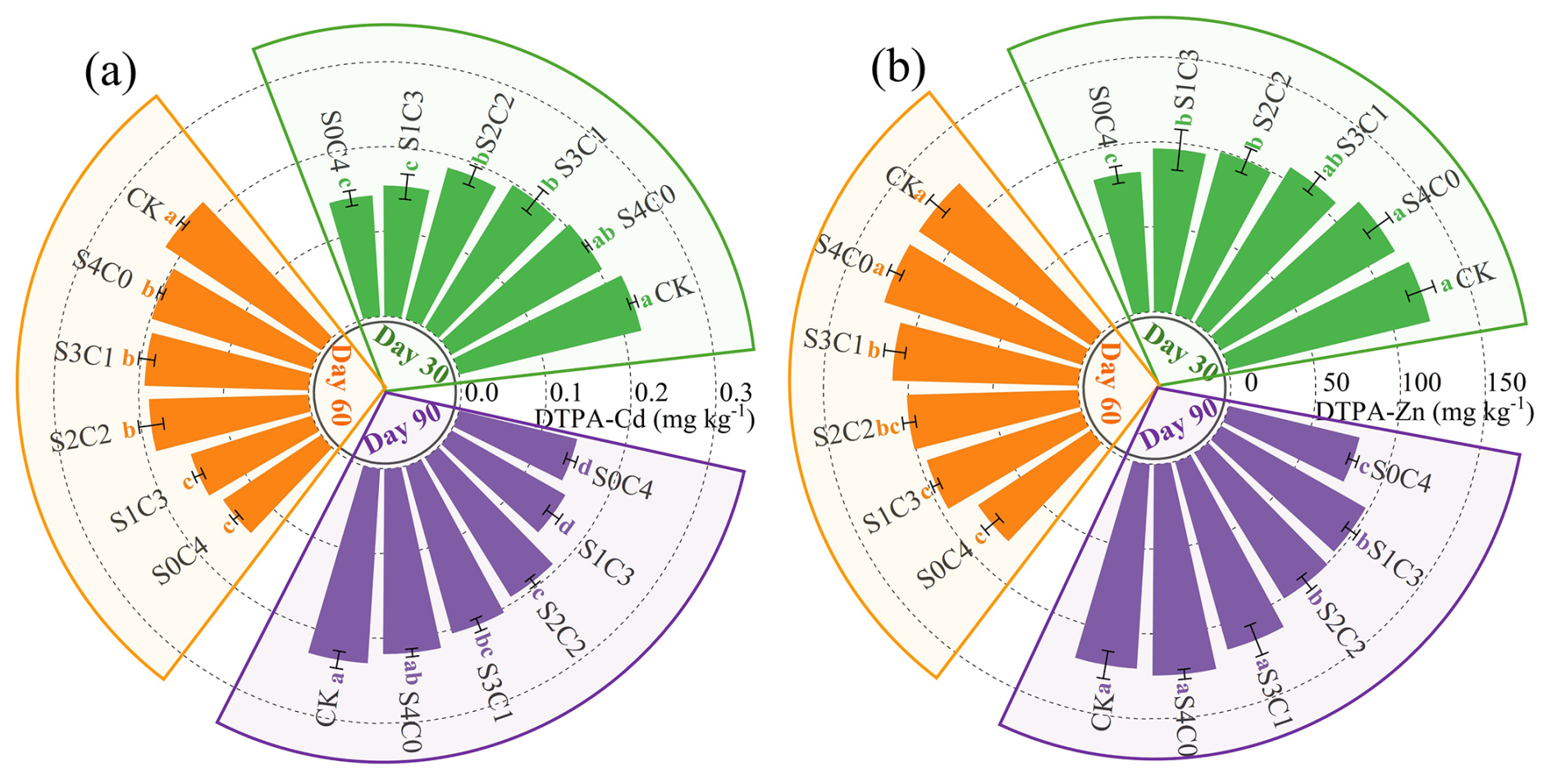
Figure 1Diethylenetriamine pentaacetic acid (DTPA) extractable (a) Cd and (b) Zn contents of different treatments on days 30, 60 and 90.
Corn straw alone also lowered available Cd, reaching significance (p<0.05) on day 60. During decomposition, straw releases humic substances, including fulvic acid, humic acid and humin, which contribute to the formation of soil organic matter (Song et al., 2025). Soil organic matter immobilizes Cd, thereby reducing its bioavailability. However, by day 90, this effect was minimal. In S4C0, available Zn gradually increased over time; on days 60 and 90, Zn content was slightly higher than that of CK. This may be due to Zn release from straw during mineralization.
3.2 Carbon dioxide flux and accumulation
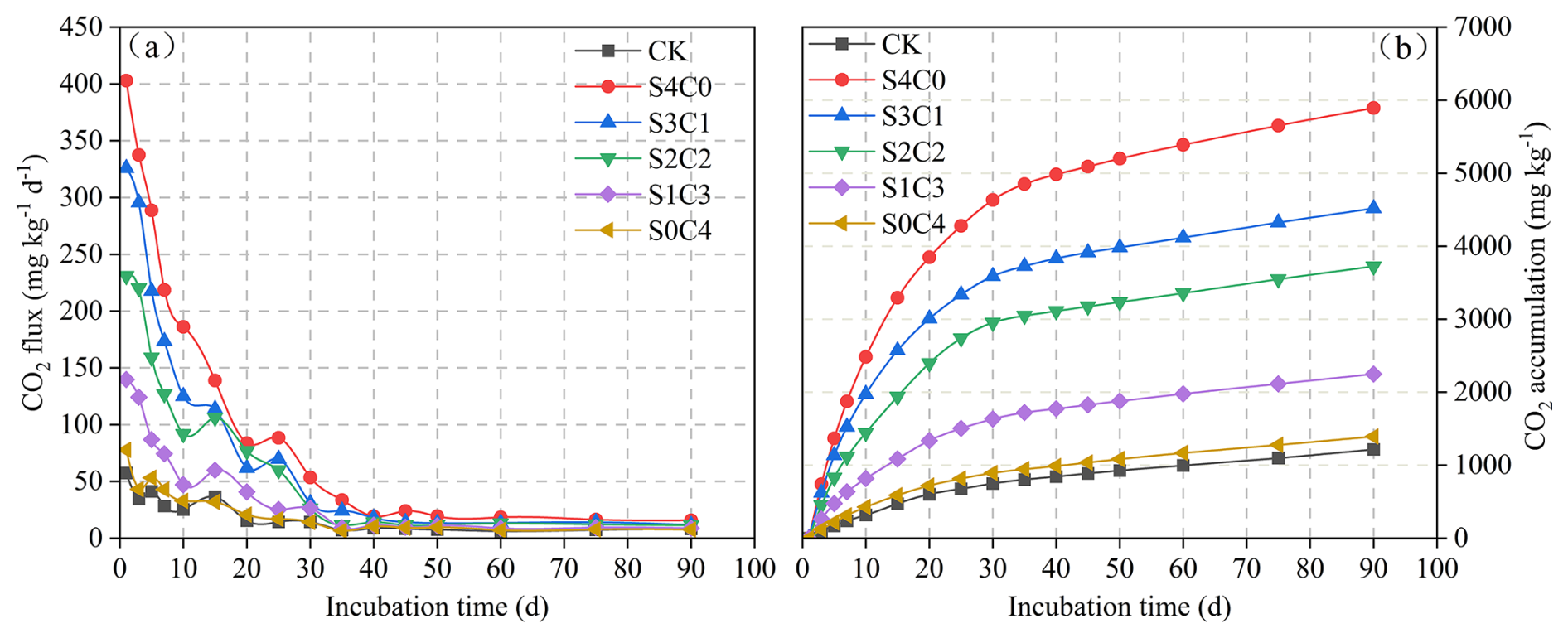
Soil CO2 emissions under straw and biochar treatments are shown in Fig. 2. Treatments containing straw markedly increased soil CO2 flux during the early incubation period (Fig. 2a), while CO2 release increased with higher straw content (Fig. 2b). By day 90, cumulative CO2 emissions of CK and S0C4 were 1215.28 and 1391.81 mg kg−1, respectively. The cumulative CO2 emissions of S4C0, S3C1, S2C2 and S1C3 were 4.85, 3.72, 3.06 and 1.85 times higher than CK and 4.23, 3.25, 2.68 and 1.62 times higher than that from S0C4, respectively. Straw decomposition supplies labile C, increasing microbial activities and CO2 emissions (Ding et al., 2025). Moreover, straw inputs promote microbial biomass turnover and substrate utilization (Yan et al., 2024). Furthermore, the physical coverage of straw decreased oxygen contact with SOC, accelerating straw mineralization and decomposition, thereby elevating CO2 emissions (Yan et al., 2024).
As a soil amendment, biochar has been extensively investigated for pollution remediation, nutrient improvement and greenhouse gas mitigation (Geng et al., 2022). Compared with CK, biochar application alone increased soil CO2 emission flux by 23.64 %–51.47 % during days 1–10 of incubation (Fig. 2a). By day 90, cumulative CO2 release in S0C4 was 14.53 % higher than that in CK (Fig. 2b), likely owing to a priming effect stimulating mineralization of native soil organic matter (Dong et al., 2026). However, compared with straw-only treatments, S1C3 and S0C4 reduced cumulative CO2 release by 61.84 % and 76.38 %, respectively, reflecting the stable, aromatic structure of biochar. These findings are consistent with those of Khaliq et al. (2024), who reported that biochar reduces greenhouse gas emissions, decreases Cd accumulation in rice and improves yield. Similarly, Yan et al. (2024) showed that under straw-return conditions, biochar application reduced CO2 emissions in acidic tea soils.
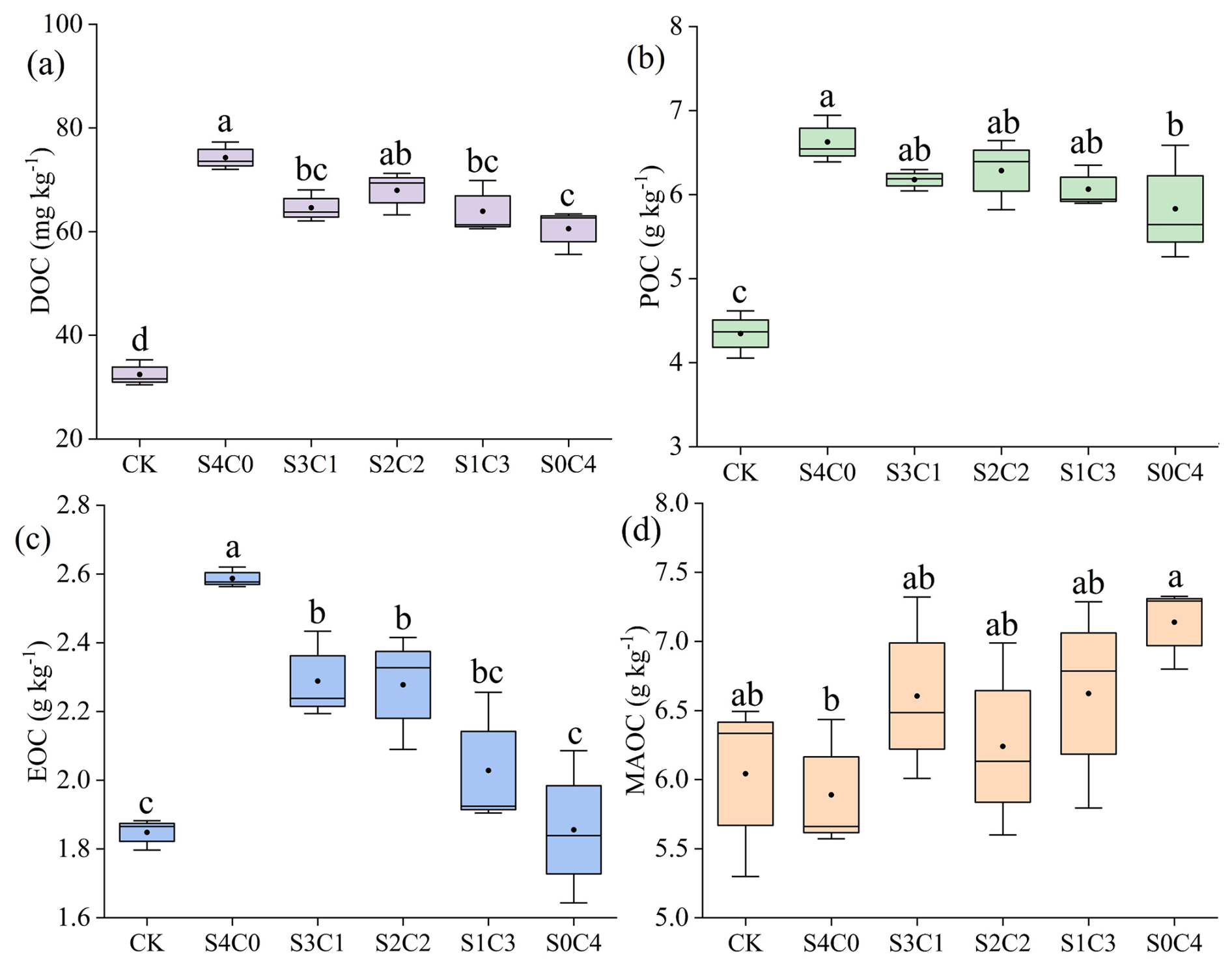
Figure 3(a) Dissolved organic carbon (DOC), (b) particulate organic carbon (POC), (c) easily oxidizable carbon (EOC), and (d) mineral-associated organic carbon (MAOC) contents of different treatments on day 90.
3.3 Soil organic carbon fractions
SOC storage is crucial for alleviating the global greenhouse effect and enhancing C sequestration (De Rosa et al., 2024). It is a critical element of soil fertility and productivity (Guo et al., 2024c). Its production capacity and stability are strongly affected by agricultural management measures (Chen et al., 2024a). Straw returning is an effective conservation tillage practice that ameliorates soil properties and promotes agricultural productivity (Lin et al., 2023), whereas biochar application is increasingly employed as a soil amendment (Jokubė et al., 2025; Zhang et al., 2025b). Returning straw provides lignin, cellulose, starch and other compounds that are partly decomposed and transformed into soil organic matter. Biochar contains abundant organic C in stable functional groups such as benzene rings and alkyl groups, which contribute to long-term increases in SOC. On days 30, 60 and 90, the SOC content of CK treatment was 10.47, 10.47 and 10.39 gkg−1 (Fig. S1 in the Supplement). Compared with CK, all treatments significantly increased SOC at each sampling time, with increases of 18.68 %–25.72 %, 17.89 %–24.41 % and 20.48 %–24.85 % on days 30, 60 and 90, respectively. These results are comparable to those of Fan et al. (2024), who reported that wheat straw and biochar increased SOC at all sampling times. However, no remarkable differences were detected among the various straw and biochar treatments.
SOC mineralization is the principal pathway for C loss; therefore, improving its stability (which largely depends on its composition) aids in reducing mineralization and greenhouse gas emissions. Active fractions (such as DOC, EOC, POC and MBC) are more sensitive to management changes (Chen et al., 2024a). MAOC is formed through adsorption of microbial residues, decomposition products and dissolved organic matter onto mineral surfaces and is more resistant to degradation and persists longer in soil (Hu et al., 2025b). In the current research, compared with CK, all treatments resulted in significant increases in DOC and POC contents of 86.72 %–129.05 % and 34.16 %–52.46 %, respectively (Fig. 3a and b). S4C0, S3C1 and S2C2 also increased EOC by 23.23 %–23.83 % (Fig. 3c). Compared with S4C0, S3C1, S2C2, S1C3 and S0C4 decreased DOC and EOC, whereas S0C4 reduced POC. Furthermore, the MAOC content of S0C4 was 21.21 % higher than that of S4C0 (Fig. 3d). These findings indicate that, compared with straw addition alone, biochar or straw–biochar combinations enhanced SOC stability.
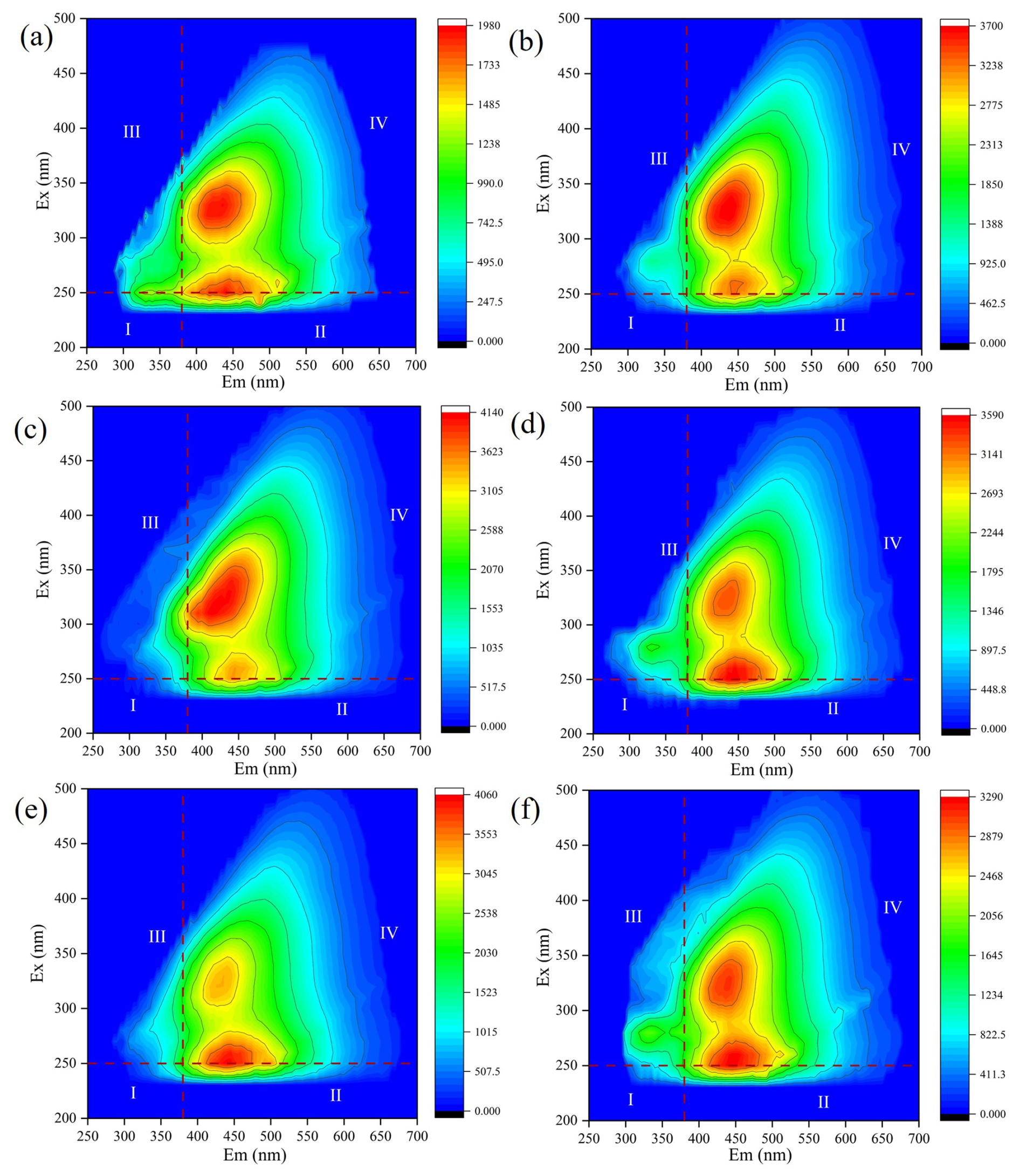
Figure 4Three-dimensional excitation-emission-matrix (3D-EEM) spectra of (a) CK (control, no straw and biochar), (b) S4C0 (4.0 g straw), (c) S3C1 (3.0 g straw and 1.0 g biochar), (d) S2C2 (2.0 g straw and 2.0 g biochar), (e) S1C3 (1.0 g straw and 3.0 g biochar) and (f) S0C4 (4.0 g biochar).
The 3D-EEM spectra was used to further analyse DOC composition under different treatments (Fig. 4a–f). Based on 3D-EEM, DOC can be classified into four components: aromatic protein (I), fulvic acid (II), microbial metabolites (III) and humic acid (IV). Regional integration was performed on each DOC component using Origin (2025). All straw and biochar treatments enhanced the fluorescence intensity of DOC (Fig. S2). Across all treatments, the fluorescence intensity of DOC components followed the order of , consistent with the results of Huang et al. (2025). These results suggest that straw and biochar applications enhance the content of four DOC components without altering the overall composition of soil DOC. The treatments primarily increased soil humic acid, thereby enhancing soluble organic C. Fulvic acid and microbial metabolite contents also increased markedly, whereas protein content showed limited change.
3.4 Soil available nutrients
Compared with CK, S4C0, S3C1 and S1C3 increased soil AHN content on day 30. All straw and biochar treatments increased AHN content on day 60, whereas S3C1, S2C2, S1C3 and S0C4 increased AHN content on day 90 (Fig. 5a). During the early stage of incubation, straw addition enhanced soil available N. However, as the incubation experiment progressed, AHN content in straw-treated soil gradually decreased (Table S2). On day 90, AHN content in S2C2, S1C3 and S0C4 was 71.81, 77.90 and 74.16 mg kg−1, respectively, which was 14.79 %, 24.52 % and 18.53 % higher than that in S4C0. This could be attributed to straw decomposition, which releases a large amount of available N (Zhao et al., 2026). However, available N was unstable and lost through volatilization as ammonia or N oxidized. In later stages, as straw decomposition slowed, soil AHN content declined. Additionally, Cong et al. (2025) reported that straw return is more effective than biochar at improving soil quality in the short term.
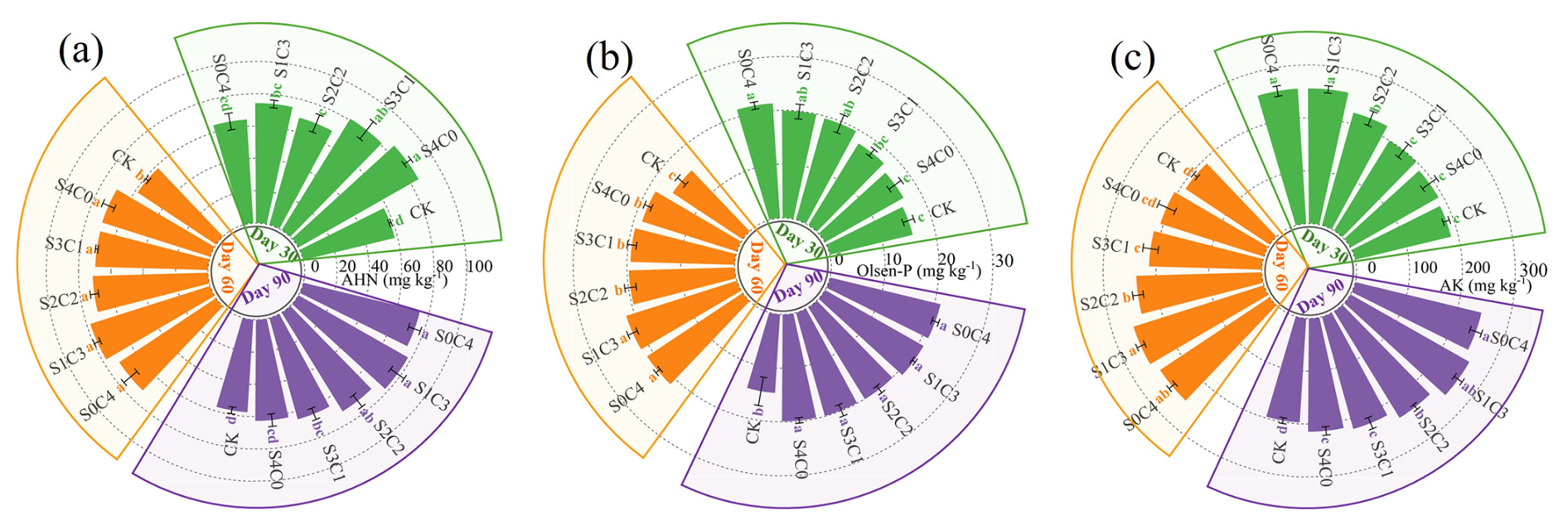
Figure 5(a) Alkali hydrolysable nitrogen (AHN), (b) available phosphorus (Olsen-P), and (c) available potassium (AK) contents of different treatments on days 30, 60 and 90.
On day 30, compared with CK, S2C2, S1C3 and S0C4 significantly increased Olsen-P content by 23.63 %, 25.90 % and 34.95 %, respectively (Fig. 5b). All straw and biochar treatments increased Olsen-P content on days 30 and 60, with S1C3 and S0C4 showing greater improvements than other treatments. Soil AK content exhibited a similar trend to Olsen-P (Fig. 5c): S2C2, S1C3 and S0C4 significantly increased AK content on days 30 and 60. By day 90, all straw and biochar treatments increased soil AK content by 8.50 %–30.94 %. These results were consistent with An et al. (2025), who revealed that straw can release P and K, and biochar and straw can serve as P sources, gradually releasing P through microbial activities (Ye et al., 2025). Between S1C3 and S0C4, no significant differences were detected in soil AHN, Olsen-P and AK across all sampling periods.
3.5 Soil microbial biomass
Soil microbial biomass is a core biological indicator reflecting soil microbial activity and nutrient sequestration (Chen et al., 2025a). Soil microorganisms utilize energy obtained from soil organic matter through respiration to create new biomass, thereby sequestering C and N (Elrys et al., 2025). After completion of the incubation experiment, treatment with straw, biochar or their combination increased soil MBC, MBN and MBP by 24.73 %–61.41 %, 20.77 %–58.60 % and 23.76 %–47.61 %, respectively (Fig. S3). The MBC content of S1C3 was significantly higher than that of S4C0, S3C1, S2C2 and S0C4. Compared with S4C0, soil MBN in S3C1, S2C2, S1C3 and S0C4, increased by 18.87 %–31.32 %. The soil MBP content of S1C3 differed significantly from that of S4C0. Overall, the MBC, MBN and MBP contents treated with S1C3 were 283.44, 44.02 and 16.51 mg kg−1, which were the highest levels, and S1C3 is the best treatment to increase soil microbial biomass.
Biochar improved soil available N, P, and K nutrients at the end of incubation (Fig. 5), however, its C is mainly composed of stable aromatic C structures, which have strong chemical stability and are difficult to be decomposed and utilized by soil microorganisms, thus induced significant limitations in C utilization (Chen et al., 2024b). When straw combined with biochar, both can alleviated heavy metal stress to enhance soil microbial biomass and provided a sustainable C, N and P nutrients for microbial growth and reproduction (Ninkuu et al., 2025). Thus, combining straw and biochar, especially at the S1C3 ratio, was most effective in promoting microbial growth and increasing soil microbial biomass.
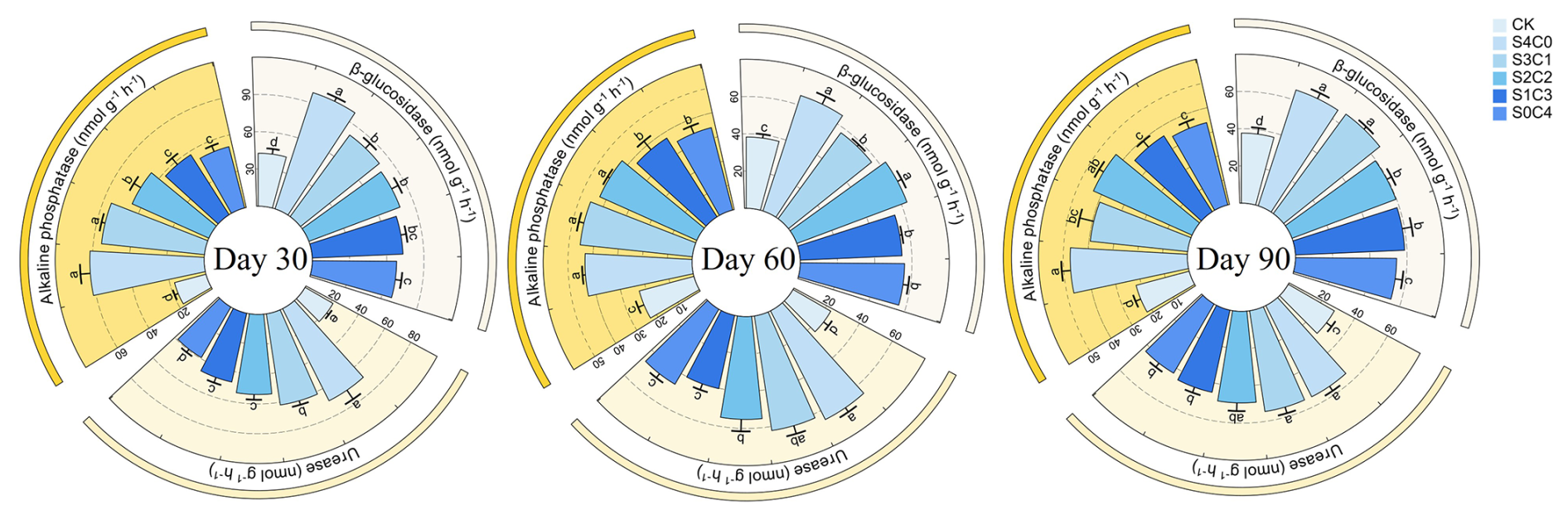
Figure 6β-glucosidase, urease and alkaline phosphatase activities of different treatments on days 30, 60 and 90.
3.6 Enzymatic activity and stoichiometry
Soil enzymes derived from microorganisms are important drivers of soil microbial activity. They decompose dead plant and microbial cells, depolymerize macromolecules and generate soluble nutrients that can be assimilated by microorganisms. As catalysts of most biochemical reactions, enzymes are instrumental in material cycling and energy conversion. Soil enzyme activities are closely related to microbial growth and activity and can reflect soil health (Das et al., 2025). This study selected β-glucosidase, urease and alkaline phosphatase as C-, N- and P-acquiring enzymes, respectively. β-glucosidase is a vital component of the enzyme mixture required for lignocellulose degradation, catalysing the conversion of cellulose disaccharides into glucose (Wu et al., 2025). Urease catalyses the conversion of urea into ammonia and water, while phosphatase promotes soil organic phosphorus mineralization and enhances the bioavailability of soil phosphorus (Kang et al., 2025). At all three sampling times, treatment with straw or biochar alone or their combination increased the activities of β-glucosidase, urease and alkaline phosphatase by 44.51 %–131.16 %, 50.64 %–219.97 % and 50.62 %–251.67 %, respectively (Fig. 6). The activity levels of enzymes involved in nutrient acquisition reflect microbial nutrient demand in relation to substrate utilization efficiency (Li et al., 2025b). In this study, the increase in nutrient-acquiring enzyme activities was attributed to the increased availability of enzymatic substrates following straw and biochar application. S4C0 had the most pronounced impact on enzyme activities which may be due to the easier utilization of nutrients in straw and the more sensitive response of microorganisms to straw compared to biochar. C derived from straw increased microbial demand for N and P, thereby stimulating urease and alkaline phosphatase activities. Li et al. (2022) reported similar results, showing that increased straw application enhanced soil enzyme activities associated with the uptake of C, N and P. Although biochar is generally considered stable and resistant to decomposition, its application also significantly enhanced the activities of C-, N- and P-acquiring enzymes. This effect depends on the properties of both the biochar and the soil. For example, Liao et al. (2022) demonstrated that biochar produced at temperatures<500 °C increased enzyme activities, whereas biochar produced at ≥500 °C exhibited less pronounced effects. Moreover, increased enzyme activity may be related to reduced heavy metal toxicity, as heavy metal pollution inhibits microorganisms and nutrient-acquiring enzymes. The activities of β-glucosidase, urease, and alkaline phosphatase exhibited distinct temporal dynamics between S4C0 and S0C4 across the 90 d incubation period (Table S3). For S4C0, the β-glucosidase, urease and alkaline phosphatase activities on day 30 were 98.44, 69.19 and 61.42 , respectively, with the highest levels at the three sampling times. The activities of β-glucosidase and alkaline phosphatase decreased on days 60 and 90, and the urease activity decreased on day 90. The initial stimulation of all three hydrolases under S4C0 at day 30 can be attributed to the rapid decomposition of straw, which supplied C, N and P substrates to microbial growth. The subsequent gradual decline of enzyme activities from day 30 to day 90 reflected the progressive depletion of degradable straw components. For S0C4, the β-glucosidase activity peaked on day 30 and significantly decreased on days 60 and 90. On day 30, soil urease activity was significantly higher than that of day 60, while alkaline phosphatase activity changed insignificantly at the three sampling times. The consistently low and temporally stable alkaline phosphatase activity of S0C4 stemmed from the biochemical recalcitrance of biochar. Its highly aromatic structure barely releases bioavailable organic nutrients, failing to induce shifts in phosphorus cycling enzyme throughout the incubation period.
In terrestrial ecosystems, microbial nutrient limitation is widely recognized as an important factor controlling C cycling (Cui et al., 2022). Enzymatic stoichiometry aids in evaluating nutrient limitations in soil microorganisms and provides insight into microbial nutrient equilibrium (Zhang et al., 2025c). In this study, enzymatic stoichiometry was used to evaluate the effects of straw and biochar additions on microbial nutrient limitations in heavy metal-contaminated soil (Table S4). On days 30, 60 and 90, vector length values of CK were highest, indicating strong microbial C limitation. S0C4 reduced vector length on day 30 but showed no significant difference on days 60 and 90. These findings indicate that biochar alone does not provide an adequate C source for microorganisms. S4C0, S3C1, S2C2 and S1C3 reduced vector lengths on days 30 and 60. Compared with S0C4, vector lengths of S3C1 and S2C2 were reduced on day 30, while those of S3C1, S2C2 and S1C3 were reduced on day 60. Therefore, combined straw and biochar mitigated microbial C limitation. However, this effect decreased over time as straw mineralized. Xu et al. (2024) reported similar results which showed that straw returning significantly improves the level of soil nutrient pool and enhances the availability of C matrix, thereby reducing the C limitation on microorganisms. The results of Zhang et al. (2025c) suggested that the addition rates of 1 % and 2 % of alkaline biochar alleviated the C limitation of soil microorganisms, while acid-modified biochar had no significant effect on vector length. On all sampling days, vector angle values were <45°, indicating that soil microorganisms were relatively N-limited. On days 30 and 90, treatments had no significant effect on vector angles, suggesting no change in microbial N–P balance at the initial and final stages. On day 60, however, S4C0, S3C1, S2C2 and S0C4 significantly reduced vector angles. This may be due to increased soil P availability (Fig. 5b), which altered the N–P balance and intensified microbial N limitation.
3.7 Correlation and principal component analysis
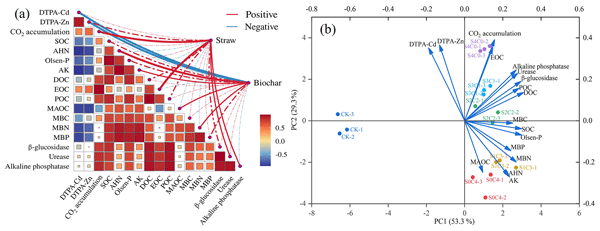
The correlation between the 17 indices and the amounts of straw and biochar applied was analysed (Fig. 7a). DTPA-Cd showed a significantly positive correlation with DTPA-Zn and a negative correlation with AHN, AK, MAOC, MBN and MBP. This result indicated that the accumulation of bioavailable heavy metals in contaminated soil can have a serious inhibitory effect on various soil ecological processes, limiting soil nutrient supply capacity, organic carbon stabilization processes, and soil microbial reproduction, exacerbating soil ecological function degradation. Kang et al. (2025) also reported a negative correlation between the availability of heavy metals and that of soil available nutrients after biochar application. Positive correlations were observed between available nutrients, microbial biomass, enzyme activities and active organic carbon components, reflecting a synergistic promotion mechanism among soil carbon sequestration, nutrient cycling and microbial activity (Chen et al., 2025b). Differential regulatory effects were observed between straw and biochar application on soil properties. The amount of straw was positively correlated with CO2 emissions, EOC, urease and alkaline phosphatase. Straw is rich in labile organic carbon components that can be rapidly decomposed and utilized by soil heterotrophic microorganisms (Fang et al., 2025). Straw addition provided a substantial quantity of active C for soil microorganisms, enhanced soil respiration and increased microbial demand for N and P nutrients. The amount of biochar applied was significantly positively correlated with soil available nutrients, MAOC and MBN, suggesting that biochar improves SOC stability and enhances soil nutrient availability. The porous structure, high specific surface area and rich functional groups of biochar can effectively adsorb soil nutrient ions, reduce nutrient leaching loss, and improve soil nutrient availability and retention capacity (Chen et al., 2024b). Meanwhile, biochar can promote the formation of stable organic carbon fractions, and provide a suitable microhabitat for microbial reproduction, thus increasing microbial biomass (Jiang et al., 2025). Additionally, the amount of biochar applied showed a significantly negative correlation with soil DTPA-Cd and DTPA-Zn contents, indicating that biochar effectively immobilized heavy metals in soil and reduced their toxicity. This phenomenon was attributed to mechanisms such as surface adsorption, ion exchange, precipitation, and complexation, which can convert labile heavy metals into stable components, significantly reducing the bioavailability and toxicity of heavy metals (Kang et al., 2024a).
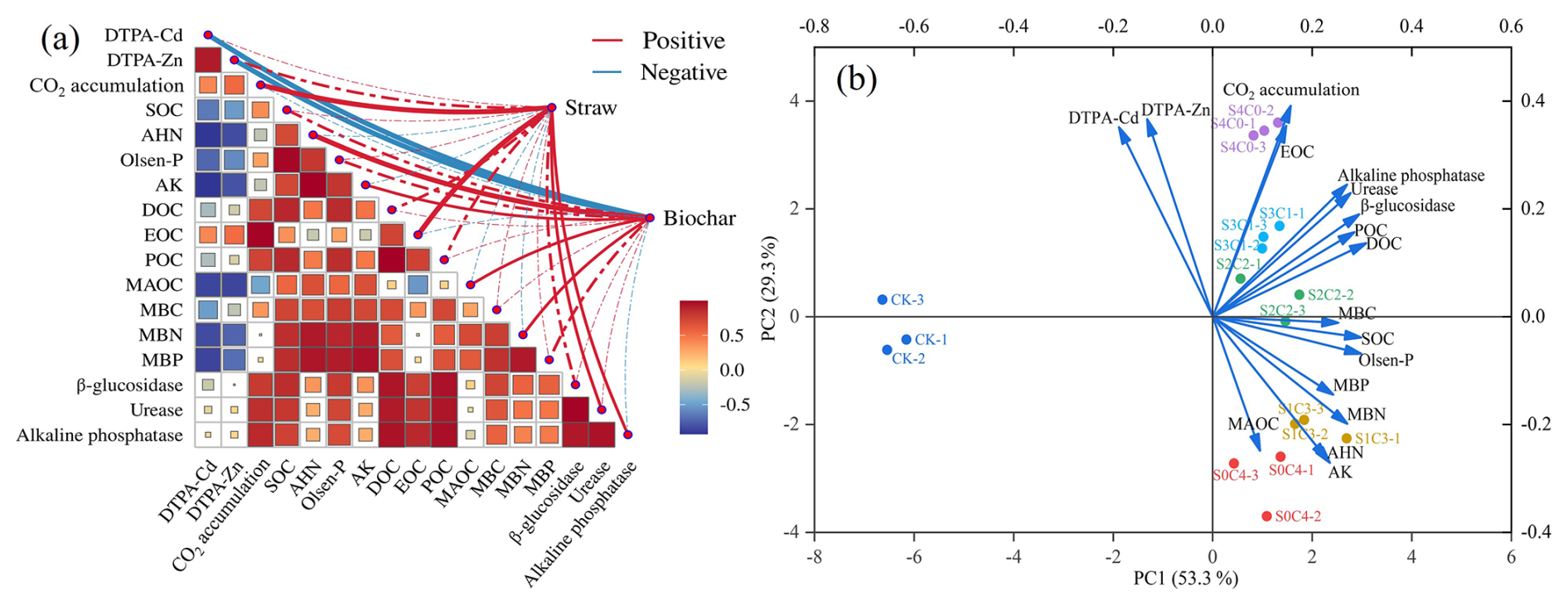
Principal component analysis (PCA) was employed to analyse differences among treatments and relationships among the 17 indices (Fig. 7b). The contribution rates of PC1 and PC2 were 53.3 % and 29.3 %, respectively; the cumulative contribution rate reached 82.6 %, indicating that PC1 and PC2 could reflect the main variation characteristics of soil physicochemical and microbial properties under different treatments, and the PCA results had high data reliability and explanatory power. The points representing straw and biochar treatments were clearly separated from those of CK. The CK points were distributed on the left side of the plot, whereas the straw and biochar treatment points were on the right, demonstrating that straw, biochar or their combined application effectively altered the properties of Cd- and Zn-contaminated soil. Moreover, the distribution of different straw and biochar treatment points varied significantly, suggested that the type and amount of organic improvement materials are key factors affecting the differences in soil properties caused by pollution. Consistent with the correlation network heatmap, the PCA plot also showed negative correlations between soil available heavy metal contents and AHN, AK, MAOC, MBN and MBP.
3.8 Comprehensive evaluation
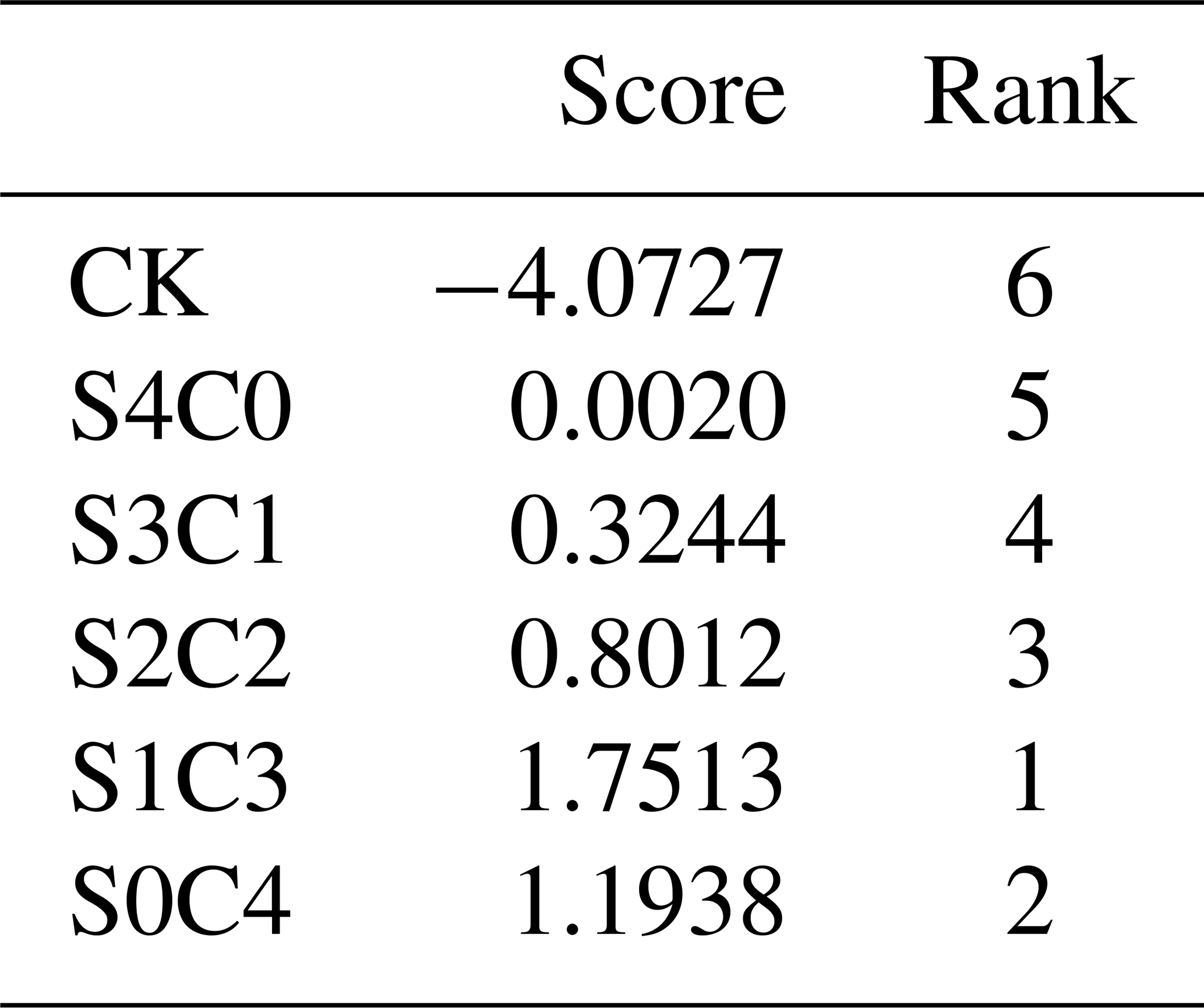
After standardizing the key indices, PCA was performed to comprehensively estimate the improvement effects of different treatments on Cd- and Zn-contaminated soil. The cumulative variance contribution of PC1 and PC2 was 90.901 % (Table S5). Based on the PCA coefficient matrix of each index, fuzzy membership function values and comprehensive evaluation scores were further calculated to quantify the comprehensive remediation efficiency of each treatment (Sun et al., 2022). The results showed that S1C3 achieved the best comprehensive score (1.7513), ranking first among all treatments (Table 1). The optimal performance of S1C3 treatment due to the synergistic balance between straw and biochar, which compensated for the shortcomings when either was applied alone or in an imbalanced ratio. Applying straw and biochar at a 1:3 (straw:biochar) ratio balanced heavy metal remediation, carbon sequestration, nutrient availability, and microbial activity, thereby achieving the optimal comprehensive improvement of soil quality on Cd and Zn contaminated soil.
The combined application of straw and biochar effectively remediated heavy metal pollution, increased soil organic carbon content and nutrient availability, and alleviated microbial nutrient stress. Overall, the S1C3 treatment () achieved the greatest comprehensive improvement in Cd- and Zn-contaminated soil. S1C3 reduced available Cd and Zn while improving SOC stability and nutrient availability. In addition, S1C3 enhanced soil C-, N- and P-acquisition activities, alleviated microbial C limitations and increased microbial biomass. This study contributes to the development of remediation strategies and provides a theoretical basis for the comprehensive treatment of heavy metal-contaminated soil.
The datasets of this study are available at https://doi.org/10.17632/pg4d42wjwf.1 (Kang, 2025)).
The supplement related to this article is available online at https://doi.org/10.5194/soil-12-1021-2026-supplement.
XK: Investigation, Data curation, and Writing–original draft. NG: Investigation and Data curation. ZY: Formal analysis. YapL: Investigation. HW: Software. HP: Validation. QY: Methodology. YanL: Conceptualisation, Writing–review and editing and Funding acquisition. YZ: Conceptualisation, Writing–review and editing and Supervision.
The contact author has declared that none of the authors has any competing interests.
Publisher's note: Copernicus Publications remains neutral with regard to jurisdictional claims made in the text, published maps, institutional affiliations, or any other geographical representation in this paper. The authors bear the ultimate responsibility for providing appropriate place names. Views expressed in the text are those of the authors and do not necessarily reflect the views of the publisher.
This work was supported by the Earmarked Fund for Shandong Agriculture Research System (SDARS-15–02).
This paper was edited by Maria Jesus Gutierrez Gines and reviewed by Abel Veloso and one anonymous referee.
Ahmad, J., Al-Farraj, A. S., Ahmad, M., Al-Swadi, H. A., and Al-Wabel, M. I.: Functionalized organo-mineral composites of biochar for the effectual immobilization of arsenic in contaminated soil, J. Soils Sediments, 24, 1556–1575, https://doi.org/10.1007/s11368-024-03730-z, 2024.
An, N., Zhang, L., Schoenau, J. J., Liu, Y., Ren, B., Wu, Z., Han, W., and Han, X.: Seven-year straw and biochar amendments modulate soil pore structure, nutrient availability, and nitrogen partial factor productivity, Agron. J., 117, e70171, https://doi.org/10.1002/agj2.70171, 2025.
Burachevskaya, M., Minkina, T., Bauer, T., Lobzenko, I., Fedorenko, A., Mazarji, M., Sushkova, S., Mandzhieva, S., Nazarenko, A., Butova, V., Wong, M. H., and Rajput, V. D.: Fabrication of biochar derived from different types of feedstocks as an efficient adsorbent for soil heavy metal removal, Sci. Rep., 13, 2020, https://doi.org/10.1038/s41598-023-27638-9, 2023.
Carnier, R., de Abreu, C. A., de Andrade, C. A., Fernandes, A. O., Silveira, A. P. D., and Coscione, A. R.: Soil quality index as a tool to assess biochars soil quality improvement in a heavy metal-contaminated soil, Environ. Geochem. Hlth., 45, 6027–6041, https://doi.org/10.1007/s10653-023-01602-y, 2023.
Chen, L., Zhou, S., Zhang, Q., Zou, M., Yin, Q., Qiu, Y., and Qin, W.: Effect of organic material addition on active soil organic carbon and microbial diversity: a meta-analysis, Soil Till. Res., 241, 106128, https://doi.org/10.1016/j.still.2024.106128, 2024a.
Chen, Y., Sun, K., Yang, Y., Gao, B., and Zheng, H.: Effects of biochar on the accumulation of necromass-derived carbon, the physical protection and microbial mineralization of soil organic carbon, Crit. Rev. Env. Sci. Tec., 54, 39–67, https://doi.org/10.1080/10643389.2023.2221155, 2024b.
Chen, Y., Liu, S., Huang, Y., Xiao, Q., Zhao, X., Wu, L., and Zhang, W.: Stimulatory effects of nutrient addition on microbial necromass C formation depend on soil stoichiometry, Geoderma, 458, 117323, https://doi.org/10.1016/j.geoderma.2025.117323, 2025a.
Chen, Y., Wu, S., Hu, C.: The synergistic effects of soil acidification and carbon sequestration technologies: Mechanism analysis, research progress, and application prospects, Geogr. Res. Bull., 4, 56–91, https://doi.org/10.50908/grb.4.0_56, 2025b.
Chen, Z., Jin, P., Wang, H., Hu, T., Lin, X., and Xie, Z.: Ecoenzymatic stoichiometry reveals stronger microbial carbon and nitrogen limitation in biochar amendment soils: a meta-analysis, Sci. Total Environ., 838, 156532, https://doi.org/10.1016/j.scitotenv.2022.156532, 2022.
Cong, P., Song, J., Dong, J., Su, W., Feng, W., and Zhang, H.: Straw return was more beneficial to improving saline soil quality and crop productivity than biochar in the short term, Front. Plant Sci., 15, 1517917, https://doi.org/10.3389/fpls.2024.1517917, 2025.
Cui, Y., Moorhead, D. L., Wang, X., Xu, M., Wang, X., Wei, X., Zhu, Z., Ge, T., Peng, S., Zhu, B., Zhang, X., and Fang, L.: Decreasing microbial phosphorus limitation increases soil carbon release, Geoderma, 419, 115868, https://doi.org/10.1016/j.geoderma.2022.115868, 2022.
Das, P., Barker, C., Park, Y., Perreault, F., Westerhoff, P., and Penton, C. R.: Impact of graphite nano amendments on soil enzyme activities, functional genes and microbiome composition in a soil-plant system, Soil Biol. Biochem., 203, 109714, https://doi.org/10.1016/j.soilbio.2025.109714, 2025.
De Rosa, D. D., Ballabio, C., Lugato, E., Fasiolo, M., Jones, A., and Panagos, P.: Soil organic carbon stocks in European croplands and grasslands: how much have we lost in the past decade?, Glob. Change Biol., 30, e16992, https://doi.org/10.1111/gcb.16992, 2024.
Ding, S., Yin, J., Lin, Q., Chen, Q., and Liu, Z.: Partial substitution of rice straw with biochar alters soil microbial biomass phosphorus and turnover by regulating carbon:phosphorus stoichiometry, J. Environ. Manage., 383, 125528, https://doi.org/10.1016/j.jenvman.2025.125528, 2025.
Dong, H., Fu, Y., Dai, S., He, P., Luo, Y., Oliver, M. A., Horwath, W. R., and Li, L. J.: Priming effects on soil organic matter mineralization by carbon substrates: A global meta-analysis, Glob. Change Biol., 32, e70861, https://doi.org/10.1111/gcb.70861, 2026.
Elrys, A. S., Wen, Y., Feng, D., El-Mekkawy, R. M., Kong, M., Qin, X., Lu, Q., Dan, X., Zhu, Q., Tang, S., Wu, Y., Meng, L., and Zhang, J.: Cadmium inhibits carbon and nitrogen cycling through soil microbial biomass and reduces soil nitrogen availability, J. Hazard. Mater., 489, 137524, https://doi.org/10.1016/j.jhazmat.2025.137524, 2025.
Fan, T., Zhang, Y., Hu, K., Xu, S., Zhang, A., Xue, S., Han, J., and Wang, X.: Changes in soil organic carbon and microbial community in saline soil following different forms of straw incorporation, Eur. J. Soil Sci., 75, e13457, https://doi.org/10.1111/ejss.13457, 2024.
Fang, K., Chen, J., Wang, G.: Straw incorporation promotes soil health by modulating stable dissolved organic carbon and microbial community in paddy soil, J. Soil Sediment., 25, 2255–2268, https://doi.org/10.1007/s11368-025-04073-z, 2025.
Geng, N., Kang, X., Yan, X., Yin, N., Wang, H., Pan, H., Yang, Q., Lou, Y., and Zhuge, Y.: Biochar mitigation of soil acidification and carbon sequestration is influenced by materials and temperature, Ecotoxicol. Environ. Saf., 232, 113241, https://doi.org/10.1016/j.ecoenv.2022.113241, 2022.
Guo, B. X., Zhou, J., Zhan, L. Q., Wang, Z. Y., Wu, W., and Liu, H. B.: Spatial and temporal variability of soil pH, organic matter and available nutrients (N, P and K) in Southwestern China, Agronomy, 14, 1796, https://doi.org/10.3390/agronomy14081796, 2024c.
Guo, J., Jiang, P., Zhang, J., Dong, S., Tian, W., Li, J., Li, F., Lv, J., Yao, Y., Hou, Y., Wu, S., Shaaban, M., Huang, M., and Li, Y.: Straw return substituting potassium fertilizer increases crop yield, efficiency, and quality in maize-wheat rotation system, Agronomy, 14, 1266, https://doi.org/10.3390/agronomy14061266, 2024b.
Guo, Z., Liu, Y., Meng, X., Yang, X., Ma, C., Chai, H., Li, H., Ding, R., Nazarov, K., Zhang, X., and Han, Q.: The long-term nitrogen fertilizer management strategy based on straw return can improve the productivity of wheat-maize rotation system and reduce carbon emissions by increasing soil carbon and nitrogen sequestration, Field Crop. Res., 317, 109561, https://doi.org/10.1016/j.fcr.2024.109561, 2024a.
Hou, P., Li, B., Cao, E., Jian, S., Liu, Z., Li, Y., Sun, Z., and Ma, C.: Optimizing maize yield and mitigating salinization in the Yellow River Delta through organic fertilizer substitution for chemical fertilizers, Soil Till. Res., 249, 106498, https://doi.org/10.1016/j.still.2025.106498, 2025.
Hu, J., Cui, H., Fan, M., Liu, M., Wang, S., Li, X., Peng, X., Shi, F., Song, W., and Sun, W.: Functional soil microbes drive soil phosphorus fractions in response to nitrogen addition across aggregate levels, Front. Microbiol., 16, 1671863, https://doi.org/10.3389/fmicb.2025.1671863, 2025a.
Hu, Y., Ao, G., Feng, J., Chen, X., and Zhu, B.: The patterns of forest soil particulate and mineral associated organic carbon characteristics with latitude and soil depth across eastern China, For. Ecosyst., 12, 100291, https://doi.org/10.1016/j.fecs.2024.100291, 2025b.
Huang, X., Li, X., Zheng, L., Zhang, Y., Sun, L., Feng, Y., Du, J., Lu, X., and Wang, G.: Comprehensive assessment of health and ecological risk of cadmium in agricultural soils across China: a tiered framework, J. Hazard. Mater., 465, 133111, https://doi.org/10.1016/j.jhazmat.2023.133111, 2024.
Huang, Y., Luo, Y., Wu, C., Xue, S., Chen, H., Wu, Y., and Li, W.: Synergistic multi-metal stabilization of lead–zinc smelting contaminated soil by Ochrobactrum EEELCW01-loaded iron-modified biochar: performance and long-term efficacy, Biochar, 7, 58, https://doi.org/10.1007/s42773-025-00441-7, 2025.
Islam, M. U., Guo, Z., Jiang, F., and Peng, X.: Does straw return increase crop yield in the wheat-maize cropping system in China? A meta-analysis, Field Crop. Res., 279, 108447, https://doi.org/10.1016/j.fcr.2022.108447, 2022.
Jiang. H., Wu, J., Guan, J., Zhao, F., Tan, L., and Chen, H.: Biochar is an innovative strategy for reconstructing microbial communities and enhancing nutrient utilization efficiency in acidic red soils, Front. Microbiol., 16, 1622408, https://doi.org/10.3389/fmicb.2025.1622408, 2025.
Jokubė, M., Hyyrynen, M., Pihlainen, S., and Hyytiäinen, K.: Economic feasibility of biochar for carbon stock enhancement in Finnish agricultural soils, Carbon Manag., 16, 2465328, https://doi.org/10.1080/17583004.2025.2465328, 2025.
Kang, X.: Straw and biochar co-application reduce Cd–Zn bioavailability, V1, Mendeley Data [data set], https://doi.org/10.17632/pg4d42wjwf.1, 2025.
Kang, X., Geng, N., Li, Y., He, W., Wang, H., Pan, H., Yang, Q., Yang, Z., Sun, Y., Lou, Y., and Zhuge, Y.: Biochar with KMnO4-hematite modification promoted foxtail millet growth by alleviating soil Cd and Zn biotoxicity, J. Hazard. Mater., 477, 135377, https://doi.org/10.1016/j.jhazmat.2024.135377, 2024a.
Kang, X., Sun, M., Geng, N., Li, Y., Wang, H., Pan, H., Yang, Q., Yang, Z., Lou, Y., and Zhuge, Y.: A novel and recyclable silica gel-modified biochar to remove cadmium from wastewater: model application and mechanism exploration, Ecotoxicol. Environ. Saf., 281, 116608, https://doi.org/10.1016/j.ecoenv.2024.116608, 2024b.
Kang, X., Geng, N., Hou, X., Wang, H., Pan, H., Yang, Q., Lou, Y., and Zhuge, Y.: Potassium permanganate-hematite-modified biochar enhances cadmium and zinc passivation and nutrient availability and promotes soil microbial activity in heavy metal-contaminated soil, J. Environ. Manage., 376, 124469, https://doi.org/10.1016/j.jenvman.2025.124469, 2025.
Khaliq, M. A., Alsudays, I. M., Alhaithloul, H. A. S., Rizwan, M., Yong, J. W. H., Ur Rahman, S., Sagir, M., Bashir, S., Ali, H., and Hongchao, Z.: Biochar impacts on carbon dioxide, methane emission, and cadmium accumulation in rice from Cd-contaminated soils; A meta-analysis, Ecotoxicol. Environ. Saf., 274, 116204, https://doi.org/10.1016/j.ecoenv.2024.116204, 2024.
Li, F., Wang, H., Yang, H., Xu, X., Ding, T., and Wang, Q.: Control of heavy metal pollution with rice husk biochar in sewage sludge compost amended soil, J. Soil Sci. Plant Nut., 25, 2786–2797, https://doi.org/10.1007/s42729-025-02298-y, 2025a.
Li, H., Qiu, Y., Ma, L., and Yao, X.: Soil ecological stoichiometry reveals microbial nutrient limitation with alpine meadow degradation in northeastern Tibetan Plateau, Catena, 246, 108358, https://doi.org/10.1016/j.catena.2024.108358, 2024.
Li, S., Cui, Y., Xia, Z., Zhang, X., Zhu, M., Gao, Y., An, S., Yu, W., and Ma, Q.: The mechanism of the dose effect of straw on soil respiration: evidence from enzymatic stoichiometry and functional genes, Soil Biol. Biochem., 168, 108636, https://doi.org/10.1016/j.soilbio.2022.108636, 2022.
Li, S., Zhou, G., Zhou, G., Nie, J., Zhang, J., Gao, S., and Cao, W.: Rice straw returning under winter green manuring enhances soil carbon pool via stoichiometric regulation of extracellular enzymes, Soil Till. Res., 252, 106617, https://doi.org/10.1016/j.still.2025.106617, 2025b.
Liao, X., Kang, H., Haidar, G., Wang, W., and Malghani, S.: The impact of biochar on the activities of soil nutrients acquisition enzymes is potentially controlled by the pyrolysis temperature: a meta-analysis, Geoderma, 411, 115692, https://doi.org/10.1016/j.geoderma.2021.115692, 2022.
Lin, J., Xu, Z., Xue, Y., Sun, R., Yang, R., Cao, X., Li, H., Shao, Q., Lou, Y., Wang, H., Yang, Q., Pan, H., and Zhuge, Y.: N2O emissions from soils under short-term straw return in a wheat-corn rotation system are associated with changes in the abundance of functional microbes, Agr. Ecosyst. Environ., 341, 108217, https://doi.org/10.1016/j.agee.2022.108217, 2023.
Mo, F., Yang, D., Wang, X., Crowther, T. W., Vinay, N., Luo, Z., Yu, K., Sun, S., Zhang, F., Xiong, Y., and Liao, Y.: Nutrient limitation of soil organic carbon stocks under straw return, Soil Biol. Biochem., 192, 109360, https://doi.org/10.1016/j.soilbio.2024.109360, 2024.
Mohan, D., Abhishek, K., Patel, M., and Pittman, C. U. Jr: Harnessing biochar in contaminated soil for heavy metal immobilization, soil health enhancement, and carbon sequestration, Ind. Eng. Chem. Res., 63, 10380–10396, https://doi.org/10.1021/acs.iecr.4c00082, 2024.
Moorhead, D. L., Sinsabaugh, R. L., Hill, B. H., and Weintraub, M. N.: Vector analysis of ecoenzyme activities reveal constraints on coupled C, N and P dynamics, Soil Biol. Biochem., 93, 1–7, https://doi.org/10.1016/j.soilbio.2015.10.019, 2016.
Natasha, N., Shahid, M., Bibi, I., Iqbal, J., Khalid, S., Murtaza, B., Bakhat, H. F., Farooq, A. B. U., Amjad, M., Hammad, H. M., Niazi, N. K., and Arshad, M.: Zinc in soil–plant–human system: A data-analysis review, Sci. Total Environ., 808, 152024, https://doi.org/10.1016/j.scitotenv.2021.152024, 2022.
Ninkuu, V., Liu, Z., Qin, A., Xie, Y., Song, X., and Sun, W.: Impact of straw returning on soil ecology and crop yield: A review, Heliyon, 11, e41651, https://doi.org/10.1016/j.heliyon.2025.e41651, 2025.
Peng, X. X., Li, R., Tang, C., Teng, W., Cheng, K., Liu, Z., and Yang, F.: Effects of artificial humic acid on decomposition of returning straw and enhancement of carbon sequestration, Appl. Soil Ecol., 203, 105619, https://doi.org/10.1016/j.apsoil.2024.105619, 2024.
Silva, D. F., Araujo, A. S. F., Lima, A. Y. V., Mota, J. C. A., Nascimento, Í. V., Queiroz, A. S., Medeiros, E. V., Costa, D. P., Melo, V. M. M., Cardoso, E. J. B. N., Verma, J. P., Smith, G. R., Mendes, L. W., and Pereira, A. P. A.: Enzymatic stoichiometry in degraded soils after two decades of restoration in a Brazilian semiarid region, Catena, 236, 107768, https://doi.org/10.1016/j.catena.2023.107768, 2024.
Song, X., Fan, Y., Li, J., Zhang, Y., Liu, X., Hussain, Q., Zhang, J., and Cui, D.: Insight in the characteristics of humic substances with cotton straw derived organic materials amendments, BMC Chem., 19, 53, https://doi.org/10.1186/s13065-025-01418-0, 2025.
Sun, M. J., Chao, Y., He, W., Kang, X. R., Yang, Q. G., Wang, H., Pan, H., Lou, Y. H., and Zhuge, Y. P.: Changes in foxtail millet (Setaria italica L.) yield, quality, and soil microbiome after replacing chemical nitrogen fertilizers with organic fertilizers, Sustainability, 14, 16412, https://doi.org/10.3390/su142416412, 2022.
Wang, Y., Wang, X., Bing, Z., Zhao, Q., Wang, K., Jiang, J., Jiang, M., Wang, Q., and Xue, R.: Remediation of Cd(II) Zn(II) and Pb(II) in contaminated soil by KMnO4 modified biochar: stabilization efficiency and effects of freeze–thaw ageing, Chem. Eng. J., 487, 150619, https://doi.org/10.1016/j.cej.2024.150619, 2024a.
Wang, Z., Zhang, M., Li, J., Wang, J., Sun, G., Yang, G., and Li, J.: Effect of biochar with various pore characteristics on heavy metal passivation and microbiota development during pig manure composting, J. Environ. Manage., 352, 120048, https://doi.org/10.1016/j.jenvman.2024.120048, 2024b.
Wu, Y., Wang, Q., Zabed, H. M., Zhao, M., and Qi, X.: Biosensor-assisted evolution of a β-glucosidase for enzymatic robustness and in vivo cellobiose metabolism in Escherichia coli, J. Agr. Food Chem., 73, 12392–12402, https://doi.org/10.1021/acs.jafc.5c02856, 2025.
Xu, L., Zhou, Y., Miao, C., Chen, H., Zhang, J., Qian, H., Hou, P., Ding, Y., Liu, Z., Li, W., Wang, S., Jiang, Y., and Li, G.: Long-term straw return increases fungal residual contribution to soil microaggregate nitrogen pool: An eco-enzymatic stoichiometric study, Soil Till. Res., 244, 106278, https://doi.org/10.1016/j.still.2024.106278, 2024.
Yan, Z., Tang, S., He, Z., Cheng, H., Twagirayezu, G., Zhao, J., Xiang, R., Hu, R., and Lin, S.: Biochar addition under straw return reduces carbon dioxide and nitrous oxide emissions in acidic tea field soil, J. Environ. Manage., 370, 122498, https://doi.org/10.1016/j.jenvman.2024.122498, 2024.
Ye, Y., Guo, X., Li, Y., Min, W., and Guo, H.: Biochar and straw amendments drive microbial regulation of phosphorus dynamics in saline-irrigated cotton fields, Front. Microbiol., 4, 1508717, https://doi.org/10.3389/frmbi.2025.1508717, 2025.
Zhang, G., Zhang, L., Shi, Z., Yang, Y., and Liu, J.: Microbial nutrient limitation and carbon use efficiency in saline-alkali soil amended with biochar: insights from ecoenzymatic stoichiometry, Biochar, 7, 68, https://doi.org/10.1007/s42773-025-00458-y, 2025c.
Zhang, J., Peng, Y., Liu, T., and Wang, Z.: Na related nanowhisker-containing biochar obtained from self-catalyzation and functionalization of papermaking black liquor lignin with superior heavy metal immobilization capability, Bioresource Technol., 417, 131866, https://doi.org/10.1016/j.biortech.2024.131866, 2025a.
Zhang, N., Xing, J., Wei, L., Liu, C., Zhao, W., Liu, Z., Wang, Y., Liu, E., Ren, X., Jia, Z., Wei, T., Siddique, K. H. M., and Zhang, P.: The potential of biochar to mitigate soil acidification: a global meta-analysis, Biochar, 7, 49, https://doi.org/10.1007/s42773-025-00451-5, 2025b.
Zhao, D., Yu, W., Brown, R. W., Liu, Z., Xu, Y., Wang, Z., Li, Z., Xu, Y., Xu, P., Jones, D. L., Wen, Y., and Zhou, S.: Straw incorporation strategies regulate detritusphere organic carbon and nutrient accumulation, Eur. J. Soil Sci., 77, e70297, https://doi.org/10.1111/ejss.70297, 2026.